This post contains affiliate links. We may earn a small commission when you buy through our links — at no extra cost to you.
A helmet is the one piece of gear you hope never earns its keep. It also happens to be the piece people buy in a rush, often the night before a trip, usually by matching a color to a jacket and guessing at the size. That’s backwards. A helmet that pinches at the temples or slides when you look uphill will ruin a day just as fast as a helmet that fits, and the difference between the two is usually a centimeter of adjustment and one honest try-on.
Over the past five months, my team and I rode in a dozen helmets across groomers, park laps, and one memorably icy morning, and the pattern was the same every time: fit decided everything else. Warmth, comfort, even how a helmet looks on your head all come down to whether the shell and liner actually match your shape, and no spec sheet tells you that. Here’s what held up — and which ones I’d strap on again.


Best for All-Round Riding
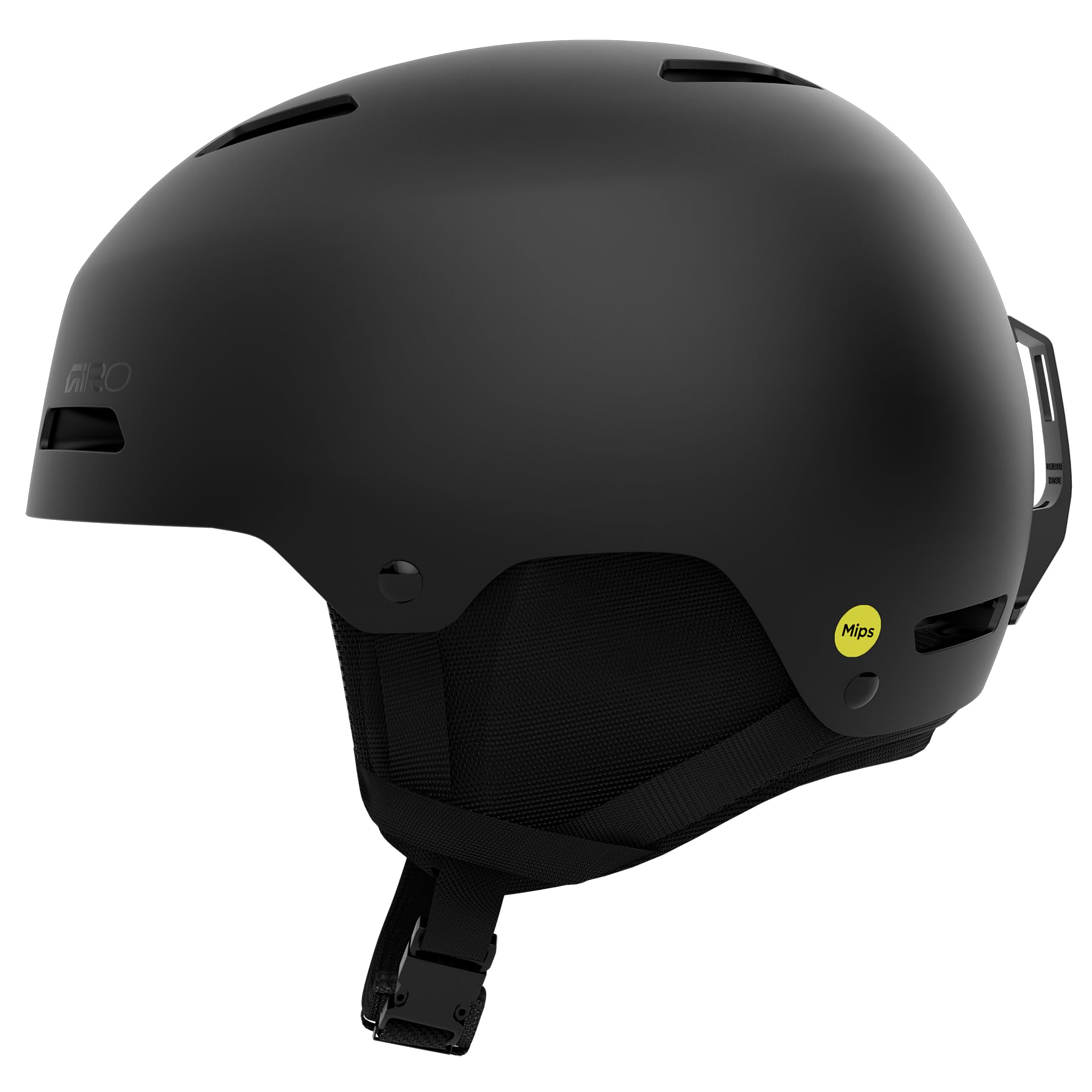
Giro Ledge MIPS
Key Features
- Ear pads: Removable
- Fit system: Auto Loc 2, removable
- Ventilation: Stack Vent, Super Cool Vents
- Impact protection: MIPS
- Price: Midrange
MIPS is the reason this one sits at the top of our list. Inside the shell there is a low-friction layer that lets the helmet rotate slightly against your head on an angled fall, which is the impact a plain foam-and-plastic lid handles least well. You will not see it or feel it on the hill; it is the part of the purchase you are making for the day things go wrong.
Around that liner, Giro has done the unglamorous work properly. The Stack Vent at the front lines up with the top vent of a goggle frame, giving the moist air that fogs lenses somewhere to go, and the Super Cool Vents across the crown move heat out when the sun comes over the ridge. The helmet is built to pair with Giro’s own EXV goggles, and with a set of those the fit is genuinely seamless; other goggles work, but expect to use the vertical tuning to close a gap at the brow. That combination, protection plus a clear field of view, is what you are actually paying for.
The rest is sensible rather than exciting: removable ear pads for spring days, compatibility with aftermarket audio systems, and a goggle retainer you can take off entirely. What settles it for us is the whole package rather than any single figure. Riders who want to spend as little as possible should look further down this list; anyone buying one helmet and wanting the best protection story in this group should start here.
Pros
- MIPS liner for angled impacts
- Vents aligned with the goggle frame
- Removable ear pads and goggle retainer
Cons
- No rear dial; fit set by snap positions
We point most riders to the Ledge MIPS: it pairs rotational-impact protection with Giro’s own goggle integration, and it does that without a top-tier price.
Best for First Helmet
OutdoorMaster Kelvin
Key Features
- Fit: Rear dial
- Vents: 14
- Colors: 22 matte options
- Weight: 1.3 lb
- Price: Budget
The first thing to know about the Kelvin is that it runs small. The shell is narrow, so if you are between sizes, go up; that one decision saves a return. Get it right and the rest falls into place: a rear dial that takes up the remaining slack, 14 vents that keep a warm spring afternoon from turning into a sauna, and a fleece liner with ear pads that pull out for washing. For a few days on the hill a year, this is the one we hand to friends.
What you give up is the rotational liner that separates our top pick. The Kelvin is a conventional ABS shell over EPS foam, and the saved money goes into ventilation and color instead: 22 matte options, from loud to very plain. If matching your jacket matters to you, this is the helmet that lets you do it.
Warmth is better than the price suggests. The fleece lining and ear covers keep the wind off on a cold chair ride, and the vents that make spring bearable do not leave your ears frozen in January. It is not the helmet we point at hard-charging riders, but for a family trip or a handful of weekends a year, it does the job without asking much of you.
Pros
- 14 vents for warm spring days
- Rear dial takes up fit slack
- Removable, washable liner and ear pads
- 22 matte color combinations
Cons
- Runs small; order a size up
If you want a capable snowboard helmet without spending much, the Kelvin is the one we hand over: 14 vents, a dial fit and a washable liner at a budget price.
Best for Dial-In Fit
VANRORA Stomper
Key Features
- Fit: Rear dial
- Liner: Removable fleece
- Vents: Adjustable top vents
- Weight: 16 oz
- Price: Budget
Setting the dial on the Stomper is a one-handed job, even in mittens, and that small thing changes a cold morning: no unclipping, no tugging at a strap with your teeth in the parking lot. The shell is a standard ABS over EPS build, with the foam made in the US, and at 16 ounces it is light enough that we stopped thinking about it on the lift.
The vents are adjustable, which is unusual at this price. A slider on the crown opens or closes the airflow instead of leaving you choosing between a sweaty climb and a frozen chair ride. The fleece liner and the thick ear pads come out, so a warm spring day does not have to be an ear-pad day, and there is a clip at the back to hold a goggle strap.
For a first helmet we keep coming back to it as the easiest recommendation here: nothing on it feels like a corner cut, the dial means it fits a visiting friend or a growing teenager as well as it fits you, and the washable liner keeps it from smelling like a rental by February. Nothing here is fancy, and that is the point.
Pros
- Rear dial works with mittens on
- Adjustable top venting
- Removable, washable fleece liner
- Light 16-ounce build
Cons
- No MIPS-style rotational liner
The Stomper is the budget helmet we reach for when fit matters more than the badge: a dial you can crank with mittens on, adjustable vents and a liner that comes out to wash.
Best for Year-Round Use
Smith Holt
Key Features
- Fit: Self-adjusting band
- Vents: 14 fixed
- Certification: ASTM F2040, CE EN1077 Class B, CPSC, EN1078
- Goggle system: AirEvac
- Price: Midrange
Four certifications is the headline, and it is unusual. The Holt is rated to ASTM F2040 and CE EN1077 Class B for snow sports and to CPSC and CE EN1078 for cycling, so the same shell can go from a powder day in January to a skate park in July. That is the reason it kept its place in this guide even with a shape that will not suit everyone.
On snow it behaves like a mountain helmet rather than a converted bike lid. AirEvac pulls air through the goggle frame to keep lenses clear, the 14 fixed vents move a lot of air on a warm day, and the Bombshell ear pads are shaped to sit around the ear instead of flattening it. Our reservation is the fit system: it is a self-adjusting band with no dial, so the shell size has to be right on its own.
The shape is the other thing to know. It is a rounder, higher-volume helmet than the low-profile picks here, which suits a bigger head and can read as bulbous on a small one, and the sizing runs generous. Check the size chart rather than guessing; with a small head and a lot of hair, the Giro is the better bet.
Pros
- Certified for snow and cycling
- AirEvac goggle venting
- Ear pads shaped around the ear
Cons
- Bulky, round profile
- Sizing runs generous
Buy the Holt if you want one helmet for the mountain and the bike park: it carries snow and cycling certifications, and the goggle venting is as good as anything here.
Best for Budget Certification
TurboSke Ski Helmet
Key Features
- Fit: Glove-friendly dial
- Vents: Adjustable
- Weight: 1.2 lb
- Certification: ASTM F2040, CE EN1077
- Price: Budget
Cheap helmets usually ask you to take the safety copy on trust. This one puts it in writing: it is certified to ASTM F2040 and CE EN1077, the two standards that matter for snow, and it does that at the bottom of the price range in this guide.
The fit mechanism is the interesting part. Turning the glove-friendly dial widens or closes a semi-flexible shell around your head rather than just tightening a band at the back, so it covers more ground than a fixed shell of the same nominal size. That is handy if you ride with a thin balaclava some days and bare-headed on others. The vents adjust, and the ear pads have a pocket for aftermarket audio.
It is a plain helmet with a simple shape, and nobody will mistake it for the Giro on the lift. That is the trade, and for a second helmet, a teenager, or anyone who rides a few times a year and wants certified protection without the markup, it is the one we point them to.
Pros
- ASTM F2040 and CE EN1077 certified
- Glove-friendly dial with wide range
- Adjustable venting
Cons
The TurboSke is what we suggest when the budget is fixed but the certification is not negotiable: ASTM F2040 and CE EN1077 on a helmet that costs the least here.
Best for Goggles Included
Odoland Helmet + Goggles
Key Features
- Fit: Rear knob and strap
- Vents: 14
- Certification: ASTM
- Included goggles: Detachable, anti-fog
- Price: Midrange
Goggles are the hidden cost of a first season, which is why we like this set: the helmet is ASTM certified and the matching goggles use a venting design meant to keep pace with the helmet’s 14 openings, so the two work together instead of arguing. For a beginner buying everything at once, that is one decision instead of two, and one less thing to get wrong.
The fit runs on a rear knob and an adjustable strap, the lining and ear muffs come out for washing, and a soft chin band keeps the strap from digging in. At 1.2 pounds it is light enough for a full day, and the set ships with a carry bag, which is more useful than it sounds when you are hauling gear from the car.
The reservation is durability. Cracks have turned up around the strap and ear-flap mounts rather than from hard falls, so check those joints when it arrives and keep the receipt. That is why it sits below the top pick even though it is the better value for a first-timer.
Pros
- ASTM-certified helmet
- Matching anti-fog goggles included
- Light 1.2-pound build
- Carry bag in the box
Cons
If you are starting from nothing, the Odoland set gets you a certified helmet and matching anti-fog goggles in one box, and that is the reason we keep it here.
Best for Spare Helmet
RIOROO Ski Helmet

Key Features
- Fit: Rear dial
- Liner: Removable, washable
- Vents: 12
- Certification: ASTM F2040-18, CE EN1077
- Price: Budget
RIOROO is not the badge you see most on the hill, and that is exactly why the spec list is worth a second look. This helmet is certified to ASTM F2040-18 and CE EN1077, wears an ABS shell over EPS foam, and carries 12 vents, a rear dial, and a removable thermal liner with matching ear pads.
In use it is the least remarkable helmet here in the best sense. The dial takes up the fit without a fight, the ear pads are soft enough for a long day, and the liner comes out at the end of the season so it does not go back into the bag damp.
What keeps it behind the budget picks above is depth. Fewer riders have put it through a full winter, there is no MIPS option, and the profile is rounder than the sleek helmets in this group. None of that makes it a bad helmet; it makes it a less certain one.
Our read is that it is a good second helmet, a spare for a partner who rides a few days a year, or a first helmet for someone who wants certification and a dial without paying for a badge. For the helmet a household relies on season after season, the certified budget picks above are the safer call.
Pros
- Certified to both snow standards
- 12 vents and a rear dial
- Removable, washable liner
Cons
The RIOROO is the quiet pick: certified to both snow standards, with a dial and a washable liner, for riders who care about the label more than the logo.
How We Tested Snowboard Helmets
We started with a shortlist of about 40 helmets from brands we’ve ridden for years, then narrowed it by certification to the snow-sport safety standard, the range of shell sizes offered, price relative to liner and padding quality, and whether replacement ear pads or liners were sold separately. That cut the list to 12, which we rode in from first snowfall through the last slushy weekend in early spring — five months total.
Fit came first, because it’s where most helmets fail. We measured every tester’s head circumference, tried each helmet in the size the brand’s chart recommended, then wore each one for a full two-hour session and noted where it pressed: forehead, temples, occiput. We checked whether the dial or pad system let us fine-tune without creating a pressure point, whether the shell stayed put when we tipped our heads down to check a binding, and how the sizing ran compared to the chart. Then we layered: thin balaclava, midweight beanie, goggles on and off, to see how much interior room was actually there.
Warmth and comfort we judged on cold mornings and wet ones. Ear pads went in and out to see how much coverage they gave and whether they muffled lift-line conversation, vents got opened and closed mid-run to check airflow and whether the mechanism worked with gloves on, and we weighed each helmet on a kitchen scale before noting neck fatigue on long chair rides. Ease of use meant buckling and unbuckling with gloves on, one-handed, plus threading a goggle strap through the rear clip without taking the helmet off.
Durability and appearance we judged over time and close up. Helmets rode in board bags next to wet gloves and goggles all season, and at the end we inspected foam for compression, straps for fraying, and shells for dents and scuffed finishes. Value got the last word: we compared what each helmet included — liner, ear pads, bag, spare pads — against what it cost.
How to Choose a Snowboard Helmet
The right snowboard helmet is the one that fits your head properly and carries a snow-sports certification; everything after that is a preference you can pay for or skip.
Certification Is the Floor, Not the Ceiling
Two standards matter for snow: ASTM F2040 in the US and CE EN1077 in Europe. A helmet certified to either has been tested for the kind of impact a hard snow surface produces, and the label normally sits inside the shell. If a product page talks about impact foam without naming a standard, ask before you buy.
Above that floor, rotational protection is the feature worth paying for. Systems like MIPS add a low-friction layer that lets the helmet slide slightly against your head during an angled impact, which is the fall a plain shell handles least well. Our top pick is the clearest example here; the budget helmets do without it, and that is mostly what your money buys as you move up.
Fit Is the Safety Feature You Control
Measure the circumference of your head just above the ears, match it to the shell size, and use the dial or band for the last bit. A dial buys a small amount of adjustment, not a whole size, and several helmets in this guide run small or generous against their labels, so your measurement matters more than the size you wear in a hat.
The trap is reading adjustable as fits everyone. A helmet should sit level and just above the eyebrows, with the front edge low enough to meet your goggles and no pressure point you notice after ten minutes. Between two sizes, take the smaller shell and let the dial do the rest.
Vents and Goggles Work as a Pair
Vent count is a rough guide at best; where the air goes matters more. Front vents that line up with the top edge of a goggle frame pull moist air out of the lens, which is why makers who sell both design them together. Fixed vents are simpler and cheaper; adjustable ones let you close things down on a cold, windy day.
Bring your goggles when you try a helmet on, or at least check that the maker lists the pairing. A gap at the brow is the usual failure: the helmet sits too high or too far back, cold air pours in, and the lens fogs from the bottom up.
Warmth, Ear Pads and the Spring Thaw
A snow helmet replaces a hat, so plan on the liner and ear pads doing the warming rather than a beanie underneath. On the coldest days add a thin balaclava and size the shell for that. Removable ear pads are the feature we care about most for spring: pull them out in March and the same helmet stops cooking your ears.
An audio pocket is worth having if you ride with music, and a washable liner is worth having regardless. Both are cheap to include and easy to forget to check.
Weight, Bulk and How It Looks
Weight sits on your neck all day, so lighter is genuinely nicer, though a couple of ounces rarely decide a purchase. Bulk is the more visible difference: round, high-volume helmets can look bulbous on a small head, while low-profile shells suit narrow faces. If you care how it looks with goggles, and most of us do, look at a photo of the two together or try them on before ordering.
Color is the last decision and the easiest one. Most helmets here come in a handful of finishes; one comes in twenty-two.
Frequently Asked Questions
How often should you replace a snowboard helmet?
Replace it after any hard impact, even if the shell looks untouched. The foam that absorbs the hit stays compressed, so a second knock on the same spot gives you far less protection than the first. Otherwise follow the maker’s guidance, and retire a helmet that has spent years being cooked in a hot car. Never buy used: you cannot see dented foam.
Can you snowboard in a bike helmet?
Only if it carries a snow standard. Look inside the shell for ASTM F2040 or CE EN1077; a helmet marked only CPSC or EN1078 was tested for bicycle falls, not for a packed snow surface. Dual-rated helmets exist, and the Smith Holt here carries both sets, but the label is the only thing that settles it.
How do you clean a snowboard helmet?
Pull out the liner and ear pads if they are removable, hand wash them in cool water with a little mild detergent, and air dry them; never put them in a dryer. Wipe the shell and straps with a damp cloth. Do not soak the foam or leave the helmet drying in direct sun, which is hard on both foam and shell.
Final Verdict
For most riders the answer is the Giro Ledge MIPS: it is the only helmet here with a rotational liner, the goggle integration is the best in this group, and the price sits in the middle rather than the top. That is the combination we recommend to anyone buying one helmet to see them through several winters.
If the budget is fixed, the OutdoorMaster Kelvin covers ventilation, a dial fit and a washable liner for a fraction of the money, provided you size up. And if you want one helmet for the mountain and the bike park, the Smith Holt’s dual certification is the only thing here that does both.