This post contains affiliate links. We may earn a small commission when you buy through our links — at no extra cost to you.
A storm day is the best day on the mountain right up until the lift stops and your goggles turn into a fishbowl. I’ve spent entire runs peering through a foggy film, wiping with a wet glove and making it worse. A good pair is the difference between reading the terrain in front of you and guessing at it, and honestly the gap between an entry-level lens and a premium one is narrower than the price tags suggest. What you’re paying for is a clear view, a seal that actually holds, and a frame that doesn’t press into your cheekbones by two in the afternoon.
Fit is the part nobody warns you about: a goggle that’s perfect with one helmet leaves a gap with another, and that gap is exactly where cold air and fog get in. Appearance matters more than people admit, too, since you’re wearing these in every photo from the trip. I’ve ridden everything from cheap cylindrical lenses to magnetic-swap models, and this winter my team put 12 pairs through five months of resort days, storm cycles, and wet spring slush. These are the ones we kept grabbing.


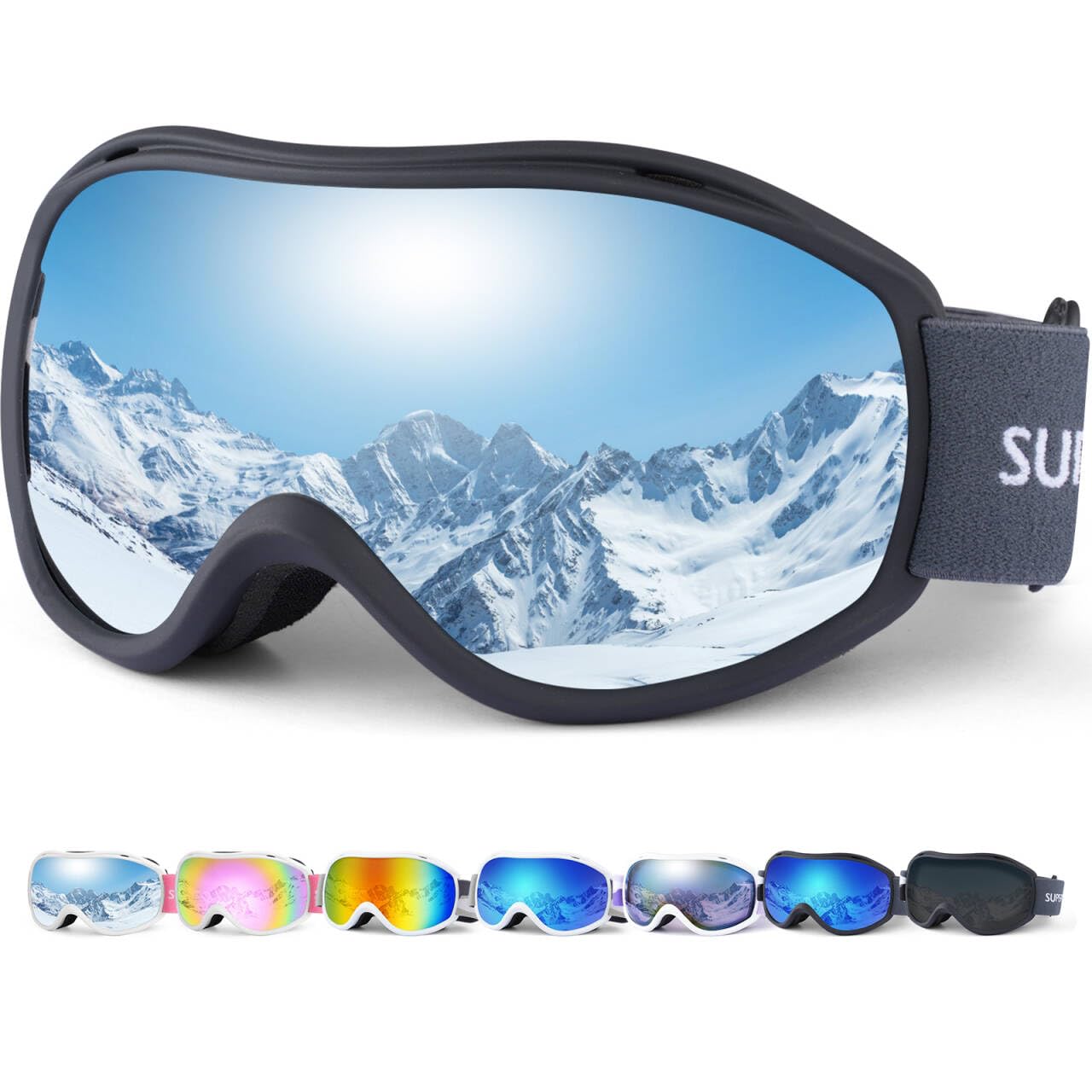
Best for All-Mountain Riding
Wildhorn Roca
Key Features
- Lens change: Magnetic
- Lens coating: Anti-fog, scratch-resistant
- UV protection: 100% UV
- Price: Premium
Flat light is what separates goggles, and it arrives without warning: bright at the base, a grey-white wall at the top. The Roca is the one we reach for on those days because the lens comes off in a couple of seconds with gloves on. There are no clips to line up and no wrestling match on a windy ridge. Magnetic systems are common now; this one seats firmly and stays seated, which is the part that matters when you are doing it one-handed.
What makes it our overall pick is how quickly you stop noticing it. The frame is wide enough that the edges drop out of your vision, and that counts for more on a snowboard than on skis, where you are often looking across the hill rather than straight down it. The foam sat comfortably against the face through full days, and the goggle stayed where we set it under a helmet without a mid-morning re-tighten.
The lens range is the other half of the argument. One frame plus two tints covers a whole season of weather, and spare lenses cost like an accessory rather than a second goggle, which is not true of every magnetic system in this guide. If you ride enough to notice the light, this is the frame that grows with you instead of being replaced when the tint is wrong.
The price is the honest barrier. It sits below the premium Oakley and above everything else here, so whether the step is worth it comes down to how often the light turns on the days you ride. For a handful of sunny weekends a season, the cheaper goggles in this guide will do the job. For everything else, this is the one.
Pros
- Lens swaps in seconds with gloves on
- Wide field of view with no frame edges
- Comfortable for full days under a helmet
- Spare lenses are cheap to add
Cons
- Can fog on warm, wet days
Our pick for most snowboarders: a wide, comfortable goggle whose magnetic lens swaps in seconds, so one frame covers bright sun and flat light.
Best for Glasses on a Budget
OutdoorMaster OTG
Key Features
- Fit: OTG over glasses
- Weight: 3.53 oz
- UV protection: 100% UV400
- Visible light transmission: 10%
- Price: Budget
Not everyone needs a lens quiver. If you ride a few weekends a season, or you are outfitting a family, this OutdoorMaster gets the fundamentals right for about as little as a full-frame goggle costs: a dual-layer lens with an anti-fog coating inside, UV400 protection across the whole lens, and a soft TPU frame that bends rather than digs.
Over glasses is the reason it earns a runner-up slot. The frame is cut deep enough for everyday specs to sit inside without your lashes brushing the lens, and it holds that position under a helmet. The weak point is the strap: it is long enough for a helmet, but it creeps loose over a long day, and the fix is a quick re-snug at the top of each lift rather than a redesign.
We were also struck by the comfort at this price. Triple-layer foam sits against the face without pressure points, and the whole goggle weighs about as much as a phone, 100 grams, so it does not drag on the bridge of your nose. If you want one pair for sunny days and nothing more ambitious, this is the sensible spend.
Pros
- Fits over prescription glasses without pressure
- Full UV400 protection across the lens
- Light on the face at 100 grams
Cons
- Single dark 10% lens for bright days
The pair we hand to glasses wearers on a budget: deep enough for prescription frames, fully UV protected, and priced like an afterthought.
Best for Changing Light
OutdoorMaster PRO
Key Features
- Fit: OTG over glasses
- Size: Adult unisex
- Lens change: Magnetic interchangeable
- Price: Midrange
If the Roca’s price is the barrier, this is where to look. The PRO does the same trick, a lens held on magnets that comes off in seconds, and in the hand the mechanism feels just as secure. The lens seats into the frame rather than floating above it, which is the difference between a system you trust at speed and one you fiddle with.
What surprised us is how clear it stays towards the corners. No softening at the edges, and no frame intruding on peripheral vision, so checking your blind side on a heel-side turn stops being a separate head movement. It fits over a helmet without maxing out the strap, and it sat comfortably through long days.
We kept coming back to the packaging, of all things. The goggle arrives with a lens case and a bag, which makes it the easiest one here to pack without grinding grit into the coating between trips, and that is what keeps a lens usable past its first season. For a one-goggle setup that has to handle a whole day of changing weather, this is the value pick of the set.
The coating is where it shows its price. Snow brushed off with a glove leaves marks, and once a scratch sits in your line of sight you cannot unsee it. Use the bag and the case and it stays a non-issue, so treat them as part of the goggle rather than packaging.
Pros
- Magnetic lens swap is fast and secure
- Clear to the edges with a wide view
- Lens case and bag included
Cons
- Big frame crowds small faces and some helmets
Close to our top pick and easier on the wallet: a secure magnetic lens, a clear view to the edges, and a case worth using.
Best for Flat-Light Clarity
Oakley Target Line L
The price is the first thing to deal with. This is the most expensive goggle in the guide by a wide margin, and what you are paying for is the lens rather than the trimmings. Whether that is a fair trade depends entirely on how often the mountain gives you the conditions to notice it.
In flat, grey light the lens earns the money. Snow loses its texture in those conditions and every bump arrives as a surprise; this one holds the surface together, so drifts and edges stay readable when a darker tint has turned the slope into a single white sheet. The lens colour drew praise specifically for low light, and on a sunny day it is simply good, with no glare and no drama.
The fit is the quiet part of the package. It sits close and snug without being cranked down, comfortable enough to forget between runs, and stable under a helmet rather than shifting when you look uphill. It is not the widest frame here, and on a small face it is still a lot of goggle, but it never felt like a compromise on the move.
So the recommendation is narrow and clear. If you ride a full season somewhere the light is more often flat than blue, the lens is worth the premium and you will feel the difference on the days that matter. If your season is a handful of sunny weekends, spend the money on a frame that takes two tints instead.
Pros
- Contrast holds up in flat light
- Comfortable all-day fit under a helmet
- No fogging in the conditions it was used
Cons
Pay for the lens rather than the trimmings: the clearest flat-light view here, and worth it if you ride often enough to use it.
Best for Cheap Backup Pair
Supertrip Goggles
Key Features
- Fit: Unisex adult
- Sport: Ski, snowboard
- Lens coating: Anti-fog
- Price: Budget
The case for this goggle fits in a sentence: it is the cheapest pair here we are happy to recommend, and it does the two things a spare has to do, sitting over a pair of glasses and staying clear. The listing gives you almost nothing beyond anti-fog and a unisex fit, and that is a fair description of what arrives.
It lives in the boot bag. It is the one handed to the friend who forgot theirs, the one that goes in the car for the sledding hill, the one that does not matter if it gets sat on. The frame adjusts wide enough for most adult faces, the foam seals without pressing, and in the cold, dry conditions we used it in it did not fog on us.
Where it makes sense is volume: a family, a school trip, a spare that gets lent out and comes back. Where it does not is a rider who wants one goggle for everything and expects it to feel like the ones higher up this list. As a second pair, though, it is an easy yes.
Pros
- Fits over glasses at a low price
- Anti-fog holds up better than expected
- Cheap enough to keep as a spare
Cons
A cheap second pair that fits over glasses and stays clear; keep it in the bag for friends, cars and first seasons.
Best for Bright-Day Riding
ZIONOR X4

Key Features
- Size: Adult unisex
- Strap: Expandable band
- Lens change: Magnetic
- Price: Midrange
The tint is the detail that decides whether this goggle suits you, and it is the sort of thing we only found out on the hill: this lens is happiest in bright sun. Take it into flat light or late-afternoon shade and the snow flattens out, contours disappear, and you are reading the surface from memory. A second, lighter lens fixes it, and the magnets make that swap easy, but budget for it up front rather than discovering it at the top of the lift.
With the right lens in, it is a good, secure goggle. The magnets hold hard enough that a tumble does not shift the lens, the swap is quick enough to do without taking the goggle off, and the band stretches over a full-size helmet without running out of adjustment. Comfort is fine for a day’s riding, with foam that seals without pressing on the brow.
Where it loses ground here is the competition rather than any single fault. The OutdoorMaster PRO offers the same magnetic convenience for less, and our top pick gives you a wider view and a deeper lens range. The X4 is the one to pick if your helmet runs large and the band on everything else comes up short.
Pros
- Strong magnets keep the lens seated
- Band stretches over a full-size helmet
- Lens can be changed while wearing it
Cons
A secure magnetic-lens goggle at a fair price, though the tint it ships with wants bright sun and a second lens for grey days.
Best for Budget Glasses Fit
findway OTG

Key Features
- Fit: OTG over glasses
- Strap: Silicone grippers
- UV protection: 100% UV
- Price: Budget
Getting a goggle over prescription glasses is a different problem from getting one over your face, and the findway solves it with depth. The frame takes a pair of everyday glasses without pressing them into your temples, and the band has silicone grippers on the inside that hold a helmet instead of sliding up the back of it.
The rest is ordinary in a way that suits the price. A coated dual-layer lens does the anti-fog work, the foam seals without pressure on the cheeks, and the whole package is light enough that you stop thinking about it by the second run. It is the kind of goggle that gets borrowed and handed back without complaint.
For a glasses wearer on a small budget, that is the whole case: it fits, it seals, and it does not look like a rental. It will not give you the view or the lens choice of the goggles higher up this list, and at this end of the market you should not expect it to.
Pros
- Deep frame clears everyday glasses
- Silicone grippers hold a helmet
- Full UV protection at a low price
Cons
- Band runs short on large helmets
The budget route to wearing glasses on the hill: a deep frame, a grippy band, and a fit that holds under a helmet.
What a Full Winter in 12 Pairs Taught Us
We started with a long list of goggles that had a genuine following among riders, then filtered it by lens shape, price tier, and whether replacement lenses were easy to find, landing on 12 pairs. Testing ran a full season, November through March, in everyday resort laps, storm cycles, and the slushy spring weekends when everything gets wet.
Fogging got its own protocol. I skinned a cat track until I was breathing hard, stood still at the top for two full minutes, and noted where moisture collected — on the lens, between the lenses, or nowhere at all. On cold lift rides I buried my face in my jacket collar and timed how long each pair took to clear. Fit and comfort were checked against three different helmets, since a gap at the brow is where cold air sneaks in; I wore each pair bell to bell and noted pressure on the nose and temples and how the foam held up after six hours.
Because scratches retire goggles faster than anything else, I wiped each lens with a glove, a sleeve, and the microfiber bag it came with, then held it under a lamp looking for hairlines, and left one pair loose in a jacket pocket with keys for a week. We timed lens swaps with gloves on and checked whether the frame resealed cleanly afterward, which is where cheaper pairs fail first. I also photographed every pair in flat light to see how the tint actually read, and at the end of the season weighed what each one cost against how often we reached for it.
How to Choose Snowboard Goggles
Goggles are the one piece of snowboard kit where the cheap version can quietly ruin a good day, so the question worth asking is not which pair looks best but which one stays clear in the conditions you actually ride.
Fog is the real specification
Every goggle here claims anti-fog, and every one of them can still fog. The coating on the inside of the lens absorbs moisture until it saturates, and once it does, the lens fogs whatever the box says. What buys you time is a dual-layer lens with a sealed gap, open venting top and bottom, and foam that sits flat on your face without a gap at the nose.
Wearing glasses inside makes it worse, because the prescription lens is a cold surface in a warm space, so plan to manage fog rather than eliminate it. When a lens does fog, vent it or let it dry. Wiping the inside with a glove scrapes off the coating that was doing the work.
Match the lens to the light
Visible light transmission is the number that tells you what a lens is for: around ten percent is a bright-sun lens, the twenties and thirties cover mixed conditions, and higher figures are for storms and flat light. Most goggles ship with one lens, which makes them good for one kind of day.
A second lens on magnets or clips is the most useful upgrade in this category. The goggles here with a swap system, the Roca, the PRO and the X4, earn their keep because one frame then covers a season. Budget for that second lens when you buy the first, not after the weather turns.
What over-the-glasses fit actually needs
OTG on a listing means the frame is deep enough for glasses, but depth alone does not settle it. Your frames have to sit far enough forward that your lashes do not brush the lens, and the goggle has to seal around them without pressing the arms into your temples. Wide or thick frames call for a bigger, deeper goggle, not a tighter strap.
Check the band too. One that has to be let out all the way to clear a large helmet has nothing left to hold with, which is the one place the findway comes up short.
Field of view and frame size
Cylindrical lenses are flatter and cheaper to make. Spherical and toric lenses curve in both directions and open up the edges of your vision, which counts when you are looking across the hill rather than straight down it. Wider is not automatically better: a big frame on a small face sits proud at the cheeks, lets air and snow in, and presses on the nose. Fit the face first, then chase the view.
What more money actually buys
At the bottom you are buying one coated lens, basic foam and a strap that holds. The middle of the range adds a magnetic or clip-in lens system, better foam and a case worth packing. The top is mostly lens quality, and contrast in flat light is where premium glass separates itself.
If you ride a handful of weekends a year, put the money into a second lens rather than a fancier frame. If you ride a full season, the lens is the part worth paying for.
Frequently Asked Questions
Can I wear sunglasses instead of goggles on a snowboard?
On a warm spring day at low speed, sunglasses are fine if they are UV-rated and wrap close to the face. Everywhere else they are a compromise: snow throws most of the sun’s UV back at your eyes, wind and spindrift get behind the lens, and a fall can push the frame into your face. Goggles seal and stay put. If you overheat, a lighter lens in a vented goggle is the better warm-weather answer.
Are cheap snowboard goggles safe to use?
Protection does not scale with price. If the lens is rated 100% UV400 and the frame seals against your face, a budget goggle blocks sun, wind and snow as well as an expensive one. What you give up is optical quality, coating life and choice of tint. Check the UV rating before you buy, and skip any pair whose listing does not state one.
How long should a pair of snowboard goggles last?
Several seasons is normal if the lens is looked after. The foam goes first: press it with a thumb and see whether it springs back, and look for crumbling or a gap at the nose. A lens scratched in your line of sight, a strap that has lost its stretch, or a frame that no longer sits flat all mean replace rather than repair.
Final Verdict
The Wildhorn Roca is the goggle we point most snowboarders to, because it solves the problem that actually costs you runs: the light changes and the lens has to change with it. Magnetic swaps are not rare, but this one pairs them with a wide, comfortable view and a lens range you can build over a season.
If you wear prescription glasses and ride a few weekends a year, the OutdoorMaster OTG does the essential job for far less. And if you ride a full season somewhere the light is often flat, the Oakley Target Line L is the one to stretch for.