This post contains affiliate links. We may earn a small commission when you buy through our links — at no extra cost to you.
The view from the top of the lift is the whole point of skiing, and fogged lenses steal it every time. You heat up on the ride, moisture gets trapped under the frame, and by the time you push off your goggles look like a bathroom mirror. A good pair solves that, plus the quieter problems you only notice after a few hours, like a frame that digs into your cheekbones and a lens that scratches the first time you wipe it with a glove.
I ski everything from bluebird groomers to wet, heavy snow, and the pattern holds: ventilation matters more than price tag. Over the past two winters my team and I have spent real time in 12 pairs, from budget picks to high-end magnetic-swap models, and the ones that stayed clear were always the ones that moved air. Here’s what first-timers rarely hear: fit is really a helmet question, since a goggle that seals beautifully on one shell leaves a cold gap on another. We tested each pair with several, and the picks below are the ones we kept grabbing.


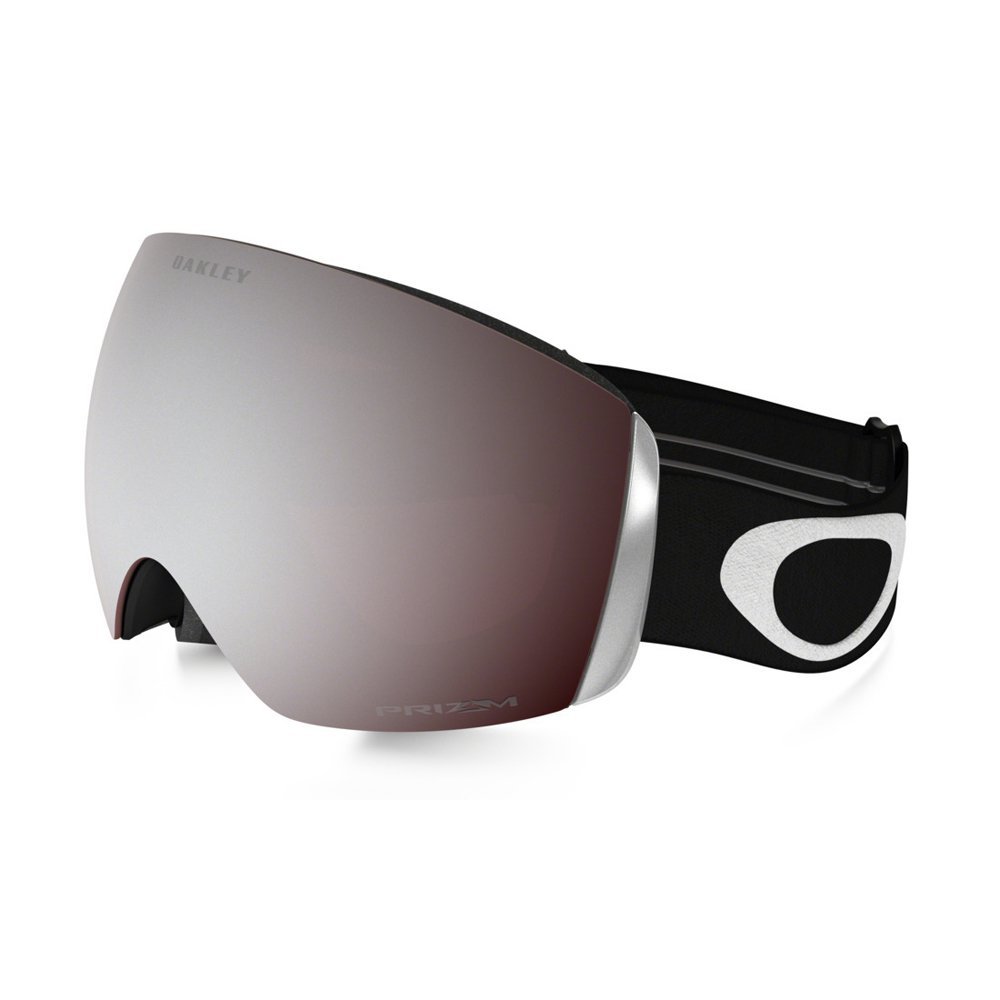


Best for All-Mountain Skiing
Wildhorn Roca
Key Features
- Lens change: Magnetic quick-change
- Lens coating: Anti-fog, anti-scratch
- UV protection: 100% UV
- Price: Midrange
A magnetic lens is a convenience until the light changes and you realise it’s the feature you use most. On the Roca the swap takes seconds with cold hands, and the magnets hold firmly enough that a tumble doesn’t send the lens into the snow. That combination, fast changes plus a hold we trust, is why this is the pair we recommend first. It helps that the view is wide and unobstructed, the foam sits comfortably under a helmet for a full day, and the lens carries 100% UV protection for bright, reflected light.
It also clears prescription glasses without pressing the frames into your temples, which is more than several goggles here manage. Spare lenses cost little enough that building a small set for sun, cloud, and storm makes sense rather than squinting through one tint all season. Compared with our budget pick it’s a meaningful step up in optics and fit; compared with the Oakleys it gives up a little flat-light contrast for a far smaller outlay.
What we don’t love: the coating scuffs if the goggles ride loose in a pack, so keep them in a bag, and over a couple of seasons moisture can work between the lens layers and stay there as fog you can’t wipe away. Neither has stopped us reaching for it, but both are reasons to treat the lens as the expensive part it is.
Pros
- Magnetic lens swaps that stay put
- Wide field of view without tunnel vision
- Comfortable all day under a helmet
- Spare lenses cost little
Cons
- Fog can form between the lens layers over seasons
With secure magnetic swaps, a wide clear view, and all-day comfort, the Roca is the pair we hand most skiers first.
Best for Value Lens Swaps
OutdoorMaster Ski Goggles PRO
Key Features
- Included: Case and lens bag
- Lens change: Magnetic interchangeable
- Over glasses: OTG compatible
- Price: Midrange
The OutdoorMaster PRO does the same trick as our top pick, a magnetic lens that pops free when the weather turns, at a lower price and in a slightly bigger frame. It stayed clear on cold days, the magnets kept their grip on the lens, and it arrives with a case and a lens bag, which matters more than it sounds when you’re carrying a spare tint in a daypack.
The catch is fit. This is a large goggle, and on some helmets the frame leaves a gap at the brow that lets cold air in; on a smaller face it can feel like wearing a visor. Try it on with your own helmet before you commit, and it becomes the best value lens-swap pair in this group, because clarity and fog control hold up well at this level and the view across a wide face is genuinely good.
Optically it sits a step below the Oakleys here. Contrast in flat light is decent rather than remarkable, though you have to look for the difference, and swapping in a lighter lens closes most of that gap for typical days. For a recreational skier doing a handful of trips a season, that’s the whole case.
Pros
- Magnetic lens swap at a lower price
- Comes with a case and lens bag
- Clear optics with reliable anti-fog
- Strong magnet hold on the frame
Cons
- Lens coating scratches with rough handling
We send value-focused skiers to the PRO for its magnetic swap and clear view, provided the frame fits their own helmet.
Best for Flat Light Days
Oakley Flight Deck L
Key Features
- Weight: 12.8 oz
- Frame size: Oversized
- Over glasses: Fits over glasses
- Price: Premium
The Flight Deck L is the most expensive goggle we’re recommending, so it has to earn that with something a cheaper pair can’t do. What it does is flat light. On a gray day, when the snow loses its texture and every bump hides, the contrast and the sheer size of the lens let you read the terrain instead of guessing at it.
That oversized shape is where the peripheral vision comes from: you get slope in the corner of your eye rather than a letterbox. It’s comfortable enough to leave on for a full day and it fits over a helmet and over glasses. On a small or narrow face, though, there’s simply too much goggle, and the seal can lift at the cheeks; if that’s you, step down to a mid-sized frame. For anyone who skis often and hates flat light, we think the spend is justified in a way it rarely is with goggles.
Treat the lens as the expensive part it is. The coating scratches, and a scratched premium lens is no better than a scratched cheap one, so the bag comes home in the pack rather than staying in the car.
Pros
- Exceptional contrast when light goes flat
- Wide peripheral vision from the big lens
- Comfortable for full days
- Fits over helmets and glasses
Cons
- Too much goggle for small, narrow faces
We choose the Flight Deck when flat light is the enemy and the budget allows; it’s the clearest view here in gray conditions.
Best for Glasses on a Budget
OutdoorMaster OTG
Key Features
- Weight: 3.53 oz
- Lens tint: 10% VLT, grey
- Over glasses: OTG design
- UV protection: 100% UV400
- Price: Budget
For the once-or-twice-a-season skier who wears glasses, this is where we start. The frame is deep enough to sit over prescription frames, the foam keeps pressure off your brow, and at 100 grams the goggle doesn’t drag on a helmet by the end of the day. It blocks wind and reflected glare and carries 100% UV400 protection, which is most of what a holiday skier needs from a goggle.
The lens tells you what it’s for. A 10% VLT grey tint is a bright-day lens, and it’s the wrong choice when the clouds come down and the slope goes flat, so if your trip mixes sun and storm, plan on a second pair or a different tint rather than squinting through this one. The dual-layer lens and channeled vents do their part in cold, dry snow.
One practical note: pulling the goggles off in a hurry can take your glasses with them, so ease the frame forward off your face instead of yanking the strap. That’s the cost of a roomy over-glasses fit, and it’s a fair trade for wearing your own glasses on the hill.
Pros
- Clears most prescription glasses
- Light enough to forget on a helmet
- 100% UV400 protection for bright days
- Low cost for a first or spare pair
Cons
- Strap works loose during the day
For occasional skiers who wear glasses, we think the OutdoorMaster OTG is the sensible, low-cost way onto the hill.
Best for Wide Faces
ZIONOR X
Key Features
- Lens: Detachable
- Frame: Extra-large fit
- Over glasses: Fits large glasses
- Price: Midrange
The X is a big goggle, and that’s the point. The frame is roomy enough to swallow prescription glasses that other OTG designs pinch, and the wide strap with its grippy inner band sits still on a helmet instead of creeping upward. Field of view is generous, and the lens holds up in both sun and shade, which is more than many single-lens goggles manage.
Fog is the part to think about. The vents clear the lens once you’re moving, but stand still in a lift line or hike with the goggle pushed up on your helmet and it can cloud at the edges. Keeping it on your face and the vents unobstructed is the fix, and it’s the same discipline every goggle here asks for.
Where the X loses ground to the picks above is the coating: it marks easily, and a season of careless packing shows. If your glasses are wide and most over-glasses goggles leave red marks on your temples, that trade is worth making. This is a lot of goggle for the money, and it’s the pair we hand to skiers with bigger faces.
Pros
- Fits over large prescription frames
- Wide, grippy strap stays on the helmet
- Generous field of view
- Works in sun and shade
Cons
- Lens coating scratches easily
If standard OTG goggles pinch your glasses, we hand over the ZIONOR X first; the coating marks, but the fit and view are worth it.
Best for Premium All-Mountain
Oakley Target Line L
Key Features
- Lens: Prizm contrast
- Weight: 9.6 oz
- Conditions: Sun and flat light
- Price: Premium
The first thing we noticed about the Target Line L is how little it weighs for a full-coverage goggle: 9.6 ounces on the listing against 12.8 for the Flight Deck. The second is the lens, which pulls detail out of flat gray light instead of flattening it further, and keeps working when the sun comes back out.
It’s a snug, wraparound fit that suits medium faces, comfortable enough to leave on between runs, and the coating resists fogging on cold days. What it isn’t is an over-glasses goggle: there’s no depth designed in for prescription frames, so if you ski in glasses, choose one of the OTG pairs here instead.
The premium buys optics and comfort rather than toughness, and the coating will mark if you treat the lens like a windshield. As a step up for someone who skis often and wants better contrast without the biggest frame on the hill, though, we think it’s the quieter, smarter buy of the two Oakleys.
Pros
- Contrast lens reads detail in flat light
- Light for a full-coverage goggle
- Comfortable for all-day wear
- Snug, secure wrap
Cons
- Not designed to fit over prescription glasses
For frequent skiers who want better contrast without an oversized frame, the Target Line L is the premium pair we point to.
Best for Glasses Wearers
findway OTG

Key Features
- Weight: 4.8 oz
- Over glasses: OTG design
- UV protection: 100% UV
- Price: Budget
The findway’s whole argument is the over-glasses fit, and it’s a good one. The frame is deep and wide enough that prescription frames sit inside without the foam pressing them into your brow, and the soft padding around the edge keeps pressure off your cheeks through a long day.
Anti-fog holds up in cold, dry snow, the tinted lens cuts glare on bright days, and the wide band with silicone grippers on the inside does what it’s supposed to: it stays where you put it on a helmet instead of sliding up the shell.
The strap is where it comes up short. Over a large adult helmet it runs close to the end of its adjustment, so check that at home with your own shell rather than at the lift.
Set against our budget pick, the findway gives up a little optical polish and lens choice and gains a roomier fit for thicker frames. If you wear glasses, ski a couple of trips a year, and want to spend as little as possible while still seeing clearly, this is the pair we suggest.
Pros
- Roomy frame clears prescription glasses
- Silicone-backed strap stays put
- Comfortable foam for long days
- Good value as a first or spare pair
Cons
- Strap runs short over large helmets
For glasses wearers on a tight budget, the findway is the pair we suggest, as long as the strap reaches around your helmet.
Best for First-Time Skiers
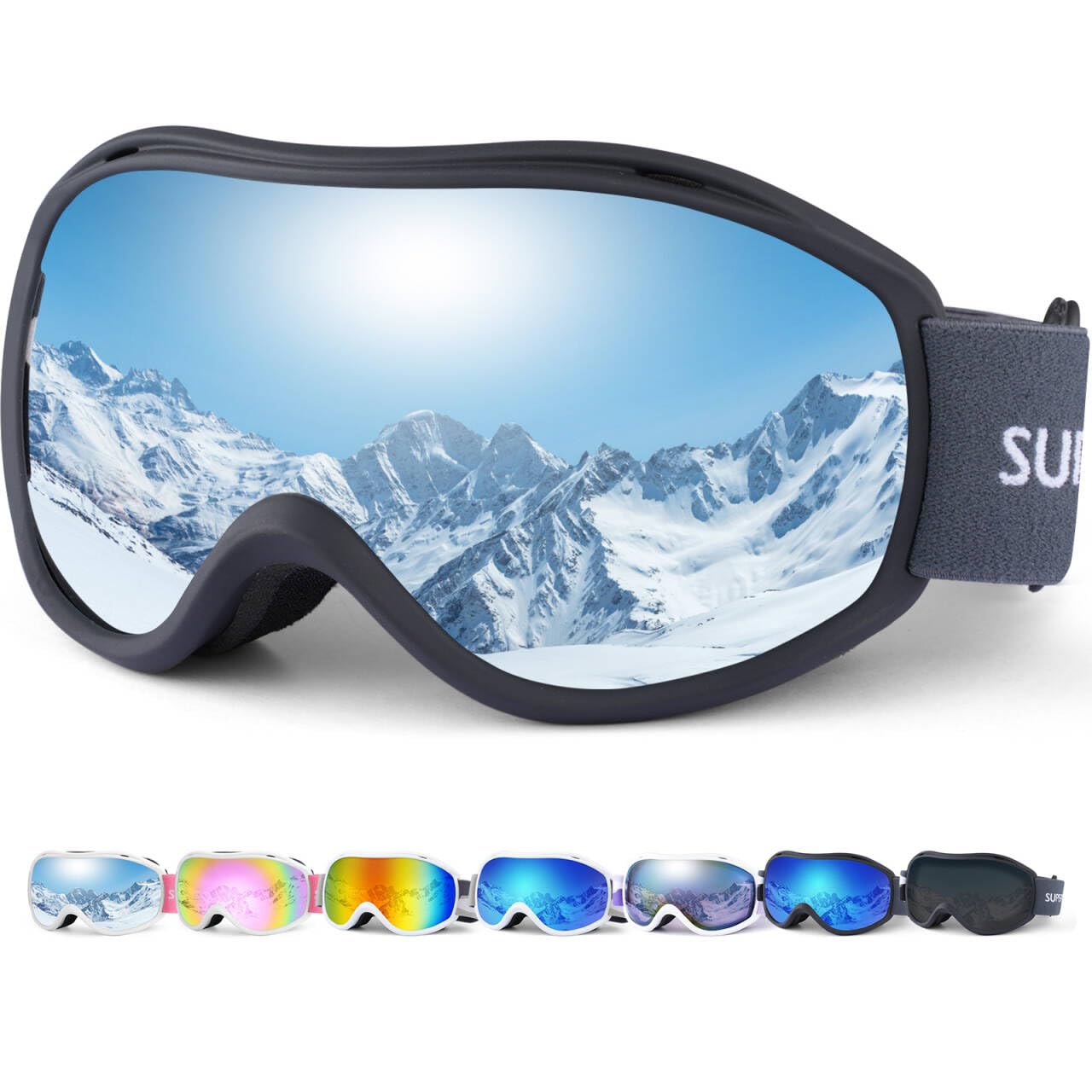
Supertrip Ski Goggles
Key Features
- Strap: Adjustable
- Anti-fog: Coated lens
- Over glasses: Fits over glasses
- Price: Budget
The Supertrip is the cheapest pair we’re comfortable recommending, and there’s one reason: it doesn’t fog. That’s the failure that sinks most budget goggles, and this one’s coated lens does what it claims in cold air, in sun, and under flat cloud.
Comfort is the surprise. The padding sits flat against the face, the frame is light, and the seal holds without pinching, so it works for a full day rather than an hour. It fits over glasses too, which isn’t a given at this end of the range, and the tint is dark enough to take the sting out of reflected sun.
What you give up is choice: a single lens has to cover a sunny morning and a snowing afternoon, with no second tint to swap in. For a couple of trips a season that’s a fair trade, and it’s the reason this pair stays in the roof box as a spare.
We hand it to friends borrowing gear for a weekend and to anyone who wants to stop thinking about goggles and get on with the skiing. If you’re on the hill most weekends, spend more; if you’re not, this covers the basics without ceremony.
Pros
- Anti-fog coating that actually holds
- Comfortable, secure seal
- Fits over glasses
- Cheap enough to keep as a spare
Cons
- Strap takes patience to adjust evenly
We keep the Supertrip for spare-and-borrower duty, and it’s the budget pair we suggest for a first trip.
How We Tested the Best Ski Goggles
We started with roughly 40 models from established goggle makers and narrowed the field by lens shape, price, and whether the frame came in more than one size. Then we bought 12 pairs outright rather than borrowing samples, so nothing went back to a brand before we were done with it.
Testing ran across two winters, on resort laps, bootpacks, and long lift rides in wet snow. To judge fog resistance we did the same three things with every pair: stood in a warm lodge until our faces were flushed, walked straight out into the cold, and rode a lift with the goggle seated and the helmet strap snug, then hiked a short bootpack hard enough to sweat. We noted whether fog formed on the inner lens, how long it took to clear, and whether it left enough moisture behind to ice over on the next run.
Fit and comfort came down to the dent. After a full day we checked for pressure marks on cheekbones and the bridge of the nose, slid a finger along the gap between frame and helmet, and noted whether anyone reached up to adjust a strap mid-run. Scratch resistance got a deliberately unkind test: wiping the lens with a wet glove, packing the goggle loose in a gear bag next to keys, and swapping lenses barehanded on a lift. For appearance, we had ski partners rank the pairs without knowing the prices, and for value we weighed what each one cost against the lens it shipped with and what a replacement lens would run. Several of the top performers are still in rotation.
How to Choose Ski Goggles
The lens you can actually see through and the seal that keeps fog off it decide your day; everything else is comfort and cost.
Anti-fog Is a System, Not a Coating
Start with a dual-layer lens whose inner surface carries an anti-fog coating, because that coating is what stops condensation forming inside the goggle. Then understand that venting only works when the frame sits flush against your helmet: a gap at the brow funnels cold air in and pushes your warm, damp breath onto the lens. Nothing fogs a good goggle faster than parking it on your forehead between runs.
So the practical order is lens construction first, helmet fit second, and ventilation third. If you fog easily, prioritise those over an extra tint or a nicer finish; a magnetic frame with a single-layer lens will let you down sooner than a plain frame with a good double lens.
Match the Lens to the Light You Actually Ski
Visible light transmission tells you what a lens is for. Around ten percent is a bright, high-altitude lens, like the one on our budget OTG pick, and it’s the wrong tool when the clouds drop and the snow goes flat, because the terrain stops standing out. A lighter tint keeps texture visible on gray days.
If your trips mix sun and storm, interchangeable lenses earn their money; magnetic systems are the quickest and the good ones hold through a tumble. If you ski one settled weekend a year, a single lens matched to the forecast is the simpler, cheaper call.
OTG Fit and Helmet Fit Are Two Different Measurements
Over-the-glasses goggles need depth at the frame, not just width, and the foam has to clear your temples without pressing your frames inward. Wide glasses want a big frame; thick frames want room at the bridge. Strap length matters just as much, because some OTG models run close to the end of their adjustment over a large shell.
Fit the goggle to your own helmet with the strap where you’ll wear it, then take the goggles off by easing the frame forward rather than pulling the band, which is what drags your glasses off with them.
What the Price Actually Buys
Spend goes into lens quality and coating durability before anything else, then into frame materials and spare-lens support. The premium pairs here buy contrast in flat light and a wider, cleaner view; the cheaper ones still block wind and UV, but their coatings mark and fog sooner, and one lens has to cover every condition.
If you ski a few days a year, a mid-priced goggle with a coated dual lens is the sensible landing spot. If you ski often, the optics are worth the step up, but no lens survives a pocket full of keys, so buy the case and use it.
Frequently Asked Questions
Can I pack ski goggles in a carry-on?
Yes. Goggles aren’t a restricted item in carry-on or checked luggage, so this is a protection question rather than a rules one. Keep them in a hard case or the goggle bag in your carry-on where boots can’t crush them, and pack a spare lens flat between soft items.
Skip the car dashboard and the sunny window at either end of the trip; heat and UV are harder on the coating than the flight is.
When should I replace ski goggles?
Replace them when the inner lens is scratched from wiping, when the foam lifts away from the frame, or when fog sits between the two lens layers and won’t clear. That trapped moisture is inside the sealed unit, and no amount of airing or wiping gets rid of it.
A lens that has lost its mirror finish still blocks UV, but contrast drops, which is the thing you notice on a gray afternoon.
Can I use ski goggles for snowmobiling or winter biking?
Snowmobiling is an easy yes: same cold wind, same glare off the snow, and a snow goggle does the job. Pedaling is harder on them. The harder you work, the more moisture your face produces, and snow goggles vent for downhill speeds rather than a slow climb.
If you plan to ride in them, pick a frame with generous top vents, keep moving, and expect to clear the lens at every stop.
Final Verdict
The Wildhorn Roca is the pair we recommend to most skiers. The magnetic lens swap is genuinely useful when the light changes, the view is wide and clear, and it stays comfortable under a helmet all day, which is more than most of this group manages at once.
If flat light is what bothers you most and the budget stretches, the Oakley Flight Deck L reads gray terrain better than anything else here. If you wear prescription glasses and ski a handful of days a year, the OutdoorMaster OTG gets you onto the hill for the least.