This post contains affiliate links. We may earn a small commission when you buy through our links — at no extra cost to you.
A mountain bike rim has one job that outranks every number on the spec sheet: finishing the ride in the shape it started. Light rims climb like a dream and then fold on the first square-edged rock; the stout ones shrug that off and make your bike feel like a wheelbarrow. I’ve ridden both, and I’ve hiked out pushing both. A good set fixes the thing you feel on every single ride — whether the bike tracks where you point it, holds a line through chatter, and comes out of the season still true.
Fit is the part most shoppers skip. The internal width printed on a rim changes how a tire’s sidewall sits, and a mismatch shows up as a vague, rolling feel in corners long before it shows up as a number. We’ve spent the last 10 months building up and thrashing eight wheelsets, from workhorse alloy hoops to carbon, and the ones worth your money earned it on sturdiness and value rather than a flashy finish. The picks below span that whole range.



Best for Trail Upgrades
ZTZ MTB Wheelset
Key Features
- Spokes: 32
- Drivetrain: 7-12 speed cassette
- Wheel size: 26, 27.5, 29 in
- Hub spacing: 9×100 / 10×135 mm QR
- Price: Midrange
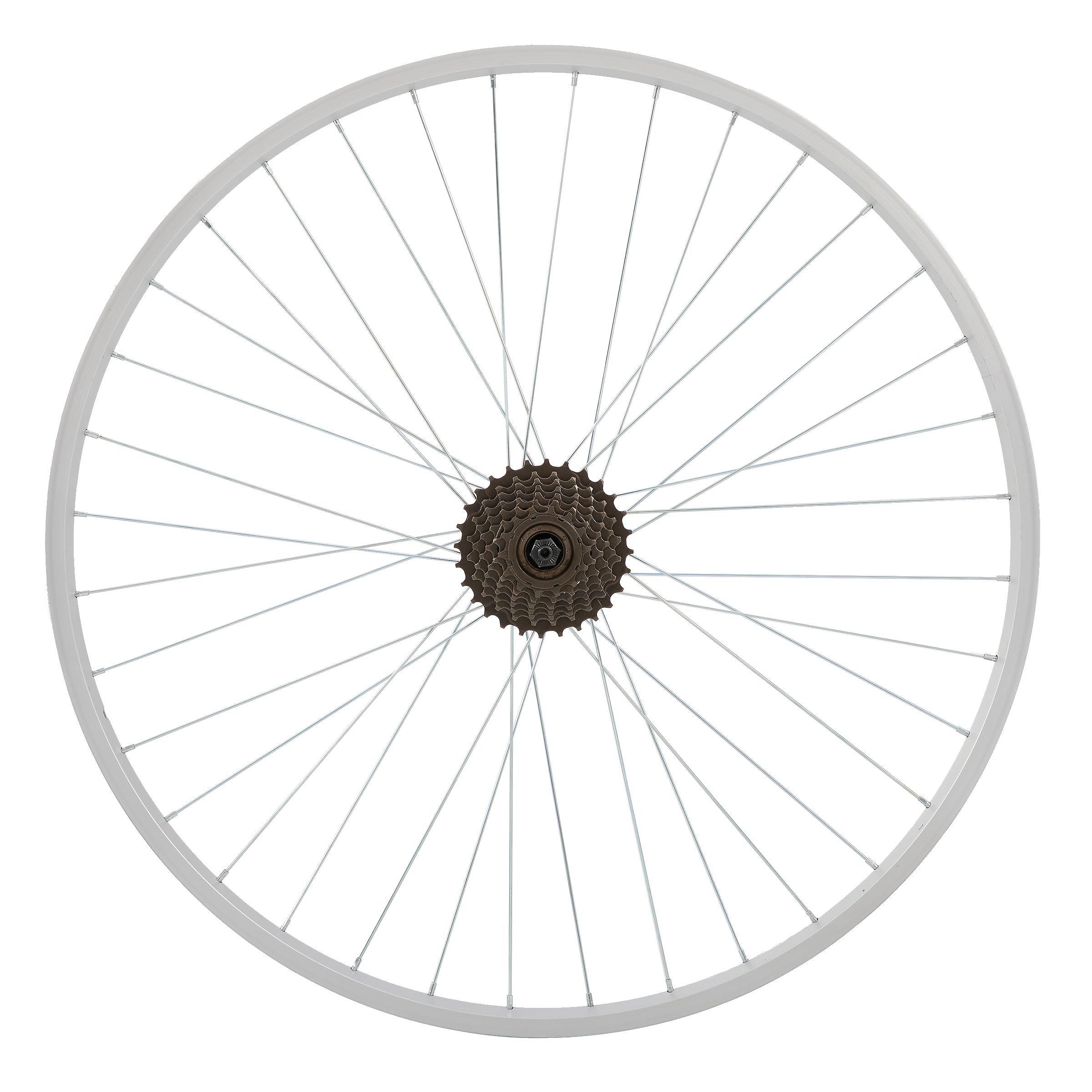
Quick-release hubs at 100 mm front and 135 mm rear, 32 spokes, a 6-bolt disc mount, and a freehub that takes anything from a 7-speed to a 12-speed cassette: that combination is why this is the set we point most riders toward. It earns the top spot on fit rather than on a headline number. The wheels go onto the frame most people already own, they clear a modern wide-range drivetrain, and they undercut the premium option here.
The riding matches the specification. The double-wall alloy rims came laced true with even tension, the bearings spun free from the first pedal stroke, and ours have stayed straight through the trail miles we have put on them. Lighter than the stock wheels on most bikes at this level is the other thing you notice, and it is not dramatic on a flat but obvious on a climb.
Two details we appreciated. The steel spokes use longer copper nipples, which makes them easier to grab with a spoke key when that day comes. And a PVC strip sits between the spoke ends and the tube, so a rough descent cannot rub a nipple through your inner tube, which is a small thing that saves a long walk.
The freehub is loud. Not faulty, just the buzzy ratchet that announces every coast, and some riders treat that as a feature while others find it tiresome. A bit more grease in the drive hub softens it and protects the pawls, and the factory fill is light. Fit it, forget it, and this is the set we recommend to most people: it matches the bikes people actually own and it has held up.
Pros
- Fits common 100/135 mm quick-release frames
- Takes 7- to 12-speed cassettes
- Lighter than typical stock wheels
Cons
- Some sizes ship as a front wheel only
We recommend this to most riders: it fits the common 100/135 mm quick-release frame, takes 7- to 12-speed cassettes, and rolls light, as long as you can live with a loud freehub.
Best for Heavy Riders
DONSP1986 48-Spoke Set
Key Features
- Spokes: 48, 12 gauge
- Tire fit: 26 x 2.35-3.5 in
- Rim width: 1.85 in (47 mm)
- Wheel size: 26 in
- Price: Midrange
Forty-eight spokes, a 39 mm inner rim width, and a stated tire range of 2.35 to 3.5 inches: this is the wheel you fit when the bike has to carry something. A heavy rider, a cargo conversion, a 26-inch plus build, a hub motor. All that spoke count spreads load across more metal, and the wide rim is what lets a fat tire sit round instead of ballooning off a narrow hoop.
It holds up. The rims and hubs are heavy-duty aluminum, the wheels stay true over hundreds of miles, and the lacing that looks the part on a cruiser is doing real work. Doubling the spoke count of a typical trail wheel is a crude solution to strength, and crude is exactly what you want at the back of a loaded bike.
Two things to know before ordering. The hub is a screw-on freewheel, single speed or a 7, 8 or 9-speed rotary freewheel, so a cassette drivetrain will not go on it. And the build is heavy: the listing puts it at 8.2 pounds, which you feel lifting the bike onto a roof rack. On a 100/135 mm frame with a freewheel, neither matters much.
Pros
- 48 spokes spread load under heavy riders
- 39 mm inner rim takes 2.35-3.5 inch tires
- Stays true over hundreds of miles
Cons
- Screw-on freewheel hub, no cassette
- Heavy at a listed 8.2 pounds
Buy this if the bike has to carry weight: 48 spokes and a 39 mm inner rim handle 2.35- to 3.5-inch tires, provided your drivetrain is a screw-on freewheel rather than a cassette.
Best for Wide-Tire 29Ers
BUCKLOS BC5 Wheelset
Key Features
- Spokes: 24
- Rim width: 25 mm
- Drivetrain: 7-11 speed cassette
- Wheel size: 29 in
- Price: Premium
Twenty-five millimeters of rim width is the argument. Put a 2.4-inch tire on a rim that wide and it sits rounder, corners with more sidewall support, and takes lower pressure without rolling off the bead in a hard turn. This is the only 29er in the group with that shape, and it is the reason to look at it.
The build has nice touches: carbon-fiber hubs with two bearings up front and four in the rear, two spare spokes in the box, and PVC rim tape already fitted. It is the most expensive set in this guide, and it looks it.
Twenty-four spokes is where we hesitate. A low count saves weight and looks fast, but it leaves less margin for a heavier rider, a loaded frame, or a square-edged hit. The failure that turns up here is a broken spoke rather than a bent rim, and it turns up soon after the wheels go into hard use. Light, smooth riders can accept that trade; everyone else should spend on the 32- or 48-spoke sets instead.
Pros
- 25 mm rim supports 2.4-inch tires
- Carbon-fiber hubs with six bearings
- Spare spokes and rim tape included
Cons
- Only 24 spokes, least margin under a heavy rider
The widest 29er rim here and the best shape for a 2.4-inch tire, but the light 24-spoke build makes it a set for smooth riders rather than heavy ones.
Best for Budget Builds
Hiland Alloy Wheelset
Key Features
- Axle: Bolt-on
- Tire fit: 1.75-2.125 in
- Drivetrain: 7-speed freewheel
- Wheel size: 26 in
- Price: Budget
Two complete wheels for less than the price of one front wheel elsewhere in this guide. Both rims are 6061 aluminum with disc mounts, the rear comes with a 7-speed freewheel already on the hub, and the set takes tires from 1.75 to 2.125 inches. For someone rebuilding a 26-inch hardtail on a tight budget, it is the obvious place to start.
You pay for it in convenience. The axles are bolt-on rather than quick-release, so a trailside flat means producing a 15 mm wrench. The freewheel is 7-speed, which suits a period-correct build and nothing else. And this is the least-proven wheel in the group: the specification is sound, but the risk you take is on how long it lasts rather than on whether it works.
For a commuter, a kid’s bike, or a gravel-path runaround with disc brakes and a seven-speed drivetrain, that is a sensible trade. The rims are the same aluminum alloy used on far pricier sets, and the fit range covers the 2.0-inch tires most of these bikes wear.
Pros
- Cheapest complete pair here
- 6061 aluminum rims with disc mounts
- Fits 1.75-2.125 inch tires
Cons
- Bolt-on axles need a wrench
- 7-speed freewheel limits drivetrain choice
The budget answer for a 26-inch bike with disc brakes and a seven-speed freewheel, as long as you accept bolt-on axles and the least-proven build here.
Best for Wide Front Tires
WEEROCK 29 Front Wheel
Key Features
- Spokes: 32
- Rim width: 28 mm
- Wheel size: 29 in
- Brake mount: 6-bolt disc
- Price: Midrange
It is one wheel, and it is the front. Start there, because it is easy to read a 29-inch wheelset price and assume a pair arrives. What this one gets right is width: 28 mm of rim gives a 2.4- or even 3-inch front tire a proper profile, and the double-wall alloy build with 32 spokes takes the hits a big front tire encourages you to attempt.
Fit is easy on most 29ers: 100 mm spacing, 6-bolt disc, quick release in the box, and a sealed hub that runs smooth and quiet. One assembly detail worth knowing is that the rotor has play on the bolts before they are tight, so hold it centered and snug them in a star pattern rather than tightening one fully first. Do that and your caliper alignment survives the swap.
Ours came straight and has stayed that way, and the 32-spoke build has held tension on rocky ground. Open the box carefully, though, since these have shipped with no padding around the rim, and a rim that takes a knock in transit is the one disappointment here. Buy it as the front half of a wide-tire build, not as a pair.
Pros
- 28 mm rim width suits wide tires
- Standard 100 mm quick-release fit
- Sealed hub runs smooth and quiet
Cons
- Front wheel only, no rear included
Buy it as the front half of a wide-tire 29er build: the 28 mm rim is the widest front wheel here, but it is one wheel and it ships with minimal padding.
Best for Rim-Brake 26Ers
CyclingDeal 26 Wheelset

Key Features
- Spokes: 36
- Rim width: 18 mm internal
- Brake type: Rim and caliper
- Wheel size: 26 in
- Price: Midrange
Rim brake only, and that one specification decides the buyer. If your 26-inch frame has caliper posts and no disc tabs, this is the best-built set in the guide. If it has disc mounts, skip it. There is no disc interface here at all, just a machined braking surface on a double-wall 6061-T6 rim.
For the rim-brake crowd the value is hard to argue with: 36-spoke Joytech hubs, quick releases, rim tape, and a Shimano 7-speed freewheel already fitted, backed by a two-year warranty. The wheels have run true for us and the finish has held up to a wet spring. The 18 mm internal width wants a 1.95 to 2.1-inch tire, and anything much wider starts to curl the sidewall.
It is a restoration part rather than an upgrade path, because 7-speed freewheel hubs belong to older bikes and the narrow rim caps how much rubber you can run. As a way to get a good 1990s hardtail back onto the trail on modern tires, it is the pick of this bunch.
Pros
- Most consistent build quality in this guide
- Freewheel and rim tape included
- Two-year manufacturer warranty
Cons
- No disc mounts, rim-brake frames only
- 7-speed freewheel limits gearing
The best-built set in this guide and the right answer for a 26-inch rim-brake frame, but with no disc mounts it cannot serve a modern mountain bike.
Best for Front Replacement
WheelMaster Alloy Disc

Key Features
- Spokes: 36
- Rim width: 1.5 in
- Wheel size: 26 in
- Brake mount: 6-bolt disc
- Price: Midrange
A damaged front wheel should not cost you a season. This is the replacement that puts a 26-inch disc-brake hardtail back on the trail: double-wall alloy rim, 36 spokes, 6-bolt rotor mount, 300-pound rating. One wheel, not a pair.
What we want from a replacement is that nothing else has to change, and this one lines up. The hub sits at the standard 100 mm spacing, the rotor mount puts the disc where your caliper already sits, and the 1.5-inch rim is narrow enough that the knobby tire you already own still fits. Per dollar it is the best value in this guide.
The limits are scope and width. Front only, 26-inch only, and the narrow rim rules out the plus-size tires that the wide rims here are built for. For the bike that needs exactly one wheel, that is the correct purchase; for a wider build, it is not.
Pros
- Standard spacing and rotor mount drop in
- 36-spoke double-wall alloy build
- Best value in this guide
Cons
- Front wheel only, 26-inch only
- Narrow 1.5-inch rim limits tire width
A front-only replacement for a 26-inch disc-brake hardtail, and the best value in this guide if one wheel is all you need.
How We Tested Mountain Bike Rims
We started with a list of every rim we could buy as a complete wheelset or lace to a hub most riders already own, then cut it down by internal width, spoke count, and whether replacement spokes and nipples were actually available. A rim you can’t buy a spare spoke for is a rim you’ll retire early. Axle standards and freehub compatibility narrowed the field again, and eight wheelsets made it to the dirt.
Each set got the same 2.4-inch tire. We mounted it by hand first to judge bead tightness, then seated it with a floor pump to see whether the rim demanded a compressor, and we noted how evenly the tire sat once inflated. On the bike, we set up rotors and checked dish so we knew each wheel was genuinely centered, not just close.
Riding was 10 months of rocky, rooty singletrack, a few bike park days, and one very wet winter. After every ride we spun each wheel in a truing stand and recorded how far the rim wandered, pinged spokes with a tension meter to catch the ones going soft, and listened for creaks at the spoke crossings and pings over square edges. Rock strikes were logged rather than avoided — dents, flat spots, and any crack starting at a nipple all went in the notes.
We also dragged tire levers across each rim to see how the finish held up, and weighed every set on a kitchen scale against the claimed figure, since value here is grams-per-dollar as much as it is warranty.
How to Choose Mountain Bike Rims and Wheelsets
More wheels are ruled out by fit than by ride quality, so start with the numbers that decide whether a set will bolt onto your bike at all.
Hub spacing and axle type come first
The near-universal standard on older and entry-level mountain bikes is a 100 mm front hub and a 135 mm rear, held by quick-release skewers, and that is what most of the sets here use. Newer trail bikes run boost spacing at 110 mm front and 148 mm rear, and nothing in this guide fits those frames. Bolt-on axles look similar in photos but sit in a different dropout and need a wrench for every removal.
Measure the inside faces of your fork legs before you order: 100 mm puts you in quick-release territory, 110 mm means keep looking. It is a thirty-second check that saves a return.
Match the brake mount before anything else
Every disc wheel in this guide uses a 6-bolt rotor mount. Centerlock hubs are a different interface and need a different rotor or an adapter, and no set here offers it. Rim-brake frames are a separate world entirely: the rim-brake set in this guide has a machined braking surface and no disc mount at all, so it cannot move to a disc frame, and a disc wheel cannot move to a caliper frame.
Look at the hub you already own rather than the frame’s marketing description, and buy for what is actually bolted to the bike.
Rim width should follow the tire you ride
Rim width sets the shape of the tire, not just its clearance. An 18 to 19 mm internal width is right for 1.95 to 2.1 inch rubber. From 25 mm up, a 2.4 to 2.6 inch trail tire sits rounder and holds its sidewall at low pressure. The 39 mm inner on our heavy-duty pick is plus and fat-bike territory.
Watch for listings that do not say whether the figure is inner or outer width, because the two differ by several millimeters. And do not squeeze a wide tire onto a narrow rim to save money; it rolls, it squirms, and it can damage the tire.
Spoke count is your strength budget
Spokes carry load, so the count is the clearest signal of what a wheel is built for. Twenty-four spokes saves weight and suits a light, smooth rider. Thirty-two is the sensible trail default. Thirty-six to 48 is what you want under a heavy rider, a loaded frame, or a hub motor.
A high count is not free: more spokes means more weight and more nipples to keep tensioned. If you have been breaking spokes on the wheels you own, buy more of them rather than lighter ones.
Freewheel, cassette, and how many gears
A cassette slides onto a freehub and is held by a lockring. A freewheel threads onto the hub and carries its ratchet inside the gear cluster. You cannot convert one hub into the other, so count your cogs before ordering: seven speeds can be either, and eight or more is almost always a cassette.
The sets here span 7- to 12-speed cassettes and 7-speed freewheels, and choosing wrong leaves you with a hub no drivetrain you own will fit.
Frequently Asked Questions
Can I fit a 29-inch wheel on a 26-inch mountain bike?
No. The frame and fork are built around one wheel diameter, so a bigger wheel will not clear the stays or the fork crown, and the brake mounts sit at the wrong radius. Going the other way is also a bad idea, because a smaller wheel drops the bottom bracket and slackens the steering.
If you want 29-inch wheels, you need a 29-inch frame and fork. No rim in this guide changes that.
How do I keep a new wheelset running true?
Check spoke tension after the first few rides, once the wheel has settled in. Squeeze pairs of spokes on each side: a spoke that flexes far more than its neighbors is loose and will become a wobble.
Deal with it then, with a quarter turn on the nipple using a spoke key, rather than waiting for the rim to rub a brake pad or a chainstay. Rims stay straight when tension is even, not when they are ignored.
Are any of these wheels tubeless ready?
None of them is listed as tubeless ready, so plan on tubes. The PVC strips some of these sets include are tube protectors, not tubeless tape, and converting a rim that is not rated for it risks a burp or a blow-off at low pressure.
If tubeless matters to you, buy a rim the maker explicitly rates for it and budget for tape and sealant on top of the wheels.
How much difference does wheel weight make?
More than most upgrades at this price, though less than a change of tires. The pairs here run from about 2,330 g for the rim-brake set to a listed 8.2 pounds for the 48-spoke heavy-duty wheels, and that spread is what you feel lifting the bike onto a rack or accelerating out of a corner.
Light and strong still trade against each other, so decide based on how hard you ride rather than on the number alone.
Final Verdict
Start with the ZTZ set unless something specific rules it out. It fits the quick-release frame most riders already own, takes a cassette from 7 to 12 speeds, and stays true under the kind of riding that bends cheaper wheels. The loud freehub is the one thing you accept.
If you are heavy, carrying a load, or running 2.35-inch-and-up tires on a 26-inch bike, the DONSP1986 set’s 48 spokes and wide rim are worth the extra weight. On a rim-brake frame, the CyclingDeal set is the only one here that fits at all.