This post contains affiliate links. We may earn a small commission when you buy through our links — at no extra cost to you.
A hiking shoe either disappears on your foot by mile three or it becomes the only thing you can think about all day. A blister doesn’t care how aggressive the tread is, and a soaked sock will ruin a view you drove four hours to reach. The right pair fixes both problems at once: it locks your heel down on the descent, gives your toes room to spread on the climb, and keeps morning dew out long enough to get you back to the car.
I’ve learned to judge a pair around mile eight, not by the ten steps I take down a store aisle — I’ve been badly wrong about shoes that felt perfect on carpet. Over the past nine months, my team and I have put 12 pairs through daily dog walks, weekend ridge trails, and one memorably muddy spring, and the gaps showed up fast. Here’s what no one tells a first-time buyer: your feet swell and slide forward on long downhills, so the size that fits at 8 a.m. in the shop can be a size too small by noon. The picks below were chosen with that in mind — plus the fact that a waterproof shoe you can’t stand wearing for six hours is worthless no matter how dry it keeps you.




Best for All-Round Day Hikes
Merrell Moab 3
The Moab 3 is the shoe we hand to someone who booked a hike for next weekend and has no time to break anything in. There’s nothing to break in — the toe box is wide enough for your feet to spread on descents, the heel stays put, and nothing rubs on the first mile. Merrell’s model number for this one is J035896, which is worth checking, because the Moab name covers several builds.
That combination — comfortable from the first mile, grippy on wet rock, and priced in the middle of this group — is why it’s our pick for most men. Traction is the part we kept coming back to: the tread bites into damp rock and loose gravel, which is where cheaper soles start sliding. We also appreciated how little it feels like a hiking shoe on the walk in, and how much like one it feels once the ground turns rough.
What it isn’t is a waterproof shoe, so treat it as the three-season trail partner rather than the one you wear through bog. If your trails are wet and cold, or you carry a loaded pack, go with a boot — the Timberland does that job with ankle coverage. If you have broad feet and overheat easily, the KEEN Voyageur is roomier still.
Pros
- No break-in; comfortable from the first mile
- Wide toe box with a heel that stays put
- Grip holds on wet rock and gravel
- Mid-set price for the strongest all-round case
Cons
- Toe cap and sole edges can separate
The pair we tell most men to buy: no break-in, room across the toes, and grip that holds on wet roots. It’s the safest money here unless you need a waterproof boot.
Best for Wet-Weather Hikes
Timberland Mt. Maddsen
Key Features
- Type: Hiking boot
- Model: TB02730R242
- Waterproofing: Waterproof
- Price: Midrange
Boots with this much protection usually announce themselves with weight, and the Mt. Maddsen doesn’t. It’s the boot here that feels least like one on your foot — quick to lace through open eyelets, easy to walk in, and light enough that you forget about the ankle coverage until the ground gets rough.
Water is where it earns its keep. Wet grass, slush, the shallow end of a puddle: the leather and the membrane handle the kind of wet a fall hike throws at you, and the collar keeps grit and twigs out. The fit is friendly too, with enough room at the front to wiggle toes on a descent and enough structure at the back that your heel doesn’t slide.
Three-season hiking in wet country is exactly the job. It covers ground comfortably all day, and it doesn’t make you pay for the protection with heavy legs — which is more than most waterproof boots manage.
If your feet run narrow, the Columbia Newton Ridge is worth a look first: it has a closer cut and asks less of your wallet. The Mt. Maddsen is the more forgiving shape, the one that suits a thicker sock and a longer day.
Pros
- Keeps feet dry in slush and wet grass
- Unusually light for a waterproof boot
- Comfortable out of the box with real ankle support
- Good value against the other waterproof boots
Cons
- Seams at the flex points can come apart
The waterproof boot we reach for first: light enough for long days, dry through slush and shallow water, and comfortable straight out of the box.
Best for Budget Waterproofing
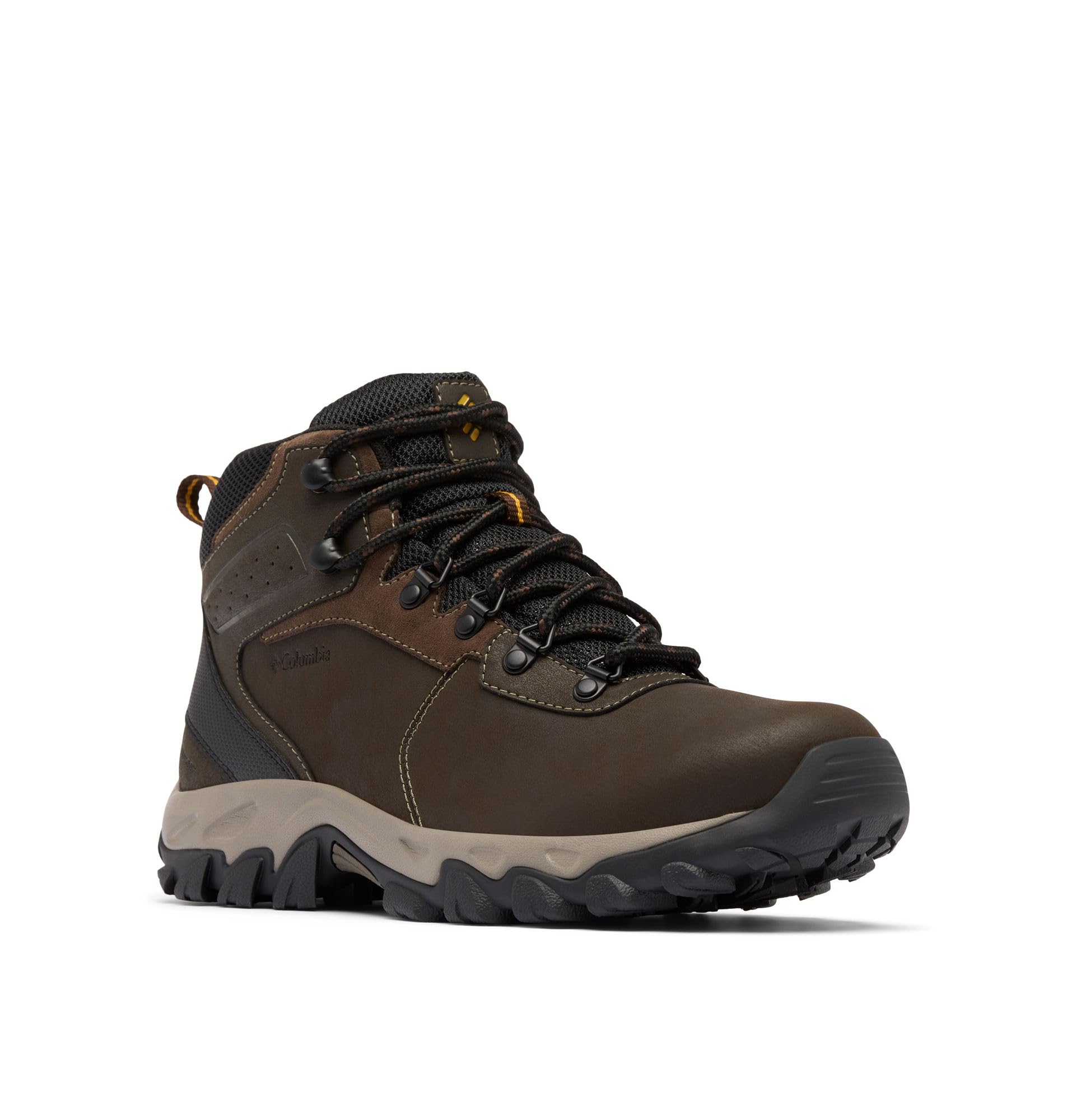
Columbia Newton Ridge Plus II
Key Features
- Type: Hiking boot
- Model: 1594732
- Waterproofing: Waterproof
- Price: Midrange
Take the Timberland’s job and cut the money: that’s the Newton Ridge in one line. It’s a waterproof leather-and-mesh boot in the traditional mold, with a look that passes at a trailhead and at a pub on the drive home, and it’s what we suggest when someone wants waterproofing without paying premium prices.
The build is tidier than the money suggests. Stitching is even, the tongue seals against the collar so water doesn’t run in over the top, and the break-in is short — what you notice in the first week is a boot softening rather than a boot fighting you. Rain, wet gravel, and muddy paths are all unremarkable in it, which is the highest compliment a waterproof boot can get.
Width is the catch. This one runs narrow through the middle, so men with broad feet or a high instep should go up a width or look at the roomier shapes here — the KEEN Voyageur and the wide sizes of the Targhee among them. Order your usual length and let the width make the decision.
Pros
- Waterproofing that keeps feet dry in rain
- Classic looks that work off the trail
- Short break-in and even construction
- Waterproofing for less than the premium boots
Cons
- Sole and upper can separate with hard use
A classic-looking waterproof hiker that does most of what the pricier boots do. Buy it if your feet run standard to narrow and you want a boot that looks the part.
Best for Wide, Hot-Weather Hikes
KEEN Voyageur Low
Key Features
- Cut: Low
- Type: Hiking shoe
- Model: Voyageur
- Ventilation: Breathable
- Price: Midrange
KEEN’s reputation is built on toe room, and the Voyageur is the clearest version of that idea in this group. The front of the shoe is broad and tall enough that your toes lie flat rather than stacked, and there’s real support under the arch — the combination that keeps wide-footed hikers comfortable on a long day.
On a hot climb, this is the low shoe we’re happiest in. The upper breathes, the shoe is light, and the sole is stable on gravel and dry rock. Where the ground is wet, the Targhee and the Timberland are the boots to look at instead; on a summer trail, airflow is worth more than a membrane.
Sizing is the one thing to get right. These run about half a size small, so go up, and decide while wearing the socks you hike in. Get that wrong and the roomy toe box stops helping, because your toes end up against the front of the shoe on every descent.
Pros
- Genuinely roomy toe box for wide feet
- Breathable upper for hot weather
- Strong arch support underfoot
- Stable all day on trail walks
Cons
- Sole bonding is the weak point over time
A genuinely roomy toe box in a shoe that breathes on hot climbs. Go up half a size and take it on wide, warm-weather hikes.
Best for Cheap Waterproof Boot
Columbia Transverse
Key Features
- Type: Hiking boot
- Model: 206740
- Waterproofing: Waterproof
- Price: Budget
This is the least expensive route into a waterproof boot in this group, and it doesn’t read that way on the foot. The sole is thick, the upper is properly built, and the toe box is roomier than the money suggests — roomy enough that the width question simply goes away for most men.
On the trail it’s steady and unexciting in the best sense: it holds a line on gravel and mud, the waterproofing stands up to wet grass, and the collar sits high enough to keep grit out. It isn’t a featherweight, and the factory insole is flat and thin, so plan on a set of insoles if you want arch support.
None of that is glamorous, and that’s the point — this is the boot we recommend for a first season of weekend trails, or for replacing a worn-out pair without spending much. What impressed us most is how little it seems to age: mud rinses off, the sole edges stay put, and the uppers don’t scuff into a mess.
Pros
- Waterproof without the usual budget leaks
- Room in the toe for wide feet
- Sole edges and uppers hold up
- The cheapest waterproof boot in this group
Cons
- Stiff sole takes a few hikes to soften
The budget boot we point to first: waterproof, roomy at the toe, and the sturdiest of the cheap boots here, provided you give it a few miles to soften.
Best for Premium Wet Trails
KEEN Targhee 3 Low
Key Features
- Cut: Low height
- Type: Hiking shoe
- Model: 1023027
- Waterproofing: Waterproof
- Price: Premium
The Targhee is the most expensive low shoe here, and the only one in this group that pairs a waterproof membrane with a leather upper. If your hiking is a wet, cold day on a maintained trail with a daypack, that combination is exactly right: leather takes scrapes, the membrane keeps the weather out, and the shoe still looks presentable when you stop for lunch.
The fit leans wide. Even the regular width runs roomy, which suits hikers who normally have to hunt for wide sizes and can feel sloppy to anyone with average-width feet on technical ground. Thicker socks help; they don’t fully solve it.
On the trail it walks like a broken-in shoe from the first outing, the platform is stable on loose rock, and the water resistance holds through rain and wet snow. The sole is stiff enough for rough ground without feeling dead underfoot.
What happens after the first season is the problem, and it’s why we stop short of making this the low shoe we recommend first, even though it’s among the nicest to wear. Buy it if leather and waterproofing matter more to you than longevity; if not, the Merrell gives you most of the comfort for a lot less.
Pros
- Waterproof leather upper that takes scrapes
- Comfortable from the first outing
- Holds water out in rain and wet snow
- Stable platform on loose rock
Cons
- Sole separation is a recurring problem
If you want a leather low shoe that shrugs off rain, this is the one — comfortable on wet day hikes, though the sole bonding is a real gamble at the price.
Best for Cold-Weather Walking
Skechers Relment-Pelmo

Warmth usually costs weight. The Relment-Pelmo is the exception here: a boot that keeps your feet warm on a frosty morning without the bulk of a leather hiker, and one that’s easy to pull on when you’re heading out the door in the dark.
Generous is the word for the fit — wide through the toes, roomy at the ankle, soft underfoot in a way that holds up over a long day on your feet. It shrugs off rain and wet pavement; standing water is where it stops being convincing.
The profile is closer to a sneaker than a mountain boot, which is part of why it works as an everyday shoe as well as a trail shoe. Scuffed, muddy, worn with jeans — it doesn’t look precious, and nobody will ask why you’re wearing hiking boots to the store.
Our view is simple: this is the boot for cold, wet, low-stakes walking — dog walks, canal-path miles, the flat trail you do every week. If that’s your hiking, the money is well spent. If you’re planning rocky climbs and multi-hour days, put it back and put the difference toward a boot built for that.
Pros
- Warm without bulk in cold weather
- Wide, roomy fit and a soft footbed
- Light enough to wear all day
- Handles rain and wet pavement
Cons
- Uppers and laces can fail within weeks of daily wear
The warm, light option for cold-weather walks and easy trails — a good boot to try if your hiking is mostly local and the budget is tight.
Best for Light, Dry Trails
adidas Terrex Anylander

Grip is what sells this one. The outsole is aggressive enough to bite into rock and loose gravel, the platform is stable for a shoe this light, and at the bottom of the price range that combination is rare. If your trails are dry and rocky and you want something that feels like a trail runner, this is the pick.
The fit is true to size with a squared-off toe box — better for wide, flat feet than for narrow, high-arched ones — and it takes thick socks without pinching. The materials look better than the money suggests, and they clean up with a damp cloth.
It’s honest about being a hybrid: closer to a trail runner than a hiking shoe, which is fine on a path and a bit conspicuous in town. What we keep coming back to is how much shoe you get for the least money here, and how little it feels like a compromise on dry ground.
Pros
- Aggressive tread that grips rock and gravel
- True to size with a roomy square toe box
- Light and stable for a cheap trail shoe
- The lowest price of anything recommended
Cons
- Pronounced arch won’t suit every foot
A light, grippy trail shoe for dry, rocky ground at the lowest price in this group — try it on before a long day out.
How We Chose and Tested These Hiking Shoes
We started with roughly 40 pairs and whittled the list by comparing published weights, lug depth, heel-to-toe drop, and — critically — which widths and half sizes each one actually came in, since a great shoe in the wrong width is just a bad shoe. Price factored in too: we noted what replacing a pair a year out would cost, because a cheap shoe you rebuy every season isn’t cheap. That left 12 pairs, most ordered online so we could judge how honest the sizing charts were and how painless the return felt when one ran narrow.
Every pair got a two-hour pavement walk before it touched dirt, which is where heel slip, hot spots, and pressure across the instep surfaced while the shoes were still returnable. On trail, we watched whether the heel stayed put on steep descents, whether toes had room to spread and slide forward as feet swelled, and how the tongue and laces behaved under a loaded pack. For water resistance, we walked through wet grass for 20 minutes and stood in ankle-deep creek water, then checked whether socks came out damp at the toes or along the seams.
Durability got checked at roughly 50-mile intervals: lug depth on the pavement-heavy sections, scuffing on the toe cap after scree, stitching at the flex points, and how much the insole had flattened. To judge appearance honestly, we wore each pair into town for coffee afterward rather than only photographing them on a trail. Then we did the arithmetic — miles logged against what the pair cost — because that’s the number that actually tells you whether a shoe was worth it.
How to Choose Men’s Hiking Shoes
Two questions settle most of this purchase: how much ankle you want and how wet your usual trail runs. Everything after that is fit and tread.
Shoe or boot: what the collar actually buys
A low-cut shoe is lighter, cooler, and easier to get on and off. An ankle-height boot adds protection from rock and roots, keeps grit out, and holds up better under a loaded pack. What it does not do is brace your ankle — coverage is abrasion protection and a little support, so don’t buy height expecting it to prevent a sprain.
For day hikes on established trails with a light pack, a low shoe is enough. If you carry weight, walk scree, or hike through the wet half of the year, take the boot. The Merrell Moab 3 is the low shoe we start most men on; the Timberland Mt. Maddsen is the boot.
Waterproof or breathable: you are choosing one
A waterproof membrane keeps rain and puddles out and also slows the escape of sweat, so in heat your feet get wet from the inside. A breathable shoe soaks through faster and dries faster. Neither is better; they belong to different weather.
The trap is assuming a waterproof shoe stays waterproof. Mud, abrasion and repeated flexing work on the membrane and the seams, and long wet grass will find the weak point at the tongue and collar even on a good boot. Buy waterproof for cold, wet, muddy conditions, breathable for summer and dry country. The Columbia Transverse and the Timberland are the waterproof options; the KEEN Voyageur is the one that breathes.
Fit: where most bad hikes start
Size late in the day, in the socks you actually hike in, and leave a thumb’s width between your longest toe and the front of the shoe. Your foot slides forward on descents, and a pair that fits perfectly standing still will bruise your toes an hour in. Heel slip is the other thing to fix, through lacing if the size is right.
Shapes differ more than sizes do. The KEEN Voyageur runs about half a size small, the Columbia Newton Ridge is narrow through the middle, and the KEEN Targhee runs wide even in its regular width. Choose the shape that matches your foot first, then adjust the size.
Tread, and how these shoes actually fail
Lug depth is the number everyone quotes and almost nobody can check against a real trail. What matters more for the walking most of us do is how the rubber grips wet rock and roots, and how well the sole is attached — the recurring failure in this group is a sole lifting at the toe cap and along the edge, not a tread worn bald.
When a new pair arrives, look at the bond line and the toe bumper before you wear them outside. A sole that starts to peel early is a repair or a return, not something to live with.
Break-in, weight, and what money buys
Modern low shoes need little or no break-in; budget boots are built stiffer and want a few short walks first. Weight matters most on the climb and on the back half of any long day. Above the mid range you are paying for better membranes, leather, and tidier sole construction — but the most expensive shoe here does not have the best durability record, so don’t buy on price alone. If you hike weekly, spend where the sole construction is proven.
Frequently Asked Questions
Can I just use trail running shoes instead of hiking shoes?
On short hikes on dry, maintained trails with a light pack, yes — trail runners are lighter and many people prefer them. Hiking shoes earn their place when you carry weight, walk rocky ground, or want a stiffer platform and a toe bumper that takes scrapes rather than your foot.
If you already own grippy trail runners and your hikes are short, spend the money on good wool socks first. If your toes have taken a beating on descents, that is the signal to move to a hiking shoe.
Why do my toes hurt on descents, and what fixes it?
Usually the foot is sliding forward because the heel isn’t locked and there isn’t enough room at the front. Leave about a thumb’s width between your longest toe and the end of the shoe, and keep your toenails short before a long downhill.
Then use a heel-lock lacing pattern: lace up to the second-toe eyelet, thread each lace end back through the loop on its own side, and pull before tying. It pulls the heel into the back of the shoe and takes the pressure off your toes.
How should I clean and dry hiking shoes?
Rinse mud off with cool water and a soft brush, then air-dry at room temperature stuffed with newspaper. Heat is what kills adhesives and membranes, so no radiators, no tumble dryer, no direct sun on the uppers.
Skip the washing machine: the agitation works the bonding at the toe cap and sole edge harder than a season of trail use. Leather uppers will take a re-proofing treatment once or twice a season to keep water beading.
Final Verdict
The Merrell Moab 3 is the pair we point most men to. It fits from the first mile, has room in the toe without feeling loose, and grips wet roots and rock — the safest money in this group, and the one that suits the widest range of trails.
Change the conditions and the answer changes. Hiking through the wet half of the year or carrying a loaded pack makes the Timberland Mt. Maddsen the better buy, and the Columbia Transverse is the budget answer when you want waterproofing and toe room without much outlay. If your feet are broad and the climate is warm, the KEEN Voyageur is the one to size up in.