This post contains affiliate links. We may earn a small commission when you buy through our links — at no extra cost to you.



Best for Serious Hikers
Google Pixel 10a
Key Features
- GPS & SOS: Satellite SOS, A-GPS
- Battery Real-World: 30+ hours typical
- Durability: IP68
- Carrier Compatibility: All major US carriers
- Offline Maps Support: Google Maps offline
- Price: Mid-Range
The Pixel 10a brings satellite SOS and a 30-plus-hour battery to a mid-range smartphone, giving hikers a single device that handles navigation, photos, and emergency alerts without needing a separate satellite messenger or extra power bank.
Battery endurance easily covers a multi-day trip: real-world use shows it lasting two to three days on a single charge, even with GPS tracking and occasional camera use. The camera produces sharp, vibrant images in daylight and manages low-light trail shots better than most phones in this price tier. Satellite SOS has been used successfully in remote areas to send location coordinates and a preset message to emergency services, though it is one-way only — no voice calls or two-way texting.
This phone suits hikers and backpackers who want a capable everyday smartphone that doubles as a backup emergency device. The satellite SOS is a safety net for trips that stay within cell coverage most of the time but venture into dead zones occasionally. Photographers on the trail will appreciate the camera quality and the 120Hz OLED screen for reviewing shots. However, if you rely on Android Auto for car navigation between trailheads, intermittent connectivity issues may frustrate — some users find the phone drops connections or fails to launch Android Auto consistently. That tradeoff aside, the Pixel 10a delivers the core features off-grid users actually need.
Pros
- Battery lasts 2–3 days on a charge, covering multi-day hikes without a power bank.
- Camera captures vivid outdoor photos and video with minimal effort.
- Satellite SOS sends location and alerts from areas without cell service.
- Smooth software and fast operation right out of the box.
Cons
- Video playback on YouTube or Facebook can freeze or glitch on some units.
- Android Auto may not connect or stay connected reliably in some vehicles.
A capable everyday phone that adds satellite SOS and exceptional battery life, making it the right choice for hikers who want one device for trail navigation, photos, and emergency backup without the cost or complexity of a dedicated satellite messenger.
Best for Backcountry Expeditions
Inmarsat IsatPhone 2.1
Key Features
- GPS & SOS: Two-way GPS tracking
- Battery Real-World: 8h talk / 160h standby
- Durability: IP65, IK04
- Carrier Compatibility: Global satellite
- Price: Luxury
The IsatPhone 2.1 delivers true global two-way voice, SMS, and GPS tracking in a rugged, IP65-rated housing. Unlike a standard smartphone with one-way satellite SOS, this device lets you speak directly with emergency responders or check in with family from any location with a clear view of the sky. The included SIM and simple activation process get you connected quickly, though the phone does not offer apps, camera, or offline maps.
This satellite phone is for expedition hikers, mountaineers, solo backpackers, boaters, and off-roaders who travel through open-sky terrain. It is not designed for day hikes in well-covered areas or daily smartphone use. The phone requires an unobstructed view of the sky—dense forest, deep canyons, and heavy cloud cover can block reception, so plan your usage accordingly.
The 8-hour talk time and 160-hour standby support multi-day trips without recharging. The dedicated SOS button and built-in GPS tracking provide location data for rescue coordination. The IP65 dust and water resistance and IK04 shock protection mean it can survive rain, drops, and trail dust in backcountry conditions. Coverage spans the entire planet, so physical obstructions are the only real dead zones.
Pros
- Two-way voice and SMS communication from any remote location with clear sky view.
- Rugged IP65 and IK04 construction withstands rain, drops, and dust in backcountry conditions.
- Easy activation with included SIM and prepaid or monthly service plans.
Cons
- Bulky form factor makes it less convenient for day hikes compared to a smartphone.
Valuable for serious backcountry explorers who need off-grid two-way communication; unnecessary for casual hikers.
Best for Day Hikes
Samsung Galaxy S24 FE
Key Features
- GPS & SOS: GPS, GLONASS, Galileo
- Battery Real-World: ~1 day moderate use
- Durability: IP-rated (not specified)
- Carrier Compatibility: Most US carriers
- Offline Maps Support: Samsung Notes offline
- Price: Mid-Range
The Exynos 2400 processor and 4700 mAh battery deliver smooth performance for offline maps and photography. Unlike entry-level options in this category, the S24 FE handles GPS navigation apps and camera processing without noticeable lag, making it a dependable partner for day trips where quick access to directions and trail shots matters.
This phone fits day hikers who want a single device for navigation, photography, and everyday tasks within Samsung’s One UI ecosystem. The 6.7-inch AMOLED display offers crisp map details, though its size may feel bulky for those accustomed to compact phones. A key consideration: carrier compatibility varies — Spectrum Mobile customers should confirm support before purchase, as some unlocked units face connectivity limits.
The 50MP camera captures sharp low-light images, useful for evening campsite shots or overcast trail moments. AI-assisted features like object eraser and smart battery management add practical value, though the touchscreen has been noted for occasional unresponsiveness near the center — a minor annoyance during rapid map zooming.
Pros
- Smooth GPS and app performance from fast processor and large battery.
- High-quality 50MP camera for clear photos in low light and hiking conditions.
- Useful AI tools and One UI integration for organizing trail data and daily tasks.
Cons
- Large 6.7-inch screen may be cumbersome for hikers who prefer pocket-friendly devices.
- Carrier compatibility can be hit-or-miss — check Spectrum Mobile and other MVNOs before buying.
The S24 FE is the practical choice for day hikers who prefer Samsung’s ecosystem and need a phone that handles GPS and photography without lag — just confirm carrier compatibility first.
Best for Trail Photographers
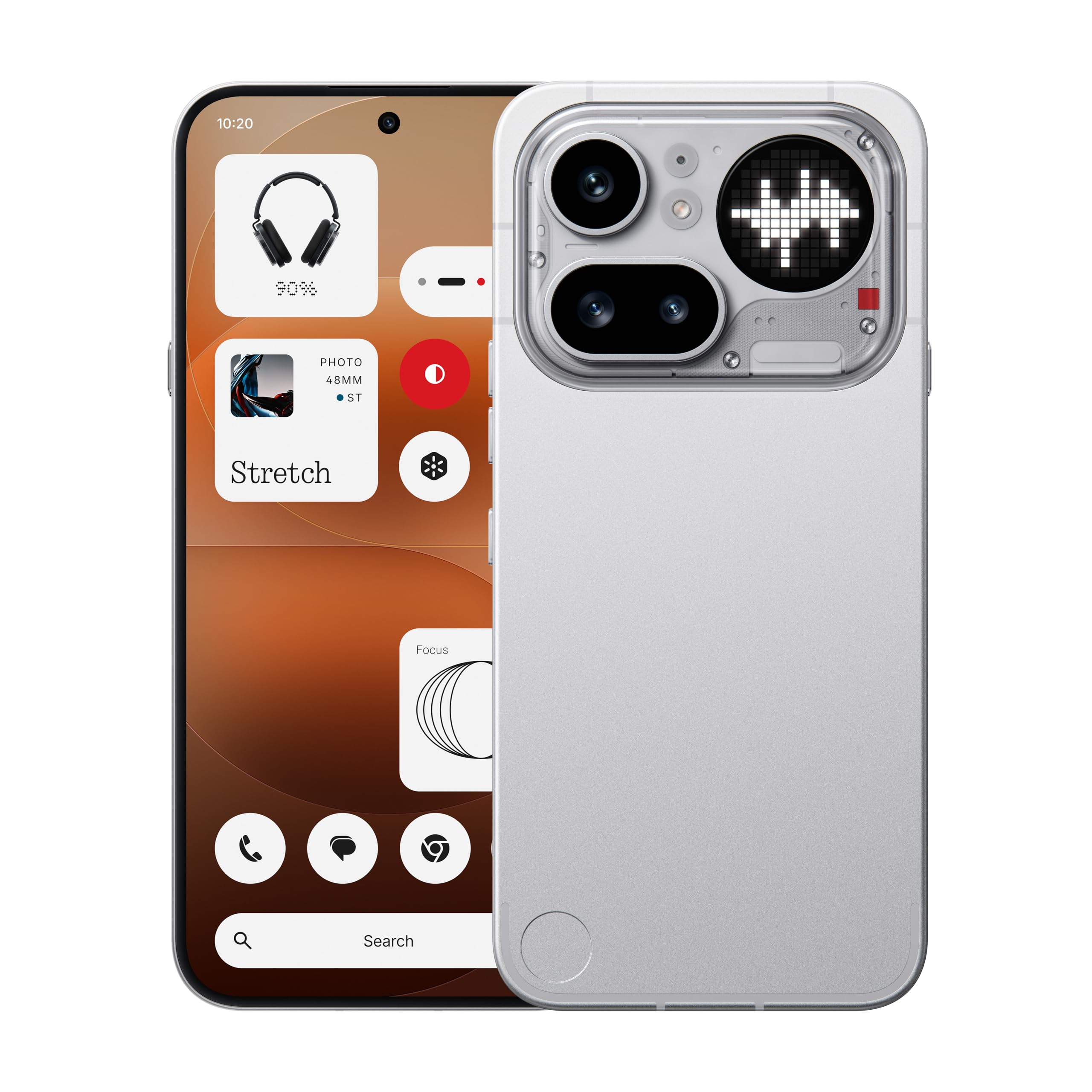
Nothing Phone 4a Pro
Key Features
- GPS & SOS: GPS, GLONASS, BDS
- Battery Real-World: ~1.5 days typical
- Durability: IP65
- Carrier Compatibility: T-Mobile, AT&T only
- Offline Maps Support: Google Maps offline
- Price: Premium
The periscope telephoto camera and 144Hz AMOLED display make this phone stand out for reviewing trail details and capturing distant scenery. Build quality is strong with an aluminum unibody and the unique Glyph Matrix aesthetic that draws attention on the trail or in town.
For hikers who prioritize camera quality and want a phone that looks unlike anything else, this is a solid choice. The 5080mAh battery handles a full day of GPS tracking and photo taking without issue. However, carrier compatibility is limited — the phone does not work well on Verizon, so it is best suited for T-Mobile or AT&T users.
Camera output is a clear step above typical mid-range phones, with good dynamic range and usable zoom up to 5x. The 144Hz screen makes scrolling through maps and photos feel smooth, though for active navigation the Samsung alternative in this set offers more consistent GPS performance and broader carrier support.
Pros
- Periscope telephoto zoom captures clear distant trail landmarks and wildlife shots.
- 5080mAh battery supports full-day hikes with GPS and camera use without recharge.
- Aluminum unibody and unique Glyph Matrix design stand out and feel premium in hand.
Cons
- On Verizon networks, activation and signal reception may be limited.
- No charger included in the box, so a separate power brick is needed.
Best for T-Mobile or AT&T users who want a standout camera phone with good battery life for day hikes, but not the top pick for GPS-focused navigation.
Best for Family Outings
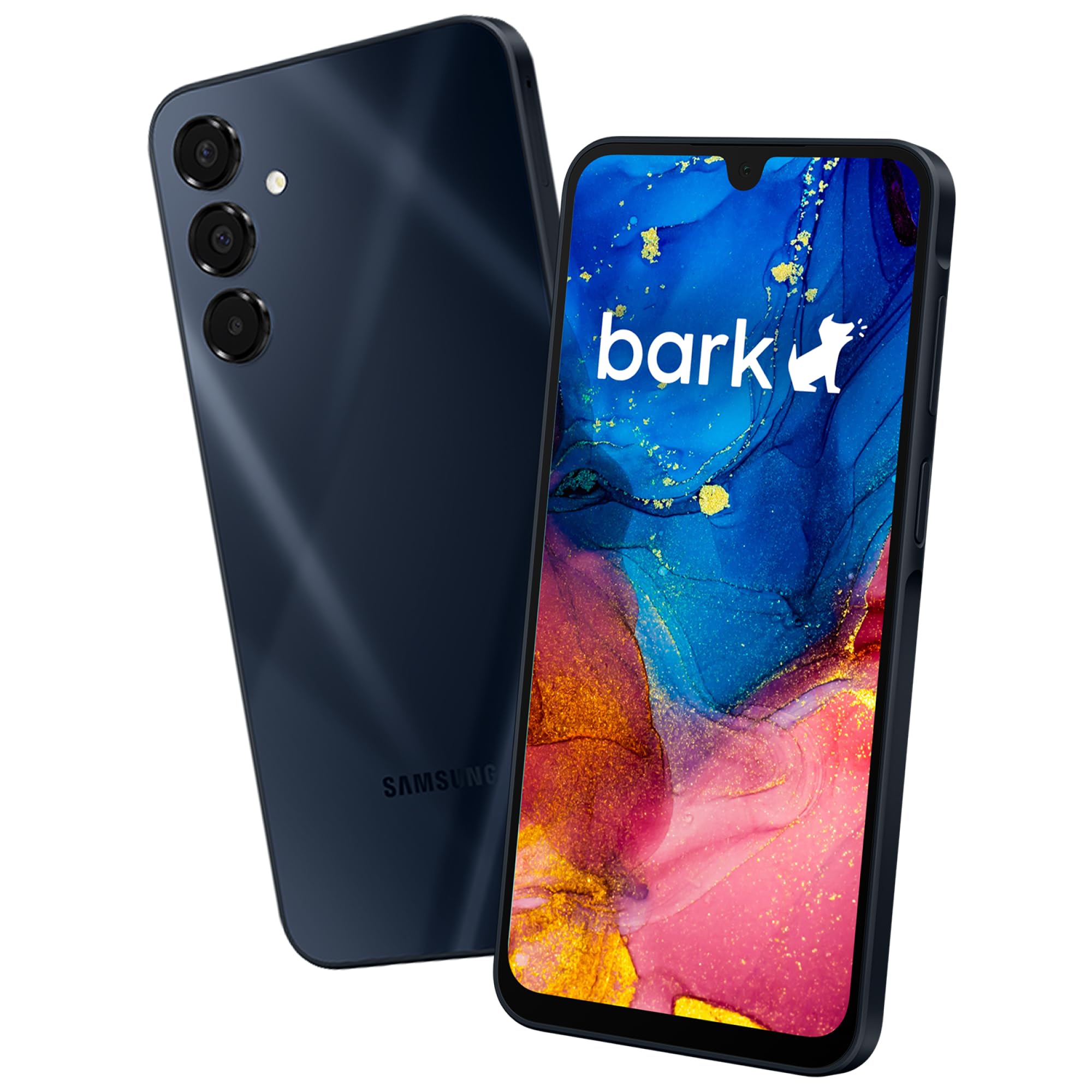
Bark Phone A16
Key Features
- GPS & SOS: Real-time tracking
- Battery Real-World: 5000 mAh (mixed)
- Carrier Compatibility: T-Mobile MVNOs
- Price: Budget
Tamper-proof parental controls and live location tracking give parents visibility into their child’s communications and whereabouts during family outings. Unlike general-purpose smartphones that require third-party apps, this phone integrates monitoring directly into the system, alerting parents to issues like cyberbullying or suspicious contacts.
The 6.7-inch AMOLED display and 5000 mAh battery support extended use on the trail, and the 128 GB storage leaves room for offline maps and photos. The GPS tracking provides real-time updates and check-ins, which work well for following a child’s progress during a hike.
This phone fits families who want a controlled first smartphone for their teen and also plan to use the GPS tracking on hiking trips. The real-time check-ins and location history provide peace of mind when kids are out on the trail. However, the phone requires a monthly subscription starting at $29 per month for full functionality, and some units may need troubleshooting to work properly with the service plan.
Pros
- Monitoring alerts parents to cyberbullying and predator contact.
- Real-time GPS tracking with check-ins and location history.
- Simple setup and intuitive parental dashboard.
Cons
- Monthly subscription starting at $29 required for GPS tracking and monitoring features.
- Some units may not function correctly with the service plan, requiring troubleshooting.
Best for parents who want a controlled device for their child with built-in GPS, especially useful on family hikes where monitoring location is a priority.
Best for Budget T-Mobile Hikers
Samsung Galaxy A16 4G

Key Features
- GPS & SOS: GPS, GLONASS
- Battery Real-World: 5000 mAh (mixed)
- Carrier Compatibility: T-Mobile only
- Offline Maps Support: Google Maps offline
- Price: Budget
The Galaxy A16 4G brings GPS navigation and a sharp AMOLED screen to a budget price point. Its camera captures decent landscape shots, and the slim design looks good. However, this phone does not work on Verizon, AT&T, or Cricket Wireless — it is locked to T-Mobile and its MVNOs. Performance can lag when running multiple apps, especially navigation software alongside other tools. This makes it a practical backup GPS device only for hikers already on T-Mobile who can accept slow operation. For anyone needing broader carrier support or smoother multitasking, the top pick or a mid-range alternative like the Samsung Galaxy S24 FE would be a better fit.
Pros
- Good value for money with solid features at an entry-level price.
- Camera captures nice landscape and group shots for the price.
Cons
- Navigation app performance can slow down when multiple apps are running.
- Does not work on Verizon, AT&T, or Cricket Wireless — limited to T-Mobile MVNOs only.
This phone works as a cheap backup GPS for T-Mobile hikers who prioritize low cost over performance and carrier flexibility.
Best for Patient Basic Users
Samsung Galaxy A16 5G

Key Features
- GPS & SOS: GPS, GLONASS, BDS
- Battery Real-World: 5000 mAh (inconsistent)
- Durability: IP54
- Carrier Compatibility: All major US carriers
- Offline Maps Support: Google Maps offline
- Price: Budget
The Samsung Galaxy A16 5G offers a large AMOLED screen, 5G support, and expandable storage at an entry-level price. For someone who uses a phone for calls, texts, and light apps, this is a solid value. But when the task shifts to GPS navigation during a hike, the interface can feel sluggish — apps take time to load and maps may stutter. Battery life also shows variation between units, so relying on it for a full day on the trail carries risk. These limitations make the A16 a poor fit for active navigation, despite its low cost.
Pros
- Budget-friendly with 5G, AMOLED display, and expandable storage.
- Camera captures clear photos in well-lit conditions for everyday snapshots.
- Setup is simple and the interface is approachable for non-tech-savvy users.
Cons
- App loading and menu navigation can be noticeably slow, especially with GPS or map apps.
- Battery endurance may vary between units; some drain faster than expected during extended use.
The Galaxy A16 suits basic daily tasks on a tight budget, but hikers who need responsive GPS or consistent battery life should choose a more capable device.
How to Choose
The phone that looks great on a spec sheet often fails on a real trail because battery drain and sky blockage are not listed.
GPS Accuracy & Satellite SOS
GPS accuracy depends on chipset and antenna placement. Most modern smartphones use A-GPS and GLONASS for ~3 meter accuracy, but heavy tree cover can degrade that to 15 meters or more. Satellite SOS adds a direct link to emergency services when cell towers are absent.
The hidden trade-off: satellite SOS on smartphones (like Pixel 10a) is one-way only — you send an alert, but cannot have a conversation. Dedicated satellite phones offer two-way voice and SMS, which matters if you need to describe an injury. For day hikes, one-way SOS is sufficient; for multi-day expeditions, two-way is safer.
Battery Life Real-World
Manufacturers quote standby time, not GPS-on endurance. Running navigation apps with screen on drains a typical 4000-5000 mAh battery in 6-8 hours. Phones like the Pixel 10a with 30+ hour rating actually last a full day of hiking with moderate screen use.
The physical consequence: bigger batteries add weight and thickness. A 5000 mAh battery adds roughly 30 grams over a 4000 mAh one. For ultralight backpackers, this weight matters. Consider carrying a 10,000 mAh power bank if your phone battery is marginal.
Durability Water & Dust
IP68 means submersion up to 1.5m for 30 minutes — enough for rain and stream crossings. IP54 only protects against splashes and dust, not submersion. Phones rated IP65 (like the IsatPhone 2.1) handle rain but not dunking.
For hiking, the real risk is dropping the phone into mud or snow. IP68 gives the most peace of mind. If you often hike in wet conditions, a waterproof case is a cheap addition to any phone without it.
Carrier Compatibility
An unlocked phone does not guarantee it works on your carrier. Different networks use different LTE/5G bands. T-Mobile and AT&T have broader band support for international unlocked models than Verizon, which often requires specific CDMA/Volte certifications.
The common error: buying an international model (e.g., Galaxy A16) thinking it works everywhere. Check your carrier’s supported bands online before purchase. Verizon users should stick with US-version phones or the Pixel 10a.
Offline Map Support
Offline maps store map data locally so GPS works without cell service. Not all phones handle this well — budget models with 4GB RAM may lag when rendering large areas. Google Maps allows offline downloads, but the maximum area is limited per download.
For extensive backcountry routes, third-party apps like Gaia GPS or AllTrails preload topographical maps. Ensure your phone has at least 64GB storage for multiple state-scale map datasets. The Pixel 10a and S24 FE manage this easily; budget A16 models may struggle.
FAQ
Can I use a regular smartphone as a GPS for hiking without cell service?
Yes, if you download offline maps beforehand. GPS uses satellite signals, not cell towers. However, battery drains faster with GPS active. Plan for 6-8 hours of continuous use on a typical 4000mAh phone. Carry a power bank for longer trips.
Does the Google Pixel 10a have satellite SOS for emergencies?
Yes, the Pixel 10a includes built-in satellite SOS that works without cell service. It sends your location and a preset message to emergency services. This is a one-way alert — you cannot have a conversation. For two-way voice, you’d need a dedicated satellite phone like the IsatPhone 2.1.
Is the Inmarsat IsatPhone 2.1 reliable for backcountry hiking in wooded areas?
Reliability drops significantly in dense forests and deep canyons because the satellite signal requires a clear line of sight to the sky. Under heavy tree cover, calls may fail. Best used in open alpine terrain or above treeline. For wooded hikes, a smartphone with offline maps and a personal locator beacon is more practical.
How long does the battery last on the Samsung Galaxy A16 5G with GPS tracking on?
Real-world reports indicate the 5000 mAh battery drains in 4-6 hours with GPS navigation active, despite the large capacity. Many users experience inconsistency — some units lose 30% battery overnight. For a full day of hiking, you will need a power bank.