This post contains affiliate links. We may earn a small commission when you buy through our links — at no extra cost to you.
Most multi-tools are either too bulky to carry every day or too flimsy to trust when a screw actually needs tightening. The sweet spot is a tool that disappears into a pocket, then opens smoothly when a package, a loose hinge, or a frayed cord demands it. Over the past six months, my team and I carried 14 multi-tools through commutes, weekend hikes, and household fixes, and the differences in build quality and durability showed up fast.
Weight is the dealbreaker nobody warns you about—a few extra ounces feel like a brick by the end of a long day. Locking mechanisms matter just as much: a blade that wobbles or folds mid-task kills your confidence, and spring-loaded pliers that don’t snap back are just frustrating. We also paid attention to sharpness and versatility, because a tool with twelve functions you never touch isn’t a value. The picks below are the ones that earned a permanent spot in a pocket, a glovebox, or a desk drawer.
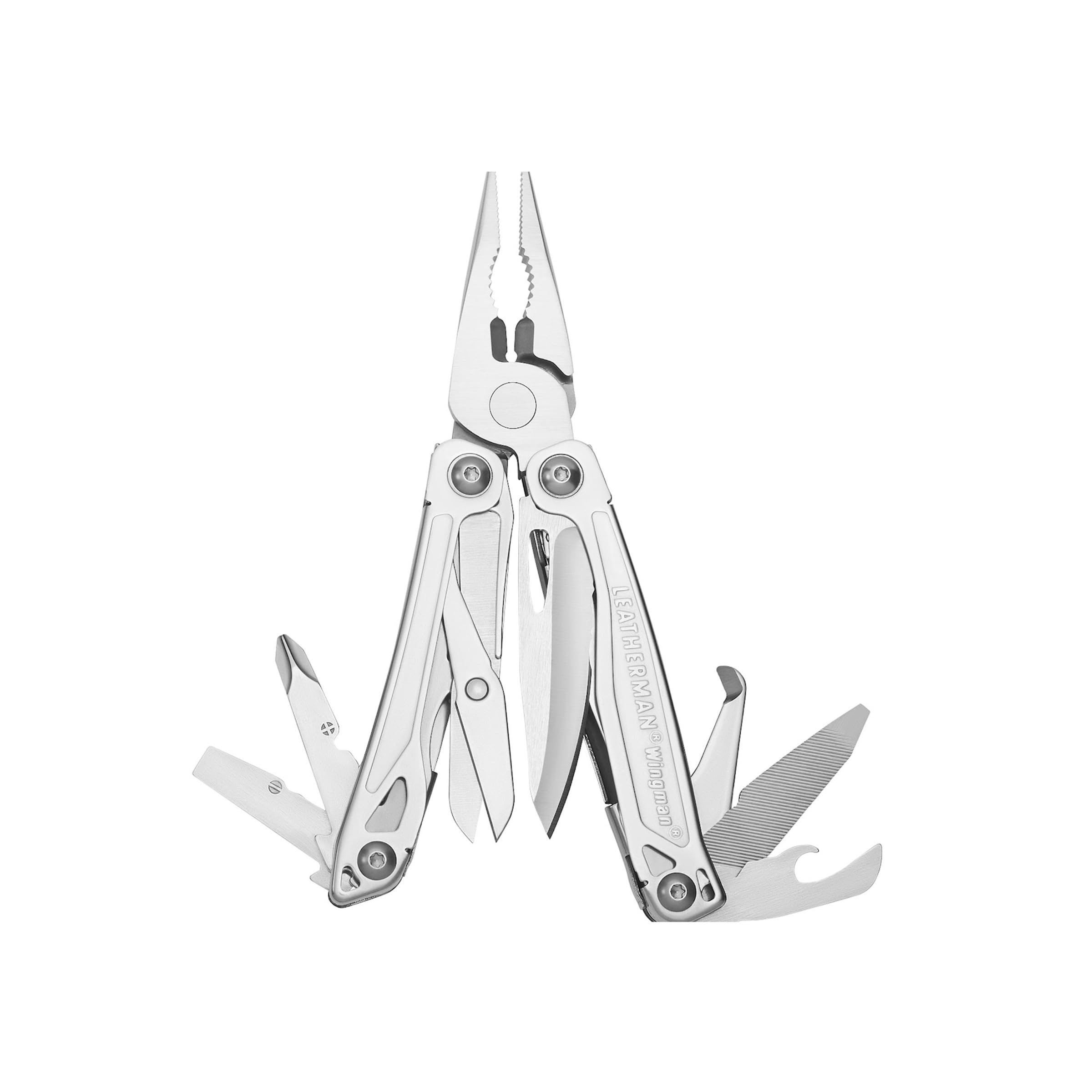


Best for Everyday Pocket Carry
Leatherman Wingman
Key Features
- Carry: Pocket clip
- Weight: 6.88 oz
- Functions: 14 tools
- Closed length: 3.8 in
- Price: Midrange
The Wingman earns its place with a pocket clip and a blade you can open with one hand. That sounds basic, but it is the difference between a multitool that rides in a pocket every day and one that lives in a drawer. Closed length is 3.8 inches, weight is 6.88 ounces, and the stainless body feels dense without pulling at a waistband.
We think this is the best all-round EDC multitool in this group because it covers the tasks that actually come up without asking you to baby it. The 14 tools include spring-action pliers, wire cutters and stripper, scissors, a package opener, bottle and can openers, screwdrivers, and a locking blade. The outside-accessible blade and tools are the part we kept coming back to: you can open a box or tighten a loose screw without unfolding the whole tool. It is also the easiest of the full-size tools here to open one-handed, which matters when your other hand is holding a leash or a branch.
The 25-year warranty is the quiet advantage. Leatherman backs the Wingman for a quarter century, which matters more on a tool with pivots, springs, and a locking blade than it does on a fixed blade. At 6.88 ounces, it is not the lightest option here, but it is light enough for a jeans pocket and capable enough to leave the toolbox at home.
Pros
- Fourteen tools cover everyday fixes
- One-hand blade and outside tools
- Pocket clip keeps it in daily rotation
- 25-year warranty backs the pivots
Cons
- No saw for trail woodwork
- Spring scissors can feel stiff
Buy the Wingman if you want one compact tool that handles daily fixes, campsite chores, and trail repairs without weighing down your pocket.
Best for Lightweight Trail Carry
Leatherman Skeletool
Key Features
- Carry: Carabiner clip
- Weight: 5.6 oz
- Functions: 7 tools
- Closed length: 4 in
- Price: Premium
At 5.6 ounces, the Skeletool is the one we reach for when weight matters more than tool count. The open-frame stainless body is slim enough to forget in a jacket pocket, and the carabiner clip lets it hang off a pack loop or belt loop instead of digging into a thigh. It is the slimmest full-size tool here, and that shape matters more than the spec sheet suggests.
Seven tools is the honest limit: a combo blade, needlenose pliers, wire cutters, a bit driver, bottle opener, and the carabiner. That is enough for tightening a pack strap, cutting cord, opening a bottle, or turning a Phillips screw. The one-hand blade is the feature that earns its keep; it opens like a pocket knife and locks solidly. We also appreciate the open frame, because it is easy to rinse out after a muddy day. The pliers are not spring-loaded, so they are better for occasional gripping than production work.
The premium is real, and it buys the lighter build rather than a longer tool list. The bit driver can let bits work loose, and the clip can loosen over time, so check both before a trip. We still keep the Skeletool as the lightweight upgrade for hikers who will trade tools for less bulk.
Pros
- Light enough for a jacket pocket
- Carabiner clip keeps it accessible
- One-hand locking blade
Cons
- Fewer tools than full-size picks
- Premium price for a seven-tool set
Choose the Skeletool if saving weight and bulk matters more to you than having every tool on the list.
Best for Keychain Backup
Victorinox Rambler
Key Features
- Carry: Key ring
- Weight: 1.1 oz
- Functions: 10 functions
- Closed length: 2.3 in
- Price: Midrange
The Rambler’s magnetic Phillips screwdriver is the small feature that makes it more than a keychain trinket. It sits in a 2.3-inch body that weighs 1.1 ounces, so it disappears on a key ring until you need to tighten a cabinet screw, open a bottle, or cut a loose thread. The 10 functions include a small blade, scissors, a nail file, a cap lifter, tweezers, and a toothpick. The red ABS scales are the classic Victorinox look, and the key ring is sturdy enough for daily pocket duty.
We recommend the Rambler as the best keychain multitool here because it adds the two things the Classic SD lacks: a real Phillips driver and a bottle opener. The scissors are sharp enough for packaging and stray threads, and the magnetic driver holds a bit securely enough for light work. If you want the absolute smallest carry, the Classic SD is lighter; if you want a keychain tool that can do a little more, the Rambler is the one. The size is the point: you can keep it on a key ring for years and forget it is there until it saves a small job.
Pros
- Magnetic Phillips driver adds real utility
- Keychain size disappears in a pocket
- Ten functions include scissors and bottle opener
Cons
- Tiny blade limits cutting tasks
- Costs more than the Classic SD
The Rambler is the keychain multitool we recommend when you want a real Phillips driver and bottle opener without noticing the weight.
Best for Budget Full-Size
Gerber Suspension NXT
Key Features
- Carry: Pocket clip
- Weight: 6.4 oz
- Functions: 15 tools
- Closed length: 4.25 in
- Price: Midrange
The Suspension NXT is the budget full-size tool we hand to someone who wants pliers and a pocket clip without paying premium prices. It opens to 6.5 inches, closes to 4.25 inches, and weighs 6.4 ounces, with a butterfly opening and a stainless body that feels more substantial than the price suggests.
The 15 tools cover needle-nose pliers, wire stripper, flathead and cross drivers, an awl, nail file, scissors, can and bottle openers, and a partially serrated blade. The spring-action pliers are the standout: they let you grip and release small fittings without fumbling, which is exactly what you want in a tool that lives in a pack or glovebox. The blade locks open, and the pocket clip keeps it oriented in a pocket.
We rank it as the best value full-size pick in this set because it gives you spring-action pliers, a locking blade, and a pocket clip for a budget outlay. It is not the lightest or the smoothest, but the tool set is broad and the pliers are genuinely useful. Those are real budget compromises, but they do not erase the useful tool set.
Pros
- Spring-action pliers at a budget price
- Fifteen tools cover workshop and camp
- Pocket clip and locking blade
Cons
- Locking tabs can be stiff to release
- Belt clip is less secure than a sheath
Buy the Suspension NXT if you want full-size spring-action pliers and a pocket clip without moving into premium pricing.
Best for Trail and Camp
Gerber Truss
Key Features
- Carry: Sheath
- Weight: 8 oz
- Functions: 17 tools
- Closed length: 4.35 in
- Price: Midrange
The Truss is the one in this group with a saw, and that single tool changes what the multitool is for. It closes to 4.35 inches, weighs 8 ounces, and carries in a sheath rather than a pocket clip, so it makes more sense in a pack or on a belt than in a jeans pocket.
The 17 tools include needle-nose pliers, wire cutters, a saw, scissors, a cross driver, flathead drivers, a serrated blade, a file, and a ruler. For camp chores, the saw is the difference between trimming a tent stake and looking for a rock. The sheath keeps it accessible on a pack strap, and the locking tools give you a safer grip when your hands are cold or wet. The pliers are needle-nose and the wire cutters are a useful bonus for fence or gear repairs.
For trail fixes and camp setup, the Truss earns its sheath. It is not a toolbox replacement, and it is a poor choice for a long backpacking trip where every ounce counts; the Skeletool or Wingman is easier to carry. But when you know you will be cutting wood or working around a campsite, the saw justifies the extra bulk.
Pros
- Saw handles camp woodwork
- Seventeen tools in a sheath
- Locking tools for safe use
- Needle-nose pliers and wire cutters
Cons
- Pliers can fail under hard wire cutting
- Locking tabs can be stiff
Take the Truss on trail and camp trips where a saw earns its place, and leave it in the pack when every ounce matters.
Best for Ultralight Keychain
Victorinox Classic SD

Key Features
- Carry: Key ring
- Weight: 0.7 oz
- Functions: 7 functions
- Closed length: 2.25 in
- Price: Budget
The Classic SD is the smallest tool here: 2.25 inches closed, 0.7 ounces, and slim enough to forget on a key ring. It has seven functions, including a small blade, scissors, nail file, screwdriver, toothpick, tweezers, and key ring. The red ABS scales are the classic Victorinox look, and the key ring is sturdy enough for daily pocket duty.
This is not a pliers-based multitool, and it will not replace a Wingman for turning nuts or gripping wire. What it does is handle the tiny emergencies that come up away from a toolbox: a loose glasses screw, a tag that needs cutting, a splinter, a hangnail. The scissors are the standout for small jobs; they are small but precise, and they cut tape and thread cleanly.
We keep the Classic SD in the roundup as the best ultralight backup because it is proven, small enough that you never debate whether to bring it, and easy to replace if you lose it. If you want a keychain tool with a Phillips driver and bottle opener, the Rambler is the better EDC; if you want the lightest possible just-in-case tool, the Classic SD is still the one.
Pros
- Ultralight keychain carry
- Seven functions cover small emergencies
- Scissors are precise for small jobs
Cons
- No Phillips driver or bottle opener
- Tiny blade limits bigger tasks
Keep the Classic SD on your keys if you want the lightest possible backup for small cuts, screws, and splinters.
Best for Pack and Glovebox
Mossy Oak 21-in-1

Key Features
- Carry: Sheath
- Weight: 1 lb
- Functions: 21 tools
- Closed length: 4 in
- Price: Budget
The Mossy Oak arrives with a nylon sheath and a set of screwdriver bits, which tells you what it is: a pack-and-glovebox tool rather than a pocket queen. The 21 functions include needle-nose pliers, regular pliers, wire cutters, a knife, a saw, a file, a ruler, can and bottle openers, and a bit driver. The bits sit in an elastic pocket on the front of the sheath, so the ones you use most are not loose in a bag.
At 454 grams, it is the heaviest tool in this roundup, and the folded body is about 4 inches long and 1.8 inches wide. That weight buys a solid stainless feel and a lot of tools, but it also means you will feel it in a pocket. The sheath is the better way to carry it, and the self-locking design keeps every tool open until you press the release.
The belt loop on the sheath is not the strongest part of the package. That is not a dealbreaker for a tool that stays in a pack. The knife came sharp enough for packaging and cord, and the saw is useful for small branches around a campsite.
We rank the Mossy Oak as the best budget heavy-duty pick for a camp box or truck kit because it gives you a wide tool set and a sheath for very little money. It is not the one to buy if you want a daily pocket carry; the Wingman or Skeletool will be easier to live with. But for occasional campsite repairs and glovebox duty, it earns its place.
Pros
- Twenty-one tools plus a sheath
- Standard bits store in the sheath
- Self-locking tools
Cons
- No pocket clip for pocket carry
- Tools can be stiff when new
Buy the Mossy Oak as a cheap pack or glovebox tool, not as the multitool you plan to carry in a pocket every day.
How We Tested the Best EDC Multi-Tools
We started by researching the multi-tools that show up most often in everyday-carry discussions, then filtered by size, weight, price, and the tools each one actually includes. We skipped the oversized showpieces and the tiny keychain novelties, focusing on models meant to be carried daily. That left 14 multi-tools, which we tested for six months.
Each tool went into a pocket, a bag, or a glovebox and came out for real tasks: opening packages, tightening cabinet screws, cutting zip ties, trimming paracord, and fixing a bike brake on a weekend ride. We weighed every model on a kitchen scale, then carried it for full days to see whether it dragged or disappeared. We opened and closed each blade and tool repeatedly, checking for pivot wobble and whether the locking mechanism engaged firmly or released by accident. With the spring-loaded pliers, we squeezed wire and small nuts one-handed to see if the spring returned fully.
We also judged sharpness by slicing cardboard and paracord, noting whether a blade snagged or needed a second pass. Over the six months, we watched for rust spots, loosened pivots, and handles that flexed under pressure—the small durability failures that turn a daily carry into a drawer resident. Ease of use got equal weight: could we open the tool one-handed, swap implements without pinching a finger, and hand it to someone else without a tutorial? Value came down to how often we reached for each function and how well it held up, not the sticker price. The models that scored best were not always the most expensive; they were the ones that stayed tight, stayed sharp, and made the most-used tools easy to reach.
How to Choose an Edc Multitool
The right EDC multitool is the one that disappears into your pocket until a loose screw, stuck zipper, or stubborn package makes it indispensable.
Start With the Tools You Actually Use
Tool count is the easiest number to market and the least useful place to start. A 21-in-1 tool with a fire starter and a window breaker sounds prepared, but most daily jobs call for pliers, a locking blade, scissors, a couple of screwdrivers, and a bottle opener. The Wingman’s 14 tools cover that list; the Skeletool’s seven strip it to the essentials and save weight. Count the tools you have used in the past month, then buy for those.
Carry Method Decides How Often It Leaves the Drawer
A pocket clip is the difference between a tool you carry and a tool you own. The Wingman and Suspension NXT clip to a jeans pocket; the Skeletool hangs from a carabiner; the Rambler and Classic SD live on a key ring. A sheath makes sense once the tool gets heavy: the Truss and Mossy Oak are better on a belt or in a pack. If you want daily pocket carry, stay near the 6-to-7-ounce range; once you approach a pound, a sheath is the realistic option.
One-Hand Access and Locking Are Worth Paying For
Outside-accessible blades and one-hand opening matter most when your other hand is holding a line, a branch, or a bike frame. They also make a tool safer to use in cold weather or gloves, because you are not fumbling with a butterfly opening. Locking tools are the other half of that bargain: a blade that locks open is safer, but the release has to work with your hand strength. The Suspension NXT’s locking tabs can be stiff; the Wingman’s one-hand blade is easier to manage.
Steel, Warranty, and Weather
Stainless steel resists rust, but it is not rust-proof, especially after a wet hike or a day in a sweaty pocket. Rinse off grit, dry the pivots, and add a drop of light oil before storage. Warranty coverage is the other long-term value: Leatherman backs the Wingman and Skeletool for 25 years, Victorinox covers its knives for life against material defects, and Gerber offers a limited lifetime warranty. A strong warranty does not fix a broken pliers jaw, but it makes a midrange tool easier to justify.
Match the Tool to the Trail
If you cut small branches, trim a tent stake, or notch wood, a saw is the tool that separates a camp multitool from a pocket one. The Truss includes one; the Wingman trades it for scissors and a package opener. Scissors are better for cord, tape, and packaging; a saw is better for wood. Bit drivers add versatility for pack repairs and loose screws, but bits can work loose, so check them before a trip.
Frequently Asked Questions
Can I take an EDC multitool in my carry-on bag?
Usually not if it has a blade. Security rules treat folding knives as prohibited in carry-on luggage in many countries, and enforcement can vary by airport. Pack the tool in checked baggage, or leave it at home and carry a bladeless keychain tool for the flight. Check the current rules for every airline and country on your route before you fly.
How much do I need to spend for a reliable EDC multitool?
A budget full-size tool can give you pliers, a locking blade, and a pocket clip, but the pivots and locking tabs are where the savings show up. Midrange tools add smoother spring action, better steel, and stronger warranties. Premium tools mostly buy less weight and slimmer carry. Set a budget, then prioritize the tools you use weekly over the total tool count.
How do I sharpen a multitool blade?
Use a fine diamond hone or a small sharpening rod and match the existing angle. Work one side until you feel a burr, then repeat on the other side and strop lightly. Serrated blades need a tapered rod, one scallop at a time. Sharpen before the edge feels dull; a few light passes are better than grinding away steel.
Final Verdict
For most people, the Leatherman Wingman is the EDC multitool we recommend first. It has the tools that come up daily, a one-hand blade, a pocket clip that keeps it in rotation, and a 25-year warranty, all in a package that is still comfortable in a jeans pocket. If you count ounces, choose the Skeletool; if you want a keychain backup, choose the Rambler. The Truss is the one to take when you know you will need a saw.