This post contains affiliate links. We may earn a small commission when you buy through our links — at no extra cost to you.
A beach tent sounds like a simple thing until you’re the one kneeling in the sand at 10 a.m., wrestling a spring-loaded bundle while everyone else is already in the water. The trade-off is baked into the category: the tents that pop up fastest are usually the ones that skitter away when the breeze picks up, and the ones that hold their ground often take two people and a video tutorial to assemble. What you actually want is the middle — a shelter that goes up without a fight, actually blocks the sun, and stays put while you eat a sandwich.
I’ve spent enough afternoons hunched under a towel to be picky about shade. Over the past six months, we pitched 12 beach tents on open sand, in a windy backyard, beside a lake, and in a park on a still afternoon, and the gaps between them showed up fast. One thing first-timers rarely consider: the anchor system matters as much as the poles, and a low tent with deep sand pockets will outlast a taller one once the wind starts. The picks below are the ones that earned a permanent spot in my trunk.


Best for Most Families
Venustas Beach Tent
Key Features
- Fabric: 190T silver-coated polyester
- Weight: 3.5 lb
- Dimensions: 86.6"L x 59"W x 48"H
- Sun protection: UPF 50+
- Price: Budget
Of everything here, the Venustas is the one that gets carried without a second thought: 3.5 pounds, a bag you can sling next to a beach chair, and a folding frame that goes up in a few minutes instead of snapping open on its own. You get 86.6 by 59 inches of floor and 48 inches at the peak for entry-level money, plus a zip front that closes the whole thing up.
It earns the top spot on the ordinary job. Two adults and two kids fit inside with a cooler at their feet, the silver-coated fabric keeps the worst of the sun off, and the four mesh panels mean air moves through instead of the inside turning into an oven. Leaving bags and towels zipped inside while everyone swims turned out to be the thing we used most.
Forty-eight inches at the peak is the number to think about. Adults sit up comfortably and crawl in and out on their knees, and the shade sits directly overhead, so by late afternoon you are shifting the whole tent or sitting in the doorway. As a first shelter for a family who go a handful of times a summer, that is a fair trade for the weight and the money.
Pros
- 3.5 pounds and a bag you can carry one-handed
- Two adults and two kids fit with a cooler
- Front zips shut, so gear stays inside
- Strong shade and airflow for the money
Cons
- 8mm fiberglass poles can snap in a gust
- Water-repellent rather than waterproof fabric
We point most families here: light enough to carry in one hand, roomy enough for two adults and two kids, and quick to put up once you have done it twice.
Best for Bigger Groups
Wolfwise Beach Tent
Key Features
- Weight: 4.32 lb
- Warranty: 2 years
- Dimensions: 94.5"L x 65"W x 55.1"H
- Sun protection: UPF 50+
- Price: Budget
Ninety-four and a half inches long, 65 wide and 55.1 at the peak: the Wolfwise is the roomiest of the folding tents here, and the height is the part we kept noticing. Fifty-five inches lets an adult crouch upright and move around instead of crawling, which changes how a long afternoon feels. For a family who bring chairs, a cooler and a dog, that is the difference between sitting shoulder to shoulder and actually relaxing.
It is built the usual way, with two fiberglass poles and a fabric shell, but the sizing is honest. Four beach chairs fit along the length with space left over, and the three mesh windows roll and adjust separately, so you can shut the windward side and open the other one.
The bag is deliberately generous, which sounds trivial and is not: getting a beach shelter back into its sack at the end of the day is where tempers go, and this one goes back without a fight. Wolfwise covers it with a two-year warranty, the longest here, which is the reassurance that counts on a tent whose poles take the load.
Pros
- Largest folding-tent interior in this group
- 55 inches of peak lets adults crouch and move
- Oversized storage bag makes repacking easy
- Two-year warranty, the longest here
Cons
- 1960 g, heavier than the small folding tents
When four people need to sit up rather than crouch, this is the folding tent we hand them: the roomiest interior here and the longest warranty.
Best for Standing Room
SUN NINJA Beach Tent
Key Features
- Frame: 4 aluminum poles
- Weight: 8.8 lb
- Dimensions: 120"L x 120"W x 79"H
- Sun protection: UPF 50+
- Price: Premium
No floor, no walls, no zip: the SUN NINJA is a stretchy sheet pulled over four aluminum poles and held down with sandbags, and at 10 by 10 feet with 79 inches of clearance it is the only shelter here an adult can walk around in. Next to the folding tents it looks less like camping gear and more like a small pavilion.
The poles are the quick part; the anchors are the work. Four bags to fill with wet sand, because dry sand pours straight back out, and bury before you tension the fabric. Set them shallow and the shelter will not stay put, since the whole design depends on the canopy being stretched tight enough to shed wind rather than flap.
It is the most expensive shelter here, and for a group of six who want chairs, standing room and shade that lasts all afternoon, it is worth it. On an exposed beach it leans in a gust, and the anchoring rather than the poles is what keeps it there. With toddlers who need a nap out of the sun, a floored tent is the better buy.
Pros
- Ten by ten feet with 79 inches of standing height
- Shade holds all afternoon for a group
- Aluminum poles and a full anchor kit included
Cons
- No walls or floor, so it is shade only
- 8.8 pounds before the sandbags are filled
For a group who want to stand up, spread out and still be in shade at four in the afternoon, this is the shelter we recommend, provided the anchors go in deep.
Best for Budget Headroom
Etto Beach Tent
Key Features
- Frame: 8.0mm fiberglass
- Weight: 5.95 lb
- Dimensions: 98"L x 59"W x 63"H
- Sun protection: UPF 50+
- Price: Budget
The Etto makes a warning of a first impression: on a breezy day it wants two people. One holds the frame while the other works the poles and the front flap, and the sheet that comes in the bag is not much of a guide. On a still morning one person can manage it; if there is wind in the forecast, plan on a second pair of hands.
What you get for that is height. At 98 by 59 inches with a 63-inch peak it is the tallest of the folding tents here: an adult stands bent at the waist rather than crawling, and two low beach chairs sit side by side with a child between them. The front flap zips closed, and that turned out to be the feature we used most, with towels, phones and a sleeping toddler all inside while everyone else swam.
The 8mm fiberglass frame is the part that decides how long it lasts. Poles are the weak link in every folding tent on this page and this one is no exception, so treat the frame gently when the fabric is fighting a breeze. A snapped pole on a first outing is a refund conversation, not a repair.
For a couple or a small family who want maximum headroom on a small budget, it is a strong buy. If setting up alone matters more than standing room, the Venustas is the easier tent.
Pros
- 63-inch peak, the tallest folding tent here
- Zip front flap secures gear while you swim
- Cheapest shelter in this group
Cons
- Fabric is thin compared with the heavier shelters
The cheapest and tallest of the folding tents here, and a good buy if you have a second person at setup and want to stand more or less upright.
Best for Flexible Shade
Elegear CumbreX Beach Tent
Key Features
- Fabric: 190T double-layer silver-coated polyester
- Weight: 6 lb
- Dimensions: 86.61"L x 59.06"W x 61.02"H
- Sun protection: UPF 50+
- Price: Midrange
Five configurations is the pitch, and it is not marketing arithmetic: the canopy tilts forward for a low sun, the rear door unzips for a through-breeze, and the whole thing closes into an enclosed cabana when a child needs to sleep. Most tents here do one of those things well and the rest not at all.
The frame is the interesting part. The poles clip onto the outside of the fabric rather than sliding through sleeves, which removes the worst job in tent assembly: feeding sand-covered fiberglass through a channel while the wind picks up. That is a small design decision that makes the first ten minutes of the day noticeably calmer.
Wind is where the design has limits. The shell is light, the sand pockets need filling, and in a real blow it shifts more than the heavier canopy shelters do. On an ordinary afternoon with the anchors loaded, it stays where you put it.
Where it earns its place is as the one shelter that covers a nap, a picnic and a low-sun evening without a second purchase. If you want simple shade for a handful of beach days a year, the Venustas does that for less; if you are buying once for a family that is out every weekend, the flexibility earns its keep.
Pros
- Five usable configurations from one shelter
- Snap-on external frame skips threading poles
- 61-inch peak and a zipped rear door for airflow
Cons
- Realistic capacity is three, not the four or five claimed
- 6 pounds plus sand in the pockets
We send families who want one shelter to nap under, eat under and tilt against the evening sun to this one; the extra weight buys genuine flexibility.
Best for Value Canopy
UMARDOO Beach Tent

Key Features
- Frame: 4 aluminum poles
- Weight: 6.8 lb
- Dimensions: 108"L x 120"W x 79"H
- Sun protection: UPF 50+
- Price: Midrange
If the four-pole canopy idea appeals but the top price does not, the UMARDOO is the same shape for less: 10 by 10 feet, 6.5 feet at the centre, four aluminum poles and four big sandbags. It is the canopy we point value-minded buyers to, and on an ordinary beach day it does what the expensive one does.
The poles are laced to the fabric with elastic cord, so the joints stay lined up and nothing goes missing between the car and the sand. The 600D carry bag has room to spare. Setup is a five-minute job once you have done it; the bags are the slow part, and they need wet sand and a deep hole to be worth carrying.
Steady is not its strong suit. Of the four-pole canopies here it is the least settled in a breeze, and it is the one where burying the bags, rather than just filling them, is the difference between an afternoon and a wrestle. The Lycra is water-resistant rather than waterproof, so a passing shower sends you home.
Pros
- Ten by ten feet of shade for midrange money
- Elastic-corded poles stay together in transit
- Packs into a 600D bag that fits in a trunk
Cons
- 6.8 pounds before four sandbags are filled
- No walls, so it provides shade only
For a family who want a big canopy without paying the most, this is the one we suggest: bury the anchors and it holds through an ordinary beach afternoon.
Best for Windy Beaches
COZEER Beach Tent
Key Features
- Weight: 10.4 lb
- Sandbags: 8
- Dimensions: 120"L x 120"W x 79.2"H
- Sun protection: UPF 50+
- Price: Midrange
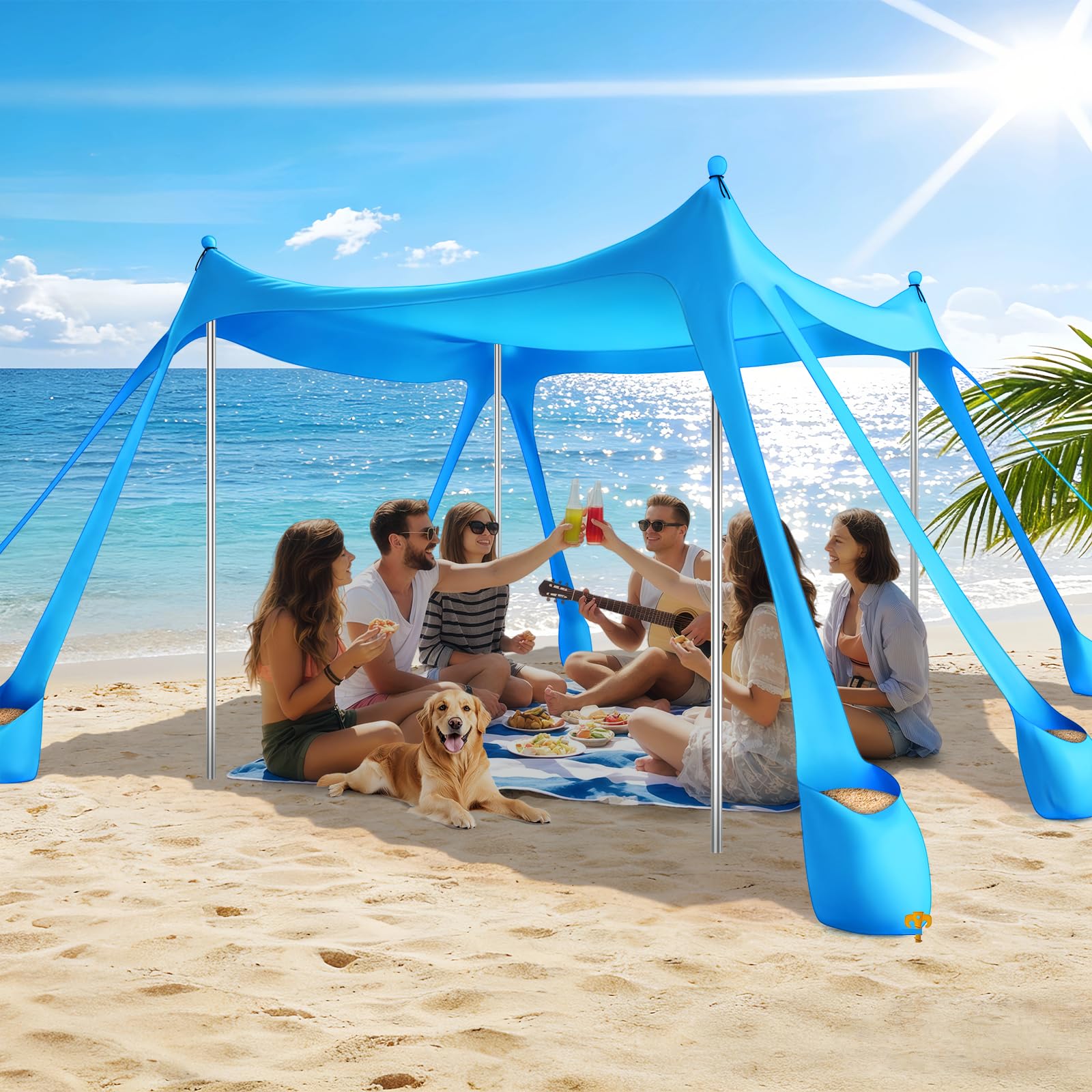
Eight sandbags instead of four is the whole argument for the COZEER, and it is a good one: twice the anchoring spread around a triangular frame, plus eight screw stakes for sand and eight more for grass. On a wide-open beach where the wind never quite stops, that extra hold is the difference between shade and a kite.
The aluminum poles join with elastic cord so the sections cannot slip apart mid-setup, and the Lycra blend carries 12 percent spandex, which is why the canopy can be pulled tight enough to shed wind instead of cracking like a flag. The 10 by 10 foot sheet sits at 6.6 feet at the centre, tall enough for most adults to walk under.
One thing to weigh: filling eight bags takes roughly twice as long as filling four, and you will do it twice a day if you are coming and going. What you get back is a shelter that stays exactly where you put it, and for an afternoon on an exposed beach that trade is the right one.
Pros
- Eight sandbags and two sets of stakes
- Poles locked with elastic cord so joints hold
- Ten by ten feet at 6.6 feet tall
- Works on grass and rock, not just sand
Cons
- The heaviest shelter in this group at 4.74 kg
Eight bags and a triangular frame are what we want on wind-exposed sand; this is the shelter that stays put when the four-pole canopies start to lean.
Best for Moving Sun
Bestset Beach Tent

Key Features
- Poles: 2 fiberglass
- Weight: 7.8 lb
- Dimensions: 120"L x 120"W x 78"H
- Sun protection: UPF 50+
- Price: Midrange
Two poles rather than four, and a strap on each leg you can lengthen or shorten: the Bestset’s trick is that the canopy angles down toward a low sun or pulls in tight when the beach is crowded. On a packed August weekend, an adjustable footprint is worth more than it sounds.
We like it for people who stay in one spot all day and would rather not move the shelter: drop one side as the sun swings around and you keep the shade without hauling poles. The coverage is genuinely large at 10 by 10 feet and 78 inches at the peak, but with only two poles the fabric slopes, so the usable headroom is on the high side rather than across the whole area.
Raising it in a breeze goes easier with someone holding the slack while you set the second pole, and 7.8 pounds is a real load on a long walk. Get the anchors buried and the angle right, though, and it stays where you left it; shortening a leg is a one-person adjustment instead of a full re-peg.
Pros
- Canopy angle adjusts as the sun moves
- Adjustable straps shrink the footprint
- 7.8 pounds and a small carry bag
Cons
- Sandbag straps can pull free of their buckles
For a long, stationary beach day where the sun moves and the sand is crowded, the adjustable angle and smaller footprint make this the canopy we reach for.
How We Tested Beach Tents, From the Parking Lot to the Windy Afternoon
We started with roughly 40 tents sold at major retailers and cut anything that didn’t publish a UV rating, a packed weight, or some form of sand anchoring. We also dropped models whose reviews clustered around snapped poles and torn seams, which is a pattern that rarely improves with age. That left 12 tents, which we used from late spring through early fall.
Setup came first, because it’s where beach days go wrong. We timed each tent going up solo with the instructions in hand, then again a week later from memory, noting whether the printed sheet was readable, whether it was attached to the bag, and whether the frame snapped together or fought back. Pack-down got its own stopwatch, and we paid attention to whether the tent went back into its bag on the first try or turned into a wrestling match with an audience.
Wind was the real test. On breezy afternoons we anchored each tent exactly as the manufacturer specified and watched whether the shell bowed flat, whether stakes pulled free of soft sand, and whether the whole thing wanted to become a kite. For sun protection, we measured the shaded footprint at midday and again mid-afternoon as the angle shifted, held the fabric up to the light looking for pinholes, and checked whether side panels could be closed for a nap.
Portability meant weighing each packed tent and carrying it from the car with a cooler in the other hand, plus a toddler once or twice. We sat two adults and a lunch bag inside to see whether the stated capacity held up, used each one as a changing room, and inspected seams, zipper pulls, and pole joints after every trip. Then we weighed what each had cost against how it looked six months in — which is where the cheaper tents separated fast.
How to Choose a Beach Tent
The first decision is not a brand or a budget, it is whether you want a tent with a floor and walls or an open canopy on poles, because everything else follows from that.
Tent or Canopy: Pick the Shape First
A folding tent like the Venustas or the Wolfwise gives you a floor, closable panels and somewhere to dump bags out of the sun. That makes it the right call with small children, with anyone who needs a nap, and on a day when you want to change out of wet swimmers without an audience. A pole canopy like the SUN NINJA gives you ten feet of standing room and no floor at all.
Choose the tent if shade for people lying down matters more than headroom. Choose the canopy if you want to stand up, host six people in chairs, and can carry eight pounds or more to the water’s edge.
What the Person Count Really Means
Treat the capacity number as optimistic. An 86-by-59-inch tent is comfortable for two adults and two children sitting, not four adults lounging, and a 10-by-10-foot canopy fits six chairs only if nobody wants to lie down. Headroom tells you more than the label: 48 inches is sit-up height, 55 inches lets adults crouch and move, and 63 inches is about as close as a folding tent gets to standing.
If anyone in the household is tall, read the peak height before the person count. It is the specification you will notice every hour of the day.
UPF, Coatings and Airflow
Every shelter here claims UPF 50+, and the coating is doing the work: silver-coated polyester on the tents, a spandex blend on the canopies. What separates them in practice is airflow. Mesh panels you can open and close let you shut the windward side and open the leeward one, which keeps the inside cooler than a sealed shell ever will.
A tent with three adjustable windows is worth more on a hot afternoon than an extra few inches of floor. Check that the panels roll and secure rather than hanging loose.
Wind Is the Whole Ballgame
Stability is where these shelters fail, and it is nearly always anchoring rather than the frame. Sandbags only work filled with wet sand and buried; dry sand pours straight out, and a bag resting on the surface slides. Four bags are the minimum, which is why the eight-bag COZEER exists for exposed beaches.
Pitch with the lowest edge into the wind, and if the fabric is flapping rather than taut, reset it before anyone sits down. A shelter that hums in the breeze will not be there when you come back from the water.
Weight, Poles and the Walk Back
Three and a half pounds is a different walk to the water than ten. The folding tents run 3.5 to 6 pounds and pack into a bag you can carry in one hand; the pole canopies start at 6.8 pounds and get heavier fast, before any sand goes in. Poles are the failure point on all of them.
That makes an oversized storage bag and a longer warranty worth more than a tidy stuff sack. Practise the fold once at home, because repacking on the sand with the wind up is where a good beach day sours.
Frequently Asked Questions
Can one person set up a beach tent alone?
Yes, with the right tent and a calm morning. The folding-pole shelters here go up in a few minutes single-handed once you have done it twice, and the pole canopies are also a one-person job. What changes it is wind: in a breeze, someone holding the slack while you set the second pole saves ten minutes of wrestling.
Practise once in the yard before you rely on it at the beach.
Is a beach tent better than a beach umbrella?
For gear and children, yes. An umbrella shades one or two people and has to be moved as the sun swings; a tent gives you a floor, somewhere to leave bags and a windbreak, and a canopy gives a group a whole room. Umbrellas still win if you are walking in alone with a small bag.
Take the tent when the trip involves chairs, a cooler and a nap.
Can you take a beach tent in a suitcase?
The folding tents are the travel-friendly ones: their carry bags are roughly the length of a camp chair and will go in checked luggage. Pole canopies are longer and heavier and generally travel in the car.
If you are flying, pack the whole shelter in the checked case and check your carrier’s rules on poles and stakes before the airport, since those rules vary.
How do you keep sand out of a beach tent?
Start with a floored tent that has a closable front, because open canopies have no answer to wind-blown sand. Then shake out the mat before you go in, keep the front zipped on breezy days, and stay out of the dry wrack line where loose sand lifts.
A towel by the door helps more than any design feature, and tipping the tent out before you fold it stops half the beach coming home with you.
Final Verdict
For most families, the Venustas is the beach tent to buy. It is the lightest way to get a shaded, sand-free floor for four people, it closes up to keep gear dry and out of sight, and it asks for nothing more than a few minutes of practice to pitch.
If you want to stand up, seat six and stay all afternoon, the SUN NINJA is the better shelter, provided you fill the anchor bags with wet sand and bury them deep. Between the two, the Wolfwise is the compromise worth knowing about: the tallest and roomiest folding tent here, for a family that has outgrown a three-person floor.