This post contains affiliate links. We may earn a small commission when you buy through our links — at no extra cost to you.
There’s a point about four miles into a climb when your pack stops being luggage and becomes a verdict on everything you bought. Bad gear announces itself — a strap sawing at your shoulder, a shell that wets out at the elbows, a bag that never lofts back up in its second season. Good gear disappears. The best backpacking items are the ones you stop noticing, and that’s the standard everything below had to meet.
My team and I spent six months carrying 16 pieces of gear on weekend trips and one wet week on the Appalachian Trail, weighing each one, stuffing it into the same 50-liter pack, and seeing what still worked by the end. Ounces matter, but only where you feel them — a pound saved on your shelter changes your day; a pound saved on a titanium spork is a hobby. Wet gear that never dries is the quiet trip-ruiner, so anything still clammy at noon got marked down. What follows earned its place on packability, durability, price, and behavior when the weather turns — and several pieces pack small enough to double as ordinary travel gear.
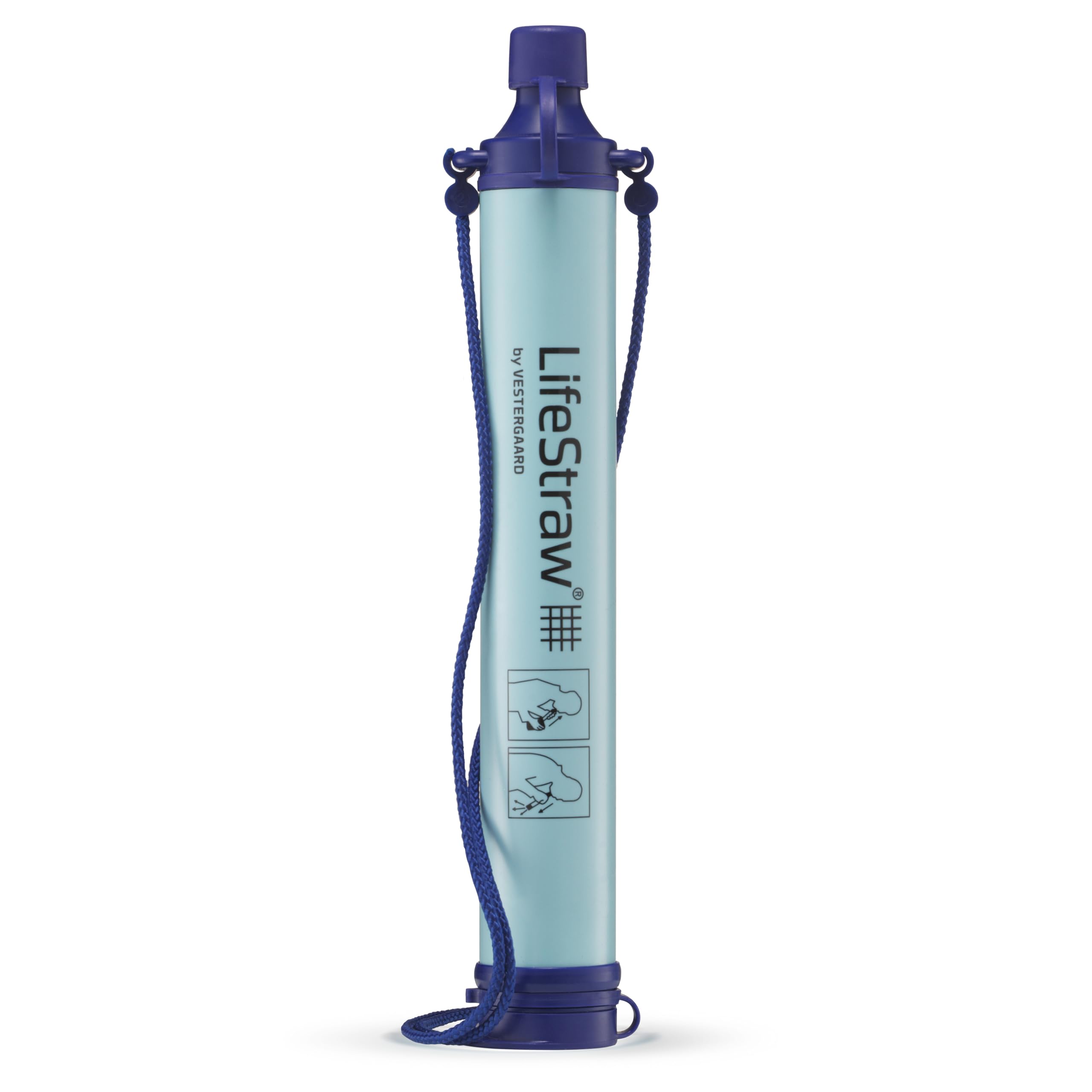


Best for Ultralight Water
LifeStraw Personal Filter
Key Features
- Weight: 1.59 oz
- Removes: Bacteria and parasites
- Filter life: 4,000 L (1,000 gal)
- Certification: NSF
- Price: Budget
Forty-five grams and a rated thousand gallons is the entire argument for the LifeStraw, and it’s why this is the top pick here. No batteries, no cartridges to swap, no assembly: you unscrew the cap, put the mouthpiece in the water and drink. The claims behind it are specific — 99.999999% of waterborne bacteria, 99.999% of parasites, microplastics down to one micron — and NSF certification backs them rather than a brand’s own say-so. That’s the difference between a filter you trust and one you merely hope works.
The rated life is worth putting in perspective, because it’s what separates this from a filter you treat as disposable. Four thousand liters is roughly a thousand gallons — more water than several seasons of weekend trips, even if you’re generous at every stream crossing. Replacement isn’t something we plan around, which is the highest compliment a piece of safety gear gets.
Using it is uncomplicated in a way that matters when you’re tired: nothing to prime, nothing to charge, nothing to break except the plastic shell. Where it earns its keep is the walking itself. A bottle is dead weight, and a filter this light means you can carry a liter and drink at the source instead of hauling three up a climb.
What we keep coming back to is how little thought it asks for. It lives in a side pocket, it doesn’t need a ritual to be ready, and it works the same on the tenth trip as the first. For a first kit, a day hike or the glovebox, it’s the item we tell people to buy before anything else on this list — and the one we replace the same week it goes missing.
Pros
- 45 g and one piece — barely a pack item
- Rated for 4,000 L (about 1,000 gal)
- NSF-certified bacteria and parasite removal
- Nothing to charge, prime or assemble
Cons
- Straw only, so no filling a bottle or pot
At 45 grams and the lowest price here, this is the first thing we tell new backpackers to buy: safe water with no setup, no batteries and no learning curve.
Best for Filling Bottles
Sawyer Squeeze SP129
Key Features
- Weight: 2.5 oz
- Included: Two 32-oz pouches
- Flow rate: 1.7 L/min
- Filter life: 100,000 gal
- Price: Midrange
The Squeeze answers the question a straw leaves hanging: how do you get four liters into bottles and a pot without spending your evening kneeling in a creek? The listed flow rate is 1.7 liters a minute, quick enough to fill a bottle while you’re standing there, and the kit arrives with two 32-ounce pouches, a drinking straw and a hydration-pack adapter. The filter itself weighs 71 grams.
We reach for it when the trip involves more than one mouth. The 28 mm threads take a standard soda or water bottle, which is the detail we appreciate most: when a pouch finally gives out, you aren’t hunting a proprietary replacement, you’re screwing the filter onto a bottle from the last gas station. The element is rated for 100,000 gallons, so the pouch is what you’ll actually replace — and that’s a cheap thing to replace.
Two habits make it last. Go easy when you tighten it onto a pouch, because the housing is plastic and a cracked filter ends the water plan for everyone. And backflush after a trip rather than waiting for the flow to slow, since flow is the first thing you notice when it clogs. It also works as a gravity setup: hang a full pouch and let it drain into a bottle while you pitch the tent. At 71 grams, the weight over a straw buys volume, not grams.
Pros
- 1.7 L/min flow fills bottles fast
- 28 mm threads fit standard soda bottles
- Two 32-oz pouches and an inline adapter included
- Lifetime warranty on the filter element
Cons
- Weighs and costs more than a straw filter
We recommend the Squeeze for anyone filtering for two people or filling a pot — the 1.7 L/min flow and 28 mm threads do what a straw can’t.
Best for No-Hardware Backup
Potable Aqua Tablets
Key Features
- Form: Two 50-count bottles
- Weight: 2.24 oz
- Targets: Bacteria and Giardia
- Price: Budget
Every water plan needs a failure case, and this is ours: two small bottles of tablets with nothing to clog, freeze or crack. One bottle holds 50 purification tablets; the other holds 50 PA Plus neutralizers that you add afterwards to lift the iodine taste and color back out of the water. The pair weighs 2.24 ounces and sits in a pack for seasons without being touched.
The job is the second system, not the first. A hollow-fiber filter that froze overnight, a squeeze bag that split, a filter dropped on rock — those are the moments tablets exist for. They cover bacteria and Giardia, which is what a backup has to do, and they need no maintenance between trips: no backflushing, no drying, no seals to check before you leave.
What we value is that they’re the one water system with no moving parts at all. The wait is the price: the water sits for the label’s contact time, then you add the neutralizer and wait again before drinking. That’s fine for water you want at dinner and irritating when you’re dry at midday, which is why tablets ride under a filter rather than instead of one. Iodine can also stain a bladder, so give treated water its own bottle.
Pros
- Nothing to clog, freeze or break
- Neutralizer tablets cut the iodine taste
- Two 50-count bottles at 2.24 oz total
Cons
- Contact time before the water is drinkable
Tablets are the backup that can’t clog, freeze or crack, and this two-bottle kit is the version we keep in every pack for the day the filter quits.
Best for Rain over Packs
ANYOO Hooded Rain Poncho
Key Features
- Length: 86 in shoulder to hem
- Weight: 9 oz
- Waterproof rating: PU 8000 mm
- Price: Budget
Eighty-six inches from shoulder to hem is the number that earns this poncho a place, because it’s what lets one piece of fabric cover you and your pack at the same time. A rain jacket protects the person. The pack, with a sleeping bag and dry layers inside, is usually the more expensive thing to keep dry, and a wet sleeping bag ends a trip faster than wet shoulders. The ANYOO is 210T ripstop polyester with a PU 8000 mm coating and taped seams, and it weighs 9 ounces — light enough that we stopped noticing it in the pack.
It’s a shelter you wear, not a jacket you hike in. The loose arm holes and long hem let air move, which is what stops a coated poncho turning into a sauna, and the side snaps let you close the sleeves down or open them up. The other side of that design is wind: in driven rain on an exposed ridge it billows and flaps, and a proper shell is the better tool there. We treat it as the layer that comes out when the sky opens and goes back in when we find somewhere to stop.
Practical details: the corner grommets mean it can be pitched as a small tarp over packs at night, and it folds into its own pouch small enough for an outside pocket. One caveat worth knowing before you order — there’s one size, and at 86 inches it is a great deal of fabric for a shorter hiker. If you’re small, expect to swim in it and plan accordingly.
Pros
- 86-inch length covers you and a pack
- PU 8000 mm coating with taped seams
- Packs small at 9 oz
- Grommets let it double as a pack tarp
Cons
- Snaps and Velcro are the flimsiest parts
When your jacket leaves your pack in the rain, this is the simplest fix on the list: 86 inches of coated polyester that covers you and your gear for 9 ounces.
Best for Wet-Weather Fire
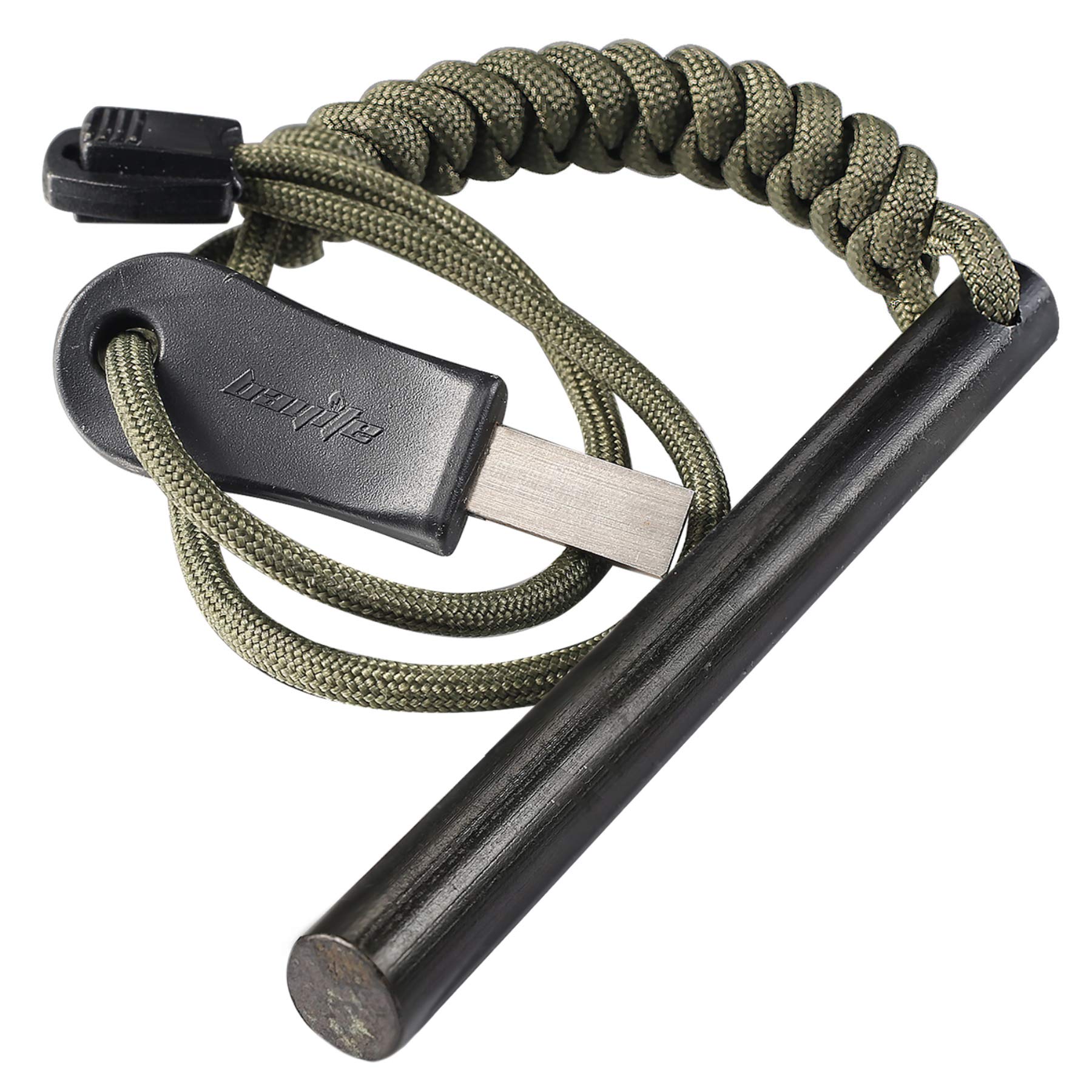
bayite Ferro Rod
Key Features
- Weight: 2.46 oz
- Lanyard: 5 ft paracord
- Rod size: 4 in x 3/8 in
- Spark heat: 5,500°F (3,000°C)
- Price: Budget
A ferrocerium rod is the least dramatic fire kit you can carry and the one most likely to still work next month: no fuel, no wick, no striker wheel to gum up with grit. This one is 4 inches long and 3/8 inch in diameter, with a tool-steel striker attached to 5 feet of paracord wrapped around the handle. The listed spark temperature is 5,500°F, and the maker claims it works wet or dry, at any altitude.
We like the thickness more than the claims. At 3/8 inch the rod is easy to hold in cold hands and slow to wear, and thin rods groove quickly if you practice — which is the whole game with a ferro rod. The paracord gives you a grip and, in a pinch, five feet of cordage already in your hand. It’s 2.46 ounces, more than a disposable lighter, and that’s the honest trade: a few grams for a fire that can’t be flooded or crushed.
The rod won’t make fire by itself. You need tinder that will take a spark — dry grass, birch bark, a cotton ball smeared with petroleum jelly — and the technique is to hold the rod still and pull the striker down it rather than pushing the striker into the rod. Scrape the coating off before your first trip and practice a dozen strikes at home, because the first attempt is usually a good shower of sparks and no flame. Check the fire rules where you’re going, too; plenty of places don’t allow a fire at all.
Pros
- Sparks wet or dry, with no fuel to run out
- Thick 4 in x 3/8 in rod lasts through practice
- 5 ft of paracord on the lanyard
Cons
- Heavier than a disposable lighter at 2.46 oz
For anyone who wants a fire to work after a soaking, this is our pick — a thick ferro rod with no fuel to run out and a striker attached to the lanyard.
Best for Packable Hygiene
GUM Folding Toothbrush

Key Features
- Design: Tri-fold
- Bristles: Soft, compact head
- Pack count: 2
- Price: Budget
The point of a folding toothbrush isn’t the folded size — it’s that the bristles end up inside the handle, so the part that goes in your mouth never touches the inside of a stuff sack. This one is a tri-fold with a compact soft head and a built-in tongue scraper, and it comes two to a pack. Folded, it’s short enough for a hipbelt pocket or a wash kit the size of a fist.
Drying is what separates a travel brush you keep using from one that gets grim by day four. Fold a wet brush into a sealed case and it stays wet; this one has vents in the handle, so it can go back in the pack damp and finish drying on the outside. The compact head takes a little longer to cover the same teeth as a full-size brush, which is the trade you’re making for the size.
We keep the second brush of the pair as the spare rather than giving it away, because the joint is where any folding brush gives out first and this one feels light rather than solid in the hand. Given what a lost or broken toothbrush costs in morale on day three, a spare already in the kit is worth more than the few cubic inches it takes up.
Pros
- Bristles fold inside the handle
- Vented handle lets it dry in a pack
- Two brushes per pack
Cons
- Hinge is the part that gives out first
For a brush that disappears into a hipbelt pocket and comes out with clean bristles, this is the neatest solution here, and the two-pack covers you and a partner.
Best for Quick-Dry Wash Kit
Rainleaf Microfiber Towel

Key Features
- Size: 24 x 12 in
- Fabric: 85% polyester, 15% polyamide
- Weight: 1.44 oz
- Absorbency: 5x its weight
- Price: Budget
A microfiber towel only makes sense if you stop expecting terry cloth. The Rainleaf is 85% polyester and 15% polyamide, it absorbs around five times its own weight in water, it weighs 1.44 ounces and it rolls into a ventilated carry bag. You pat with it rather than scrub; rub hard and you push water around instead of picking it up.
The drying is the feature. A wet cotton towel in a pack is a heavy, sour problem that spreads to everything next to it, and this one is ready to use again after a night on a line. Ours hung off a pack strap through a hot afternoon and went back in the bag dry. On a long trip that cycle matters more than how plush the thing feels against your skin.
Sizing is the decision, and the range runs to six sizes and sixteen colors. The 24-by-12 version is a wash-kit towel — face, hands, a wiped-down pot lid, condensation inside a tent in the morning. If you want something to wrap around yourself after a shower, buy a bigger one; the 40-by-72 size also adds a zippered pocket, which this one doesn’t have.
We rate the small one as the better buy for a pack, because it’s the size that actually gets carried and used every day rather than the size that sounds more useful in a shopping cart. The snap loop is the detail we appreciate most — clip it to the outside of the pack in the morning and it’s dry by lunch.
Pros
- 1.44 oz and packs into its own bag
- Dries on a pack strap between stops
- Absorbs around five times its weight
Cons
We rate it as a wash-kit towel rather than a body towel: at 24 by 12 inches it’s a pat-dry, and that’s exactly the size that actually gets carried and used.
Best for Emergency Warmth
Mart Cobra Emergency Blankets

Key Features
- Size: 82 x 52 in
- Material: Aluminized Mylar
- Pack count: 4
- Heat retention: Up to 90% of body heat
- Price: Budget
An emergency blanket is a heat reflector, not a blanket, and the difference stops being pedantic the first time you use one. This is aluminized Mylar, 82 by 52 inches unfolded, and the maker claims it reflects up to 90% of body heat. It has essentially no insulation of its own: it works by bouncing your own warmth back at you and cutting wind, which is exactly what you want in the twenty minutes before a shelter goes up, or after someone has gone into cold water.
Four to a pack, each folded and sealed, is the right quantity for the way these get used — one in the pack, one in the car, one in the first-aid kit, one to hand to somebody else. Folded, a single blanket disappears into a lid pocket and you forget it’s there, which is the whole point of emergency gear.
One thing to know before you rely on it: Mylar doesn’t breathe and it’s loud, so wrap it loose over a layer rather than against bare skin, and don’t plan on sleeping in it. It supplements a bag; it doesn’t replace one. Get it out of the stuff sack before the trip and practice the wrap once in daylight, because fumbling with a crinkling sheet in the dark is its own small disaster.
We keep one at the top of the pack, reachable without unpacking, and that’s the only discipline the item asks for. What we value is the price of being wrong: the least expensive thing here covers four bags and buys time in the one scenario you can’t plan for.
Pros
- Four sealed blankets per pack
- Folds into a lid pocket
- Reflects up to 90% of body heat
Cons
- Tears once it’s dragged over rough ground
We treat these as a few ounces of insurance: four heat reflectors that stuff into a lid pocket and can buy a cold, wet night the time to get better.
How We Tested the Best Backpacking Gear
We built the shortlist from spec sheets and a lot of reading: packed volume and trail weight in ounces, fabric denier and coating, warranty terms, and price per piece. Anything that couldn’t survive a season of weekend use got cut before it reached a trailhead — we passed on ultralight shelters with a reputation for tearing at the guy-out points and on bargain bags claiming a temperature rating the fill couldn’t back up. From that pile we pulled 16 items and used them for six months, from early spring frosts through a muggy July.
Every piece was weighed on a kitchen scale and packed into the same 50-liter bag in my living room, which is where several so-called compact items lost their case — a pillow that swallowed a third of the main compartment is not compact, whatever the listing said. On trail, we paid attention to the boring stuff: whether a strap stayed put after an hour of climbing, whether a zipper snagged when our hands were cold, whether a tent fly still shed water after a wet week on the Appalachian Trail. Setup and pack-up were timed at camp, including one arrival after dark in the rain.
Drying time got its own test. After each trip, wet items were hung on a shaded line and checked hourly to see what was dry by morning and what was still damp at noon the next day. Durability came from mileage and laundry — pack bottoms dragged over granite, stuff sacks stuffed one time too many, fabrics washed on the same cycle a normal person would use and then checked for pilling, seam stress, and fading. Value was the final filter: what each piece cost against how often we actually reached for it, and how it stacked up against similar-weight alternatives.
How to Choose Backpacking Essentials
Backpacking gear is a weight budget, and the items that earn their place are usually the ones that remove a risk rather than add a convenience.
Weigh Each Item Against What It Replaces
The first question isn’t how much an item weighs; it’s what it lets you leave behind. A 45-gram filter that lets you drink at the source replaces two or three liters of carried water — several pounds at the start of a day. A 9-ounce poncho can stand in for a rain jacket and a pack cover together. We’re suspicious of gear that only adds: if nothing comes out of the pack when something goes in, the item has to be clearly better than what’s already there. Run that test on every purchase and the list gets shorter and lighter.
Decide How You’ll Drink Before You Buy a Filter
Straw, squeeze, bottle-top or tablets — each suits a different trip. A straw is the lightest way for one person to drink straight from a source. A squeeze filter earns its extra weight when water has to go into bottles and into a pot, or when two or more people are filling up. The trap is buying the lightest filter and then discovering it can’t fill a pot: if your dinners need water, you need a filter with an outlet that goes into a container, not just into your mouth.
Check the thread while you’re at it. A 28 mm fitting matches a standard soda or water bottle, which turns a cheap bottle into a spare reservoir and means a split pouch doesn’t end the trip.
Carry Two Water Systems, Not One
Filters fail in boring, predictable ways: a wet hollow-fiber membrane that freezes overnight, a squeeze pouch that splits at the seam, a housing cracked by overtightening. None of that is exotic, and any of it leaves you with no way to make water. The fix costs almost nothing — a bottle of purification tablets at the bottom of the pack, with its own contact time and its own limits. Treat tablets as the layer under the filter and you won’t be walking out early because of a small plastic part.
Rain Gear Has to Cover the Pack
The question with rain gear isn’t whether it’s waterproof; it’s what it covers. A jacket keeps you dry while your sleeping bag soaks. Look for a length that drops below the top of your pack, a hydrostatic rating around 8,000 mm or better for steady rain, and taped seams rather than a coating alone. The trap with a poncho is wind: a loose one billows on an exposed ridge, so treat it as a stop-and-shelter layer rather than a shell for a full day of walking. That’s still a lot of protection for very little weight and money.
Small Items Fail at the Soft Parts
Zippers, snaps, hinges, pouch seams, Mylar film — the working parts of small gear wear out long before the clever part does. Before a trip, look at the piece that flexes: the hinge on a folding toothbrush, the snaps on a poncho, the seam where a squeeze pouch meets its thread. Carry the spare if it’s small and cheap (a second brush, a second blanket) and skip the item that has no answer for its own wear point. Then dry everything that folds: a brush or towel packed wet is a smell waiting to happen.
Frequently Asked Questions
Do backpacking water filters remove viruses?
The filters here publish claims for bacteria, protozoa and microplastics. Virus removal is a separate claim that has to appear on the label, so look for it before a trip where human waste could be in the water. If you can’t confirm it, run the water through the filter and then treat it with purification tablets as well.
Do water purification tablets expire?
Yes, and the clock starts before you open the bottle. Tablets lose potency over time, so write the expiry date on the bottle in marker, replace the supply at the start of every season, and check the date when a new bottle arrives instead of assuming it’s fresh. An expired tablet is a gamble, not a backup.
Can I fly with a ferro rod?
Put the fire kit in checked baggage. A ferrocerium rod and striker aren’t fuel, but carry-on screening rules vary by country and airline, and a striker with a sharp edge tends to get a second look. Check your carrier’s rules before you leave, and keep the rod in its packaging so it’s obvious what it is.
Final Verdict
Start with the LifeStraw. Forty-five grams, no parts to lose, a rated thousand gallons, and the lowest price on this page — safe water is the one problem you can’t improvise around, and this solves it before any other purchase on the list matters.
When your trips grow past one person, the Sawyer Squeeze is the upgrade worth paying for: 1.7 liters a minute, two pouches, and threads that fit a soda bottle. Everything else here is a smaller decision, though if you walk in cold, wet country, the poncho is the item most likely to save a night.