This post contains affiliate links. We may earn a small commission when you buy through our links — at no extra cost to you.
The pitch for a two-person tent is simple: a small, light shelter you carry anywhere. Then the rain starts at 2 a.m., and you find out whether you bought a shelter or a sieve. A good one keeps two adults and a weekend’s gear dry without a wrestling match at setup; a bad one leaves you sponging out the floor and nursing a zipper that quit on night one.
My team and I have spent the past eight months in 12 of them, from budget domes to pricier backcountry doubles, and the differences show up in the first ten minutes: how the poles feed through the sleeves, how the door zips, how much of the advertised floor space you can actually lie on. One thing nobody prints on the box — a two-person rating usually assumes two sleeping pads and nothing else. If you want a duffel inside with you, or you’re tall enough to care about peak height, shop a size up. What follows is what held up and what didn’t.



Best for Car Camping
Coleman Sundome 2 Person
Key Features
- Sleeps: 2
- Seasons: 3-season
- Setup time: 10 minutes
- Packed weight: 7.5 lb
- Price: Midrange
We put the Sundome up in the fading light, one person, no argument about which pole went where: color-coded sleeves, clips that snap over the poles, and a dome standing in about ten minutes the first time and less once you know it. That is the whole case for this tent. It removes the part of camping that goes wrong. For two people who get out a handful of weekends a season and want to arrive, eat and sleep, it is the one we point at first.
Rain is where it earns the extra money over a cheap dome. Welded corners and inverted seams keep the stitching out of the water’s path, and the coated fly sheds a steady night rather than wetting through. A ground vent and a wide window keep air moving on a mild evening, which matters more by the second morning than most shoppers expect. Inside, two adults sleep with a little room between them and their bags pushed down to the foot, which is what a two-person tent should be and often isn’t.
The trade-offs are weight and one door. At 7.5 pounds the Sundome lives in the trunk, and carrying it any distance is a decision you make once and reconsider by the second mile. The single door means whoever draws the far side climbs over the other at 3 a.m., annoying rather than disqualifying. The fiberglass poles are the part to baby: feed them through by hand instead of flicking the tent open, and keep a repair sleeve in the bag for the day one lets go.
Pros
- Pitches in about ten minutes, one person
- Welded corners and inverted seams shed rain
- Two adults fit with bags at the foot
- Ground vent and wide window move air
Cons
- 7.5 lb rules out backpacking
- One door for two people
Our default pick for two people camping from a car: a ten-minute pitch, a fly that handles real rain, and enough floor for two adults and their bags.
Best for Couples Camping
Forceatt 2 Person
Key Features
- Sleeps: 2
- Packed weight: 5.5 lb
- Waterproof rating: 3000 mm
- Doors and vestibules: 2 doors, 2 vestibules
- Price: Midrange
Two doors decide this tent. In a two-person shelter a second exit isn’t a luxury, it’s the difference between getting up in the night and waking your partner to let you out, and it’s the first thing we check on any tent this size.
The floor is 88.6 by 53.1 inches, which reads long and narrow and behaves that way: two 25-inch pads fill it edge to edge, and you get the length back if you’re over six foot. Each side has a D-shaped door and a vestibule for boots and a pack. The 7001 aluminum poles are what we care about most here, because aluminum bends and can usually be straightened on the trail, where fiberglass splinters and ends the trip. A 3000 mm coating and a welded floor are the substance behind the dry nights.
Forceatt bills it as a three-to-four-season tent, and we read that as wind and cold rather than snow: it’s a double-wall dome with mesh, so it holds a cold night but not a snow load. At 5.5 pounds it’s a load two people split without noticing and one person notices all day. Pitch it with the guylines out in a gust, because the poles can bend if the dome is left to flap, and a repair sleeve weighs nothing.
Pros
- Two doors and two vestibules
- Aluminum poles that bend, not splinter
- 3000 mm coating and welded floor
- 88.6-inch floor suits tall sleepers
Cons
- 5.5 lb is heavy for one carrier
- Four-season billing overpromises for snow
The two-door tent we hand a couple who split the load between packs: separate exits, a porch on each side, and aluminum poles that survive a bend.
Best for Backpacking Trips
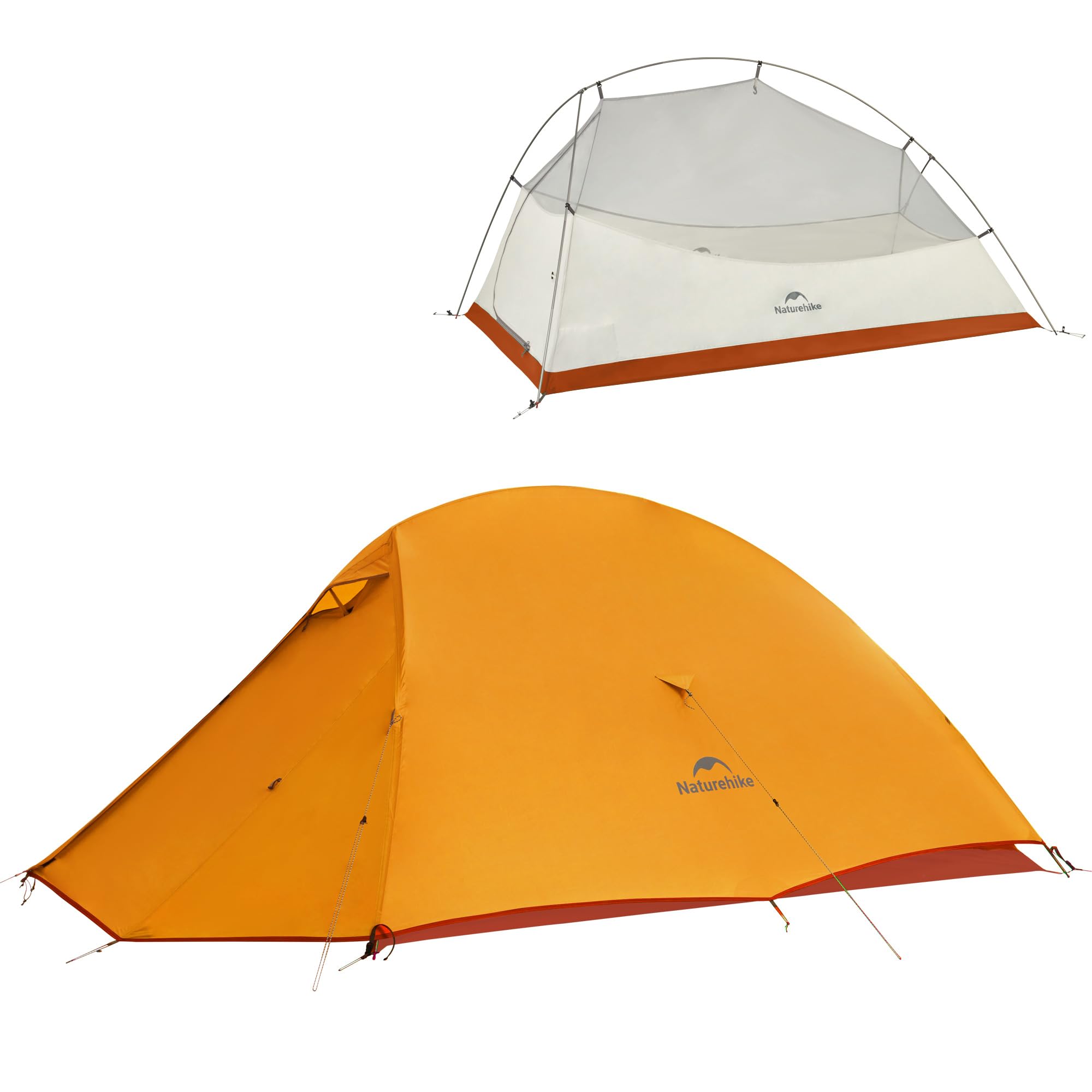
Naturehike Cloud Up 2 Base
Key Features
- Sleeps: 2
- Footprint: Included
- Packed weight: 4.3 lb
- Waterproof rating: 3000 mm+
- Price: Premium
The Cloud Up Base is the tent we hand to someone whose camping involves a pack. At 4.3 pounds it’s light enough that splitting it between two people makes it nearly disappear, and the footprint comes in the bag, which is one less thing to buy and one less thing to forget.
It pitches fast and small, which matters on a ledge or in a stand of trees where a bigger dome won’t sit. The fly sits over a mostly mesh body, so on a clear night you can leave it off and sleep with the stars, and in the rain the 3000 mm+ coating and taped seams did their job for us. The five guylines are worth using; this is a tall, light tent and it likes being tied down.
The catch is width. At 51.2 inches the floor takes two pads and nothing else: no spare inch for a dry bag, and the single door means one of you climbs over the other. The vestibule is small enough that two big packs end up inside with you. That’s the trade for the weight, and it’s a fair one for a couple who pack light, but if you want two people plus their gear, look at the Forceatt instead.
Pros
- 4.3 lb with the footprint included
- 3000 mm+ coated fly
- Pitches fast in tight spots
Cons
- 51-inch floor leaves no room beside two pads
- One door and a shallow vestibule
Our backpacking pick: 4.3 pounds, a footprint in the bag, and a fly that handles a wet night, as long as you and your partner are happy sleeping close.
Best for Budget Backpacking
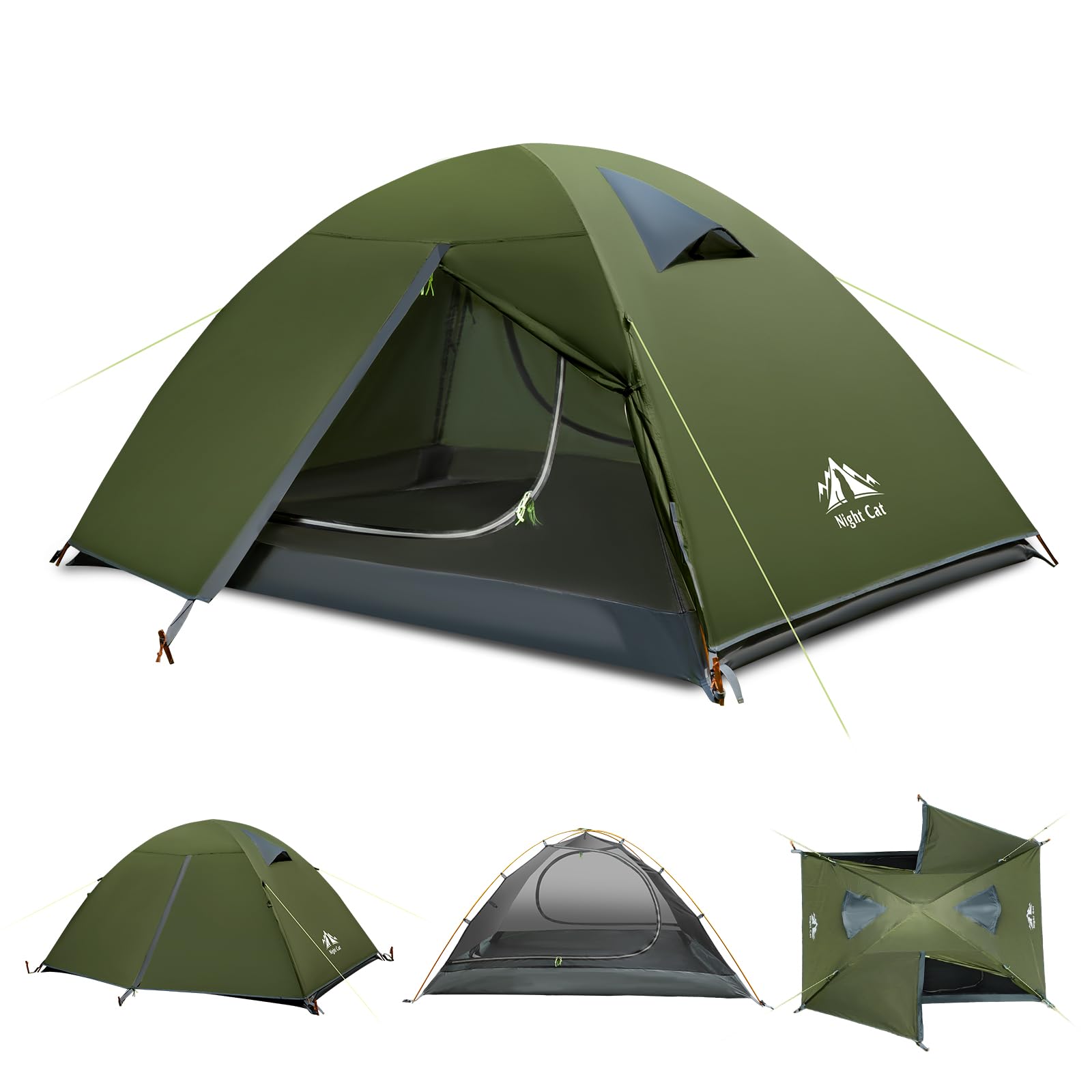
Night Cat Backpacking 2 Person
Key Features
- Poles: Aluminum
- Sleeps: 2
- Packed weight: 4.4 lb
- Doors and vestibules: 2 doors, 2 vestibules
- Price: Midrange
Night Cat sells this for roughly half what the lightest tent here costs, and it doesn’t get there by stripping out the things that make a two-person tent workable: two doors, two vestibules, aluminum poles, and a 4.4-pound carry.
The pitch is two aluminum poles and a set of clips, and it’s a five-minute job the first time. The fly is full coverage with taped seams, and the interior is 82.6 by 55.1 inches: two pads with a couple of inches left over and enough length for a six-footer. There’s a hanging loop inside for a small lantern, which sounds trivial until you’re reading by phone light for the third night running.
The vestibules are the compromise at 4.33 square feet between them, so a big pack either sits in the porch at an angle or comes inside with you. Durability is the open question: the poles and fly are sound, but the fabric is lighter than the Coleman’s and this design doesn’t have as many seasons behind it, so we treat it as a tent to look after rather than abuse.
Pros
- Two doors and two vestibules on a budget
- 4.4 lb with aluminum poles
- 82.6-inch floor fits tall sleepers
Cons
- Vestibules too small for two big packs
- Lighter fabric than the pricier picks
Our budget backpacking pick: two doors, aluminum poles, and a 4.4-pound carry at about half the price of the Naturehike.
Best for Budget Car Camping
Clostnature 2 Person
Key Features
- Sleeps: 2
- Trail weight: 5.3 lb
- Waterproof rating: 2000 mm
- Doors and vestibules: 2 doors, 2 vestibules
- Price: Budget
Two vestibules and two doors on a tent this cheap is unusual enough that we checked the specifications twice. Each side has its own entry and its own porch, so boots, a stove and the daypack you don’t want in the sleeping space all have somewhere to go.
Eighty-seven inches by 59 inches of floor and 45 inches of height means most adults can sit up and nobody’s head touches the wall. A three-minute pitch is realistic: the X-pole design and clips go up without swearing, and the instructions are sewn into the bag. The 2000 mm coating is the lowest in this group, though, which is fine for a weekend of showers and not what you want for a night of proper rain.
Watch the zips. The doors run on lighter zippers than the rest of the tent deserves, and they can jam or come off the track; open and close them slowly, and check both before you leave the driveway. Treat it as a fair-weather tent with a great layout and it’s a bargain, and the budget saved is real money toward a footprint and a better set of stakes.
Pros
- Two doors and two vestibules on a budget
- 87-inch floor fits tall sleepers
- Three-minute pitch
Cons
- Waterproofing suits showers, not sustained rain
- Door zippers can jam or fail
A lot of tent for the money if your trips are mostly dry: two doors, two vestibules, and an 87-inch floor at a budget price.
Best for a First Tent
JELUCAMP 2 Person Dome

Key Features
- Sleeps: 2
- Floor size: 86.6 x 59.1 in
- Packed weight: 4.3 lb
- Waterproof rating: 3000 mm
- Price: Budget
Eighty-six inches long and fifty-nine wide at 4.3 pounds: on paper this is the best space for the weight in the group, and it’s also the least expensive tent here. That combination is why it earns a place rather than getting dismissed as another budget dome.
It goes up in a few minutes with two fiberglass poles and clips, and the double-layer door gives you mesh for a warm night and a solid panel when the wind picks up. One door, though, and no vestibule at all, so boots and packs live inside and eat into that generous floor. Two people who pack light will be fine; two people with a duffel each will be climbing over things.
A 3000 mm coating is a fabric figure, not a promise about seams, so we treat this as a fine-weather tent and give it a spray of seam sealer over the pole crossings before a wet trip. As a first tent, a festival shelter, or a spare for the kids, that’s plenty, and the price leaves room for a footprint.
Pros
- 4.3 lb with an 86.6-inch floor
- Double-layer door for ventilation
- Cheapest tent here
Cons
- Single door and no vestibule
The cheapest way into a real two-person tent: light, long and roomy, provided your camping is mostly dry and you can live with one door.
Best for Festivals, Fair Weather
Night Cat Pop-Up Tent

Key Features
- Sleeps: 2 to 4
- Floor size: 112 x 79 in
- Pitch time: 3 seconds
- Packed weight: 6.6 lb
- Price: Midrange
You throw it on the ground, spread the poles, and it’s up: genuinely a few seconds, no threading, no clips. Of everything on this page, this is the one that gets a first-timer camping without a rehearsal in the yard.
The floor is 112 by 79 inches, and that is a lot of tent for two people. A queen mattress fits with room to spare, there are two doors and two windows that zip from the inside, and the mesh panels make it a genuinely pleasant summer shelter. It is closer to a small family tent than a backpacking tent, and it should be judged that way.
The take-down is the price. It folds on a figure-eight and it takes practice: the first few times you will wrestle it, and what you end up with is a 28-inch disc rather than a stuff sack. It is also not a wet-weather tent. Rain works its way in through the doors and the fly in sustained weather, and a big flat panel like this catches wind.
What it’s genuinely good at is the arrival: unload, throw, done, and you’re eating while everyone else is still counting poles. That speed is worth real money on a Friday night, and it’s why we keep coming back to it despite the wrestling match when it’s time to leave.
Pros
- Three-second pitch
- 112 x 79 in floor sleeps two in luxury
- Two doors and windows that zip from inside
Cons
- Not a wet-weather tent
- Folding it back takes practice and a 28-inch disc
A three-second pitch and a festival-sized floor make this the fastest way into a tent, as long as the forecast is kind.
How We Tested 12 Two-Person Tents
We started with roughly 40 tents and trimmed to 12. Anything that couldn’t be pitched solo, had only one door, or quoted a packed weight that didn’t match its real footprint came off the list, as did models with a pattern of pole or zipper complaints in owner reviews. The final dozen ran from cheap dome tents to three-season doubles, and we bought each one at retail so the packaging, the missing instructions, and the return policies were exactly what you’d get.
Setup got timed twice: once in daylight with two people, once alone with a headlamp after dark. We noted whether poles slid through their sleeves without snagging, whether the fly clipped on straight the first attempt, and whether the whole thing went back into its stuff sack without a fight. Several didn’t — and that’s a real cost when you’re breaking camp in the rain with cold hands.
Weather protection was tested the unglamorous way: twenty minutes of a garden hose aimed at the fly and floor seams, then a genuinely wet weekend that found every weak point. We looked for water pooling under the floor, mist pushing through the fabric, and condensation soaking our bags by morning. Durability came from repetition — each tent was pitched and struck a dozen or more times, and we watched the zippers for catching at the curves, the pole ferrules for splintering, and the stake loops for tearing out.
Finally, we slept in them. Two adults plus a weekend’s gear, checking whether we could sit up without our heads brushing the ceiling, whether the vestibule swallowed two packs, and whether the door could be zipped from inside without kneeling in the dirt. Value got judged last: what the tent really cost once you added a footprint or decent stakes, and whether the cheaper ones were a bargain or just cheap.
How to Choose a Two-Person Camping Tent
The first question isn’t which tent. It’s whether you’ll carry it, because that single answer rules out half of what’s on this page before you compare anything else.
Decide whether you’re carrying it
A tent you drive to and a tent you walk with are built to different rules. The Coleman here weighs 7.5 pounds because it spends its life in a trunk; the Naturehike and the Night Cat backpacking tent come in around 4.3 to 4.4 pounds because they don’t. If two of you share the load, a 4.5-pound tent is roughly two and a quarter pounds each, which is the difference between a pleasant climb and a long one.
Set a weight ceiling before you fall for a floor plan. It is much easier to reject a tent for being too heavy than to talk yourself into carrying it.
One door or two
Two doors cost money and a few ounces, and they buy separate exits, separate vestibules, and no 3 a.m. climbing over your partner. For a couple who camps often, we think that’s the upgrade worth paying for, and the Forceatt, the Night Cat and the Clostnature all give you two. A single door is fine on a small tent used for short trips, as long as you accept that boots and packs will live inside with you.
What a waterproof rating actually tells you
A hydrostatic head figure, 2000 mm or 3000 mm, describes the fabric, usually the fly. It says nothing about the seams or the floor, which is where water actually gets in. Look for welded or taped seams and a floor with a raised bathtub edge; a 2000 mm fly with sealed seams keeps you drier than a 3000 mm fly with stitched ones.
And if the inside of the fly is wet in the morning while the outside is dry, that’s your breath condensing, not a leak.
The two-person floor is smaller than the number suggests
Capacity assumes sleeping pads, not pads plus bags and duffels. Two standard 25-inch pads fill a 50-inch floor exactly, wall to wall; 55 to 59 inches leaves a little breathing room and something to put a water bottle on. Length matters just as much: 82 inches suits most adults, 87 or 88 inches is what anyone over six foot should be looking at.
Measure your pads before you measure the tent, and plan on the vestibule for anything you’d rather not sleep against.
Poles, zippers, and what breaks first
Failures in this category cluster in the poles and the door zips. Aluminum poles bend, and a bent pole can often be straightened enough to get you home; fiberglass ones splinter, and a splinter is a worse problem than a kink. Whichever you buy, pitch it once in the yard, carry a repair sleeve, and work the zips slowly for the first few trips, because a zipper that’s going to fail usually shows you early.
Frequently Asked Questions
Do I need to buy a footprint for a camping tent?
It helps, but you don’t have to buy one. A footprint protects the floor from abrasion and stops ground water wicking through. The Naturehike Cloud Up Base comes with one; for the others, cut a tarp so it sits an inch inside the tent’s outline. A footprint bigger than the tent catches rain and channels it under the floor, which is worse than going without.
Why is the inside of my tent wet in the morning?
Almost always condensation, not a leak. Two people breathing in a closed box put a lot of moisture into the air, and it collects on the coldest surface, which is the fly. Open the ground vent, crack a door, and pitch so the vent faces whatever breeze there is. If the wet is only on the inside of the fly while the tent fabric underneath is dry, the tent is doing its job.
Can I use a three-season tent in winter?
For frost, wind and an unexpected dusting of snow, yes. For real snow, no. These tents are built around mesh panels and a fly, so they shed heat and won’t carry a snow load. If you plan to camp below freezing, look for a solid inner and a stronger pole set, or move up to a four-season shelter. From April to October, a three-season tent is the right buy.
How do I make a tent last more than a few seasons?
Two habits do most of the work: dry it completely before it goes into storage, and never leave it packed wet for more than a day, because mildew eats coatings. Store it loose rather than compressed, and when water stops beading on the fly, re-proof it with a spray-on treatment instead of replacing the tent.
Final Verdict
The Coleman Sundome 2 Person is the tent we recommend to most people asking this question. It pitches in about ten minutes, handles a wet night, and has enough floor for two adults and their bags: the three things that decide whether a camping weekend works.
If you’re carrying the tent rather than parking beside it, the Forceatt gives you two doors and aluminum poles at 5.5 pounds, and the Naturehike Cloud Up Base is the one that goes up a mountain. Buy for the trips you actually take, not the ones you’d like to.