This post contains affiliate links. We may earn a small commission when you buy through our links — at no extra cost to you.
A scrape on the trail is never just a scrape — it’s the mile and a half back to the car with a wad of napkins pressed to your shin. A good wilderness first aid kit is what keeps a small injury from ending a good day, and a bad one from turning into a genuine emergency. The trouble is that most of what gets sold as backcountry-ready is either a blister kit in a clever pouch or a five-pound box of hospital surplus you’ll resent by the second switchback.
The kit that actually works is the one you don’t mind carrying, which is why portability and completeness fight each other in every kit I’ve opened. Something first-timers don’t learn until it matters: gloves, gauze, and tape run out or expire long before the fancy splint does. I’ve spent nine months with 12 kits rotating through my pack, my truck, and my closet, and the short list below is what I’d grab again.


Best for Backpacking and Hiking
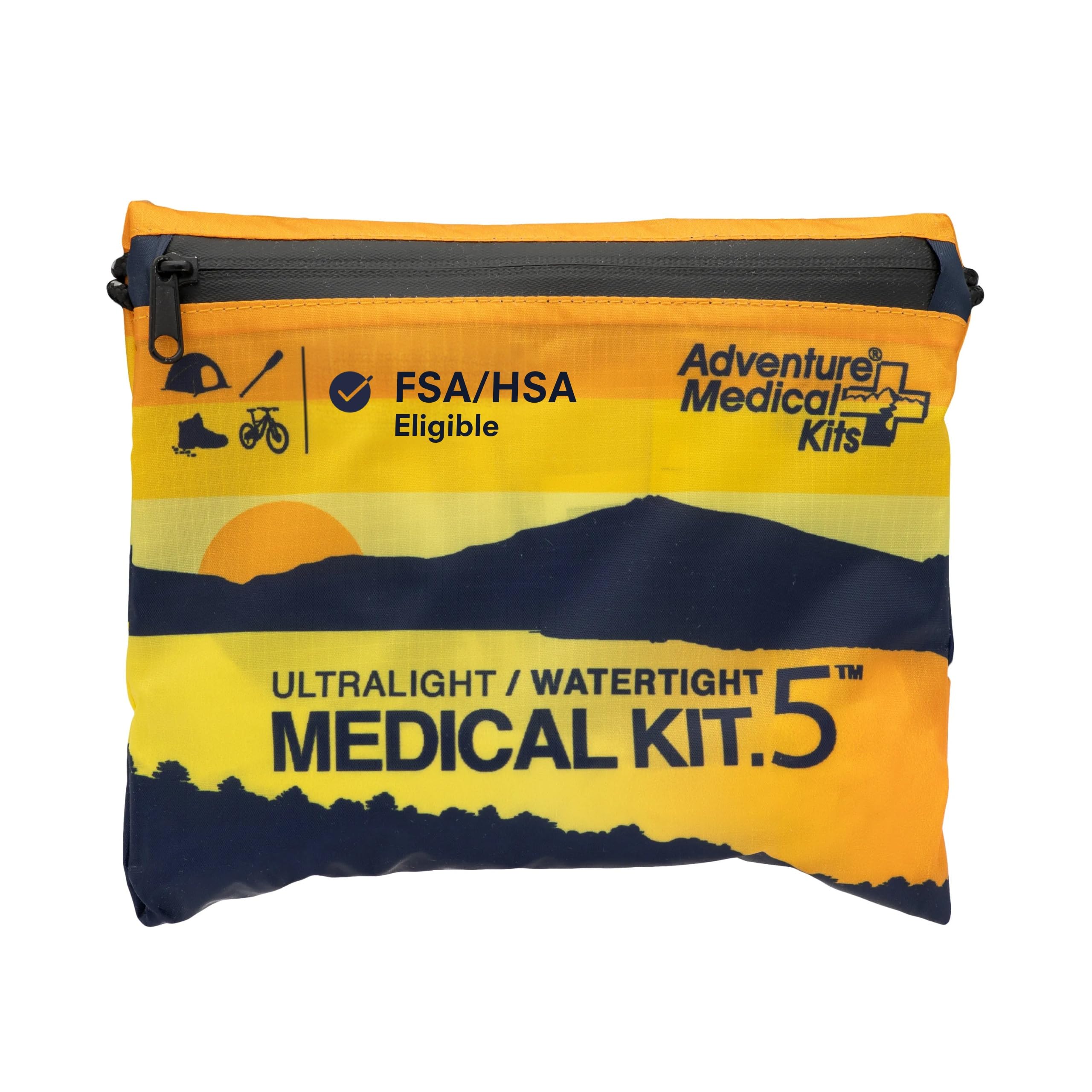
Adventure Medical Ultralight .5
Key Features
- Capacity: 2 person
- Blister care: Die-cut moleskin
- Water protection: Waterproof DryFlex inner bag
- Dimensions and weight: 7 x 1 x 5 inches; 3.52 ounces
- Price: Midrange
At 3.52 ounces, the Ultralight/Watertight .5 is the kit that comes along when the pack weight is already an argument, and that number is most of the reason it wins here. It drops into a side pocket and stays out of the way until something goes wrong. Inside, the contents are chosen for what actually happens on a trail: gauze and dressings for a real cut, antiseptic wipes, antibiotic ointment, sting relief, and die-cut moleskin for the blister that starts at mile four.
Two bags do two jobs, and knowing which is which matters. The outer pouch is water-resistant; the sealed inner bag is the waterproof layer, so on a wet trip the inner one is what you trust and the outer one is what eventually wets out. There is a little slack in the pouch as well, which is rare at this weight — enough room for a couple of extra dressings or a personal medication.
What you give up is quantity. Against the 110- and 250-piece kits here, this is a small kit, and per item it is among the least generous of the group: you are paying for the waterproofing and the weight, not the contents list. For day hikes and weekend trips, where a cut and a blister are the realistic problems, that is a trade we take every time. For a truck or a cabin, spend the same money on a bigger pouch and stock it yourself.
Pros
- 3.52 ounces and pocket-sized in a pack
- Sealed inner bag keeps supplies dry
- Moleskin and sting relief for trail problems
- Spare room for extra dressings or medication
Cons
- Sized for two people, not a group
The kit we carry when pack weight is already tight: 3.52 ounces, a genuinely waterproof inner bag, and supplies chosen for cuts and blisters instead of worst-case fantasy.
Best for Wet Weather Trips
Surviveware Waterproof Kit
Key Features
- Mounting: MOLLE compatible
- Compartments: Labelled and organized
- Waterproofing: IPX7
- Dimensions and weight: 7.5 x 5.5 x 3.5 inches; 2.25 pounds
- Price: Premium
Labelled compartments are the reason to buy the Surviveware. Every section is marked, so finding the burn gel or the butterfly closures takes a glance with a headlamp rather than emptying the bag into the mud. On a real trip that is worth more than any single item in the contents list.
We rate it as the best-organized kit of these, and the case backs the claim up: an IPX7 rating, watertight zippers, and a build that feels as though it will still seal after a few seasons of being sat on in a truck bed. The contents go well beyond the mini kits — enough for a weekend of minor injuries rather than one scrape — which puts it in group-kit, canoe-barrel, or vehicle territory.
The zipper is the compromise. It is stiff, it ships with a tube of grease to keep the seal working, and opening it takes two hands and a moment of patience. With cold hands, or when you are the one who is hurt, that becomes a two-person job. We understand the design decision, since a soft zip would leak, but it is the one thing keeping this from being the fastest kit here to open when it counts.
Pros
- Labelled compartments you can read by headlamp
- IPX7 case with watertight zippers
- Contents cover a weekend of minor injuries
Cons
- At 2.25 pounds it stays near camp
For wet trips and group kits, the labelled compartments and watertight case make this the easiest kit here to use in bad weather, if you can spare the weight.
Best for Vehicle and Basecamp
EVERLIT 250 Pc Survival Kit
Key Features
- Pieces: 250
- Mounting: MOLLE straps
- Compartments: Three large
- Pouch material: 1000D water-resistant nylon
- Price: Midrange
A lot of what you are buying with the EVERLIT kit is the bag: 1000D nylon, three large compartments, solid stitching, and a wall of MOLLE straps for lashing it to a roll bar, a pack frame, or a boat rail. That is not a knock. A pouch that survives being thrown in and out of a vehicle is exactly why people keep this one loaded and refill it as things get used.
The medical side is broad — bandages in several sizes, wipes, dressings, tape — and the survival extras are what make it a ditch bag rather than a pure first aid kit: a mylar space blanket, a three-mode flashlight, and paracord. On a family camping trip or a long drive, we like having that mix in one grab-and-go bag instead of three.
One caveat matters more than the rest. The nylon is water-resistant rather than waterproof, so if the kit lives on a boat or in an open truck bed, bag the contents before you stow it. This is a bag you keep somewhere — a vehicle, a basecamp, a cabin — and on that job it is the most complete of these.
Pros
- Tough 1000D nylon MOLLE pouch
- 250 pieces with room to restock
- Three large compartments keep supplies sorted
Cons
- Survival tools take space from medical supplies
The kit we leave in the truck or at basecamp: a tough MOLLE pouch, 250 pieces inside, and enough room to keep restocking it season after season.
Best for Budget Day Pack
General Medi Mini 110
Key Features
- Extras: Foil blanket and scissors
- Pieces: 110
- Dimensions and weight: 7.1 x 1.9 x 5.1 inches; 5.6 ounces
- Price: Budget
This is the least expensive kit in the group, and the one we hand to people who want a pack, a glovebox, and a saddlebag covered without thinking hard about it. At 5.6 ounces and 7.1 by 1.9 by 5.1 inches it disappears into a lid pocket, a large fanny pack, or the space under a car seat.
For a day hike, that is usually enough. The 110 pieces cover a cut, a graze, a smashed finger, and a splinter, with a foil blanket and a small pair of scissors in the bag as well. We still add blister plasters and any personal medication, because no kit at this size carries them, and we would rather pay for those once than carry a heavier bag all season.
The pouch is a soft zip bag with one main compartment, so opening it on a windy summit risks everything leaving at once; a small stuff sack inside fixes that for the price of a coffee. Buy it as the kit that is always there rather than the one you rely on for a multi-day trip.
Pros
- 5.6 ounces and easy to stow
- 110 pieces cover basic wound care
- Lowest-priced kit here, easy to buy in multiples
Cons
- Contents top out at minor wound care
The cheapest way to have a real kit in every bag: 5.6 ounces, 110 pieces, and enough for the everyday cut — the one to buy in multiples.
Best for Day Hikes
RHINO RESCUE Mini Adventure
Key Features
- Pieces: 124
- Weight: 2.23 lb
- Mounting: MOLLE straps
- Pouch material: 600D oxford nylon
- Price: Midrange
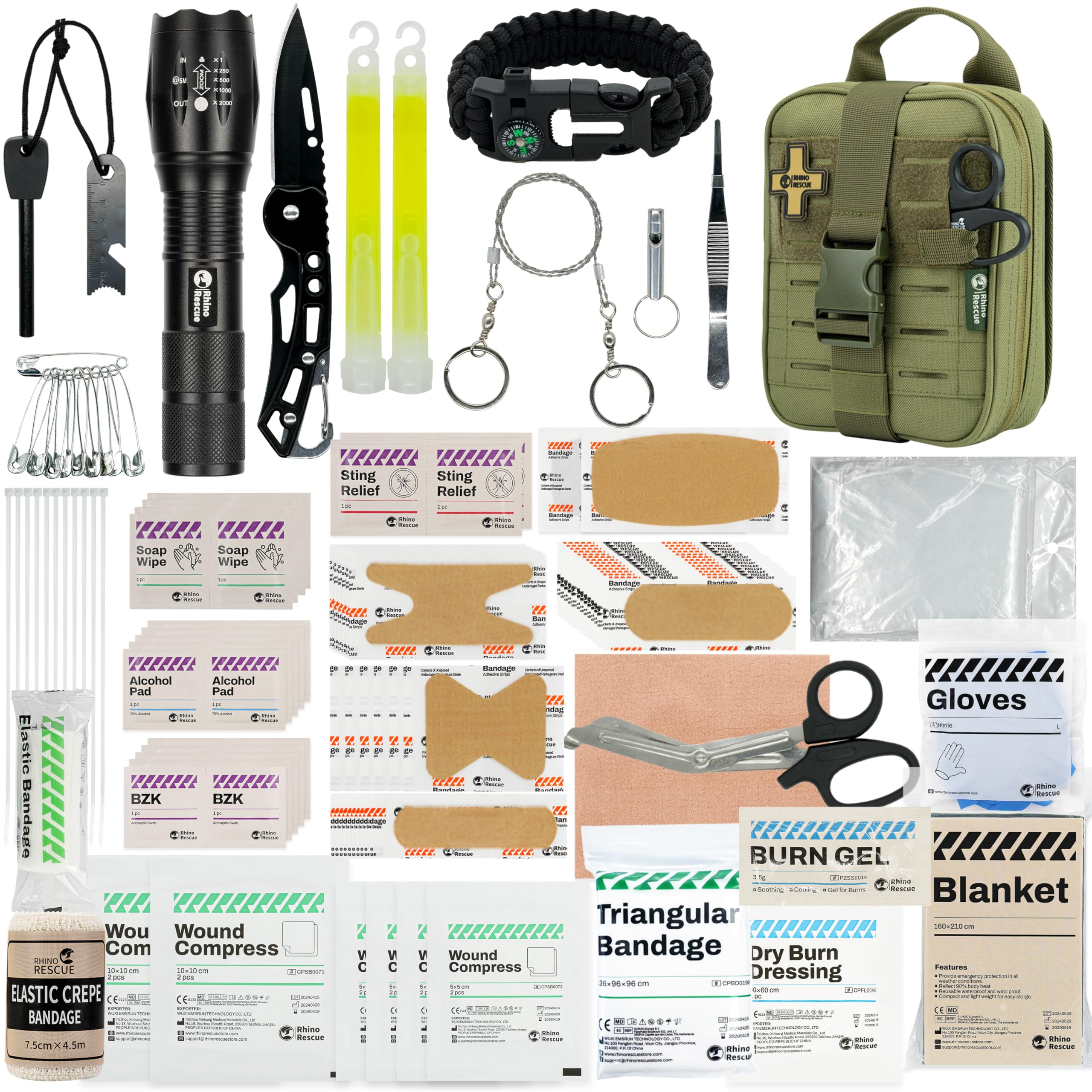
Rhino Rescue’s mini adventure kit splits the difference between the ultralight pouches and the big basecamp bags. There are 124 pieces in a 600D oxford pouch of about a kilo, which is enough for a genuine wound plus the odds and ends — cord, a blanket, a light — that a cold, wet day can suddenly require.
The pouch itself is nicer than the price suggests: double-stitched handles, upgraded zippers, and MOLLE straps for hanging it off a pack or a side-by-side. We like the split of more than 100 first aid supplies with a couple of dozen survival extras, because most day-hike emergencies are small and messy rather than dramatic.
Where it falls down is duplication. If you already carry a headlamp, a shelter, and cord, you are paying for weight twice, and the extras become dead space in a bag you have to carry. As a first kit for someone building a pack from nothing, or as the one that lives in a boat or a UTV, it makes a lot of sense.
Pros
- Over 100 first aid supplies plus survival extras
- Rugged 600D pouch with double-stitched handles
- MOLLE straps for a pack or vehicle
Cons
- Heavier than an ultralight kit at 1.01 kg
A sensible middle for day hikes with a group: real wound-care supplies plus a few survival extras in a rugged pouch that still goes in a daypack.
Best for Groups and Cabins
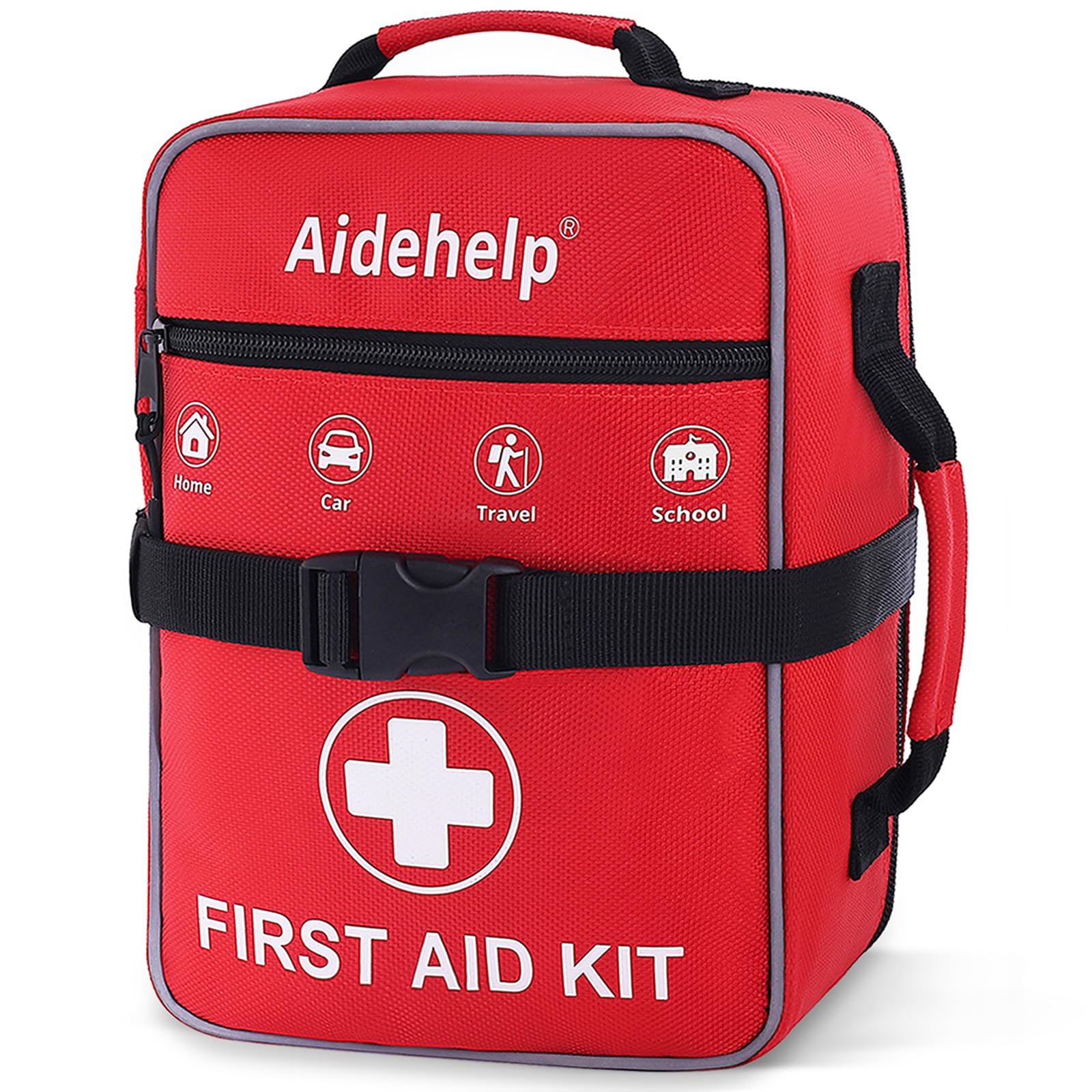
Aidehelp 520 Piece Kit
Key Features
- Pieces: 520
- Material: 1680D polyester
- Mounting: MOLLE compatible
- Dimensions and weight: 7.87 x 5.91 x 10.24 inches; 2.65 pounds
- Price: Midrange
Five hundred and twenty pieces is the headline, and the honest reading is that many of them are small: bandages in every width, wipes, gauze, tape. What earns the Aidehelp a place here is the bag they sit in — a 1680D polyester case with labelled, sorted compartments and MOLLE straps, built to be mounted or stowed rather than carried up a hill.
The shell is the heaviest fabric of these, and the layout is the reason to choose it over a cheaper jumble: sections are marked, so a panicked search for gauze does not end with the whole kit on the ground. In a cabin, a family basecamp, or a truck, that is the difference between a kit that gets used and one that gets quietly replaced.
Think of it as the kit that stays where the trip starts. It holds the deepest supply count here with the least searching, and it stands upright in a cupboard, a boat locker, or a truck box. If a group shares one bag for a season, this is the one to hand them.
Pros
- 520 pieces, the deepest supply count here
- Labelled compartments stay usable under stress
- 1680D polyester shell with MOLLE straps
Cons
- Bulky at 10.24 inches tall and 2.65 pounds
We recommend this for families and groups who want one deep kit at camp, with labelled compartments that make sense to someone who did not pack it.
Best for Spare Bag Kit
Care Science 110 Piece

Key Features
- Pieces: 110
- Inner storage: Organized pouches
- Dimensions and weight: 6 x 5.5 x 1.75 inches; 10.55 ounces
- Price: Budget
The Care Science kit measures 6 by 5.5 by 1.75 inches and holds 110 pieces, which is genuinely impressive packing. It is also the source of the kit’s main irritation: there is no slack anywhere, and once a bandage comes out, getting the case closed again takes a flat surface and both hands.
Inside is a broad starter selection — adhesive bandages in several sizes, gauze, wipes, sting gel, and organized pouches that keep the categories apart. At 10.55 ounces it is heavier than the General Medi despite similar contents, and those pouches are what the extra weight buys.
Our fix is simple: move the loose pieces into a quart zip bag and a small stuff sack on day one, keep the original case for the car, and the kit turns into something genuinely useful. That is more repacking than most people want from a purchase, though, and it is why this sits below the General Medi on our list.
Where it earns its place is as the second or third kit: the one in the boat locker, the desk drawer, or the bag you take to a rental cabin. It is stocked better than most kits its size and costs about the same as our budget pick. Just do not count on it as your backcountry kit.
Pros
- 110 pieces in a very small case
- Organized inner pouches separate categories
- Low-cost enough to keep as a spare
Cons
- Contents are starter-level basic wound care
A well-stocked little starter kit for a glovebox, a boat locker, or a second bag, as long as you repack it before your first trip.
How We Tested the Best Wilderness First Aid Kits
We started with roughly 30 kits from the major outdoor and safety brands, then read every contents list against what wilderness medicine courses actually teach you to carry — gloves, gauze, tape, a usable bandage assortment, a way to clean a wound, and something for an allergic reaction. Kits that were mostly filler, or that assumed you’d add your own basics, got cut. That left 12, which we tested over nine months.
Those kits went where a kit actually goes: day packs on rainy ridge hikes, a truck bed on a car-camping weekend, the bottom of a climbing pack, a hall closet between trips. We ran drills rather than waiting for disaster — a simulated rolled ankle on loose gravel, a sliced palm, a blister that needed dressing with the bag balanced on one knee. Two of us timed how long it took to find a gauze pad and a pair of gloves with the kit open on the ground in failing light, because fumbling is what turns a small injury into a bad one.
Zippers got their own treatment: 50 open-and-close cycles with cold, wet hands, then a few more with gloves on, checking for snags, split seams, and whether a panicked pull would dump everything into the dirt. We weighed each kit on a kitchen scale and slid it into a pack lid and a hip-belt pocket to see if it truly disappeared. Finally, we spread every kit across the table, counted the items we’d genuinely use, priced the contents piece by piece to judge value, and checked whether the soonest-expiring supplies could be replaced.
How to Choose a Wilderness First Aid Kit
The kit that helps is the one still in your pack at mile eight, so weight and water protection matter as much as what is inside.
Contents: What the Kit Can Treat
Put the piece count aside for a moment. A 520-piece kit and a 110-piece kit count very different things, because individually wrapped bandages, wipes, and safety pins all inflate the total without adding capability. What decides usefulness is whether the kit can dress a decent-sized wound and handle a blister.
Look for gauze and tape rather than only adhesive bandages, plus moleskin or a blister dressing, an antiseptic, and something to pull a splinter. The Adventure Medical kit is built around that short list; larger pouches pile volume and instruments on top of it, which is useful at a camp and less useful on a climb.
Weight and Where It Rides
The gap between 3.5 ounces and 2.25 pounds decides whether the kit comes along at all. Ultralight kits vanish into a side pocket; bigger pouches get lashed outside, which is fine on a canoe or in a truck and awkward on a scramble where you want both hands.
The trap is the word compact. In a listing it usually means the kit fits a glovebox or a motorcycle saddlebag, not that it disappears in a day pack. Check the listed weight and longest dimension against the pocket you actually plan to use before you order.
Water Protection: Which Layer Does the Work
Every kit here resists water somehow, but not in the same place. One uses a water-resistant outer bag with a sealed inner bag, so the waterproofing belongs to the layer inside and the outer pouch is the part that eventually wets out. Another goes the other way, with a rated hard-wearing case and a gasketed zipper that wants occasional grease.
Both approaches work. What matters is knowing which layer keeps your gauze dry, and adding a quart zip bag if the kit lives on a boat, in a truck bed, or in a pack that gets rained on for hours.
Organization You Can Use One-Handed
When someone is bleeding, you are cold, wet, and holding a light in your teeth. Labelled compartments and a layout you have learned earn their place in that moment, and they are the main reason to pay more for a kit with the same contents as a cheap one.
The opposite failure is over-packing. One kit here jams its supplies so tightly into a small case that closing it again takes a flat surface and both hands. If your kit arrives packed to the lid, repack the loose pieces into a couple of zip bags before the first trip and leave the original case at home.
Match Capacity to Your Group
A two-person kit is the right unit for most hiking. Two people can treat each other, and the supplies stay proportionate to the weight you are willing to carry uphill. Groups, families, and vehicle-based camps are where the bigger pouches pay off: more of everything and one bag someone can grab.
Do not buy the largest kit to cover a solo habit. The weight penalty is paid on every trip while most of the extra supplies sit untouched. A small kit for the pack plus a bigger one for the car is usually the better arrangement.
Frequently Asked Questions
Should I buy a first aid kit or build my own?
Buy one for most people. A kit gives you a pouch, a layout, and a set of supplies for less than assembling the same items one at a time, and you can add to it as you learn what you use. Build your own only if you already know your exact list: a specific dressing, your prescriptions, a blister routine you trust.
Either way the bag matters most. A case you refill beats a bargain kit you replace.
Do first aid kits expire?
Yes, and it is the part people forget. Antiseptic wipes, ointments, sting relief, and any medications carry dates, and adhesive bandages lose their stick over time.
Go through the kit at the start of every season: replace anything dated or used, check the zip or seal still works, and put the kit back where you will find it. A kit nobody has opened in two years is a guess rather than a plan.
Do I need the survival extras, like a flashlight or paracord?
For hiking, usually not. A headlamp, cord, and emergency blanket are already in most packs, so the versions bundled into a kit are weight you carry twice. They earn their place in a vehicle, boat, or cabin kit where no other gear is nearby.
Given two kits of similar weight, take the one with more dressings and blister care and leave the paracord at home.
Do I need training to use a wilderness first aid kit?
A kit does not teach you to use it, and no purchase fixes that. A wilderness first aid course changes outcomes more than any upgrade on this page, and it tells you which extras to add for the trips you actually take.
Until then, empty the kit before your first trip so you know where the gauze, tape, and dressings sit without hunting.
Final Verdict
The Adventure Medical Ultralight/Watertight .5 is the kit we put in a hiking pack first. At 3.52 ounces with a sealed inner bag, it answers the two questions that decide a trail kit — will it come, and will it stay dry — and its contents are aimed at the cuts and blisters you will actually meet. Its limit is scale: two people, a few days.
Wetter trips and bigger groups want the Surviveware’s labelled IPX7 case, and a truck or a family camp wants the EVERLIT pouch. Pick by the trip, not the piece count.