This post contains affiliate links. We may earn a small commission when you buy through our links — at no extra cost to you.
Camping flashlight shopping often involves wading through inflated lumen numbers and promises of ‘10,000 lumens’ from lights that barely hit a fraction of that. The real problem isn’t just marketing hype—it’s that a light that looks impressive on paper can leave you fumbling in the dark an hour into a night hike. This guide cuts through the spec-sheet noise to focus on what actually matters: real-world brightness you can count on, battery life that lasts through the weekend, and a build that won’t quit after a few trips.
Beyond lumen exaggeration, many budget flashlights suffer from reliability issues—switches that stop working after a few months, zoom mechanisms that loosen up, and batteries that drain faster than expected. The key is understanding that a well-built light at a reasonable price often outperforms a flashy but fragile alternative. We’ve sorted through dozens of options to identify which ones strike the right balance between brightness, durability, and cost for typical camping and hiking use.



Best for Budget, Family, Edc
GearLight S1000 2-Pack
Key Features
- Brightness: 1040 Lumens
- Battery & Runtime: 3x AAA (not incl.)
- Beam Adjustability: Zoomable
- Durability: Water resistant
- Size & Portability: Pocket-sized
- Price: Budget
The GearLight S1000 2-pack delivers a genuine 1040 lumens in a pocket-sized body that costs under twenty dollars for two lights. Its zoomable beam shifts from a wide flood for close tasks to a tight spot for distant objects, and five modes cover high, medium, low, strobe, and SOS.
Brightness on high comes with a cost: three AAA alkaline cells drain in a few hours, and batteries are not included. This matters less for casual camp tasks like setting up a tent or navigating a dark trail, where medium or low modes extend runtime considerably. The S1000 is best for budget-conscious campers and families who want dependable light without spending on premium gear.
Pros
- Produces bright, adjustable light from a compact body that fits in a pocket.
- Solid aluminum build with threaded tail cap feels durable at this price point.
- Two lights for under twenty dollars means one for the glovebox and one for the camping kit.
Cons
- On high, alkaline AAA batteries drain quickly, making the light less suited for extended use without spares.
- Occasional reports of units stopping function after a few months, though most work fine out of the box.
The S1000 2-pack is the right choice for anyone who wants a practical, bright flashlight without overspending – just pack extra batteries.
Best for Budget, Edc, Kids
Blukar Rechargeable
Key Features
- Brightness: 2000 Lumens (claimed)
- Battery & Runtime: 1800mAh USB-C
- Beam Adjustability: Zoomable
- Durability: Water resistant
- Size & Portability: Compact
- Price: Budget
The Blukar Rechargeable shines brightest on convenience: a built-in 1800mAh battery and USB-C charging at a price that undercuts most alternatives. Real-world output sits around 400–500 lumens—plenty for a tent or car emergency light, though the 2000-lumen claim on the box is pure marketing. Some units may experience charging or switch issues after a few months, which makes this a smart pick for occasional use or as a first flashlight for kids, not a tool for heavy-duty reliance.
Pros
- USB-C rechargeable with built-in battery, saving on disposables.
- Compact enough for an everyday carry pocket or glovebox.
- Actually bright enough for camping tasks at a budget-friendly price.
Cons
- The 2000-lumen claim is exaggerated; actual output is roughly 400–500 lumens.
- In some cases, the light stops charging or working after a few months.
A low-risk entry into rechargeable flashlights for budget campers or kids, provided you accept the inflated brightness spec and occasional durability hiccup.
Best for High Output, Emergency
Shadowhawk S1476
Key Features
- Brightness: 10000 Lumens (claimed)
- Battery & Runtime: 6000mAh USB-C
- Beam Adjustability: Zoomable
- Durability: IP67
- Size & Portability: Handheld
- Price: Budget
The Shadowhawk S1476 offers a built-in 6000mAh rechargeable battery and IP67 water resistance, rare at this price. Output is well above typical budget lights — users find it plenty bright for camping, night walks, or emergency car use. It works best for campers who want a high-output light without moving to premium tiers, but the advertised 10,000 lumens is a stretch (real output is under 2,000) and the zoom head may shift during use. The sturdy construction and USB-C convenience make it a strong budget pick, especially compared to cheaper rechargeable models that lack weather sealing. For car emergency kits, tent lighting, or evening hikes, the battery life on lower modes covers multiple nights.
Pros
- Brightness that exceeds typical budget lights
- Sturdy build quality with a premium feel
- USB-C rechargeable with long runtime
Cons
- Claimed 10,000 lumens is unrealistic; actual output likely under 2,000
- Zoom mechanism can be loose, allowing the head to slide too easily
For campers who want a powerful rechargeable light without breaking the bank, the Shadowhawk delivers strong performance — just ignore the inflated lumen rating and treat it as a solid 1500-lumen light.
Best for Edc, Backup
OLIGHT IMINI 2 Keychain
Key Features
- Brightness: 50 Lumens
- Battery & Runtime: Built-in Li-ion USB plug
- Beam Adjustability: Fixed flood
- Size & Portability: Ultra-compact
- Price: Budget
This 19.5-gram keychain light attaches magnetically and turns on with a simple break of the magnetic contact. Unlike the clip-on Oclip option, the IMINI 2 is designed to live on your keys, offering instant access for close-up tasks like finding a lock or reading a menu. It is a capable backup for everyday carry and emergencies, but not intended as a primary camping light.
Pros
- Ultra-compact and lightweight for keychain carry
- Magnetic break-to-on design makes one-handed operation easy
- Built-in USB rechargeable battery eliminates battery swaps
Cons
- 50 lumens limits visibility to a few feet in the dark
- 1-hour runtime requires recharging between uses for extended tasks
A tiny, always-ready companion for keys and bags — ideal for short, close-range needs rather than outdoor excursions.
Best for Emergency, Self-Defense
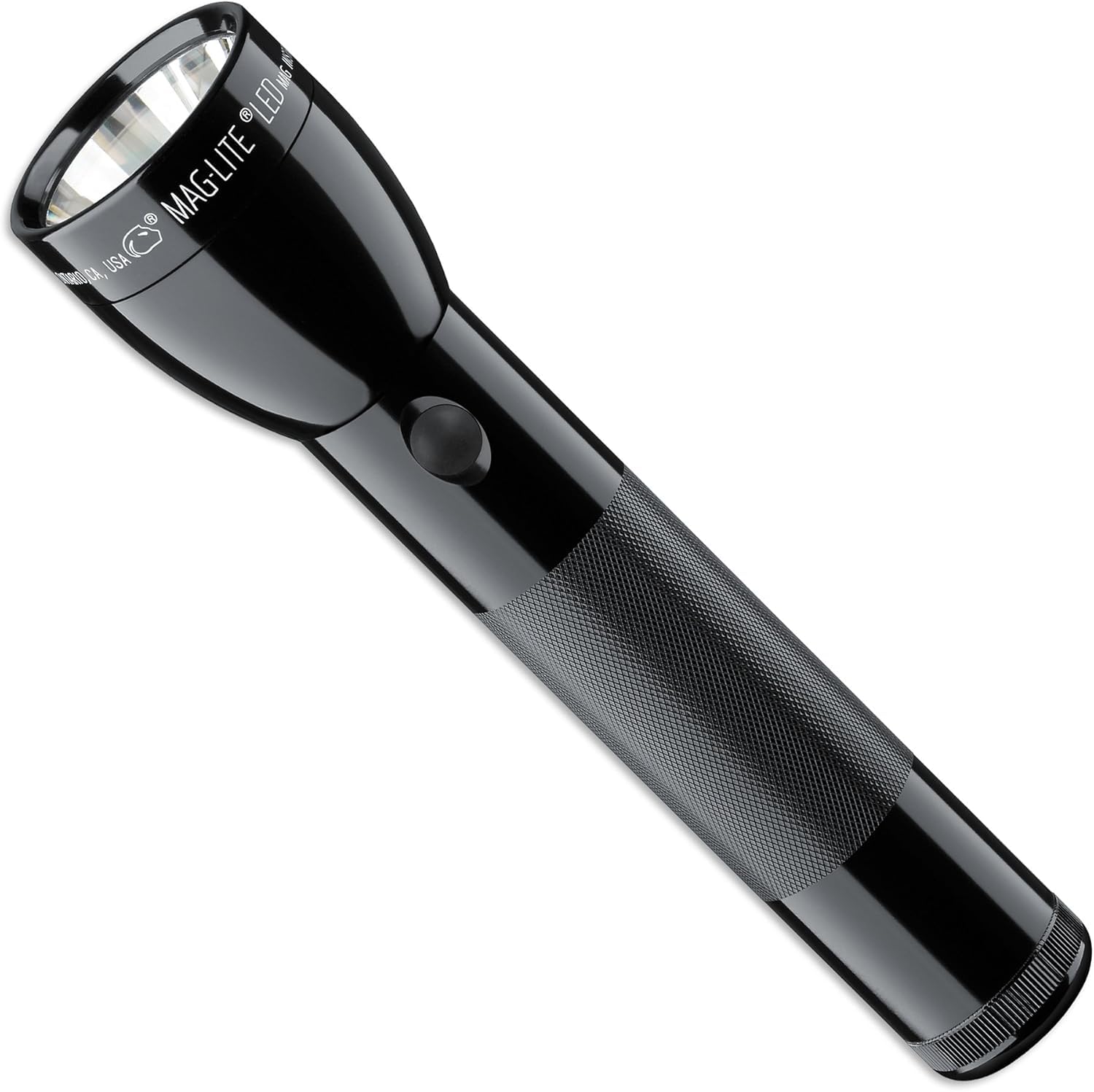
MagLite ML300L 2-D
Key Features
- Brightness: 487 Lumens
- Battery & Runtime: 2x D, 260h eco
- Beam Adjustability: Twist focus
- Durability: IPX4
- Size & Portability: Large, heavy
- Price: Mid-Range
The MagLite ML300L delivers legendary build quality and a 260-hour runtime on Eco mode, making it one of the most efficient long-lasting lights available. The adjustable twist focus shifts from flood to spot, and the anodized aluminum body shrugs off drops and rough handling.
This light suits traditionalists who prioritize durability over weight, emergency kits where bulk isn’t a concern, or anyone wanting a flashlight that doubles as a blunt object. The tradeoffs are clear: at 487 lumens it lags behind modern budget lights, and the two D batteries bring the total weight over a pound — not for pocket or light pack carry.
Pros
- Rugged anodized aluminum construction built to last for years.
- Eco mode provides 260 hours of continuous light, far beyond typical LED flashlights.
Cons
- With two D batteries it exceeds a pound — too heavy for pocket or pack carry.
- Switch mechanism can develop issues in some units over time, requiring replacement.
Best kept in a vehicle emergency kit, by the bedside, or in a workshop drawer where its weight is irrelevant and long runtime matters.
Best for Casual, Emergency
Lighting EVER 2-Pack
Key Features
- Brightness: 140 Lumens
- Battery & Runtime: 3x AAA included
- Beam Adjustability: Zoomable
- Durability: IPX4
- Size & Portability: Compact
- Price: Budget
The Lighting EVER 2-pack stands out for its convenience: each light comes with three AAA batteries, so you can start using them without a trip to the store. In a compact, zoomable design, they deliver enough brightness for close-up tasks around camp or as a glovebox emergency light. However, the 140-lumen output is notably dimmer than the GearLight S1000 (1,040 lumens), and some units can stop working after a few months. This makes the pack best suited as a cheap backup or for low-stakes use where absolute reliability isn’t critical.
Pros
- Two lights with batteries included – ready to use out of the box.
- Compact size fits easily in a pocket or glovebox.
- Adjustable focus beam for close or wider illumination.
Cons
- High mode drains AAA batteries quickly – a tradeoff for the compact size.
A practical choice for those who need a ready-to-use emergency light and accept its modest output and possible unit variability. For more brightness and consistent performance, the GearLight S1000 2-pack is worth the slight extra cost.
Best for Headlamp, 2-Pack
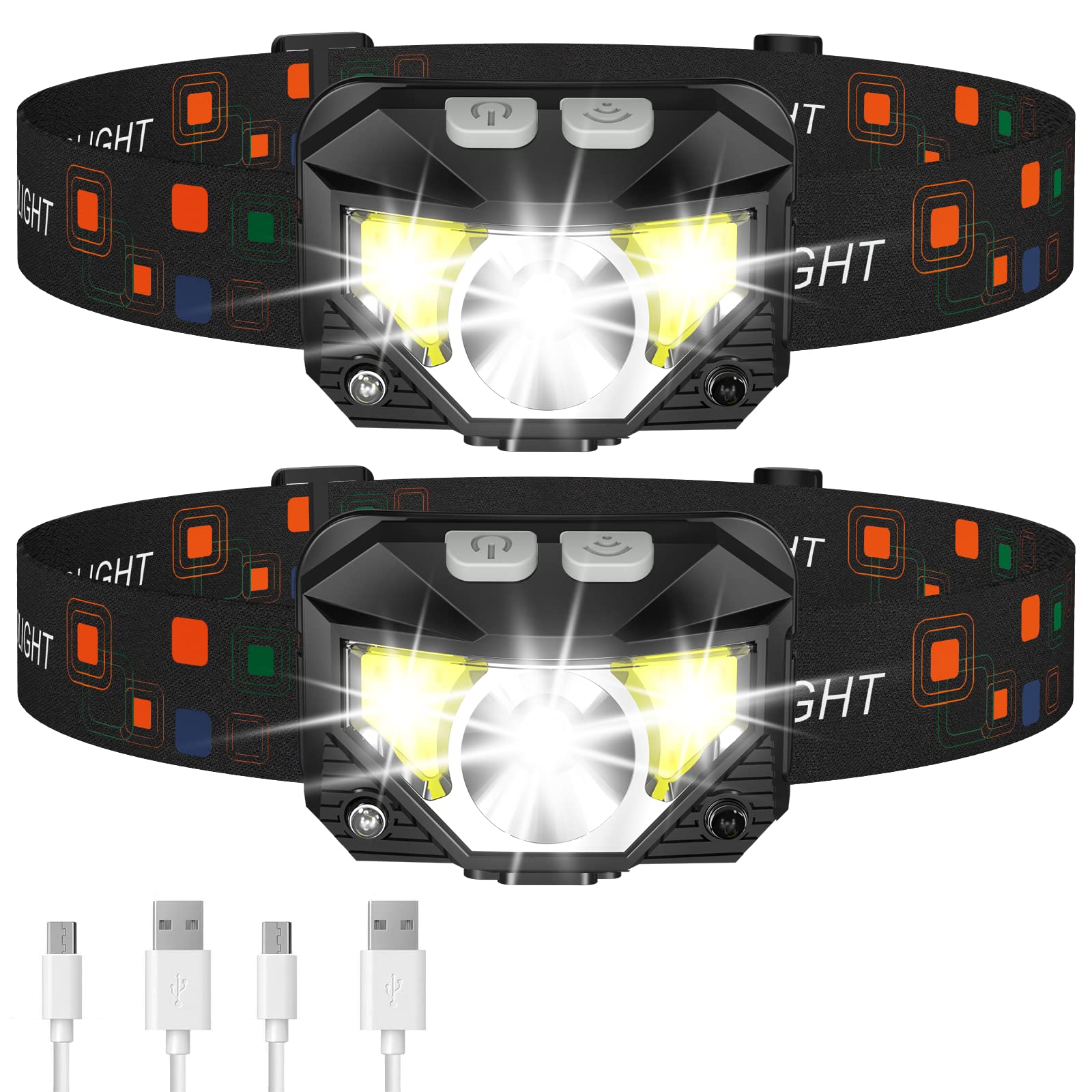
LHKNL Headlamp 2-Pack
Key Features
- Battery & Runtime: 1500mAh rechargeable
- Beam Adjustability: Adjustable angle
- Durability: IPX4
- Size & Portability: Headlamp
- Price: Budget
Headlamp 2-pack with motion sensor and red light offers two rechargeable lights for shared camping or backup use. However, sparse specifications and limited user reports leave brightness and runtime unverified – important to consider if you need assured performance for night hiking or camp tasks.
Pros
- Two headlamps in one package for shared camping trips or emergencies.
- Motion sensor provides quick hands-free activation without fumbling.
Cons
- Unverified brightness and runtime specs create uncertainty for campers needing consistent illumination.
Best suited as a budget spare or secondary light for campers who prioritize low cost and extra features over verified performance.
Best for Budget, Home
Victoper 2-Pack

Key Features
- Brightness: 1200 Lumens (claimed)
- Battery & Runtime: 3x AAA each
- Beam Adjustability: Zoomable
- Durability: Waterproof
- Size & Portability: Compact
- Price: Budget
The Victoper 2-pack delivers surprising brightness for the money, with five modes (low to SOS) and a zoom lens that adjusts from wide flood to focused spot. Portable enough for a jacket pocket, it works well for weekend camping or power outages. The catch: quality control is inconsistent — some units may arrive non-functional or stop working after light use. For buyers who want a disposable backup or a gift for occasional use and can accept that possibility, this is a solid low-risk option; for a more dependable daily carry, the GearLight S1000 2-pack is a safer bet.
Pros
- Noticeably bright beam with five adjustable modes
- Compact build that fits easily in a pocket or glovebox
Cons
- Some units may arrive inoperable or lose function after short use
Worth considering if you need a spare light for the camper or a casual gift and aren’t bothered by the chance of getting a dud.
Best for Budget, Emergency
HAUSBELL A100 2-Pack

Key Features
- Brightness: 2000 Lumens (claimed)
- Battery & Runtime: 3x AAA or 18650
- Beam Adjustability: Zoomable
- Durability: IPX6 claimed
- Size & Portability: Compact
- Price: Budget
Solid brightness and a useful zoom make this budget 2-pack appealing for campers, though the 2000-lumen claim is optimistic. Battery life on high runs short, so spare batteries are needed for extended use. Some units may arrive with issues, so check upon arrival. Best for emergency kits or short trips where brightness matters more than runtime.
Pros
- Bright output for the price, with a solid aluminum build.
- Cost-effective two-pack offers great value.
Cons
- High mode drains batteries fast; spare cells are necessary for extended use.
This pack suits emergency backup or short camp trips where brightness is key and battery life less critical.
Best for Budget, Home
TrixHub 2-Pack

Key Features
- Brightness: 700 Lumens (claimed)
- Battery & Runtime: Built-in USB-C
- Beam Adjustability: Zoomable
- Size & Portability: Compact
- Price: Budget
The TrixHub 2-pack brings a helpful LCD battery gauge and quick USB-C charging — rare at this price. It delivers decent brightness with zoom and five modes. However, durability is a tradeoff: the lens can separate from the housing and the charging port may loosen, making it better suited for home emergency kits or light indoor use than regular outdoor camping.
Pros
- Bright adjustable beam with zoom for varied tasks.
- Great value for a two-pack with built-in rechargeable batteries.
Cons
- Lens may separate from housing and charging port can loosen with moderate use.
Best suited for budget buyers who want a battery gauge for emergency kits around the house, where occasional drop risk is acceptable.
Best for Budget, Dog Walking
GORILLA GRIP 1-Pack

Key Features
- Brightness: 345 Lumens (test-confirmed)
- Battery & Runtime: 3x AAA
- Beam Adjustability: Zoomable
- Durability: Water resistant
- Size & Portability: Compact
- Price: Budget
This flashlight delivers a genuine 345 lumens — enough for camping tasks and dog walks — with a comfortable grip and fun color options. The tradeoff: some units may experience switch issues, and the single-pack price is less economical than 2-pack alternatives from other brands.
Pros
- Honest brightness rating — 345 lumens confirmed and sufficient for most camping needs.
- Compact size with comfortable grip fits easily in hand or pocket.
Cons
- Switch issues can occur, making reliability a gamble on individual units.
Best for buyers who prioritize honest specs and color variety over multi-pack value and guaranteed reliability.
Best for Camping, Hurricane
EverBrite 900 Lumen

Key Features
- Brightness: 900 Lumens
- Battery & Runtime: 3x C included
- Beam Adjustability: Zoomable
- Durability: Not water resistant
- Size & Portability: Heavy
- Price: Budget
The EverBrite delivers strong brightness and long runtime using three C cells — a solid choice for a hurricane kit or base camp where weight isn’t a concern. Its heavy aluminum build and lack of water resistance make it less suitable for backpacking or wet conditions. The zoomable beam and included batteries add convenience, but the tradeoff is a flashlight that stays dry or stays home.
Pros
- Very bright beam with a focusable spot.
- Long runtime from economical C batteries.
Cons
- Not water resistant — limit use to dry conditions only.
Ideal as an emergency kit standby or for dry-weather car camping where weight isn’t a factor.
Best for Edc, Hands-Free
OLIGHT Oclip Pro

Key Features
- Brightness: 500 Lumens
- Battery & Runtime: Built-in Li-ion USB-C
- Beam Adjustability: Fixed flood/spot/red
- Durability: Water-resistant
- Size & Portability: Compact, 53g
- Price: Mid-Range
The Oclip Pro packs flood, spot, and red LEDs into a compact 53-gram clip-on body that attaches magnetically or hangs from a loop. On high, battery life runs 1–2 hours, and water resistance is limited to splashes — not submersion or heavy rain. It works as a hands-free task light around camp but won’t replace a primary flashlight for all-night treks.
Pros
- Flood, spot, and red light modes in one compact clip-on design.
- Magnetic base and clip allow hands-free mounting on metal surfaces or pockets.
Cons
- Battery life on high is limited to about 1-2 hours; rechargeable though.
Best as a pocketable secondary light for campsite chores or evening cycling, not for all-night illumination.
How to Choose
The most overlooked factor in buying a camping flashlight is that the claimed lumens often have little relation to the light you actually get—real-world brightness depends on the LED quality and battery voltage, not just the number on the box.
Brightness (Lumens)
Lumens measure total light output, but the number on the box is often the peak at full battery. Most budget lights drop brightness as the battery drains. A light rated at 1000 lumens may only deliver 500 after 30 minutes. For camping, prioritize a stable output over a high peak—look for lights that maintain brightness for at least the first hour.
Battery Type & Runtime
Rechargeable lights save money on batteries but leave you stranded if you forget to charge. Alkaline-powered lights let you carry spares but add waste and weight. The hidden trade-off: NiMH rechargeable AAAs can be swapped and reused, but most budget lights are not designed for them.
Choose based on how long you’ll be away from power—short trips favor USB-C rechargeables, extended backcountry trips favor standard batteries with backups.
Beam Adjustability
Zoomable flashlights offer versatility but the sliding mechanism is a common failure point. Over time, dirt and wear can cause it to loosen, making the beam erratic. Fixed-beam lights are more durable and often have a more consistent beam pattern. If you need both spot and flood, consider a light with a dedicated flood mode rather than a zoom head.
Durability
Water resistance ratings like IPX4 mean it can handle splashes but not submersion. Many budget lights claim IPX6 or IP67 but lack proper seals. Drop resistance is rarely specified. For camping, an IPX4 rating is sufficient for rain—just avoid dropping it in a creek. Aluminum bodies are standard, but check for lens retention; glued lenses can pop out after impact.
Size & Portability
Pocket-sized lights are convenient but sacrifice runtime and brightness. A compact light that lasts 1 hour on high may not get you through a night hike. Larger lights with D or C cells run for many hours but are heavy. For most campers, a mid-sized light that fits in a jacket pocket is the best compromise—enough output for trail use, small enough for everyday carry.
FAQ
Why does my camping flashlight drain batteries so fast on high mode?
Most flashlights run on high mode at maximum current, which drains alkaline batteries quickly—often in under an hour. The drop in voltage also reduces brightness rapidly. To extend runtime, use the medium or low mode for general camp tasks, and reserve high for when you need maximum light. Better yet, use lithium or NiMH rechargeable batteries for more consistent voltage.
Can I replace the built-in battery in my rechargeable camping flashlight?
It depends on the model. Lights with a built-in lithium battery usually have a sealed unit that cannot be replaced without soldering. If the battery wears out, the entire light becomes e-waste. For long-term use, choose a flashlight that uses standard rechargeable batteries like 18650 or AA NiMH, so you can swap them out.
How many lumens do I really need for camping and hiking?
For most camping tasks—setting up tents, cooking, hiking trails—100 to 300 lumens is sufficient. For night hiking on dark trails, 300-500 lumens gives good throw and flood. Anything above 800 lumens is excessive for camp use and drains batteries faster. Prioritize beam quality and runtime over raw brightness.
Is a zoomable flashlight more likely to break than a fixed-focus one?
Yes, the sliding zoom mechanism is a mechanical wear point that can loosen over time or fail if dropped. Fixed-beam lights are inherently more durable and often have better water sealing. If you need both spot and flood, consider a light with a dedicated flood mode or a secondary flood light instead of a zoomable one.