This post contains affiliate links. We may earn a small commission when you buy through our links — at no extra cost to you.
Most freeze-dried backpacking meals advertise ‘2 servings’ per pouch, but after a full day on the trail, that’s barely enough for one. And even when you nail the water ratio, texture can be a gamble – crunchy rice or mushy noodles are the norm, not the exception.
The real differences come down to ingredient quality and rehydration behavior. Meals with real meat and higher protein tend to be more satisfying, but they often cost more and require careful water management. Meals built on TVP or fillers are cheaper but leave you hungry faster.
This guide cuts through the marketing to highlight the pouches that consistently deliver on taste, protein, and portion realism – so you can fuel your next hike without the dinner disappointment.


Best for First-Time Buyers
MH Chicken Fried Rice
Key Features
- Protein & Meat: Chicken, 18g protein
- Serving Size: 1 hungry hiker
- Rehydration: 10 min, may need extra
- Dietary: Gluten-free
- Shelf Life: 30 years
- Price: $$
Mountain House Chicken Fried Rice delivers a familiar, comforting flavor that has made it a go-to choice for backpackers. The lightweight 4.7 oz pouch packs easily for multi-day trips, and preparation is as simple as adding hot water and stirring. With a 30-year shelf life, this meal offers long-term storage peace of mind without sacrificing taste on the trail.
The taste consistently hits the mark for those who enjoy classic takeout-style chicken fried rice. The combination of vegetables, chicken pieces, and seasoned rice rehydrates well for most users, though the texture can vary depending on water temperature and steeping time. Preparation remains straightforward: just pour, stir, and wait ten minutes.
This meal is best suited for first-time freeze-dried meal buyers or hikers looking for a comforting, familiar flavor on the trail. Keep in mind that the rice may rehydrate unevenly in some cases, and the pouch labeled as two servings is more appropriate for a single hungry adult. Those comfortable with these boundaries will find it a practical choice for quick trail meals.
Pros
- Familiar chicken fried rice flavor that appeals to a wide range of tastes.
- Lightweight 4.7 oz pouch fits easily into a pack.
- Just add hot water and stir — no cooking required.
- 30-year shelf life provides long-term storage confidence.
Cons
- In some cases, rice grains may remain crunchy or become mushy after rehydration.
- The pouch labeled as two servings is more appropriate for one hungry adult.
If you want a freeze-dried meal that tastes like takeout without the fuss, Mountain House Chicken Fried Rice fits the bill.
Best for High Protein Hikers
Peak Refuel Sweet Pork & Rice
Key Features
- Protein & Meat: Real pork, 40g protein
- Serving Size: 1 hungry hiker
- Rehydration: 10 min, water matters
- Dietary: Not gluten-free
- Shelf Life: ~7 years
- Price: $$
Peak Refuel’s Sweet Pork & Rice packs 40g of real USDA pork protein per pouch, with no TVP fillers – a rare find in freeze-dried meals. Unlike the larger Basecamp Bucket, this single pouch is designed for individual use on short trips.
For solo backpackers who want a hearty, savory meal that doesn’t rely on soy-based protein, this delivers on flavor and protein. That said, the ‘2-serving’ label is more accurate for one hungry adult. Texture can be uneven – some bites may be crunchy or mushy – and achieving the right consistency requires careful water measurement.
Pros
- 40g of real pork protein, no TVP or fillers
- Savory flavor that stands out among freeze-dried options
- Prepares in under 10 minutes with just hot water
Cons
- Labeled as 2 servings but more realistically a single hearty meal for one
- Rehydration consistency varies; too much or too little water can produce soupy or crunchy results
If you’re a solo backpacker who values high protein and real meat over perfect texture, this pouch offers good value. For groups or those who dislike tinkering with water ratios, the top pick Mountain House Chicken Fried Rice is a safer bet.
Best for Flavor-Seeking Hikers
BIGHORN Butter Chicken 4-Pack
Key Features
- Protein & Meat: Chicken, 17.5g per serving
- Serving Size: 2 servings (hearty)
- Rehydration: 15 min, excellent
- Dietary: Not gluten-free
- Shelf Life: ~5 years
- Price: $$$
The BIGHORN Butter Chicken raises the bar for freeze-dried meal flavor. The chicken stays tender, the rice rehydrates without turning mushy, and the sauce is rich and authentic. While Mountain House Chicken Fried Rice is the safe bet for consistent value, this meal offers a noticeably more satisfying dining experience on the trail.
This 4-pack is best for hikers who prioritize taste over budget and don’t mind moderate sodium. Each pouch serves two, making it a good option for duos after a long day. The sodium content is higher than many competitors, so those watching their intake should plan accordingly. The premium price also means this is a splurge rather than a daily staple.
Pros
- Rich, authentic butter chicken flavor with tender meat.
- Rice rehydrates perfectly without turning mushy.
- Generous portions easily satisfy two hungry hikers.
Cons
- Per-pouch cost is higher than comparable freeze-dried meals.
- Sodium content may be high for those monitoring intake.
For backpackers who want a genuinely satisfying meal and are willing to pay extra, this is a standout choice — just keep an eye on the salt.
Best for Vegetarian Comfort
Backpacker’s Pantry 3-Cheese Mac
Key Features
- Protein & Meat: Cheese, 24g protein
- Serving Size: 1 hungry hiker
- Rehydration: 10 min, may clump
- Dietary: Vegetarian
- Shelf Life: ~5 years
- Price: $
This freeze-dried mac and cheese delivers 24 grams of protein per pouch at a budget-friendly price, making it a go-to for vegetarians who want a filling, familiar meal on the trail. The three-cheese flavor stands out among dehydrated options, and the 7-ounce pouch easily satisfies one hungry hiker or two lighter appetites.
It suits backpackers and campers who value convenience and don’t mind occasional sauce separation — the cheese can turn watery or lumpy, but the flavor and portion size still hold up. Those expecting a creamy restaurant-style sauce should look elsewhere; for a quick, affordable vegetarian comfort meal in the backcountry, it does the job well.
Pros
- Best-tasting freeze-dried mac and cheese available
- Simple preparation with hot water
- Generous portion for the weight
Cons
- Flavor can come across as bland or watery depending on preparation
- Cheese sauce may separate into watery liquid and clumps
For vegetarians seeking an affordable, protein-rich comfort meal that travels well, this mac and cheese hits the mark — just expect to stir thoroughly.
Best for Vegan & Gluten-Free
Nomad Irish Shepherd’s Pie
Key Features
- Protein & Meat: Lentils, ~15g protein
- Serving Size: 1 moderate eater
- Rehydration: 15-20 min, uneven
- Dietary: Vegan, gluten-free
- Shelf Life: 36 months
- Price: $$
Nomad Nutrition’s Irish Shepherd’s Pie stands out as a vegan freeze-dried meal with whole-food ingredients and no gluten, dairy, or palm oil. It offers a filling portion for its weight, making it a satisfying option for plant-based hikers. Compared to the top-pick mac and cheese, this meal prioritizes ingredient quality over flavor consistency.
This meal suits vegan and gluten-free backpackers who value clean labels and don’t mind some texture variation. Rehydration can leave peas and corn chewy, and the black pepper level may be overpowering for some — these tradeoffs are manageable with longer soaking and seasoning adjustments.
Pros
- Uses clean, plant-based ingredients free of gluten, dairy, and palm oil
- Provides a satisfying, calorie-dense meal for its weight — good energy return for vegan options
- Simple preparation: just add boiling water and wait 8-10 minutes
Cons
A decent vegan option for backpackers who prioritize ingredient quality over consistent texture. If you’re sensitive to spice or rehydration, this meal may require some tweaks.
Best for Premium Comfort
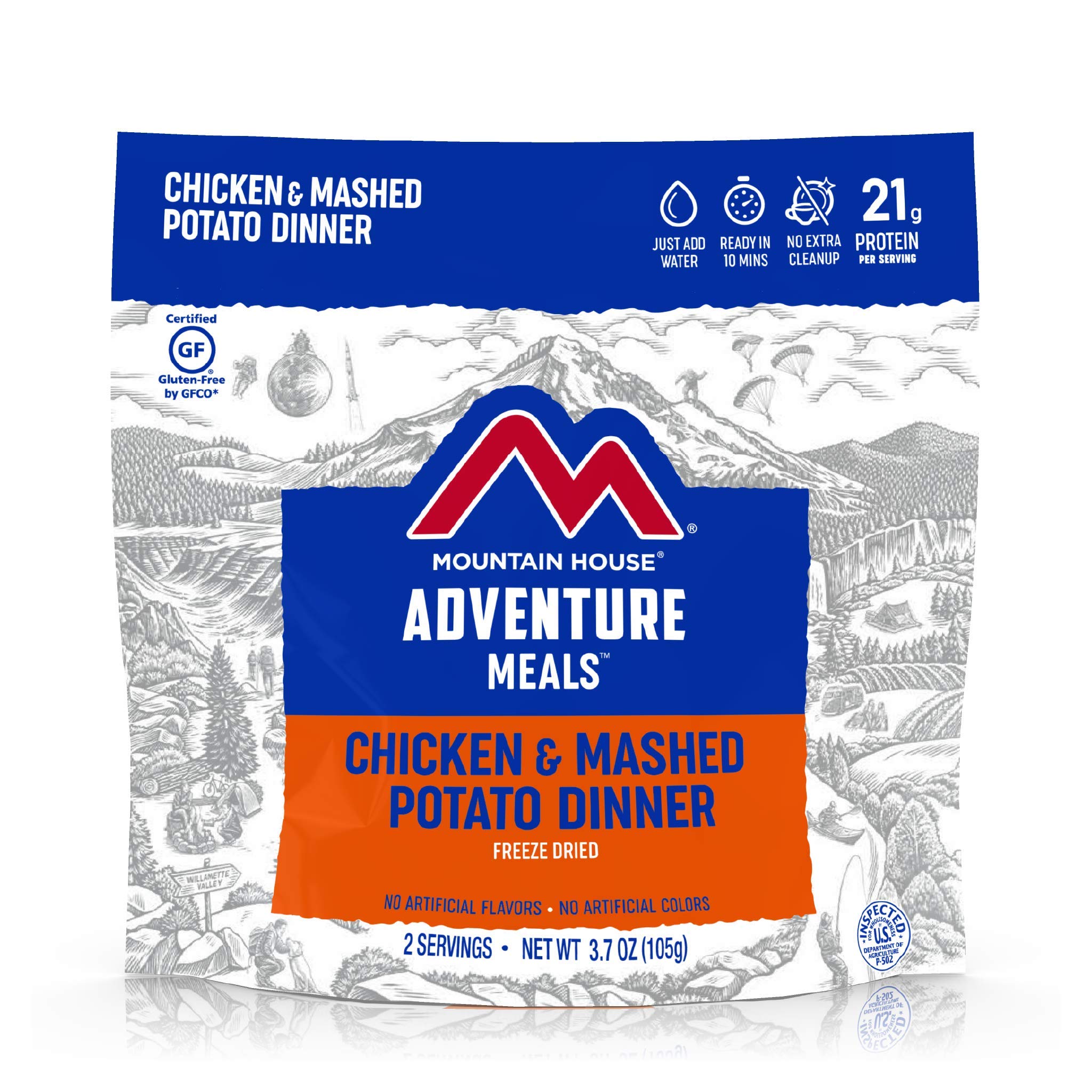
MH Chicken & Mashed Potato
Key Features
- Protein & Meat: Real chicken, ~20g
- Serving Size: 1 hungry hiker
- Rehydration: 10 min, creamy
- Dietary: Gluten-free
- Shelf Life: 30 years
- Price: $$$
This pouch delivers tender chicken chunks and creamy mashed potatoes that taste remarkably like a home-cooked meal, a rare feat for freeze-dried backpacking food. The gluten-free ingredients and 30-year shelf life add to its appeal for those who prioritize flavor above all else. However, the premium price per pouch makes it a luxury choice — best saved for special nights on the trail rather than routine trips, especially if you need multiple servings.
Pros
- Flavor and texture rival fresh-cooked comfort food
- High-quality ingredients with real, tender chicken
Cons
- At a premium price, it’s a treat rather than a daily staple for most backpackers
For hikers willing to pay extra for a top-tier comfort meal, this delivers. Otherwise, stick with more cost-effective options for regular use.
Best for Bulk Groups
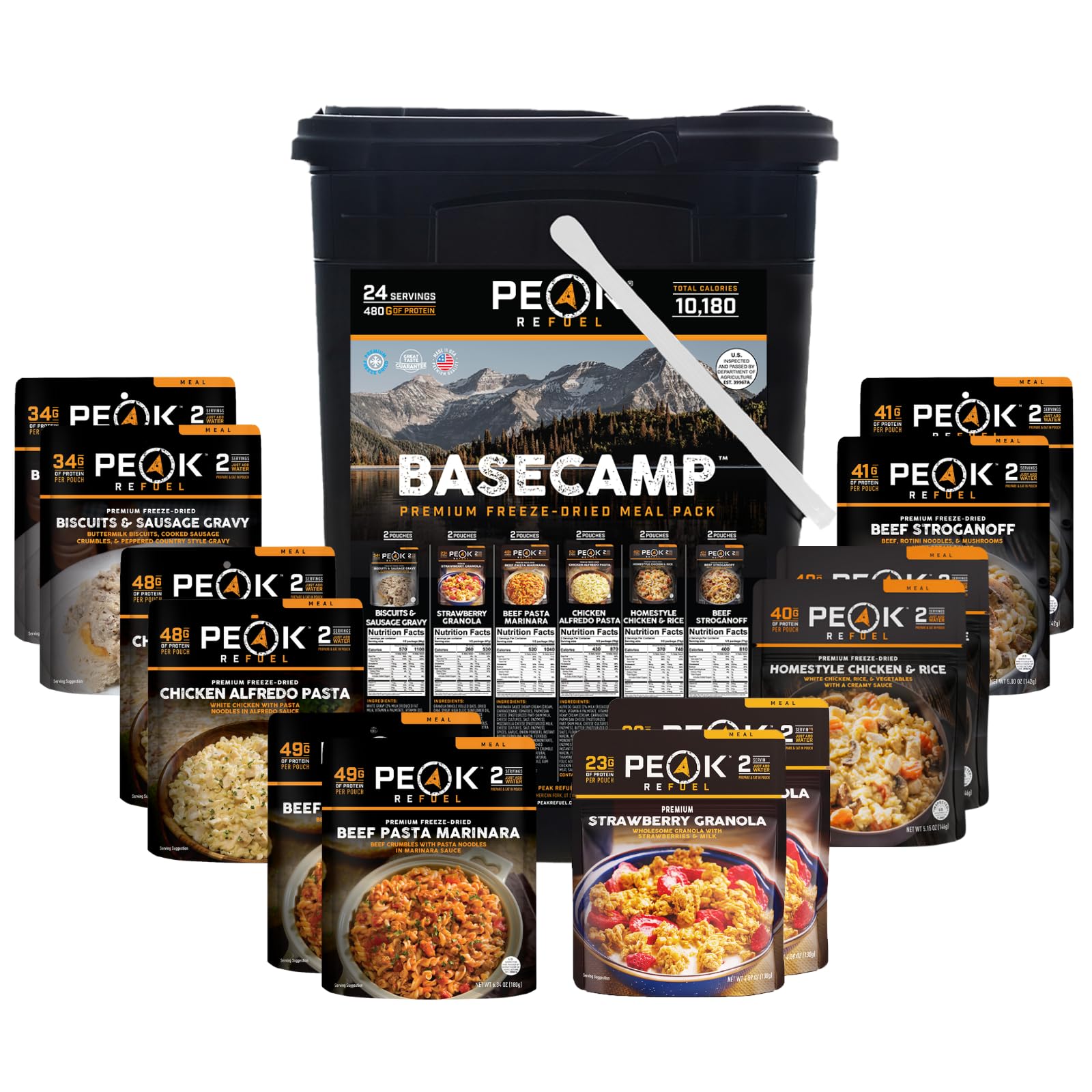
Peak Refuel Basecamp Bucket
Key Features
- Protein & Meat: Real meat, 2x protein
- Serving Size: Multiple servings
- Rehydration: Varies by meal
- Shelf Life: ~7 years
- Price: $$$$
This bucket delivers on taste and ingredient quality: 100% real meat and noticeably higher protein than typical freeze-dried meals. But at a luxury price and with limited feedback, it’s a significant commitment for anyone not already sold on Peak Refuel’s individual pouches. The real payoff comes for large groups or emergency stockpiles where the per-serving cost drops and the variety keeps everyone happy. Solo backpackers or first-time buyers should start with a single Peak Refuel pouch to see if the flavor matches expectations.
Pros
- Meals taste consistently good with a texture that avoids the overly salty or artificial flavor common in the category.
- Real meat and double the protein per serving compared to most competitors, using no fillers or TVP.
Cons
- Premium price demands a large upfront spend, making it a risk for those unsure about the meal variety.
Worth the bulk buy if you prioritize real ingredients and protein for group trips or emergency reserves, but try an individual pouch first to confirm the taste fits your palate.
Best for Paleo/keto
Wild Zora Paleo Variety Pack

Key Features
- Protein & Meat: Grass-fed beef, chicken
- Serving Size: 1 pouch per meal
- Rehydration: 10-15 min
- Dietary: Paleo, keto, GF
- Shelf Life: ~3 years
- Price: $$
These packs deliver on their health promises: grass-fed beef, free-range chicken, no added sugar, and ingredients that are easy to digest. The tradeoff is flavor consistency – some dinners, especially those with kale, have an earthy taste that doesn’t appeal to everyone. For hikers who prioritize dietary compliance over predictable flavor across the whole variety pack, these still hit the mark. But if you want every pouch to be a crowd-pleaser, the taste variance makes this a cautious buy.
Pros
- Clean ingredients with grass-fed beef and free-range chicken, no added sugar.
- Paleo, keto, and gluten-free compliant, supporting specific dietary needs on the trail.
Cons
- Some meals, particularly those with kale, have an earthy, unappealing flavor.
Best for paleo or keto hikers who prioritize clean eating over consistent flavor – consider trying a single pouch before committing to the full variety pack.
How to Choose
The most important factor in choosing a freeze-dried meal is understanding that the labels ‘2 servings’ often mean one hungry hiker, and that protein content and rehydration texture are the real differentiators.
Protein Content and Real Meat vs. TVP
Real meat (chicken, pork, beef) costs more but delivers better satiety and flavor. TVP (textured vegetable protein) is cheaper but often leaves you hungry sooner and can have a spongy texture.
For long-distance hikers or those needing muscle recovery, a meal with 30-40g of real protein makes a noticeable difference. Check the ingredients list: if you see ‘soy protein concentrate’ or ‘textured vegetable protein,’ the protein count may be inflated with fillers.
Serving Size Realism
Most pouches labeled ‘2 servings’ are designed for moderate appetites – not for someone who just hiked 15 miles. In practice, plan on one pouch per adult per meal, especially for dinner.
If you’re sharing, expect two people to need separate pouches or to supplement with sides. The most honest brands mark their pouches as ‘1-2 servings’ to reflect this flexibility.
Rehydration Speed and Texture
Freeze-dried meals require precise water amounts and wait times. Under-hydrating leaves crunchy bits; over-hydrating turns everything to mush. Letting the pouch sit 5-10 minutes longer than the package says often improves results.
Ingredients rehydrate at different rates – rice and beans are the trickiest. If you consistently get hard grains, add a few extra tablespoons of water and stir thoroughly before sealing the pouch.
Dietary Compatibility
Many ‘gluten-free’ meals still contain dairy or soy, so check the allergen statement. Vegan options are growing but often struggle with texture – lentils and vegetables can remain chewy.
Paleo and keto meals typically avoid grains and use real meat, but they often cost more per calorie. If you have strict needs, prioritize brands that clearly list all ingredients and certifications.
Shelf Life and Storage Weight
Mountain House’s 30-year shelf life is ideal for emergency kits or infrequent use. Most other brands offer 3-7 years, which is plenty for regular backpacking trips.
Weight per calorie matters: a heavier pouch with more real meat can be worth the carry for a satisfying dinner. Lighter, lower-protein meals may leave you reaching for snacks.
FAQ
Why does my freeze-dried meal still have crunchy rice after the recommended wait time?
Crunchy rice usually means the water volume or temperature is off, or the meal needs more time. Add a few extra tablespoons of hot water and let it sit 5-10 more minutes. If it’s still hard, the batch may have inconsistent rehydration – breaking up clumps before adding water helps.
Are Mountain House meals really worth the higher price compared to Peak Refuel?
Mountain House is the industry benchmark with proven taste and a 30-year shelf life. Peak Refuel offers higher protein from real meat at a similar per-pouch price, but with more texture variability. For protein seekers, Peak Refuel often delivers more value; for consistent comfort, Mountain House wins.
Can I use cold water to rehydrate freeze-dried backpacking meals?
Cold water will rehydrate, but it takes much longer – often 30-60 minutes – and may not fully soften tough ingredients like rice or meat. Hot water is recommended for best texture and speed.
Which freeze-dried backpacking meals have the most protein without soy or TVP?
Peak Refuel’s Sweet Pork & Rice leads with 40g of real pork protein. BIGHORN Butter Chicken and Mountain House Chicken & Mashed Potato also use real chicken. Avoid meals listing ‘textured vegetable protein’ or ‘soy protein isolate’ if you want whole-food protein.