This post contains affiliate links. We may earn a small commission when you buy through our links — at no extra cost to you.
The best part of a backpacking day is the moment you drop your pack and light the stove. The worst is ten minutes later, when a pouch that promised chili turns into a salty, half-hydrated paste you eat anyway because you’re hungry. Freeze-dried meals earn their spot by weighing almost nothing and asking only for boiling water, but the gap between a dinner you look forward to and one you choke down is wider than the price suggests. What you’re buying is a hot, filling meal at the end of a long day without carrying its water weight up the mountain.
I’ve eaten enough bland camp dinners to be skeptical, so over the past five months my team and I worked through 16 meals from ten brands, on real trips and at my own picnic table. Portion size turned out to vary more than flavor, and the calorie number on the front of the pouch says very little about whether you’ll still be hungry at 9 p.m. The picks below are the ones we’d carry again.



Best for Backpacking Dinners
Peak Refuel Sweet Pork and Rice
Key Features
- Meat: 100% USDA inspected
- Servings: 2
- Pack weight: 6.07 oz
- Protein per pouch: 1.41 oz
- Price: Midrange
Forty grams of protein in a pouch that weighs six ounces is the figure that decided this one for us. It’s more than three times what the cobbler here carries, and it comes from real pork rather than textured vegetable protein — you can see the meat through the bag before the water goes in, which isn’t true of everything in this lineup.
Flavor is where it earns its keep. The sauce is savory and lightly spiced, closer to a home stir-fry than to a ration, and the pork holds its texture through a ten-minute steep instead of collapsing into paste. Two servings is the claim on the pouch; in practice it feeds two people sharing a tent with a tortilla each, or one person who’s been walking since dawn.
The rice is the part that needs attention. With water that’s very hot but not boiling, the grains can still be chalky when the timer goes, so we treat a rolling boil and the full wait as part of the recipe rather than a suggestion — stir well, reseal, and give it a few extra minutes wrapped in a jacket. It’s also a rich, spiced dinner, and heavy food doesn’t sit well with everyone on a hard climb; save it for a night when you’re camped early.
Cost is the other honest caveat. It sits mid-pack on price here, and what you’re paying for is the protein — a trade we’re glad to make for the meal at the end of the hardest day of a trip.
Pros
- 40 g of protein in a six-ounce pouch
- Real pork, not textured vegetable protein
- Savory, lightly spiced flavor that doesn’t taste like a ration
- Enough for two people with something alongside
Cons
- Priced above the budget pouches here
- Rich and spiced — can sit heavy on a hard effort
This is the one we put at the top of the food bag: real pork, 40 grams of protein, and a dinner that still tastes good on day four.
Best for No-Stove Breakfasts
Mountain House Granola with Blueberries
Key Features
- Diet: Vegetarian
- Prep: No cooking required
- Servings: 2
- Pack weight: 4 oz
- Price: Budget
Breakfast is the meal a stove is least welcome at, and this is the pouch we reach for when we want to be walking before the sun is properly up. Half a cup of cold water, ten minutes and a spoon: no fuel, no pot, nothing to scrub. For anyone counting stove sessions, that alone puts it near the top of this group.
The eating is better than a cold-soak breakfast has any right to be. The milk powder comes back as actual blueberry milk, the granola keeps a crunch instead of collapsing into porridge, and there are enough dried berries that the bottom of the pouch isn’t just dust. Sweetness is the dividing line — we found it closer to dessert than to a bowl of oats, which is lovely on a frosty morning and less lovely if you want a savory start.
It’s also one of the easiest things here to carry: four ounces, a pouch that flattens as you empty it, and a stated 30-year shelf life backed by Mountain House’s taste guarantee, so a spare can live in a pack or a car trunk for years without a second thought. Two servings splits cleanly between two people, or fills one person who skipped dinner the night before.
Pros
- Cold water, no stove, no cleanup
- Creamy milk powder and granola that keeps its crunch
- Four-ounce pouch that flattens as you eat
Cons
- Sweet enough to read as dessert
We buy this one for the mornings we can’t be bothered with a stove — cold water, ten minutes, and a breakfast that’s genuinely good.
Best for Gluten-Free Dinners
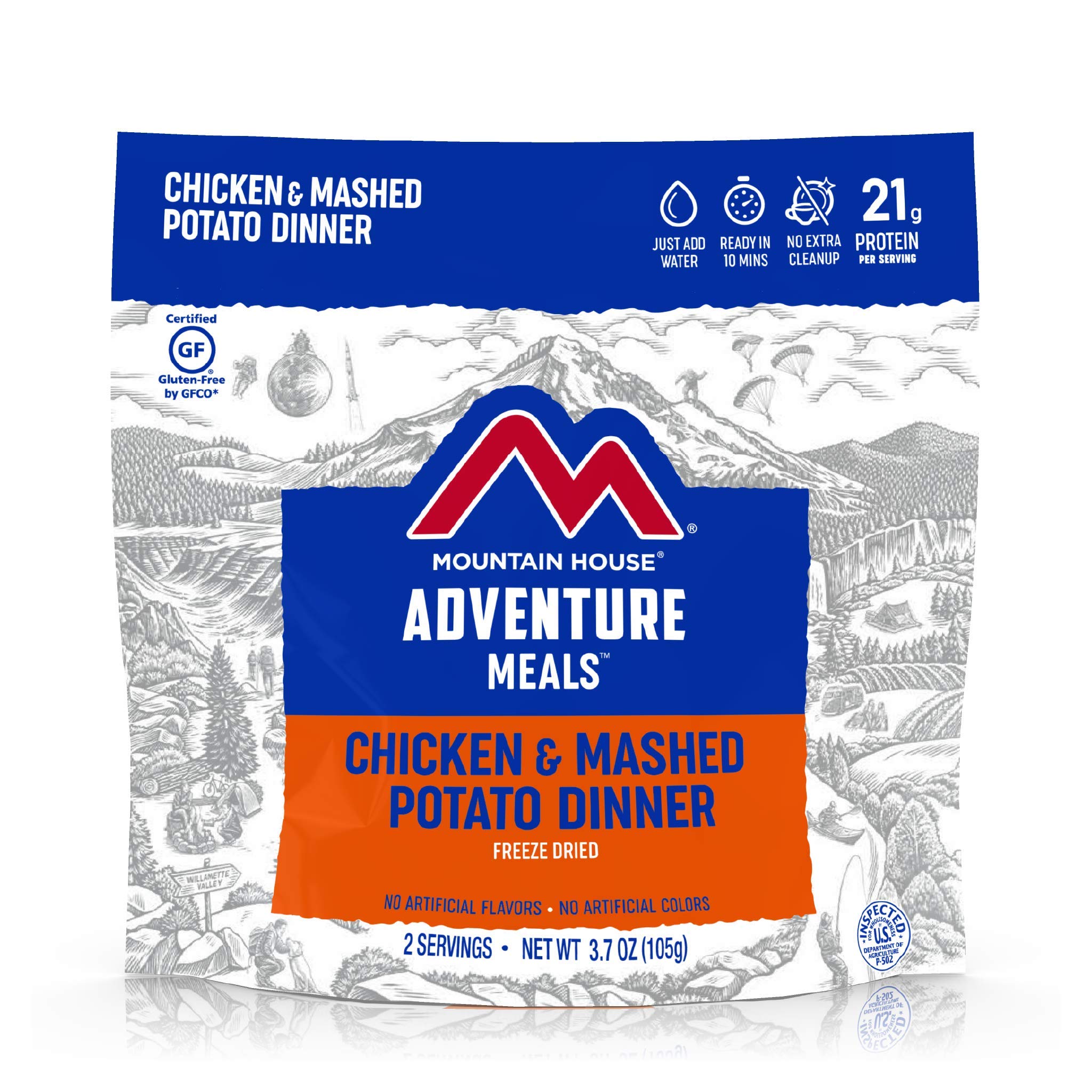
Mountain House Chicken & Mashed Potato
Key Features
- Diet: Certified gluten-free
- Servings: 2
- Shelf life: 30 years
- Pack weight: 4.48 oz
- Price: Premium
The certification is why this pouch made the cut. It’s gluten-free by GFCO, a verified certification rather than a vague ‘no gluten ingredients’ line on the front of the bag — a distinction that matters if you’ve ever stood in a resupply box reading small print in the rain. It’s also, not incidentally, the most comforting thing in this lineup.
Chicken and mashed potatoes with herbs and chives rehydrate into something that tastes of chicken and butter rather than salt and thickener, and the potato comes back smooth rather than gluey — that texture is the detail that sold us. Ten minutes with hot water, eaten straight from the pouch, and there’s nothing to wash up. The two-serving pouch splits between two people, though a hungry one will want a tortilla alongside.
What you pay for it is money: this is the priciest pouch in this group, by a margin wide enough that we treat it as a treat rather than something to buy by the case. It also wants boiling water — there’s no cold-soak version of mashed potatoes — so it’s a stove meal on a trip where you might have hoped to skip one. Stir once halfway through the steep; the potato thickens fast at the bottom of the pouch.
Pros
- GFCO-certified gluten-free, no guesswork
- Tastes of chicken and butter, not thickener
- Under ten minutes from pouch to eating
Cons
- The priciest pouch in this group
- Hot water only — no cold-soak fallback
For anyone gluten-free, this is the dinner that requires no label-reading and no compromise: certified, creamy, and ready in ten minutes.
Best for Camp Desserts
Peak Refuel Peach Cobbler
Key Features
- Water: 5.3 oz boiling
- Protein: 0.39 oz
- Calories: 670 per pouch
- Servings: 2
- Price: Midrange
Five-point-three ounces of boiling water is the entire recipe, which is less than any dinner here asks for — and on a trip where you’re melting snow for every drop, that’s not a small thing. What comes back is cobbler: pound cake and granola in a creamy sauce, with peach running through it.
The flavor is convincingly cobbler — sweet, buttery, a bit of crunch left in the granola — and it’s the pouch that gets the loudest reaction around a campfire. It isn’t peach-forward the way the name suggests, though. You get peach flavor and very little peach texture, and anyone expecting fruit chunks will notice they’re missing. The set runs soft and spoonable, and it goes to soup if you pour in the full amount and then let it stand, so aim slightly under and add a splash at the end.
With 670 calories and 11 grams of protein in the pouch, it’s a real contribution to a day’s food rather than a frivolity. Two people can share it as dessert, and one person can call it breakfast — which is what happened to more than one of our test pouches.
Pros
- Takes only 5.3 ounces of boiling water
- Cake, granola and creamy sauce that reads as cobbler
- 670 calories and 11 g protein per pouch
Cons
- More peach flavor than actual peach pieces
Our pick for the sweet course — a cobbler that needs less water than dinner and turns a campsite into something worth sitting down for.
Best for Cold-Water Treats
Backpacker’s Pantry Creme Brulee

Key Features
- Diet: Vegetarian, gluten-free
- Water: Cold
- Servings: 1
- Pack weight: 4.5 oz
- Price: Budget
Call it a vanilla pudding with a sugar crust and you’ll enjoy it more. The topping cracks and crunches the way it should, but the body underneath never sets into the firm custard the name promises — and by the second spoonful, that stopped bothering us.
The useful part is the water. This one mixes with cold water and waits ten minutes, so it works when the stove is already packed away or the fuel ran out a day early. There’s a proper layer of caramelized sugar to scatter on top, and it’s vegetarian and gluten-free, which makes it an easy extra to throw in for someone who usually gets left out of dessert.
Consistency is the variable. Eaten quickly it’s loose and pourable; give it the full ten minutes, stir again, and stand the pouch in a cold stream or a snowbank and it firms toward something spoonable. One pouch is rich enough that two people can pass it back and forth, which is worth knowing before you buy two.
Pros
- Mixes with cold water — no stove needed
- Caramelized sugar topping that actually crunches
- Vegetarian and gluten-free
- Rich enough to split between two
Cons
- Sets as pudding rather than a firm custard
We recommend it as a pudding, not a brûlée: cold water, no stove, and a sugar crust that still cracks.
How We Tested 16 Freeze-Dried Meals
We started by gathering every freeze-dried entrée we could find from outdoor retailers and brand sites, roughly 40 options in all, then cut the list by price per serving, calories per ounce, stated serving size, and whether a brand offered vegetarian or dairy-free choices. That left 16 meals, which we bought at retail rather than accepting samples.
Testing ran five months and happened where these meals actually get eaten: a rainy three-night trip, a two-night car camp, and plenty of evenings at a backyard picnic table with a camp stove. We timed each meal from opening the pouch to first bite, noted whether it needed a stir halfway through, and rehydrated one of each in cold water to see what happens when you’re low on fuel or impatient. Pouches were weighed before and after repacking, and we checked how flat they lay in a bear can and how easily they slid into a full pack.
Then we ate them. Each meal was judged on flavor and texture straight out of the pouch and again ten minutes later, since anything that turns gluey as it cools doesn’t get finished on a cold night. We watched portion size closely, whether one pouch satisfied a hungry adult after a 10-mile day or sent someone digging for snacks an hour later, and paid attention to how everyone felt a couple of hours after eating, where heavy, oversalted meals reveal themselves. Value came last: cost per serving and per 100 calories, and whether we’d spend our own money on it again.
How to Choose Freeze-Dried Camping Food
The single most useful thing to know before you buy is whether a pouch needs boiling water or will happily take cold — that one detail decides how much fuel you carry and whether breakfast happens at all.
Count your stove sessions, not your calories
Every pouch that needs boiling water costs you fuel, a pot, a sheltered spot and about ten minutes of standing around in the cold. On a short summer trip that’s nothing; on a trip where you’re melting snow for every cup, it’s the difference between an easy morning and a slow one. We plan at least one no-cook meal a day, and breakfast is the easiest place to do it — the granola here takes cold water, and so does the crème brûlée if you want dessert without lighting anything.
The trap is a meal sold as quick that still wants a full pot of boiling water and a ten-minute wait. Read the directions before you pack it, not at camp.
Treat the serving count as a starting point
A two-serving pouch is two honest servings at a desk and closer to one after ten hours of walking with a heavy pack in cold weather. Our working rule is one entrée pouch per person for dinner, plus something to bulk it out — tortillas, a block of cheese, nuts — and save the two-serving math for easy days. If two of you are splitting a pouch, supplement it deliberately rather than hoping the label was right.
Protein, calories and the weight you’re paying for
The pouches here run from four ounces to just over six, and what they deliver differs far more than their weight does. Protein per pouch ranges from 11 grams to 40 across this group, which matters most on long, hard days and least on a two-night trip. Calories fill in the rest of the picture: the cobbler delivers 670 for the pouch. Our preference is to spend weight on protein at dinner, keep breakfast light, and make up the shortfall with snacks you actually want to eat.
Water, texture and the ten-minute rule
Most freeze-dried disappointments are water mistakes rather than food mistakes. Too much water gives you soup, especially with cobbler and mashed potato; too little, or water that’s hot but not boiling, leaves rice chalky when the timer goes. Measure what the pouch asks for, use a rolling boil, seal it, and wait the full time — a pouch wrapped in a jacket keeps its heat and finishes better.
If it’s still tight at ten minutes, give it five more rather than adding water.
Frequently Asked Questions
How much water should I carry for freeze-dried meals?
The desserts are the lightest. The crème brûlée mixes with cold water, the cobbler takes 5.3 ounces of boiling water, and the granola needs half a cup of cold. Savory entrées want more, so tally the pouches you’ve actually packed before you leave and add your drinking water on top. On a route with reliable sources, refill at the last one before camp rather than carrying the day’s cooking water uphill.
Do freeze-dried meals expire?
Mountain House states a 30-year shelf life for its pouches, backed by a taste guarantee, and other brands print their own best-by dates — check the pouch in your hand rather than the product photo. Storage matters as much as the printed date, because heat is what degrades them: a cool closet beats a hot garage, and a car trunk in summer is the worst place for your spares. Mark the date you bought them and eat the oldest first.
What’s the difference between freeze-dried and dehydrated camping food?
Freeze-dried food is frozen and then dried under vacuum, which keeps the cell structure intact, so it rehydrates quickly and often accepts cold water. Dehydrated food is dried with heat, which is slower to come back and usually wants boiling water and a longer soak. If you’re counting stove sessions, look for freeze-dried; if you’re carrying a stove anyway and want the widest choice, either works.
Final Verdict
Peak Refuel’s Sweet Pork and Rice is the pouch we name when someone asks what to put in the food bag: real meat, 40 grams of protein, and a flavor that survives a full ten-minute steep. It’s the dinner, not the whole menu. If gluten is the constraint, Mountain House’s chicken and mashed potatoes is certified and just as comforting, and if you want a breakfast that never touches a stove, the granola with milk and blueberries is the one we keep coming back to.