This post contains affiliate links. We may earn a small commission when you buy through our links — at no extra cost to you.
Many hikers reach for 12x binoculars only to find every heartbeat shakes the image. Higher magnification amplifies natural hand movement, turning a scenic overlook into a bouncing mess. The result is frustration and a gadget that stays in the pack.
The fix isn’t more expensive glass — it’s choosing the right magnification for the trail. 8x offers a wide, stable field of view that stays usable when you’re tired and breathing hard. 10x trades some stability for extra reach, while 12x demands tripod-like stillness or a resting surface.
This guide cuts through the confusion between waterproof ratings and magnification claims. Every pick here balances portability, weather protection, and real-world steadiness — so you spend more time looking at the view and less time fighting the instrument.



Best for All-Around Hiking
Nikon PROSTAFF P3 8×30
Key Features
- Magnification: 8x
- Objective Lens: 30mm
- Waterproof/Fogproof: Yes
- Weight: 16.8 oz
- Price: $$
The Nikon PROSTAFF P3 8×30 stands out among compact hiking binoculars for its wide 456-foot field of view at 1,000 yards — broad enough to follow fast-moving birds or scan ridgelines without constantly panning. The 8x magnification keeps the image steady in hand, reducing the jitter common with higher-power compacts. Multilayer-coated optics deliver bright, sharp views that hold up in shaded woods or overcast skies.
At 16.8 ounces, this binocular is not the lightest option, but the balance distributes weight comfortably during a full day on the trail. The rubber-armored body provides a secure grip even in damp conditions, and O-ring seals plus nitrogen purging make it genuinely waterproof — a necessity for hikers who encounter rain or stream crossings.
This binocular is ideal for hikers and birders who spend hours observing landscapes — the wide field of view makes scanning efficient, and the 8x magnification keeps images steady without requiring a tripod. The mid-range price delivers optical quality that holds its own against many higher-priced models, making it a practical choice for those who want performance without the premium cost.
For a mid-range price, the optical quality and waterproof build rival many binoculars costing twice as much. The tradeoffs — moderate weight and a slight learning curve with the eye cups — are manageable for the performance gained, especially for hikers who carry binoculars on a strap rather than in a pocket.
Pros
- Crisp, clear optics with multilayer coatings for bright views in varied light
- Lightweight and well-balanced for all-day carry
- Great value – offers optical quality typical of higher-priced binoculars
- Waterproof and fogproof construction for wet-weather hiking
Cons
- Eye cup adjustment may require manual extension for proper eye relief – a finicky step for some users
- At 16.8 oz, it is heavier than ultra-compact alternatives – less ideal for minimalist packers
If you want a wide, clear view on the trail without overspending, the PROSTAFF P3 is the hiking compact to reach for.
Best for Premium Value
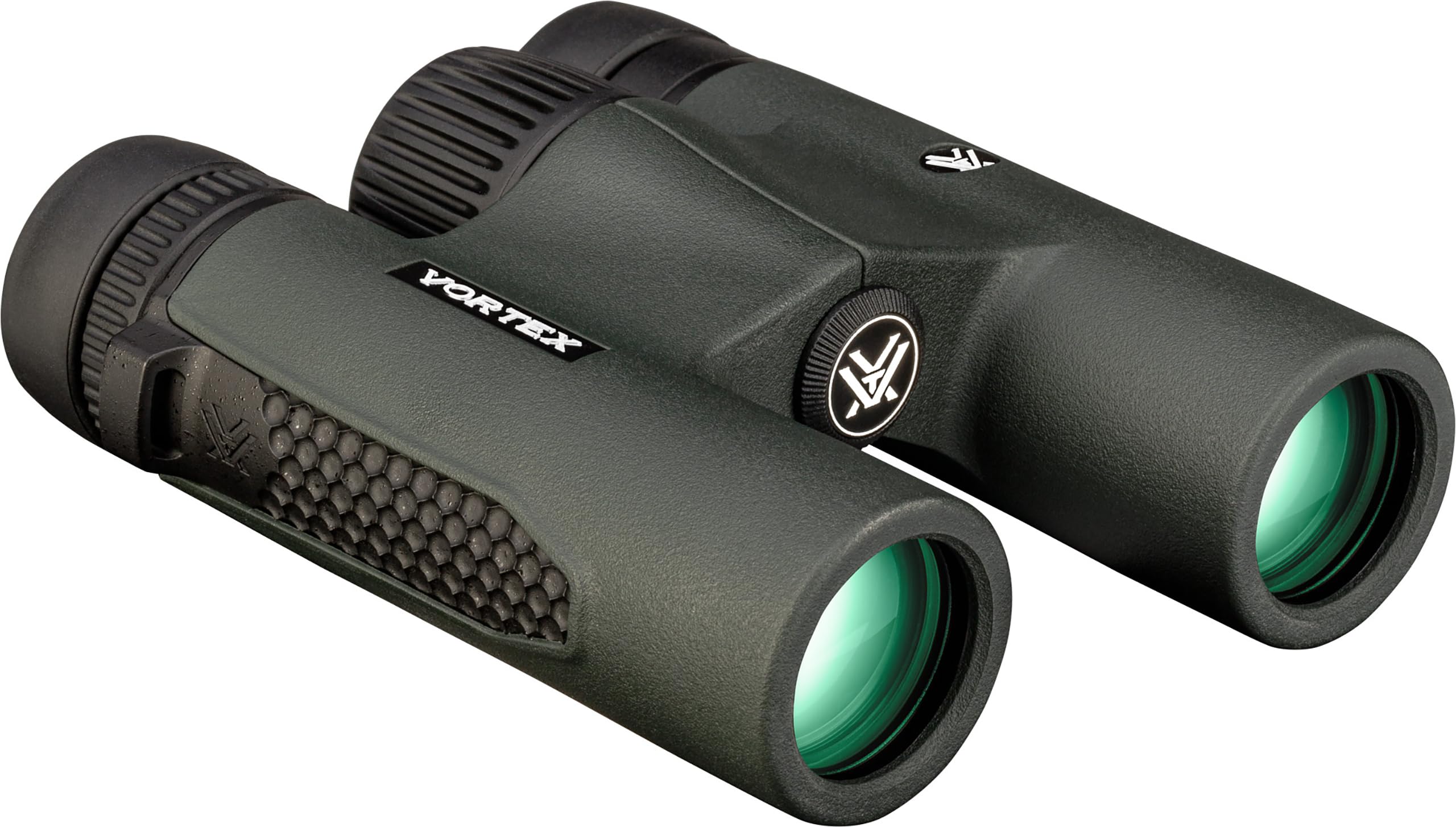
Vortex Triumph HD 10×28
Key Features
- Magnification: 10x
- Objective Lens: 28mm
- Waterproof/Fogproof: Yes
- Weight: 12.8 oz
- Price: $$
With a 4.8 rating and Vortex’s unconditional lifetime warranty, the Triumph HD offers premium HD optics at a mid-range price. Its 15mm eye relief makes it one of the best options for eyeglass wearers in this set, though the PROSTAFF P3’s wider field of view provides a more immersive hiking experience.
Best suited for hikers who prioritize crisp image quality and long eye relief over maximum field width. The 10x magnification pulls distant details closer, handy for identifying far-off landmarks, but the narrower view means more panning on open trails. Minor chromatic aberration can appear at high-contrast edges — something primary birders or coast-watchers may notice, but less critical for general trail use.
At 12.8 oz, the Triumph HD is moderate in weight — light enough for day hikes but not the most pocketable. The roof prism body feels solid, and the multi-coated optics deliver bright images in good light. The focus wheel operates smoothly with reasonable tension.
Pros
- HD optics deliver sharp, clear images across most of the field.
- Lifetime warranty adds long-term peace of mind for outdoor use.
- 15mm eye relief accommodates glasses without losing the full view.
- Lightweight enough for day hikes at 12.8 oz.
Cons
- High-contrast edges can show slight color fringing, noticeable when scanning tree lines against bright sky.
- 10x magnification can amplify hand movement, making it less forgiving than an 8x model for some users.
A strong mid-range choice with lifetime backing – ideal for glasses-wearing hikers who want 10x reach and don’t mind a narrower field of view.
Best for Ultra-Compact Carry
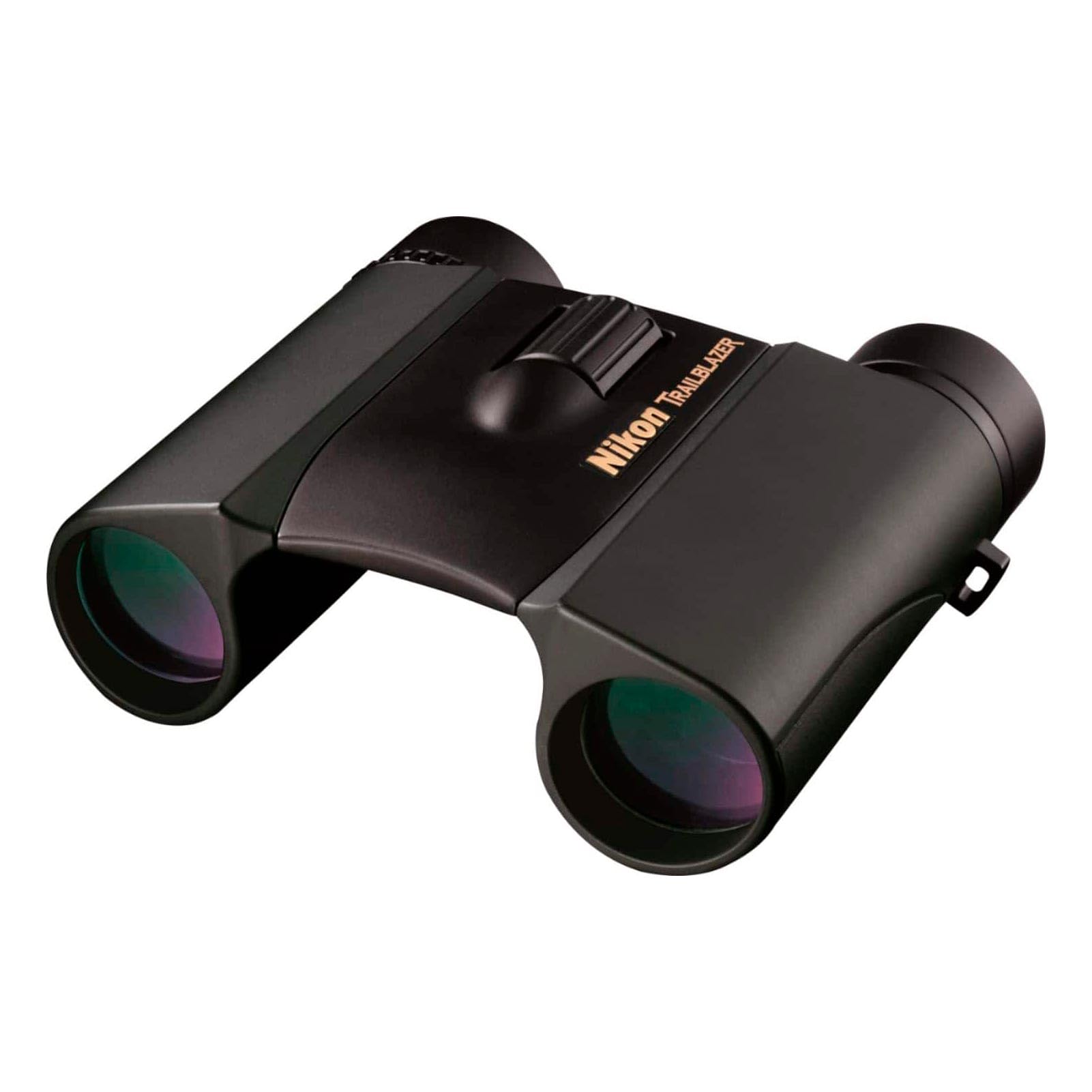
Nikon Trailblazer 8×25
Key Features
- Magnification: 8x
- Objective Lens: 25mm
- Waterproof/Fogproof: Yes
- Weight: 9.9 oz
- Price: $$$
Weighing just 9.9 oz, the Trailblazer fits easily into a jacket pocket without adding noticeable weight. Its fully multi-coated roof prism optics deliver clear, color-accurate views that rival larger binoculars. Where the top pick PROSTAFF P3 offers a wider field of view, the Trailblazer’s smaller footprint makes it the better choice for hikers who pack light.
This binocular suits hikers, bird watchers, and travelers who want waterproof, fogproof durability in a minimalist package. The loose eyecup adjustment is a tradeoff: those who set their eyecups once and leave them will have no issue, but frequent adjusters should test the fit before committing.
The nitrogen-purged, O-ring sealed body handles rain and splashes without fogging, making it a reliable companion on damp trails. The 8x magnification provides a steady image for extended glassing without arm fatigue.
Pros
- Crisp, color-accurate optics for detailed viewing.
- Pocketable 9.9 oz design that disappears in a pack.
- Waterproof and fogproof build for all-weather hiking.
Cons
- Eyecup adjustment may loosen during use, requiring occasional readjustment.
For hikers who prioritize weight and size above all else, the Trailblazer is a strong option — just be prepared to secure the eyecups.
Best for Wet Conditions
Bushnell H2O 12×25
Key Features
- Magnification: 12x
- Objective Lens: 25mm
- Waterproof/Fogproof: IPX7
- Weight: 13.6 oz
- Price: $$
Bushnell’s H2O stands apart with genuine IPX7 waterproofing – it can survive full submersion, not just splashes. That makes it the go-to choice for rainy trails and marine environments where other compacts would fail. The 12x magnification provides extra reach for spotting distant wildlife, though it also amplifies hand movements more than lower powers.
This binocular suits hikers who prioritize waterproof certainty over lightweight carry. At 13.6 oz it’s heavier than many pocketable options, and the focus knob requires more deliberate turning than some competitors. Those who need a binocular for constant rain or coastal spray will find the tradeoff worthwhile; for dry-weather ultralight hiking, a slimmer model like the top pick may serve better.
Optical quality holds up well in overcast conditions, with fully multi-coated lenses delivering clear, contrasty views. The compact roof prism body feels rugged, and the rubber armor provides a secure grip when wet. The 12x magnification does demand a steady hand or a rest for prolonged viewing, but for quick looks at markers or birds, it’s manageable.
Pros
- True IPX7 waterproof construction withstands full submersion, ideal for wet conditions.
- Clear, contrast-rich image from fully multi-coated optics.
- Compact and durable body with rubber armor for wet grip.
Cons
- Focus knob requires more force to turn than typical binoculars.
- 13.6 oz weight is heavier than many compact hiking binoculars.
- 12x magnification amplifies hand shake, requiring a steady hold or support.
For hikers who regularly face rain, spray, or fog, the H2O’s waterproofing is unmatched in this class – just be prepared for a stiffer focus and a bit more weight.
Best for Budget Families
Hontry 10×25
Key Features
- Magnification: 10x
- Objective Lens: 25mm
- Waterproof/Fogproof: Yes
- Weight: 0.6 lb
- Price: $
The most popular budget binocular in this set, the Hontry 10×25 delivers sharp image quality at an entry-level price that’s hard to beat. Where competing 12x models introduce hand-shake on uneven terrain, the 10x magnification here stays steady enough for casual trail use, and the fully multi-coated Porro optics produce a crisp, bright view for daytime hiking.
The 0.6-pound body slips easily into a jacket pocket or glovebox, and the O-ring-sealed chassis is genuinely waterproof for rain or splash crossings. The short 10mm eye relief is a clear tradeoff: eyeglass wearers can see the full field only by removing their glasses, so this suits those who don’t rely on prescription lenses on the trail.
This binocular is built for families on a budget, for kids learning to focus on distant objects, and for anyone who wants a grab-and-go pair kept permanently in the glovebox. The 25mm objective limits low-light performance — expect dimming in twilight or under dense forest canopy — but for bright-day hikes, roadside wildlife, or stadium events, it delivers more than enough clarity. At this price, the Hontry covers the vast majority of casual outdoor needs without the anxiety of damaging an expensive optic.
Pros
- Exceptional value for the price
- Compact and lightweight at 0.6 lb
- Clear, sharp image quality for the price
Cons
- Low-light performance drops noticeably in twilight or dense shade
- Short 10mm eye relief can make full-field viewing difficult for eyeglass wearers
For hikers who don’t wear glasses and mostly hike in good light, the Hontry 10×25 is the best value compact binocular under $30 — no other budget model offers this many positive user experiences.
Best for Budget High-Mag
Occer 12×25

Key Features
- Magnification: 12x
- Objective Lens: 25mm
- Waterproof/Fogproof: Yes
- Price: $
The Occer 12×25 packs a lot of reach into a tiny, lightweight body, making it a go-to for hikers who want to see distant ridges without bulk. The tradeoff is that 12x magnification amplifies hand shake; steady viewing requires bracing against a tree or rock. Optical clarity is good for the price, but edge sharpness does not match mid-range compacts. This is a strong option for budget-conscious hikers who prioritize portability and magnification over stability.
Pros
- Very compact and lightweight for a 12x binocular
- Good center-field clarity for the price point
Cons
- 12x magnification makes hand-held viewing shaky without a rest or support
- Edge sharpness is not as refined as pricier models; best for center-field focus
For hikers on a tight budget who don’t mind a little shake and want maximum reach in a compact package, the Occer delivers exceptional value.
Best for Ultralight Hiking
VULNESS 8×21

Key Features
- Magnification: 8x
- Objective Lens: 21mm
- Waterproof/Fogproof: Yes
- Weight: 5.6 oz
- Price: $
At 5.6 oz, these are the lightest waterproof binoculars you can slip into a pocket — ideal for ultralight hikers or as a backup pair. Daytime views are acceptable for the price, but the small objective limits brightness in dusk conditions. The neck strap attachment may come loose over time. This is a specialized tool for weight-conscious daytime outings, not a primary hiking binocular.
Pros
- Extremely compact and lightweight at 5.6 oz
- Good value for money with waterproof construction
Cons
- Small 21mm objective limits low-light performance and image brightness
- Neck strap attachment can break easily
A solid choice for ultralight day hikes where every gram counts, provided you accept restricted low-light use and a potential strap issue.
Best for Budget High-Mag
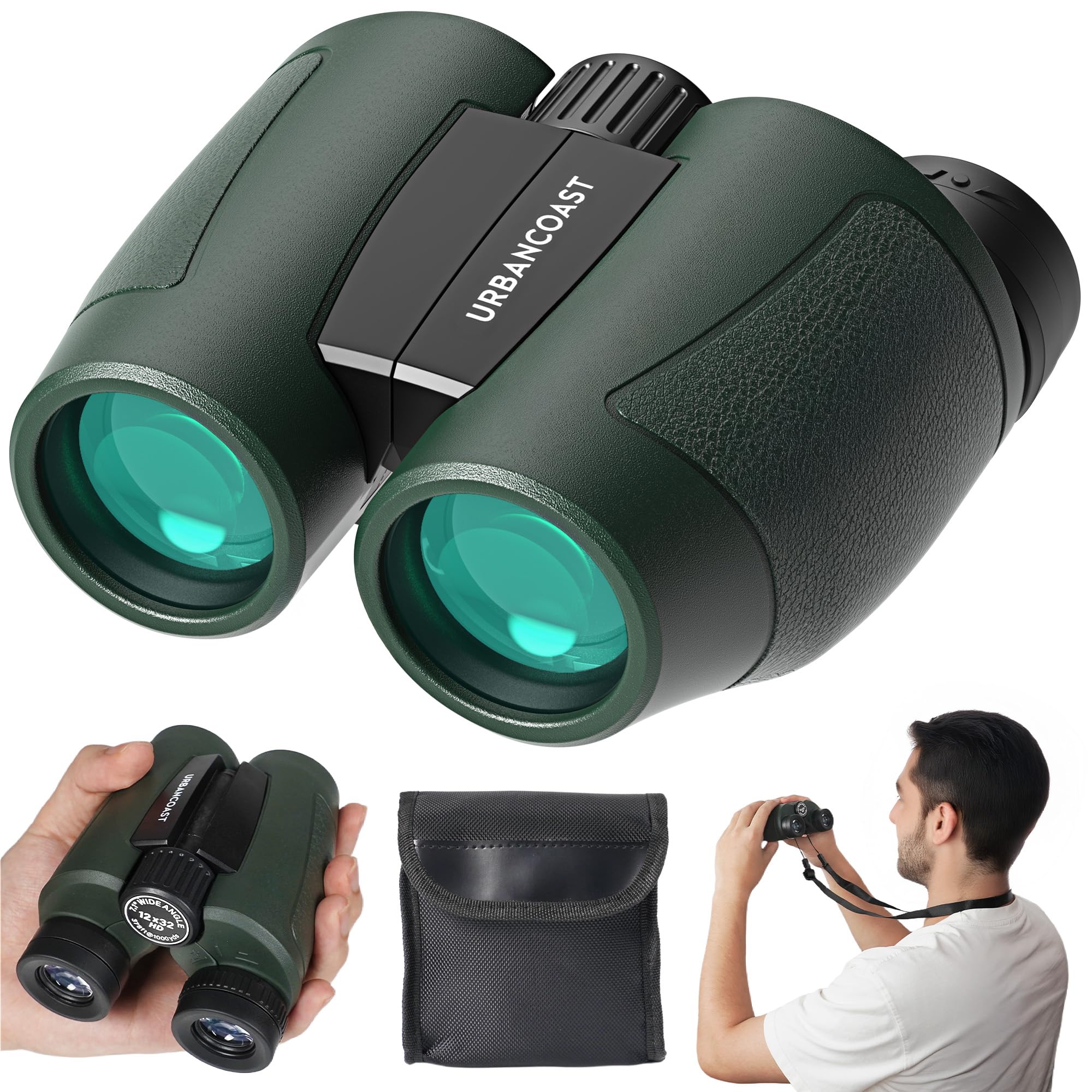
URBANCOAST 12×32
Key Features
- Magnification: 12x
- Objective Lens: 32mm
- Waterproof/Fogproof: Yes
- Weight: 12 oz
- Price: $
At $40, the URBANCOAST 12×32 delivers a magnification and objective size combination typically found in more expensive binoculars. Its fully multi-coated BAK4 optics produce good clarity and a wide field of view for a 12x model, making it a strong daytime performer. The 12-ounce weight and waterproof build suit hiking use. However, the limited number of user reports means long-term durability under regular trail conditions is uncertain. This makes it a better fit for budget-minded hikers willing to accept some risk for the specs, rather than those expecting a binocular they’ll use for years.
Pros
- Wide field of view for 12x magnification – good for scanning landscapes.
- Lightweight at 12 ounces – easy to carry on hikes.
Cons
- Small 2.67mm exit pupil makes dawn/dusk views dim – best reserved for daylight hours.
Best for daytime trail use where 12x reach and a 32mm objective are desired at minimal cost.
Best for Travel Compact
Nikon Travelite EX 10×25

Key Features
- Magnification: 10x
- Objective Lens: 25mm
- Waterproof/Fogproof: Yes
- Weight: 9.5 oz
- Price: $$$
The Travelite EX packs Nikon’s well-regarded Porro prism optics into a featherweight 9.5 oz body. Image quality is sharp with good contrast, and multi-coated lenses handle midday light effectively. Build quality from Nikon is solid – the chassis feels rugged despite its size. The nitrogen-purged body is fully waterproof, adding reassurance in wet conditions. However, the premium price positions this as a niche pick for hikers who prioritize absolute weight savings over cost. For travelers who count every ounce, the portability is unmatched.
Pros
- Ultra-light 9.5 oz design disappears into any pocket or pack.
- Solid build quality from a respected optics brand ensures durability.
- Crisp, clear image quality with effective multi-coatings.
Cons
- Narrow 4.2° field of view feels restrictive when scanning landscapes.
Best for travelers and hikers who prioritize ultra-light weight and pocketability over everything else – a specialist compact for close-observation moments.
How to Choose
The most important thing to know: for hiking, 8x magnification gives you a steadier, wider view than 10x or 12x, especially when you’re tired.
Magnification
8x is the hiking sweet spot. It delivers a stable image because your natural hand movement is magnified less than at 10x or 12x. On a long uphill climb with a racing heart, that difference becomes dramatic—12x can be unusable without leaning against a tree.
10x offers more reach for spotting distant wildlife but requires a steadier hold. 12x should only be considered if you frequently brace against a rock or use a trekking pole as a monopod.
Objective Lens Diameter
A larger objective (e.g., 32mm vs 25mm) lets in more light, giving you a brighter image in low-light conditions like dawn or dense forest. But it adds size and weight. A 25mm lens is fine for daytime hiking and keeps the binocular compact.
The trade-off is that a 21mm objective (like on ultralight models) is noticeably dim at twilight. If you hike early or late, aim for at least 28mm.
Waterproof and Fogproof
Waterproofing is non-negotiable for hiking. A few minutes in rain can fog up non-sealed optics internally, ruining the view permanently. Look for models that specify O-ring seals and nitrogen purging—not just ‘water resistant’.
The Bushnell H2O is the only model here with an actual IPX7 submersion rating, meaning it can survive a drop in a stream. Most others are rainproof but not dunkable.
Weight
Every ounce counts on a multi-mile hike. A binocular weighing 16.8 oz (like the PROSTAFF P3) is fine for a daypack, but 9.9 oz (Trailblazer) or 5.6 oz (VULNESS) disappears around your neck. However, lighter models often compromise on objective size and low-light performance.
If you carry binoculars on a neck strap all day, aim for under 13 oz. If they ride in a pack pocket, weight is less critical.
Eye Relief
Eye relief is the distance your eye can be from the eyepiece while still seeing the full field. For glasses wearers, 15mm or more is essential—shorter relief cuts off the outer view. Budget models like the Hontry (10mm) are frustrating for spectacle users.
Twist-up eyecups help non-glasses wearers adjust, but if you wear glasses, check the spec before buying.
FAQ
Why are my 12x compact binoculars so shaky on a hike?
12x magnification amplifies every hand tremor, heartbeat, and muscle twitch. When you are tired from hiking, your stability decreases, making the image bounce more. This is a physical limitation of high magnification in handheld devices. For hiking, 8x or 10x are far more practical unless you always brace the binoculars against a solid object.
Are water-resistant binoculars good enough for hiking in rain?
No. ‘Water resistant’ usually means only light drizzle protection—a heavy rain or accidental drop in a stream can cause internal fogging or permanent damage. Only binoculars with O-ring seals and nitrogen purging (labeled waterproof/fogproof) should be trusted for wet hiking. The Bushnell H2O with its IPX7 rating is the safest choice for truly wet conditions.
Can I use 8×21 ultra-compact binoculars for bird watching on trails?
For casual daytime birding, yes. The 8×21 is extremely lightweight and portable. But the small 21mm objective lets in less light, so images appear dimmer in shade or early morning. You will miss fine feather detail. For serious birding, an 8×30 or 8×32 is a better choice.
How important is eye relief when choosing binoculars for glasses wearers?
Critical. Short eye relief (under 12mm) forces you to press your glasses into the eyecups, often smudging them and cutting off the outer view. Look for at least 15mm of eye relief and twist-up eyecups. The Vortex Triumph HD (15mm) and Nikon PROSTAFF P3 (not specified but generally good) work well with glasses.