This post contains affiliate links. We may earn a small commission when you buy through our links — at no extra cost to you.
Freeze-dried meals promise a hot dinner with just boiling water, but many leave you stirring crunchy meat or mushy rice. The most consistent complaint isn’t taste — it’s rehydration that rarely matches the package photo. Some pouches labeled ‘2 servings’ barely satisfy one hungry hiker after a long day.
Between these pouches and no-cook meal bars, the decision comes down to more than just calories per ounce. It’s about whether you’re willing to carry a stove, wait ten minutes, and accept texture quirks in exchange for a warm meal. Bars eliminate cooking entirely but have their own trade-offs in moisture and satiety.
The solution is matching your food to your trip style. Long days with minimal stops call for dense, grab-and-go calories. Relaxed evenings with a camp stove reward the comfort of a hot dinner. This guide sorts through the options so you pick what actually works for you.
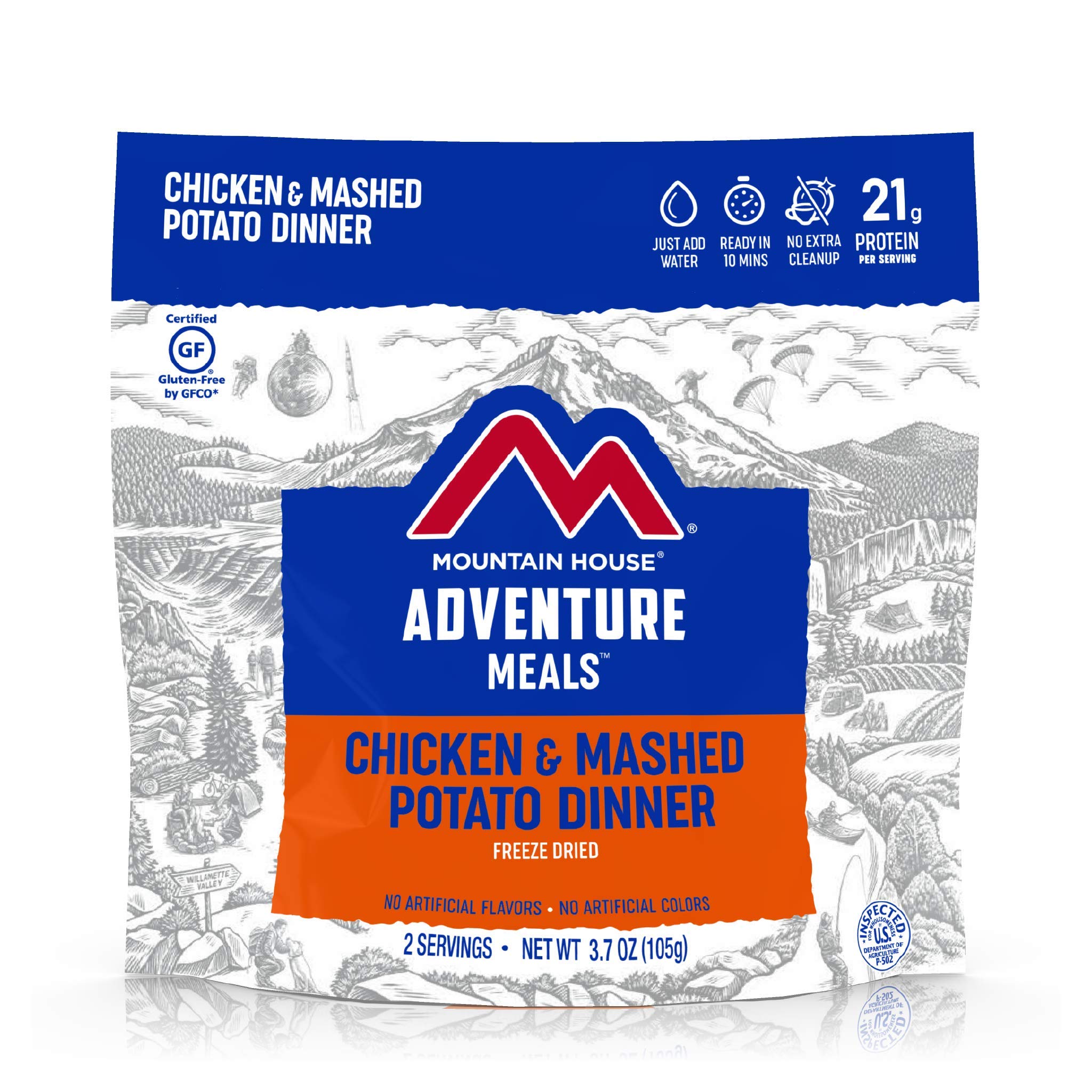


Best for Gourmet Dinner
MH Chicken & Mashed Potatoes
Key Features
- Prep Time & Method: Under 10 minutes
- Shelf Life: 30 years
- Dietary Features: Gluten-free
- Price: $$$
The instant preparation — just add hot water, stir, and wait — produces a surprisingly creamy mashed potato base with noticeable chunks of chicken, not the mushy paste common in many freeze-dried meals. The texture holds up consistently, which is rare for a pouch this lightweight (4.48 ounces).
Flavor leans toward comforting, home-style chicken and gravy, and the gluten-free certification (GFCO) removes a common dietary barrier. The 30-year shelf life adds security for emergency kits, but the real draw is how closely it mimics a fresh-cooked meal after a long day on the trail.
Best suited for backpackers who prioritize taste over per-serving cost and for gluten-free hikers wanting a hearty dinner without compromise. The ~400 calories per serving and premium price (~$11.75 per serving) mean this isn’t the most calorie-dense or budget-friendly option — ultralight hikers may need to supplement with extra snacks, and budget-conscious shoppers will find cheaper alternatives.
Pros
- Chicken pieces stay chunky and mashed potatoes remain creamy after rehydration.
- Consistently described as delicious and satisfying for a freeze-dried meal.
- Certified gluten-free with a 30-year shelf life for emergency storage.
- Lightweight pouch (4.48 oz) packs easily for multi-day trips.
Cons
- At about 400 calories per serving, ultralight hikers will need to supplement for high-output days.
- Per-serving cost approaches $12, placing it firmly in premium territory for freeze-dried dinners.
If a comforting, restaurant-quality dinner matters more than calories or cost, this is the freeze-dried meal to pack.
Best for Ultralight Hikers
Greenbelly Meal Bars 5-Pack
Key Features
- Prep Time & Method: Ready to eat
- Dietary Features: Gluten-free, mostly vegan
- Price: $$$
Greenbelly packs 650 calories into a single pouch of two bars, making it one of the densest no-cook options for long-distance hiking. The taste is surprisingly good for a meal bar — savory rather than sweet — which sets it apart from the planet-based variety packs in this comparison.
This is a solid fit for ultralight backpackers who want to ditch the stove and eat on the move. The tradeoff is texture: bars can be flaky or dry, especially in cooler conditions, and the per-meal cost sits above most freeze-dried dinners that require boiling water. For hikers who prioritize weight and speed over a hot meal, the convenience outweighs those boundaries.
Pros
- Taste is savory and satisfying for a bar, outperforming most alternatives.
- No cooking or cleanup needed — eat straight from the pouch on the trail.
- 650 calories per serving provides sustained energy for long days.
Cons
- Texture can be flaky or dry, especially in cold weather or when eaten without a drink.
- Premium price per meal compared to freeze-dried options that require a stove.
Best for stoveless hikers who value calorie density and convenience over cost savings.
Best for High Protein
Peak Refuel Beef Stroganoff
Peak Refuel’s Beef Stroganoff sets itself apart with real beef chunks and a rich, beefy flavor that many consider the best-tasting freeze-dried dinner available. It packs roughly 28g of protein per pouch, roughly double what many competitors offer, and uses no textured vegetable protein. However, achieving that ideal texture demands careful water measurement and extra patience — the meat and mushrooms can remain crunchy if rushed or under-watered.
This meal suits backpackers who prioritize flavor and protein over convenience, and who are willing to experiment with water amounts to dial in the texture. The premium price tag means it’s a treat for trips where taste matters most, not a budget-friendly staple for long hauls. Those who want a foolproof, quick meal without extra fuss will find the rehydration finickiness a genuine limitation.
Pros
- Rich, beefy flavor consistently praised as one of the best in freeze-dried meals
- High protein content from real meat, no textured vegetable protein
- Lightweight and simple to prepare on the trail
Cons
- Meat and mushrooms may remain crunchy if water is not carefully measured or given enough time
- Premium price per pouch may not match value expectations for some
For backpackers who value exceptional flavor and high protein above all else, and are willing to manage the rehydration process, Peak Refuel delivers a satisfying trail meal that stands apart from standard freeze-dried fare.
Best for Vegan/gf
PROBAR MEAL 12-Pack
Key Features
- Prep Time & Method: No-cook
- Dietary Features: Vegan, gluten-free
- Price: $$
The PROBAR MEAL 12-Pack delivers a dozen plant-based, vegan, and gluten-free flavors in one box – from Peanut Butter Chocolate Chip to Banana Nut. At roughly 390 calories per bar, it’s a filling no-cook option for day hikes or commutes, but not the most calorie-dense choice for multi-day trips (the more concentrated bar in this roundup packs 650 calories). The real draw is taste: the bars are naturally sweet, not cloying, and most flavors avoid the chalky feel common in plant-based meal bars. Freshness, however, varies – some shipments arrive with short expiration dates or bars that feel dry and hard.
This pack suits vegan or gluten-free hikers who prioritize flavor variety and want a meal replacement that keeps them satisfied for a few hours. It’s also practical for commuters or day-trippers who grab a quick breakfast or lunch. The tradeoff: check the expiration date on arrival, and plan to eat these within a few months. At full price, the per-bar cost sits in mid-range territory – many find it reasonable only when bought on sale.
Pros
- Flavor variety with natural sweetness, not overly sugary
- Keeps you full for hours between meals
- Portable and easy to pack for hiking or daily carry
Cons
- Value at full price is debatable – better bought on sale
- Freshness can be hit-or-miss with short expiration dates or stale texture
A strong option for vegan and gluten-free hikers who value flavor variety over maximum calories – just buy on sale and use soon after arrival.
Best for Vegetarian Budget
BP Lasagna
Key Features
- Prep Time & Method: Add hot water
- Dietary Features: Vegetarian
- Price: $
For under $10 and 28g of protein, this freeze-dried lasagna delivers a familiar Italian comfort meal on the trail. The 3.53 oz pouch is lightweight, and preparation is quick — add boiling water and wait 8-10 minutes. The result is a hot, filling dish with a mild cheesy tomato flavor that some hikers find satisfying, though the seasoning is subtle. It lacks the bold flavor and rehydration consistency of premium alternatives like the top pick, but remains a practical choice for budget-conscious vegetarian backpackers.
This meal suits hikers who prioritize cost and protein over complex flavor. The taste is mild — adding salt, pepper, or hot sauce improves it noticeably. It also contains bio-engineered ingredients, which may be a concern for clean-label shoppers. The package claims two servings, but one hungry hiker will likely eat the whole pouch.
Pros
- Cheesy flavor that works as comforting trail food after a long hike.
- Lightweight pouch and simple hot-water preparation make it easy to prepare anywhere.
- Filling portion with 28g protein keeps hunger at bay for hours.
Cons
- Contains bio-engineered ingredients, a point to consider for those seeking clean-label foods.
- Flavor may come across as bland without added seasoning — adding salt or spices is recommended.
A budget-friendly vegetarian option with decent protein, best for hikers who don’t mind adding their own seasoning and accept bio-engineered ingredients.
Best for Gf Breakfast
MH Breakfast Skillet
Key Features
- Prep Time & Method: Under 10 minutes
- Dietary Features: Gluten-free
- Price: $
This breakfast skillet delivers on the camp stove promise: a smoky sausage flavor and hot meal in under 10 minutes with just boiling water. The 3.7-ounce pouch makes it one of the lightest hot breakfasts you’ll carry — ideal for multi-day trips where every gram counts. Unlike the top pick dinner option, this is a breakfast-specific pouch certified gluten-free, so it fills a specific gap for those avoiding gluten.
The sausage texture is a known trade-off for freeze-dried meat — pieces can turn rubbery after rehydration. At roughly 300 calories per serving, it’s a moderate-calorie start, better suited for a lighter breakfast or as part of a layered meal plan. Best for backpackers who value portability and hot flavor over meat texture, and especially for anyone needing a certified gluten-free option on the trail.
Pros
- Rich smoky sausage flavor that satisfies after a cold morning hike
- Extremely lightweight (3.7 oz) and packs flat for easy storage
- No cleanup required — just add hot water and eat from the pouch
Cons
- Per-serving cost is higher than bulk breakfast options for long trips
- Sausage pieces can become rubbery after rehydration — expected for freeze-dried meat
A go-to gluten-free breakfast for backpackers who prioritize portability and flavor over meat texture — best for short trips or as a varied breakfast rotation.
Peak Refuel Peach Cobbler
Peak Refuel Peach Cobbler

The Peak Refuel Peach Cobbler delivers a rich, sweet peach cobbler flavor that many find satisfying after a long hike. The simple just-add-water preparation is convenient. However, the final consistency can turn into a mushy paste rather than a textured cobbler, and the premium price for a two-serving pouch makes it a luxury rather than a staple.
Pros
- Rich peach cobbler flavor that satisfies a sweet tooth on the trail.
- Easy to prepare with minimal water – just add water and wait.
Cons
- Value for money is questionable – high price for a small dessert portion.
- Consistency can turn into a mushy glob rather than cobbler texture.
Best for backpackers who prioritize dessert flavor over texture and are comfortable with a premium cost per serving.
Best for Sweet Dessert
BP Dark Chocolate Cheesecake

Key Features
- Prep Time & Method: Add water, mix
- Dietary Features: Vegetarian
- Price: $
The Backpacker’s Pantry Dark Chocolate Cheesecake Mix delivers a rich, pudding-like chocolate taste with just cold water — no stove needed. But preparing it is messy, the texture can end up pasty, and the 3.5-ounce portion feels small for the price. It works as an occasional trail dessert for hikers who don’t mind the cleanup and value a sweet reward over calorie density.
Pros
- Rich chocolate pudding-like flavor satisfies a sweet craving on the trail.
- Cold water preparation eliminates the need for a stove or hot water.
Cons
- Preparation is messy with sticky powder, and texture can turn mushy instead of firm.
- Small serving size for the price limits its value as a trail meal component.
Best for a backpacker who wants a simple chocolate dessert and is willing to deal with sticky cleanup and a small portion for the occasional treat.
Best for Bulk Value
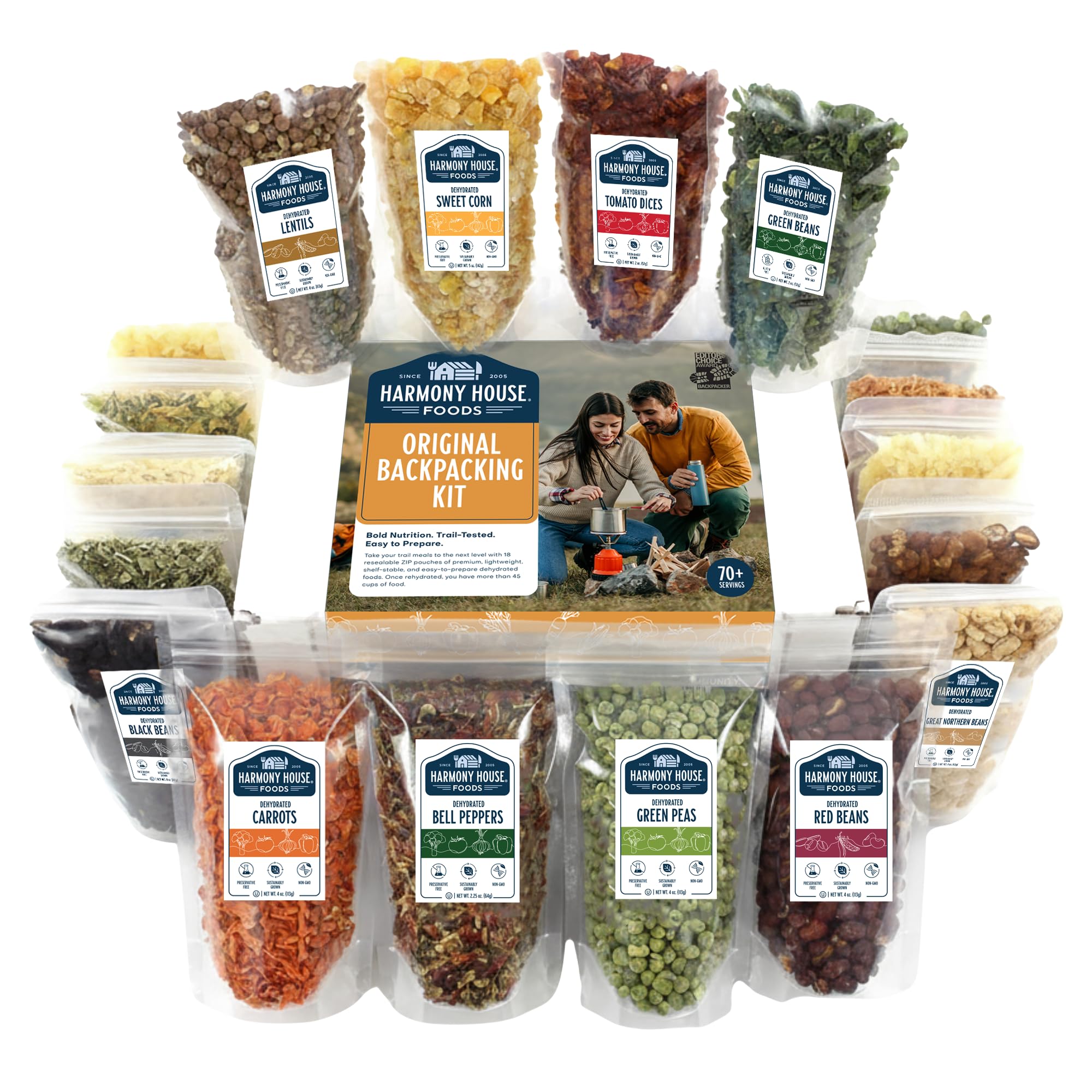
Harmony House Backpacking Kit
Key Features
- Prep Time & Method: Stove cooking required
- Dietary Features: Non-GMO, gluten-free
- Price: $
The Harmony House Backpacking Kit delivers an impressive 70+ servings of non-GMO, gluten-free dried vegetables, beans, and lentils at a budget-friendly price. For long-distance hikers willing to pack a stove and spend time simmering — up to an hour for some ingredients like corn and peas — this kit offers unmatched savings and ingredient versatility. However, it requires extra seasoning and cooking effort, making it a poor fit for those seeking instant meals or minimal preparation.
Pros
- Over 70 servings of dried vegetables and legumes for a budget-friendly per-meal cost.
- Tomatoes and beans are especially fresh-tasting for dried produce.
Cons
- Corn and peas can remain hard even after extended simmering.
- Meals require a stove and extra seasoning — not just-add-water.
Best suited for thru-hikers and campers who already carry a stove and value bulk savings over convenience; not for those seeking instant freeze-dried pouches.
Best for Comfort Groups
Mountain House Chicken & Dumplings 6-Pack

Key Features
- Prep Time & Method: Under 10 minutes
- Shelf Life: 30 years
- Price: $$$
The Mountain House Chicken & Dumplings 6-pack delivers consistently great taste and a 30-year shelf life, making it a smart choice for group backpacking trips or emergency food reserves. However, the per-pouch cost is higher than many single-serve competitors, and the multi-pack format reduces flexibility for solo hikers who prefer meal variety or lighter individual loads.
Pros
- Great taste that stands out among freeze-dried meals
- Lightweight and quick to prepare with just boiled water
Cons
- Multi-pack format limits flexibility for solo hikers who want single-serve portions
- Per-pouch cost may be higher than comparable single-serve freeze-dried meals
This 6-pack is a strong choice for groups prioritizing taste and long shelf life, but solo hikers or those watching per-meal costs should consider single-serve alternatives.
How to Choose
Choose your backpacking food by calorie density per ounce, not serving size on the label.
Calories Per Serving
A pouch labeled ‘2 servings’ often contains just enough for one hungry hiker after a day on the trail. The actual calorie count per pouch matters more than the advertised number of servings.
A 650-calorie meal bar can outperform a 400-calorie freeze-dried dinner, especially when you factor in the weight of the stove and fuel needed for the hot meal. Compare total calories per ounce to see the true efficiency.
Weight Per Calorie
Every ounce you carry costs energy. A meal that delivers 120 calories per ounce is twice as efficient as one that delivers 60. Freeze-dried pouches often hover around 100-130 cal/oz, while dense bars can exceed 150.
That difference adds up over a multi-day trip. A day’s worth of food (2500 cal) using 150 cal/oz bars weighs just over a pound, whereas a mix of pouches and stove gear can push two pounds.
Preparation Time and Method
Most freeze-dried meals claim ‘just add water and wait 8-10 minutes.’ In practice, many require closer to 15-20 minutes for proper rehydration, especially items with meat or biscuits. The time spent waiting and cleaning a stove is real.
No-cook bars eliminate that entirely — open and eat on the move. The trade-off is texture and warmth. For short days or frequent stops, a hot meal may be worth the extra time. For long miles, bars win on convenience.
Shelf Life and Freshness
Mountain House pouches advertise a 30-year shelf life, making them ideal for emergency kits and infrequent trips. But that longevity comes from aggressive drying and sealing, which can affect texture over time.
Meal bars typically last 6-12 months. Freshness matters because stale or dry bars are harder to eat. Buy bars in small batches and check expiration dates when they arrive. For long-term storage, stick with freeze-dried pouches.
Dietary Features
Gluten-free, vegan, and high-protein claims are common but not all equal. Gluten-free certification ensures no cross-contamination, but the meal may rely on rice or potato starch that rehydrates differently than wheat-based options.
Vegan meals often use plant proteins that can be less filling than animal proteins. High-protein options like Peak Refuel use real meat but require careful water measurement to avoid crunchy chunks. Match the dietary feature to your tolerance for texture trade-offs.
FAQ
Why do my freeze-dried biscuits stay hard even after following the instructions?
Biscuits have low surface area and high starch content, which resists water absorption. Break them into small pieces before adding water, then let them sit for 10-15 minutes instead of the recommended 8. If that doesn’t work, crumble them into the gravy or sauce — the texture becomes tolerable.
How many calories per day should I pack for a multi-day backpacking trip?
Aim for 2500-3500 calories per day depending on your body weight, pack weight, and daily mileage. Ultralight hikers can get away with 2500, while heavy loads and steep terrain push toward 3500. Weigh your food options by calories per ounce to keep pack weight down while meeting energy needs.
Can you eat backpacking meal bars without cooking or adding water?
Yes — bars like PROBAR and Greenbelly are ready to eat out of the package. They are designed to be eaten as-is, with no preparation. They do require some chewing and drinking water alongside, but they eliminate the need for a stove, fuel, and cleanup.
Are Peak Refuel meals worth the extra cost compared to Mountain House?
Peak Refuel uses real USDA meat and offers higher protein (28g vs ~15g per serving), which is a real advantage for muscle recovery on big miles. However, the rehydration is more finicky — you may get crunchy meat or mushrooms if you don’t add extra water and time. Mountain House is more consistent and easier to prepare, so Peak Refuel is worth it only if you prioritize protein and flavor over foolproof prep.