This post contains affiliate links. We may earn a small commission when you buy through our links — at no extra cost to you.
Backpacking shoes are asked to do two jobs that don’t get along: stay light enough that you’re not hauling bricks uphill, and stiff enough to carry a loaded pack over rock and root. Add a waterproof membrane and you usually trade away breathability, which is where day-three smell comes from. I’ve owned pairs that nailed support and failed on weight, and the blisters showed up on the descent, five miles from the car. A good pair fixes all of it — it mostly disappears underfoot, so the only thing on your mind at mile twelve is where you’re sleeping.
Fit is the part nobody warns you about. Feet swell over a long day, and the shoe that felt perfect at 9 a.m. can be a half size tight by afternoon, which is why I size up and use the laces to lock the heel down. We’ve spent seven months hiking in 12 pairs, and the ones that held up all had a grippy outsole, a toe box you can spread your toes in, and a heel that stayed put. They’re below, sorted by the kind of trip you’re packing for.


Best for Loaded Overnight Trips
Merrell Moab 3
Key Features
- Cut: Low-cut
- Model: J035896
- Department: Men’s
- Listed weight: 3.06 lb
- Price: Midrange
Of everything we tested, the Moab 3 is the pair we name first to someone planning a first overnighter. It is comfortable from the minute you put it on, roomy through the forefoot without feeling sloppy, with a heel that stays put when the trail tips downhill, and it does not need weeks of walking before a trip.
Grip is the rest of the case. The outsole bit into packed dirt, wet rock and root steps during our testing, and the shoe rolls through a walking stride instead of clomping. We noticed the forefoot has room for a thicker sock on a cold morning without cranking the laces down, which is the kind of detail you appreciate on a trip where you cannot change your footwear plans halfway through.
It also costs less than the membrane-lined picks here, and it works as a daily shoe between trips rather than sitting in a closet until the next long weekend. With a heavy pack on rough, off-camber ground we want more stiffness under the arch and more shoe around the ankle. That is the honest limit of any low-cut design, and it is where a boot still earns its weight.
Pros
- Comfortable from the first mile, no break-in
- Sure grip on packed dirt and wet rock
- Roomy forefoot with a heel that holds
- Costs less than the premium picks here
Cons
- Toe bumper and sole bonding give out first
If you want one shoe for a season of overnighters without a break-in period, this is the one: comfortable, grippy and better value than the premium picks here.
Best for Wet, Cold Trails
KEEN Targhee 4 Low
Key Features
- Cut: Low height
- Department: Men’s
- Water protection: Waterproof
- Price: Premium
Cold, wet mornings are where the Targhee 4 makes its case. The waterproof construction keeps dew, mud and shallow puddles on the outside, and it manages that without the brick-like stiffness that turns some protected shoes into a chore by the second day.
We paid close attention to the sole bond, because that is where low-cut hikers fail first, and this is the pair in the group that looks best put together: no lifting at the toe cap, no gaps along the edge. The KEEN toe box is the other draw, wide enough that toes spread out on a long descent, which is often the difference between finishing the day comfortably and limping into camp.
What we did not expect was how easy they are to pull on. The opening is generous enough to step into without unlacing much, a small mercy at a trailhead with cold fingers. Sizing ran true for us and the heel sits snug without pinching. It is the most expensive shoe we recommend here, and the waterproofing and construction are what you are paying for.
Pros
- Keeps feet dry on wet, muddy trails
- Wide toe box for long descents
- Sole bonding looks the best of this group
- Easy to pull on at a cold trailhead
Cons
- Runs warmer than a mesh shoe
Buy this one if your trips run wet and cold: the waterproof build, roomy KEEN toe box and encouraging durability make it our pick on soggy ground.
Best for Hot-Weather Hiking
KEEN Voyageur Low
Heat is the enemy on a summer trip, and the Voyageur is built for it. The upper is mesh-forward and airy, and after a long warm climb it is the shoe in this group that feels least like a sealed box around your foot. Underneath there is a firm sole with real grip and enough support that we were comfortable on rocky trail with a light to moderate pack.
Fit is where you need to pay attention. The toe box is the roomiest here, wide enough to spread your toes on a descent instead of bracing them against the front of the shoe, and the arch support underneath is genuinely supportive rather than decorative. But the sizing runs small: our usual number put toes close to the edge, and a half size up solved it.
The limit is underfoot. This is a light-trail shoe, and with a heavy pack on rough ground it feels thin and flexible next to the Moab 3. For hot-weather weekends, fast and light trips and everyday wear, though, it is the pair we pick, and the breathability is worth more than the stiffness you give up.
Pros
- Airy upper for hot weather
- Roomiest toe box in this group
- Supportive arch and a firm, grippy sole
Cons
- Sole separation is the long-term risk
Our choice for hot, humid trips: an airy upper and the roomiest toe box here keep feet cool and uncramped, provided you order up a half size.
Best for Camp and Town Days
Columbia Fairbanks Low
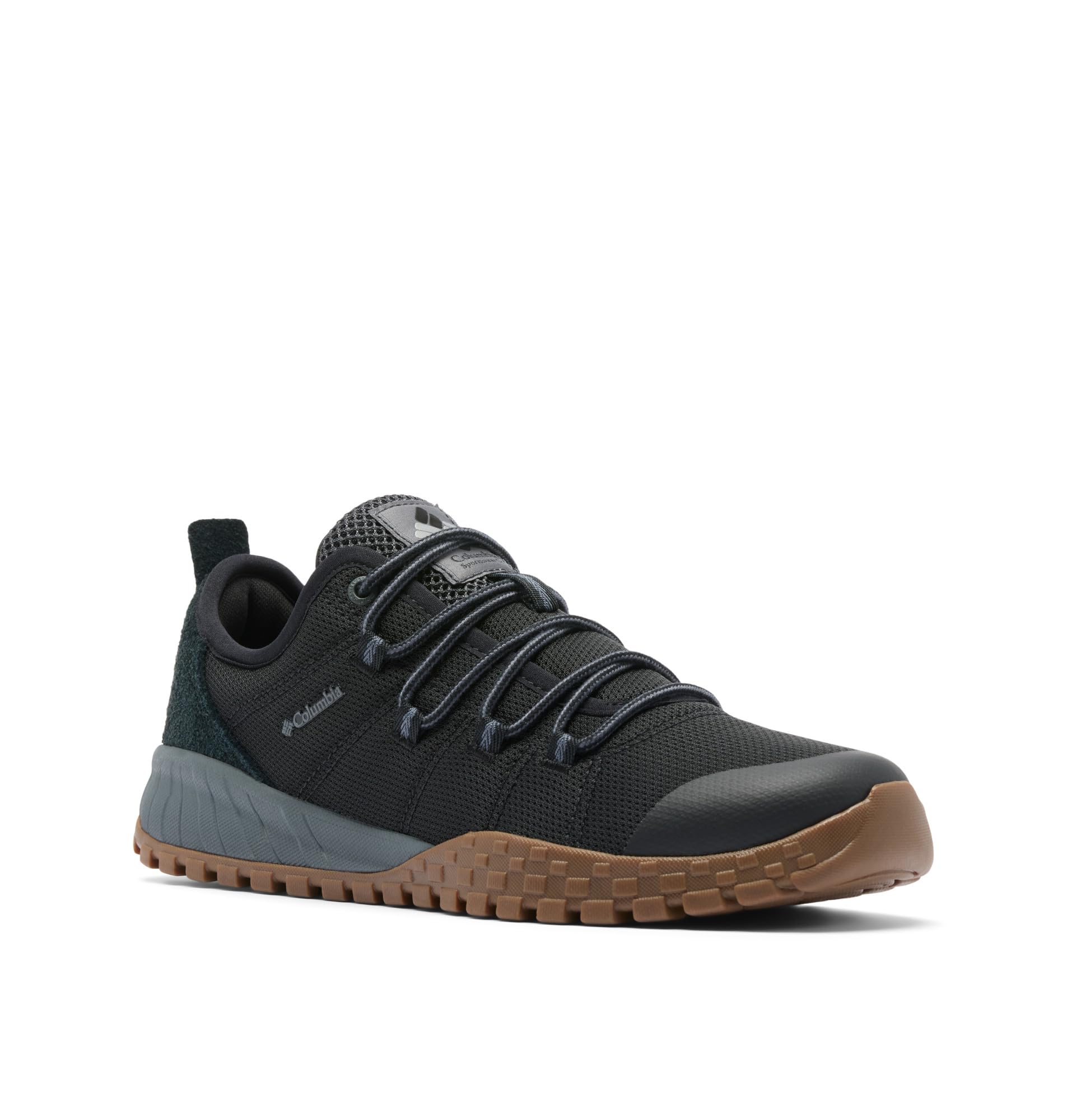
The Fairbanks Low is not a backpacking shoe in the way the others are, and it is worth saying that plainly. What it is: a light, flat, inexpensive low-cut shoe that is comfortable on pavement, gravel paths and easy dirt, with a sole closer to a skate shoe than a trail shoe. Buy it as a second pair rather than your only pair.
Two things we noticed. The pair we unboxed smelled strongly of adhesive and rubber; it faded after a few days of airing on a porch, but do not open the box the night before a trip and expect a neutral shoe. And the sole is firm and flat rather than cushioned, which some feet love and others find harsh after a long day standing.
For camp, town and gentle trails, its light weight and low cost make real sense, and it disappears into a daypack without adding anything you notice. Ours also wiped clean with a damp cloth after a muddy walk, which is more than we can say for the mesh shoes in this group.
Pros
- Light enough to forget in a daypack
- Comfortable straight out of the box
- Inexpensive second pair
Cons
- Wears quickly with regular use
A light, inexpensive hiker we like for easy trails and town days, not for a loaded pack or a rough multi-day route.
Best for Tight Budgets
NORTIV 8 Waterproof

Key Features
- Cut: Low
- Upper: Leather
- Department: Men’s
- Water protection: Waterproof
- Price: Budget
Nothing else here comes close on price, and for the money the NORTIV 8 is a real hiking shoe: leather upper, padded collar, lugged sole and a waterproof liner, all of it put together more solidly than the price suggests.
The trade-off shows up when you pick them up. These are heavy shoes, and on a climb you feel the weight in your calves rather than in your feet. Ventilation is minimal too; after half an hour of steep uphill our feet were hot and damp, and that was not on a summer afternoon.
Check the metal lace loops, which is where laces wear through on this design, and do not count on the waterproofing once the ground is properly wet. What you get is a sturdy shoe for short trips, wet grass, work and yard duty. As a load carrier for a week on rough trail, it is out of its depth.
Pros
- Lowest price in this group
- Leather upper and lugged sole feel sturdy
- Comfortable for work and easy trails
Cons
- Heavy on climbs
- Water gets in on wet ground
The budget pick: a solidly built hiker for short trips and everyday wear, provided you can live with the weight and do not count on staying dry.
How We Tested Backpacking Shoes
We started with roughly 40 models and cut the list to 12 by reading specs and filtering hard: weight per shoe, lug depth, whether the upper was a waterproof membrane or mesh, and whether the shoe was built for a loaded pack or a daypack. Value counted as much as anything — a pricier pair has to earn that gap over a full season of weekends.
Every pair went out on the same six-mile loop with a 25-pound pack, plus at least one overnight trip. We wore the same medium-weight wool socks each time and logged where the first hot spot appeared, how much the heel slipped on steep descents, and whether the toe box left room for toes to spread. Fit got checked twice: before we set out in the morning and again after six hours of hiking, since feet swell. Appearance got its own test — several of us wore the test pairs into town for dinner afterward and noted which ones didn’t look like clown shoes.
For durability, we kept a running mileage count and inspected each shoe after 50 miles: outsole wear under the ball of the foot, fraying at the seams, any peeling at the toe cap. Water resistance meant standing in moving water two inches deep for two minutes, then checking the socks. Breathability and odor we judged the unglamorous way, sniffing the insoles after back-to-back days without washing. And we weighed every shoe ourselves on a kitchen scale instead of trusting the spec sheet.
How to Choose Backpacking Shoes
The right backpacking shoe is the one that still feels right at the end of day three, and that comes down to four things: how much weight you carry, how the shoe fits, how wet the trip is, and how the sole handles the ground under you.
How Much Pack Weight a Low-Cut Shoe Handles
Ankle height gets all the attention, but underfoot stiffness is what actually carries a load. A firmer platform spreads a heavy pack’s weight across the whole foot and stops the shoe twisting when you stand on a rock edge; a soft, flexible shoe lets the pack win. Load your pack and walk a rough side-hill stretch before you commit. If you feel the shoe flexing under your arch, that pair is for day hikes, not for a week of food and a tent.
This is the line our top pick sits on. The Moab 3 handles loaded overnighters on decent trail comfortably, and rough off-camber ground with a heavy pack still argues for a boot or a much stiffer shoe.
Fit: Toe Room, Heel Hold, and When to Size Up
Feet swell over a multi-day trip and slide forward on descents, so the two fit points that matter are a toe box with room to spare and a heel that does not lift. Try shoes late in the day, in the socks you actually hike in, with weight on your back. A shoe that feels perfect in the shop and short on the first descent was the wrong size, not the wrong shoe.
Sizing is not consistent across this group. The KEEN Voyageur is the clearest example: it runs small enough that half a size up solves most complaints, while the Moab 3 felt true from the box. Read the sizing pattern for the specific model, not the brand.
Waterproof Membrane or Breathable Mesh
A membrane keeps dew, mud and shallow puddles on the outside, and it also keeps moisture in. A waterproof shoe dries slower than a mesh one, and once water comes over the collar on a crossing it sits against your sock for the rest of the day. Cold, wet, muddy trips justify the membrane, which is the whole reason the Targhee 4 is here.
Hot, humid weather and routes with stream crossings favor mesh, like the Voyageur’s airy upper. Whichever way you go, the socks underneath do as much of the work as the shoe does.
Traction, Durability, and When to Retire a Pair
Lug depth is a compromise. Deep, soft lugs bite into mud and wet roots but wear quickly on rock; harder rubber lasts longer and skates on wet slabs. In this group the toe bumper and the sole edge are where shoes fail first, so press the toe cap against the upper before a trip and watch for separation starting at the bond line.
Cushioning usually goes before the upper does. If the midsole no longer springs back when you press a thumbnail into it, the shoe is finished no matter how good the outside looks.
Frequently Asked Questions
What socks should I wear with backpacking shoes?
Wool or synthetic, never cotton. Cotton holds water against your skin, and that is how blisters start. A thin liner under a medium-weight hiking sock gives you a friction layer, and carrying a dry pair to change into at lunch does more for your feet than any insole.
Sock thickness changes fit, too. A heavy sock can turn a good shoe into a cramped toe box, so try the combination before your trip.
Do I need to break in backpacking shoes before a trip?
Less than boots, but not zero. Wear them on two or three shorter walks with the pack weight you plan to carry, and include a descent, since that is where toes and heels complain first. Most of the shoes here felt fine straight out of the box; the point of the test walks is to find the hot spot at home rather than eight miles from the trailhead.
How do you dry soaking-wet hiking shoes overnight?
Pull the insoles out, loosen the laces wide, and stuff the shoes with dry newspaper or a towel, changing the paper once before bed. Keep them away from direct heat: a radiator, a fire or a hot car can shrink and crack the upper and soften the adhesives.
In humid weather a slow dry beats a fast one, and a spare set of insoles is cheap insurance.
Final Verdict
The Merrell Moab 3 is the pair we point most backpackers toward. It fits without a break-in, grips the surfaces you actually walk on, and leaves more of the budget for the rest of your kit. Choose the KEEN Targhee 4 instead when your trips run wet and cold and you want a membrane over your foot; choose the KEEN Voyageur when heat is the bigger problem than rain.
Between those three, most multi-day plans are covered before you ever reach the budget shelf.