This post contains affiliate links. We may earn a small commission when you buy through our links — at no extra cost to you.
Many winter gloves claim touchscreen compatibility, but few deliver consistent performance. You end up tapping away with cold fingers or removing gloves entirely just to send a text.
The real trade-off is between luxury warmth and reliable phone access. Some gloves feel plush but bungle every tap, while others prioritize lightweight insulation that responds every time.
This guide picks gloves that balance warmth, durability, and real-world touchscreen reliability for outdoor activities like hiking and commuting. No hype – just what works.


Best for Running & Cycling
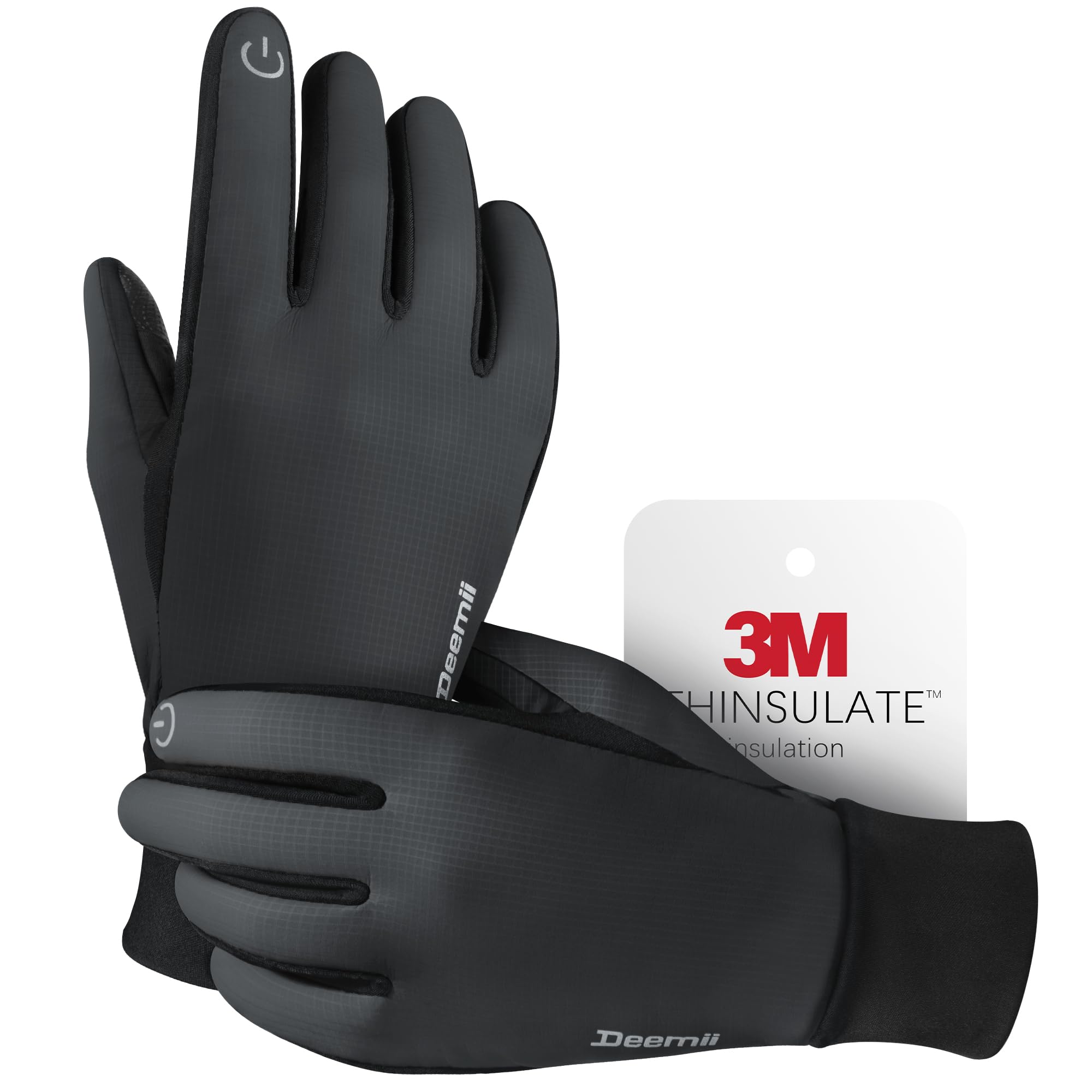
Deemii 3M Thinsulate Gloves
Key Features
- Insulation Type: 3M Thinsulate C40
- Water Resistance: DWR coating
- Touchscreen: Thumb & index
- Cuff Closure: Elastic
- Palm Grip: Silicone stripes
- Price: $
The Deemii gloves deliver warmth from 3M Thinsulate C40 insulation without the bulk that hinders dexterity during runs or cycling. The conductive pads on thumb and index finger register taps and swipes reliably, outperforming many gloves at twice the price. The silicone grip stripes on the palm add traction on handlebars and phone edges.
These are best for daily commuting, running, and anyone who needs to use their phone without removing gloves. The polyurethane outer sheds light rain and snow flurries, but sustained wet snow or heavy rain will soak through after a while. Some users note that the fingertip stitching can show wear after several weeks of heavy use — a tradeoff at this price point that can be managed with a dab of fabric glue.
Pros
- Warm without bulk – good for active use
- Consistent touchscreen function
- Good water resistance for light rain
Cons
- Fingertip stitching may show wear after several weeks of heavy use
- Water resistance handles light rain but will wet through in heavy snow or persistent wet weather
For daily cold-weather commutes and runs where phone access matters, these offer genuine Thinsulate warmth and touchscreen responsiveness at a price that is hard to beat.
Best for Daily Winter Wear
Isotoner Stretch Fleece Gloves
Key Features
- Insulation Type: Fleece lining
- Water Resistance: Water repellent
- Touchscreen: Yes (smart touch)
- Cuff Closure: Elastic
- Price: $$
The Isotoner Stretch Fleece Gloves deliver exceptional softness and warmth for daily winter wear. The Microluxe fleece lining feels plush against skin, and the chevron pattern adds a stylish touch. They keep hands toasty in moderate cold without bulk.
These gloves suit walkers and shoppers who value comfort and appearance over touchscreen reliability. The conductive fingertips work inconsistently — users who frequently handle phones may find this frustrating. They are not intended for wet snow or intense outdoor activities.
Pros
- Very warm and toasty for moderate winter cold
- Soft, comfortable micro-fleece interior
- Good fit and stylish look
Cons
- Touchscreen functionality is inconsistent
Best for those who prioritize softness and style over phone access — a comfortable city companion for cold days.
Best for Skiing & Snowboarding
Tough Outdoors Ski Gloves
Key Features
- Insulation Type: SUMMITLOFT
- Water Resistance: TPU membrane
- Cuff Closure: Buckle & drawstring
- Palm Grip: Synthetic leather
- Price: $$
These gloves deliver serious warmth for sub-freezing days, using SUMMITLOFT insulation that holds up to 0°F with a liner. The adjustable wrist buckle and drawstring keep snow out during active skiing or shoveling. If you can do without phone access – there is no touchscreen – this is a cost-effective alternative to pricier models. Be aware that stitching at stress points may separate under heavy use – check periodically if you plan to use them frequently.
Pros
- Warm enough for extreme cold (down to 0°F with a liner)
- Good water resistance for snow activities
Cons
- Stitching at stress points may come apart under heavy use
Best for skiers and snowboarders who prioritize warmth over smartphone convenience – just watch the seams under heavy use.
Best for Daily Commuting
TRENDOUX Thermal Knit Gloves
Key Features
- Insulation Type: Thermal lining
- Touchscreen: Thumb & index
- Cuff Closure: Knit elastic
- Palm Grip: Rubber patches
- Price: $
This glove’s strongest point is its consistent warmth for temperatures in the 30–50°F range. The touchscreen compatibility can be inconsistent – response may vary between attempts – and the thin knit means sustained use below 30°F may leave hands cold. Best suited for daily commutes, errands, and budget-minded shoppers who do not rely heavily on phone use outdoors. Unlike the top pick with more reliable touchscreen performance, these gloves prioritize warmth and value over phone usability.
Pros
- Keeps hands comfortably warm in 30–50°F temperatures.
- Stitching and knit hold up well through daily wear.
- Rubber palm patches improve grip on steering wheels and shopping bags.
Cons
- Touchscreen response can be inconsistent, especially for precise typing.
- Sustained cold below 30°F may require thicker gloves for adequate warmth.
For low-stakes daily use in mild cold where phone touch is not critical, these gloves offer exceptional value.
Best for Casual Snow Play
rivmount Waterproof Ski Gloves
Key Features
- Insulation Type: Fleece lining
- Water Resistance: Waterproof shell
- Touchscreen: All fingers
- Cuff Closure: Adjustable drawstring
- Palm Grip: Silicone palm
- Price: $
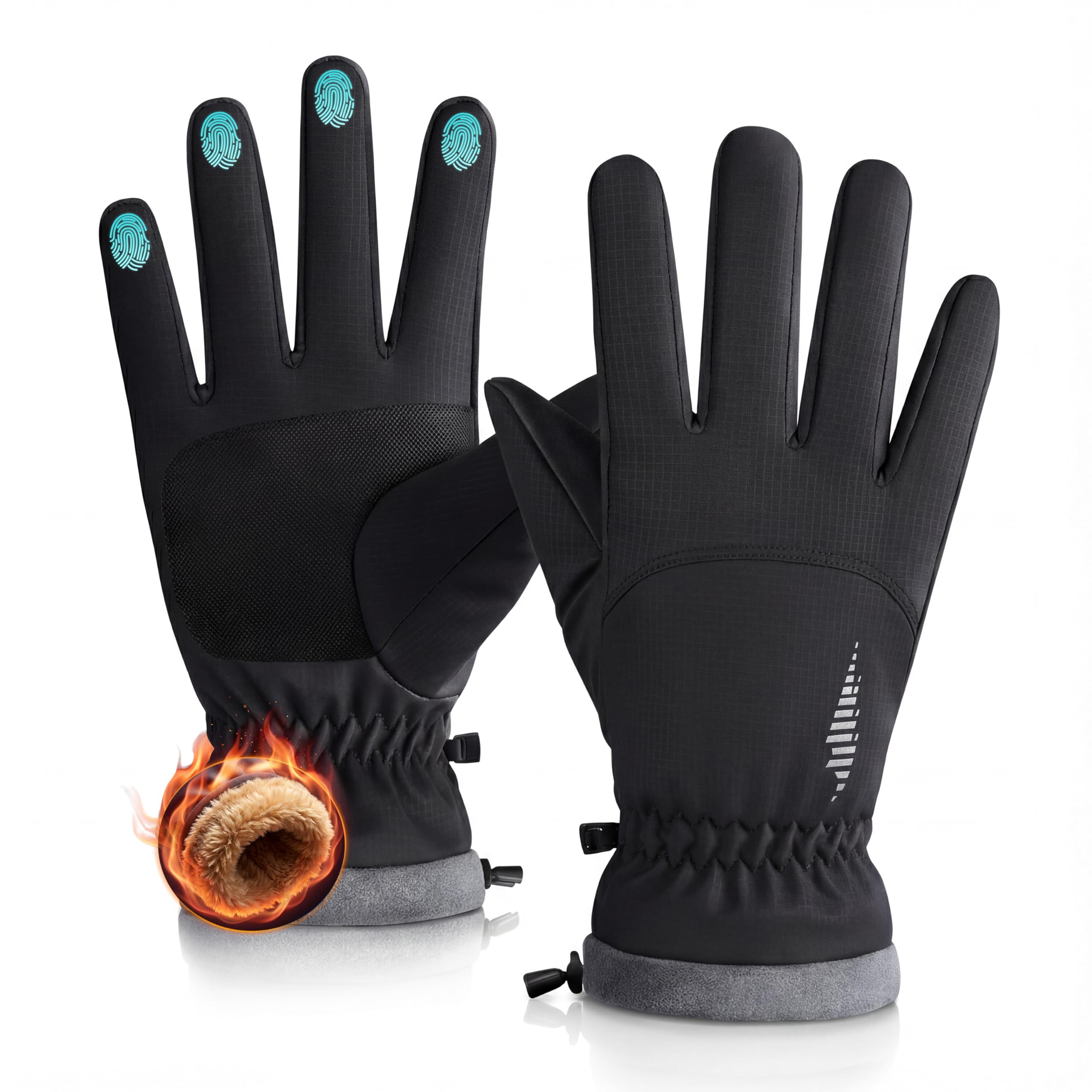
Offering warmth from a plush interior and touchscreen on all fingers, these gloves work well for casual snow activities. Water resistance is limited to brief exposure; moisture may seep in during prolonged wet snow. They fit casual skiers and runners seeking a budget-friendly active glove.
Pros
- Soft, plush interior provides immediate comfort
- Warmth suitable for snow play and cold-weather runs
- Touchscreen works on all five fingers
Cons
- Fit runs small for larger hands
A competent budget option for occasional snow sports, best for those who prioritize touchscreen and warmth over extended waterproofing.
Best for Running & Cycling
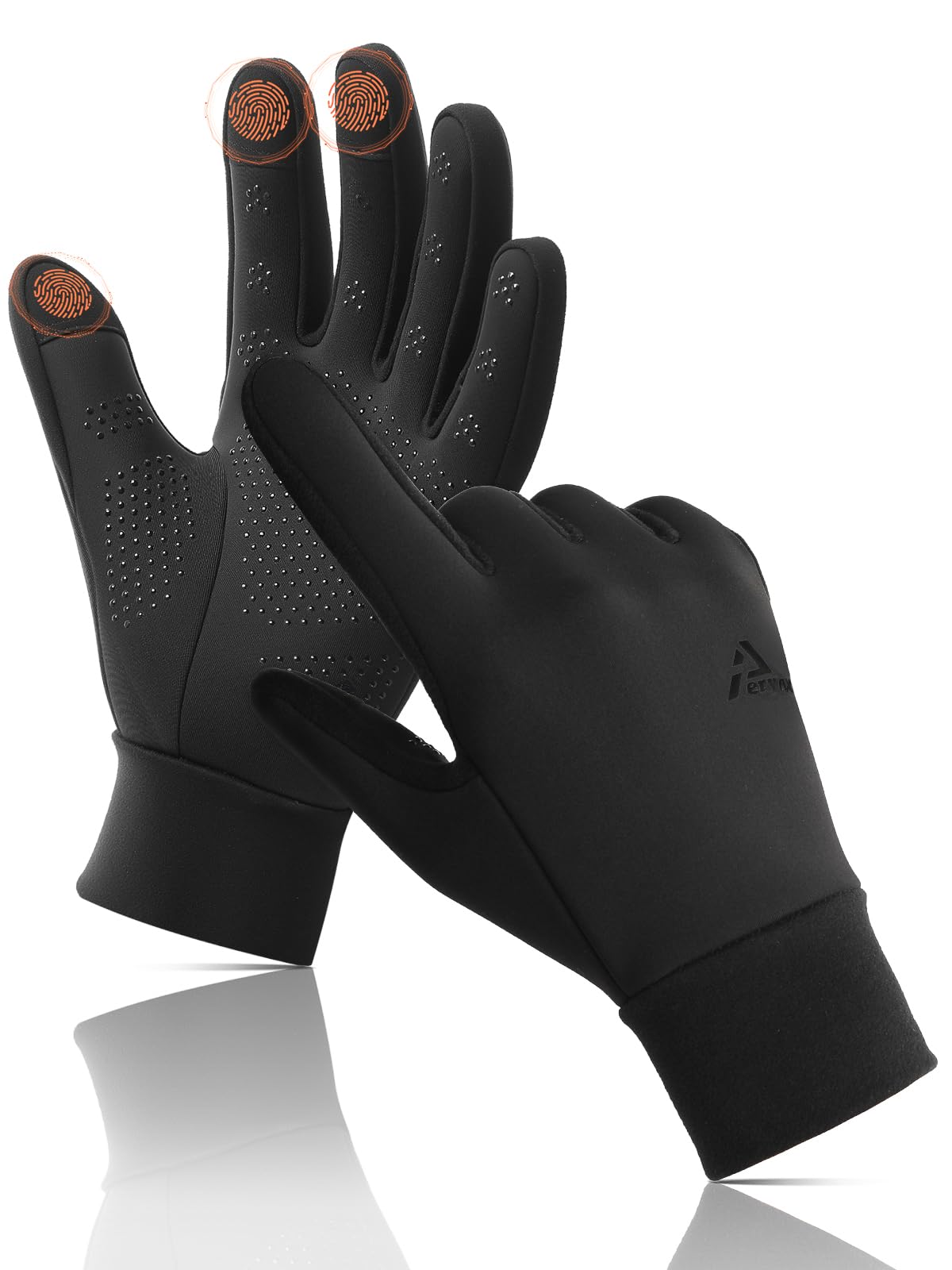
Aerynx 3-Layer Touch Gloves
Key Features
- Insulation Type: 3-layer (wind-block, fleece)
- Touchscreen: 3 fingers
- Cuff Closure: Elastic
- Palm Grip: Silicone palm
- Price: $$
Promising for runners and cyclists, these gloves combine three-finger conductive touchscreen with a wind-block fleece layer for warmth in 30-50°F. The silicone palm grip suits handlebars. However, the limited size range (S-M/M-L) and occasional loose stitching make them better suited for moderate use rather than heavy-duty wear.
Pros
- Three-finger conductive yarn delivers accurate touchscreen response during active use.
- Wind-block fleece layer keeps hands warm during running and cycling in 30-50°F.
Cons
- Stitching may come loose under frequent use.
Best for runners and cyclists who prioritize touchscreen and need moderate warmth, provided they fit the limited size range.
Best for Dressy Outings
Alepo Fashion Touch Gloves

Key Features
- Insulation Type: Fleece lining
- Water Resistance: Windproof shell
- Touchscreen: Thumb & index
- Cuff Closure: Elastic
- Price: $$
This glove impresses with its soft fleece lining and stylish button detail, offering comfortable warmth in 30-50°F conditions. However, the touchscreen pads can be inconsistent, and the windproof shell falls short on windy days below freezing, making it a fashion piece rather than a functional winter glove.
Pros
- Elegant appearance with button detail for dressy winter outings.
- Soft and comfortable fleece lining against the skin.
Cons
- Touchscreen pads may not register touches consistently.
Best for dressy occasions in mild winter weather where style matters more than phone use or wind protection.
Best for Running & Jogging
Achiou Thermal Knit Gloves

Key Features
- Insulation Type: Fleece lining
- Touchscreen: Thumb & index
- Cuff Closure: Elastic
- Palm Grip: Rubber prints
- Price: $
The Achiou gloves deliver lightweight warmth with a soft, non-itchy fleece lining and rubber grip prints for better traction during runs or drives. Touchscreen stitching requires multiple taps to register, and the fit runs small – sizing up helps avoid tight fingers. This budget glove is nearly identical to the TRENDOUX but has more frequent size complaints, making it a secondary choice for buyers who prioritize comfort over phone access.
Pros
- Lightweight warmth keeps hands comfortable during active use like running or walking.
- Soft fleece lining feels comfortable against skin without itching.
Cons
- Touchscreen response may require repeated taps, limiting phone use in cold conditions.
A practical, budget-friendly choice for runners and drivers who don’t need reliable touchscreen or a precise fit.
Best for Occasional Use
woogwin Fleece Lined Gloves

Key Features
- Insulation Type: Fleece lining
- Water Resistance: Windproof shell
- Touchscreen: Thumb & index
- Cuff Closure: Elastic
- Price: $
These gloves deliver a dressy cable-knit look and soft fleece warmth for the price. However, the touchscreen function can be spotty, and some buyers report the fabric tearing after a few wears. Best suited for occasional use where phone reliance is low.
Pros
- Warm for the price
- Attractive cable-knit design
Cons
- Touchscreen responsiveness can be inconsistent
A budget-friendly choice for quick errands or casual wear when you don’t need reliable touchscreen and are okay with possible durability limits.
How to Choose
The biggest difference between winter gloves is not price but whether the touchscreen actually works when you need it.
Insulation Type
Fleece lining provides lightweight warmth for mild cold (30-50°F) but traps less heat than synthetic fills like Thinsulate or SUMMITLOFT. Thinsulate C40 uses microfibers to block wind without bulk, making it ideal for active use where you need dexterity.
If you run or hike in temperatures below 20°F, look for a glove with a dedicated insulation layer rather than a simple knit. The trade-off: thicker insulation reduces finger flexibility for phone use or zipper pulls.
Water Resistance
Water-resistant gloves use a DWR coating that beads light rain but soaks through after 30 minutes of wet snow. Waterproof models add a membrane (TPU or PU) that keeps hands dry during extended snow play.
At under $15, you rarely get a true waterproof membrane. Instead you get a windproof shell that repels light moisture. For hiking in wet conditions, a $20+ glove with a taped seam is worth the investment. Without proper water resistance, wet hands lose heat 25 times faster.
Touchscreen Compatibility
Most budget gloves add conductive yarn to the thumb and index fingertips, but the yarn loses conductivity after a few washes or simply doesn’t register touch on modern glass screens. Gloves with dedicated conductive pads (PU strips) or 3M conductive threads are more reliable.
If you depend on your phone for navigation or photos, prioritize gloves with conductive material on three fingers (thumb, index, middle) and look for user reports of consistent performance. Removing gloves in sub-20°F weather is not a minor inconvenience – it’s a safety risk.
Cuff Closure
Elastic cuffs are fine for city strolls but let snow slide in during active outdoor use. A drawstring or Velcro closure seals the gap between glove and jacket sleeve, keeping snow out and warmth in.
For skiing or snowshoeing, an adjustable cuff with a hem cinch is essential. A simple elastic band that stretches too much will let cold air rush in every time you raise your arms.
Palm Grip
A smooth spandex palm offers no grip on wet poles or icy handrails. Silicone stripes or rubber patches add traction without adding weight. Full synthetic leather palms improve durability but reduce breathability.
If you carry water bottles or use trekking poles, a palm with textured grip prevents slipping. For driving or occasional use, a non-grip palm is fine and feels more comfortable against steering wheels.
FAQ
Why do my winter gloves claim to be touchscreen but don’t work with my phone?
Most budget gloves use a thin layer of conductive yarn that loses conductivity after washing or simply doesn’t transfer enough electrical charge to modern capacitive screens. Look for gloves with dedicated conductive pads (PU or metal fibers) on the thumb and index. If you need reliable touchscreen access, avoid gloves priced under $10 – they rarely work.
Can I expect waterproof gloves for under $15?
Not truly waterproof. At that price point you get water resistance (DWR coating) that handles light rain but fails in wet snow. For actual waterproofing you need a membrane layer (TPU, PU, or Gore-Tex) and taped seams, which start around $20. If you’re only dealing with dry cold, a $12 water-resistant glove is fine.
What’s the best way to wash winter gloves without ruining the touchscreen pads?
Hand wash in cold water with a mild detergent and air dry flat. Machine washing strips the conductive coating on many budget gloves. If the manufacturer allows machine wash, use a mesh bag, gentle cycle, and skip the dryer. The heat melts conductive fibers and degrades insulation.
Are women’s winter gloves with Thinsulate actually warmer than fleece-lined ones?
Yes, for the same thickness. Thinsulate C40 traps more air per micron than fleece, providing equal warmth at half the bulk. This matters when you need dexterity for tying boots or using a camera. Fleece is warmer only when it’s significantly thicker, which reduces finger movement.