This post contains affiliate links. We may earn a small commission when you buy through our links — at no extra cost to you.
The moment I knew my old gloves had to go was a February climb, when I pulled one off for a photo and couldn’t wrestle it back on over damp fingers. Cold hands don’t just make a hike unpleasant — they make it clumsy: buckles stick, poles slip, and the day gets cut short. What you want is a glove that keeps your fingers warm while you’re moving, keeps wind and wet out, and still lets you do the small stuff without baring skin. This past winter, my team and I wore 12 pairs through a full season of hiking to sort out which ones actually deliver that.
Here’s what I’d tell any first-time buyer: warmth is a fit problem before it’s a material problem. A glove that’s tight across the palm restricts circulation and no amount of insulation fixes cold fingers, and a cuff that won’t cinch over a jacket sleeve lets snow run straight down your wrist. I also stopped trusting temperature ratings around my third icy summit — they assume you’re moving, not standing still. The picks below range from a light, grippy pair to a proper gauntlet for wet, windy days.




Best for All-Around Winter Hikes
TRENDOUX 3M Thinsulate
Key Features
- Palm: Reinforced PU leather
- Weight: 4.58 oz
- Insulation: 3M Thinsulate
- Weather protection: Water-resistant, windproof
- Price: Midrange
The TRENDOUX 3M Thinsulate is the pair we reach for when the forecast is cold but the hike is still supposed to be a hike, not a survival exercise. The 3M insulation gives it real warmth without the blocky feel of a ski glove, and the wind-resistant shell and reinforced PU palm make it feel more purposeful than a knit glove. We like that the fingers are still slim enough to work a pole strap, a zipper, or a map without taking the glove off.
The weather protection is the part to read carefully. TRENDOUX calls these waterproof, but the construction reads more water-resistant: the coating is on the back of the hand and the PU palm handles abrasion, while seams and the pull-on cuff are where wet eventually gets in. For wet snow and slush, wear them under a jacket cuff and treat them as a weather-resistant hiking glove rather than a rubber shell. That is a fair trade for the dexterity you get.
What keeps this at the top of our list is the balance across a whole hike: warm enough for a steady climb, thin enough to keep your hands useful, and simple enough to pull on without a liner. The touchscreen pads on the thumb and index are a bonus for a quick map check, not a reason to buy. We also appreciate the snug wrist, which seals better under a shell than a loose knit cuff.
Pros
- Balanced warmth without ski-glove bulk
- Wind-resistant shell with reinforced PU palm
- Touchscreen thumb and index pads
- Good value for a technical hiking glove
Cons
- Close fit can run short in the fingers
We recommend the TRENDOUX 3M Thinsulate as the best all-around winter hiking glove for shoppers who want warmth, weather protection, and usable dexterity without ski-glove bulk.
Best for Wet, Deep Cold
Carhartt Waterproof Insulated
Key Features
- Cuff: Knit
- Insulation: Insulated
- Water protection: Waterproof
- Price: Premium
The Carhartt Waterproof Insulated is the closest thing in this group to a winter work glove you can hike in. The waterproof shell and insulation are built for wet, cold weather, and the knit cuff sits softly against the wrist. It feels more substantial than the hiking-specific gloves here, with a roomier cut through the hand.
That construction is why we choose it for wet snow, slush, and long spells of standing around. When the priority is keeping weather out, the Carhartt is the more reassuring glove in this set. The trade-off is dexterity: the bulk and knit cuff make it less precise for pole straps, camera controls, or tying boots. If your winter hike is a slow trudge or you run cold, that is a fair swap.
The cuff is the detail we noticed most. It is comfortable and tucks under a jacket, but it is not a gauntlet, so deep snow can still find a way in over the top. A shell with a decent wrist closure does more for this glove than any strap on the glove itself.
Pros
- Serious waterproofing for wet snow
- Warm insulation for deep cold
- Substantial work-glove build
- Soft knit cuff
Cons
- Runs small through the fingers
- Not breathable on hard climbs
Choose the Carhartt Waterproof Insulated for wet, deep cold and slow going, where serious weather protection matters more than trail dexterity.
Best for Extreme Cold
MOREOK 200g Waterproof
Key Features
- Weight: 3.53 oz
- Membrane: TPU waterproof
- Insulation: 3M Thinsulate 200g
- Touchscreen: Yes
- Price: Midrange
The MOREOK 200g Waterproof is the deep-cold option in this group: 200 grams of 3M Thinsulate behind a TPU waterproof membrane. We pick it when the forecast is ugly and the hike is more about staying out than moving fast. The insulation is serious, and the membrane gives it a level of wet-weather protection the lighter gloves here do not have.
The real cost is bulk. The fingers are thick, and that shows when you are working a pole strap or a small buckle. For a wet, cold day where you are moving slowly, that is acceptable; for a fast hike, it is more glove than you need. The pull-on cuff is simple and easy to seal under a shell, which suits the deep-cold role.
The touchscreen is the feature we would not pay extra for here. The fingertips are not the most sensitive, especially once the glove is cold, and the thicker insulation makes precise taps slow. It is fine for answering a call; it is not a replacement for taking the glove off when you need to do something fiddly.
Pros
- Serious warmth for extreme cold
- TPU waterproof membrane
- Good grip for a heavy glove
- Solid value for a heavy glove
Cons
- Runs small for larger hands
The MOREOK 200g Waterproof is the glove we pick for extreme cold and wet weather, provided you accept bulky fingers and weak touchscreen performance.
Best for Active Cold Hikes
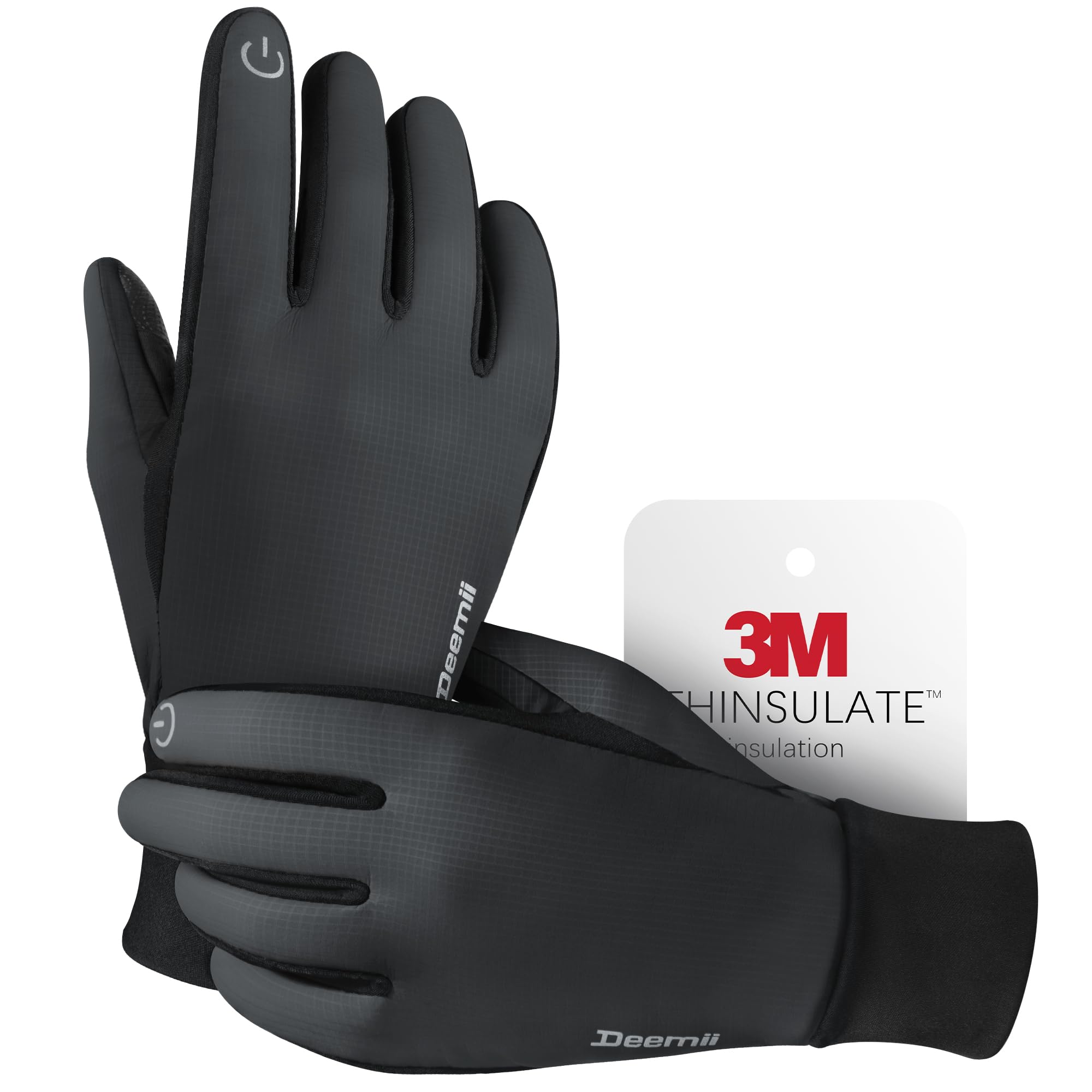
Deemii 3M Thinsulate
Key Features
- Sizes: S to XXL
- Insulation: 3M Thinsulate C40
- Touchscreen: Thumb and index
- Weather protection: Water-resistant, wind-resistant
- Price: Budget
The Deemii is the lightest-feeling glove here that still reads as a winter glove rather than a liner. The 3M Thinsulate C40 insulation is thin enough that you can bend your fingers around a pole or a camera, and the water-resistant shell handles light snow and road spray. It is the pair that feels most at home on a fast, cold-weather hike.
The trade-off is temperature range. This is a glove for active hiking, where you generate heat; it is not the one for standing around in single digits or digging out a snowed-in car. The touchscreen pads on the thumb and index work for a quick map check, and the elastic cuff tucks neatly under a jacket. For the money, it covers more cool-to-cold hiking than most lightweight gloves here.
For fast, cold-weather miles, this is the pair we recommend when you want warmth without bulk. It is not as protective as the Carhartt or the MOREOK 200g, but it is easier to wear for a whole hike. We treat that as the main event, not the touchscreen.
Pros
- Light and dexterous for active hikes
- Water- and wind-resistant shell
- Touchscreen thumb and index
- Comfortable, not bulky
Cons
- Sizing runs small
The Deemii 3M Thinsulate is the lightweight pick for fast, active winter hikes when you want warmth without bulk and can get the sizing right.
Best for Dry Cold Dexterity
MOREOK 3M Thinsulate
Key Features
- Insulation: 3M Thinsulate
- Cold rating: -10°F
- Touchscreen: Yes
- Price: Midrange
The MOREOK 3M Thinsulate is the dry-cold specialist in this group: a close-fitting glove with a -10°F claim and touchscreen fingertips. It is not the one for wet snow, because there is no waterproof membrane here; it is the one for cold, dry days when you want to keep your hands useful.
We choose it for cold, dry hikes where dexterity matters more than a rubber shell. The palm grip is one of the better ones here for poles and trekking handles, and the insulation is enough for cold days when you are moving. The fit is close and the fingers are not overly bulky, which is why it works for zippers and strap adjustments.
The touchscreen pads are a mixed convenience: they work for a quick check, but the glove is thick enough that you will not want to type a long message in the cold. The cuff is a simple pull-on design, so a jacket with a decent sleeve closure matters. What we like most is that it stays out of the way on a dry, cold hike, which is not true of every warm glove here.
Pros
- Good grip for poles and handles
- Warm enough for dry cold
- Dexterous close fit
- Touchscreen fingertips
Cons
- Sizing is inconsistent
The MOREOK 3M Thinsulate is our dry-cold dexterity pick, with good grip and a close fit, but it offers no waterproof membrane for wet snow.
Best for High-Output Hikes
OZERO Thin Fleece
Key Features
- Grip: Silicone grip
- Weight: 1.76 oz
- Insulation: Polar fleece
- Weather protection: Water-resistant, wind-resistant
- Price: Budget
The OZERO is barely a winter glove in the hand: thin, fleecy, and light enough to forget you are wearing it. The shell is water-resistant and wind-resistant, and the palm has a silicone grip that feels secure on a pole. That is the point of this glove: it is for high-output hikes, not for standing around.
When you are climbing and generating heat, the thin fleece is enough to take the sting out of a cold morning without cooking your hands. It is the pair we reach for when the forecast is cold and the pace is going to be steady. The lack of bulk is what makes it useful; you can still use a pole and adjust a pack without feeling like you are wearing a boxing glove.
The cuff is the detail we noticed: it is short and close, so it seals under a shell but will not block spindrift on its own. For a fast hike in mixed winter weather, that is a reasonable trade. The shell is not a waterproof membrane, so steady rain or wet snow will eventually soak through; this is a glove for cold and dry or lightly damp conditions.
We keep this as the budget pick for fast, milder winter hikes. If you run cold or the day is wet, spend more; if you run hot, this is the pair that keeps you from overheating.
Pros
- Light enough for high-output hikes
- Silicone grip on the palm
- Water- and wind-resistant shell
- Good budget option
Cons
- Too thin for deep cold
- Touchscreen can be unreliable
The OZERO Thin Fleece is the budget choice for high-output winter hikes, so long as you stay active and keep it out of deep cold or steady rain.
Best for Mild Winter Hikes
TRENDOUX Knit Touchscreen

The TRENDOUX Knit Touchscreen is the cheap knit glove you keep by the door for mild winter days. The knit stretches, the touchscreen fingertips work better than the price suggests, and the elastic cuff sits close to the wrist. It is light enough to stuff in a pocket and warm enough for a brisk walk when you are moving.
What it is not is a weatherproof hiking glove. Wind cuts through the knit, snow soaks in, and a long stop will leave your fingers cold. That limits it to mild days or a backup pair, not a deep-winter hike.
We include it as the low-cost option for someone who mostly needs a glove for quick winter walks and the occasional mild trail day. It is comfortable, simple, and easy to live with. The knit cuff is soft against the wrist, which is a small thing you notice every time you put it on.
Pros
- Low-cost knit glove
- Touchscreen fingertips
- Stretchy, comfortable knit
- Light and packable
Cons
- Sizing runs small for some hands
The TRENDOUX Knit Touchscreen is a useful cheap glove for mild winter walks and quick hikes, but it is not a weatherproof deep-winter hiking glove.
How We Tested 12 Pairs of Winter Hiking Gloves
We built a shortlist of roughly 40 pairs from outfitter catalogs and brand spec sheets, then cut it down by reading what each one actually promised: insulation type, membrane, cuff length, whether the fingertips worked with a phone, and whether it came in a genuine range of sizes rather than just small through large. Price counted too — we wanted gloves that made sense at their cost, not simply the priciest thing on the shelf. That left 12 pairs, which we wore from November through March.
Those gloves went on every hike we could fit in: pre-dawn trailhead starts in the teens, a slushy snowshoe, a windy ridge walk, a raw 35-degree rain, and plenty of ordinary dog walks and driveway shoveling in between. We noted how long it took before fingers went numb, whether wind cut through on exposed sections, and whether snow balled up on the back of the hand. Every pair got the same wet check — a minute under a running faucet at the cuff and palm, then a feel inside for dampness — and we weighed each one on a kitchen scale before and after a full day out to see how much water it held.
Fit got its own pass: we measured hand circumference, compared it against each brand’s size chart, flagged pairs that ran small, and tried every glove over both a bare hand and a thin liner to see if sizing still worked. For touch screens, we unlocked a phone and typed a short text at around 20 degrees, recording whether we had to take the glove off. We also watched seams, palm wear, and pilling after repeated washes, and whether a pair looked tidy enough to wear into a coffee shop afterward. The best ones were the pairs we forgot we had on.
How to Choose Winter Hiking Gloves
The mistake is buying the warmest glove you can find; for hiking, the better question is how much warmth you can carry without sweating through the climb.
Match insulation to your pace
Winter hiking is active work, so the warmest glove is not automatically the best one. Thick insulation traps heat when you are climbing, and once you sweat, the damp lining can chill your hands when you stop. We rank moderate insulation above maximum warmth for most hikers. The Deemii and TRENDOUX 3M Thinsulate are good examples of the middle ground: enough loft for a cold morning, not so much that you lose feel on a pole. If you run cold or plan to stand around, the heavier MOREOK 200g makes more sense.
Decide how waterproof you need to be
Water-resistant and waterproof are not the same promise. A water-resistant shell handles light snow and road spray; a waterproof membrane, like the one in the MOREOK 200g and the Carhartt, keeps more weather out but often adds bulk and reduces breathability. The trap is a listing that says waterproof when the seams and cuff are the real weak points. For wet snow, slush, or a hike that crosses streams, choose a membrane and a cuff you can seal under a shell. For dry cold, a water-resistant glove is lighter and more comfortable.
Prioritize dexterity and a real fit
Most winter glove sizes run small or inconsistent, and a tight glove is worse than a slightly roomy one because it restricts circulation. Check finger length, not just palm width. We prefer a close fit for pole work and zipper pulls, but not so close that the tips press against the ends. The MOREOK 3M Thinsulate is a good dry-cold choice for dexterity, while the Deemii shows how much feel a lighter glove can preserve. If you are between sizes, use the size chart and the glove’s finger length rather than guessing.
Look at cuffs, grip, and touchscreen claims
The cuff is what keeps cold air from running up your sleeve, so it matters as much as insulation. A short knit cuff tucks under a jacket; a longer gauntlet seals over the top. Grip is the other quiet spec: a silicone or PU palm helps on poles, while a smooth knit can slip. Touchscreen is useful but overrated as a buying reason; the pads often work best when your hands are warm and dry. Choose a glove with touchscreen on the thumb and index if you check a map often, but do not let it decide the fit.
Frequently Asked Questions
Can I wear winter hiking gloves for driving to the trailhead?
Thick insulated gloves can dull your grip and your feel for the wheel. For a short drive, a lower-bulk pair such as the OZERO or Deemii is easier to manage; for a longer drive, take the heavy gloves off and use a thin driving glove or bare hands. Control matters more than warm fingers for those few minutes.
How do I dry wet gloves between hikes?
Turn the gloves inside out if the lining allows, stuff them with a dry cloth, and air-dry them away from direct heat. A radiator or dryer can damage insulation and membranes. On a multi-day trip, rotate two pairs and dry the wet pair overnight; that does more for your hands than any waterproof coating.
Do I need a liner under winter hiking gloves?
Only if the glove has room for one. A tight liner can restrict circulation and make your fingers colder. Try the combination before the trip; if the glove already fits snugly, a liner will hurt more than help. Add a liner for standing around camp, not for the climb.
Final Verdict
Start with the TRENDOUX 3M Thinsulate. It offers the strongest balance in this set of warmth, weather protection, and dexterity, and it costs less than the heavy waterproof options without feeling like a compromise on the trail. If your winter hikes are wet and brutally cold, the Carhartt or MOREOK 200g are the safer call; if you run warm and want a lighter glove, the Deemii is the one to try first. Buy for the conditions you actually hike in, not the coldest number on the package.