This post contains affiliate links. We may earn a small commission when you buy through our links — at no extra cost to you.
Winter boot labels often promise more than they deliver. A boot marked ‘waterproof’ can soak through in slush, and an extreme-cold rating may leave your feet numb after an hour standing still.
The gap between marketing and reality isn’t deception – it’s that boots are engineered for specific activities. A 200g insulated boot works for a brisk walk but fails at -20°F shoveling. A boot with aggressive lugs handles ice and snow, while a smooth sole is fine for dry pavement but treacherous on packed snow.
This guide matches each boot to its ideal use case – whether you’re hiking, working, or commuting. Insulation material, waterproof membrane, and outsole pattern are the real differentiators. Choosing the wrong boot doesn’t just mean cold feet – it can mean wet socks, blisters, and a wasted investment.


Best for Outdoor Workers Frigid
MUCK Arctic Pro
Key Features
- Insulation: -40°F
- Waterproofing: 100% neoprene rubber
- Outsole Traction: Aggressive tread, slip-resistant
- Boot Height: Mid-calf (~15 in)
- Price: $$
The MUCK Arctic Pro keeps feet warm in sub-zero temperatures when worn with good socks, and its full neoprene and rubber upper seals out snow and slush completely. The aggressive outsole provides solid slip resistance on ice and packed snow, making it a dependable cold-weather boot for active winter conditions.
This boot is for winter workers, hunters, and ice fishermen who need something that withstands daily abuse — many users report years of heavy farm or industrial use without failure. Sizing can vary between production batches, and the ankle area may feel snug for some; trying on with intended sock thickness is recommended. Not suited for lightweight hiking or those with narrow feet who prefer thin socks.
Pros
- Keeps feet warm in sub-zero temperatures with good socks.
- Fully waterproof and easy to clean after deep snow or slush.
- Durable construction holds up to years of heavy farm or industrial use.
Cons
- Sizing can be inconsistent across production batches, and the ankle area may feel snug for some users.
For sub-zero work and winter hunting, this boot delivers warmth and waterproofing that rivals boots costing twice as much.
Best for Women on Budget
Columbia Ice Maiden II
Key Features
- Insulation: 200g
- Waterproofing: Omni-Tech membrane
- Outsole Traction: Omni-Grip non-marking
- Boot Height: Mid-calf (~8 in)
- Price: $
The Columbia Ice Maiden II uses an Omni-Tech waterproof membrane and 200g insulation to keep feet dry and warm in typical winter conditions down to about -10°F. The Omni-Grip outsole provides dependable traction on snow and ice, making this a practical choice for daily commutes and errands. Where it falls short is in fit and temperature range: the toe box can feel tight for wider feet, and insulation isn’t sufficient for sub-zero days below -10°F. This boot suits women who need an affordable, waterproof snow boot for mild to moderate winters and don’t require extreme cold protection.
Pros
- Waterproof Omni-Tech membrane keeps feet dry in snow and slush.
- Omni-Grip outsole offers consistent traction on snow and ice.
- 200g insulation provides enough warmth for most winter days above -10°F.
Cons
- Toe box may be snug for those with wider feet, especially in the non-wide version.
- Insulation is not adequate for sub-zero temperatures below -10°F.
A dependable budget boot for women who face snow and slush but not extreme cold. If your winters stay above -10°F, this is a cost-effective pick.
Best for Construction Workers Tradespeople
Timberland PRO MaxTRAX
Key Features
- Insulation: 200g
- Waterproofing: Timberland PRO waterproof
- Outsole Traction: MaxTRAX slip-resistant
- Boot Height: 6 in
- Price: $$
The Timberland PRO MaxTRAX packs 200g insulation and a slip-resistant MaxTRAX outsole into a mid-range boot, offering more cold-weather capability than a standard lifestyle boot like the classic Timberland. It is designed for active winter work, not deep snow or extreme cold below -30°F.
This boot suits construction workers and tradespeople who need waterproofing and warmth on cold job sites. Its out-of-the-box comfort reduces foot fatigue during long shifts. Budget-conscious buyers get dependable performance without the premium price. However, some units may experience sole separation after months of heavy use — something to monitor if you work in harsh conditions daily.
Pros
- Great value for a durable work winter boot
- Comfortable from first wear with good support
Cons
- Some units may experience sole separation after months of heavy use
Best suited for tradespeople who need a warm, waterproof work boot at a reasonable price — ideal if you accept occasional QC variance.
Best for Sub-Zero Winters
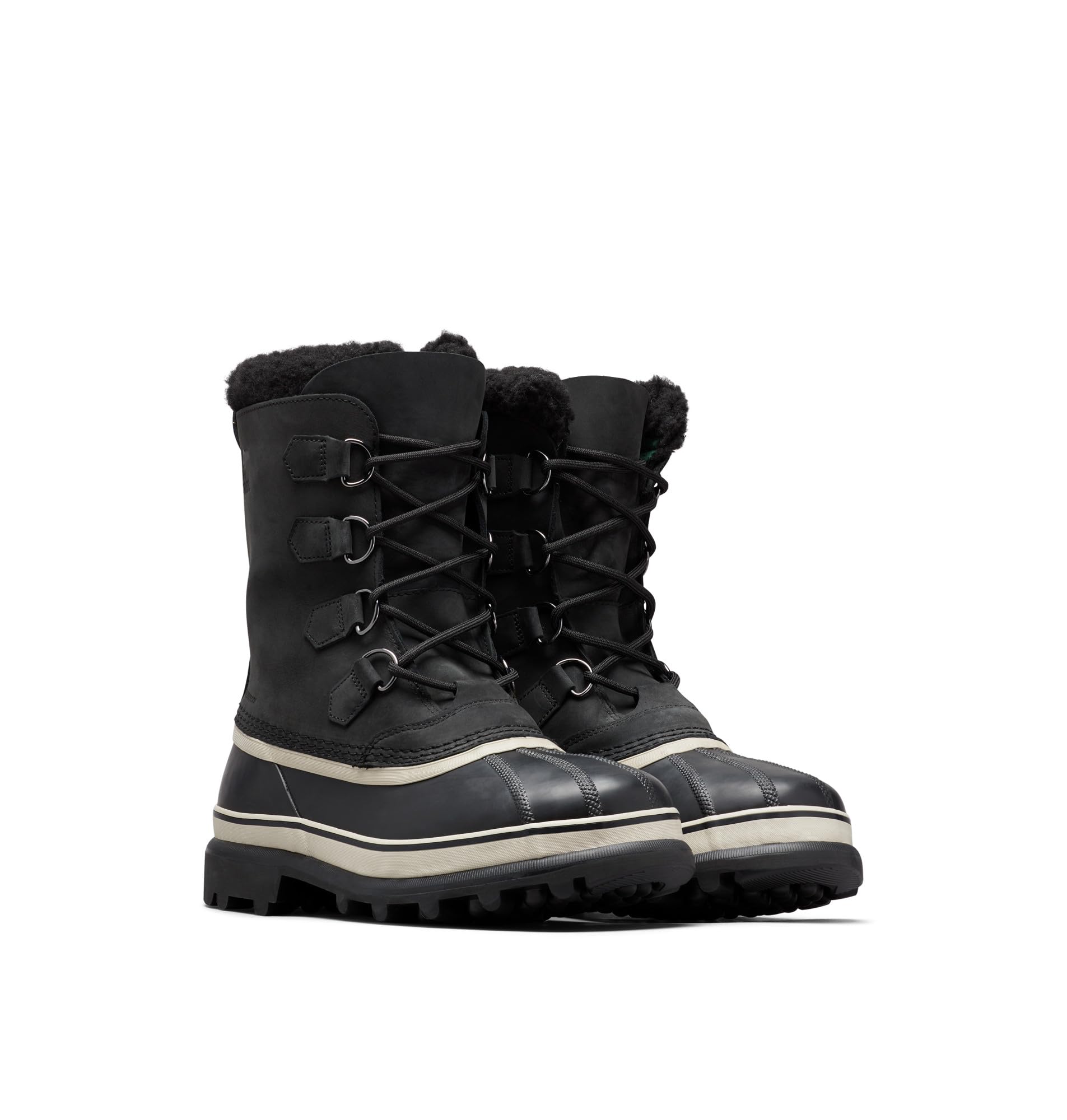
Sorel Caribou
Key Features
- Insulation: -40°F removable felt
- Waterproofing: Rubber bottom, leather water-resistant
- Outsole Traction: Herringbone outsole
- Boot Height: Mid-calf (~10 in)
- Price: $$
The Sorel Caribou’s replaceable felt liner holds its -40°F rating in real-world use, and the rubber-and-leather build holds up season after season. But the fit runs large — going down a full size is necessary — and the weight makes it a burden for anything beyond snow shoveling or standing at an ice hole. This boot suits people who need dependable cold-weather insulation without much walking, but if you want a lighter, more consistent fit, the MUCK Arctic Pro is the better pick.
Pros
- Removable felt liner keeps feet warm in sub-zero temperatures and can be replaced when worn.
- Herringbone outsole and rubber bottom provide secure traction on snow and ice.
- Build quality supports many years of use with proper care.
Cons
- Sizing runs large; going down a full size gives a better fit.
- Heavy build limits use to standing or slow walking — not suited for hiking or long treks.
A capable sub-zero boot for stationary winter tasks — just be ready to size down and accept the heft.
Best for Hunters Outdoor Enthusiasts
TIDEWE Neoprene Boot
The TIDEWE delivers 6mm neoprene warmth and 100% waterproofing in a mid-calf boot that’s comfortable for walking through wet mud and light snow. The reinforced toe and rubber sole provide decent traction on slippery ground. However, the toe box runs narrow — those with wider feet or planning to wear thick socks should size up. Some units have shown sole separation after extended use, so durability under heavy wear is a variable. This boot suits hunters and outdoor enthusiasts who need a quiet, warm boot for moderate winter conditions (down to around -4°F) and want to save compared to MUCK, but it’s not built for extreme cold below -20°F or for buyers with wide feet.
Pros
- Warm 6mm neoprene without excess weight — comfortable for all-day wear
- Mid-range price that undercuts MUCK while offering comparable waterproofing and comfort
Cons
- In snug-fit scenarios (thick socks, wider feet), the toe box may feel cramped — sizing up helps
- After a season of heavy use, sole or neoprene separation has occurred in some boots
For moderate winter conditions and a budget below MUCK, this boot holds up well — just order a size larger and inspect for any bonding issues after heavy use.
Best for Ice Fishing Shoveling
MUCK Arctic Sport Tall

Key Features
- Insulation: -20°F
- Waterproofing: 100% rubber neoprene
- Outsole Traction: Deep lug outsole
- Boot Height: Knee-high (~16 in)
- Price: $$
Delivers dependable warmth and waterproofing for standing in deep snow, with a tall shaft that keeps snow out. The 5mm neoprene and fleece lining hold heat well in sub-zero conditions, and the deep lug outsole provides solid grip on ice and packed snow. However, the boot is noticeably heavy and clunky — it works best for stationary activities like ice fishing and shoveling, not for hiking or long walks. That weight and lack of agility keep it behind the top pick for active winter use.
Pros
- High warmth and waterproofing rated to -20°F, keeps feet dry in deep snow.
- Comfortable for extended standing wear with easy on/off and no hot spots.
Cons
- Heavy and clunky; not suited for hiking or walking any distance.
Best for ice fishing, shoveling, or any deep-snow scenario where you stay put; avoid if you need a boot for walking or hiking.
Best for Students Tight Budget
NORTIV 8 Winter Boot

Key Features
- Waterproofing: Claimed waterproof membrane
- Outsole Traction: Rubber patterned tread
- Boot Height: Mid-calf (~8 in)
- Price: $
This boot offers lightweight warmth and decent traction for the price, making it a practical choice for light snow days or casual commuting. However, waterproofing can degrade within months in wet conditions like slush or deeper snow, and the construction is not built for daily heavy use. It works best as a backup pair for mild winters or for budget-conscious students needing occasional winter protection.
Pros
- Great value for budget-conscious buyers
- Lightweight construction for a snow boot
Cons
- Waterproofing can degrade within months in wet conditions like slush or deeper snow
Ideal as a backup boot for light snow days or for students on a budget who need occasional winter footwear.
Best for Occasional Snow Use
ALEADER Snow Boot

Key Features
- Insulation: 200g
- Waterproofing: Claimed waterproof membrane
- Outsole Traction: Rubber multidirectional tread
- Boot Height: Mid-calf (~7 in)
- Price: $
This budget boot delivers solid warmth and decent traction on snow at a very low price. However, the narrow fit may not suit wider feet, and waterproofing or sole integrity can deteriorate within a season, making it best for occasional, one-season use rather than daily winter wear.
Pros
- Great value for a waterproof insulated boot
- Warm and comfortable for daily use
Cons
- Toe box can feel tight for those with wider feet
Ideal for someone needing a low-cost boot for light snow shoveling or short walks, provided their foot width is narrow to medium and they plan to replace it after one season.
Best for Mild Winter Days
DREAM PAIRS Snow Boot

Key Features
- Insulation: Faux fur lining
- Waterproofing: Claimed waterproof, mixed
- Outsole Traction: Rubber
- Boot Height: Mid-calf (~8 in)
- Price: $
This boot delivers a stylish look and cozy warmth for short outdoor trips in dry cold, at a budget-friendly price. However, its waterproofing is inconsistent in slushy snow, and durability concerns mean it may not hold up beyond one season. Fit can cause blistering for some wearers. Best suited for occasional wear on mild, non-wet winter days.
Pros
- Very affordable and stylish
- Warm and comfortable for casual winter wear
Cons
- In slushy snow or wet conditions, water can seep through seams
Best for mild, dry winter days where style matters more than weather protection, and the boots won’t see heavy snow or daily use.
Best for Fashion Budget Shoppers
ArcticShield Winter Boots

Key Features
- Insulation: Faux fur lining
- Waterproofing: Claimed waterproof, mixed
- Outsole Traction: Rubber
- Boot Height: Mid-calf (~6 in)
- Price: $
This ArcticShield boot offers an appealing faux-fur design and plush memory foam comfort for short trips in dry, mild winter weather. The budget-friendly cost makes it an easy pickup for style over substance, but the waterproofing can let in slush and the hardware may loosen with regular use — better suited as a backup pair for casual outings rather than a daily winter boot.
Pros
- Attractive faux-fur styling at a very affordable price.
- Cozy memory foam and fur lining keeps feet warm in mild cold.
Cons
- In wet snow or slush, water may seep through seams and zippers.
A stylish, budget-friendly option for dry, mild winter days when you want looks over full weather protection.
How to Choose
The best winter boot for you depends on your activity level and climate – a boot that keeps you warm while shoveling may leave you sweaty on a hike.
Insulation Type and Weight
Insulation is measured in grams or temperature ratings, but those numbers assume ideal conditions. A 200g boot works for brisk walks but not for standing still at -20°F. Conversely, heavy insulation can overheat feet during active hiking, leading to moisture and cold.
Waterproofing Technology
A waterproof label doesn’t guarantee dry feet in slush. Seam-sealed membranes provide reliable barriers, but zippers and lace areas are weak points. Neoprene boots like MUCK use rubber construction that resists water ingress even in deep snow.
Outsole Traction for Snow and Ice
Aggressive treads with wide lugs provide grip on loose snow, but on ice, only boots with specialized rubber (like Omni-Grip) or studs offer real traction. For icy sidewalks, look for rubber compounds labeled as slip-resistant.
Boot Height and Ankle Support
Boot height determines how deep snow you can tackle without getting snow in your boots. Knee-high boots are great for post-holing but restrict ankle movement. For hiking, a 6-8 inch boot balances mobility and coverage.
Weight and Flexibility for Activity
A boot that weighs 3 pounds per boot is fine for standing still but will exhaust you on a three-mile hike. Flexible neoprene boots are easy to walk in but lack the ankle support of stiff leather boots. Match weight to your activity: lightweight for hiking, heavy for stationary use.
FAQ
Why do my supposedly waterproof winter boots leak after a few months?
Most waterproof membranes are only as durable as the boot’s construction. Cheap boots often use glued seams or liners that degrade with flexing and moisture. To avoid leaks, choose boots with vulcanized rubber or taped seams, and inspect the boot for wear before the warranty expires.
Can I use Muck Arctic Pro boots for hiking, or are they only for standing still?
Muck Arctic Pro boots are stable and warm for light walking but are too heavy and inflexible for long hikes. The aggressive tread works on snow and mud, but the 15-inch height restricts ankle movement. They excel for ice fishing, shoveling, and work, not for trail hiking.
How much should I size up in Sorel Caribou boots to wear thick socks?
Sorel Caribou boots run large. Most users size down a half to full size from their normal shoe size, even with thick wool socks. Order your usual size first, then exchange if needed; sizing up makes the boot sloppy and reduces insulation effectiveness.
Why do some winter boots feel warm at first but leave my toes cold after an hour?
This often happens when the boot is too tight or too breathless. A boot with thick insulation but no moisture-wicking liner traps sweat, which then cools your feet. Wear a thin synthetic liner sock under a thick wool sock, and ensure the boot has room to wiggle toes.