This post contains affiliate links. We may earn a small commission when you buy through our links — at no extra cost to you.
Walk into any camping store and you’ll see tents plastered with ‘ultralight’ tags, but many weigh over three pounds once you factor in stakes and fly. The gap between marketing and real trail weight is one of the most common traps for solo hikers looking to cut pack weight.
The real decision isn’t between ultralight and heavy—it’s between a tent that saves ounces but demands careful handling, and one that sets up in minutes with proven durability but won’t satisfy a gram counter. This guide breaks down the trade-offs so you can match the shelter to your style of hiking.

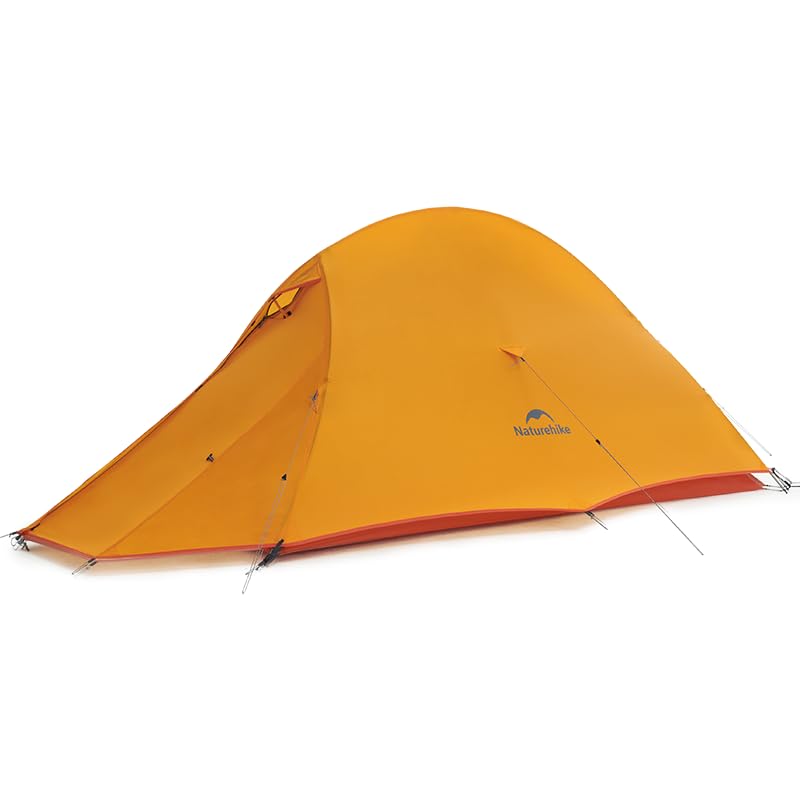

Best for Weight-Obsessed Backpackers
Night Cat Ultralight 1P
Key Features
- Trail Weight: 1.68 lbs
- Waterproof: Seam-taped, TPU zippers
- Ease of Setup: Easy, clip system
- Interior Livability: 90.6×39.4in, 49.2in peak
- Pole Material: Fiberglass
- Price: Mid-Range
Confirmed at 1.68 lbs, the Night Cat Ultralight tent is among the lightest solo shelters available, and it holds up in sustained rain without leaking. Ventilation is adequate for condensation control, and the bathtub floor keeps ground moisture out.
Setup is straightforward with trekking poles (not included); the 15-denier fabric and seam-sealed construction feel appropriate for a tent at this weight and price. Takedown is quick, but disassembling the fiberglass poles requires a gentle hand to prevent sections from separating. The tent pitches taut with proper pole tension, and the inner mesh provides bug protection without feeling claustrophobic.
This tent suits backpackers who prioritize ounces over interior space and are comfortable with the care needed for fiberglass poles. Taller or broader-shouldered hikers may find the 39-inch width confining; sleeping pads wider than 20 inches may touch the walls. The tradeoff for this weight is a snug fit and poles that require patience to avoid snapping the ferrule ends.
At a mid-range price, the Night Cat delivers weight and weather performance that rivals tents costing twice as much, making it a compelling choice for long-distance hikers with tight budgets. Consistent reports from thru-hikers highlight its ability to handle heavy rain and hold up over weeks of trail use.
Pros
- Extremely lightweight, among the lightest in its class.
- Good build quality and materials for the price.
- Easy to set up and take down.
- Effective rain protection, keeps occupants dry in storms.
Cons
- Interior width of 39 inches may feel cramped for broad-shouldered or tall individuals.
- Fiberglass poles can separate during disassembly or snap under repeated use if handled forcefully.
For gram-counting backpackers who understand the care required by fiberglass poles, this tent offers the lowest verified trail weight with genuine weather protection at a price that undercuts the competition.
Best for Budget-Minded Beginners
Naturehike Cloud Up 1P
Key Features
- Trail Weight: 3.66 lbs (4.1 trail)
- Waterproof: PU 3000mm+
- Ease of Setup: Color-coded poles, clip
- Interior Livability: 35.4in wide, 43.3in peak
- Pole Material: Aluminum 7075
- Price: Budget
The Naturehike Cloud Up 1P stands out from sub-2 lb ultralight tents like the top pick Night Cat by prioritizing easy setup and solid weather protection over minimal weight. With color-coded poles and a clip system, pitching takes minutes, and the PU 3000mm+ fly handles rain without issue.
This tent suits budget-minded beginner backpackers who want a durable, easy-to-use shelter without spending premium dollars. At a trail weight of 4.1 lbs, it is too heavy for ultralight hikers targeting under 3 lbs — a dealbreaker if every ounce counts.
Build quality is good for the price: aluminum 7075 poles feel sturdy, and the 43-inch peak height provides reasonable headroom for sitting up. The 35.4-inch floor width can feel narrow for broader shoulders, and some users note the stakes bend more easily than aftermarket options. Overall, it offers strong value for the asking price, but the weight tradeoff is clear.
Pros
- Very easy to set up with color-coded poles and simple clip system.
- Solid construction and good build quality for the price.
- Great value for money, especially for beginner backpackers.
- Handles rain and wind well with reliable weather sealing.
Cons
- Narrow 35.4-inch floor width limits shoulder room for larger users.
- Included aluminum stakes can bend in hard or rocky ground — upgrading improves longevity.
- At 3.66 lbs (4.1 lbs trail weight), it is heavier than ultralight tents — a dealbreaker for gram-counting hikers.
A practical entry-level solo tent for backpackers who value easy setup and weather protection over shaving ounces.
Best for Ultralighters on Budget
Underwood Trekking Pole 1P
Key Features
- Trail Weight: 2.5 lbs
- Waterproof: Claimed PU 5000mm, but leaks
- Ease of Setup: Trekking pole, needs practice
- Interior Livability: 86.6×33.5in floor
- Pole Material: Trekking poles required
- Price: Budget
At 2.5 lbs and a budget-friendly price, this trekking-pole tent offers the lightest and most affordable option in this comparison. Its generous floor and large vestibule provide comfort for one hiker. However, the claimed 5000mm waterproof rating does not translate to reliable rain protection – the single-wall fabric can wet through in moderate rain.
This tent suits ultralighters on a strict budget who primarily camp in dry or desert climates. For fair-weather trips, it delivers impressive weight savings. But if rain is possible, a tent with verified weather performance – like the Night Cat in this set – is a safer choice.
The tent’s single-wall design can lead to condensation inside, particularly in humid environments. While setup becomes intuitive after a few tries, the interior netting may sag and zipper seals may show gaps over time. Despite these quirks, the combination of low weight and low price is notable for those who can pick their weather.
Pros
- Weighs only 2.5 lbs for easy packing on long backpacking trips.
- Spacious interior with a large 8.46 sq ft vestibule for gear storage.
- Budget-friendly price makes ultralight trekking-pole tent accessible.
- Setup becomes quick after learning the pole system.
Cons
- Over time, the interior netting may sag, creating gaps that could let in insects.
- In humid climates, moisture from condensation may drip onto your sleeping bag and gear.
- In moderate to heavy rain, the tent may allow water to penetrate despite its high waterproof rating.
For ultralighters on a tight budget who can guarantee dry conditions, this tent offers remarkable value – but it’s a gamble in any rain.
Best for Budget-Conscious Ultralighters
Naturehike Star Trail 1P
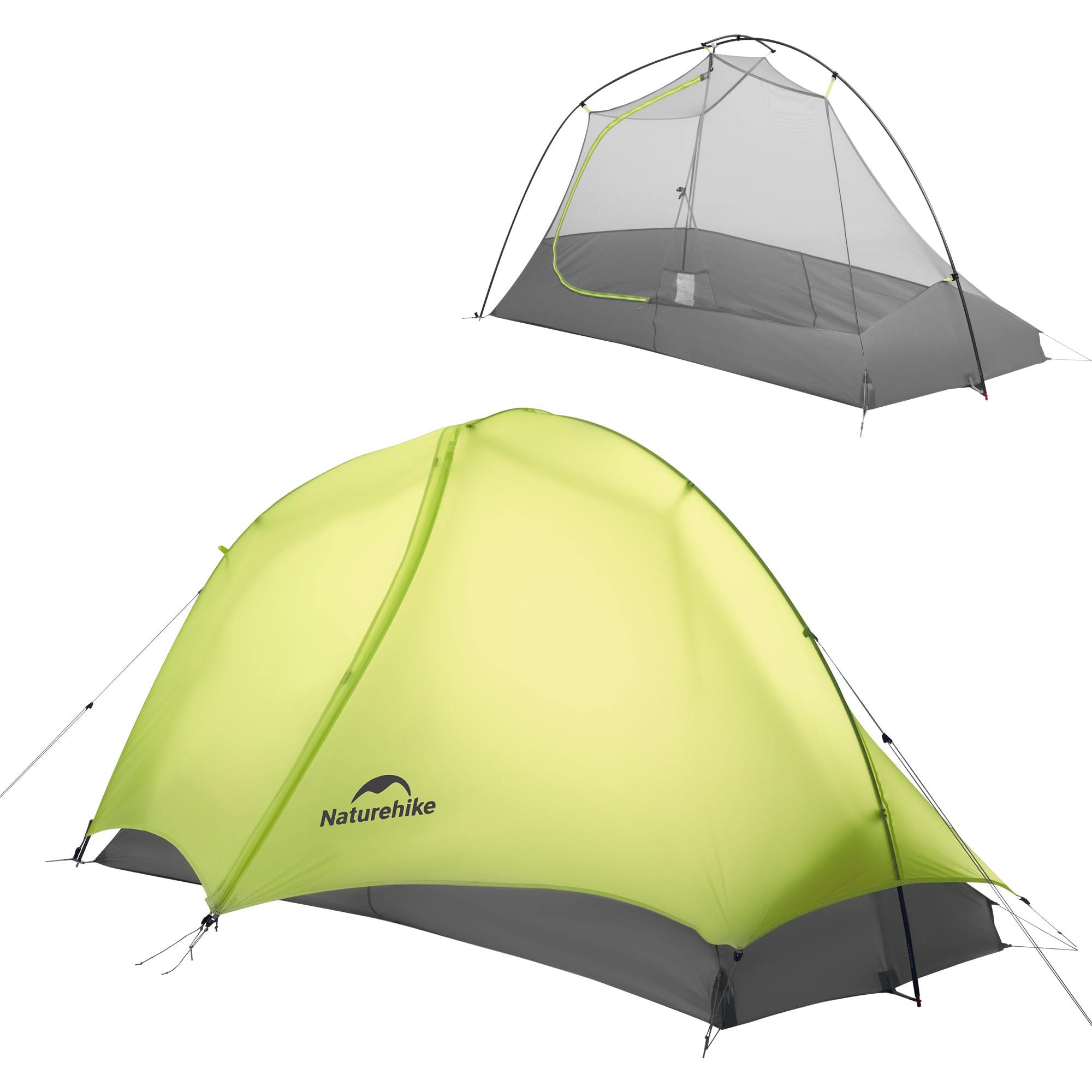
Key Features
- Trail Weight: 2.3 lbs
- Waterproof: Fly 1500mm+, Floor 3000mm+
- Ease of Setup: Quick setup, easy
- Interior Livability: 86.6×59.1in, 45.3in peak
- Pole Material: Aluminum
- Price: Mid-Range
At 2.3 lbs, the Star Trail delivers on its core ultralight promise, and the interior feels roomier than most solo tents—enough to stow a backpack beside you. The aluminum poles and quick clip setup get you sheltered fast, making this an appealing pick for weight-conscious hikers on a budget.
The catch: product dimensions (86.6 x 59.1 inches) appear to line up with a two-person model, not the one-person version being sold. Until Naturehike clarifies this discrepancy, buyers should verify the exact floor size before ordering. That spec uncertainty keeps this tent from surpassing alternatives with cleaner data, even though its weight and price are competitive.
Pros
- Lightweight construction matches advertised 2.3 lbs trail weight.
- Generous interior space for a solo tent, allowing gear storage inside.
- Cost-effective entry into ultralight backpacking tents.
Cons
- Floor dimensions may be from a 2P variant, making actual floor space uncertain.
- Interior length and width may be insufficient for taller or broader users.
An appealing option for budget-focused solo hikers who are average height and willing to verify dimensions before purchase.
Best for Experienced Backpackers
Featherstone Backbone 1P

Key Features
- Trail Weight: 2 lbs 6 oz
- Waterproof: Seam-taped, TPU zippers
- Ease of Setup: Trekking pole setup
- Pole Material: Trekking poles required
- Price: Premium
The Backbone’s 40/60 pole placement gives the foot end more headroom than typical single-wall shelters, and the two vestibules provide convenient gear storage on both sides. At 2 lbs 6 oz, it’s competitive with many ultralight solo tents. However, because independent field performance data has not yet been accumulated, its waterproofing and durability in real-world conditions remain unverified. This makes the Backbone a speculative pick for early adopters who trust spec sheets and are comfortable testing a newer product.
Pros
- Two vestibules allow separate gear storage and easy access from either side.
- 40/60 pole placement creates extra headroom at the foot end for taller sleepers.
- Seam-taped sil-nylon and TPU zippers offer a waterproof build standard in this weight class.
Cons
- Field performance has not been independently verified, so weather protection and durability are uncertain.
- At 2 lbs 6 oz, it’s heavier than sub-2 lb alternatives in this category.
Best suited for experienced backpackers who are willing to field-test an untried design and can accept the risk that it may not perform as spec’d.
How to Choose
The single most important insight: many tents marketed as ‘ultralight’ actually weigh over 3 lbs, so always verify trail weight in user reviews before buying.
Trail Weight: Actual vs. Claimed
Manufacturers often list a ‘minimum trail weight’ that excludes stakes, guylines, and stuff sack. That advertised 2.5 lb tent can become over 3 lbs once you add the essentials. Always check review-confirmed weights to know what you’re actually carrying.
For a true ultralight setup, look for tents that come in under 3 lbs with all included parts. A difference of 8-12 ounces might not seem big, but on a multi-day hike it shifts the balance of your pack significantly.
Waterproof Rating and Real-World Rain
A high PU number like 5000mm tells you the fabric’s hydrostatic head rating when new and dry. But that number doesn’t account for seam tape degradation, UV wear, or condensation—the most common source of wetness inside a tent. Single-wall designs, in particular, trap moisture no matter how high the rating.
Real-world rain performance depends more on seam sealing, double-wall construction, and ventilation strategy than on the printed spec. Look for user reports of heavy-rain tests, not just the coating numbers.
Ease of Setup
Freestanding tents with color-coded poles and clip systems can be pitched in under five minutes by anyone. Trekking pole tents require site selection, adjustable poles or sticks, and practice to get a taut pitch. That extra time matters when you’re setting up in fading light or rain.
Your tolerance for setup complexity should match your hiking style. If you often push to camp after sunset, a quick-pitch dome tent will save frustration. If you enjoy meticulous camp craft, a trekking pole shelter offers weight savings.
Interior Livability
Floor width is the most overlooked dimension. A 35-inch floor feels tight for anyone with broad shoulders or who tosses in sleep. Peak height determines if you can sit up to change clothes. Vestibule space lets you stash gear outside the inner tent, keeping condensation off your bag.
For a 1-person tent, aim for at least 39 inches of floor width and a 45-inch peak if you want to sit up comfortably. Narrower tents save weight but can feel claustrophobic on a rainy day confined to shelter.
Pole Material and Durability
Aluminum poles are the standard for durability and repairability. Fiberglass poles are lighter and cheaper but prone to splintering under stress or separating during disassembly. Trekking pole tents eliminate poles entirely, relying on your hiking poles, which can fail if they’re not meant to support lateral load.
The trade-off is clear: aluminum costs more and adds ounces but withstands years of abuse. Fiberglass works for careful users on a budget. Trekking pole tents are the lightest but require spare poles if your hiking pole breaks mid-trip.
FAQ
Why does my ultralight tent leak even though it has a 5000mm waterproof rating?
A 5000mm rating measures hydrostatic pressure on fresh fabric in a lab. Real-world leaks happen because of poor seam sealing, fabric abrasion, or condensation that drips from the ceiling. Check review comments about actual rain performance rather than trusting the number alone.
Can a 1-person ultralight tent fit a 25-inch sleeping pad comfortably?
Most 1-person tents have floor widths between 35 and 40 inches, so a 25-inch pad fits with 5 to 15 inches of leftover space for gear. The limiting factor is often the tent’s taper at the foot end. Check the pad width against the tent’s published floor dimensions, especially if you use a wide or rectangular pad.
How do I prevent condensation in a trekking pole tent when camping in humid conditions?
Condensation is worst in single-wall trekking pole tents because there’s no separate fly to wick moisture. To reduce it, pitch with all vents fully open, avoid camping in low-lying damp spots, and consider a double-wall tent if you frequently hike in humid environments. Wiping down the interior before packing is the only sure fix.
Is a 3.7 lb tent considered ultralight for solo backpacking?
No. The ultralight standard for a 1-person tent is under 3 lbs, and most serious gram-counters aim for 2.5 lbs or less. A 3.7 lb tent is better described as lightweight or traditional backpacking weight. It’s a fine option for beginners or those prioritizing comfort, but it won’t fit a sub-10 lb base weight goal.