This post contains affiliate links. We may earn a small commission when you buy through our links — at no extra cost to you.
Many travelers buy a portable coffee maker expecting convenience, only to find battery life short or pumps failing after a few trips. The result is a disappointing morning coffee and extra weight in the pack. The real solution lies in manual brewers designed to withstand the elements.
Whether you are an ultralight backpacker counting grams or a car camper wanting a rich cup, the right choice depends on your setup. This guide focuses on the travel coffee makers that deliver consistently, from pour-overs that weigh nothing to self-contained presses that pack their own mug.
The goal is one coffee maker that works on a mountaintop, in a hotel room, or at a campsite without depending on batteries or fragile glass.
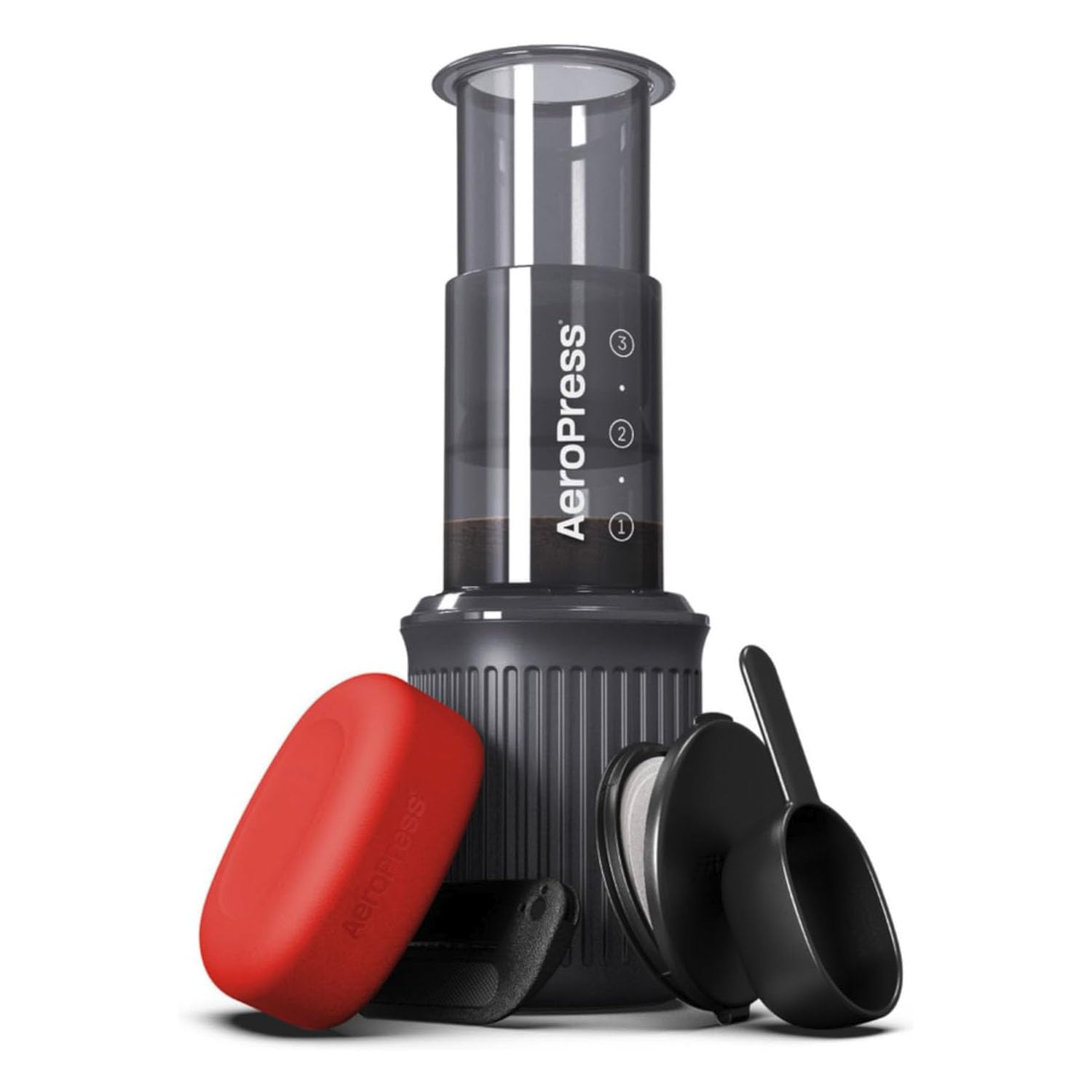


Best for Backpackers & Travelers
AeroPress Go
Key Features
- Weight & Packed Size: 11.2 oz, self-contained
- Brewing Method: Manual pressure-based
- Capacity: 8 oz
- Ease of Cleanup: Quick rinse, 2 min
- Heat Source Compat: Hot water from stove
- Price: Mid-Range
The AeroPress Go stores its brewer, scoop, and stirrer inside its own 8-oz mug, creating a package that slips into a backpack or carry-on without extra cases. It brews a smooth, full-bodied cup in under two minutes using the same pressure-based method as the larger Original, and cleanup requires just a quick rinse of the plunger and filter cap.
This kit suits backpackers, campers, and frequent travelers who want one compact system rather than packing separate gear. The 8-oz capacity is enough for a single serving but may feel small if you expect a standard 12-oz travel mug, and at 11.2 oz the built-in mug adds weight over the standalone Original — ultralight gram-counters may prefer a separate pour-over setup.
Pros
- Stores entirely inside its own mug for compact packing
- Brews a rich, smooth cup in under 2 minutes with simple cleanup
- Slightly higher rating than the Original, with strong praise for portability
Cons
- 8-oz capacity may not fill a standard 12-oz travel mug
- Heavier than the standalone Original when packed as a full kit
For travelers who want a single self-contained kit that brews quality coffee without extra gear, the AeroPress Go is the right choice.
Best for Ultralight Backpackers
GSI Ultralight Java Drip
Key Features
- Weight & Packed Size: 0.4 oz, collapsible
- Brewing Method: Manual pour-over
- Capacity: Standard mug size
- Ease of Cleanup: Rinse clean
- Heat Source Compat: Any mug + hot water
- Price: Budget
At 0.4 oz and completely flat when collapsed, this pour-over adds essentially no weight or bulk to a pack. It clips directly onto a standard mug, needs only hot water and grounds, and rinses clean in seconds. The reusable nylon filter brews a solid cup of coffee — lighter and more convenient than any integrated mug system.
This setup is for backpackers and thru-hikers who obsess over every gram and already carry a mug or pot. The nylon filter alone can let fine grounds through, so many users add a paper filter for a cleaner cup. The plastic clips can also bend or snap under rough handling — treat them with care on rocky trails.
Pros
- Extremely lightweight and collapsible — virtually weightless in a pack
- Clips onto any mug, easy to rinse clean with minimal effort
- Brews good-tasting pour-over coffee with simple equipment
Cons
- Reusable nylon filter can let fine grounds through without a paper filter
- Plastic leg clips can bend or break if handled roughly
The GSI Ultralight Java Drip is the lightest way to make real coffee on the trail — perfect for backpackers who prioritize weight and already have a mug, but be prepared to add a paper filter for the cleanest cup.
Best for Travelers with Kettle
OXO Single-Serve Pour-Over
Key Features
- Weight & Packed Size: 7.7 oz pour-over
- Brewing Method: Manual pour-over with tank
- Capacity: 12 oz
- Ease of Cleanup: Dishwasher safe
- Heat Source Compat: Hot water + #2 filters
- Price: Budget
The OXO Brew’s water tank handles the pour for you, making consistent single cups without practice. At 7.7 oz it’s not the lightest brewer, but it packs down small with a lid that doubles as a drip tray. This works for travelers who already carry a kettle and want mess-free results, or for beginners who struggle with manual pour-overs. Fine grinds can slow the drip, so medium grind is best; it requires #2 paper filters (10 included).
Pros
- Auto-drip water tank removes the need for pouring technique
- Breaks down flat with lid tray for compact travel storage
Cons
- Fine grind can slow extraction; requires #2 paper filters
If you want pour-over reliability without learning the technique, the OXO Brew is a smart choice for home or travel — just keep your grind medium.
Best for Espresso Lovers
WACACO Minipresso GR2
Key Features
- Weight & Packed Size: 0.8 lb manual espresso
- Brewing Method: Manual pump espresso
- Capacity: 80 ml shot
- Ease of Cleanup: Disassembly required
- Heat Source Compat: Hot water + grind
- Price: Mid-Range
The Minipresso GR2 sets itself apart from lighter travel brewers by producing genuine espresso with crema from ground coffee using a manual 18-bar pump — no batteries or power needed. This makes it a strong choice for espresso lovers who want real shots on camping trips and enjoy the manual brewing ritual. However, each use requires disassembly and cleaning of several small parts, and output is limited to a single 60 ml shot. It suits those who prioritize crema quality over quick convenience, not the casual drinker seeking a no-fuss cup.
Pros
- Delivers genuine espresso with thick crema from ground coffee.
- Compact manual design works anywhere with hot water — no batteries or outlet needed.
- Accepts both ground coffee and Nespresso capsules with adjustable basket.
Cons
- Cleaning requires disassembly of multiple small parts after each use.
- Pump performance may vary between units; occasional extraction inconsistency has been noted.
For the espresso purist who values real shot quality over convenience and doesn’t mind a post-brew cleaning ritual, the Minipresso GR2 delivers where other travel brewers can’t.
Best for Hotel & Dorm
Elite Gourmet Single-Serve
Key Features
- Weight & Packed Size: 0.875 lb electric
- Brewing Method: Electric drip
- Capacity: 14 oz
- Ease of Cleanup: Dishwasher safe mug
- Heat Source Compat: AC outlet required
- Price: Budget
The Elite Gourmet EHC113M brews a full mug in about 3 minutes and its compact shape slips into a suitcase or dorm shelf. Unlike the AeroPress Go, this electric model needs an outlet, so it’s a better fit for road trips, vacation rentals, or small offices than backpacking. The included stainless steel mug is dishwasher-safe but won’t keep coffee piping hot for long — expect drinkable warmth for about 20 minutes. Durability is a note of caution: some units may stop working within months, making this more of a short-term buy for occasional use.
Pros
- Brews a single cup in about 3 minutes, faster than most manual methods
- Compact design fits in luggage, counter corners, and small shelves
- Uses ground coffee and a washable filter basket — no pods needed
Cons
- Coffee temperature drops faster than fully insulated travel mugs — best for drinking within 20 minutes of brewing
- Some units may stop working within months, so treat it as a budget short-term option rather than a long-term investment
Good entry-level electric for hotel rooms or a desk where an outlet is always nearby, but the AeroPress Go packs smaller and lasts longer for true travel.
Best for Road Trippers
Bodum Travel Press 15oz
Key Features
- Weight & Packed Size: 0.9 lb insulated mug
- Brewing Method: Manual French press
- Capacity: 15 oz
- Ease of Cleanup: Hand wash plunger
- Heat Source Compat: Hot water, not leak-proof
- Price: Mid-Range
The double-wall vacuum insulation keeps coffee hot for hours, a clear advantage over the top pick’s standard mug. This is a 2-in-1 press and travel mug that reduces gear for commuters and car trips. However, the lid is not leak-proof – expect spills if tipped over in a bag – and the plunger stops short, leaving a small amount of liquid unpressed. Ideal for road trippers who want a warm cup in the driver’s seat, office workers without a machine, or loose-leaf tea drinkers. Not suited for backpackers who need a packable, spill-proof design.
Pros
- Keeps coffee hot for hours thanks to double-wall vacuum insulation.
- Combines press and mug in one, reducing items to carry for commuters and road trips.
- Stainless steel construction with silicone grip feels durable and comfortable to hold.
Cons
For road trips and desk use where a leak-free seal isn’t critical, this insulated press mug delivers fresh coffee without an appliance.
Best for Budget Travelers
AeroPress Original

Key Features
- Weight & Packed Size: 6.4 oz separate mug
- Brewing Method: Manual pressure-based
- Capacity: 10 oz
- Ease of Cleanup: Quick rinse
- Heat Source Compat: Hot water + mug
- Price: Budget
The AeroPress Original delivers smooth, full-flavored coffee with less bitterness than drip or French press, and brew-and-cleanup takes under two minutes. It costs less than the Go and holds 10 oz — but you need to supply your own mug, and it doesn’t pack as neatly as the self-contained Go kit.
Pros
- Produces smooth, full-flavored coffee with less bitterness
- Fast brew and cleanup in under two minutes
Cons
- Requires a separate mug, making it less self-contained than the Go model
Perfect for budget-conscious travelers who already own a mug and want a larger brew capacity than the Go offers.
Best for Home & Picnic
Veken 21oz French Press

Key Features
- Weight & Packed Size: ~1.5 lb glass
- Brewing Method: Manual French press
- Capacity: 21 oz
- Ease of Cleanup: Rinse glass carafe
- Heat Source Compat: Hot water, fragile
- Price: Budget
The Veken 21oz French press is a stylish, affordable option for car camping or home use, arriving with useful extras like a scoop and cleaning brush. The borosilicate glass carafe and stainless steel filter make a decent cup of coffee, and the measurement markings simplify brewing. However, this glass construction can crack under thermal shock or with minor bumps. For backpackers or hikers needing something shatterproof, this is a mismatch. It fits well for a relaxed campsite where breakage isn’t a major worry.
Pros
- Attractive design at a budget-friendly price, includes scoop and brush
- Easy to clean and brew with clear glass markings
Cons
- Glass carafe can crack under thermal shock or light impact, not suited for rough travel
A reasonable pick for car camping or kitchen counter use if you accept the glass risk, but skip it for any trip where the press might get jostled in a pack.
Best for Jetboil Owners
Jetboil French Press

Key Features
- Weight & Packed Size: 0.8 oz, fits Jetboil
- Brewing Method: Manual French press accessory
- Capacity: ~1 L
- Ease of Cleanup: Rinse silicone
- Heat Source Compat: Jetboil stove only
- Price: Budget
This silicone French press is purpose-built for Jetboil owners who want real coffee on the trail without carrying a separate brewer. It weighs next to nothing and clips inside the pot, so it disappears into the pack. The micro-filter produces a clean cup with minimal grit, and the silicone body is easy to rinse out. The catch: it only fits specific Jetboil pots (Flash, MicroMo, Zip, 1L cups) and may not stow completely inside as some expect. For anyone without a compatible Jetboil stove, this accessory is simply not an option.
Pros
- Weighs only 0.8 oz and packs inside Jetboil pots without adding bulk to your load.
- Brews French press coffee with very little sediment, using a reusable micro-filter.
Cons
- Only works with specific Jetboil pots – no use with other cookware or as a standalone device.
If you already own a compatible Jetboil stove and want ultralight French press coffee without extra gear, this is a tidy add-on. For anyone else, it is a part without a purpose.
Best for Budget Car Campers
Mixpresso Single-Serve

Key Features
- Weight & Packed Size: 2 lb electric
- Brewing Method: Electric drip
- Capacity: 14 oz
- Ease of Cleanup: Washable filter
- Heat Source Compat: AC outlet required
- Price: Budget
Under $30, this electric brewer includes a 14 oz thermal mug and reusable filter, brewing in about four minutes. Quality control varies — some units may have brewing problems, and coffee can taste weak unless grounds are packed densely. A backup for hotel or RV use; the Elite Gourmet is more consistent.
Pros
- Compact design fits easily in luggage; includes a 14 oz thermal mug for immediate use.
- Brews a full mug in about four minutes with no ongoing filter costs.
Cons
- Brewing reliability may vary; some units can develop functionality issues shortly after purchase.
Best as a spare travel brewer for occasional use where AC power is available and consistency isn’t critical.
Best for Tech-Savvy Travelers
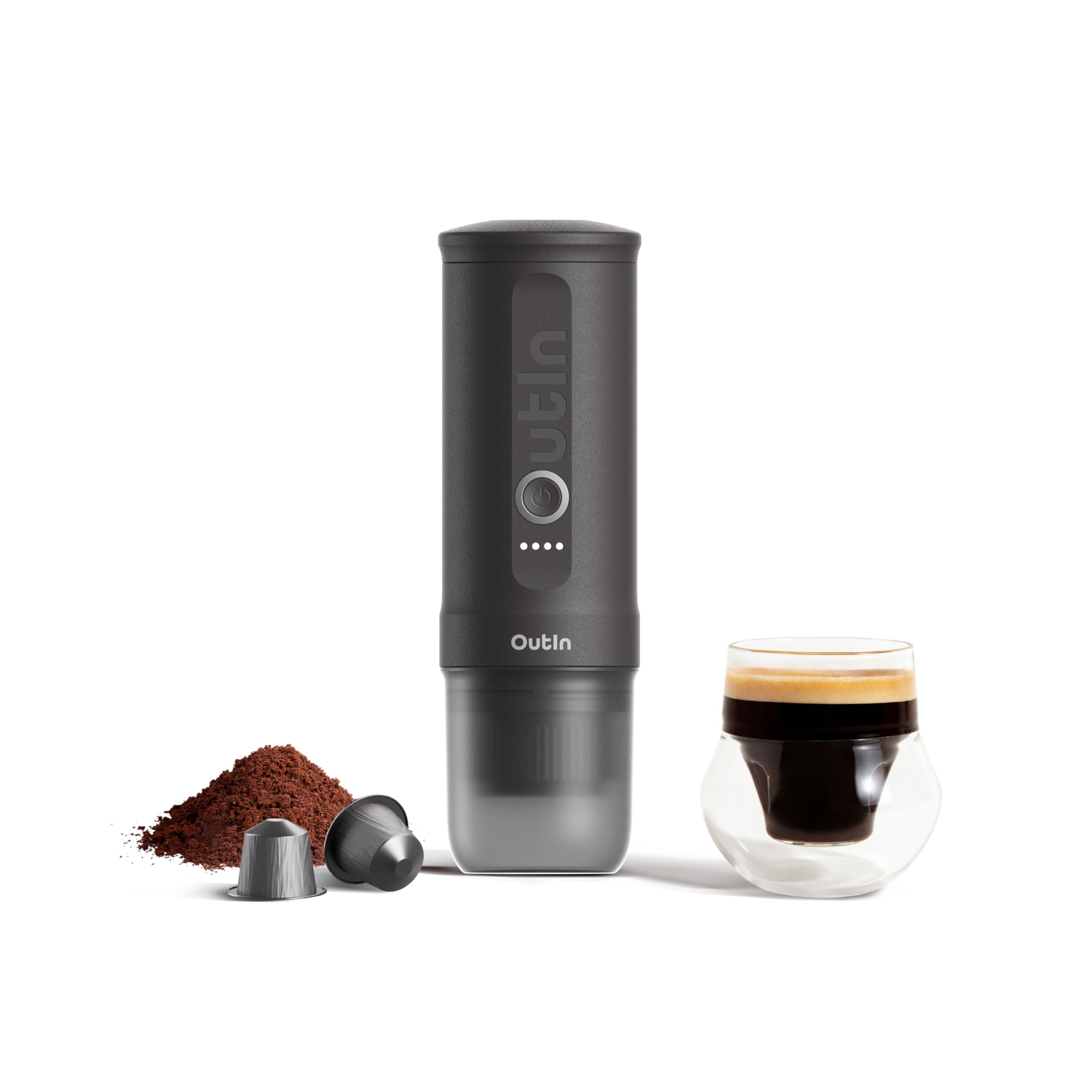
OutIn Nano Espresso
Key Features
- Weight & Packed Size: 1.5 lb battery
- Brewing Method: Electric battery espresso
- Capacity: 60 ml
- Ease of Cleanup: Washable parts
- Heat Source Compat: USB-C rechargeable
- Price: Premium
The OutIn Nano delivers authentic espresso with crema in a self-heating, USB-C rechargeable package that works with grounds or capsules. But battery yields only 3–5 hot shots per charge, pump/heating inconsistencies have been noted, and the premium price for a single 60ml shot limits it to espresso-focused tech travelers on short trips.
Pros
- Self-heating 20-bar pump produces authentic espresso with crema anywhere.
- Accepts both ground coffee and Nespresso original capsules.
Cons
- Battery only supports 3–5 hot extractions per charge — needs nightly recharge for multi-day use.
Fits best for tech enthusiasts who want real espresso on short trips or hotel stays and can recharge nightly — not for extended camping without power.
Best for Car Camping
Mueller 34oz French Press
Keeps coffee hot for hours thanks to double-wall construction, and the 4-layer filter produces a clean full-bodied cup. Durable stainless steel carafe survives campsite bumps. At 2.2 lbs it’s too heavy for hiking or carry-on, and the plunger assembly can wear down over time. This is a solid choice for group car camping or RV trips where weight isn’t a concern.
Pros
- Double-walled stainless steel retains heat exceptionally well
- 4-layer filter minimizes grounds for a clean, full-bodied cup
Cons
- Plunger screen assembly can strip after extended use, requiring replacement
Best suited for car camping or home use where you need multiple servings and can handle the weight; skip if you need something packable for hiking.
Best for Home & Office
Keurig K-Mini

Key Features
- Weight & Packed Size: 5.9 lb electric
- Brewing Method: Electric pod-based
- Capacity: 6-12 oz pods
- Ease of Cleanup: Descaling needed
- Heat Source Compat: AC outlet required
- Price: Premium
The most compact Keurig at 4.5 inches wide, this fits tight countertops and brews quickly from K-Cups. But its 5.9 lb weight and AC requirement make it a home-only machine — not portable. Some units may develop pump issues over time, further limiting its travel viability. It’s fine for a desk or dorm, but not for a backpack.
Pros
- Compact 4.5-inch width fits tight counter spaces.
- One-button operation brews a single cup quickly.
Cons
- At 5.9 lb and requiring AC power, this is a countertop machine — not portable.
Best for a home or office with limited counter space where pod convenience is the priority — not for any travel or camping use.
How to Choose
The biggest mistake travelers make is assuming electric portable coffee makers are more convenient — in practice, manual brewers like AeroPress and pour-overs are far more dependable on the trail.
Weight & Packed Size
Every ounce counts in a backpack, but lighter brewers often trade insulation or brew volume. A 0.4-oz pour-over fits anywhere but requires a separate mug, while a self-contained 11-oz kit includes its own cup. Choose based on whether you already carry a mug or want an all-in-one system.
For ultralight hikers, a collapsible pour-over or small cone is the lightest path. Car campers can afford the extra pound for a French press that doubles as a thermos.
Brewing Method
Manual brewers (pour-over, AeroPress, French press) need only hot water from a camp stove or kettle — no batteries, no outlets. Electric brewers require AC power or a rechargeable battery, which adds weight and failure points. On multi-day trips, manual is the only reliable choice.
Electric models are fine for car camping or motels where power is guaranteed, but their pumps and heaters are prone to failure after a few months of use.
Capacity & Serving Size
Single-serve brewers range from 60 ml espresso shots to 15 oz mugs. A smaller capacity saves weight but may leave you wanting a second cup. For most solo hikers, 8-12 oz is enough. Group camping calls for larger French presses, but those exceed the portable weight limit.
Consider that pour-over and AeroPress brew directly into your mug, while French press travel mugs combine brewing and drinking in one vessel — convenient but often with leakage trade-offs.
Ease of Cleanup
Cleanup is critical on the trail where water is scarce. Pour-over cones rinse clean in seconds. AeroPress plungers eject the puck for nearly mess-free disposal. French presses require rinsing the mesh and carafe, and electric brewers need descaling. Avoid models with multiple small parts that require disassembly after each use.
Heat Source Compatibility
Most manual brewers work with any hot water source — camp stove, kettle, or even a fire. Electric models need an AC outlet or USB-C charging, which limits them to car camping or accommodations. Rechargeable battery units like the OutIn Nano offer tether-free use but have limited cycles per charge and degrade over time.
FAQ
Why does my portable electric espresso machine battery die after only a few uses?
Most portable electric espresso machines use lithium batteries that degrade faster with frequent charging and have limited capacity — typically only 3-5 hot shots per charge. The heating element draws significant power. For extended backcountry trips, a manual espresso maker like the WACACO Minipresso is more reliable because it requires no batteries at all.
Is a French press or pour-over better for camping with limited water?
Pour-over uses less water because it does not require full immersion of the grounds; you only pour what you drink. A French press needs enough water to steep the grounds, which often means making more than you want or wasting water. For ultralight backpacking where water is scarce, pour-over is the better choice.
Can I use a manual travel coffee maker with just boiled water from a camp stove?
Yes, that is exactly what most manual brewers are designed for. Pour-over cones, AeroPress, and French presses all work by pouring hot water over grounds. Boil water on your camp stove, let it cool slightly (around 200°F), and brew. No electricity or special equipment needed.
Why does my Bodum Travel Press leak coffee from the lid?
The Bodum Travel Press lid is designed for drinking, not for leak-proof storage. It uses a simple flip-top that can open if tilted or jostled in a backpack. This makes it unsuitable for hiking or tossing in a bag. For active travel, consider a separate press and a sealed travel mug, or use the Bodum only for car trips where it sits upright.