This post contains affiliate links. We may earn a small commission when you buy through our links — at no extra cost to you.
Many women find trail shoes comfortable at first but quickly show wear or fit issues. The real challenge is finding a pair that holds up over miles without sacrificing that initial ease.
This guide helps you match your foot shape and hiking style to the right construction. Whether you need wide toe boxes, waterproof membranes, or supportive arches, the picks here prioritize proven durability and consistent fit over marketing hype.
Because the best trail shoe isn’t the one with the highest price tag, but the one that still feels good after a full day on rocky terrain.



Best for Dry Trail Hiking
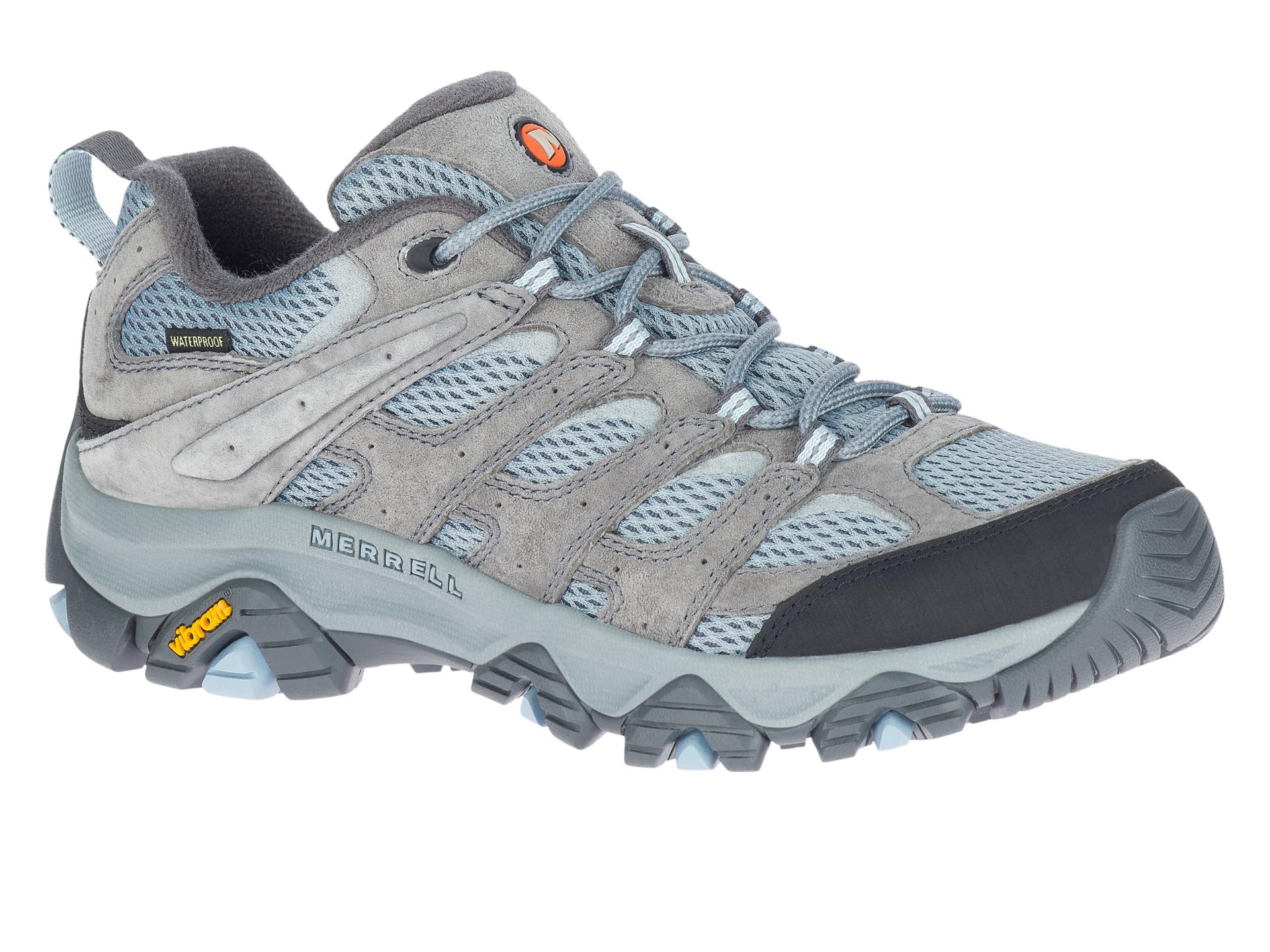
Merrell Moab 3
Key Features
- Traction: Vibram TC5+ outsole
- Comfort & Fit: Out-of-box comfort
- Durability: High durability
- Arch & Stability: Outstanding arch support
- Water Resistance: Not waterproof
- Price: Mid-Range
The Moab 3 provides immediate comfort and solid arch support straight from the box, with no break-in needed. Its Vibram outsole grips well on rocky trails, and the construction holds up over many miles. At under $100, it packs features typically found in pricier models.
Best suited for hikers tackling dry, unpaved terrain who prioritize support over weight savings. The shoe runs slightly small for some users, so trying a half size up is worth checking. It lacks waterproofing, so wet conditions call for the Moab 3 WP version instead.
Pros
- No break-in period; comfortable from first wear with zero blister issues.
- Strong arch support and stability on uneven ground.
- Durable build that holds up across many trail miles.
Cons
- Sizing runs small for some; going up half a size can resolve the fit.
For day hikers who need a comfortable, supportive shoe for dry trails without overspending, the Moab 3 is a straightforward choice.
Best for Wide Feet, Natural
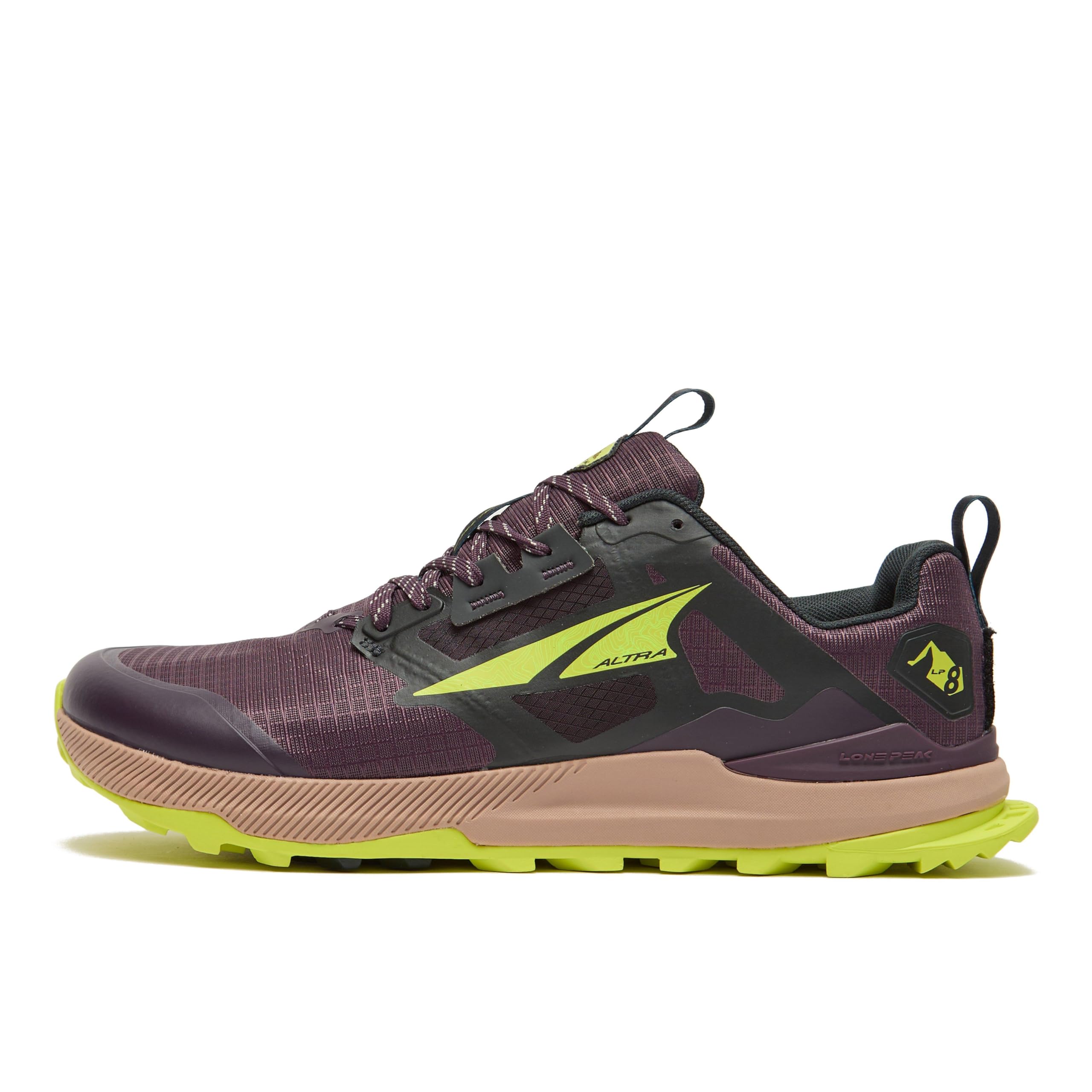
ALTRA Lone Peak 8
Key Features
- Traction: MaxTrac outsole
- Comfort & Fit: FootShape wide toe box
- Durability: Tread wears quickly
- Arch & Stability: Good for zero-drop
- Water Resistance: Not waterproof
- Price: Mid-Range
The FootShape toe box gives toes room to splay, and the MaxTrac outsole grips well on varied terrain. The zero-drop design mimics barefoot running, but can strain calves for those not accustomed to it. Tread may wear faster than some similarly priced options, especially on abrasive trails. Best for runners with wide feet who want ground feel and road-to-trail versatility, provided they accept the adjustment period and potential for quicker outsole replacement.
Pros
- Roomy toe box allows natural toe splay without pinching
- Comfortable from first wear with no break-in needed
- MaxTrac outsole provides confident traction on wet rock and loose dirt
Cons
- Zero-drop platform can cause calf strain for newcomers transitioning from standard shoes
- Outsole tread may wear faster than other mid-range trail shoes on abrasive surfaces
For trail runners who value toe freedom and a flat platform, this is a worthwhile mid-range option — just factor in sooner outsole replacement if you log heavy miles on rock.
Best for Wet Trail Running
NB Hierro V7 GTX
Key Features
- Traction: Vibram Megagrip
- Comfort & Fit: Plush Fresh Foam X
- Durability: Mixed durability reports
- Arch & Stability: Good stability
- Water Resistance: Gore-Tex waterproof
- Price: Premium
The Fresh Foam X cushioning and Gore-Tex liner make this shoe a natural choice for wet trail runs and mixed-surface commutes. The Vibram Megagrip outsole holds well on slick rocks and mud, while the arch support keeps longer efforts stable. The toe box is narrow, so runners with wider feet or those who prefer ample forefoot room may find it restrictive. Occasional reports of sole separation or upper tearing suggest durability is not its strong suit, but for wet-weather runners who prioritize immediate cushion and waterproofing, it delivers.
Pros
- Plush Fresh Foam X cushion absorbs impact on rocky trails.
- Gore-Tex membrane keeps feet dry in rain and puddles.
- Vibram Megagrip provides reliable traction on wet, uneven terrain.
Cons
- Toe box may feel cramped for wide-footed runners.
- Some pairs show sole separation or upper tearing with regular use.
A solid pick if you run in wet conditions and value cushion over a roomy fit or long-term durability.
Best for Budget Daily Walks
Columbia Novo Trail
Key Features
- Traction: Omni-Grip outsole
- Comfort & Fit: Roomy toe box, no break-in
- Durability: Good for light use
- Arch & Stability: Mild support
- Water Resistance: Not waterproof
- Price: Budget
The Novo Trail delivers immediate, out-of-the-box comfort with a generous toe box that accommodates wide feet — a rarity at this price point. It feels lighter than the Merrell Moab 3, making it a good match for casual day hikes and daily walking on packed dirt or gravel. The tradeoff is the firm Techlite cushioning, which can feel stiff on paved surfaces, and the sole lacks the traction and stability needed for rocky or uneven trails. This shoe prioritizes fit and value over technical performance, so it works best for women who stick to smooth, unpaved paths and want a true wide fit.
Pros
- Extremely comfortable from the first step with no break-in required
- Roomy toe box and wide fit for feet that need extra space
- Lightweight build that works for casual walking and light hiking
Cons
- Cushioning can feel firm on hard pavement or concrete
For women with wide feet who want a comfortable, affordable shoe for easy trails and daily walks, the Novo Trail delivers — but it’s not a technical trail runner.
Best for Technical Trail Running
Salomon XA PRO 3D
Key Features
- Traction: Contagrip outsole
- Comfort & Fit: Narrow fit
- Durability: Sturdy build
- Arch & Stability: Strong arch support
- Water Resistance: Not waterproof
- Price: Premium
The XA PRO 3D delivers a secure, planted feel on technical descents thanks to its Contagrip outsole and supportive chassis — a clear alternative for runners who find the Merrell Moab 3 too roomy. The Quicklace system and breathable mesh upper keep weight low, making it a capable partner for fast-paced trail runs over rocky or uneven ground.
This shoe suits narrow-footed athletes who value stability over plush comfort. The fit is notably slim, so those with wider feet or a preference for toe room will find it restrictive. Some heel slip has been noted — a trade-off that matters more on steep, loose slopes than on moderate trails.
Pros
- Contagrip outsole provides reliable traction on loose and wet rock.
- Supportive 3D chassis keeps the foot stable during lateral cuts and uneven terrain.
Cons
- Narrow fit can be too tight for wider feet or those who prefer generous toe space.
- Heel slippage may occur on steeper grades, requiring careful lacing adjustment.
The XA PRO 3D is a precise tool for technical trails if you have narrow feet and want stability over all-day comfort. For wider-footed hikers or casual walkers, the Merrell Moab 3 is a better fit.
Best for Budget Trail Runner
Saucony Excursion TR14
Key Features
- Traction: Rubber multidirectional lugs
- Comfort & Fit: Soft cushioning
- Durability: Spotty durability
- Arch & Stability: Reliable arch support
- Water Resistance: Not waterproof
- Price: Budget
Where the Merrell Moab 3 commands a higher price for proven durability, the Saucony Excursion TR14 delivers similar cushioning and trail grip for significantly less. The Versafoam midsole feels plush underfoot on well-groomed paths and moderate rock sections, while the multidirectional lugs provide solid bite on dirt and loose gravel. This shoe works best for budget-conscious runners and day hikers who stick to maintained trails and want a single pair that transitions to casual wear. Durability can vary between pairs, with some units showing premature separation at the toe box, so inspecting the build on arrival is worth the extra minute.
Pros
- Plush cushioning that rivals shoes twice the price
- Confident traction on dirt, gravel, and moderate rock
- Consistent arch support for moderate-mileage days
Cons
- Some pairs may separate at the toe box under regular use
- Sizing runs short for some buyers, requiring a half-size up
If you prioritize budget and immediate comfort over long-term certainty, this Saucony handles most non-technical trails with ease.
Best for Waterproof Hiking
Merrell Moab 3 WP
Key Features
- Traction: Vibram TC5+ outsole
- Comfort & Fit: Leather/mesh upper
- Durability: Generally durable
- Arch & Stability: Same as Moab 3
- Water Resistance: Waterproof
- Price: Premium
The Moab 3 WP pairs the same arch support and Vibram TC5+ outsole as the non-waterproof version with a waterproof membrane for wet-weather hikes. The tradeoff is a warmer build and a toe box that some find snug — going half a size up can resolve the fit for most.
Best for hikers who prioritize stability on rocky terrain and want waterproofing, but who don’t need a lightweight trail runner or have very narrow feet.
Pros
- Comfortable straight out of the box with no break-in period
- Arch support and stability keep footing secure on rocky, uneven ground
- Vibram outsole offers reliable grip on wet rocks and trails
Cons
- Toe box can feel tight for some foot shapes; ordering a half size up is a common adjustment
- Waterproofing may lose effectiveness after several months in a small number of pairs
A solid choice for wet-weather hiking where stability and traction matter, but check the fit – half size up may be needed for comfort.
Best for Road-To-Trail
ASICS Gel-Venture 10

Key Features
- Traction: Trail-specific rubber
- Comfort & Fit: GEL cushioning
- Durability: Average durability
- Arch & Stability: Good arch support
- Water Resistance: Not waterproof
- Price: Mid-Range
The Gel-Venture 10 blends ASICS road-shoe cushioning with a trail outsole, making it a natural fit for walkers and runners who stick to maintained paths. The narrow fit and occasional sole separation limit its appeal for serious trail use, but for casual outings on packed dirt or gravel it offers a comfortable, low-commitment option.
Pros
- Recognizable ASICS cushioning that transitions smoothly from pavement to light trail.
- Attractive design that works for everyday wear, not just running.
Cons
- Sizing runs small and narrow; many need half a size up to avoid pinching.
Best for budget-conscious buyers who split their time between sidewalks and easy dirt paths and don’t need a shoe for technical or high-mileage trail work.
Best for Casual Dry Use
NORTIV 8 Lightweight

Key Features
- Traction: Rubber
- Comfort & Fit: Lightweight and stylish
- Durability: Poor durability
- Arch & Stability: Minimal arch support
- Water Resistance: Not waterproof
- Price: Budget
Lightweight and stylish with no break-in needed, this budget-friendly sneaker is comfortable for casual walks. However, durability and water resistance are limited, making it unsuitable for unpaved or wet trails – best reserved for dry-weather pavement strolls.
Pros
- Very comfortable out of the box with no break-in needed.
- Lightweight and stylish design at a budget-friendly price.
Cons
- Water resistance is poor despite marketing claims – not suited for wet conditions.
Best for occasional dry-weather walks on pavement, where its low cost and style shine, but not for trail hiking or wet terrain.
Best for Dry Trail Hiking
Merrell Moab 3
Key Features
- Traction: Vibram TC5+ outsole
- Comfort & Fit: Out-of-box comfort
- Durability: High durability
- Arch & Stability: Outstanding arch support
- Water Resistance: Not waterproof
- Price: Mid-Range
Out of the box, the Moab 3 feels broken-in — the padded collar and contoured insole provide arch support that keeps feet stable on rocky sections without a break-in period. The Vibram outsole offers consistent traction on packed dirt and loose gravel, and the suede-and-mesh upper holds up over repeated miles of unpaved terrain.
This shoe is built for dry trails and moderate loads. In wet grass or light rain, the non-waterproof upper will let moisture through — that’s a boundary, not a flaw. The fit runs a half-size snug for some foot shapes; ordering up resolves it without sacrificing lockdown. It suits day hikers, backpackers on dry routes, and anyone who prioritizes all-day comfort over ultralight weight or water protection.
Pros
- No blister issues during break-in; feels comfortable immediately
- Arch support and stability reduce fatigue on uneven trails
- Durable construction holds up over many miles of hiking
Cons
- Some foot shapes may need a half-size up for the ideal fit
- The non-waterproof upper limits use to dry conditions — puddles and wet grass soak through
For dry-route hikers who value immediate comfort and stable support, the Moab 3 is a straightforward pick that delivers on its promise without surprises.
How to Choose
The key to choosing trail shoes is understanding that immediate comfort often comes at the cost of long-term durability, so prioritize construction details that match your hiking frequency and terrain.
Traction and Outsole Grip
Traction depends on lug pattern and rubber compound. Deeper, more aggressive lugs bite into mud and loose gravel but wear faster on hard-packed trails. Vibram and Contagrip compounds offer reliable grip on wet rock, while softer rubber like MaxTrac provides better dry traction but shortens tread life.
If you hike mostly on well-maintained dirt paths, a moderate lug depth saves weight and lasts longer. For technical, wet terrain, invest in a shoe with a proven outsole and expect to replace it sooner.
Comfort and Fit (Toe Box Width)
Toe box width is the most common fit issue. A narrow toe box can cause blisters and black toenails on descents, while an overly wide one leads to heel slip. Brands like ALTRA use a FootShape last for natural splay, but require a size down for some feet.
Always try shoes with your hiking socks and account for foot swelling on long days. Many hikers need a half size up, especially in Merrell and New Balance models.
Durability of Materials and Sole Construction
Upper materials trade breathability for toughness. Mesh uppers dry fast but tear on sharp rocks; leather adds protection but weight and heat. The sole is often the first failure point – thin treads may wear through in 200 miles, while a thick Vibram base can last 500+ miles.
For frequent hikers, a heavier shoe with a durable outsole and reinforced toe cap saves money over time. For occasional use, a lighter build is acceptable.
Arch Support and Stability
Arch support varies widely. Zero-drop shoes like Altra offer minimal support and rely on the foot’s natural mechanics – good for runners but risky for hikers with low arches. Shoe with 8-12mm drop and firm foam midsoles provide more stability on uneven terrain.
If you need orthotics, look for removable insoles and a midsole that doesn’t bottom out under load. Many budget models lack sufficient arch support for all-day hikes.
Water Resistance
Waterproof membranes like Gore-Tex keep moisture out but also trap heat and slow drying. In humid climates or for water crossings, a non-waterproof shoe with drainage ports is more practical. Water resistance also adds cost and weight.
For wet trail runs or cold-weather hikes, waterproofing is worth the trade-off. For summer day hikes, skip it and enjoy the breathability.
FAQ
Why do my trail running shoes feel tight after a few hours on the trail?
Feet swell during activity, and trail shoes often have less give than road shoes. If your shoes feel snug at the store, they’ll likely be too tight after a few miles. Try going up half a size, and look for models with a wider toe box if you experience this consistently.
Are zero-drop shoes like Altra good for hiking or just running?
Zero-drop shoes work for hiking if you are accustomed to a natural stride and have strong calves. They lack the heel cushioning that helps on steep descents, so start with short, flat hikes and gradually increase. For most hikers, a shoe with 4-8mm drop is more forgiving.
How long should women’s trail shoes last before needing replacement?
Expect 300 to 500 miles from a well-built trail shoe, depending on terrain and weight. Lightweight models with soft rubber outsoles may wear out at 200 miles. Check for smooth tread or holes in the upper as signs to replace, regardless of mileage.
Is Gore-Tex worth it in trail shoes for day hikes in humid climates?
In humid environments, Gore-Tex traps sweat and takes longer to dry once wet from the inside. If you frequently cross streams or hike in light rain, it’s useful. For dry, hot conditions, a non-waterproof shoe breathes better and dries faster.