This post contains affiliate links. We may earn a small commission when you buy through our links — at no extra cost to you.
Many snowshoe kits bundle trekking poles and gaiters to look like a deal, but the snowshoes themselves often have weak bindings that slip or break after a few hikes.
This guide focuses on what matters: bindings that stay tight on the trail, frames that last, and traction that bites when you need it. We separate the sets worth buying from those where the accessories are the best part.
Whether you want a complete kit for occasional walks or a technical pair for backcountry climbs, the choices here prioritize the snowshoe itself — because that’s what keeps you moving.




Best for Budget Recreational
Retrospec Drifter
Key Features
- Size / Weight Capacity: 25 in, 160 lbs
- Binding System: Double ratchet
- Weight per Pair: 5.8 lbs
- Price: $
The double-ratchet binding system allows quick, secure adjustments even with thick winter gloves – a notable advantage over kit bundles that often use less reliable strap systems. The aluminum frame keeps each shoe at 5.8 lbs for the pair, light enough for day hikes on packed trails without fatiguing legs. An integrated heel lift reduces calf fatigue on inclines, a feature typically found on pricier models. On moderate snow, the crampons provide sufficient bite for confident strides. Some users note that wet snow can accumulate under the heel, occasionally altering gait – more a nuisance than a hazard on groomed terrain.
Designed for recreational users under 160 lbs, the Drifter is best suited for beginners and occasional day hikers who want a functional entry without a big investment. Durability is a tradeoff: rivet heads can loosen and straps can wear after moderate use, making this a better match for light-duty snowshoeing than heavy backcountry treks or multi-season use. For buyers who stay on well-traveled trails, the price-to-performance ratio makes it the most sensible choice for casual winter walks.
Pros
- Double-ratchet bindings are easy to adjust with gloves and stay snug on the boot.
- Lightweight aluminum frame (5.8 lbs per pair) reduces fatigue on day hikes.
- Integrated heel lift improves comfort on ascents without adding complexity.
Cons
- Snow can accumulate under the heel on wet trails, potentially affecting stride.
- Rivet heads can loosen and straps can wear after moderate use.
For casual day hikers who value easy bindings and a low price, the Drifter is the safest value choice among recreational snowshoes.
Best for Backcountry Enthusiasts
Tubbs Mountianeer
Key Features
- Size / Weight Capacity: 25 in, 200 lbs
- Binding System: ActiveFit 2.0
- Weight per Pair: ~4 lbs
- Price: $$$
The Anaconda toe and Python heel crampons provide grip that lighter day-hiking snowshoes can’t match, making steep ascents and icy traverses feel planted rather than precarious. The ActiveFit 2.0 bindings secure boots quickly and hold tension through variable snow conditions.
This snowshoe is built for aggressive terrain and serious mileage — casual flat-trail walkers will find it overbuilt and pricey at the premium end. A single report of a binding strap detaching on first use has been noted, though no wider pattern suggests a systemic issue; buyers should still inspect the attachments before committing to a long backcountry trip.
Pros
- Anaconda toe and Python heel crampons dig into ice and hardpack with authority.
- Lightweight build reduces fatigue on long ascents and multi-hour outings.
- Bindings adjust easily with gloves and stay locked through aggressive movement.
Cons
- Premium pricing puts it out of reach for budget-focused buyers.
- A single report of a binding strap separating on first use — worth checking before extended trips.
Best for those who demand uncompromised traction on technical terrain — casual users can save money elsewhere.
Best for Day Hiking
Tubbs Flex RDG
Key Features
- Size / Weight Capacity: 24 in, 198 lbs
- Binding System: BOA
- Weight per Pair: ~2.4 lbs
- Price: $$
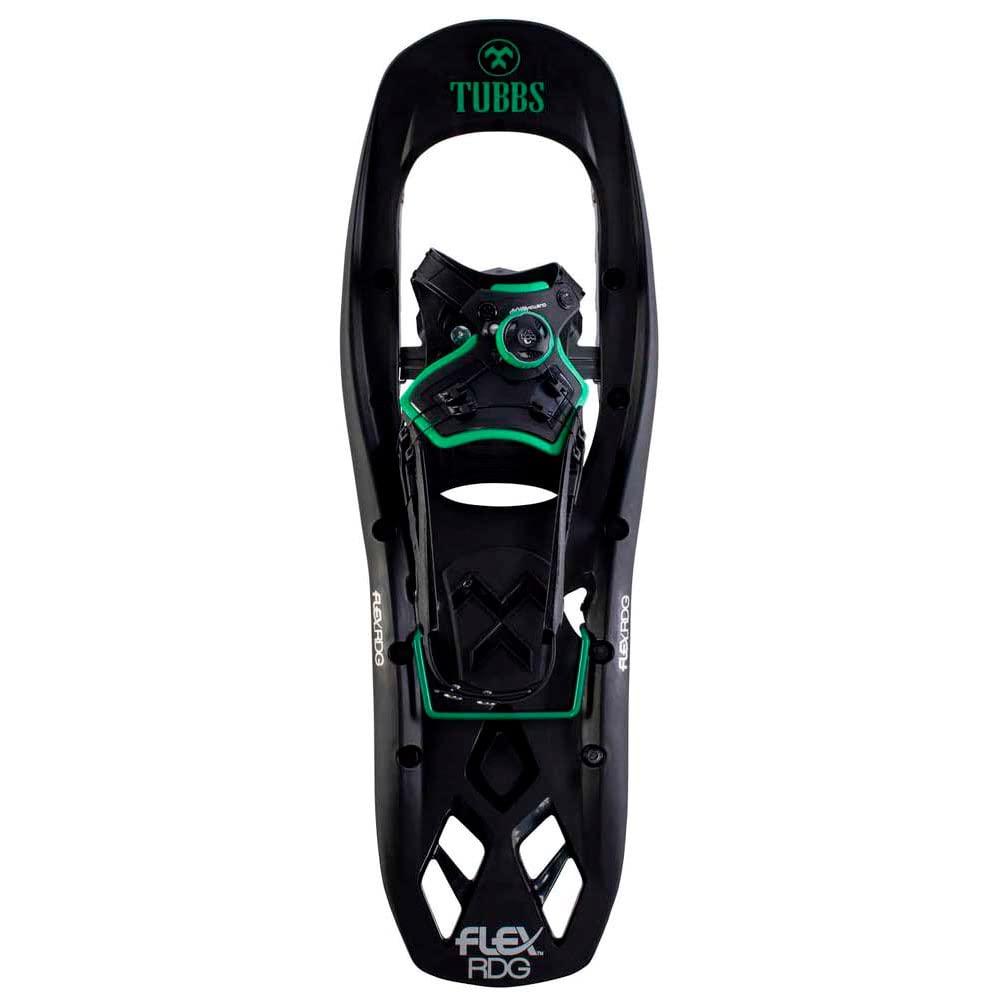
At just 1.2 pounds per shoe, the Tubbs Flex RDG feels more like an extension of your boot than a snowshoe. The BOA dial binding lets you dial in a secure fit in seconds, even with thick gloves on a frigid morning. This design is tuned for day hikers who stick to packed or groomed trails—the 3D-curved traction rails bite into icy slopes without the bulk of a backcountry shoe. For deep powder or heavy loads, a wider or more aggressive model in this guide is a better fit.
Pros
- Weighs just 1.2 pounds per shoe, reducing fatigue on long day hikes.
- BOA dial binding provides fast, precise adjustments even with thick gloves.
Cons
- Not effective in deep powder or under heavy loads; optimized for packed, icy trails.
If your winter hiking stays on groomed or packed terrain, this is the lightest, most convenient option for day trips.
Best for Recreational Hikers
G2 Light Weight Snowshoes
Key Features
- Size / Weight Capacity: 21-36 in, 200 lbs
- Binding System: Ratchet, EVA padded
- Weight per Pair: 3.3 lbs
- Price: $$
The G2 kit differentiates itself with sizes from 21 to 36 inches, accommodating everyone from children to heavier adults, and ships with trekking poles and a tote bag at a mid-range price.
This setup works well for recreational hikers and first-time snowshoers who want a single purchase for occasional moderate terrain. However, the ratchet binding can loosen during use, and some units show frame or binding wear after a few outings — straps should be checked before each trip.
Pros
- Lightweight design reduces fatigue on moderate hikes.
- Ratchet bindings engage quickly even with gloves on.
- Complete bundle includes poles and carry bag at a fair price.
Cons
- Straps may come loose during use, requiring re-tightening.
- Frame or binding components can break after a few outings on rougher terrain.
For recreational users who value size range and a complete bundle, this G2 set is a practical choice if you stick to moderate trails and inspect the bindings before each outing.
Best for Mountaineering
MSR Evo Ascent
Key Features
- Size / Weight Capacity: 22 in, 180 lbs
- Binding System: Tri Fit strap
- Weight per Pair: 4.1 lbs
- Price: $$$
Steel traction rails and brake bars provide aggressive bite on icy slopes and hardpack, a level of grip that sets the Evo Ascent apart from recreational models. The optional tail attachment boosts load capacity to 250 lbs, useful for carrying mountaineering gear. Unlike the top pick’s straightforward bindings, this shoe requires deliberate adjustment.
Best suited for off-trail adventurers and mountaineers who need reliable traction and don’t mind spending time dialing in the Tri Fit bindings. Those who prioritize quick on/off or adjust straps frequently with cold hands will find the process frustrating.
Pros
- Superb grip on ice and hardpack keeps you stable on steep terrain
- Durable frame and deck hold up through multi-season backcountry use
- Lightweight for a backcountry snowshoe at 4.1 lbs per pair
Cons
- Tri Fit bindings can be fiddly to adjust with cold hands, especially when tightening the heel strap
For mountaineers who value traction over convenience, the Evo Ascent is a capable partner; recreational users will find better ease of use elsewhere.
Best for Beginner Full Kit
G2 Kit with Poles
Key Features
- Size / Weight Capacity: 21-30 in, 250 lbs
- Binding System: Fast ratchet
- Price: $
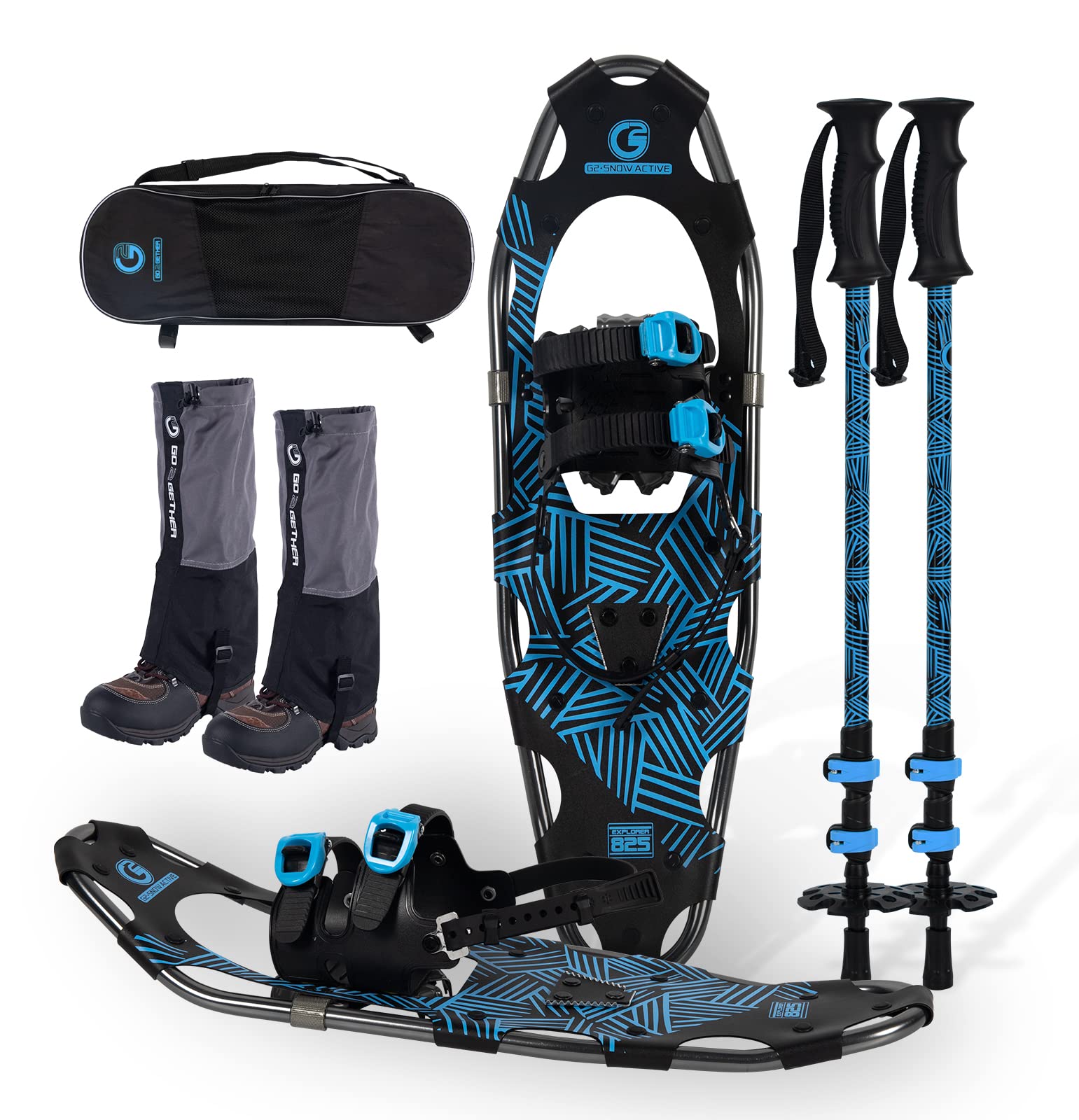
At this price, the G2 kit delivers a solid aluminum and HDPE frame with intuitive ratchet bindings. The included poles and gaiters are basic but functional for casual trails. However, the size range stops at 30 inches, and the deck lacks the EVA padding found on the top G2 model, making it less comfortable for extended days. This kit suits those new to snowshoeing or needing a low-cost setup for light use; it is not built for frequent or high-mileage outings.
Pros
- High-quality frame construction for the price.
- Easy-to-use ratchet bindings that adjust quickly with gloves on.
Cons
- Deck lacks EVA padding, reducing comfort on packed snow during longer hikes.
Best for beginners or occasional users who want a full kit without spending extra – the lack of padding and limited size range are acceptable tradeoffs for light, infrequent use.
Best for Recreational Moderate
Yukon Charlie’s Sherpa
Key Features
- Size / Weight Capacity: 25 in, 200 lbs
- Binding System: Quick Click II ratchet
- Weight per Pair: 4.2 lbs
- Price: $$
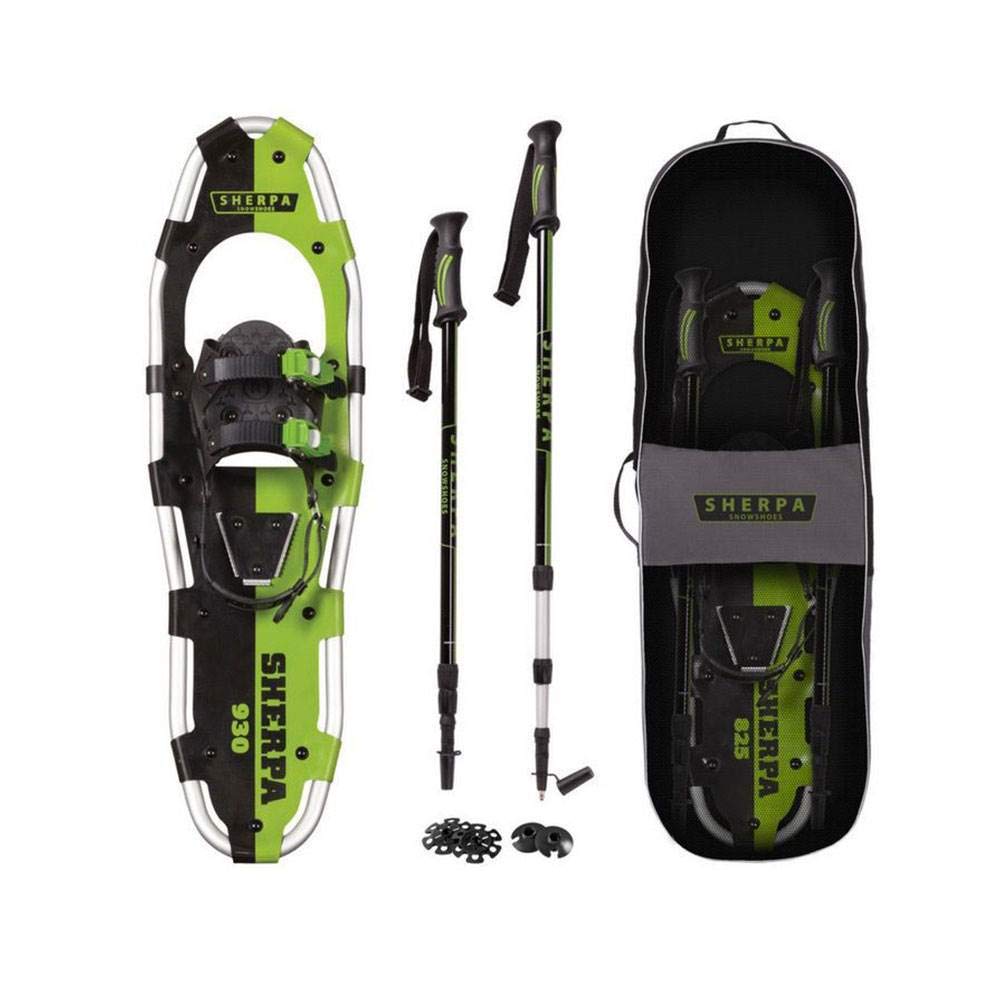
The Sherpa delivers solid construction and an intuitive ratcheting binding system that feels secure on moderate terrain. However, occasional fabric tearing has been noted, and the toe area may feel cramped with larger winter boots. This makes it a fair choice for light recreational use rather than aggressive backcountry travel.
Pros
- Sturdy alloy steel frame and HDPE deck hold up well on packed trails
- Quick Click II ratcheting bindings are intuitive and glove-friendly to adjust
Cons
- Fabric tearing or premature wear can occur under heavier use or deep snow conditions
For recreational snowshoers on moderate terrain who prioritize easy bindings over long-term durability, the Sherpa is a reasonable entry point.
Best for Recreational Trails
Tubbs Wayfinder
Key Features
- Size / Weight Capacity: 25 in
- Binding System: CustomWrap 2.0
- Price: $$
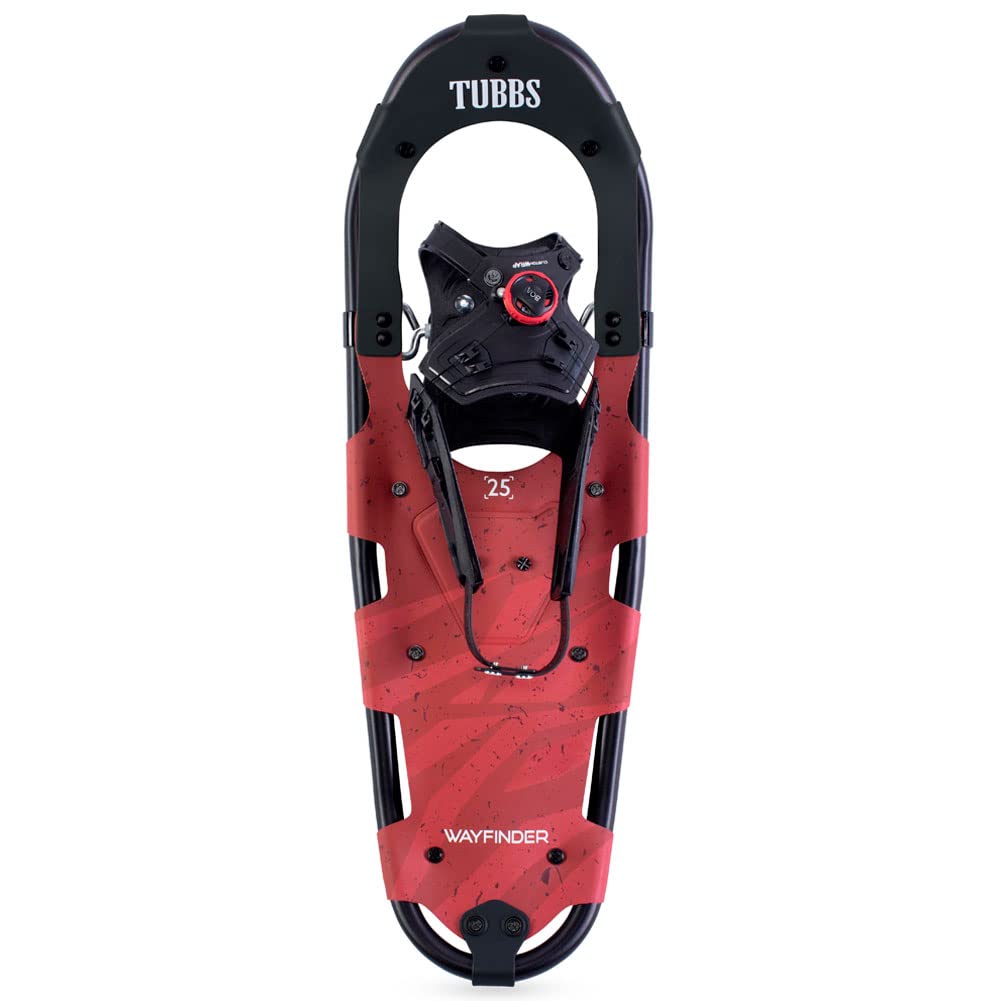
The CustomWrap 2.0 binding is exceptionally glove-friendly, and the build quality feels premium. However, the recreational-grade crampons lack the bite for steep or icy terrain — these are meant for flat, groomed trails.
Pros
- Exceptionally easy to put on and take off with a quick mounting system.
- Binding system fits comfortably without pressure points.
Cons
- The recreational crampons may lose grip on icy or steep sections — best on packed, flat snow.
For casual walks on groomed trails where ease of use matters more than traction, the Wayfinder is a comfortable, hassle-free option.
Best for Occasional Budget
G2 Snowshoes (Blue)

Key Features
- Size / Weight Capacity: 21-36 in, 250 lbs
- Binding System: Ratchet with EVA pad
- Price: $
The G2 snowshoes deliver a secure ratchet binding and padded EVA straps at a budget price. Build quality is decent for occasional use on packed snow. However, they are heavier than advertised and isolated breakage has been noted, making them best for short, infrequent trips rather than regular outings.
Pros
- Secure ratchet binding with EVA pad fits a range of boot sizes comfortably.
- Binding adjusts quickly and easily, even with gloved hands.
Cons
- The snowshoes are heavier than some alternatives, which may cause fatigue on longer walks.
A passable choice for short, occasional walks on packed snow when budget is the top priority, but not for longer trips or deeper conditions.
Best for Toddlers First
Tubbs Snowflake Kids

Key Features
- Size / Weight Capacity: 14 in, 50 lbs
- Binding System: 2-step hook & loop
- Weight per Pair: 2.2 lbs
- Price: $
For parents wanting to introduce their youngest to snowshoeing, the Tubbs Snowflake delivers a simple on/off binding and a deck length that keeps small steps stable. However, the narrow age and weight limits (best for 25-50 lbs) mean most kids outgrow it before age 6, making it a short-term investment.
Pros
- Easy hook-and-loop binding is glove-friendly and simple for toddlers.
- Lightweight plastic deck allows natural walking motion for small children.
Cons
- Growth window is tight; children over 40-45 lbs or ages 5+ may find it too small.
A solid starter for a season or two of family snow adventures, but plan to size up as your child grows.
Best for Casual Trail
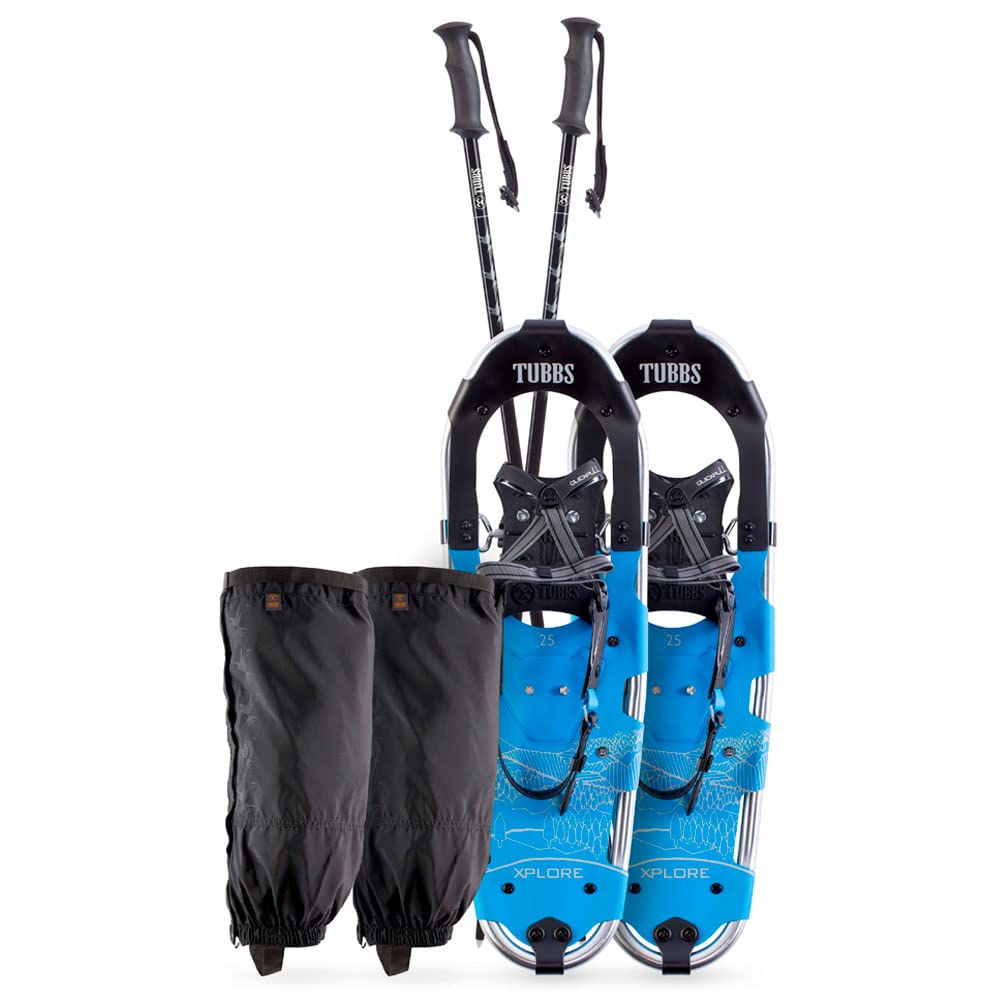
Tubbs Xplore Kit
Key Features
- Size / Weight Capacity: 30 in, 220 lbs
- Weight per Pair: 6.5 lbs
- Price: $$
The Tubbs Xplore Kit comes as a complete set with snowshoes, poles, and gaiters, backed by Tubbs’ warranty and brand reputation. However, without documented owner experiences, durability and binding reliability on snow are uncertain. This makes sense primarily for shoppers who trust the Tubbs name enough to buy sight unseen; anyone wanting confirmed performance should look at the top pick with a track record of user feedback.
Pros
- Full kit includes poles, gaiters, and bag out of the box.
- Tubbs brand carries a reputation for quality construction.
Cons
- With no user feedback available, long-term reliability on snow is untested.
Best for Tubbs loyalists who want a ready-to-go set without comparison shopping; otherwise, stick with options that have verified user experiences.
Best for Mountaineering
MSR Lightning Ascent

Key Features
- Size / Weight Capacity: 25 in, 220 lbs
- Binding System: Paragon contouring strap
- Weight per Pair: 4.33 lbs
- Price: $$$$
MSR’s Lightning Ascent uses 360° Traction Frames and DTX crampons for firm grip on icy slopes and traverses. The Paragon bindings wrap boots securely. MSR’s mountain gear reputation is solid, but the specialized design and premium cost mean this is best for serious backcountry travelers, not casual hikers.
Pros
- Extremely lightweight for a technical snowshoe at 4.33 lbs per pair.
- 360° Traction Frames and DTX crampons provide firm edge-to-edge grip on traverses and slopes.
Cons
- Aggressive crampons and stiff decking feel harsh on flat, packed trails – suited only for mountain terrain.
For mountaineers who need lightweight traction on steep snow, the Lightning Ascent is a capable tool. Others will find more practical options at lower cost.
How to Choose
The single most important buying insight: advertised ‘lightweight’ snowshoes can weigh over 5 lbs, so always check the actual weight per pair.
Size and Weight Capacity
Snowshoes are sized to support your total weight (body + gear). A shoe that is too small sinks in powder, creating drag; one that is too large is awkward on packed trails. Manufacturers provide a max weight rating for each size — match your weight plus pack weight to the nearest rating, not the size you think looks right.
Underestimating capacity leads to excessive post-holing, while oversizing adds unnecessary width and weight that tires you out on flat terrain.
Binding System
The binding is the part that holds your boot in place. Ratchet-style bindings (with a toothed strap that clicks tight) are the most user-friendly in cold weather because they don’t require fine finger work. Strap-only bindings rely on friction and can slip under load, especially when wet or icy.
A good binding should let you cinch down with one tug and release quickly. If you plan to adjust fit frequently (e.g., switching boots), look for a BOA dial or a quick-pull cord system.
Crampon Traction
Crampons are the metal teeth under the deck that bite into ice and hardpack. Deeper, sharper teeth made of steel grip better but add weight. Aluminum crampons are lighter but wear faster on rock. Full-length traction rails (from toe to heel) provide stable edging on sidehills, while toe-only crampons are adequate for flat trails.
For steep, icy terrain, look for aggressive, replaceable steel crampons. For recreational use, molded plastic teeth are sufficient but will not hold on black ice.
Weight per Pair
Every pound on your feet feels like five on your back over a long hike. Light snowshoes (under 4 lbs per pair) reduce leg fatigue and are easier to carry when not in use. Heavier models (5+ lbs) are more durable but can make every step feel like a lift.
The trade-off: lighter frames often use thinner aluminum or plastic decks that flex more and may crack under heavy loads. For day hikes on packed snow, light is fine. For carrying heavy packs off-trail, accept a few extra ounces for strength.
Included Accessories
Many budget kits include trekking poles, gaiters, and a carry bag to boost perceived value. In practice, these poles are often flimsy, with twist-lock mechanisms that slip after a few uses. Gaiters are usually functional but basic. The bag is a nice bonus for storage but rarely padded enough for air travel.
Focus on the snowshoe quality first. If the poles are poor, you can replace them later. A kit with decent snowshoes is a better buy than one with great accessories and mediocre snowshoes.
FAQ
Why do my snowshoes keep coming loose while hiking?
This usually happens because the binding system isn’t securing your boot firmly. Strap-type bindings are prone to loosening as you walk, especially in wet snow. Ratchet bindings hold tighter because they lock in place. To fix it, tighten each strap in sequence — heel first, then toe — and re-check after the first few steps.
Can I use snowshoes without the included trekking poles?
Yes, you can snowshoe without poles. Poles provide extra balance on uneven terrain and help you maintain a steady rhythm, but they are not required. If the included poles are low quality, you are better off using your own hiking poles or none at all.
How much should I spend on snowshoes for occasional use?
For a few outings a year on packed trails, a budget model between $60 and $100 will work fine. Look for aluminum frames and ratchet bindings in that range. Spending more than $150 is only necessary if you plan to tackle steep, icy terrain or carry heavy loads regularly.
Do heel lifts really help on steep climbs?
Yes, they reduce calf fatigue by raising your heel to a flatter position relative to the slope. This mimics a shorter stride and shifts the workload to your quads. Models with a built-in or strap-on heel lift are noticeably more comfortable on long ascents.