This post contains affiliate links. We may earn a small commission when you buy through our links — at no extra cost to you.
Waking up on a deflated pad in the middle of the night is a backpacker’s worst frustration. The promise of a comfortable inflatable often gives way to slow leaks and cold ground. Meanwhile, foam pads are nearly indestructible but leave side sleepers feeling every root and rock.
The real trade-off is between reliability and plush comfort. Foam won’t fail but offers little cushion; many inflatables lose air after a few trips. Your choice depends on how much risk you can tolerate and what temperatures you’ll face.
This guide focuses on the three specs that matter most: insulation (R-value), weight, and how well a pad holds air over multiple nights. The best pad is the one that won’t let you down halfway through a week-long hike.



Best for Ultralight Backpacking
Therm-a-Rest Z Lite
Key Features
- Type: Closed-cell foam
- Weight: 14 oz
- R-Value: 1.7
- Thickness: 0.75 in
- Price: $$
At 14 ounces and 0.75 inches thick, the Z Lite is a closed-cell foam pad that simply won’t leak or puncture – something no inflatable can promise. Its R-value of 1.7 provides adequate ground insulation for three-season use. The tradeoff is a firm sleeping surface that works best for back and stomach sleepers.
This pad suits ultralight backpackers who prioritize a bombproof shelter over plush comfort. Side sleepers will find the 0.75-inch foam insufficient for hard ground after a long night. For those who need a sit pad or extra insulation layer under an inflatable, the Z Lite fills that role without adding risk of deflation.
Pros
- Extremely durable foam construction – no punctures or leaks
- Lightweight and easy to carry on multi-day hikes
- Provides reliable insulation from cold ground for three-season use
Cons
- Thin cushioning may be uncomfortable for side sleepers on hard ground
The only sleeping pad that guarantees zero leaks at this weight and price – built for hikers who value dependability over cushioning.
Best for Cold-Weather Backpacking
Gear Doctors ApolloAir
Key Features
- Type: Inflatable insulated
- Weight: 17 oz
- R-Value: 5.2
- Thickness: 3.2 in
- Price: $$$
The Gear Doctors ApolloAir brings a 5.2 R-value to just 17 ounces — an insulation-to-weight ratio that outpaces most inflatable pads in its class. At 3.2 inches thick it offers genuine comfort for back and stomach sleepers, and the included pump sack gets it ready in under two minutes. This pad suits cold-weather backpackers who want serious warmth without bulk, though the 22-inch width may feel snug for broad-shouldered sleepers and some units can lose air gradually overnight — a tradeoff worth checking before multi-night trips.
Pros
- Exceptional warmth-to-weight ratio for sub-freezing trips
- Packs down to water bottle size at 17 ounces
- Comfortable 3.2-inch thickness supports most sleep positions
Cons
- Some units may need topping off during the night due to slow air loss
- The 22-inch width can feel restrictive for sleepers with broader shoulders
For cold-weather backpackers who value low weight and high insulation, the ApolloAir delivers — just be prepared to check air retention before relying on it for multiple nights.
Best for Warm-Weather Hiking
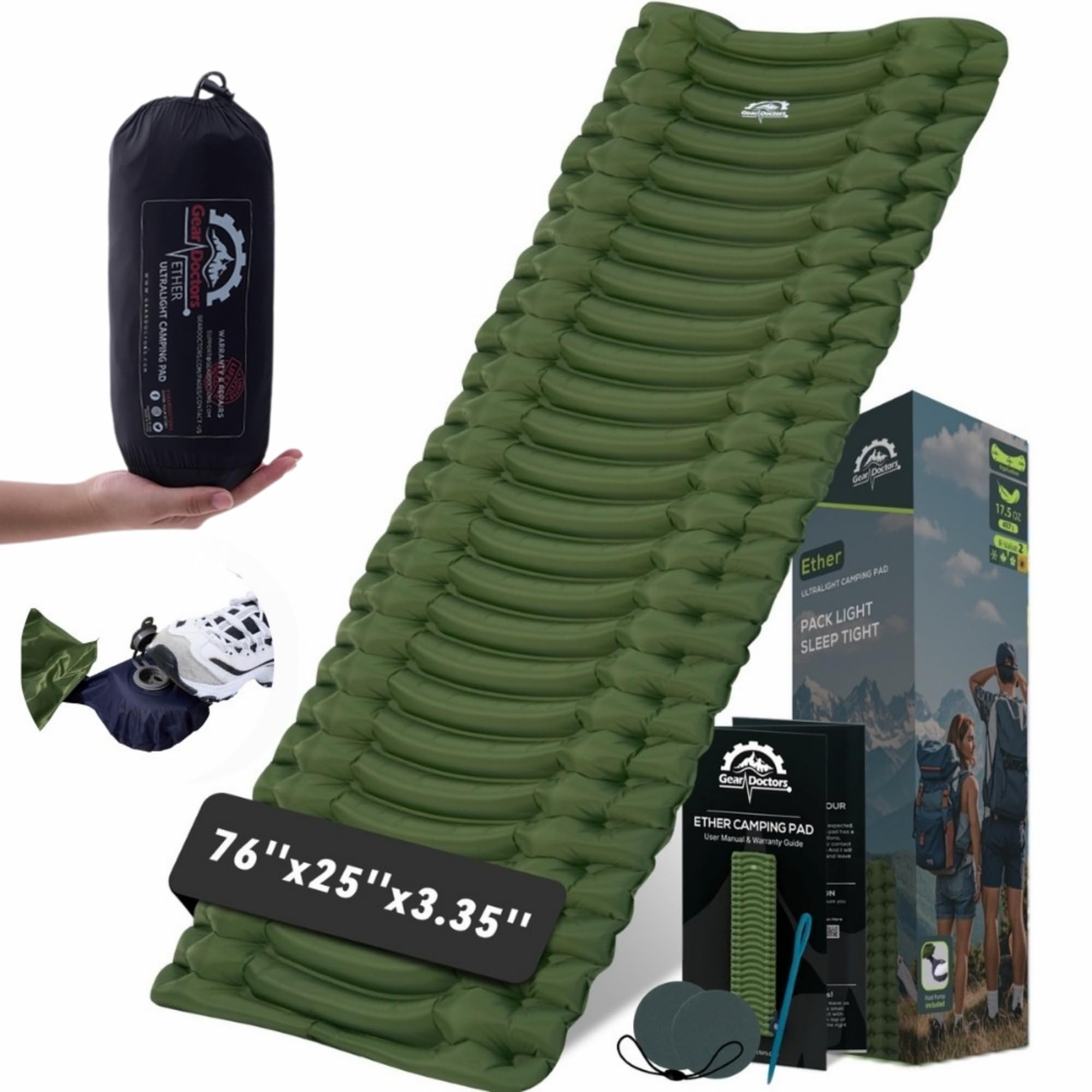
Gear Doctors Ether
Key Features
- Type: Inflatable (20D nylon)
- Weight: 17.5 oz
- R-Value: 2
- Thickness: 3.35 in
- Price: $
The Gear Doctors Ether delivers a 25-inch wide sleeping surface at just 17.5 ounces — rare at this price point. It includes a foot pump for easy inflation and offers good comfort for side sleepers.
This pad suits warm-weather hikers who want space without weight. The R-value of 2 means it loses heat quickly below 40°F, and some units may experience slow air loss over multiple nights. For summer trips where reliability is less critical, the tradeoff is acceptable.
Pros
- Ultralight at 17.5 oz with a generous 25-inch width.
- Easy inflation via included foot pump.
- Good value for the features offered.
Cons
- Low R-value (2.0) limits use to warm weather.
- Air retention can be inconsistent over time.
For warm-weather backpackers who value width and weight over cold-weather performance, the Ether delivers solid comfort at a fair price — just keep an eye on inflation during longer trips.
Best for Fast Setup
FUN PAC Foot Pump
Key Features
- Type: Inflatable foot pump
- Weight: 1.5 lbs
- Thickness: 3 in
- Price: $
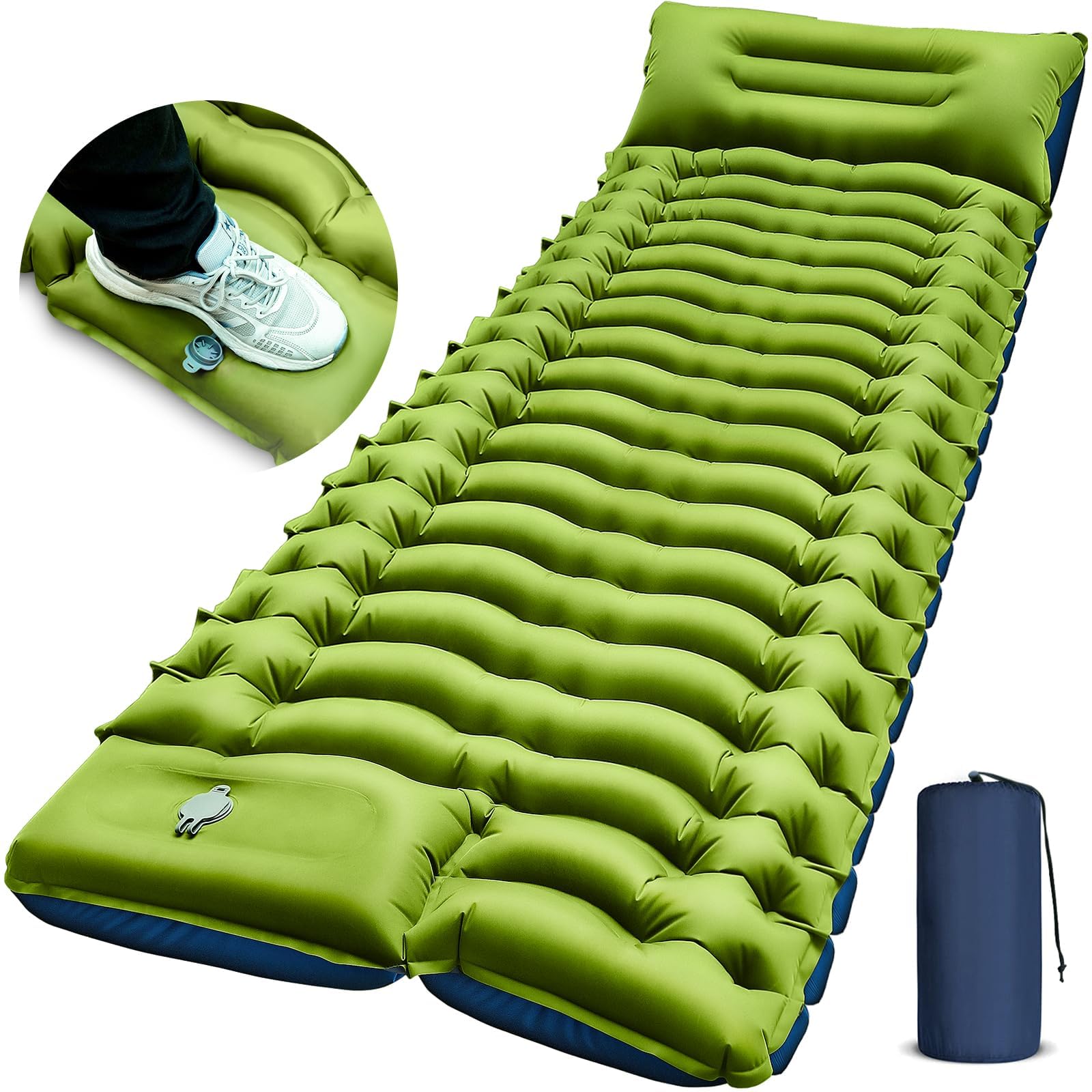
The built-in foot pump fills this pad in under a minute — no lung power needed — and the integrated pillow adds neck support for side sleepers. Thickness and cushioning work well for warm-climate camping, but the lack of any R-value means cold ground seeps through below 50°F. For backpackers who prioritize quick setup and lightweight packability over insulation, this pad delivers; compared to the width-focused budget alternative, it trades a few inches of width for a faster, easier inflation system and a pillow you cannot forget.
Pros
- Foot pump inflates the pad in 30–60 seconds without blowing into a valve.
- Three-inch thickness and firm support suit side sleepers well.
- Built-in pillow saves packing an extra item for neck support.
Cons
- No insulation — ground cold becomes noticeable below 50°F.
- Width can feel tight for some, limiting arm placement while sleeping on the back.
A warm-weather pad for backpackers who want instant inflation and a built-in pillow, but accept that it won’t insulate from cold ground and may feel narrow.
Best for Budget Ultralight
Sleepingo Ultralight
Key Features
- Type: Inflatable ripstop nylon
- Weight: 14.4 oz
- Thickness: 2 in
- Price: $
Sleepingo offers the smallest packed size and lowest price among ultralight pads. It’s best for budget-conscious backpackers camping above 50°F; the uninsulated design lets ground cold through, and air retention can vary between units. The simple valve makes setup quick, and the 2-inch thickness provides adequate cushion for most sleepers on soft ground. At 14.4 ounces, it’s competitive with foam pads but packs much smaller. For fair-weather trips where every ounce matters, this mat keeps your pack light without breaking the bank.
Pros
- Weighs 14.4 ounces and compresses to water-bottle size.
- Budget-friendly price lowers the barrier to ultralight gear.
- Straightforward valve enables fast inflation and deflation.
Cons
A smart choice for warm-weather backpackers who want to save weight and money — just check for slow leaks before longer trips.
Best for Premium Foam
NEMO Switchback
Key Features
- Type: Closed-cell foam
- Weight: 14.8 oz
- R-Value: 2.0
- Thickness: 0.75 in
- Price: $$
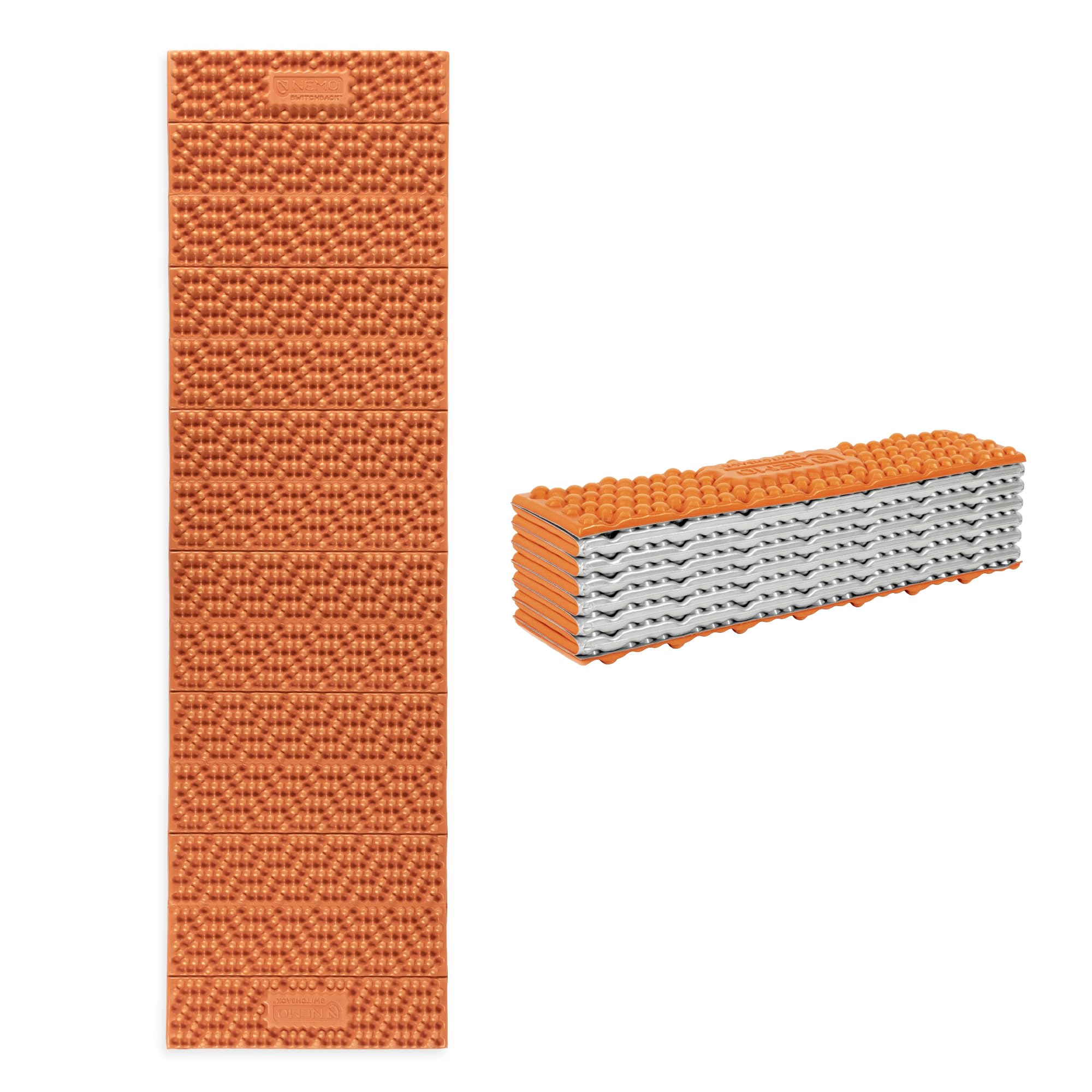
The NEMO Switchback improves on the classic accordion design by folding into a more compact shape (14.8 oz, 0.42 kg) while maintaining a 2.0 R-value for three-season insulation. Its closed-cell construction offers puncture-proof performance with no inflation or leaks. For backpackers who prioritize weight and packability over luxury, the Z Lite delivers essentially the same foam experience at a lower price. The Switchback’s firm 0.75-inch thickness also limits comfort for side sleepers, making it a better fit for back sleepers or as an insulating layer under an inflatable pad.
Pros
- Packs into a smaller folded size than comparable foam pads, saving space in a backpack.
- Reflective film boosts warmth retention for a foam pad of this thickness.
Cons
- Costs more than the Therm-a-Rest Z Lite for a similar foam experience.
Worth considering if you value a more compact folded size and slight warmth improvement over the Z Lite, and you are willing to pay a premium for those advantages.
Best for Insulated Lightweight
Klymit Static V Insulated

Key Features
- Type: Inflatable insulated
- Weight: 24 oz
- R-Value: 4.4
- Thickness: 2.5 in
- Price: $$$
This pad delivers good warmth for its weight and the V-chamber design provides genuine support for side sleepers. Inflation takes under 15 breaths. However, some units lose air overnight, which makes it risky for multi-night trips where a patch kit or backup is needed.
Pros
- Good insulation for a 24 oz pack weight — handles freezing conditions
- V-chamber design offers solid comfort for side sleepers
Cons
- Some pads can lose air overnight, requiring patching or reinflation
Best for short trips or car camping where a slow leak is manageable; not the first pick for multi-day backpacking.
Best for Self-Inflating Warmth
Gear Doctors Oxylus

Key Features
- Type: Self-inflating foam
- Weight: 35.2 oz
- R-Value: 4.3
- Thickness: 1.5 in
- Price: $$
The Gear Doctors Oxylus offers solid cold-weather insulation (keeps warm in 20°F) and self-inflates in minutes, making it a sensible pick for car camping or short backpacking trips. However, at 2.2 lbs, it is too heavy for ultralight backpackers who count every ounce.
Pros
- Warmth for 20°F conditions – foam core insulates well.
- Self-inflates quickly – just unroll and wait a few minutes.
Cons
- At 2.2 lbs, it is heavier than typical backpacking pads – a tradeoff for weight-conscious hikers.
Best for car campers or short backpacking trips where weight is not the primary concern.
Best for Wide Budget
AKSOUL Foot Pump

Key Features
- Type: Inflatable foot pump
- Weight: 1.87 lbs
- Thickness: 3.9 in
- Price: $
This pad offers generous width and thickness for side sleepers at a low price, with an easy foot pump. However, it lacks insulation (no R-value) and the crinkly material is noisy. Air retention can vary between units, which combined with the lack of insulation keeps it from the runner-up tier for three-season backpacking.
Pros
- Wide and thick – comfortable for side sleepers
- Easy inflation with built-in foot pump
Cons
- Air retention may be inconsistent; some units can lose pressure over time.
A suitable choice for warm-weather backpackers on a budget who prioritize width over insulation and don’t mind occasional noise.
Best for Extra Wide
TREKOLOGY UL140

Key Features
- Type: Inflatable foot pump
- Weight: 2.32 lbs
- Thickness: 4.9 in
- Price: $$
The TREKOLOGY UL140 offers a generous 30-inch width and 4.9-inch thickness that side sleepers will appreciate, with a built-in foot pump that inflates quickly. However, at 2.32 lbs and with no R-value, it’s too heavy and uninsulated for backpacking beyond short, warm-weather trips. The comfortable platform and easy inflation suit car camping or casual use where pack weight isn’t a concern.
Pros
- Very wide and thick – comfortable for side sleepers who need room to spread out.
- Built-in foot pump inflates quickly without lung effort.
Cons
- No insulation – feels cold in cool temperatures, limiting use to warm weather.
Best for car campers or day-hikers who prioritize a roomy, cushioned sleep surface and don’t mind carrying extra weight or staying in mild climates.
Best for Thick Lightweight
TREKOLOGY UL80

Key Features
- Type: Inflatable (40D nylon)
- Weight: 19.8 oz
- R-Value: 1.6-2
- Thickness: 4 in
- Price: $
The UL80 delivers uncommon thickness for its weight, making it a tempting budget pick for car campers or overnight hikers who prioritize plush comfort. That 4-inch height keeps hips off the ground, and the pack size is small enough for a backpack. However, air retention is inconsistent between units, and a pad that loses pressure overnight becomes a gamble on multi-day trips where reliable sleep matters. This works best for short, warm-weather outings where a patch kit and a backup plan are easy to manage.
Pros
- Thick 4-inch profile keeps hips off the ground for side sleepers
- Lightweight and packs down small for easy carry
Cons
- Air retention can be inconsistent — some units may lose noticeable air overnight
Worth a look for car camping or a single overnight where you can carry a patch kit and accept the risk.
How to Choose
The most important factor in a backpacking sleeping pad is not weight or thickness — it’s whether it stays inflated and provides the insulation you need for the temperatures you’ll face.
Weight and Packed Size
Every ounce saved means less strain on your back, but lighter pads often cut corners on insulation or durability. A 14-ounce foam pad takes up more volume than a compressed inflatable that fits in a water bottle pocket.
The trade-off: ultralight inflatables under 1.5 lbs typically use thin fabrics that are more prone to punctures. If you’re going off-trail or sleeping on rocky ground, a slightly heavier pad with thicker denier fabric is worth the extra grams.
R-Value (Insulation)
R-value measures how well a pad resists ground heat loss. A value of 2 is bare minimum for summer, 4+ keeps you warm at freezing, and 5+ handles sub-20°F nights. Many budget models skip R-value entirely, which means cold ground will steal your body heat faster than the air temperature suggests.
Don’t trust marketing terms like ‘3-season’ without a number. A pad with R-value 1.7 can feel cold on a 40°F night if you sleep still. For real three-season versatility, aim for R-value 3 or higher.
Thickness and Comfort for Side Sleepers
Side sleepers need at least 2.5 inches of thickness to keep hips and shoulders from hitting the ground. Foam pads at 0.75 inches provide almost no cushion, while inflatables can reach 4 inches or more.
But thickness alone isn’t enough — the internal baffle design matters. Inflatable pads with horizontal baffles let side sleepers sink into a comfortable cradle, while vertical baffles may cause a ‘log rolling’ effect. A wide pad (25+ inches) also helps keep arms on the mat.
Inflation Method
Mouth inflation is simple but introduces moisture into the pad, which can cause internal mold over time. Pump sacks and foot pumps eliminate that risk and save breath, but add a few ounces to your pack.
Self-inflating pads (foam core) are the most convenient: unroll and let them expand. They’re heavier and bulkier but need zero lung power. Foot pumps are a middle ground — fast, lung-free, and the pump adds minimal weight.
Durability and Air Retention
This is the hidden failure point for inflatables. Many budget pads lose air after a few nights due to pinholes or valve flaws. Foam pads never leak, but they compress over years of use.
If you choose an inflatable, bring a patch kit and a pump sack that doubles as a stuff sack. Pads with 40D or thicker nylon fabric resist punctures better than 20D. The most reliable option for multi-day trips is still closed-cell foam.
FAQ
Why does my inflatable sleeping pad deflate overnight?
The most common cause is a slow leak from a pinhole or valve issue. Check the valve first by inflating and submerging it in water. For pinholes, use a patch kit (most pads come with one). If the pad hisses after inflation, the leak is often at a seam or baffle. For trail fixes, duct tape or gear tape works temporarily.
What R-value sleeping pad do I need for 3-season backpacking?
For typical spring, summer, and fall temperatures (down to about 30°F), look for an R-value of 3 to 4. Pads with R-value 2 or less will feel cold below 50°F, especially on damp ground. If you camp in mountains where nights can dip below freezing, choose R-value 4 or higher.
Can I use a car camping sleeping pad for backpacking?
Generally no. Most car camping pads weigh 4 to 6 pounds and pack to the size of a small duffel. They’re too heavy and bulky for backpacking. Stick with pads under 2 pounds for multi-day trips. The exception is short, easy hikes — but even then, a dedicated backpacking pad is a better choice.
How to fix a leaking inflatable sleeping pad on the trail?
First find the leak: inflate the pad, listen for hissing, or run your hand near the seam. For small holes, apply a dab of seam grip or a patch from your repair kit. If you have no kit, a piece of duct tape or Tenacious Tape will hold for the rest of your trip. Always deflate before patching and let it cure for 10 minutes.