This post contains affiliate links. We may earn a small commission when you buy through our links — at no extra cost to you.
Walk into any camping aisle and you’ll see ‘self-inflating’ slapped on pads that are nothing more than air mattresses with a foot pump. True self-inflating pads use open-cell foam that draws in air when you open the valve. The difference matters for insulation, stability, and how long the pad holds up.
A solid foam pad with an R-value of 4 or higher keeps you warm through three-season trips, while an air-only pad leaves you cold on chilly nights. But thickness and weight trade off: a 4-inch pad sleeps like a dream but weighs over 6 pounds, ruling out backpacking.
This guide cuts through the labeling confusion to match you with a pad that actually self-inflates, insulates, and fits the way you camp — whether that means carrying it miles or hauling it to a drive-in site.


Best for Backpacking, 3-Season
Gear Doctors Oxylus
Key Features
- Thickness & R-Value: 1.5 in, R-4.3
- Weight & Packed Size: 2.2 lbs, compact
- Fill Material: Open-cell foam
- Price: Mid-Range
At 2.2 lbs with an R-value of 4.3, this pad delivers the insulation and comfort most three-season backpackers need without the bulk of thicker foam options. Its open-cell foam core inflates on its own in a few minutes — no huffing or pumping required — and the 1.5-inch thickness provides sufficient cushion for back and stomach sleepers on tent floors or packed snow.
This is a strong fit for backpackers and car campers who want a self-inflating pad that balances packability with ground insulation, especially those on a mid-range budget. Side sleepers may find the 1.5-inch profile less forgiving against hips and shoulders, and a small number of units have shown seam leaks over time — worth checking the pad before multi-day trips. For ultralight gram-counters or winter campers needing R-values above 5, lighter air pads or thicker insulated options make more sense.
Pros
- Comfortable and supportive for its thickness
- Self-inflates quickly with minimal effort
- Insulation suitable for spring through fall camping
Cons
- Heavier than ultralight competitors at 2.2 lbs — best for balanced backpacking loads
- Seam leaks can develop in some units after extended use
If you want a self-inflating pad that actually works without breaking the bank, this is the one to get — just check the seam before heading out.
Best for Budget Campers
KAMUI Connectable Pad
Key Features
- Thickness & R-Value: 2 in, R-5.7
- Weight & Packed Size: 3.5 lbs, moderate
- Fill Material: High rebound foam
- Price: Budget
The KAMUI uses a snap-together system that lets two pads form a double bed, a feature rare in self-inflating foam designs. At under $50, you get 2 inches of foam with an R-5.7 rating that handles three-season conditions comfortably.
This pad suits couples or families car camping on a budget who want a connected sleep surface without paying for a double mattress. Some units may develop foam delamination after extended use, so it is not a lifetime purchase. Also, the 2-inch thickness and R-5.7 fall short for winter camping below freezing.
Pros
- Snap-together connectors create a double bed from two pads
- Supportive foam with good three-season insulation
- Budget-friendly price for a self-inflating foam pad
Cons
- Foam can detach from the shell in some units after months of use
- Insufficient warmth for winter camping below freezing
A smart choice for couples who prioritize a shared sleeping surface and three-season warmth over long-term durability and winter performance.
Best for Winter Car Camping
Hikenture 4" Thick Pad
Key Features
- Thickness & R-Value: 4 in, R-9.5
- Weight & Packed Size: 6.5 lbs, bulky
- Fill Material: Memory + polyfoam
- Price: Mid-Range
At 4 inches thick and with an R-value of 9.5, this pad provides serious insulation and comfort for cold-weather car camping. The 80-inch length accommodates tall sleepers without feet hanging off. Inflation via the pump sack is straightforward, though some may need a few extra breaths to reach full firmness.
The tradeoff is bulk: at 6.5 lbs and a large packed size, this pad is strictly for vehicle-based trips. The outer fabric is thin enough that some owners report punctures after a season of use — a consideration for rocky campsites.
Pros
- Extremely comfortable for side and back sleepers on cold ground.
- Excellent warmth for winter camping with a 9.5 R-value.
- Easy inflation with included pump sack.
Cons
- Bulky and heavy — unsuitable for backpacking or carrying far from the car.
- Thin outer shell may develop punctures over time with rough terrain.
For car campers who sleep cold and want a thick, warm mattress, this pad delivers — just keep it away from sharp rocks and leave the hiking pole at home.
Best for Car Camping Convenience
OGERY Memory Foam Pad
Key Features
- Thickness & R-Value: 3.15 in, R-9.5
- Weight & Packed Size: 5.95 lbs, bulky
- Fill Material: Memory foam
- Price: Mid-Range
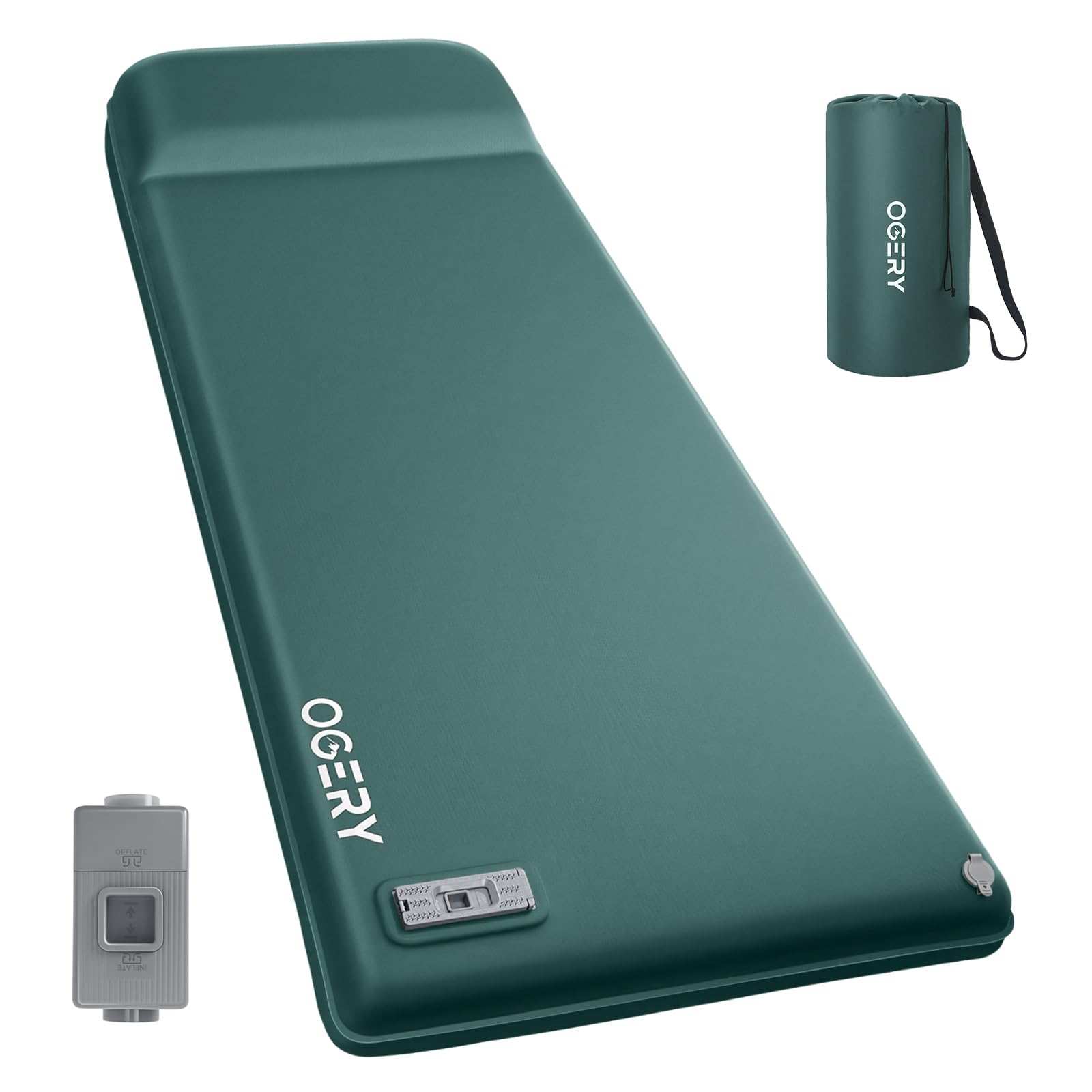
The OGERY self-inflating pad sets itself apart with a built-in USB-C rechargeable pump that inflates the 3.15-inch memory foam mattress in roughly 40 seconds — no manual effort required. The foam delivers a comfortable, quiet night’s sleep, and the R-9.5 rating ensures warmth in freezing conditions. A built-in pillow adds extra comfort.
This pad suits car campers and RV users who value electric-pump convenience and cold-weather insulation. At 5.95 pounds, it’s too heavy for backpacking, and the pump’s long-term durability remains unverified after extended use.
Pros
- Built-in electric pump inflates pad in 40 seconds with push-button ease.
- Memory foam provides a comfortable, quiet sleep surface.
- High R-value of 9.5 keeps you warm in cold weather.
Cons
- At 5.95 pounds, it’s too heavy for backpacking and adds bulk for car trunk space.
- Pump durability may vary over time; some units may experience issues.
For car campers who want electric-pump convenience and strong cold-weather insulation, the OGERY delivers. Just keep it in the vehicle and charge the pump before each trip.
Best for Budget Campers
KAMUI Connectable Pad
Key Features
- Thickness & R-Value: 2 in, R-5.7
- Weight & Packed Size: 3.5 lbs, moderate
- Fill Material: High rebound foam
- Price: Budget
Snap two KAMUI pads together for a double bed — a rare feature in budget self-inflating pads. The 2-inch foam and R-5.7 rating provide comfortable support for side sleepers in spring through fall. Over time, some units develop foam delamination where the core separates from the shell. Best suited for couples or families who use the pad occasionally for car camping and want a connectable surface without spending much.
Pros
- Snap-together design lets you join multiple pads into a double sleeping surface.
- Supportive 2-inch foam with R-5.7 keeps side sleepers comfortable in moderate conditions.
Cons
- Foam core can separate from the shell after months of use in some units.
A solid budget option for couples who need a double sleeping pad; worth checking foam integrity over time.
Best for Side Sleepers, Quality
Therm-a-Rest LuxuryMap

Key Features
- Thickness & R-Value: 3 in, R-6
- Weight & Packed Size: 3.25 lbs, moderate
- Fill Material: Foam
- Price: Premium
The LuxuryMap delivers plush, pressure-mapped foam and consistent R-6 insulation in a 3-inch self-inflating design. Its 20-inch width and premium price limit its appeal versus the Gear Doctors Oxylus for those needing more shoulder room or a lower cost.
Pros
- Pressure-mapped foam cushions hips and shoulders for side sleepers.
- R-6 insulation provides warmth for three-season camping.
Cons
- 20-inch width can feel restrictive for broad-shouldered or larger sleepers.
Best for average-sized side sleepers who value plush comfort and are willing to pay a premium for Therm-a-Rest build quality and pressure mapping.
Best for Luxury Car Camping
Therm-a-Rest MondoKing 3D

Key Features
- Thickness & R-Value: 4.25 in, R-7
- Weight & Packed Size: 4.38 lbs, bulky
- Fill Material: Urethane foam
- Price: Luxury
This luxury car camping pad offers plush 4.25-inch foam with 3D sidewalls for maximum usable space and an R-7 rating that keeps you warm in freezing conditions. The tradeoffs are its premium price, substantial packed size (26×10.3 inches, 4.38 lbs), and potential seam delamination in some units – it is strictly for vehicle camping where weight and cost are secondary to comfort.
Pros
- Extremely comfortable and thick – ideal for car campers wanting a bed-like sleep surface.
- High R-value of 7 provides reliable warmth for winter camping.
Cons
- High price and substantial packed size restrict use to vehicle camping.
For car campers who prioritize plush comfort and cold-weather insulation over budget and packability, this pad delivers unmatched luxury.
Best for Memory Foam Comfort
Elegear CumbreX

Key Features
- Thickness & R-Value: 3.15 in, R-9.5
- Weight & Packed Size: 8.1 lbs, very bulky
- Fill Material: Memory foam
- Price: Mid-Range
With 3.15 inches of memory foam and an R-value of 9.5, this pad delivers bed-like comfort and winter-grade insulation. The fabric stays quiet during movement. However, its 8.1-pound weight and bulky roll limit it to vehicle camping, and packing it back into the bag can be a struggle.
Pros
- Thick memory foam provides a bed-like sleep surface.
- High R-value keeps you warm in freezing temperatures.
Cons
- Deflating and rolling it back into the bag can be a struggle.
Suitable for winter car campers who don’t mind the extra weight and packing effort for the sake of comfort and warmth.
Best for Thick Budget Option
INVOKER 3.15" Pad

Key Features
- Thickness & R-Value: 3.15 in, R-8
- Weight & Packed Size: 6.6 lbs, bulky
- Fill Material: Foam
- Price: Mid-Range
The INVOKER offers thick 3.15-inch foam and R-8 warmth at a low price, with good shoulder support. Self-inflation may be inconsistent — some pads need manual topping off. Seam separation has been noted, and at 6.6 lbs it’s only for car camping. These issues put it behind more consistent competitors.
Pros
- Comfortable foam provides good shoulder support for side sleepers.
- Good value for a thick pad with high R-value.
Cons
- Self-inflation can be inconsistent; some units may not inflate fully without manual help.
Best for car campers on a tight budget who prioritize thickness and warmth over guaranteed self-inflation and long-term durability.
Best for Ultralight Budget
Sleepingo Ultralight Air Pad

Key Features
- Thickness & R-Value: 2 in, not rated
- Weight & Packed Size: 14.4 oz, compact
- Fill Material: Air
- Price: Budget
Extremely lightweight and compact at 14.4 oz, the Sleepingo inflates quickly by mouth and packs small, making it ideal for weight-conscious backpackers on a budget. However, it lacks foam insulation entirely and requires manual inflation, so it does not self-inflate and offers negligible ground insulation for cold weather.
Pros
- Weighs only 14.4 oz and packs very small
- Inflates and deflates quickly by mouth
Cons
- Manual inflation required — no self-inflating foam layer, so it needs blowing up by mouth or pump
Best for ultralight backpackers who prioritize weight over insulation and don’t need self-inflating convenience, but avoid if you want ground warmth or a pad that inflates on its own.
Best for Budget Backpackers
AKSOUL 3.9" Air Pad

Key Features
- Thickness & R-Value: 3.9 in, not rated
- Weight & Packed Size: 1.87 lbs, compact
- Fill Material: Air
- Price: Budget
This 1.87-lb pad inflates quickly via foot pump and provides a surprisingly comfortable 3.9-inch air mattress. The tradeoffs: no foam insulation (so cold ground penetrates) and the fabric crinkles noisily when you move — fine for summer trips but not for cold-weather camping.
Pros
- Surprisingly comfortable for an air pad
- Fast foot-pump inflation
Cons
- Crinkling fabric noise when shifting positions
Best for warm-weather backpackers who want a lightweight air pad at a low price and can accept the noise and lack of insulation.
Best for Double Air Pad
FNARMW Double Air Pad

Key Features
- Thickness & R-Value: 6 in, not rated
- Weight & Packed Size: 4.4 lbs, bulky
- Fill Material: Air
- Price: Budget
The FNARMW offers impressive 6-inch thickness and spacious double size, with a foot pump that makes inflation easy. However, it is an air-only pad, not a self-inflating foam pad, so it provides no ground insulation. Air retention is generally good, but isolated leak reports mean checking for defects before trips is wise.
Pros
- Very thick and spacious for two people
- Easy foot-pump inflation and deflation
Cons
- Not a true self-inflating pad – relies on foot pump and air-only construction
Best suited for car campers on a budget who prioritize thickness and double size over insulation and self-inflation.
Best for Basic Budget Foam
Clostnature Foam Pad

Key Features
- Thickness & R-Value: 1.5 in, R-4 est.
- Weight & Packed Size: 3.1 lbs, moderate
- Fill Material: Memory foam
- Price: Budget
This Clostnature pad offers an affordable memory foam sleep surface with decent user feedback. However, sparse product details — exact thickness, weight, and R-value vary by version — make it hard to compare against other self-inflating pads. It suits budget-conscious campers who prioritize price over spec certainty.
Pros
- Affordable memory foam pad with steady user satisfaction.
- Good option for hammock campers needing a lightweight foam pad.
Cons
- Missing detailed specs makes direct comparison with other pads difficult.
A decent choice if you want a basic, inexpensive foam pad and are willing to verify dimensions from the listing before buying.
Best for Extreme Cold, Car
Lost Horizon Air & Foam
Key Features
- Thickness & R-Value: 4.5 in, R-13
- Weight & Packed Size: 9 lbs, very bulky
- Fill Material: Foam
- Price: Premium
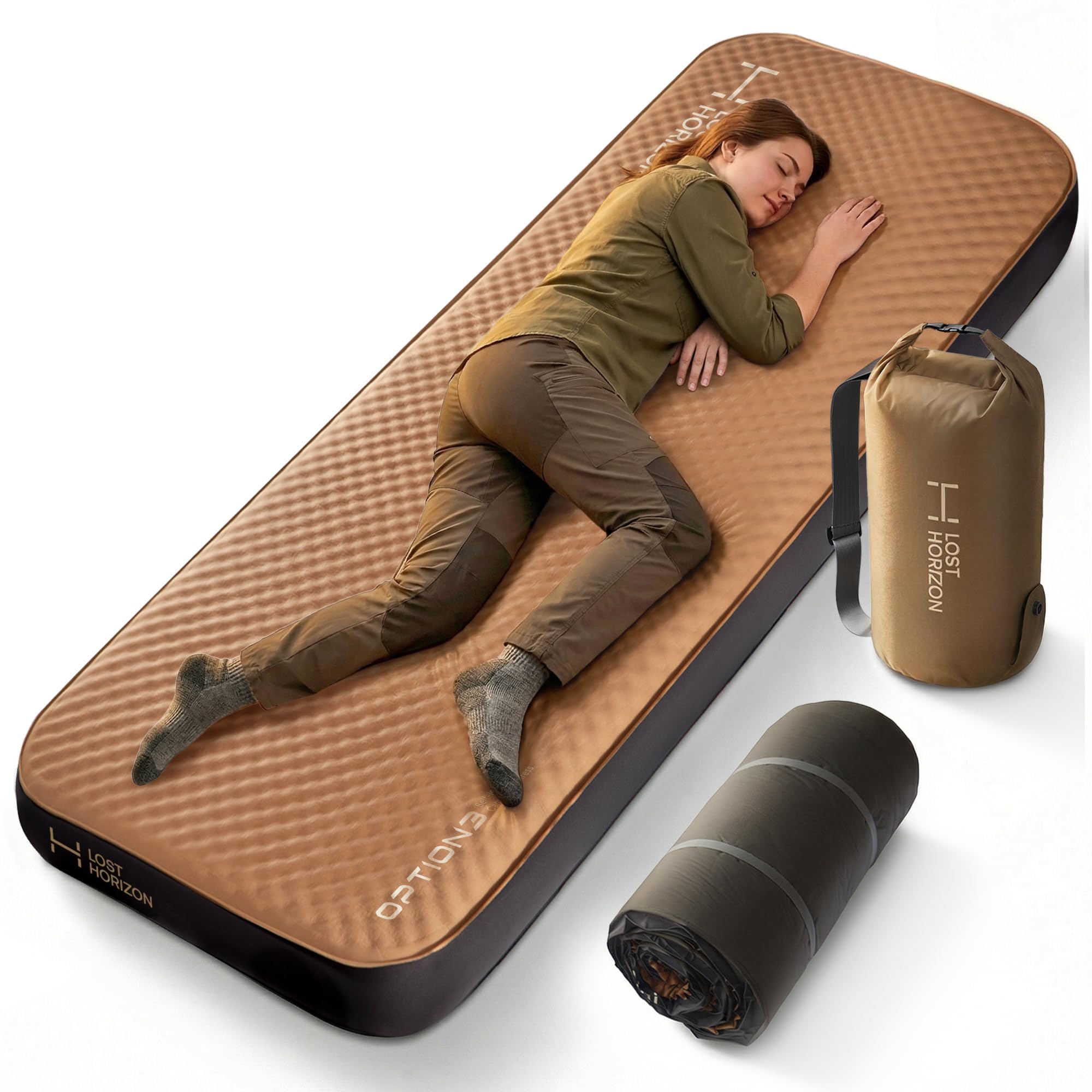
The Lost Horizon delivers a home-like 4.5-inch thickness and high R-13 insulation, with durable materials. The self-inflating foam core ensures comfort, but the 9-lb weight and difficulty deflating limit it to vehicle-based camping.
Pros
- Thick 4.5-inch construction provides home-mattress comfort.
- High R-13 insulation keeps you warm in freezing conditions.
Cons
- Weighs 9 lbs and packs large, limiting it to vehicle-based trips.
Best for car campers and winter campers who prioritize warmth over portability.
How to Choose
The most critical decision when buying a self-inflating sleeping pad is whether it actually contains foam — air-only pads don’t self-inflate and offer minimal ground insulation.
Thickness and R-Value
Thickness directly affects comfort: side sleepers need at least 3 inches to avoid hip pressure. R-value measures insulation — 4 or higher works for three-season camping, but winter campers should look for 8 or above. A thick, high-R pad often weighs significantly more, so your climate and carrying method should guide the trade-off.
Weight and Packed Size
Weight ranges from under 2 pounds for backpacking models to over 9 pounds for car-camping behemoths. Packed size follows the same curve: ultralight pads roll down to the size of a water bottle, while thick foam pads can fill a duffel bag. If you’re hiking more than a mile, keep the pad under 3 pounds.
Self-Inflating Foam vs Air-Only
True self-inflating pads contain open-cell foam that expands and draws air when the valve opens. Air-only pads (often labeled ‘self-inflating’ in marketing) require manual pumping or blowing. The foam adds insulation, stability, and quietness, but also weight and bulk. If the product description lists ‘air’ as the fill material, it won’t self-inflate.
Valve Design
A good valve lets air in quickly but seals tight when closed. Some pads use a one-way valve with a micro-adjustment for firmness; others rely on a simple pull-tab. Larger valves speed inflation but can be harder to seal. Look for a design that allows fine-tuning of air pressure without losing foam compression.
Durability of Shell and Straps
Foam pads are vulnerable to seam separation and shell punctures over time. Straps and buckles for rolling often break first, especially on budget models. A thicker outer fabric (e.g., 75D polyester) resists abrasion better than thin 30D nylon. Checking customer reviews for long-term failure patterns is more useful than trusting a brand’s warranty.
FAQ
Why does my self-inflating sleeping pad not fully inflate on its own?
Foam takes time to expand after being compressed, especially if stored rolled up for weeks. Open the valve fully and leave the pad out for 10–15 minutes. If it still doesn’t inflate, the foam may be damaged from repeated compression or the valve may need cleaning.
Can I use a self-inflating pad for backpacking or is it only for car camping?
Yes, but only lightweight models under 3 pounds. The Gear Doctors Oxylus and KAMUI connectable pad are two examples that balance weight and comfort. Anything above 4 pounds is best left for car or basecamp use.
What R-value do I need for cold weather camping in a tent?
For three-season camping (spring through fall), an R-value of 4 or higher is sufficient. For winter camping below freezing, aim for 8 or higher. Air-only pads have near-zero insulation, so foam is essential for cold weather.
How do I repair a leak in a self-inflating foam sleeping pad?
Inflate the pad fully, listen for hissing or submerge it in water to locate the puncture. Mark the spot, deflate, and apply a patch from a repair kit (included with many pads). For seam leaks, a seam sealer works better. If the foam itself is damaged, replacement is usually the only option.