This post contains affiliate links. We may earn a small commission when you buy through our links — at no extra cost to you.
Many rain jackets marketed as waterproof leave hikers wet — either from rain seeping through or from sweat soaking the interior. This is not about bad products, but about matching the jacket’s construction to the demands of the trail.
The difference lies in specifics: seam-sealed construction, a breathable membrane, and pit zips. A jacket that works for a quick city walk may fail on a sustained uphill hike.
For hikers, the choice is between a lightweight emergency shell and a technical jacket built for movement. Each has its place, but knowing the trade-offs saves you from buying a jacket that leaves you wet either way.



Best for Three-Season Backpacking
Marmot Precip Eco
Key Features
- Waterproof & Seams: Seam-taped membrane
- Weight & Pack: 305g, packs into pocket
- Hood Design: Adjustable, large
- Fit for Layers: Room for layers
- Price: Mid-Range
The Marmot Precip Eco delivers active ventilation via pit zips — a rare feature at this price — paired with a fully taped NanoPro membrane that sheds heavy rain and blocks wind. At 305g with a pocket-stow design, it packs down small enough for daypack backup or minimalist overnights.
This jacket suits hikers and backpackers who want a technical shell without the premium price tag. The hood is adjustable but runs large — those with smaller heads may find it floppy in windy conditions. Under sustained heavy use, some owners note that waterproofing can lose effectiveness over time; this is a three-season piece best rotated with other layers if you hike weekly in wet weather.
Pros
- Keeps you dry in rain and shields against wind
- Stows into its own pocket, saving pack space
- Offers pit zips and sealed seams at a competitive price
Cons
- Hood size may be generous for some head shapes
- Waterproofing can degrade with frequent heavy use
For hikers who prioritize breathability and packability without overspending, this shell handles three-season conditions with few compromises.
Best for Layering Shell
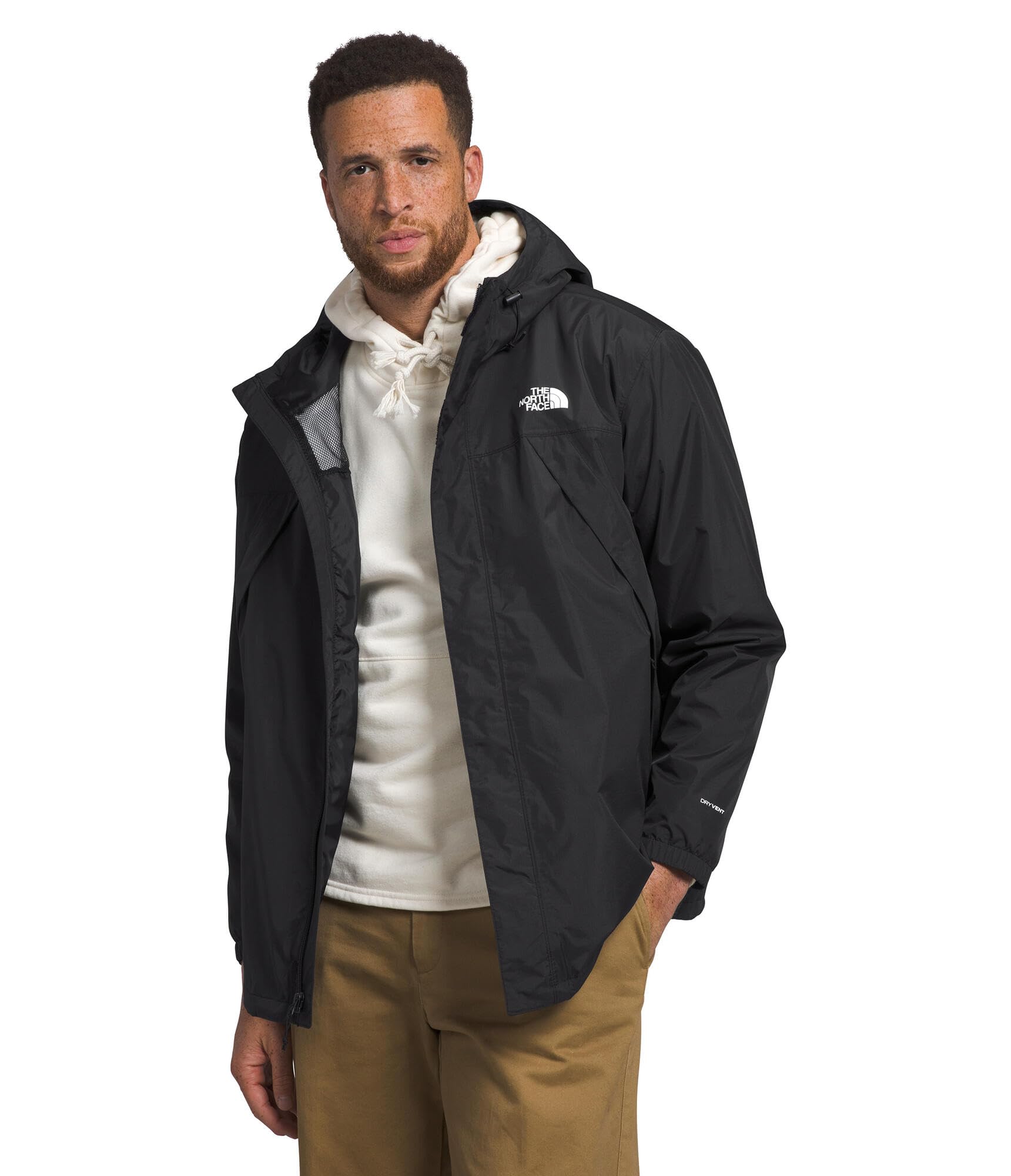
North Face Antora
Key Features
- Waterproof & Seams: DryVent, sealed seams
- Weight & Pack: Lightweight
- Hood Design: Adjustable
- Fit for Layers: Good for layering
- Price: Premium
Fully sealed DryVent construction keeps rain out even in sustained downpours. The Antora prioritizes waterproofing over ventilation — it has no pit zips, so breathability is limited during active use. This pure shell suits hikers who plan to layer and want maximum rain protection. The fit accommodates a mid-layer underneath, though sleeves can run long for some builds — trying on with intended layers is recommended.
Pros
- Waterproofing holds up in heavy rain
- Build quality stands up to repeated use
- Lightweight shell layers well under other gear
Cons
- Sleeves may be too long for shorter arms
For hikers who treat a rain shell as a long-term investment in wet-weather protection, the Antora delivers consistent performance without unnecessary features.
Best for Women Moderate Hikes
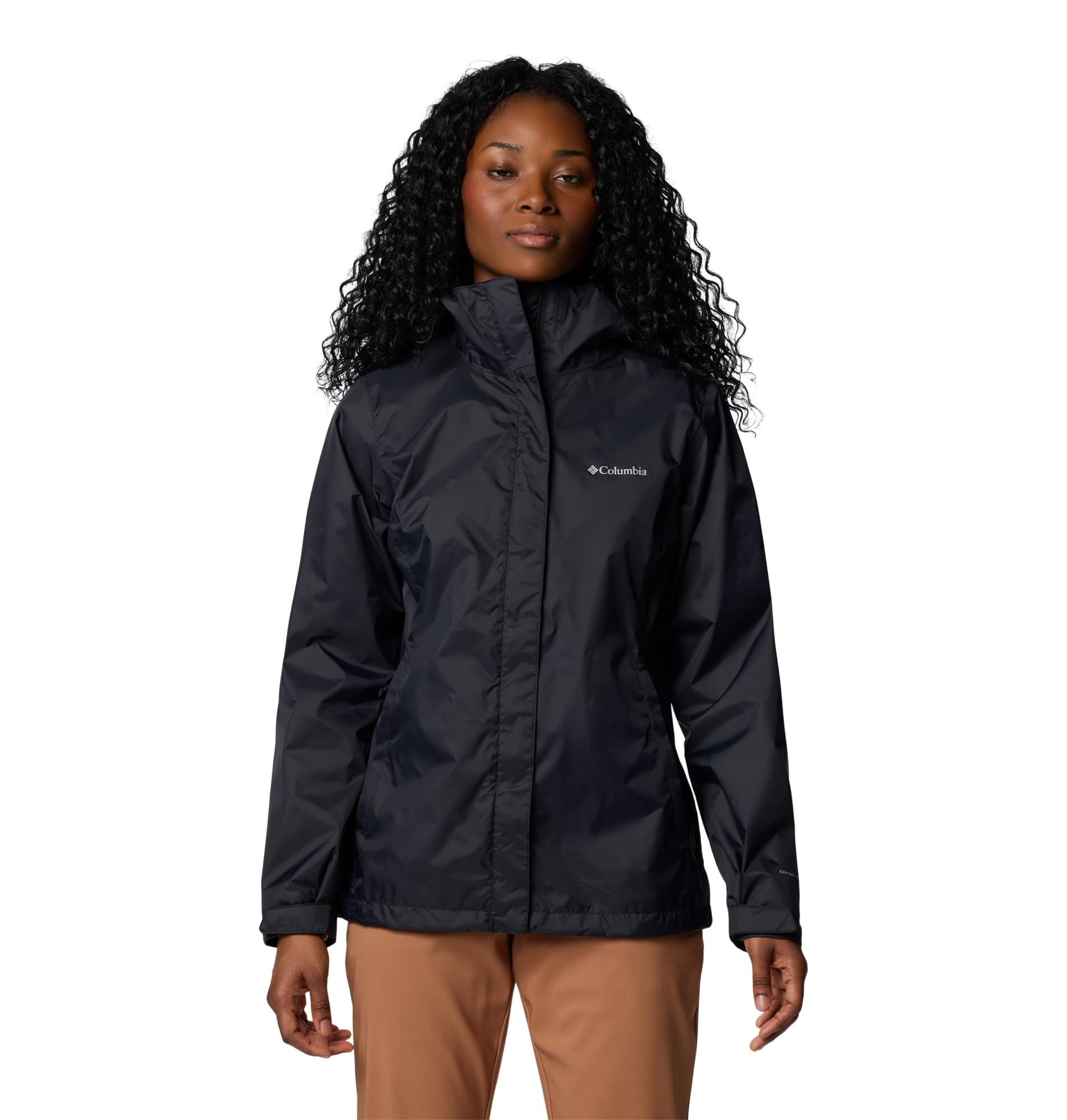
Columbia Arcadia II
Key Features
- Waterproof & Seams: Review-verified
- Weight & Pack: Lightweight, packable
- Hood Design: Adjustable, small
- Fit for Layers: Runs small
- Price: Mid-Range
The Columbia Arcadia II delivers reliable water resistance in a lightweight package that packs into its own pocket, making it easy to carry on day hikes. It prioritizes comfort and a flattering cut over technical features like pit zips, so breathability is limited during high exertion. Best for hikers who want a shell that works well in light to moderate rain and stows away when the sun returns. Sizing runs small — plan to go up one size if layering — and the hood may not cover fully in wind-driven rain, so it suits shorter trips or protected trails rather than exposed ridgelines.
Pros
- Water resistance holds up well in moderate rain
- Lightweight and packs into its own pocket for easy carry
- Flattering fit that suits many body types without feeling baggy
Cons
- Sizing runs small; hood may lack depth for full coverage in windy conditions
For hikers who want a packable, stylish rain jacket for moderate conditions and don’t mind sizing up, this Columbia delivers solid performance without breaking the bank.
Best for Diverse Conditions Use
HH Seven J
Key Features
- Waterproof & Seams: Review-verified
- Weight & Pack: Lightweight
- Hood Design: Adjustable
- Fit for Layers: Runs small, size up
- Price: Mid-Range
High-quality construction and consistent water and wind protection define the Helly Hansen Seven J Jacket. It uses durable materials that hold up over time, making it a lightweight shield for diverse hiking conditions. The fit runs trimmer than many competitors; sizing up allows for layering underneath. This jacket suits hikers who value Scandinavian heritage and want a shell that doubles as a windbreaker, but it is not intended for winter insulation or a very roomy cut.
Pros
- Durable construction and materials that hold up over time
- Effective water and wind protection for rainy hikes
Cons
- Sizing runs small; may need to size up for layering
A well-made rain shell that delivers on weather protection and durability, with the main caveat being its trim fit — best for hikers who prefer a slimmer cut and plan to size up for layering.
Best for Multi-Sport Active
baleaf Rain Jacket
Key Features
- Waterproof & Seams: Review-verified
- Weight & Pack: Lightweight, packable
- Fit for Layers: Runs small, athletic
- Price: Budget
This jacket’s reflective details and athletic cut suit hikers who cycle or run. It’s lightweight and handles light rain well, but the trim fit runs small — sizing up is advised — and breathability falls short during high-output effort. Best for those who want a single jacket for road and trail without overspending.
Pros
- Lightweight and comfortable for active use
- Good water resistance for light rain
- Versatile design with reflective elements for road and trail use
Cons
- For high‑intensity activities like running, breathability can lead to sweat buildup
For multi‑sport enthusiasts on a budget, this jacket handles light rain and road use well, but expect to size up and avoid heavy exertion.
Best for Budget Light Hikes
MOERDENG Rain Jacket
Key Features
- Waterproof & Seams: Most reviews verified
- Weight & Pack: Lightweight
- Hood Design: Removable
- Fit for Layers: Runs small, size up
- Price: Budget
The MOERDENG Rain Jacket offers a sharp-looking, lightweight design at an entry-level price, making it a strong value for casual hikers. It sheds light to moderate rain well enough for day trips, but the waterproofing can be overwhelmed during sustained downpours. Sizing runs small, so ordering one size up is a safe bet for a comfortable fit with layers underneath.
Pros
- Lightweight and comfortable for all-day wear
- Decent water resistance for light to moderate rain
- Attractive colors and a flattering cut
Cons
- Sizing runs small; may need to order up
- Waterproofing can give out in heavy, steady rain
For occasional, light-rain hikes, this is a stylish, low-cost option — just size up and save it for fair weather.
Best for Three-Season Use
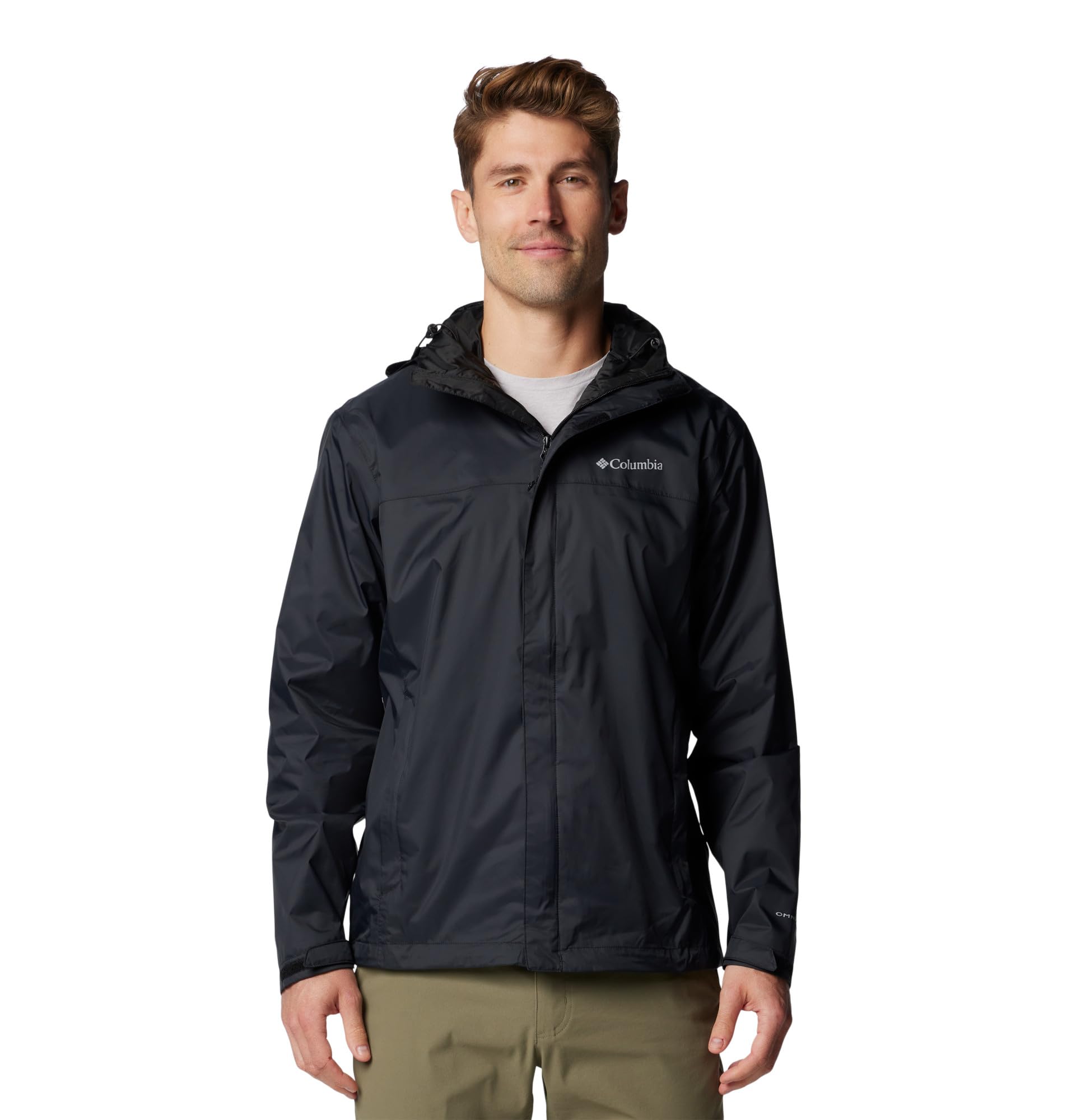
Columbia Watertight II
Key Features
- Waterproof & Seams: Yes
- Weight & Pack: Lightweight, packable
- Hood Design: Adjustable
- Fit for Layers: Roomy, runs large
- Price: Mid-Range
Solid waterproofing and lightweight packability define this Columbia shell at a mid-range price. Where it falls short next to the top pick is ventilation — no pit zips mean less breathability on active climbs, and the generous cut suits those who want room for fleece layers rather than a trim athletic fit.
Pros
- Waterproof and windproof shell keeps you dry in sustained rain.
- Lightweight design packs small for stashing in a daypack.
Cons
- Extra roomy cut and long sleeves may feel oversized for athletic builds, and the lack of pit zips limits airflow during high-output hikes.
For hikers who want a roomy cut for layering and a fair price, this Columbia shell performs — but active climbers will miss the pit zips of the top pick.
Best for Budget Casual Hikes
Diamond Candy Rain

Key Features
- Waterproof & Seams: Yes
- Weight & Pack: Lightweight
- Hood Design: Removable
- Fit for Layers: Runs small
- Price: Budget
This jacket delivers attractive colors, lightweight packability, and comfort for the price — ideal for casual day hikes or travel in light drizzle. Sizing runs small (size up) and waterproofing may not hold in sustained downpours, making it a fair-weather pick rather than a serious hiking shell.
Pros
- Lightweight and packable for convenient travel and storage.
- Stylish color options with a comfortable fit for everyday wear.
Cons
- Sizing runs small; those between sizes may need to size up for a proper fit.
A solid option for budget-minded hikers and travelers who stick to light rain and prioritize style and weight over all-weather durability.
Best for Emergency Shell
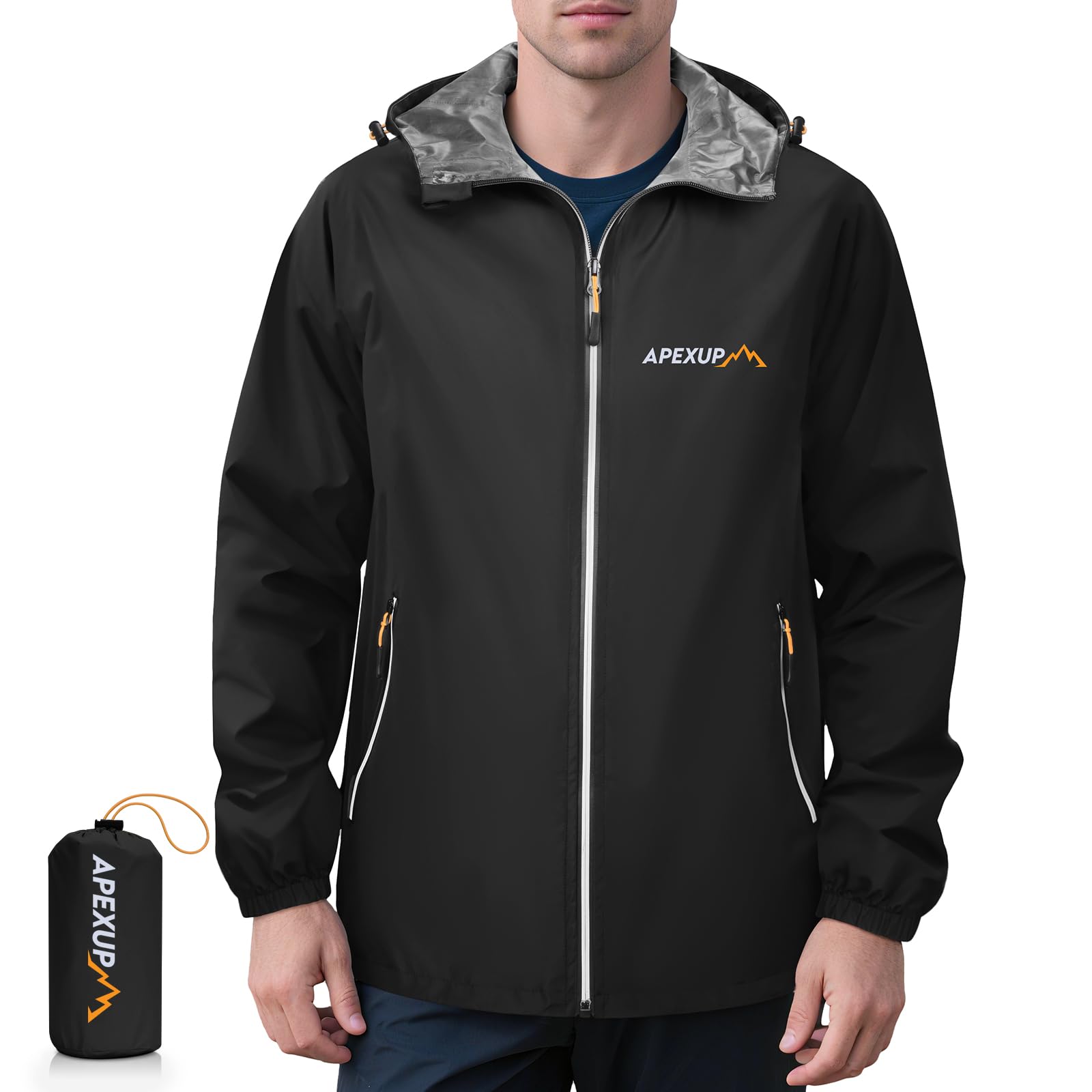
APEXUP Rain Jacket
Key Features
- Waterproof & Seams: Yes
- Weight & Pack: Lightweight, carry bag
- Fit for Layers: Accurate fit
- Price: Budget
This jacket offers impressive value for its price: it’s lightweight, packs into its own pocket, and features reflective zippers for visibility. However, it lacks ventilation and won’t hold up to sustained rain, making it best as an emergency shell for cyclists or light use rather than a primary hiking jacket.
Pros
- Exceptional value at a low price point
- Lightweight and packs into a small carry bag
Cons
- Breathability is poor; during active use the interior becomes sweaty and uncomfortable
Suitable as a budget emergency backup for cyclists or light drizzle, but not for hikes where rain is expected.
Best for Travel Light Rain
33,000ft Rain Jacket

Key Features
- Waterproof & Seams: Seam sealed
- Weight & Pack: Lightweight, pouch
- Hood Design: Adjustable, stowable
- Fit for Layers: True to size
- Price: Budget
This women’s rain jacket packs into a tiny pouch, has an adjustable stowable hood, and seam-sealed seams at a budget-friendly price. It handles light rain for golf, travel, or casual hikes. However, it is water-resistant rather than fully waterproof, so sustained downpours will wet it out. Ideal for hikers who want a compact backup shell rather than a primary rain layer.
Pros
- Lightweight and packable
- Good water resistance for light rain
Cons
- Not suitable for heavy rain; only water-resistant
Works as a compact travel jacket for light drizzle, golf, and casual walks, but not for hiking in sustained rain.
Best for Golf/running Light
Outdoor Ventures Pullover

Key Features
- Waterproof & Seams: Water-resistant
- Weight & Pack: Lightweight, pouch
- Price: Budget
Weighing almost nothing and stowing in its own pouch, this pullover works as a light rain layer for golf, running, or tossing in a daypack in case of a shower. The water resistance handles drizzle and brief rain, but sustained wet weather will soak through. Breathability is limited by the pullover design, so it can feel clammy during active use. Skip this for serious hiking and look for a full-zip jacket with better ventilation and waterproofing.
Pros
- Packs into a small pouch for easy storage
- Budget-friendly price for occasional rain coverage
Cons
- Not waterproof; water resistance can fail in sustained rain
A decent emergency layer for light use, but not the right choice for hikers expecting real rain.
Best for Emergency Travel
Columbia Glennaker II

Key Features
- Waterproof & Seams: Water-resistant
- Weight & Pack: Lightweight, pocket
- Hood Design: Stowable
- Fit for Layers: Comfortable layers
- Price: Budget
The Columbia Glennaker Lake II is a lightweight windbreaker that packs into its own pocket for travel emergencies. It fits comfortably over a base layer and comes from a well-known brand. But it is only water-resistant — in moderate rain it wets through — so it is an emergency shell for dry climates, not a hiking rain jacket.
Pros
- Lightweight and easy to pack
- Good value for a known brand
Cons
- Not fully waterproof; may wet through in moderate rain
Best as a packable emergency shell for light drizzle or dry-climate travel, not for hiking in rain.
Best for Light Rain Casual
OTU Rain Jacket

Key Features
- Waterproof & Seams: Mixed reviews
- Weight & Pack: Lightweight
- Hood Design: Adjustable brim
- Fit for Layers: Good fit
- Price: Budget
This jacket offers great value with its lightweight, breathable fabric, good fit, and stylish look for light rain and casual wear. However, its water resistance is inconsistent; wetting through during sustained downpours has been noted, which limits it to backup or fair-weather use rather than primary hiking.
Pros
- Lightweight and breathable fabric for active wear.
- Good fit and sleeve length for comfortable layering.
Cons
- Inconsistent water resistance; can wet through in sustained heavy rain.
Best as a cheap backup shell for light rain or travel, not a primary hiking jacket for wet conditions.
Best for Urban Trail Use
HH Dubliner

Key Features
- Waterproof & Seams: Yes
- Weight & Pack: Lightweight lined
- Fit for Layers: Runs small
- Price: Premium
High-quality construction and integrated warmth make this a comfortable choice for cool-weather wear in town or on easy trails. The waterproof and windproof fabric handles steady rain, but it is heavier than a typical hiking shell and does not pack small. Sizing runs very small — buying at least one size up is necessary for layering.
Pros
- Warm lining provides comfort in cool weather without needing extra layers.
- Sturdy build and reliable weather protection for daily use.
Cons
- Fits very small; ordering a size larger than usual is required for any layering.
Best for someone who wants a durable, warm rain coat for commuting or light trail use and is willing to size up significantly.
Best for Budget Short-Term
GIISAM Rain Jacket

Key Features
- Waterproof & Seams: Claimed, unreliable
- Weight & Pack: Lightweight
- Hood Design: Small
- Price: Budget
Lightweight and decent-looking for the price, with short-term water resistance in light drizzle. But the zipper can break, seams may tear, and the fabric soaks through in sustained rain — core reliability issues that make it a poor choice for hiking.
Pros
- Lightweight design and attractive styling.
- Offers some water resistance for brief exposure to light rain.
Cons
- Zipper can become stuck or separate after limited use.
Only for budget-constrained buyers who need a short-term windbreaker for fair weather, not for hiking or rainy conditions.
How to Choose
The difference between a jacket that keeps you dry and one that leaves you soaked is often in the seams and zippers, not the fabric alone.
Waterproofing and Seam Sealing
A jacket’s waterproof rating tells you how much water pressure it can handle before leaking. But in practice, seams are the weak point: untreated stitching creates thousands of tiny holes where water seeps through.
Fully seam-taped construction seals these holes with a waterproof membrane. Without it, even a high-rated fabric will fail in steady rain. Look for 100% seam sealing if you plan to hike in sustained downpours.
Breathability and Venting
Breathability determines how fast moisture vapor from sweat escapes. A jacket that doesn’t breathe turns into a personal sauna, leaving you as wet from perspiration as from rain.
Pit zips provide an instant vent for high-output hiking, releasing heat without compromising waterproofing. Membranes like Gore-Tex or NanoPro offer better breathability but often cost more.
Weight and Packability
Weight matters when your rain jacket lives in your pack all day, not just when it’s raining. A 300-gram shell packs smaller and adds less burden than a 500-gram one.
Packability is about how tightly the jacket compresses. Models that stuff into their own pocket save space but may sacrifice features like pit zips or a sturdy hood.
Hood Design
A hood that flops or slips off is more frustrating than no hood at all. Look for an adjustable brim, drawcords, and enough volume to fit over a climbing helmet if you use one.
Some hoods are cut close to the face for visibility, others are roomy for layering. Try on with a hat or helmet to ensure it stays put when you turn your head.
Layering Room and Fit
Rain jackets are outer layers, so they need to fit over a fleece or insulating layer without restricting movement. A trim athletic fit may limit layering, while a roomy cut can flap in the wind.
Most brands run differently: Columbia tends to be roomier, while Helly Hansen and baleaf fit smaller. Always size up if you plan to wear more than a T-shirt underneath.
FAQ
Why does my rain jacket leak at the seams after a few months?
Seams are the Achilles’ heel of any rain jacket. Even if the fabric is waterproof, the stitching creates tiny holes that leak without proper seam tape. Over time, the tape can peel or crack from washing and friction. To extend the life, wash with a technical cleaner and re-apply DWR coating annually.
Can a lightweight rain jacket handle a downpour on the trail?
It depends on the construction. Lightweight jackets like the Marmot Precip Eco or North Face Antora with fully sealed seams and a high-performance membrane can handle heavy rain for hours. Ultralight emergency shells with no seam taping will wet through quickly. Check for seam-sealed construction and a waterproof membrane before relying on it in a storm.
How do I know if a rain jacket is breathable enough for hiking?
Look for two things: a breathable membrane (like NanoPro or DryVent) and pit zips. Pit zips allow you to dump heat instantly without unzipping the jacket. If a jacket lacks pit zips and has no venting, expect it to feel clammy during uphill sections. Reviews often mention sweating if breathability is poor.
Should I size up in a rain jacket to wear a fleece underneath?
Yes, if you plan to layer. Most rain jackets are designed as shells and assume a thin base layer. Sizing up gives room for a fleece or puffy without restricting arm movement. Check user reviews: many brands like Helly Hansen and baleaf run small, while Columbia runs large. A good rule is to try on with your typical mid-layer.