This post contains affiliate links. We may earn a small commission when you buy through our links — at no extra cost to you.
A rain jacket that wets out after 30 minutes is not waterproof. Yet many budget shells labeled ‘waterproof’ rely on a simple DWR coating that fails in sustained rain. The real protection comes from a sealed membrane and taped seams — a feature absent on most jackets under $40.
This guide focuses on jackets that pass the real-world test: seam-taped construction, breathability for active use, and a weight that won’t weigh down your pack. We cover everything from premium shells with pit zips to budget options that still handle light drizzle. No hype, just the specs that matter.
Whether you’re a day hiker, a commuter, or a weekend backpacker, the right jacket is the one that matches your rain exposure and activity level. Here we sort through the options to find the best fit for your needs.




Best for Hiking, Backpacking
Marmot Precip Eco Jacket
Key Features
- Waterproofing: Seam-taped NanoPro
- Weight & Packability: 305g, packs into pocket
- Hood Design: Adjustable, stowable
- Venting: Pit zips
- Pockets: 2 zippered hand
- Price: Mid-Range
The Marmot Precip Eco delivers genuine waterproofing with fully taped seams and a NanoPro membrane that moves moisture well enough for hiking and commuting. Underarm pit zips add ventilation when you’re working hard, and the jacket packs into its own pocket, making it easy to stash in a daypack or suitcase. At 305 grams, it’s light enough to wear as a daily layer without feeling bulky.
This jacket suits hikers, travelers, and daily commuters who want a breathable rain shell without the premium price of Arc’teryx or Patagonia. The tradeoff is that the DWR finish can lose effectiveness over time — periodic reapplication keeps water beading as expected. For those comfortable with occasional maintenance, this is a lightweight, feature-rich shell that competes with jackets costing twice as much.
Pros
- Waterproof construction with sealed seams and pit zips for active use
- Lightweight and packs into its own pocket for easy travel carry
- Feature set (pit zips, adjustable hood) at a mid-range price that undercuts premium shells
Cons
- DWR coating may require reapplication after extended use to maintain water repellency
- Hood can be roomy and feel oversized for those with smaller or average head sizes
For anyone needing a genuinely waterproof, breathable jacket for hiking or daily errands without spending over $150, this Marmot does the job — just budget a few minutes each year to refresh the DWR.
Best for Hiking, Travel, Commute
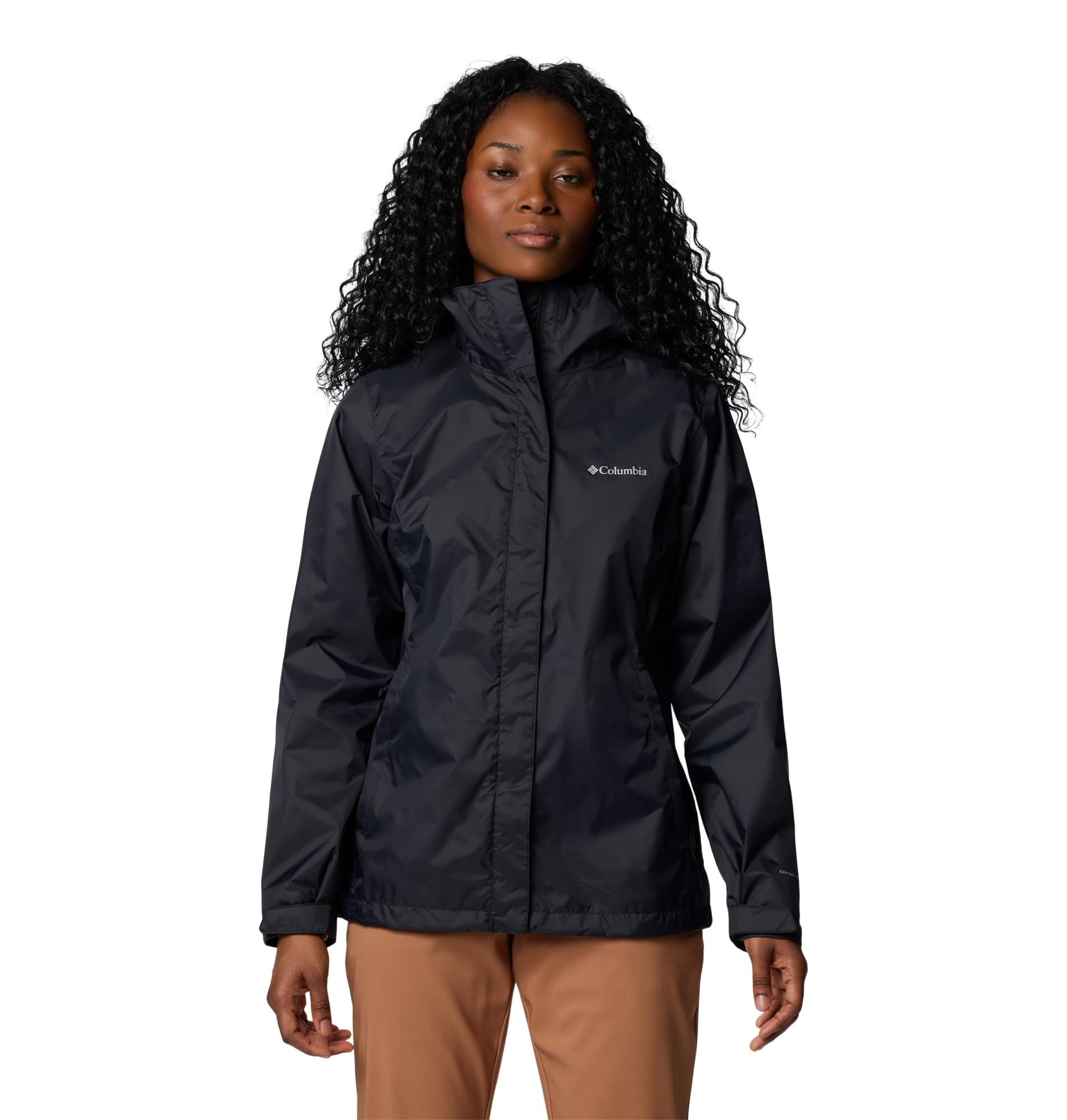
Columbia Women’s Arcadia II
Key Features
- Waterproofing: Seam-taped Omni-Tech
- Weight & Packability: Packs into pocket
- Hood Design: Adjustable, stowable
- Venting: Mesh lining
- Pockets: 2 zippered hand
- Price: Mid-Range
The Columbia Arcadia II delivers reliable waterproofing with its seam-taped Omni-Tech membrane at a cost that undercuts many similarly protected shells. It packs into its own pocket, making it a practical companion for commuting, hiking, and travel. The hood can be small for some and may not stay put in wind, while the chest area runs snug for women with larger busts. This jacket suits those who want a straightforward, packable rain shell without extra features like pit zips, and who are comfortable checking the fit in the chest and head coverage.
Pros
- Seam-taped construction keeps you dry in steady rain
- Folds into its own pocket for easy packing and travel
- Mid-range price for a recognized outdoor brand with waterproof protection
Cons
- Hood may be too small to cover fully in windy rain
- Chest area can feel tight for women with larger busts
A practical, packable rain shell for everyday use, travel, and light hiking – but check the hood coverage and chest fit before buying.
Best for Hiking, Biking, Daily
Helly Hansen Seven J Jacket
Key Features
- Waterproofing: Helly Tech membrane
- Weight & Packability: Lightweight, mesh
- Hood Design: Adjustable, roll-away
- Pockets: 2 zip hand, 1 chest
- Price: Mid-Range
The Helly Hansen Seven J Jacket uses a burly Helly Tech membrane and robust construction that holds up over years of regular wear — a clear contrast with the lighter, vented Marmot Precip Eco. It delivers dependable waterproof protection in sustained rain and snow, making it a solid choice for hiking, commuting, and daily errands. This jacket suits buyers who prioritize longevity over pack weight and don’t need pit zips for high-output activities. However, the fit runs small — most wearers need to go up one size for layering — and the lining at the arm cuffs can occasionally pull out when pulling the jacket on.
Pros
- Sturdy build that lasts years without losing waterproofing
- Keeps you dry in steady rain and snow
- Looks good for both trail and town
Cons
- Lining at arm cuffs can pull out when putting on the jacket
- Runs small; sizing up is needed for layering
A durable rain shell for those who value long-term performance over weight savings — just plan to size up and skip high-intensity outings.
Best for Hiking, Climbing, Outdoor
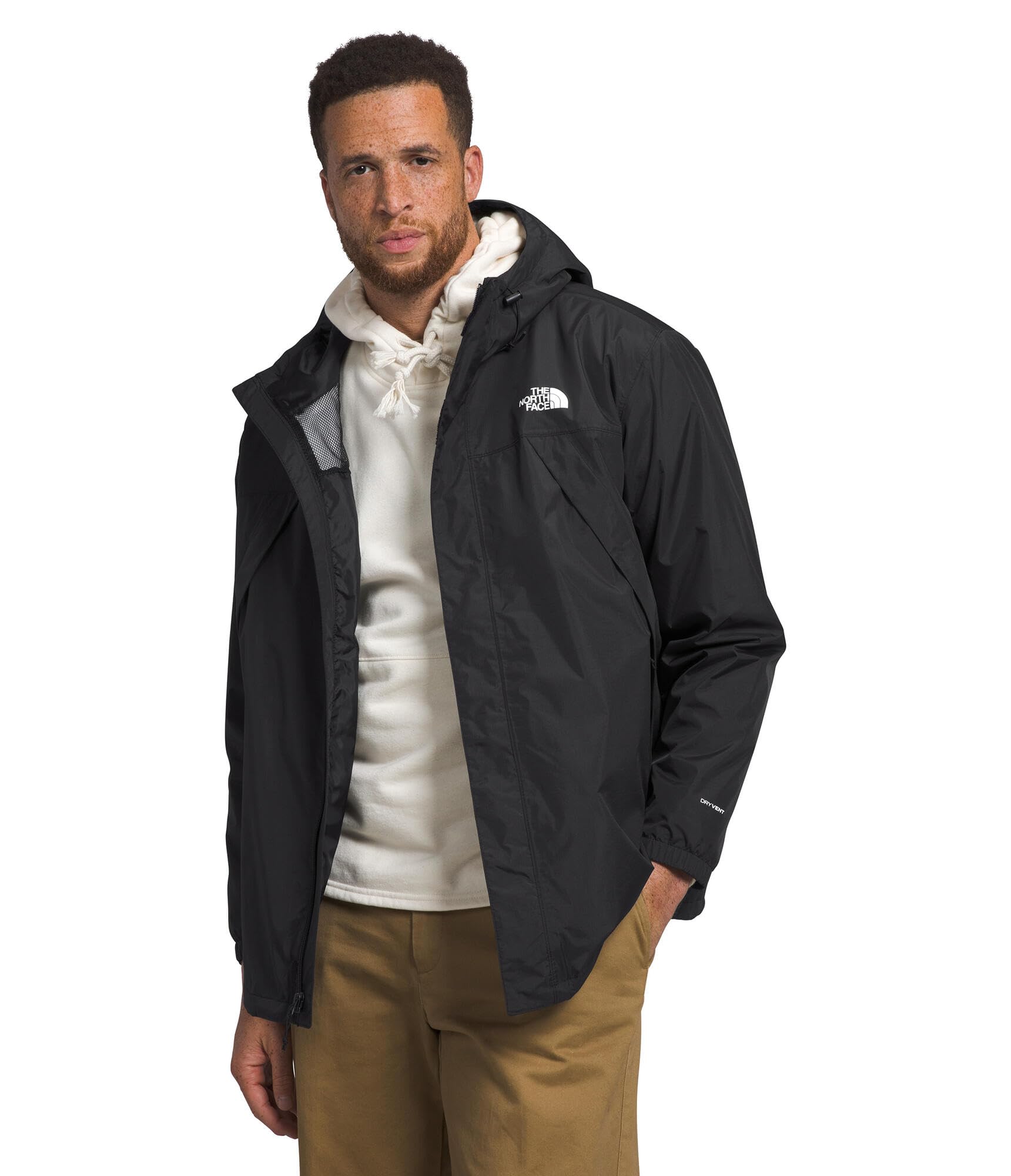
North Face Antora Jacket
Key Features
- Waterproofing: DryVent seam-taped
- Weight & Packability: Lightweight, packable
- Hood Design: Adjustable, helmet-compatible
- Venting: Pit zips
- Pockets: 2 zip hand, 1 chest
- Price: Premium
The North Face Antora uses DryVent seam-taped construction for full waterproofing, plus pit zips for ventilation. It competes directly with the Marmot Precip Eco but comes at a higher price. This jacket suits outdoor enthusiasts who value brand reputation and a helmet-compatible hood for climbing. It is a pure shell with no insulation and sleeves designed for layering – expect a roomy fit and long arms. The fabric feels substantial without being heavy, suggesting long-term durability. If you need a budget-friendly everyday rain jacket, the Marmot is the smarter pick.
Pros
- Underarm pit zips release trapped heat during climbs or hikes.
- Roomy cut accommodates a fleece or mid-layer underneath.
Cons
- Sleeves are intentionally long for climbing positions; average arm lengths may find them excessive.
- Price sits above many competing rain shells with similar specs.
For serious outdoor use, the Antora delivers dependable waterproofing and ventilation – but the Marmot Precip Eco offers the same for less, making this a brand-driven choice.
Best for Casual, Travel, Light Rain
OTU Men’s Lightweight Rain Jacket
Key Features
- Waterproofing: Water-resistant
- Weight & Packability: Lightweight, packable
- Hood Design: Adjustable
- Pockets: 2 zip hand, 1 interior
- Price: Budget
The OTU jacket delivers extreme value for budget-conscious travelers who want a lightweight, packable shell for emergencies or very light drizzle. It looks more expensive than it is, fits most well, and weighs almost nothing in a bag. However, the waterproofing wets out in moderate rain, so this is best treated as a water-resistant windbreaker rather than a rain jacket.
Ideal for anyone who needs a low-cost backup jacket for unexpected sprinkles or as a wind layer on fair-weather hikes. If you expect to face sustained rain, look to the seam-taped options instead.
Pros
- Very affordable price that still includes adjustable hood and zippered pockets.
- Lightweight and packable, easy to stow in a daypack or carry-on.
- Stylish silhouette that looks more expensive than the price suggests.
Cons
- In active use, the lack of breathability can cause heat buildup and sweat.
A smart buy for travelers who want an ultra-light windbreaker on a tight budget, but not a replacement for a real rain shell.
Best for Running, Cycling, Travel
baleaf Women’s Rain Jacket
Key Features
- Waterproofing: Water-resistant
- Weight & Packability: 10.5 oz, packable
- Hood Design: Adjustable visor, stowable
- Venting: Underarm vents
- Pockets: Multiple zip, rear stow
- Price: Mid-Range
Underarm mesh vents, a stowable rear pocket that doubles as a stuff sack, and reflective trim make this jacket purpose-built for cycling and running in light rain. The tradeoff: water resistance handles mist and drizzle but can wet out in steady downpours — a common boundary for shells in this price tier. Best for active women who prioritize packability (10.55 oz) and visibility over all-weather protection, especially if you run warm and need breathability.
Pros
- Ultra-lightweight and packs into its own rear pocket, ideal for stashing in a running belt or daypack.
- Reflective trim and adjustable hood with visor keep you visible and dry in light rain during rides or runs.
- Multiple zippered pockets, including a rear pocket that doubles as a stuff sack, add convenience for keys and phone.
Cons
- In moderate to heavy rain, the jacket can wet out; it is water-resistant, not waterproof.
- Fit runs snug in the chest and shoulders; sizing up may be needed if layering over thicker base layers.
If your primary use is running or cycling in light rain and you want a pocket-friendly shell that disappears into a pack, this is a strong option. For general hiking or commuting where downpours are common, look to a fully seam-taped jacket.
Best for Everyday, Commute
SaphiRose Women’s Long Rain Jacket

Key Features
- Waterproofing: Water-resistant
- Weight & Packability: 2 lb, not packable
- Pockets: 2 snap pockets
- Price: Budget
This trench-style jacket looks far more expensive than its price tag, with sturdy stitching and a lined interior that suits daily commutes and errands. It handles light drizzle and wind well, but at roughly 2 lb and with only water-resistant fabric, it’s not packable or suited for hiking or heavy downpours. Buyers wanting a genuine waterproof shell for travel or outdoor activity should look at seam-taped options instead.
Pros
- Stylish trench-coat design that looks more expensive than it is
- Well-made construction with good stitching and lining
Cons
- In moderate to heavy rain, the fabric can wet through
This coat works well for casual urban wear in light rain, but look elsewhere if you need a lightweight, waterproof shell for hiking or travel.
Best for Hiking, Commute, Travel
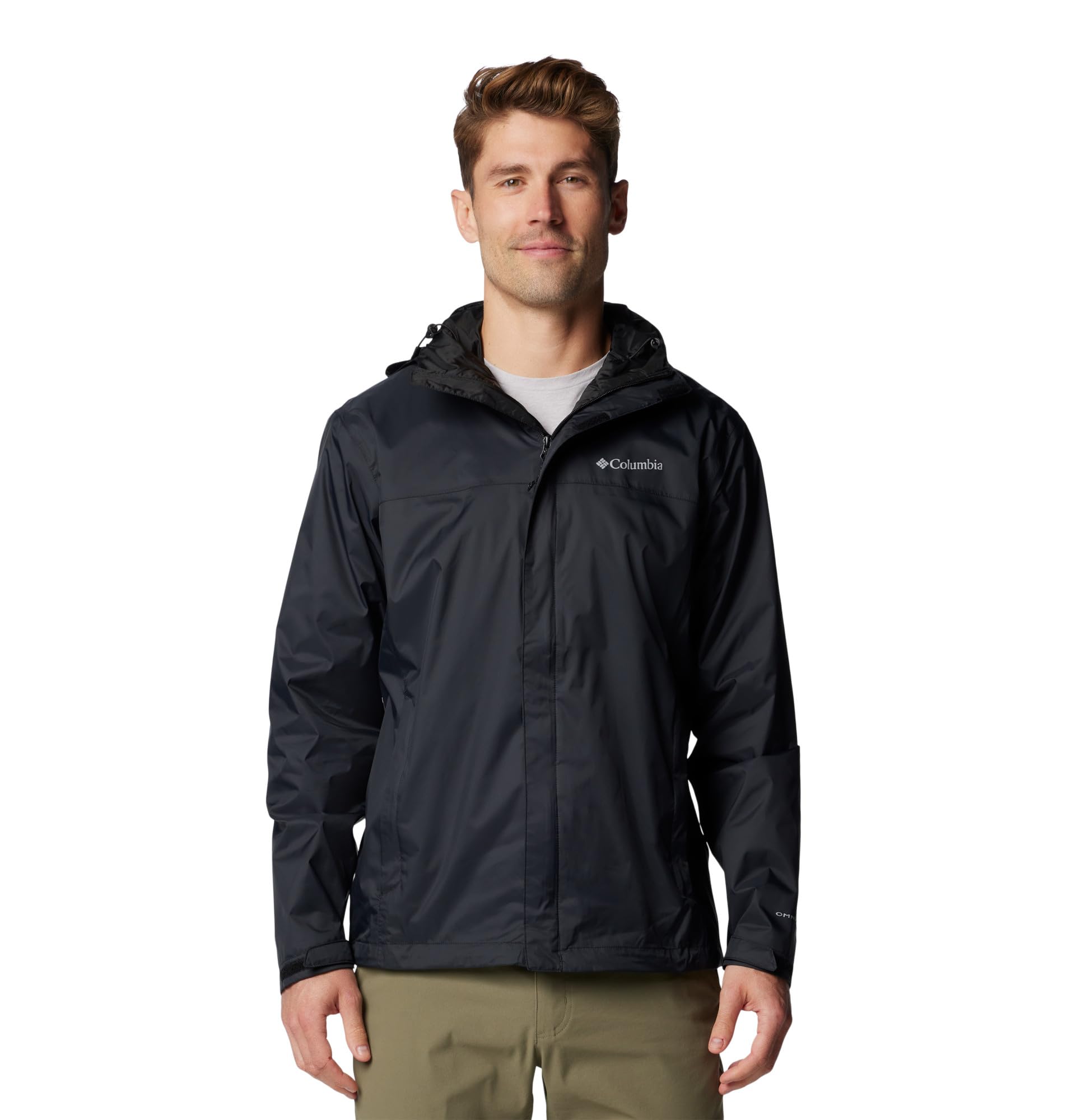
Columbia Watertight II
Key Features
- Waterproofing: Seam-taped Omni-Tech
- Weight & Packability: Lightweight, packable
- Hood Design: Adjustable, stowable
- Venting: Mesh lining
- Pockets: 2 zippered hand
- Price: Mid-Range
The Columbia Watertight II delivers genuine Omni-Tech seam-taped waterproofing at a fair price, keeping you dry in rain and snow. Where it falls short for active hikers: no pit zips mean sweat can build up during exertion, and the roomy fit suits layering but may feel bulky. The Marmot Precip offers better ventilation and a more tailored fit for the same money.
Pros
- Keeps you dry in rain and snow with fully seam-taped waterproofing
- Lightweight and easy to move in, packs well for travel
Cons
- Lacks pit zips, so sweat can build up during active use
This jacket fits best as a no-fuss rain shell for everyday commutes, casual hikes, or travel where ventilation isn’t a priority. If you need breathability for active pursuits, the Marmot Precip is a better match.
Best for Running, Cycling, Commute
baleaf Men’s Rain Jacket

Key Features
- Waterproofing: Water-resistant
- Weight & Packability: Lightweight, packable
- Hood Design: Adjustable, stowable
- Venting: Underarm vents
- Pockets: Multiple zip, back stow
- Price: Mid-Range
This ultra-lightweight jacket packs small, includes underarm vents and reflective details, and handles wind and light rain well for active use. But waterproofing can falter in heavy downpours, and the fit runs snug around the belly — size up if layering.
Pros
- Budget-friendly price for a lightweight, packable active shell.
- Underarm vents and reflective trim improve comfort and visibility during exercise.
Cons
- In heavy rain, water may seep through — best for light showers and wind protection.
A good choice for budget-conscious cyclists and runners who need a lightweight windbreaker for fair-weather commutes and occasional light rain.
Best for Travel, Golf, Backup
33,000ft Men’s Rain Jacket

Key Features
- Waterproofing: Water-resistant
- Weight & Packability: 10.9 oz, packable
- Hood Design: Adjustable
- Pockets: 2 zip hand, 1 interior
- Price: Budget
Weighing under 11 ounces and folding into its own pouch, this jacket is a convenient stash piece for a car or suitcase. It handles light drizzle and wind well, but non-taped seams mean it wets through quickly in moderate rain. Build quality is adequate for occasional use, not daily wear.
Pros
- Lightweight and compact, packs into included pouch for portability.
- Budget-friendly price for a shell that handles light rain and wind.
Cons
- Water resistance is limited; non-taped seams allow seepage in moderate rain.
Keep this in your glovebox or travel bag as an emergency windbreaker for light drizzle, but don’t rely on it for real rain.
Best for Cycling, Hiking, Active
33,000ft Women’s Rain Jacket

Key Features
- Waterproofing: Water-resistant
- Weight & Packability: Lightweight, packable
- Hood Design: Adjustable, stowable
- Venting: Underarm vents
- Pockets: 2 zip hand, 1 int, back
- Price: Mid-Range
33,000ft’s packable jacket is light enough to carry everywhere, with underarm vents and a rear stow pocket for small items. The water-resistant coating handles mist and light showers, but sustained rain will wet through. The hood can be oversized for some.
Pros
- Very lightweight and packable with included pouch
- Multiple secure pockets including interior zip
Cons
- Water resistance is limited to light rain; heavier rain may soak through
Best for women cyclists or travelers who want a lightweight, pocket-rich shell for light rain and don’t need full waterproofing.
Best for Casual, Travel, Light Rain
MOERDENG Women’s Rain Jacket

Key Features
- Waterproofing: Water-resistant
- Weight & Packability: Lightweight, mesh
- Hood Design: Removable, adjustable
- Pockets: 2 zip hand, 1 interior
- Price: Budget
Offers an attractive design and removable hood at a budget price, ideal for casual use. Waterproofing is inconsistent – handles light drizzle but may wet out in moderate rain. Sizing runs slightly snug, so consider sizing up. For heavy rain, look to a seam-taped option.
Pros
- Great value with many features at a low price
- Stylish appearance and color options
Cons
- In moderate rain, the jacket may wet out, limiting its use to light rain or dry conditions
Suitable for daily wear, commuting, and light rain; not reliable for all-day hikes or heavy downpours.
Best for Budget, Style, Occasional
Diamond Candy Women’s Rain Jacket

Key Features
- Waterproofing: Water-resistant
- Weight & Packability: Lightweight, packable
- Hood Design: Removable, adjustable
- Pockets: 2 zippered side
- Price: Budget
This jacket’s low price gets you a lightweight, attractive shell for occasional light drizzle — but its water resistance stops there. The fit runs small and boxy, so plan to size up. Not a jacket for any real rain; treat it as a colorful windbreaker for dry climates or emergencies.
Pros
- Lightweight and easy to pack for mild-weather errands or travel
- Available in multiple colors that appeal to style-first buyers
Cons
- In sustained rain the fabric soaks through — fine for a quick dash, not a commute
If you need a cheap shell for sunny days or the occasional mist, this fits the bill — but plan to size up and keep expectations low in wet weather.
Best for Travel, Backup, Wind
Columbia Glennaker Lake II

Key Features
- Waterproofing: Water-resistant
- Weight & Packability: Very light, packable
- Hood Design: Stowable into collar
- Pockets: 2 zippered hand
- Price: Budget
Extremely lightweight and packable, this jacket rolls into a pocket-sized bundle ideal for travelers who want a spare layer against light drizzle or gusty wind. It fits well and costs little, but the water resistance gives out in moderate rain and the hood lacks adjustability — it can flap around in a breeze.
Pros
- Folds down small enough to stash in a bag for travel emergencies.
- Budget-friendly price for a Columbia-branded lightweight shell.
Cons
- Not waterproof; can wet through in moderate rain or extended drizzle.
Best suited as a packable windbreaker for travelers who know it won’t handle real rain.
Best for Budget, Emergency, Wind
COOFANDY Men’s Rain Jacket

Key Features
- Waterproofing: Water-resistant
- Weight & Packability: Lightweight, packable
- Hood Design: Adjustable
- Pockets: 2 zippered hand
- Price: Budget
At its core, this is a cheap windbreaker that packs into a pouch and works for dry conditions or as a backup stashed in a bag. The catch: it is not reliably waterproof, so even a light drizzle can soak through, and the oversized hood can’t be adjusted. Construction feels thin — more like a disposable layer than a jacket meant to last. That makes sense only for extreme budget buyers who need a one-use shell for unexpected weather.
Pros
- Extremely low price for an emergency layer.
- Lightweight and packs into its own pocket for easy carry.
Cons
- Not waterproof; many report soaking through in light rain despite the claim.
Only consider this if you need a disposable windbreaker for emergency carry and accept that it won’t handle actual rain.
How to Choose
The most important factor in a rain jacket is whether it has seam-taped construction — without it, even expensive jackets will leak at the seams.
Waterproofing: Seam-Taped vs. Water-Resistant
Seam-taped jackets have sealed seams that prevent water from seeping through needle holes. Jackets without taping rely solely on a DWR coating, which wears off over time and fails in sustained rain. For hiking or commuting in moderate rain, seam-taped construction is non-negotiable.
Budget jackets often skip seam taping and still claim waterproof. Check the product description for ‘seam-taped’ or ‘fully taped seams’ — if absent, treat the jacket as a windbreaker for light drizzle only.
Weight and Packability
A lightweight jacket (under 500g) packs into its own pocket or a small pouch, making it easy to stash in a daypack or carry as a backup. Heavier jackets around 2 lbs are better for urban use where weight doesn’t matter but durability does. For hiking, every ounce counts — a packable shell gives you flexibility without the bulk.
Breathability and Venting
Pit zips are zippered vents under the arms that release heat during high-output activities like hiking uphill or running. Jackets without pit zips trap moisture, leaving you clammy even if the fabric claims to breathe. Mesh linings offer minimal ventilation; pit zips are the only effective solution for active use.
Hood Design
An adjustable hood with a brim or wire visor stays put in wind and sheds rain from your face. Helmets require a larger, helmet-compatible hood. Non-adjustable hoods often flop or slip, forcing you to hold the jacket closed. A stowable hood tucks into the collar when not needed, a nice feature for variable weather.
Pocket Configuration
Zippered hand pockets keep valuables dry and secure. Some jackets add an interior chest pocket for a phone or wallet. For cyclists, a rear stow pocket doubles as a stuff sack and also holds a smartphone. Ensure pockets are placed above a hip belt if you hike with a pack.
FAQ
Why does my rain jacket wet out after an hour in moderate rain?
The jacket likely lacks seam-taped construction and uses only a DWR coating. Once the coating saturates, water soaks through the fabric and seams. To stay dry, choose a jacket with sealed seams and a waterproof membrane like NanoPro or Omni-Tech. Reapply DWR occasionally to maintain performance.
Can I wear a rain jacket for hiking in summer without overheating?
Yes, but look for pit zips — they dump heat during exertion. Jackets without venting (like most budget shells) will leave you sweaty. Marmot Precip Eco and North Face Antora both have pit zips, making them viable for warm-weather hikes. Layer with a wicking base under the shell.
Is a $30 rain jacket good enough for backpacking trips?
No. $30 jackets like COOFANDY are water-resistant at best and will soak through in any real rain. They also lack sealed seams and durability. For backpacking, spend at least $50 on a seam-tapped jacket like Columbia Watertight II or Marmot Precip Eco — your gear stays dry.
How do I restore waterproofing on my rain jacket after washing?
Use a wash-in or spray-on DWR treatment (Nikwax or Grangers) after cleaning. First, wash with a tech-wash to remove dirt and oils that block pores. Then apply DWR according to the label. For seam-taped jackets, this restores the outer coating but don’t expect the same performance as new if the membrane is damaged.