This post contains affiliate links. We may earn a small commission when you buy through our links — at no extra cost to you.
Many hikers find their water filter’s flow slows to a trickle after just a few trips, or the pouch springs a leak mid-hike. That’s because real backcountry water—full of silt and organic matter—clogs filters faster than clear-water lab tests suggest.
The core trade-off is between the lightest, most packable straw filters and more robust squeeze systems that let you fill bottles for cooking and group use. Each type has a clear job, but no single filter handles every scenario equally well.
This guide focuses on which designs actually hold up to the conditions you’ll encounter, whether you’re sipping from a clear mountain stream or filling from a turbid puddle. The right choice depends on your water source, group size, and tolerance for field maintenance.




Best for Backpacking, Small Groups
Sawyer Squeeze Filter
Key Features
- Filtration Type: Squeeze, bottle, gravity
- Pore Size: 0.1 micron
- Flow Rate: 1.7 L/min
- Filter Capacity: 100K gal
- Weight: 2 oz (filter)
- Price: Mid-Range
The Sawyer Squeeze delivers a fast 1.7 liters per minute flow rate, easily outpacing straw-style filters and most pump alternatives. Weighing only 2 ounces for the filter core, it saves significant weight compared to traditional pump filters while fitting into a small pack pocket. The filter threads directly onto standard disposable water bottles, giving you flexibility to collect and drink without extra accessories. Compared to the smaller Sawyer Mini, the Squeeze offers a notably higher flow rate, making it better suited for filling multiple bottles.
This system shines on multi-day backpacking trips where you need to fill water bottles for cooking and for a group of 2-4 people. The included squeeze pouches can tear after moderate use — a tradeoff easily addressed by screwing the filter onto a Smartwater bottle instead. The filter core itself maintains its flow rate across seasons. For through-hikers and small groups who want a lightweight, fast-filtering solution, the Squeeze is a top contender.
Pros
- Fast flow rate and easy to use
- Lightweight and compact
- Filter core retains performance across multiple seasons
Cons
- Seal between filter and bag can break, causing leaks
For backpackers and small groups, the Squeeze offers a practical blend of fast flow, light weight, and bottle compatibility for backcountry water needs.
Best for Solo Day Hikes
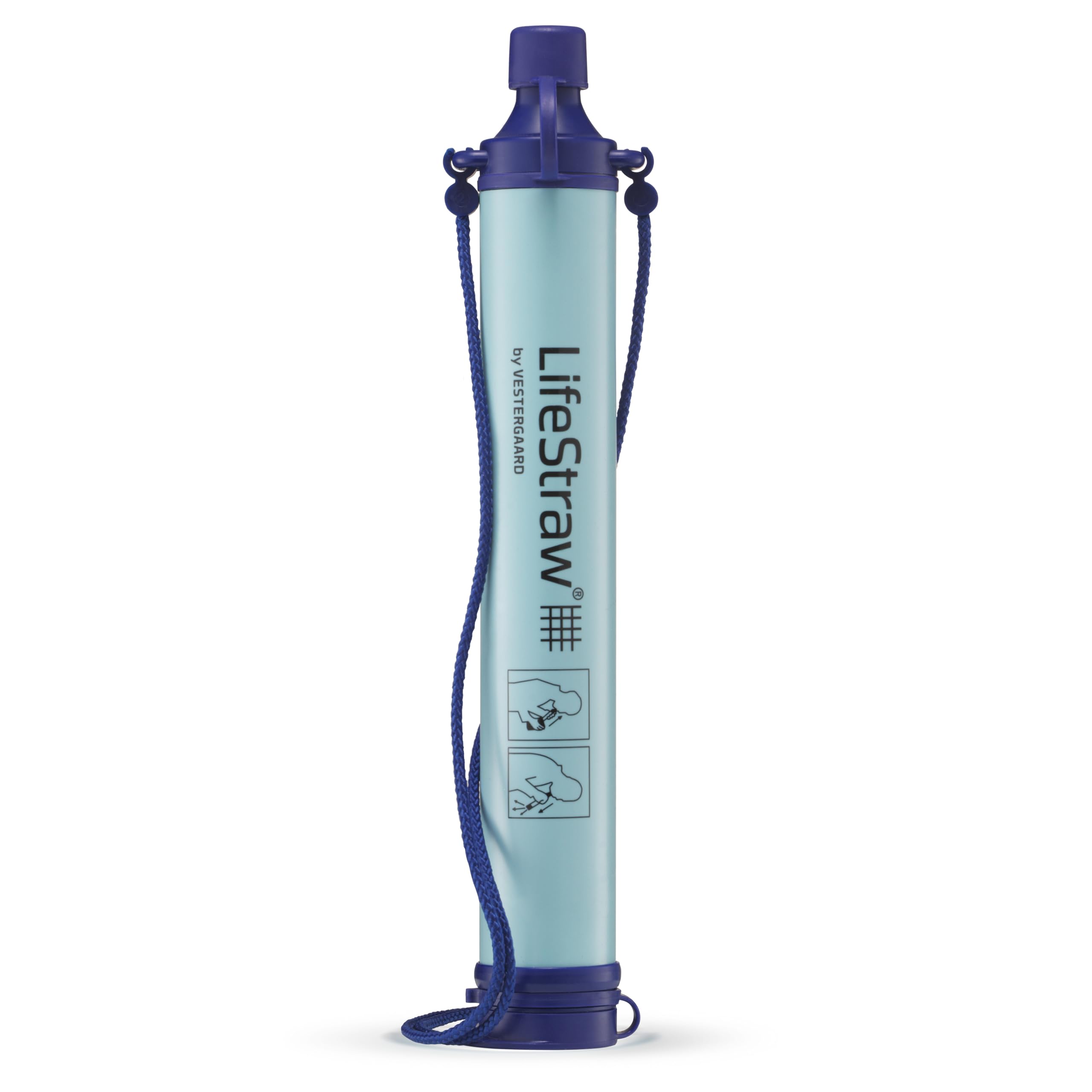
LifeStraw Personal Filter
Key Features
- Filtration Type: Straw
- Pore Size: 0.2 micron
- Filter Capacity: 4,000 L
- Weight: 2 oz
- Price: Budget
At 2 ounces and under $15, the original LifeStraw is the lightest and most affordable way to drink directly from streams. Unlike the newer Peak Series, it does not screw onto standard bottles, so it is limited to direct sipping. This works best for solo use where you can dip and sip – ideal for emergency preparedness kits, day hikes, or as a lightweight backup for clear water sources.
Pros
- Ultralight 2-ounce weight – packs easily into any bag or emergency kit.
- Budget-friendly price for a personal water filter with a 1,000-gallon capacity.
- Durable build that holds up to repeated field use.
Cons
- Starting flow requires strong suction; the filter may need to be wetted and sucked hard.
- Flow slows noticeably in silty water; occasional back-blowing may be needed to restore.
For solo hikers and emergency preppers on a budget, the original LifeStraw delivers direct drinking at the lowest weight and cost – just plan around its suction effort and bottle limitation.
Best for Trail Runners, Day Hikes
Katadyn BeFree Bottle
Key Features
- Filtration Type: Squeeze bottle
- Pore Size: 0.1 micron
- Flow Rate: 2 L/min
- Filter Capacity: 1,000 L
- Weight: 2.24 oz (filter)
- Price: Mid-Range
At 2.24 oz including the filter, the BeFree is among the lightest portable filter systems available. It collapses to nearly nothing when empty, making it a favorite among trail runners and fast-packers who refill from clear streams. The squeeze-and-drink operation is intuitive and delivers 2 L/min with minimal effort.
This design trades durability for weight savings. The collapsible bottle can develop pinhole leaks or splits after moderate use, and the hollow-fiber filter cannot be backwashed or cleaned once flow slows from sediment. For day hikes and ultralight trips where water sources are consistently clear, the weight savings are worth the compromise. Heavier use or silty water exposes the limits.
Pros
- Ultralight and collapsible for minimal pack volume
- Fast flow rate with simple squeeze-to-drink operation
- Folds flat and stows easily in a pocket or vest
Cons
- Bottle can develop holes or splits after limited use
- Filter cannot be backwashed; flow may drop quickly with sediment-heavy water
Best for ultralight trips where every gram matters and water sources are clear—not a daily workhorse or a choice for silty streams.
Best for International Travel
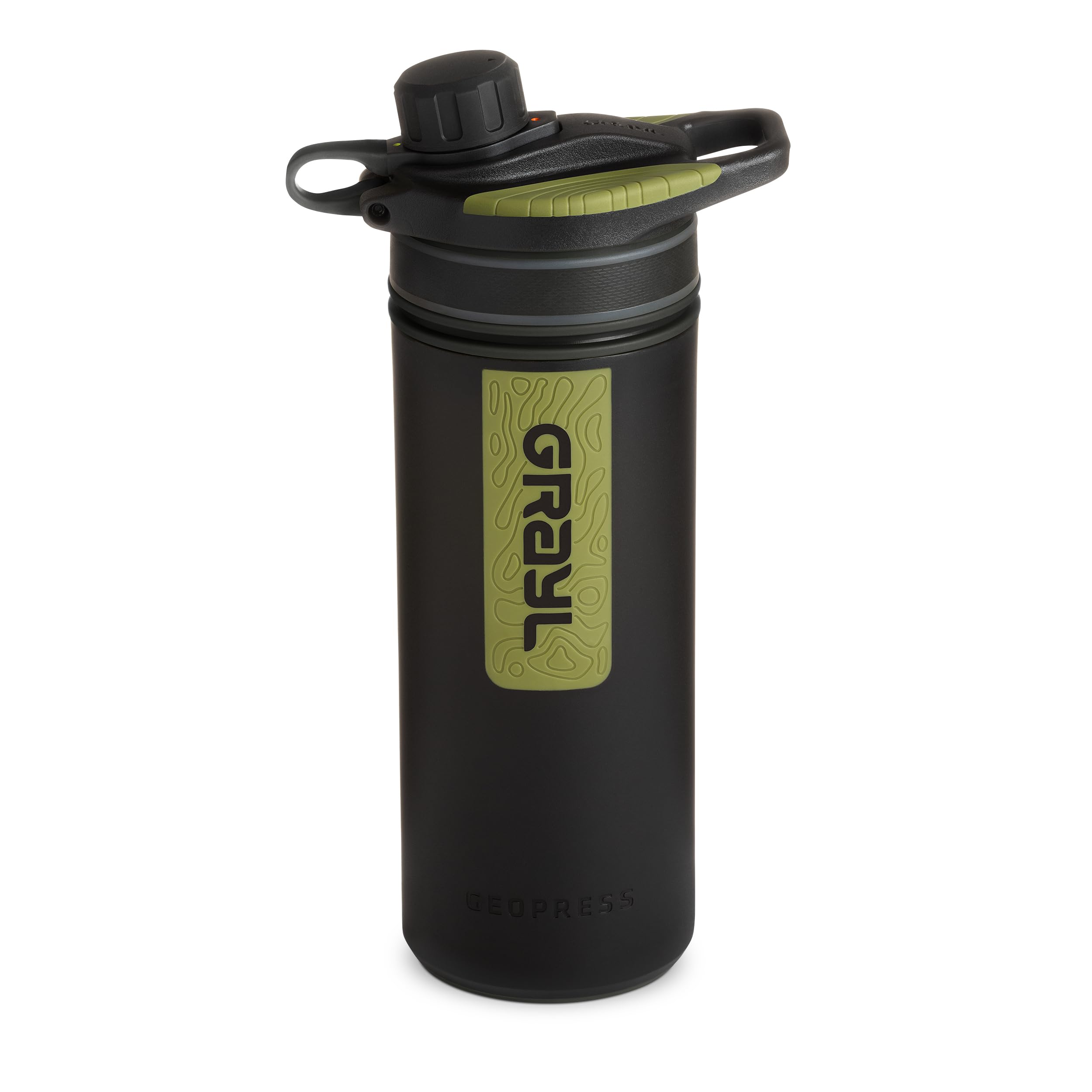
GRAYL GeoPress Bottle
Key Features
- Filtration Type: Press bottle
- Pore Size: Electroadsorption
- Flow Rate: 5 L/min
- Filter Capacity: 65 gal
- Weight: 15.9 oz
- Price: Premium
Unlike the top pick Sawyer Squeeze, the GeoPress eliminates viruses on the spot without chemicals or waiting. Its press-to-purify action delivers clean, great-tasting water in seconds, and the cartridge lasts 10 years in storage. This bottle suits international travelers and hikers in regions with unsafe tap water where virus protection matters. However, at 15.9 oz it is the heaviest option here, and pressing the filter requires deliberate hand strength — not a fit for ultralight backpackers or users with limited grip.
Pros
- Removes viruses, which most portable filters in this price range cannot.
- Press-to-purify delivers clean water in seconds with no wait time.
- Durable build with 10-year cartridge shelf life for long-term preparedness.
Cons
- Pressing the filter requires significant hand strength, especially when the bottle is full.
- At 15.9 oz, it is noticeably heavier than squeeze or straw filters for backpacking.
Best for travelers and hikers who need virus removal and can accept the extra weight and pressing effort.
Best for Backpackers, Travelers
Sawyer Mini Filter
Key Features
- Filtration Type: Straw, bottle
- Pore Size: 0.1 micron
- Filter Capacity: 100K gal
- Weight: 2 oz
- Price: Mid-Range
Screwing onto standard water bottles, this 2-ounce filter makes any disposable container a clean water source for solo hikers or travelers. The 0.1-micron membrane removes bacteria and protozoa, and the filter is rated for 100,000 gallons. Flow is slower than the larger Squeeze, so it is not ideal for groups, and the O-ring can pop out if overtightened (replacements are free from Sawyer). Best for minimalist packers who want a backup or travel filter that fits in a palm and works with widely available bottles.
Pros
- Removes bacteria, protozoa, and microplastics down to 0.1 micron
- Weighs just 2 oz and fits in the palm of your hand
- Screws onto standard disposable water bottles for convenient use
Cons
- O-ring seal can dislodge if over-tightened; replacement is free but annoying in the field
- Flow rate is slower than larger squeeze filters, making it less suitable for groups
A capable backup or solo filter for those who need bottle compatibility and extreme portability — expect slower sipping and gentle threading.
Best for Backpackers, Pump Users
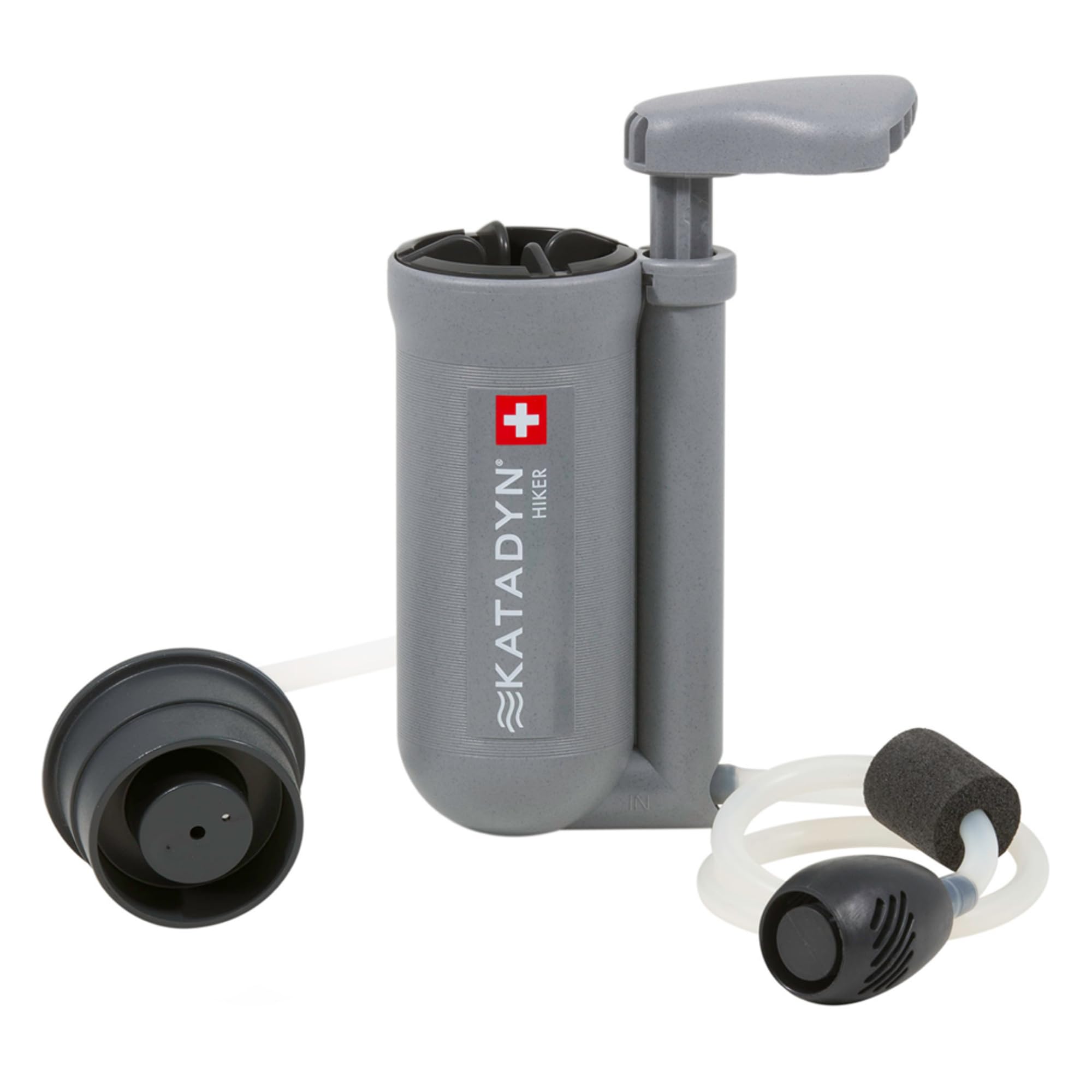
Katadyn Hiker Microfilter
Key Features
- Filtration Type: Pump
- Pore Size: 0.2 micron
- Flow Rate: 0.95 L/min
- Filter Capacity: 750 L
- Weight: 1.2 lbs
- Price: Premium
Unlike lighter squeeze filters, the Katadyn Hiker Microfilter uses a traditional pump with a glass fiber element that can be cleaned in the field, restoring flow without spare parts. This makes it a practical choice for backpackers who prioritize long-term durability over weight savings. At 1.2 lbs, it is heavier than modern alternatives, and replacement filters add ongoing expense, but for those who want a pump that is simple to maintain and produces great-tasting water, this is a well-established option.
Pros
- Field-cleanable glass fiber element maintains flow over years of use.
- Carbon core effectively removes odors and improves water taste.
- Simple pump design with no complicated setup.
Cons
- Heavier than modern squeeze or straw systems at 1.2 lbs.
- Replacement filters add ongoing expense, reducing long-term value.
For backpackers who prefer a field-cleanable pump and great water taste over ultralight weight, the Hiker Microfilter is a time-tested design.
Best for Emergency Kits, Families
Practical Survival 2-Pack
Key Features
- Filtration Type: Straw, bottle
- Pore Size: 0.1 micron
- Filter Capacity: 1,800 gal each
- Weight: 2 oz each
- Price: Mid-Range
Unlike a single-use straw you replace seasonally, these filters store indefinitely — no expiry to track. Each straw handles 1,800 gallons and the backflushing plunger keeps flow going without replacement filters. The pair works well for family emergency kits or as spares in bug-out bags. The bottle adapter threading can be misaligned on some units, so using them as straight straws avoids that friction entirely.
Pros
- Two filters per pack for the price of one premium straw
- No expiration date simplifies long-term preparedness storage
- Backflushing plunger keeps the filter clean without tools
Cons
- Threading on the bottle adapter may be misaligned, making bottle attachment difficult
A practical two-pack for emergency kits where long shelf life and backup capacity matter more than daily bottle compatibility.
Best for Couples, Pairs
LifeStraw Peak 2-Pack

Key Features
- Filtration Type: Straw, bottle
- Pore Size: Microfiltration
- Flow Rate: 2.5 L/min
- Filter Capacity: 4,000 L each
- Weight: 7.36 oz (2-pack)
- Price: Mid-Range
The LifeStraw Peak delivers a noticeably faster flow rate (2.5 L/min) and screws onto standard water bottles, a step up from the original straw. The two-pack is well suited for couples or as a backup. Each straw weighs 3.7 oz, so ultralight solo hikers who prioritize minimal weight will find the original LifeStraw a better fit. For backpackers who share filtration and want quicker drinking, this is a solid option.
Pros
- Faster flow rate reduces suction effort compared to the original LifeStraw
- Screws onto standard water bottles for flexible use
Cons
- Each straw weighs 3.7 oz — slightly heavier than the original; less ideal for ultralight solo trips
Best for backpacking couples who want faster flow and bottle compatibility; solo ultralight hikers should stick with the original.
Best for Certification Seekers
Membrane Solutions S1

Key Features
- Filtration Type: Straw, bottle
- Pore Size: 5-stage UF+AC
- Filter Capacity: 1,320 gal
- Weight: 2 oz
- Price: Mid-Range
The Membrane Solutions S1 earns NSF 42/372/401 certifications for reducing sediment, chlorine, and emerging contaminants – a rare spec at this price. Its five-stage hollow fiber and carbon filter improves taste over basic straws. However, the filter has a one-year storage shelf life, so it is not a set-and-forget emergency kit item. With turbid water, flow may slow noticeably, making it best for clear streams on day hikes rather than cloudy ponds.
Pros
- NSF certified filtration for sediment, chlorine, and emerging contaminants
- Compact design that fits in a pocket or pack easily
Cons
- One-year shelf life means it cannot be stored long-term for emergencies
Best for short trips where you want NSF certification and compact size, but skip if you need a filter that stays viable in a survival kit for years.
Best for Car Campers, Groups
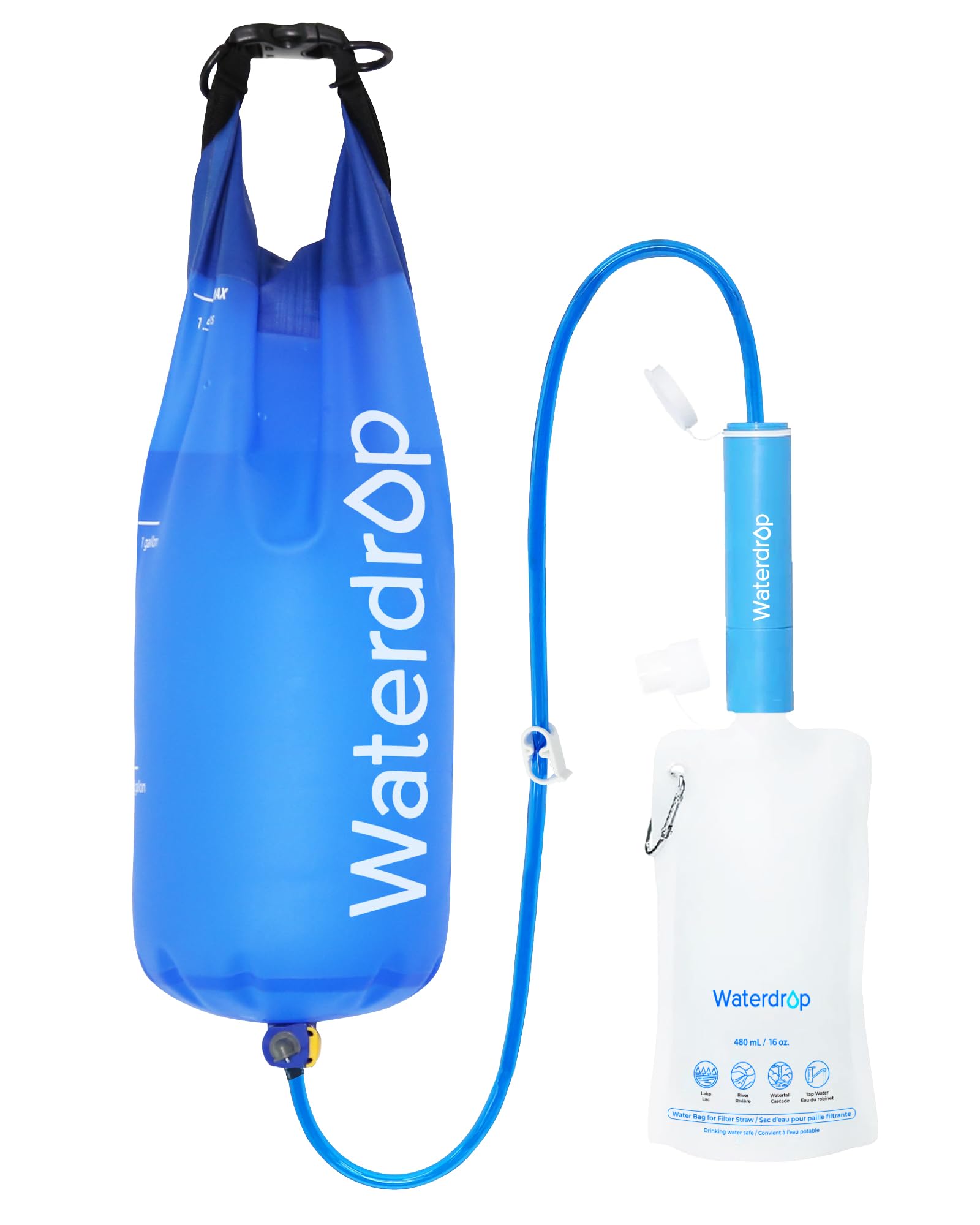
Waterdrop Gravity Kit
Key Features
- Filtration Type: Gravity bag
- Pore Size: 5-stage UF+AC
- Flow Rate: 0.7 L/min
- Filter Capacity: 1,400 gal
- Weight: 0.29 lbs
- Price: Mid-Range
This kit pairs a 1.5-gallon bag with a five-stage filter and backwash function, making it a cost-effective way to treat water for small groups at a base camp. The flow rate is slower than Sawyer gravity systems, and the bag material may wear with heavy use, so it suits casual car camping or emergency kits rather than backpacking or daily trail use.
Pros
- Filters large volumes with minimal effort when hung at camp
- Affordable kit with a generous 1.5-gallon bag for groups
Cons
- Flow rate can slow noticeably as the filter clogs, making it less convenient for quick refills
Good for car campers who want a hands-free gravity filter for small groups, but upgrade to a Sawyer if you prioritize faster flow and bag durability.
Best for Virus-Conscious Pump Users
Survivor Filter PRO

Key Features
- Filtration Type: Pump
- Pore Size: 0.01 micron
- Flow Rate: 0.5 L/min
- Filter Capacity: 100K L
- Weight: 12.8 oz
- Price: Premium
The Survivor Filter PRO removes viruses at 0.01 micron and includes a lifetime warranty – rare for a pump at this price. It’s compact for a pump style and improves taste with a carbon layer. The trade-off: sediment clogs both pre-filter and main filter quickly, requiring frequent backwashing. This means more maintenance than squeeze or gravity systems, making it a fit for those who value virus protection over convenience.
Pros
- Compact and lightweight for a pump-style filter
- 0.01 micron virus removal at a moderate price
Cons
- Sediment can clog both pre-filter and main filter, requiring frequent backwashing
Best for preppers who want virus removal and a lifetime warranty, or backpackers willing to manage regular backwashing.
Best for Field-Cleanable Pump
Katadyn Hiker Pro

Key Features
- Filtration Type: Pump
- Pore Size: 0.2 micron
- Flow Rate: 1 L/min
- Filter Capacity: 300 gal
- Weight: 11.2 oz
- Price: Premium
This pump delivers steady flow (1 L/min) and the carbon core noticeably improves taste. The glass fiber element can be swished clean in the field – a practical advantage for turbid water. Durability varies: some units may crack after moderate use. The classic Hiker model offers better long-term reliability, but if field-cleanability matters more, this fits.
Pros
- Field-cleanable glass fiber element can be swished clean without tools – ideal for murky water.
- Lightweight for a hand pump (11.2 oz), easy to pack for multi-day trips.
Cons
- Replacement filters are expensive – comparable to buying a new pump after a few swaps.
Best suited for backpackers who anticipate murky water and want to clean the filter in the field without carrying spares – just factor in the higher long-term cost.
Best for Base Camp Groups
Sawyer Gravity SP160

Key Features
- Filtration Type: Gravity bag
- Pore Size: 0.1 micron
- Flow Rate: ~1 L/min
- Filter Capacity: 100K gal
- Weight: 2.7 oz system
- Price: Mid-Range
Hang it up and let gravity do the work – this 1-gallon setup uses the well-regarded Sawyer Mini filter for convenient group hydration at a fixed camp. The system packs light for its capacity, but the flow rate drops as the filter catches sediment, and the bag’s seams can leak after repeated use. Refilling from shallow streams also requires a separate container. It’s a decent solution for car camping, but the Squeeze is a better all-around choice for backpackers who need speed and ruggedness.
Pros
- Hands-free gravity filtration frees you up while it runs.
- Light enough to toss in a car camp kit or base camp load.
Cons
- Flow slows noticeably as the filter clogs, and the bag can develop leaks over time.
Fits car campers who want a set-it-and-forget-it filter for a nearby water source, but backpackers should opt for the Squeeze for faster refills and better durability.
How to Choose
The single most important insight: real-world backcountry water clogs filters much faster than clear-water lab tests suggest, so prioritize field-cleanable designs and realistic capacity expectations.
Filtration Type
Straw filters require direct suction and cannot fill a bottle. They are ideal for solo emergency use but impractical for group trips or cooking.
Squeeze filters let you fill bottles quickly and are the most versatile for backpacking. Pump filters are field-cleanable but slower and heavier. Gravity systems are hands-free but bags often leak. Integrated bottles like the Grayl offer virus removal at the cost of weight.
Pore Size
Pore size determines what the filter removes. A 0.2 micron filter stops bacteria and protozoa but not viruses. A 0.1 micron absolute filter is more thorough but still cannot remove viruses.
For virus protection, you need either a chemical treatment, UV light, or an electroadsorption system like the Grayl. Most hikers in North America don’t need virus removal, but international travelers should consider it.
Flow Rate
Higher flow rates (1.5+ L/min) are convenient but often come with larger filter surface area or less dense media, which can clog faster in turbid water. Slower flow (under 1 L/min) is frustrating for group use but may indicate tighter filtration.
For solo use, 1 L/min is acceptable. For groups, look for at least 1.5 L/min. Pre-filtering or letting sediment settle can preserve flow.
Filter Capacity
Manufacturer ratings (e.g., 100,000 gallons) are based on clear water. In reality, backcountry water can clog filters after 10-20% of that capacity. Backwashing extends life, but some filters (like the Katadyn BeFree) cannot be backwashed.
If you filter from silty streams, choose a filter with a cleanable pre-filter or a design that allows backflushing. Budget for replacement cartridges more often than the label suggests.
Weight and Size
Ultralight filters (under 3 oz) sacrifice durability and flow. They are great for day hikes or emergency kits but may not survive a multi-season thru-hike. Heavier pump filters (11+ oz) offer field-cleanable elements but are overkill for short trips.
Your weight budget should reflect how often you use the filter. A 2 oz straw is perfect for a bug-out bag, while a 6 oz squeeze system is worth the extra ounces for daily use.
FAQ
Can a LifeStraw filter out viruses?
No. LifeStraw uses a 0.2 micron hollow fiber membrane that removes bacteria and protozoa but not viruses. For virus protection, you need a purifier like the Grayl GeoPress or chemical treatment such as chlorine dioxide tablets.
Why does my Sawyer Squeeze bag keep leaking?
The included squeeze pouches are thin and prone to tearing at the seams. Many users replace them with a standard Smartwater bottle, which screws directly onto the filter and is much more durable. Sawyer also sells replacement pouches.
How do you backwash a hollow fiber water filter?
Use the provided backflushing syringe or plunger to push clean water backward through the filter. This dislodges trapped sediment and restores flow. Backwash after each trip or whenever you notice the flow slowing significantly.
Is the Grayl GeoPress worth the weight for backpacking?
At 15.9 oz, it is heavy for ultralight trips. But if you travel to regions where tap water may contain viruses, its virus removal and fast press operation justify the weight. For domestic backpacking, a lighter squeeze filter like the Sawyer Squeeze is more practical.