This post contains affiliate links. We may earn a small commission when you buy through our links — at no extra cost to you.
Most campers start with the same hope: one tool that does everything without weighing down your pack. But the reality often involves pliers that snap on a stuck tent stake, a saw that barely cuts a branch, or a tool that’s too heavy to carry beyond the trailhead. The problem isn’t the idea – it’s matching the tool to your actual camp routine.
The trade-off between weight and tool count is the central decision. A 5-ounce minimalist tool covers basic tasks for an ultralight hiker, while a 9-ounce full-size multitool handles camp repairs and DIY projects. Neither is wrong, but grabbing the heaviest option out of fear of missing out can ruin a trip.
This guide breaks down the real-world performance of the most popular camping multitools, focusing on what holds up on the trail and what belongs in a glovebox. The right choice depends on how you camp, not on how many tools the box lists.


Best for Outdoor Enthusiasts
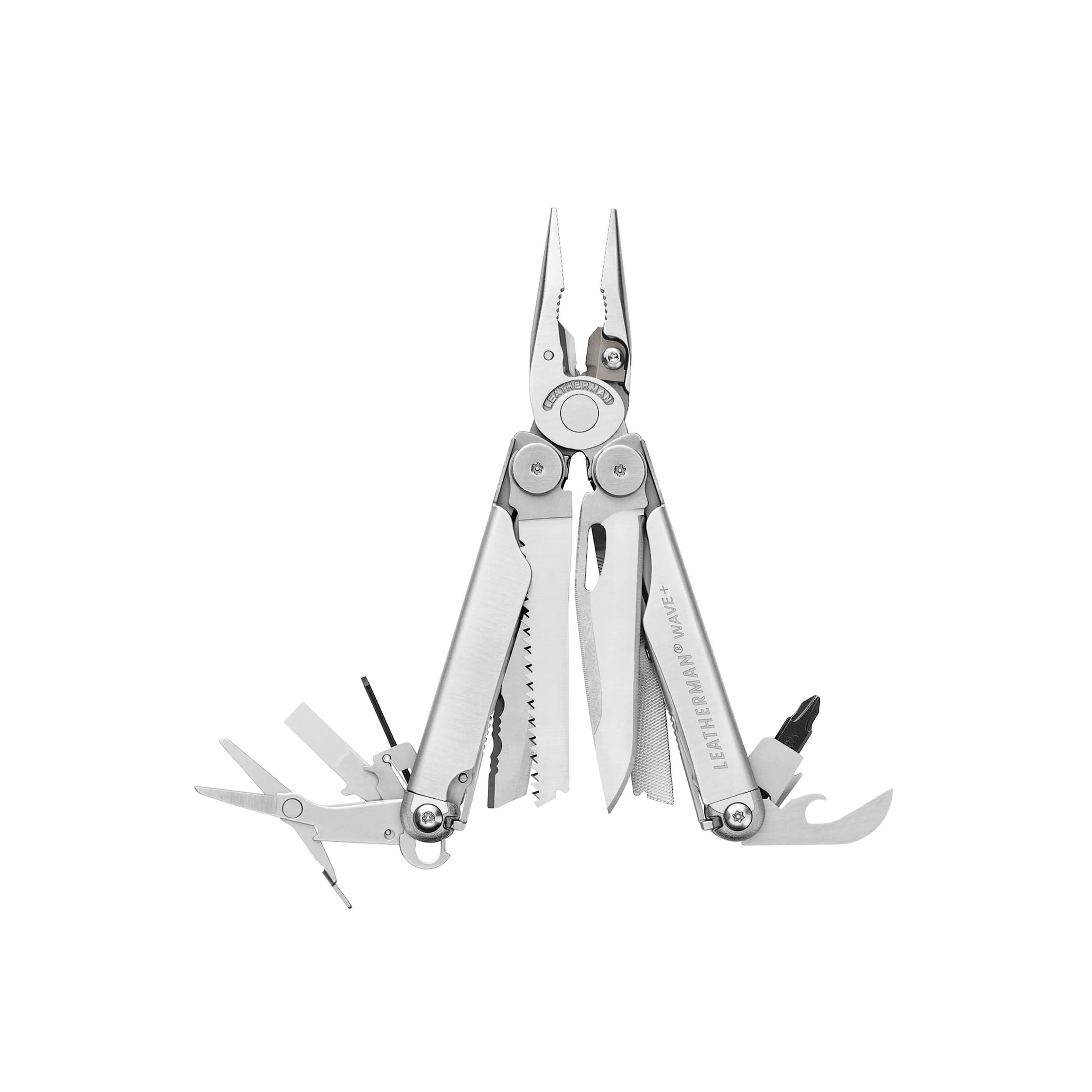
Leatherman Wave+
Key Features
- Number of Tools: 18
- Weight & Size: 8.5 oz, 4.0 in
- Pliers Type: Manual
- Locking Mechanism: Liner lock
- Carry Method: Sheath included
- Price: Premium
The Wave+ packs 18 tools into a stainless steel frame that opens with a satisfying click. Replaceable wire cutters handle fencing and camping wire without wearing out, and one-hand opening blades make quick work of rope or tape. The saw cuts through small branches and plastic tubing with consistent strokes.
This is a multitool for campers who need pliers for gear repairs, a saw for kindling, and screwdrivers for tent stakes or stove adjustments. The 8.5 oz weight is manageable on a belt or in a pack’s side pocket. On some units, the plier tips can snap under moderate twisting force – an occasional quality variance rather than a pattern, but worth considering if your camping involves heavy-duty wire cutting.
Pros
- Replaceable wire cutters extend the tool’s lifespan after cutting fence wire or cable.
- One-hand opening blades allow quick access for cutting rope or slicing open packages.
- Saw blade cuts through small branches and wooden dowels with steady pressure.
Cons
- Pliers can snap under moderate twisting force – occasional quality variance worth checking.
For campers who want one tool that handles nearly everything, the Wave+ delivers the most comprehensive set of functions in a full-size package.
Best for Budget Campers
Wetols 21-in-1
Key Features
- Number of Tools: 21
- Weight & Size: 11.8 oz, 4.13 in
- Pliers Type: Spring-loaded
- Locking Mechanism: Self-locking
- Carry Method: Sheath included
- Price: Budget
For campers who want a full set of tools without exceeding $25, this multitool delivers spring-loaded pliers, self-locking blades, and four dual-sided bits. The stainless steel build feels solid in hand, and the included EDC sheath adds carry convenience.
It suits budget-conscious campers and gift givers who can tolerate a break-in period: some tools arrive stiff to open and close, requiring a bit of oil and repeated use to smooth out. Minor durability concerns may surface under sustained heavy use, but for occasional camping and home tasks this is a capable companion at a low price.
Pros
- Solid stainless steel build with a satisfying weight for the price point.
- Functional tool set covers pliers, screwdrivers, saw, and knife for camp tasks.
- Spring-loaded pliers and self-locking mechanism add safety and convenience.
Cons
- Tools can be stiff to open and close initially, requiring a break-in period.
- Long-term durability may be limited if subjected to regular heavy-duty use.
A strong value pick for casual campers who want many tools on a tight budget, provided they are comfortable working through an initial break-in phase.
Best for Ultralight Backpackers
Leatherman Skeletool
Key Features
- Number of Tools: 7
- Weight & Size: 5.0 oz, 4.0 in
- Pliers Type: Manual
- Locking Mechanism: Liner lock
- Carry Method: Pocket clip
- Price: Premium
At 5 ounces with a carabiner clip and bit driver, the Skeletool is built for hikers who need the basics without extra weight. The pliers lack spring-loading and can deform under sustained heavy use, so this tool suits light camp tasks like opening packages or tightening a screw, not heavy repairs. Best for ultralight backpackers and EDC users who prioritize pocketability over a full tool set.
Pros
- Ultra-light at 5 oz – fits in a pocket without weighing you down.
- Carabiner clip integrates bottle opener for quick access on the trail.
- One-hand opening blade for efficient cutting tasks.
Cons
- Pliers are not spring-loaded – each open requires two hands.
- Pliers can deform under sustained heavy use – limit to light tasks.
For hikers who want a tool that disappears in a pocket and covers the essentials, the Skeletool is a smart buy – but leave heavy camp chores for the Wave+.
Best for Budget Campers
Gerber Suspension-NXT
Key Features
- Number of Tools: 15
- Weight & Size: 6.7 oz, 4.25 in
- Pliers Type: Spring-action
- Locking Mechanism: Liner lock
- Carry Method: Pocket clip
- Price: Budget
The Gerber Suspension-NXT delivers 15 tools with spring-action pliers at a price that undercuts most competitors. The butterfly opening and pocket clip make it convenient for light camp chores – cutting cord, tightening screws, or handling small repairs.
This is the right choice for the occasional camper who wants a functional multitool without spending over $50. However, plier breakage under moderate stress has been reported, and the locking mechanism can feel stiff – limitations that matter more to someone using it daily.
Pros
- Budget-friendly multitool with spring-action pliers and a full set of tools
- Tool selection covers camping essentials: pliers, scissors, saw, and knife
- Pliers and scissors handle common camp tasks without difficulty
Cons
- Pliers may bend under repeated heavy use – best for light-duty tasks
- Locking mechanism can be difficult to release, especially with one hand
A capable entry-level multitool for light camping – just don’t expect it to survive a construction site or daily professional use.
Best for Day Hikers
Victorinox Huntsman
Key Features
- Number of Tools: 15
- Weight & Size: 3.4 oz, 3.6 in
- Locking Mechanism: Slipjoint
- Carry Method: Pocket sheath
- Price: Mid-Range
The Victorinox Huntsman offers 15 practical tools in a slim 3.4 oz design – a lighter alternative to plier-based multitools for hikers who primarily cut, saw, and open bottles. Day hikers and scouts will find the saw and scissors especially useful. That said, it lacks pliers, making it unsuitable for wire repairs or gripping tasks common in camping; the top pick includes those for a heavier carry.
Pros
- Lightweight pocket knife with saw and scissors for trail chores
- Sharp blade and wood saw ready out of the box
- Swiss-made build quality suitable for moderate outdoor use
Cons
- Lacks pliers, so wire repairs and heavy gripping are not possible
- Under heavy prying or twisting, the tool may show wear – best for cutting and light tasks
If pliers aren’t on your checklist, the Huntsman delivers a solid tool set at a mid-range price – a practical companion for light camping and everyday carry.
Best for Outdoor Survival
Leatherman Signal
Key Features
- Number of Tools: 19
- Weight & Size: 7.5 oz, 4.5 in
- Pliers Type: Manual
- Locking Mechanism: Liner lock
- Carry Method: Sheath included
- Price: Luxury
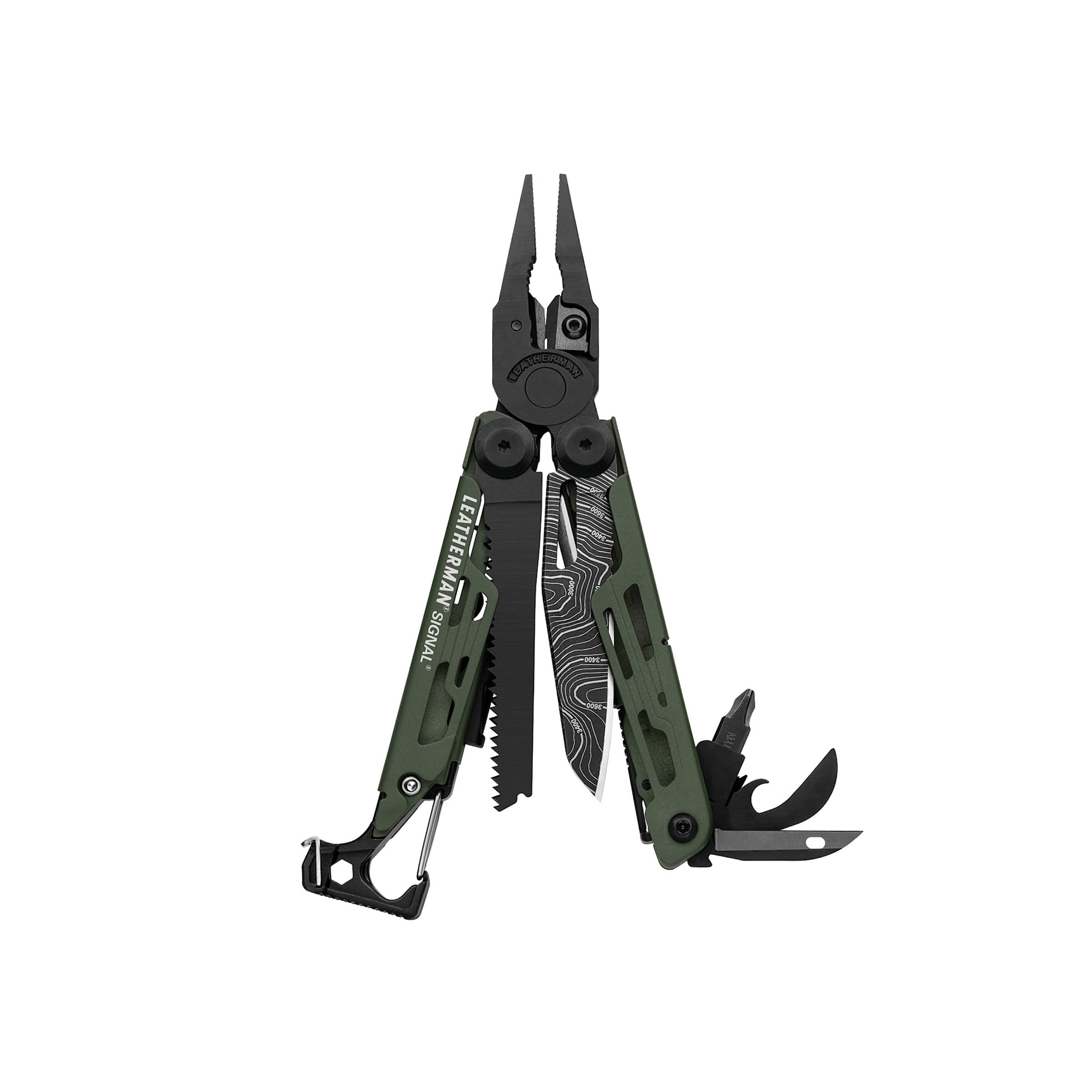
The Signal packs a fire starter, whistle, and hammer into a 7.5 oz package, setting it apart from the Wave+ as a dedicated backcountry tool. However, the survival extras add weight and complexity, and durability concerns — blade wear and corrosion — are more prominent here than on Leatherman’s flagship.
This model suits outdoor enthusiasts who want a single tool for emergency scenarios and are willing to accept occasional finickiness with the fire starter. Budget-minded campers or those needing a reliable daily driver should consider a simpler design.
Pros
- High-quality materials and construction.
- Versatile for outdoor and survival scenarios.
Cons
- Pliers may be difficult to open and close; locking mechanism can feel stiff initially.
- Blade and ferro rod components can show wear or corrosion under regular use.
A specialized backcountry tool with integrated fire-starting, but durability tradeoffs make it less suited for everyday camp chores.
Best for Everyday Carry
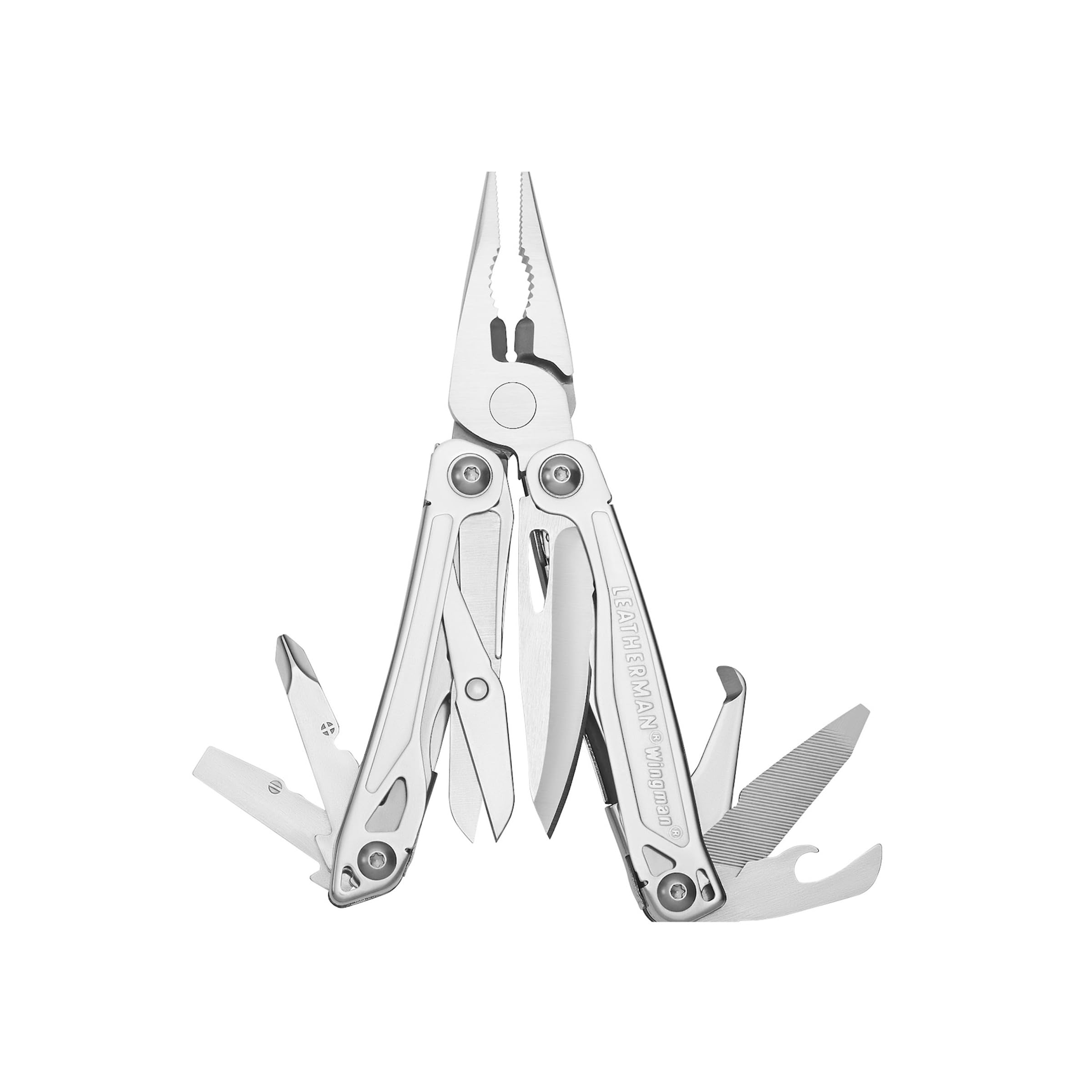
Leatherman Wingman
Key Features
- Number of Tools: 14
- Weight & Size: 6.9 oz, 3.8 in
- Pliers Type: Spring-action
- Locking Mechanism: Liner lock
- Carry Method: Pocket clip
- Price: Mid-Range
An affordable Leatherman with spring-action pliers and pocket clip for campers who don’t mind extra heft. The steel construction holds up for light tasks, though some units show plier tip wear or rust under moderate use. A capable mid-range tool if you prioritize spring-action over maximum durability.
Pros
- Spring-action pliers at a mid-range price point
- Covers common camping tasks without the premium cost
Cons
- Some units may develop plier tip wear or surface rust under moderate use
Best for campers who want spring-action pliers and a pocket clip without paying for the full Wave+ feature set.
Best for Campers with Saw
Leatherman Sidekick

Key Features
- Number of Tools: 14
- Weight & Size: 6.9 oz, 3.8 in
- Pliers Type: Spring-action
- Locking Mechanism: Liner lock
- Carry Method: Pocket clip
- Price: Mid-Range
This Leatherman adds a saw to the spring-action pliers found on the Wingman, making it a reasonable mid-range choice for campers. However, blade sharpness can be inconsistent, the pocket clip may detach, and plier tips can snap under heavy pressure. It lacks scissors that the Wingman offers and costs slightly more, so it sits between entry-level and flagship.
Pros
- Saw and spring-action pliers suited for camp tasks
- Leatherman construction at a mid-range price
Cons
- Clip may detach during pocket carry; plier tip can snap under heavy use
Best for campers who need a saw but can overlook occasional blade dullness and clip concerns, and don’t require scissors.
Best for Gift Givers
Veitorld Hammer Multitool

Key Features
- Number of Tools: 14
- Weight & Size: 1.08 lb, 7.0 in
- Pliers Type: Manual
- Carry Method: Sheath included
- Price: Budget
This novelty multitool packs a hammer and axe head into a portable package, making it a conversational gift for dads or grandpas who enjoy light camp tasks like driving tent stakes. The included sheath aids carry, and the stainless steel build feels solid at first glance. However, the pliers can bend under moderate pressure, and several tools (like the screwdrivers) are fiddly to deploy and smaller than expected. That limits this to occasional use rather than a primary camping companion – better as a thoughtful present than a hard-working tool.
Pros
- Hammer/axe head adds unique capability not found in typical multitools
- Thoughtful gift appeal with solid perceived quality out of box
Cons
- Pliers may bend under pressure; some tools are fiddly to deploy
Works best as a unique gift for a casual camper who needs a compact hammer for light stakes – not a do-it-all tool for serious outdoor work.
Best for Budget Campers
Mossy Oak 21-in-1

Key Features
- Number of Tools: 21
- Weight & Size: 1.0 lb, 4.0 in
- Pliers Type: Self-locking
- Locking Mechanism: Self-locking
- Carry Method: Sheath included
- Price: Budget
This budget multitool packs 21 tools including a magnetic hex sleeve and self-locking pliers, making it a cost-effective addition to a base camp or vehicle kit. The tradeoff is clear: at 1 lb it’s too heavy for pocket carry, and the locking mechanism can feel stiff out of the box. Durability concerns with the pliers and sheath mean it’s best reserved for light tasks rather than heavy camp chores.
Pros
- High tool count for the price – covers most basic camping and DIY needs
- Stainless steel build feels sturdy for the weight class
Cons
- Heavy at 1 lb – not a pocket-friendly design, best stored in a bag or sheath on a belt
For budget campers who keep their tools in a glovebox or backpack rather than their pocket, this offers good value for the tool count.
Best for Gift Givers
DR.LILIANG Hammer Tool

Key Features
- Number of Tools: 13
- Weight & Size: 10.9 oz, 5.9 in
- Carry Method: Sheath included
- Price: Budget
This 13-in-1 tool delivers a solid hammer function for camping stakes and includes a window breaker for emergencies. The stainless steel build feels sturdy for light use. However, the included screwdriver bits are non-standard and very small, making them impractical for screwdriving tasks. It works best as a unique gift or a glovebox companion rather than a primary camping multitool.
Pros
- Solid hammer function for tent stakes and emergency glass breaking
- Great gift appeal with thoughtful packaging
Cons
- Screwdriver bits are non-standard and too small for practical screwdriving
Best for gift-givers seeking a unique, functional hammer tool, or campers who need a compact stake driver and don’t require screwdriving capability.
How to Choose
The most important decision is whether you need pliers at all – they add weight and complexity, but they’re essential for wire repairs, gripping hot cookware, or bending tent stakes.
Number of Tools
More tools don’t automatically mean a better camping tool. Each extra function adds weight and makes the tool bulkier in hand. A 21-in-1 under $30 may look impressive, but many include redundant bits or tiny screwdrivers that are useless on the trail.
Focus on the tools you’ll actually use: a knife, saw, pliers, screwdriver, and maybe scissors. For most campers, 15-18 well-chosen tools outperform 21 that include a fish scaler or an awl you never touch.
Weight & Size
Every ounce matters when you’re carrying a multitool on a multi-day hike. A 5-ounce tool like the Skeletool disappears in your pocket, while a 1-pound model like the Mossy Oak 21-in-1 stays in the car. The hidden trade-off: lighter tools often skip scissors, saws, or spring-action pliers.
Consider where you’ll carry it. If it lives on your belt, a 9-ounce full-size tool is fine. If it’s in your pack’s hipbelt pocket, every extra ounce reduces pack space for food or water.
Pliers Type
Spring-action pliers use a spring to open the handles automatically, making them faster for repetitive tasks like pulling barbed wire or gripping small objects. Manual pliers require you to open them by hand, which is slower but often stronger because there are fewer moving parts.
For camping, spring-action is a convenience bonus, not a necessity. But if you anticipate many small gripping tasks – fixing zippers, removing splinters, or handling hot stove parts – the extra cost is worth it.
Locking Mechanism
A reliable lock prevents the blade from folding on your fingers during use. Liner locks are common on plier-based multitools and are generally secure if the steel is thick enough. Slipjoint designs (like on Swiss Army knives) rely on backspring tension and can close under heavy pressure.
The trap: some budget multitools claim a lock but the mechanism can fail under moderate stress, as seen on the RoverTac 15-in-1. Always test the lock before a trip – if the blade wobbles or unlocks with a slight push, choose another tool.
Carry Method
Pocket clips keep the tool handy without a bulky sheath, but they work best on lightweight models under 7 ounces. Heavier tools tend to slip out or drag down a pocket. Sheaths protect the tool and distribute weight on a belt, but they can snag on brush when hiking.
Two-piece sheath systems (nylon with a removable clip) offer the best compromise. They let you attach the tool to a pack strap or belt loop without the sheath flopping around.
Extra Features
Survival extras like fire starters, whistles, and hammer heads add weight and complexity. A ferro rod on a multitool may seem clever, but it’s often too small to grip comfortably and the striker can be awkward to use. These features are rarely a substitute for dedicated gear.
If you want a do-it-all survival tool, the Leatherman Signal packages them in a single unit – but at a premium price and with some durability trade-offs. For most campers, a separate fire starter and a whistle are lighter and more functional.
FAQ
Why do my multitool pliers keep breaking?
Pliers break most often because the tool is asked to do work beyond its design – cutting hardened wire or twisting a rusty bolt. Budget multitools use cheaper steel and thinner hinge pins. For camp tasks like bending tent stakes or cutting zip ties, even budget pliers hold up, but avoid using them on thick metal or as a hammer.
Is a Leatherman Wave+ worth the money over a Gerber Suspension?
Yes, if you need a tool that lasts through years of camping and DIY projects. The Wave+ uses higher-grade stainless steel, replaceable wire cutters, and better lockup. The Gerber Suspension-NXT is a solid budget choice for occasional use, but its pliers and locking mechanism are more likely to fail under moderate stress. Pay the premium if you want a single tool for the next decade.
What is the best lightweight multitool for backpacking and camping?
The Leatherman Skeletool at 5 ounces is the lightest plier-based multitool that still includes a knife, bit driver, and bottle opener. It lacks a saw and scissors, so it’s best for ultralight hikers who prioritize weight. For a sub-4-ounce option without pliers, the Victorinox Huntsman gives you a saw and scissors in a classic folding knife.
Can a multitool replace a dedicated camping knife and saw?
Not for serious bushcraft. A multitool’s blade is shorter and thinner than a dedicated camping knife, and its saw has a smaller tooth pitch – fine for light branches but frustrating on thicker logs. For camp tasks like whittling tent stakes or cutting rope, a multitool works well. For batoning wood or heavy cutting, bring a fixed-blade knife and a folding saw.