This post contains affiliate links. We may earn a small commission when you buy through our links — at no extra cost to you.
Many parents discover after buying that the ‘lightweight’ sleeping bag advertised takes ten minutes to cram back into its sack, and the zipper snags on fabric after a few uses.
Those two details — stuff sack size and zipper quality — matter more than the ‘lightweight’ label on the box. A bag that repacks easily and zips smoothly turns bedtime from a chore into a routine.
This guide focuses on real-world usability: which kids’ sleeping bags actually deliver on warmth claims, pack back into their sack without a fight, and survive the washing machine. The choice comes down to temperature range and how your child sleeps, not marketing promises.



Best for Cold-Weather Camping
TETON Junior 20°F
Key Features
- Temp Rating: 20°F
- Weight: 2.65 lbs
- Washable: Yes
- Price: Mid-Range
The TETON Junior is rated to 20°F and backed by a limited lifetime warranty — a combination that sets it apart from most other kids’ bags. The rectangular shape and polyester fill provide consistent warmth for nights near freezing, and the construction feels substantial enough to handle several seasons of use.
Parents report that the bag keeps children comfortable even when temperatures dip into the low 20s, with the durable shell and zipper holding up well after repeated trips. The 66-inch length fits kids up to about 5’2", and the 26-inch width offers enough room for most elementary-age children to shift position without feeling restricted.
This bag is best for families who camp in cold weather and want something that will last through multiple children’s camping phases. The included stuff sack is very tight — repacking takes patience, and a larger compression sack is a practical upgrade. For taller or older kids, the width may feel narrow, but for the intended 5-10 age range it works well.
Pros
- Genuine 20°F warmth keeps kids comfortable near freezing
- Durable build quality that holds up over several seasons
- Limited lifetime warranty adds long-term confidence
- Soft interior fabric adds comfort on cold nights
Cons
- For older or taller kids, the rectangular shape can feel snug
- Stuff sack is very small, making repacking a tight squeeze
For families who camp in cold weather, the TETON Junior delivers warmth and construction that other kids’ bags can’t match — just plan to swap the stuff sack for a larger one.
Best for Mild Weather & Value
Coleman Kids 45°F
Key Features
- Temp Rating: 45°F
- Weight: 2.86 lbs
- Zipper: ZipPlow anti-snag
- Washable: Yes
- Price: Mid-Range
The Coleman Kids 45°F bag differentiates itself with a glow-in-the-dark pattern that excites children and a ZipPlow zipper that glides smoothly without catching fabric. This makes it a more engaging option for first-time campers compared to the TETON Junior, which focuses on cold-weather performance.
Designed for mild outdoor nights and indoor sleepovers, this sleeping bag keeps kids comfortable down to 45°F. The machine-washable synthetic fill holds up well to typical play-and-camp cycles. However, some units have shown seam separation after multiple washes, so this bag fits best for light-duty use rather than weekly camping trips.
The rectangular shape provides ample wiggle room, and at 2.86 pounds it is manageable for a parent to carry. The stuff sack is snug — rolling the bag loosely before stuffing makes repacking easier.
Pros
- Glow-in-the-dark pattern excites kids and makes bedtime fun.
- ZipPlow zipper reduces fabric snags, making entry and exit easier.
- Synthetic fill keeps kids warm in mild weather down to 45°F.
Cons
- Stuff sack is tight, requiring extra effort to repack.
- Seam durability may be inconsistent after repeated washing.
A fun, kid-focused sleeping bag for mild-weather camping and sleepovers, best for families who value design and ease of use over extreme durability.
Best for Backpacking
KidzAdventure Mummy
Key Features
- Temp Rating: 32°F
- Weight: 2.09 lbs
- Zipper: Prone to failure
- Washable: Yes
- Price: Budget
The KidzAdventure Mummy stands out for its 2.09-pound weight and compact packed size, making it the lightest option here for kids who need to carry their own bedding. While the top pick (TETON Junior) offers a warmer 20°F rating and a lifetime warranty, this bag trades some cold-weather performance for genuine portability — a meaningful difference for backpacking trips where every ounce counts.
Real-world feedback highlights two tradeoffs. The zipper can become difficult to operate after repeated use, and the included stuff sack is tight, requiring patience to repack. These are not dealbreakers for a budget-priced bag, but they do ask for gentle handling and a bit of extra packing time.
This bag suits older children (ages 5-12) who are comfortable sleeping in a mummy shape and who will be joining on hikes or scout outings. It is less appropriate for restless sleepers who may feel confined, or for families who expect a zipper that glides effortlessly season after season. The 32°F rating is sufficient for cool summer nights but not for deep winter camping.
Pros
- Lightweight at 2.09 lbs packs down small for a child’s backpack
- 32°F temperature rating keeps kids warm on cool camping nights
- Adventure-themed design includes a built-in pillow sleeve
Cons
- Repacking into the included stuff sack can be a tight squeeze
- Zipper may show signs of wear or snagging after limited use
Best for families who prioritize pack weight over warmth and are willing to handle the zipper with care.
Best for Cozy Comfort
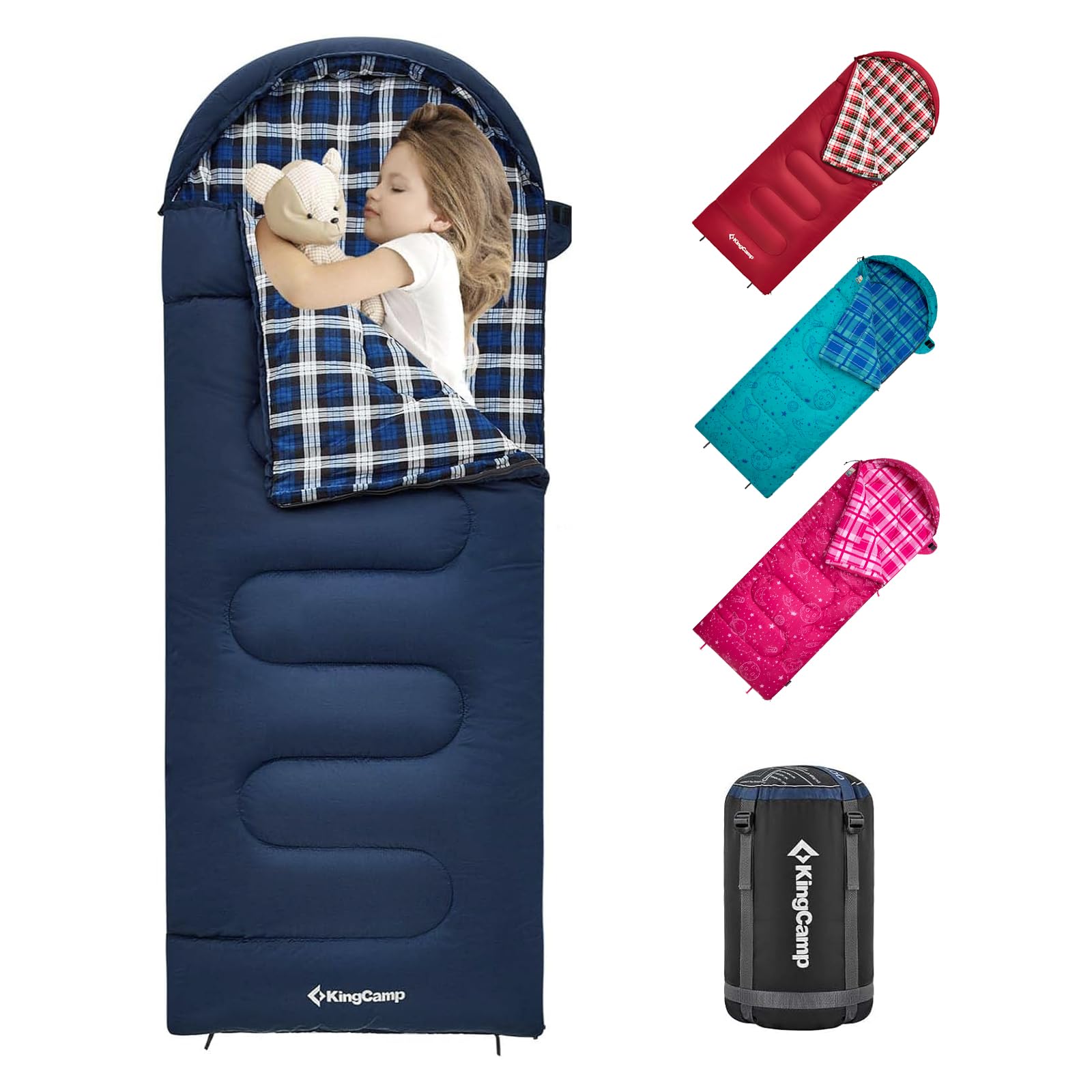
KingCamp 45°F Flannel
Key Features
- Temp Rating: 45°F
- Weight: 3 lbs
- Zipper: Occasional sticks
- Washable: Yes
- Price: Mid-Range
The flannel lining is the defining feature here — it’s genuinely soft and cozy, the kind of fabric that makes kids want to crawl in. That blanket-like feel is what sets it apart from the more mainstream Coleman option, which uses a synthetic taffeta interior. For sleepovers or mild spring evenings, this bag delivers on comfort where others feel utilitarian.
This bag suits families who car-camp in temperate weather or host indoor sleepovers. The 45°F rating means it works from about 40°F up to 50°F — below that, you’ll need extra layers. At 3 pounds it’s not backpacking gear, but for tossing in the trunk or carrying to a friend’s house, the weight is manageable. Zipper quality can vary between units: some run smoothly, others may develop sticking after moderate use. That’s something to check early rather than discover on the first trip.
In mild conditions, the hollow-fiber fill and semi-rectangular cut provide enough warmth without feeling restrictive. Kids who move around in their sleep appreciate the extra wiggle room. The flannel holds up well to washing — though the bag’s carrying case and seam stitching may show wear faster than pricier options. For casual use with younger children who value softness over ruggedness, it’s a fair tradeoff.
Pros
- Cotton flannel interior that kids describe as blanket-like
- Holds warmth reliably in 40–50°F weather
- Materials and overall build feel substantial for the price
Cons
- Zipper may occasionally stick or become difficult to operate after repeated use
- Stitching around the bag holder and seams can come undone with regular use
If your child prioritizes a soft, cozy sleeping surface over ultralight packing or extreme durability, this mid-priced flannel bag hits the mark for mild weather. Just inspect the zipper early and consider using a lubricant if it starts to grab.
Best for Toddlers & Budget
tuphen Kids
Key Features
- Temp Rating: 40°F
- Weight: 2.1 lbs
- Zipper: Snags fabric
- Washable: Yes
- Price: Budget
Unlike the flannel-lined option that prioritizes softness, the tuphen focuses on value: a 40°F comfort rating at a price that undercuts most kids’ bags. Its rectangular shape provides enough room for toddlers to shift around, and the polyester fill holds warmth decently for mild nights above 50°F. Weighing just 2.1 pounds, it’s light enough for a preschooler to carry to the backyard tent.
This bag is best suited for children ages 2 to 6 who need a lightweight, portable sleep solution for indoor sleepovers or summer camping. The 61-inch length accommodates kids up to about 4’6′ — beyond that, the fit becomes restrictive. The zipper has a tendency to snag the inner fabric when closing, so it’s not ideal for nightly use or for kids who zip themselves in unsupervised. While the zipper can catch, gently guiding the fabric helps — a tradeoff worth accepting at this price point.
Cheerful color options and child-friendly prints make the bag appealing to young campers, and the waterproof outer shell adds a layer of protection against damp grass or spills. The polyester material wipes clean easily, which parents will appreciate. For the price, it’s a capable starter bag that prioritizes affordability over heavy-duty construction.
Pros
- Great warmth for the price – comfortable in temperatures down to 40°F
- Lightweight at 2.1 lbs – easy for toddlers to carry to the living room or campsite
- Cute color options and kid-friendly prints appeal to young children
- Waterproof outer shell helps keep the bag dry on damp ground
Cons
- Zipper can catch the fabric when closing – more noticeable during hurried bedtime routines than occasional sleepovers
- The 61-inch length fits children only up to about 4’6′ – too short for kids over 7 or those tall for their age
For families introducing a toddler to camping or sleepovers without spending much, this bag offers solid warmth and a kid-friendly design – just expect the zipper to need a little patience.
Best for Unicorn Lovers
Axolotl Unicorn

Key Features
- Temp Rating: 32°F
- Weight: 3 lbs
- Zipper: Bottom gap
- Washable: Yes
- Price: Mid-Range
The Axolotl Unicorn Sleeping Bag charms with its bright rainbow unicorn print that kids immediately love. It offers decent warmth for indoor sleepovers or warm-weather camping. However, the material has a crinkly texture that rustles noticeably, and the zipper leaves a gap at the bottom — inconveniences that may disturb light sleepers. These quirks keep it from competing with more functional outdoor bags, but for a themed sleepover bag, the fun factor wins.
Pros
- Bright unicorn pattern that captivates young fans
- Good warmth for sleepovers and warm-weather camping
Cons
- Zipper leaves a small gap at the foot end, which can let in cool air
- Crinkly fabric creates rustling sounds that can be disruptive in quiet sleep environments
This bag works well for unicorn-themed sleepovers where the fun design outweighs the noise and zipper quirks.
Best for Warm Nights Only
CORE Youth 50°F

The CORE Youth 50°F is the cheapest outdoor sleeping bag among credible options, making it a smart choice for families on a budget. It offers a generous 64-inch length that fits kids with room to grow, and the polyester hollow fiber fill provides basic insulation for warm nights. However, the 50°F rating strictly limits its use to summer camping or indoor sleepovers – it won’t handle cooler temperatures. The rectangular shape is less efficient at retaining heat compared to mummy designs, and long-term durability is still unverified due to limited user feedback. For mild-weather use at a low price, it’s a functional option.
Pros
- Generous 64-inch length lets kids use it for several years as they grow.
- Lowest price among outdoor-grade kids’ sleeping bags – a smart choice for budget-conscious families.
Cons
- Only effective in temperatures above 50°F – not suitable for cooler conditions.
- Rectangular shape can lead to more heat loss compared to mummy bags – a design tradeoff for easier movement.
Worth considering for summer sleepovers and warm-weather camping when price is the top priority, but look elsewhere if you need cold-weather performance.
Best for Indoor Sleepovers
iPlay iLearn Dino Plush

Key Features
- Temp Rating: Indoor
- Weight: 4.15 lbs
- Washable: Yes
- Price: Premium
The iPlay iLearn Dinosaur Sleeping Bag is exceptionally soft and generously sized for children up to 8+ years, making it a cozy choice for sleepovers and daycare naps. However, it lacks waterproofing and insulation, so outdoor camping is off the table. Additionally, the decorative paws and eyes can detach after washing, so gentle care is important.
Pros
- Extremely soft and fluffy surface that kids love to cuddle
- Large 70×27-inch size accommodates kids up to age 8-10 with room to spare
- High-quality construction with a cute dinosaur design
Cons
- Decorative elements (paws, eyes) may detach after washing
- Not weatherproof or insulated, so it is unsuitable for outdoor camping
Best for indoor sleepovers and dinosaur-themed gifts when you are willing to hand-wash or use a gentle cycle to protect the decorative parts.
How to Choose
The two details that matter most are the temperature rating and how easily the bag fits back into its stuff sack — almost every complaint centers on those.
Temperature Rating
A bag’s temperature rating indicates the lowest temperature at which a typical child can sleep comfortably. A 20°F bag uses more insulation and heavier fabric than a 45°F bag, making it warmer but also bulkier and harder to pack.
For summer camping above 50°F, a 45°F bag is sufficient. For spring or fall trips that dip into the 30s, choose a 20°F rating. Kids also sleep colder than adults, so add 5–10°F to the expected low when selecting a bag.
Weight and Packed Size
Most kids’ sleeping bags weigh 2–3 lbs, but the packed size varies widely. A lighter bag (under 2.5 lbs) is easier for a child to carry and takes up less space in the car or backpack.
However, lighter bags often use thinner fabrics that may not hold up to repeated use or washing. A heavier bag (3+ lbs) tends to be more durable but takes up more trunk space. For car camping, weight matters less; for backpacking, every ounce counts.
Stuff Sack and Repacking
The stuff sack is almost always smaller than you expect. Many parents report spending several minutes wrestling the bag back in. A bag with a larger sack or a compression strap system makes repacking much faster.
If a bag’s reviews repeatedly mention a tight stuff sack, plan to buy a separate larger sack. Some brands sell oversized replacement sacks for under $10, which can save daily frustration on multi-night trips.
Zipper Durability
Zippers on kids’ bags are a weak point. Plastic zippers can snag on the fabric, and the pull tab often breaks after a few dozen cycles. Metal zippers are less common but more durable.
Look for bags with a zipper guard (a fabric strip inside that prevents snags) or an anti-snag design like Coleman’s ZipPlow. Avoid bags where reviews report zipper failure after just a few uses.
Machine Washability
Kids’ sleeping bags get dirty quickly — mud, s’mores, juice. Machine washability is a must unless you enjoy hand-washing a 3-pound bag in a bathtub. Most modern synthetic bags can be washed in a front-loader on a gentle cycle.
Check that the bag’s care instructions allow machine washing. Some bags with decorative attachments (like faux fur or buttons) may require delicates or hand-washing to avoid damage.
FAQ
Why do kids sleeping bags have such small stuff sacks?
Manufacturers often prioritize a small packed size for marketing over actual usability. A tight sack also compresses the insulation for storage, but it makes daily repacking frustrating. If the sack is too small, buy a separate larger compression sack — it’s a cheap fix that saves time every time you pack up.
Can a 45°F sleeping bag be used in 30°F weather?
No, not comfortably. A 45°F rating means the bag is designed to keep a child warm down to 45°F. Below that, the insulation is insufficient, and the child will likely shiver and wake up cold. For 30°F weather, look for a bag rated at 20°F or lower.
At what age should I switch from a toddler nap mat to a real sleeping bag?
Around age 3–4, when the child starts camping outdoors. Nap mats lack insulation, waterproofing, and a proper weather seal — they are designed for daycare floors, not forest floors. Once your child sleeps outside, move to a sleeping bag with a temperature rating.
What’s the difference between a rectangular and a mummy sleeping bag for a child?
Rectangular bags offer more room to move and are easier to get in and out of — good for restless sleepers and car camping. Mummy bags are narrower, lighter, and trap heat better, making them ideal for backpacking and colder temperatures. A mummy shape can feel restrictive for young children.