This post contains affiliate links. We may earn a small commission when you buy through our links — at no extra cost to you.
Hunting boot marketing often promises total waterproofing and warmth, but real-world performance varies sharply. Many hunters find themselves swapping boots mid-season because treads wear out, seams leak, or the fit turns into a wrestling match.
This guide cuts through the marketing by focusing on the trade-offs that actually matter in the field: insulation weight vs. activity level, rubber vs. leather construction, and the hidden hassle of getting pull-on boots off. The right boot for you depends on whether you’re walking miles over dry ridges or sitting still in a wet swamp.
We’ve sorted through the most common complaints—tread wear, sizing headaches, and waterproof failures—to highlight boots that deliver where it counts. No single boot does everything, but the picks here match specific hunting scenarios with predictable performance.




Best for Wet Cold Hunts
MUCK Woody Max
Key Features
- Waterproof: Rubber neoprene
- Closure: Pull-on
- Height: Mid-calf
- Price: $$
The MUCK Woody Max combines neoprene construction with a pull-on design that keeps feet warm and dry in cold, wet conditions. Multiple seasons of use confirm consistent insulation down to 20°F and a waterproof seal that handles swampy stand hunts without leakage.
Slip-on convenience matters when you’re getting in and out of a blind, and the mid-calf height provides enough coverage without restricting movement. The tradeoff is a softer tread compound that can wear faster than lace-up competitors if you walk significant distances — this boot suits stationary hunts and short hikes better than mile-long treks through rocky terrain.
Designed for cold-weather deer and duck hunters who prioritize warmth, waterproofing, and easy on/off. Best for all-day sits in wet swamps or fields. Not ideal for hunters who need lace-up ankle support or expect heavy-duty tread longevity over rough ground.
Pros
- Build quality and day-long comfort for stand hunting.
- Consistent warmth in temperatures down to 20°F.
- 100% waterproof for wet swamps and rain.
Cons
- Tread can wear faster than lace-up boots on rocky or long-distance terrain.
- Occasional reports of seal leakage after heavy use.
If you need a warm, waterproof boot for cold-weather stand hunting and value slip-on ease, the Woody Max delivers consistent performance — just be aware the tread isn’t built for miles of walking.
Best for Upland Bird Hunt
Irish Setter Wingshooter
Key Features
- Waterproof: Leather + membrane
- Closure: Lace-up
- Height: 7 inch
- Price: $$
This Wingshooter delivers standout comfort and leather build quality that make it a favorite for long days chasing pheasants across dry fields. The Goodyear welt construction permits resoling, extending the boot’s service life. However, the outsole is notably slippery on wet rocks and rain-wet floors, so it doesn’t suit stream crossings or rainy hunts. Sole separation has been noted in some cases, though the resoleable design offers a remedy. Best for upland bird hunters who stay on dry terrain and value a supportive, lace-up leather boot over wet-weather traction.
Pros
- Superior comfort and cushioning for all-day hunts
- High-quality full-grain leather construction
Cons
- Slippery on wet rocks and rain-wet floors – unsuitable for wet terrain
- Sole separation may occur; the Goodyear welt allows resoling
A high-quality leather boot for dry-terrain upland hunting, but traction limitations mean it is not for wet conditions.
Best for Extreme Cold
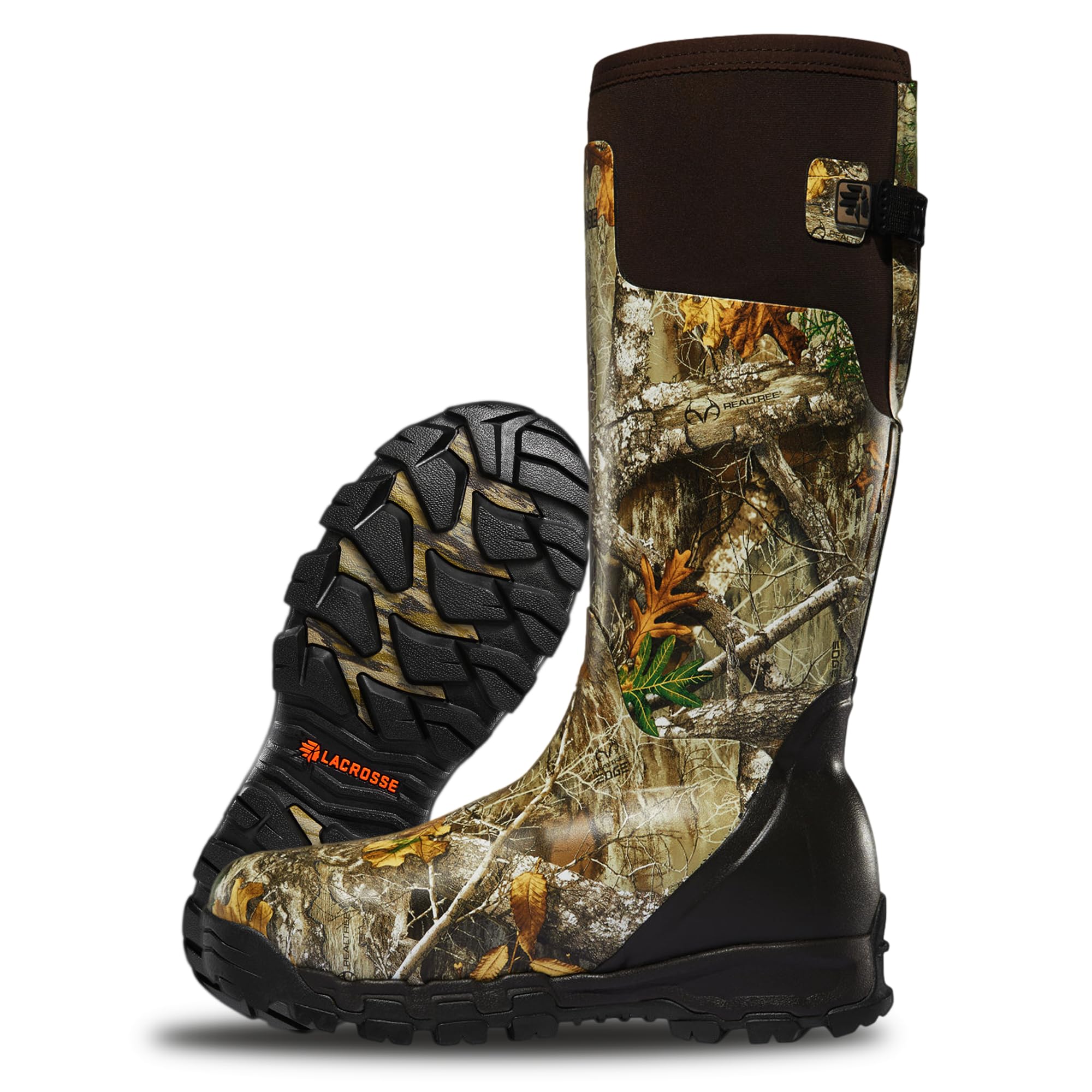
LaCrosse Alphaburly Pro
Key Features
- Insulation: 1600g Thinsulate
- Waterproof: Rubber/neoprene
- Closure: Pull-on
- Height: 18 inch
- Price: $$
While the top pick balances warmth, weight, and convenience, the Alphaburly Pro goes all-in on insulation — its 1600g Thinsulate is the most extreme cold protection in this group. That single-minded focus makes it the go-to boot when temperatures drop well below zero, but it also means compromises in other areas.
This boot is built for ice fishing and late-season northern hunts where you’re sitting in a stand for hours, not hiking miles. The spacious toe box accommodates thick wool socks, and the rubber-neoprene construction keeps feet dry. But the weight is noticeable, and getting these boots off without a boot jack is a real chore.
Pros
- Exceptional warmth for sub-zero temperatures
- High-quality construction and fit
- Spacious toe box accommodates thick socks
Cons
- Very heavy and difficult to remove; a boot jack is essential
- Heel lining can disintegrate, and some boots develop leaks over time
The Alphaburly Pro is the extreme cold specialist in this group — ideal when warmth is the priority over mobility.
Best for Early-Season Hikes
Danner Vital 8"
The Danner Vital 8" is the lightest lace-up boot in this roundup, pairing 400g Thinsulate insulation with a hiking-shoe feel. It’s built for covering miles on early-season deer drives and dry terrain, where weight matters more than waterproofing.
This suit fits hunters in arid climates who prioritize walking comfort and ankle support over water protection. The leather and polyester upper handles light rain but will leak in streams or deep puddles, so keep to dry trails. Sizing can run small, so going up half a size is worth considering.
Pros
- Lightweight construction reduces fatigue on long walks.
- Outsole provides reliable grip on varied terrain.
Cons
- Sizing can run small; ordering a half-size up may be needed.
A go-to for dry-weather walkers who want a light, comfortable lace-up with mild insulation.
Best for Snake Protection
ROCKY ProLight Snake
Key Features
- Waterproof: Leather + membrane
- Closure: Lace-up + side zipper
- Height: Knee-high
- Price: $$
Effective snake protection up to knee height with a lightweight, comfortable fit sets the ROCKY ProLight apart from heavier snake boots. The tradeoff: waterproofing is inconsistent — you may get wet feet after stream crossings — making this boot best for warm-weather turkey and small game hunts where staying dry is a secondary concern.
Pros
- Comfortable for long days in the field
- Snake protection is effective
- Lightweight and easy to move in
Cons
- Durability can vary — some boots may develop holes or zipper failures over time
- Waterproofing is inconsistent — wet feet are possible after stream crossings
For hunters who need snake protection and value lightweight comfort over water resistance, the ROCKY ProLight is a capable boot – just don’t expect it to keep your feet dry after crossing a creek.
Best for Cold Wet Hunts
TIDEWE Next Camo G2
Key Features
- Insulation: 800g Thinsulate
- Waterproof: Rubber neoprene
- Closure: Pull-on
- Price: $$
With 7mm neoprene and 800g Thinsulate, this boot earns the best durability marks among TIDEWE models — a clear step up from the budget-friendly alternative that trades longevity for a lower price. The build feels substantial without rattling, and the waterproof seal holds up through wet brush and shallow crossings.
This is the boot for all-day sits in cold, damp conditions when you want warmth and waterproofing without the premium price tag. The bulk and weight are noticeable during long walks, so it’s better for stand hunting than covering miles. Half-size buyers should order a full size up to accommodate thick socks.
Pros
- Sturdy build that holds up through multiple seasons of use
- Warm enough for cold-weather hunts with 800g insulation
- True-to-size fit leaves room for heavy socks
Cons
- Feel heavy and bulky during extended walking – better suited for stationary hunting
A durable, warm neoprene boot that beats cheaper options on longevity while keeping the price reasonable for hunters who value reliability over ultralight weight.
Best for Wet Mud Work
LaCrosse Burly Classic
The LaCrosse Burly Classic delivers impressive warmth and comfort for its mid-range price, making it a strong choice for cold-weather hunting and farm work. While the MUCK Woody Max offers a better overall balance, this LaCrosse excels as a simple rubber boot for standing hunts.
This boot suits late-season deer hunters in swampy ground and farmers working in cold mud. The snug fit and adjustable top strap seal out debris, but removal is a physical chore that typically requires a boot jack – best reserved for days when you don’t need to take them off frequently.
Pros
- Warmth holds up well in cold weather without adding bulk.
- Soft sole cushions feet on hard or uneven ground all day.
Cons
- Some boots develop cracks or leaks at stress points over time.
For hunters who prioritize warmth and comfort over easy removal, this LaCrosse delivers solid performance in cold mud at a fair price.
Best for Mountain Deep Snow
Irish Setter Elk Tracker

Key Features
- Insulation: 1000g Thinsulate
- Waterproof: Leather + membrane
- Closure: Lace-up
- Height: 12 inch
- Price: $$$
The Elk Tracker delivers 1000g Thinsulate warmth and full-grain leather durability for deep snow and mountain hunting. Its narrow fit requires sizing up for most hunters, and the premium-priced build suits those who demand extreme conditions over everyday versatility. This is a heavy, purpose-built boot for dedicated elk hunters in cold, rugged terrain.
Pros
- 1000g Thinsulate insulation keeps feet warm in sub-zero temperatures
- Full-grain leather upper provides long-term support and durability in rough terrain
Cons
- Narrow fit requires sizing up, especially for hunters with wider feet
Best suited for elk and mountain hunters who prioritize warmth and build over fit width and cost.
Best for Budget Occasional
TIDEWE Rubber Neoprene
This boot provides reliable warmth and waterproofing for occasional use in mild winters, making it a solid value for budget-conscious hunters. However, durability can be inconsistent – some units develop leaks or seam separation within a year, so it’s better suited for light, intermittent use rather than heavy-duty or frequent hunting.
Pros
- Extremely warm and comfortable for cold-weather hunting.
- Good value for the price with reliable waterproofing.
Cons
- Durability can be inconsistent; some boots develop leaks or seam separation within a year.
A good choice for occasional hunters who prioritize warmth and price over long-term durability.
How to Choose
The biggest mistake hunters make is choosing insulation weight before considering the actual activity and climate.
Insulation Weight
Insulation is measured in grams of Thinsulate or millimeters of neoprene. High insulation (1000g+) traps body heat effectively for stationary stands in sub-zero weather, but generates sweat and overheating during hiking. Low insulation or uninsulated boots breathe better for early-season walks.
A hunter walking miles to a ridge needs less insulation than one sitting for hours in a blind. Match the insulation to the coldest expected temperature at rest, not the daytime high.
Waterproof Construction
Rubber (neoprene) boots are impermeable and remain waterproof as long as the material stays intact. Leather boots with a waterproof membrane rely on a durable water-repellent (DWR) coating; once the coating wears and the upper saturates, the membrane can leak under pressure.
For frequent creek crossings or wet snow, rubber boots offer more reliable protection. Leather boots offer better breathability but require regular maintenance to stay waterproof.
Closure Type
Lace-up boots provide adjustable ankle support and a locked heel fit, reducing blisters and improving stability on uneven ground. Pull-on boots sacrifice support for convenience but are harder to remove when tight at the ankle.
A boot jack is almost mandatory for snug pull-on boots; without one, removing them strains the calf and can damage the boot. For all-day walking, lace-ups typically cause less fatigue.
Boot Height
Knee-high boots (16-18 inches) protect against water, mud, and snake bites but add weight and restrict knee flexion. Mid-calf boots are lighter and allow freer movement, but offer less protection in deep water.
Choose height based on the worst terrain you expect: knee-high for swamps and snake country, mid-calf for dry hills and early-season hunts.
Tread Pattern
Deep, aggressive lugs dig into mud and soft snow but wear quickly on hard-packed trails and pavement. Shallow, multi-directional treads provide better grip on wet rocks and last longer on mixed terrain.
For swampy bottoms choose deep lugs; for rocky hillsides a more moderate tread with siping reduces slipping. No single tread works everywhere, so prioritize based on your primary hunting ground.
FAQ
Why do my hunting boots leak even though they say waterproof?
Leather boots with a membrane often leak when the DWR coating wears off and the leather saturates, pushing water through the membrane. Rubber boots can leak if the neoprene or rubber develops hairline cracks. For guaranteed waterproofing in wet conditions, neoprene rubber boots are the most consistent choice.
How do I get my tight pull-on hunting boots off without a boot jack?
Sit down, grip the heel with both hands, and pull upward while pressing the instep with your other foot. Avoid yanking the top strap. A boot jack (a simple V-shaped board) makes removal effortless and prevents boot damage.
Are lace-up hunting boots better than pull-ons for ankle support?
Yes, lace-up boots allow you to lock the heel and adjust tension across the ankle, providing superior support on uneven terrain. Pull-on boots rely on neoprene stretch, which can loosen over time and increase the risk of ankle rolls on rocks or roots.
Can snake-proof boots double as waterproof boots in wet conditions?
Not reliably. Snake-proof boots prioritize bite resistance with flexible materials that often sacrifice waterproofing. Many are only water-resistant, and users frequently report wet feet after stream crossings. Look for boots that explicitly state both snake protection and waterproof construction if you need both.