This post contains affiliate links. We may earn a small commission when you buy through our links — at no extra cost to you.
Many hiking headlamps claim sky-high lumens but fall short on runtime and build. The real challenge is finding a light that balances brightness with actual battery life and durability.
This guide focuses on models that deliver consistent performance – where the spec sheet matches trail reality. Whether you need a lightweight runner or a rugged backcountry companion, we’ve identified picks that avoid the common pitfalls of early battery degradation and flimsy brackets.
The choice often comes down to whether you prioritize replaceable batteries for multi-day trips or rechargeable convenience for shorter outings. That trade-off is more important than raw lumen numbers.
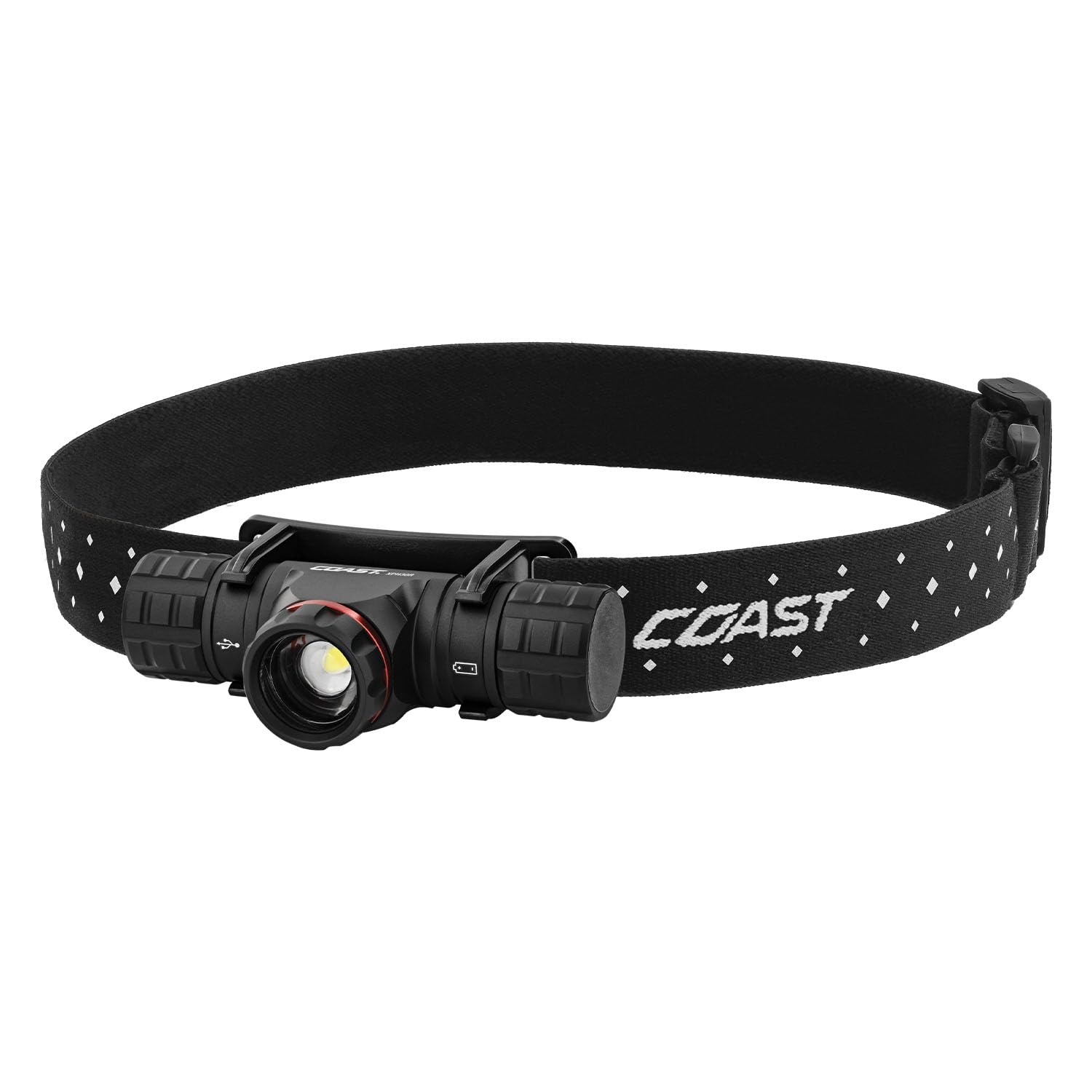


Best for Serious Hikers
Coast XPH30R
Key Features
- Brightness: 1200 (turbo)
- Battery: USB-C, 6.75h high
- Water Resistance: IP54
- Weight: 4.37 oz
- Price: Premium
The Coast XPH30R swaps the usual plastic shell for a machined aluminum body that can take a beating. Its twist-focus beam throws 1200 lumens in turbo mode, while the magnetic base frees up hands for camp tasks or mechanical work. The battery pack is user-replaceable and charges via USB-C, and the lifetime warranty backs the whole package.
This headlamp suits hikers who value durability over gram-counting – serious backpackers, cave explorers, and SAR personnel will appreciate the impact resistance and adjustable beam. At 4.37 oz, it is heavier than ultralight running lamps, but that heft comes from materials that survive drops and rough terrain. For standard day hikes or multi-day trips where gear survival matters, the weight tradeoff is easy to accept.
Pros
- Aluminum housing with twist focus and magnetic base that handles rough use
- Bright adjustable beam with 1200-lumen turbo mode for dark trails and search tasks
- USB-C rechargeable with a replaceable battery pack – extends useful life beyond built-in cells
Cons
- Heavier than ultralight competition – noticeable during trail runs but fine for hiking
For hikers who need a headlamp that can outlive the trail, the Coast delivers professional-grade build and a warranty that backs it – weight is the only compromise.
Best for Runners/hikers
Foxelli MX20
Key Features
- Brightness: 165 lm
- Battery: 3x AAA, 45h low
- Water Resistance: IPX5
- Weight: 3.2 oz
- Red Light: Yes
- Price: Budget
The Foxelli MX20 delivers 165 lumens, IPX5 waterproofing, and a red-light mode in a package that weighs just 3.2 oz. It’s bright enough for hiking trails and comfortable enough to forget you’re wearing it. The tradeoff for this price is a plastic mounting bracket that can crack if the headband is overtightened or handled roughly – something to keep in mind if you tend to adjust tension frequently. For most hikers who treat it with normal care, it holds up well for the cost.
Pros
- Extremely bright for its size with adjustable intensity and red light
- Lightweight and comfortable to wear for extended periods
- IPX5 waterproof rating provides confidence in wet conditions
Cons
- Plastic mounting bracket may crack if headband tension is adjusted frequently or overtightened
For hikers on a tight budget who don’t mind AAA batteries and treat gear gently, this is a fantastic value – just don’t expect the durability of a pricier aluminum model.
Best for Family Camping
Energizer PRO 2-Pack
Key Features
- Brightness: 260 lm
- Battery: 3x AAA, 35h low
- Water Resistance: IPX4
- Weight: ~4 oz
- Red Light: Yes
- Price: Mid-Range
This two-pack delivers consistent 260-lumen output across both lamps, with dimming and red/green modes for preserving night vision. The adjustable headband is comfortable for extended wear. Unlike some budget two-pack options, the Energizer PRO maintains even beam distribution and IPX4 water resistance for damp conditions. For hikers who prefer carrying spare AAA batteries over worrying about charging ports, this setup allows quick swaps on long trips. The tradeoff: no rechargeable option, so frequent users will face ongoing battery costs.
Pros
- Two lamps with dimming and multiple beam modes for shared use in the family or group.
- Mid-range price for a 2-pack with included batteries and adjustable headband.
Cons
- Relies on AAA batteries, creating recurring expense for those who hike often – no rechargeable option.
A dependable two-pack for hikers who value battery-swap convenience over rechargeable simplicity – best for families or groups on moderate outings.
Best for Budget Hikers
Blukar Rechargeable 2-Pack
Key Features
- Brightness: 2000 (claimed)
- Battery: USB-C, 3.5-5h high
- Water Resistance: IPX5
- Weight: ~3 oz
- Red Light: Yes
- Price: Budget
This Blukar 2-pack delivers motion sensor, stepless dimming, red light, and IPX5 waterproofing at a budget price – a rare combo in this tier. The 2000-lumen claim feels bright for short bursts, but runtime on high drops to 3-4 hours, and the motion sensor can trigger accidentally with arm movement. It’s best for hikers who prioritize features over all-night runtime, or as a backup for urban walks and emergency kits.
Pros
- Stepless dimming plus red light and motion sensor give versatile hands-free control.
- USB-C rechargeable and IPX5 rated – good weather protection at this price.
- Comfortable, lightweight build that stays put during brisk walks.
Cons
- Battery life on high setting is limited – expect 3-4 hours of usable brightness.
- Motion sensor may activate from routine head or arm movements in some cases.
A strong value if you keep runtime expectations realistic – ideal for short evening walks or as a spare headlamp.
Best for Ultralight Runners
Lepro 320015
Key Features
- Brightness: 200 lm
- Battery: 3x AAA, 22h low
- Water Resistance: IPX4
- Weight: 1.94 oz
- Red Light: Yes
- Price: Budget
At 1.94 oz without batteries, the Lepro 320015 is barely noticeable on your head – a clear advantage for trail runners and ultralight hikers who count every gram. The 200-lumen output is enough for reading maps, cooking, or jogging on familiar paths, but don’t expect to pick out trail markers at distance in the dark.
This headlamp suits runners who want a simple, disposable-light backup and campers on a tight budget. The reliance on three AAA batteries (not included) means you’ll need spares for longer trips, and the plastic bracket may wear with rough handling – treat it as a capable but not rugged tool.
Pros
- Weighs just 1.94 oz – easy to forget on a headband during long runs.
- Six modes including red light preserve night vision and extend battery life.
- Budget-friendly price makes it a low-risk backup for camping or emergencies.
Cons
- Uses three AAA batteries (not included) – ongoing cost and waste versus rechargeable options.
- 200 lumens limits visibility on dark, technical trails – better suited to paved paths or camp tasks.
If you need the lightest possible headlamp for jogging or as a spare, this Lepro delivers – just keep expectations in check for serious backcountry navigation.
Best for Budget Hikers
GearLight S500 2-Pack
Key Features
- Brightness: 200 lm
- Battery: 3x AAA, 10h
- Water Resistance: Water Resistant
- Weight: 3 oz
- Red Light: Yes
- Price: Budget
The S500 2-pack provides enough brightness for camp chores and short trails at a price that leaves room in the budget for other gear. The adjustable headband and lightweight build keep it comfortable during extended use, and the red light mode helps preserve night vision. Battery life on high brightness is shorter than some alternatives, so this pair suits shorter outings or backup duty rather than all-night treks.
Pros
- Two headlamps for under $15 — a practical value for families or emergency kits.
- Comfortable and lightweight with a secure adjustable headband.
- Multiple modes including red light for preserving night adaptation.
Cons
- Battery drain on high mode can be noticeable — optimal for short tasks rather than extended use.
For casual hikers and emergency-kit builders who want two functional headlamps at a minimal cost, the S500 2-pack delivers — just plan for shorter runtimes on high.
Best for Hikers Single
Energizer PRO-260

Key Features
- Brightness: 260 lm
- Battery: 3x AAA, 35h low
- Water Resistance: IPX4
- Weight: 3.7 oz
- Red Light: Yes
- Price: Budget
This Energizer delivers consistent 260-lumen output with smooth dimming and red light, ideal for hikers who prefer simple AAA batteries. The single pack limits value compared to the 2-pack version, and the lack of rechargeable option may deter eco-conscious users. Still, for households with batteries on hand, it’s a solid budget pick.
Pros
- Consistent brightness with smooth dimming across spot, wide, and red modes.
- Comfortable headband suited for extended hiking or camping.
Cons
- Requires disposable AAA batteries with no rechargeable option, which may be inconvenient for frequent users.
Best for occasional hikers and emergency kits where AAA batteries are readily available and rechargeable isn’t a priority.
Best for Night Fishing
Energizer PRO-360

Key Features
- Brightness: 360 lm
- Battery: 3x AAA, 50h low
- Water Resistance: IPX4
- Weight: 3.53 oz
- Red Light: Yes (red+green)
- Price: Budget
The Energizer PRO-360 delivers 360 lumens with a wide beam and red/green modes for night fishing or hiking. The shatterproof lens and impact-resistant body add durability. However, it relies on AAA batteries, no rechargeable convenience, and costs more than the PRO-260, making it a better fit for occasional use than frequent hiking.
Pros
- Bright 360-lumen output with a wide beam and red/green light modes
- Energizer build quality with shatterproof lens and impact resistance
Cons
- Uses AAA batteries rather than a rechargeable option – less convenient for frequent use
A bright AAA-powered headlamp suited for emergency kits or night fishing where battery swaps are acceptable.
Best for Trail Runners
BIAT Wide Beam 2-Pack

Key Features
- Brightness: 350 lm
- Battery: USB, 4-6h
- Water Resistance: IPX4
- Weight: 2.47 oz
- Red Light: No
- Price: Budget
The wide 230-degree beam and responsive motion sensor make this headlamp suited for runners and hikers who value peripheral vision during short night trips. Battery life is limited to a few hours, and some units may develop charging issues over time, so it is best reserved for predictable outings where you can recharge before each use.
Pros
- Wide 230-degree beam improves peripheral awareness on night trails.
- Lightweight and low-profile design fits comfortably under a hat.
Cons
- For a full evening hike, the battery may run out before you return.
Best for short, predictable night runs where charging before each use is practical and beam width matters more than runtime.
Best for Power Users
SLONIK 1000 Lumens

Key Features
- Brightness: 1000 (claimed)
- Battery: 18650, 4h high
- Water Resistance: IPX4
- Weight: 4 oz
- Red Light: No
- Price: Mid-Range
This headlamp delivers strong brightness for its price, and the aluminum housing feels sturdy. The 1000-lumen output drains the battery in about 4 hours on high, so it suits hunters or campers who need short bursts of light rather than all-night hikes. The plastic bracket that holds the light to the headband may break if dropped — a detail to check before trusting it in rough terrain.
Pros
- Very bright with multiple intensity levels.
- Solid aluminum build withstands outdoor use.
Cons
- Battery lasts only about 4 hours on high; heavy users may need spare 18650 cells.
Best for anyone who wants maximum brightness for short periods and a rechargeable battery they can swap out — not for long-distance backpacking or all-night excursions.
Best for Budget Brightness
Lepro LE 2-Pack

Key Features
- Brightness: 2000 (claimed)
- Battery: USB-C, 10-15h low
- Water Resistance: IPX4
- Weight: 2.65 oz
- Red Light: Yes
- Price: Budget
This 2-pack delivers impressive brightness and a USB-C rechargeable design for a low price. The spot and flood modes work well for camp tasks or short trails. However, battery capacity may degrade over time in some units, making this better suited as a backup light for car or emergency kits rather than regular hiking.
Pros
- Impressive brightness with spot and flood options for camp and trail tasks.
- Rechargeable and lightweight, convenient for short trips or emergency use.
Cons
- Battery capacity may degrade over time; occasional use recommended.
Best suited as a backup light for car or emergency kits, not for frequent hiking.
Best for Budget Hikers
Blukar Rechargeable 2-Pack (v2)

Key Features
- Brightness: 2000 (claimed)
- Battery: USB-C, 4-10h
- Water Resistance: IPX5
- Weight: 2.96 oz
- Red Light: Yes
- Price: Budget
This 2-pack offers impressive brightness, adjustable dimming, and USB-C charging at a budget-friendly price. The motion sensor and multiple modes add versatility for short hikes or camp tasks. However, some units may experience intermittent power issues after a few months, and this model is essentially redundant with the identical but lower-priced Blukar 2-pack already widely reviewed. It works well for casual use where occasional hiccups are acceptable.
Pros
- Very bright with adjustable dimming and multiple modes for hiking versatility.
- Good value 2-pack with USB-C charging and comfortable headband.
Cons
- Some units may develop intermittent power issues after months of use.
Best suited for budget-conscious hikers on short trips or as a backup headlamp in emergency kits.
Best for Stationary Use
Blukar 3-Light Zoomable

Key Features
- Brightness: 8000 (claimed)
- Battery: USB-C, 20h claimed
- Water Resistance: IPX6
- Weight: 9.7 oz
- Red Light: No
- Price: Budget
This headlamp delivers genuine brightness and a useful zoom lens for distance or wide area lighting, plus IPX6 water resistance and long battery life. However, at 9.7 oz it is heavy enough that bouncing becomes an issue during movement, which is why it suits stationary tasks like camping or workshop use rather than hiking or running.
Pros
- Extremely bright even at realistic output with zoomable lens for distance or wide area.
- Long battery life and IPX6 waterproof rating handle wet conditions well.
Cons
- At 9.7 oz, the weight limits use to stationary tasks; bouncing can be an issue if walking briskly.
Best for hunters, campers, or DIYers who need a bright stationary spotlight and don’t mind the heft.
Best for Car Campers
Lighting EVER 2-Pack

Key Features
- Brightness: 150 lm
- Battery: USB, 30h low
- Water Resistance: IPX4
- Weight: 2.85 oz
- Red Light: Yes
- Price: Budget
This 2-pack delivers a decent light for camp chores, with a red light mode and 30-hour runtime on low. But at 150 lumens, it is too dim for navigating dark trails – better suited for emergency kits or RV use rather than serious hiking.
Pros
- Convenient rechargeable 2-pack – good value for everyday use and camping.
- Red light mode and multiple brightness settings for versatility.
Cons
- Insufficient brightness for navigating dark trails – best for close-up tasks.
Ideal for emergency kits and camp chores where weight and rechargeability matter more than beam distance.
How to Choose
The most important factor is finding a headlamp that delivers enough light for your trails without dying mid-hike.
Brightness
Higher lumens don’t always mean better visibility. A 200-lumen light is sufficient for most hiking trails; 500+ lumens are useful for running on technical terrain or navigating dense forests. The trade-off: brighter settings drain batteries faster and generate more heat, which can degrade LEDs over time.
Many budget models claim 2000+ lumens but actually deliver less than half that in real use. Focus on verified output from trusted reviewers, not the headline number.
Battery Type and Runtime
Rechargeable USB models save money on batteries and are convenient for short trips. However, built-in lithium batteries degrade after 200-500 charge cycles and cannot be replaced. If you need a headlamp for multi-day backpacking, look for models with replaceable AAA or 18650 batteries so you can carry spares.
Runtime figures are typically based on the lowest brightness setting. At high output, expect 4-6 hours max. Check user reports for real-world runtime on the mode you’ll use most.
Water Resistance
IPX4 means splash-resistant – fine for light rain. IPX5 or higher can withstand heavy downpours and even brief submersion. For hiking in wet climates or crossing streams, IPX5 is a safer choice. The rubber seals that provide waterproofing can degrade over time, so periodic inspection is recommended.
Weight and Comfort
Every ounce matters when you’re wearing a headlamp for hours. Models under 3 oz are ideal for running and long hikes; those above 4 oz may bounce or cause discomfort. A secure headband with silicone strips prevents slipping. The light’s center of gravity also affects stability – front-heavy designs wobble more.
Red Light Mode
Red light preserves night vision – essential for reading maps, cooking at camp, or moving without blinding companions. However, many cheap headlamps use weak red LEDs that are barely visible. A good red mode should have at least a few lumens and not be buried behind multiple button presses. Some models even offer dimmable red light for gradual adjustment.
FAQ
How many lumens do I actually need for night hiking?
For well-marked trails, 150-200 lumens is sufficient. For technical terrain, trail running, or dense forests, 300-500 lumens provides better depth perception. Above 500 lumens is rarely needed for hiking and often comes with shorter runtime.
Why does my rechargeable headlamp stop charging after a few months?
Budget rechargeable headlamps often use low-quality lithium batteries without protection circuits. Over-discharging or heat can kill the battery. To avoid this, recharge before the battery is completely dead and store at room temperature. If the lamp dies early, check if the battery is user-replaceable – many budget models are disposable.
Is red light on a headlamp really necessary for hiking?
Red light is highly recommended for preserving night vision – it doesn’t constrict your pupils like white light, so you can see better when you turn it off. It’s also less attractive to insects and less likely to blind others. But ensure the red LED is bright enough to be useful; some cheap models have a weak red that’s barely better than a glow.
Can I use AAA batteries in a rechargeable headlamp if the battery dies?
Only if the headlamp is designed for dual power (like the Coast XPH30R which accepts a rechargeable pack or AAA carrier). Most built-in battery models have no such option. If you rely on a rechargeable lamp for long trips, choose one with a replaceable battery or carry a power bank to recharge.