This post contains affiliate links. We may earn a small commission when you buy through our links — at no extra cost to you.
Headlamp marketing loves triple-digit lumen counts. But for backpacking, 1200 lumens drains batteries fast and adds weight you don’t need on the trail. The real question is which lights deliver 200-400 lumens consistently, with a red mode for camp, without dying after a few months.
That goldilocks range is where battery life and brightness balance. Red light isn’t a gimmick — it preserves night vision for camp chores and star-gazing. Yet many value packs skip it, and rechargeable models introduce a field failure point when the battery won’t swap.
This guide cuts through the lumen race and picks headlamps that fit the backpacker’s real-world needs: dependable enough for a thru-hike, light enough for your pack, and with features that actually get used. No hype, just the specs that matter.

Best for Backpacking, Emergency
Energizer PRO-260
Key Features
- Brightness: 260 lumens
- Red Light Mode: Yes
- Battery Type: 3 x AAA
- Weight: 3.7 oz
- Water Resistance: IPX4
- Price: Budget
The Energizer PRO-260 delivers 260 lumens with a red light mode in a compact body that holds its brightness well over the battery life. Multiple modes let you dial in the right level for trail walking or camp tasks, and the IPX4 rating handles rain without worry.
This headlamp suits backpackers who want a dependable primary light with red mode for night vision. The tradeoff is the AAA battery system — no built-in USB charging, so multi-day trips require spare cells or rechargeable AAAs. That keeps the weight reasonable at 3.7 oz, though ultralight hikers may prefer a smaller option.
Pros
- Brightness is sufficient for trail navigation with multiple modes including red light
- Consistent performance across battery life from a well-known brand
- Good value for a single headlamp with red light and solid build
Cons
- Uses AAA batteries with no built-in USB charging — requires spares or rechargeable AAAs on extended trips
For backpackers who need a steady light and red mode without relying on USB, the PRO-260 offers consistent performance at a budget-friendly price.
Best for Budget Camping, Backup
LHKNL 2-Pack Rechargeable
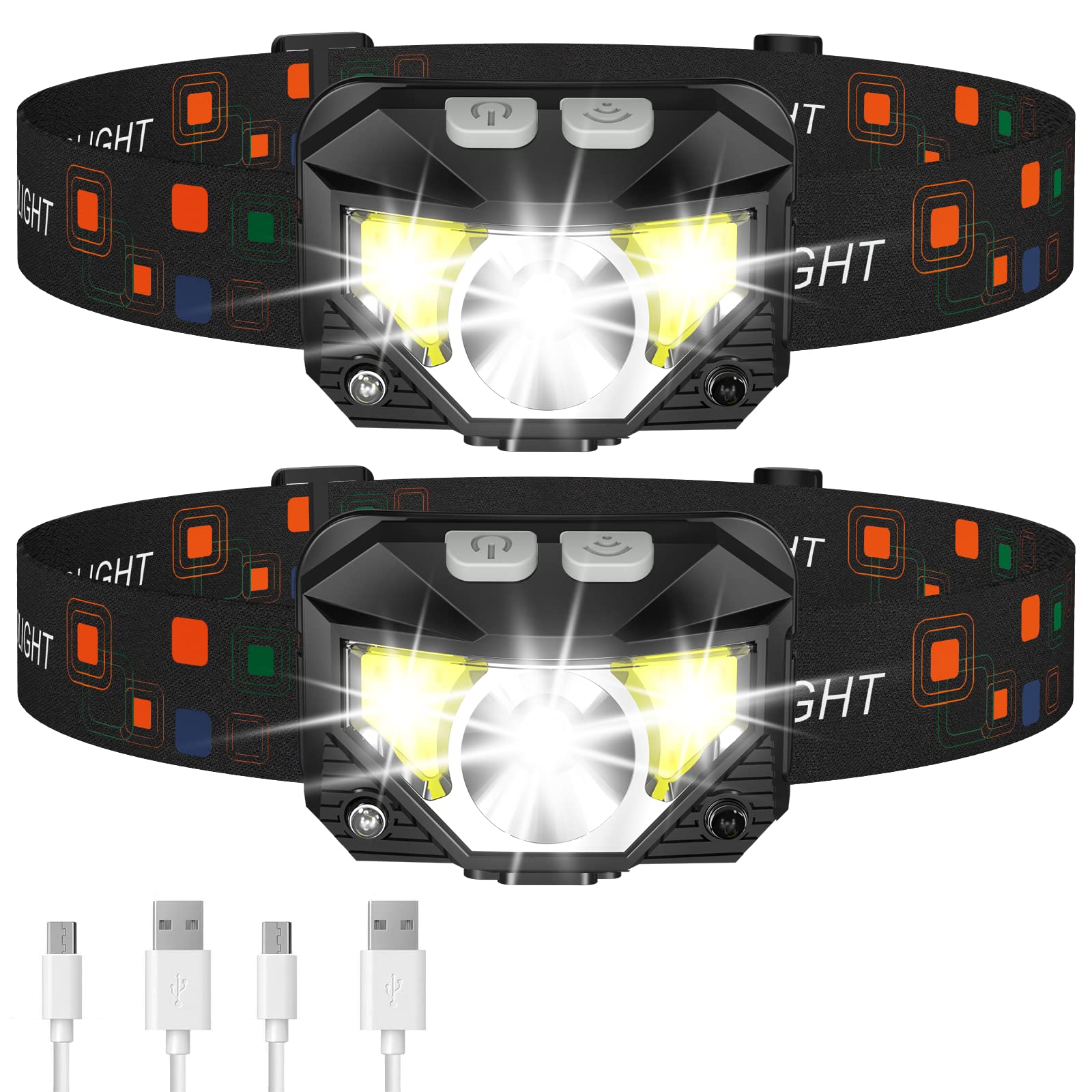
Key Features
- Brightness: 1200 lumens
- Red Light Mode: Yes
- Battery Type: Rechargeable 1500mAh
- Weight: 1.87 oz
- Water Resistance: IPX4
- Price: Budget
This two-pack delivers 1200 lumens, red light, and motion sensor at a budget-friendly price — impressive for car camping or emergency kits. However, the brightness far exceeds the 200-400 lumen sweet spot for backpacking, and some units may experience inconsistent battery life or random shut-offs, making it a gamble for trips where dependability is critical.
Pros
- Extremely bright for the price
- Good value as a 2-pack
Cons
- Units can shut off unexpectedly or fail to charge over time — a risk for critical trips.
Best suited for car camping, emergency kits, or as a spare light where the occasional shutdown is a minor inconvenience rather than a safety concern.
Best for Family Camping, Work
Energizer PRO 2-Pack

Key Features
- Brightness: 260 lumens
- Red Light Mode: No
- Battery Type: 3 x AAA
- Weight: ~3.7 oz
- Water Resistance: IPX4
- Price: Budget
This two-pack delivers consistent brightness and a comfortable strap for group camping or workshop tasks. However, the lack of red light makes it unsuitable for preserving night vision on the trail, and isolated battery incidents have been noted in some units. For backpacking where red light and reliability are priorities, look to the top pick instead.
Pros
- Build quality and consistent performance from a known brand
- Great value with two lights at a low cost
Cons
- No red light mode, limiting night vision preservation in dark conditions
For family camping or workshop tasks where red light isn’t needed, this two-pack offers good reliability at a low cost.
Best for Ultralight Camp, Backup
Vekkia 160L

Key Features
- Brightness: 160 lumens
- Red Light Mode: Yes
- Battery Type: 3 x AAA
- Weight: 1.6 oz
- Water Resistance: IPX6
- Price: Budget
Weighing just 1.6 oz and offering a red light mode, the Vekkia handles camp chores and reading without disturbing night vision. However, 160 lumens is below the typical hiking range, making it unsuitable as a primary trail light. Batteries may also drain during storage, so keep spares handy.
Pros
- Weighs only 1.6 oz – comfortable for all-night wear.
- Budget-friendly price for the features offered.
Cons
- 160 lumens is below the 200-400 lumen range needed for nighttime trail navigation – a tradeoff for hikers needing a primary light.
Best kept as a backup or camp-only headlamp for ultralight backpackers who prioritize bare-minimum weight over trail-illumination capability.
Best for Tent Use, Backup
Lepro Rechargeable 150L

Key Features
- Brightness: 150 lumens
- Red Light Mode: Yes
- Battery Type: Rechargeable (Li-poly)
- Weight: 2.86 oz
- Water Resistance: IPX4
- Price: Budget
This headlamp offers USB rechargeability and a red light mode at a budget-friendly price — ideal for tent reading or emergency kits. However, its 150-lumen output is too dim for navigating trails in darkness, and occasional battery inconsistencies mean it’s best suited as a backup rather than a primary backpacking light.
Pros
- USB rechargeable eliminates the need for disposable batteries.
- Budget-friendly price with a useful red light mode for night vision.
Cons
- Only 150 lumens – insufficient for trail navigation in darkness.
Best as a low-cost backup for camp chores or power outages, not for hiking or backpacking.
Best for Running, Helmet Work
klarus HM1

Key Features
- Brightness: 440 lumens
- Red Light Mode: No
- Battery Type: Rechargeable (Li-poly)
- Weight: 3.0 oz
- Water Resistance: IPX6
- Price: Mid-Range
The Klarus HM1 delivers impressive 70-hour runtime and lightweight 3-ounce build with military-grade durability. However, the lack of red light and 440-lumen output exceed the 200-400 lumen range preferred for backpacking, making it less suitable for night-vision preservation on the trail.
Pros
- 70-hour runtime on low for extended trips without recharging
- Weighs only 3 oz with a durable, military-grade build
Cons
- No red light mode, so night vision is compromised when using the lamp at night
A solid choice for runners and fastpackers who don’t need red light and want maximum runtime per gram.
Best for Group Camping, Work
WopkDupk 3-Pack
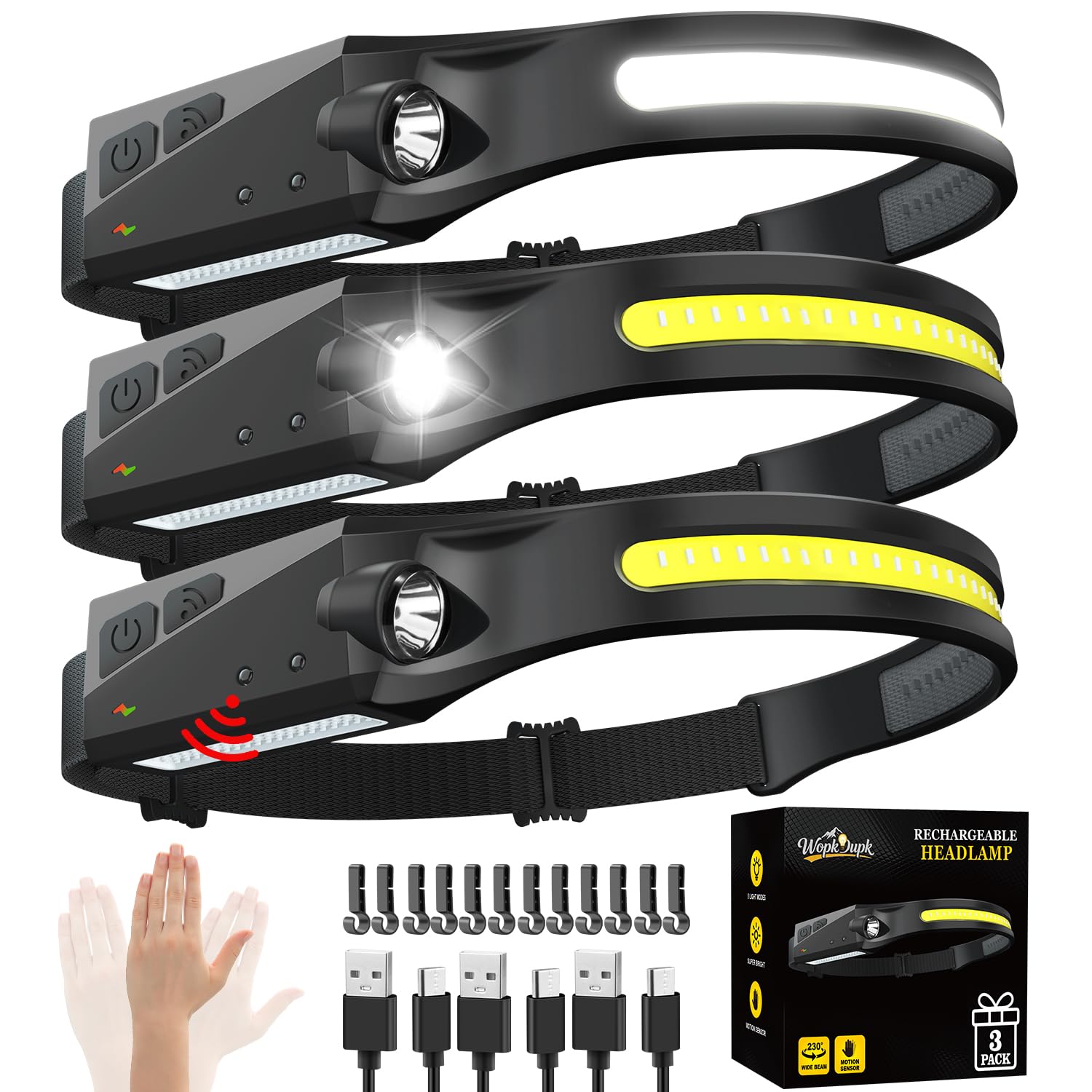
Key Features
- Brightness: 350 lumens
- Red Light Mode: No
- Battery Type: Rechargeable 1200mAh
- Weight: 2.47 oz
- Water Resistance: IPX4
- Price: Budget
The three-pack’s wide 230° beam lights up a broad area, ideal for group camping or workshop tasks. The budget-friendly price for three units adds appeal. However, the absence of a red light and occasional battery or durability issues mean this set is best left for casual group use rather than solo backpacking where dependability is key.
Pros
- Broad 230° beam evenly illuminates a wide area without hotspots.
- Low per-unit cost when you need multiple headlamps for a group.
Cons
- No red light mode for preserving night vision.
For group camping or DIY projects where a red light isn’t required, the three-pack provides a budget-friendly solution.
Best for Emergency Kit, Kids
EVEREADY 5-Pack

Key Features
- Brightness: 200 lumens
- Red Light Mode: No
- Battery Type: 3 x AAA per light
- Weight: ~3 oz
- Water Resistance: IPX4
- Price: Budget
This five-pack delivers a low per-unit cost for basic illumination around the house, car, or kids’ camp crafts. The 200-lumen output handles close-up tasks but falls short for trail navigation, and the lack of a red light mode makes it unsuitable for preserving night vision while camping. A few units may arrive with missing batteries, so it is worth checking the package upon receipt.
Pros
- Great value for five headlamps with included batteries
- Simple one-button operation reliable for basic tasks
Cons
- No red light mode – not useful for low-light camping where night vision matters
A practical multi-pack for glove boxes and craft projects, but not a primary headlamp for night hiking or backpacking trips.
Best for Campsite Use, Emergency
Blukar 2000L 2-Pack

Key Features
- Brightness: 2000 lumens
- Red Light Mode: Yes
- Battery Type: Rechargeable 1200mAh
- Weight: 6.0 oz
- Water Resistance: IPX5
- Price: Budget
At 6 ounces per unit, these headlamps are too heavy for backpacking, and some units may stop working after a few months. For car camping or emergency kits where brightness per dollar matters most, the 2000-lumen output and included red light provide solid value.
Pros
- Extremely bright for the price, with a good blend of flood and spot beam
- Budget-friendly two-pack with USB-C rechargeability
Cons
- At 6 oz each, too heavy for backpacking use
Best suited for car camping or emergency kits where weight isn’t critical and high brightness is the priority.
How to Choose
The right headlamp for backpacking balances enough brightness for the trail with a red light for camp, all while keeping weight and battery reliability in check.
Brightness (Lumens)
Many backpacking headlamps advertise 800+ lumens, but those high settings drain batteries in under an hour. For typical trail navigation and camp tasks, 200-400 lumens is sufficient; any higher adds weight and heat without practical benefit. The real-world consequence: a 1200-lumen headlamp often runs on high for 2 hours, while a 260-lumen model can last 10+ hours on a single set of batteries.
Red Light Mode
Red light preserves your night vision, letting you read a map or cook without blinding your tentmate. However, some headlamps have dim red modes that barely illuminate. Look for a dedicated red LED, not just a red filter over a white LED, which wastes battery and is often too dim for close work.
Battery Type
Rechargeable headlamps save money on batteries and are convenient for trips with access to power. But on a multi-day backpack, a dead rechargeable leaves you in the dark unless you carry a power bank. Standard AAA-powered lights let you swap in spares from any store. The trade-off: more waste and ongoing cost of batteries.
Weight
Every ounce matters in a backpack. Headlamps range from 1.6 oz to over 6 oz. A 3-ounce difference may not sound like much, but on a 7-day trip, that is 21 extra ounces of battery weight you are carrying compared to an ultralight model. Yet lighter lights often have lower lumens or shorter runtime.
Water Resistance
IPX4 handles rain splashes, IPX5 can withstand hose spray, IPX6 is more robust. For backpacking, IPX4 is usually enough unless you expect heavy downpours. Higher ratings often add weight and cost.
FAQ
Why does my rechargeable headlamp stop holding a charge after a few months?
Lithium-ion batteries degrade with charge cycles and heat. Many budget headlamps use low-quality cells that lose capacity after 50-100 cycles. If you need a long-lasting light, consider a model with replaceable AAA batteries — you can swap batteries indefinitely and avoid built-in battery failure.
Can I use regular AAA batteries in a headlamp that says ‘rechargeable’?
No. Rechargeable headlamps have a built-in rechargeable battery pack that is not user-replaceable. They cannot run on disposable AAA cells. If you want flexibility, choose a headlamp that explicitly accepts AAA batteries.
Is red light really necessary for backpacking, or is it a gimmick?
Red light is not a gimmick — it preserves your natural night vision, making it easier to see in the dark after you turn off the light. It also disturbs less when sharing a tent. For camp tasks like cooking or reading, red light is genuinely useful. It is not necessary for trail hiking, but it is a valuable feature for overnight trips.
How bright should a backpacking headlamp be for trail navigation and camp chores?
For trail navigation, 200-300 lumens is enough to see the path without blinding others. For camp chores, 50-100 lumens is plenty. A headlamp that can adjust down to a low mode saves battery. Avoid headlamps over 400 lumens for backpacking — they drain batteries too fast and add unnecessary weight.