This post contains affiliate links. We may earn a small commission when you buy through our links — at no extra cost to you.
A headlamp that dies mid-trail or stops charging after a few months is worse than no light at all. Many budget options promise high lumens and flashy features but deliver short battery life and fragile brackets.
The most reliable headlamps are often simpler AAA-powered models from established brands, not the feature-packed rechargeables that dominate search results. This guide cuts through the marketing to find lights that hold up on real trips.
Choosing between an ultralight single and a value two-pack means trading weight for backup convenience. Either way, the right pick depends on how many nights you need the light to last without a charge or a battery swap.



Best for Budget Camping/hiking
GearLight S500 2-Pack
Key Features
- Brightness: 200 lumens
- Power Source: 3x AAA
- Runtime: 10 hours
- Weight/Comfort: Lightweight
- Build Durability: IPX4 plastic
- Price: $
The S500 delivers a clean, well-bounded beam that handles close-to-medium tasks like setting up a tent, reading a map, or walking a trail after dark. Three brightness levels and a red mode let you dial in exactly the light you need without washing out close-up work or blinding fellow campers.
This is a light for daytime trips and short evening outings, not all-night treks on max output. The headband stays put without pressure points, and the whole unit disappears on your forehead. For budget-conscious families or anyone stocking an emergency kit, the two-pack means one goes in the glove box and another stays in the backpack without a second thought. On the highest setting, AAA batteries drain faster than expected — carrying a spare set solves that for anyone planning to use the full 200 lumens for more than a couple of hours.
Pros
- Sufficient brightness for camp chores, evening hikes, and reading
- Two lights at a price that undercuts most single models
- Light enough to wear for hours without noticing
Cons
- Battery life drops sharply on the highest brightness setting — spare AAAs recommended for extended use
If you need a straightforward headlamp for casual outdoor use and don’t want to overthink the purchase, this two-pack is the default choice.
Best for Night Running
Foxelli MX20
Key Features
- Brightness: 165 lumens
- Power Source: 3x AAA
- Runtime: 45 hours low
- Weight/Comfort: 3.2 oz lightweight
- Build Durability: IPX5 plastic
- Price: $
The Foxelli MX20 is the lightest headlamp in this roundup at just over two ounces with batteries—ideal for night runners and ultralight backpackers who notice every gram. Three brightness levels and a wide, even beam make it easy to navigate trails or set up camp after dark. The included AAA batteries and red light mode add convenience for extended trips.
This design trades ruggedness for weight savings: the plastic bracket that holds the lamp to the headband can break if dropped or overtightened. For runners who keep the light on their head and rarely remove it, this is rarely an issue. But for general campers or those who pack it loosely in a bag, the top pick (GearLight two-pack) offers more durable mounting at a similar price.
Pros
- Extremely lightweight and comfortable for long runs
- Three brightness levels plus red light and tilt adjustment
- Batteries included, ready out of the box
Cons
- Plastic headband bracket can break under moderate use or if dropped
The right choice if your priority is weight and running performance—otherwise, the GearLight two-pack delivers more durability for similar money.
Best for Rechargeable Value
Lepro LE D500 2-Pack
Key Features
- Brightness: 2000 lumens claimed
- Power Source: USB-C rechargeable
- Runtime: 15 hours low
- Weight/Comfort: Moderate
- Build Durability: IPX4 plastic
- Price: $$
The Lepro LE D500 delivers a claimed 2000 lumens per light, with a beam that reaches far enough for trail navigation and campsite work. Battery life on low mode stretches across multiple evenings, and USB-C charging adds convenience over micro-USB competitors.
This two-pack suits group trips or couples who want a spare rechargeable light without extra cost. Some units may develop charging port issues over months of use – a tradeoff at this price point that occasional users are unlikely to notice.
Pros
- Beam distance covers up to 500 feet, bright enough for most outdoor tasks
- Battery holds charge well between uses, supporting multi-day trips on low
- Two-pack price undercuts most single rechargeable headlamps with similar specs
Cons
- In high-use scenarios, the charging port may become unreliable after months – occasional use is less impacted
Budget campers who want USB-C and long runtime get a solid two-pack here, provided they can accept the possibility of charging issues over time.
Best for Reliability Focus
Energizer PRO-260
Key Features
- Brightness: 260 lumens
- Power Source: 3x AAA
- Runtime: 35 hours low
- Weight/Comfort: Lightweight
- Build Durability: IPX4 plastic
- Price: $
The Energizer PRO-260 delivers dependable lighting with a simple dimming control and dual beam options. While the GearLight two-pack offers better value per unit, this headlamp prioritizes brand consistency and no-frills operation. It fits naturally in emergency kits and vehicle storage where dependability matters more than brightness or weight. The 260-lumen high mode has modest battery life, so keep spare AAA cells for extended use.
Pros
- Bright output with dimming and dual beam options
- Brand consistency from a household name
- Simple controls and good fit
Cons
- High brightness mode drains batteries faster than low-mode runtime suggests
A straightforward pick for anyone building an emergency kit or keeping a backup light in the car – just pack spare batteries for the high setting.
Best for Heavy-Duty Work
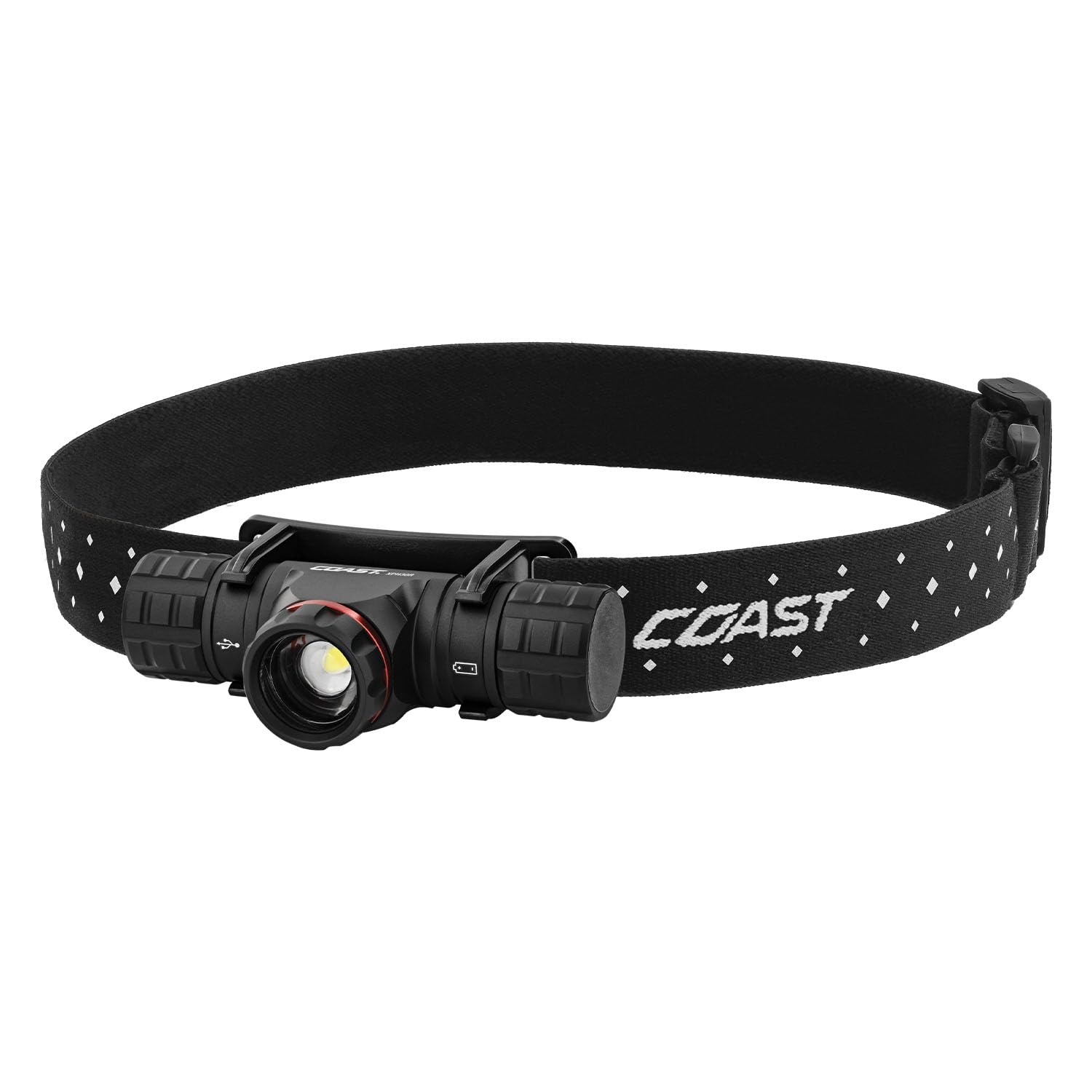
Coast XPH30R
Key Features
- Brightness: 1200 lumens turbo
- Power Source: USB-C rechargeable
- Runtime: 6.75h high / 28h low
- Weight/Comfort: 8 oz heavy
- Build Durability: IP54 aluminum
- Price: $$$
The Coast XPH30R delivers serious brightness in a metal body that can handle drops and grease. Its twist focus lets you switch from a wide flood to a tight spot instantly, and the magnetic base and detachable battery pack add flexibility for workshop or hard-hat use. At 8 oz, the weight is noticeable during extended wear – this is a headlamp for mechanics, electricians, and search crews who value durability over ounces, not for runners or all-day hikers. The plastic headband bracket, while functional, can be a weak point if handled roughly.
Pros
- All-metal body with USB-C rechargeable battery and magnetic base
- Twist focus gives smooth beam control from flood to spot
- Long runtime on low setting stretches battery life for overnight jobs
Cons
- For all-day wear or running, the 8-ounce weight can cause head fatigue
If you need a bright, tough headlamp for work or intermittent outdoor use and don’t mind the weight, this is a solid option. For running or ultralight backpacking, look elsewhere.
Best for Family Camping
Energizer PRO 2-Pack
Key Features
- Brightness: 260 lumens each
- Power Source: 4x AAA each
- Runtime: 35 hours low
- Weight/Comfort: Moderate
- Build Durability: IPX4 plastic
- Price: $$
This two-pack from Energizer arrives with four AAA batteries per light and adjustable beam settings, so there’s no rummaging for power sources before a trip. The build is sturdy and the headband stays comfortable even during extended wear. For families or groups taking these camping, the convenience of having two ready-to-use lights is hard to beat, though those planning to run the lights on high for hours should toss a few extra batteries in the bag.
Pros
- Bright beam with solid construction
- Two-pack at a cost-effective price, batteries included
- Comfortable headband with easy tilt adjustment
Cons
For groups needing multiple lights ready to go, this Energizer two-pack delivers consistent performance without the search for batteries.
Best for Night Fishing
Energizer PRO-360

Key Features
- Brightness: 360 lumens
- Power Source: 3x AAA
- Runtime: 50 hours low
- Build Durability: IPX4 plastic
- Price: $
The Energizer PRO-360 steps up from the PRO-260 with 360 lumens and added green and red LEDs, making it a strong choice for night fishing or tasks where preserving night vision matters. The beam reaches 85 meters, and the IPX4 rating handles light rain. However, on high mode the batteries drain noticeably faster than claimed, so this is a side grade from the PRO-260 for most campers and hikers. Energizer’s build quality is solid, but the short runtime on bright settings means you will want spare AAA batteries handy for extended trips.
Pros
- Very bright with useful green and red modes for night vision
- Good value for a brighter budget light with Energizer construction
Cons
- Battery life on high mode is short – pack spare AAA cells for extended use
Best for night fishermen or anyone who needs red/green modes and extra lumens without going rechargeable – for general outdoor use, the PRO-260 offers similar brightness with longer runtime.
Best for Aaa Alternative
Lepro D500 AAA 2-Pack

Key Features
- Brightness: 200 lumens
- Power Source: 3x AAA
- Runtime: 22 hours low
- Build Durability: IPX4 plastic
- Price: $
The Lepro D500 two-pack delivers consistent 200-lumen output and solid construction at a budget-friendly price. Battery life on high can be inconsistent, so keep spares handy. It’s essentially a clone of the GearLight S500 but with a smaller review base, making the GearLight a more established buy for most. Best for those who want AAA-convenience and a backup light.
Pros
- Bright beam with consistent light output across its range
- Solid build quality that feels well-made for the price
Cons
- Battery life on high can be inconsistent across units
A solid backup headlamp for those who prefer AAA convenience and need a spare, but the GearLight two-pack is a more established primary option.
Best for Light Camping
Lighting EVER LE 2-Pack

Key Features
- Brightness: 150 lumens
- Power Source: USB rechargeable
- Runtime: 30 hours low
- Weight/Comfort: 2.85 oz lightweight
- Build Durability: IPX4 plastic
- Price: $$
This two-pack delivers adequate brightness for camp chores and long runtime on low, with a useful red light. But 150 lumens limit it to lit paths, not unlit trails, and charging port durability can vary. The Lepro D500 provides more light and a stronger track record for similar money.
Pros
- Convenient two-pack with USB rechargeable lights
- Battery lasts well on low, reducing recharge frequency
Cons
- Occasional charging port or mount failure after moderate use
Best for casual campers or emergency kits where 150 lumens suffice and you want a spare light ready to go.
Best for Stationary Tasks
Blukar K9116

Key Features
- Brightness: 8000 lumens claimed
- Power Source: USB-C rechargeable
- Runtime: 20 hours low
- Build Durability: IPX6 plastic
- Price: $
The Blukar K9116 delivers impressive brightness for its low price, with a zoom lens and red light modes that suit workshop and car repairs. However, the claimed 8000 lumens is unrealistic — real-world output is around 1500 — and the heavy, bulky build becomes uncomfortable during any activity that involves head movement. For hiking, running, or camping, the weight pulls forward and limits usability; this light is best left in a tool kit or car trunk where stationary use is the priority.
Pros
- Very bright for the price, even after accounting for the inflated lumen claim
- Good battery life and fast USB-C charging for extended work sessions
Cons
- Can feel heavy and uncomfortable during prolonged wear due to forward-pulling weight
Keep the Blukar K9116 in your garage or car trunk for stationary repairs; it is not suited for hiking, running, or any activity that requires moving your head freely.
Best for High Brightness
DanForce Bold-S

Key Features
- Brightness: 1080 lumens
- Power Source: USB-C 5000mAh
- Build Durability: Aluminum body
- Price: $$$
The DanForce Bold-S delivers impressive 1080 lumens with a useful zoom and red light mode, backed by a large 5000mAh battery and comfortable aluminum build. The lens assembly can work loose during regular use, and battery capacity may degrade after several months — durability that suits buyers who value brightness over long-term dependability.
Pros
- Very bright with adjustable zoom
- Good build quality and comfort
Cons
- Lens can become loose during regular use, requiring occasional adjustment
Best suited for buyers who prioritize maximum brightness and zoom function over long-term durability.
Best for Short Sessions
SLONIK 1000

Key Features
- Brightness: 1000 lumens
- Power Source: USB 18650
- Runtime: 4 hours high
- Build Durability: Aluminum body
- Price: $$$
This headlamp delivers serious brightness from a sturdy aluminum body, and the detachable design adds utility as a handheld light. However, the plastic headband bracket can snap under normal tension, and the 4-hour runtime on high is short compared to competitors. Best suited for short sessions or hard hat use with an aftermarket mount.
Pros
- High brightness with multiple adjustable levels
- Aluminum body feels solid and durable
Cons
- Plastic headband bracket can snap under normal tension
Works well for short-duration tasks or as a hard hat light with an aftermarket bracket.
How to Choose
The brightest headlamp isn’t always the best – runtime and reliability matter more for real outdoor trips.
Brightness and Beam Distance
Lumen ratings are often exaggerated, especially on budget rechargeable models. A 200-lumen light with a focused beam can outshine a claimed 2000-lumen light with a wide, uneven spill.
For hiking and camping, 150–300 real lumens are sufficient for most tasks. Beam distance (measured in meters) is a better indicator of how far you can see, but few budget brands provide honest figures.
Power Source: AAA vs Rechargeable
AAA-powered headlamps let you carry spare batteries and swap instantly – critical for multi-day trips. Lithium AAA cells also perform well in cold weather where rechargeable batteries lose capacity.
Rechargeable models offer convenience and lower long-term cost per use, but the built-in battery will eventually degrade. After 12–18 months, runtime may drop significantly, and the unit becomes disposable.
Runtime on High and Low
Manufacturers quote runtime on the lowest setting, which is misleading for real use. A headlamp that claims 50 hours on low may only last 4 hours on high.
Look for runtime at medium or high output. For a weekend trip, aim for at least 6 hours on a usable brightness level. Always carry backup batteries or a power bank if using rechargeables.
Weight and Comfort for Extended Wear
Every ounce matters on the trail. A headlamp over 5 ounces will bounce and pull during runs or hikes, causing neck fatigue. Ultralight models under 4 ounces are ideal for active use.
The strap quality and tilt mechanism also affect comfort. A slippery elastic band or limited tilt angle forces you to adjust constantly. Test the fit before a long trip.
Build Durability and Bracket Strength
The most common failure point on budget headlamps is the plastic bracket that holds the light to the band. Once it snaps, the light is unusable without modification.
Metal brackets or reinforced plastic add weight but greatly improve longevity. Water resistance (IPX4 minimum) is adequate for rain, but submerging a headlamp can kill it even with an IPX6 rating if the charging port is exposed.
FAQ
Why does my rechargeable headlamp not last as long as advertised?
Manufacturers base runtime on the lowest brightness setting, which is rarely used. On medium or high, real runtime is often 50–70% less. Also, built-in batteries lose capacity over time. For honest numbers, check user reviews that mention actual use time at a given brightness level.
Can I use rechargeable batteries in a AAA headlamp?
Yes – rechargeable NiMH AAAs (like Eneloop) work fine and save money over time. They provide consistent voltage and perform well in moderate temperatures. Avoid lithium-ion rechargeable AAA cells unless the headlamp specifically supports them, as voltage differences can cause flickering or damage.
How many lumens do I really need for hiking and camping?
For trail hiking and camp tasks, 150–250 real lumens is sufficient. Above that, you gain distance but drain batteries faster. Night runners need a solid 100–200 lumens to see obstacles. For cave exploration or search and rescue, 500+ lumens may be necessary.
Is a motion sensor headlamp worth it for outdoor activities?
Motion sensors are convenient for quick hands-free mode changes but add complexity and a potential failure point. Many users report accidental activation or shutdowns when the sensor is triggered by head movement. For outdoor reliability, a simple button is preferable.