This post contains affiliate links. We may earn a small commission when you buy through our links — at no extra cost to you.
Outdoor and tactical gear often looks rugged on the shelf but starts showing wear after a few outings. Sizing that runs small, buckles that don’t fit standard loops, and seams that separate early are common frustrations — especially in the budget and mid-range tiers.
The right piece of gear isn’t about the highest price or the longest features list. It’s about matching the construction to your actual use: a belt that stretches well for hiking won’t support a heavy holster, and a versatile glove may trade some abrasion resistance for dexterity.
This guide cuts through the overpromises by focusing on specific materials, failure points, and real-world trade-offs. You’ll find picks that hold up under the conditions you actually face — whether that’s a weekend hike, a day at the range, or daily carry.




Best for Outdoor Work
Mechanix Original Tactical Gloves
Key Features
- Durability: 0.8mm synthetic leather
- Fit Consistency: Sizing guide required
- Functionality: Tactical dexterity
- Ease of Use: TPR wrist closure
- Value: Budget-friendly
- Price: Mid-Range
The Mechanix Original gloves provide a snug fit that allows fine motor control—good for handling gear, adjusting optics, or gripping tools without the bulk of thicker work gloves. TrekDry back panels keep hands comfortable during active use, and the touchscreen fingertips work reliably for quick phone checks.
These gloves suit shooters, hikers, and tactical training users who need protection without sacrificing dexterity. The synthetic leather and seam construction hold up well for light to medium tasks, but under heavy or frequent use the thumb seam may separate—this is a glove for versatility and comfort, not for heavy construction or abrasive handling. No insulation means they’re best for mild-weather use.
Pros
- Snug, natural fit that maintains dexterity for detailed tasks like shooting or handling small parts.
- Breathable TrekDry back keeps hands from overheating during active outdoor use.
- Touchscreen-compatible fingertips work without removing gloves for quick phone or device use.
Cons
- Sizing can vary between pairs; check the manufacturer’s sizing chart before ordering.
- No thermal insulation—designed for mild conditions, not cold weather use.
A solid choice for shooters and outdoor enthusiasts who value dexterity over heavy-duty abrasion resistance—skip if you work with rough materials or need insulated gloves.
Best for Range Use
Walker’s Razor Slim Earmuffs
Key Features
- Durability: Plastic/foam construction
- Fit Consistency: Tight on larger heads
- Functionality: Electronic noise cancelling
- Ease of Use: 2 AAA batteries
- Value: Exceptional value
- Price: Budget
Strong noise cancellation reduces loud gunshots while amplifying voices clearly. Unlike the top pick’s broad utility, this earmuff is purpose-built for the range and hunting. It’s a solid fit for recreational and competition shooters who want to hear commands and conversation without removing protection. Hunters benefit from situational awareness while safeguarding against impulsive noise. That said, the mono sound and background hiss make it unsuitable for music or quiet indoor use — a tradeoff at this price point.
Pros
- Noise cancellation effectively muffles gunshots while keeping speech clear.
- Comfortable padding supports extended wear at the range or in the field.
- Budget-friendly price for electronic hearing protection with consistent performance.
Cons
- Fit can be tight on larger heads, with possible pressure points during long sessions.
For shooters who need clear communication and hearing protection without paying a premium, this is the right call.
Best for Night Running
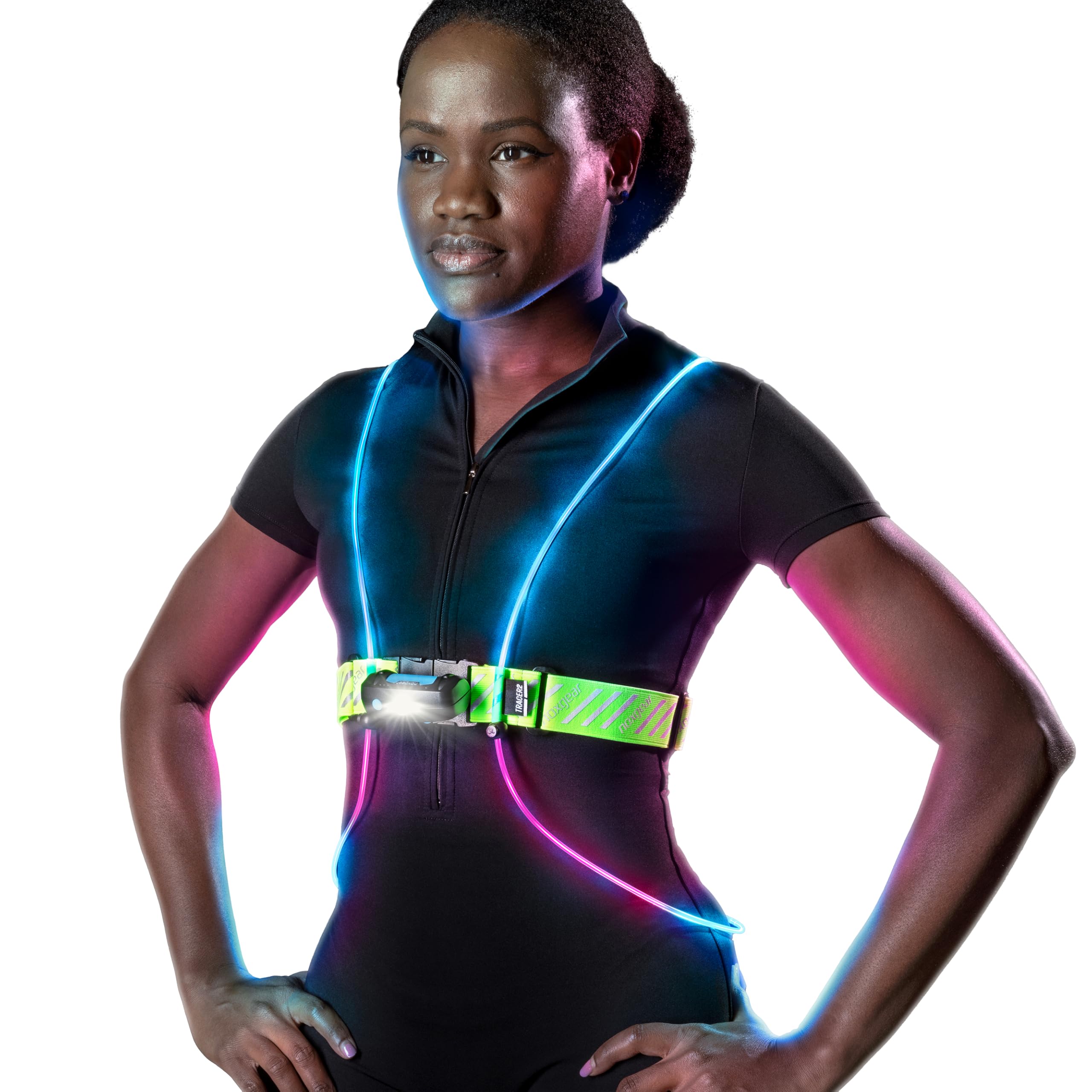
noxgear Tracer2 Light Vest
Key Features
- Durability: Waterproof design
- Fit Consistency: Loose on slim frames
- Functionality: 360° fiber optic light
- Ease of Use: Rechargeable
- Value: High construction quality
- Price: Premium
The noxgear Tracer2 delivers 360° fiber-optic lighting that stands out from a quarter mile away, weighing just 6.5 oz with a lightweight, comfortable design that’s easy to forget during a run. Multiple color options and flash patterns let you tailor visibility to conditions. This is the vest for runners, cyclists, and dog walkers who train near traffic and need maximum presence — though the fit can be loose on very slim frames, so sizing deserves attention.
Pros
- 360° visibility from over a quarter mile with fiber-optic cables.
- Lightweight at 6.5 oz and comfortable for extended wear.
- Rechargeable with 8 solid and multicolor flash modes.
Cons
- Fit may be loose on very slim frames or tight when layered over bulky clothing.
For runners and cyclists who train near traffic, the Tracer2 offers premium visibility that justifies its price — just check the fit if you’re on the slimmer side.
Best for Everyday Wear
JUKMO Stretch Belt
Key Features
- Durability: Elastic nylon webbing
- Fit Consistency: Infinite adjustment
- Functionality: Light tool carry
- Ease of Use: Ratchet buckle
- Value: Outstanding budget
- Price: Budget
The stretch weave makes this JUKMO belt noticeably more forgiving than the stiffer original—ideal for hiking and daily wear. It trades heavy-load capability for comfort: skip this if you need to support a duty holster or multiple tools. The buckle’s paint can chip under hard use, but the closure stays secure.
Pros
- Slight stretch provides all-day comfort and flexibility.
- Ratchet buckle allows infinite adjustment and stays latched.
- Good value for a durable everyday belt.
Cons
- Buckle may show paint chipping under heavy use—cosmetic only.
A smart budget choice for anyone who values comfort and precise fit over load-bearing capacity—best paired with light gear.
Best for Camping/e Dc
Gerber Suspension Multitool
Key Features
- Durability: Stainless steel
- Functionality: 12 tools, spring pliers
- Ease of Use: Stiff opening
- Value: Great for price
- Price: Mid-Range
This Gerber multitool pairs spring-loaded pliers with locking implements, giving campers and hikers a capable toolset for light repairs and everyday tasks. Tools require two hands to open, and the screwdriver tips may snap under heavier torque, so it suits those who prioritize affordability over heavy-duty reliability.
Pros
- Spring-loaded pliers reduce hand fatigue during repetitive gripping tasks.
- Each tool locks securely in place, improving safety during use.
- Solid stainless steel build holds up well for its price range.
Cons
- Tools are stiff and require two hands to open; one-handed operation is not possible.
- Screwdriver and wire cutter tips may break under sustained heavy use.
A practical multitool for campers and hikers who need a versatile tool without spending premium, provided they accept the stiff tool access and occasional implement breakage.
Best for Hunting Cold
CL Thermal Underwear Set
Key Features
- Durability: Polyester-spandex blend
- Fit Consistency: Size up, shrinks
- Functionality: Thermal insulation
- Ease of Use: Layering simple
- Value: Unbeatable warmth
- Price: Budget
Fleece-lined polyester set that retains heat in sub-zero conditions — this base layer delivers serious warmth for hunting or winter camping. The catch: sizing runs small and the material can shrink after washing; order one size up. Some buyers with sensitive skin may find the fabric itchy, so layering over a thin shirt is advisable. Compared to the top pick Mechanix gloves, this set addresses core body insulation rather than hand protection.
Pros
- Holds heat effectively in sub-zero conditions for hunting or camping.
- Fleece lining feels soft against skin for all-day comfort.
- Affordable set includes both top and bottom for a complete base layer.
Cons
- Sizing runs small and fabric can shrink after washing; order one size up.
For anyone needing budget-friendly thermal base layer warmth on outdoor winter trips, this set delivers — just remember to order one size up.
Maxpedition Beefy Organizer
Maxpedition Beefy Organizer

The Maxpedition Beefy Organizer uses heavy-duty 1000D nylon and solid stitching for years of hard use. Elastic loops and zippered compartments hold tools, first aid, or electronics neatly. However, its size and weight make it impractical for pocket carry — this is a pack accessory, not something you toss in jeans. For anyone building a modular tactical kit or needing organized storage in a backpack, this is a durable buy-it-for-life solution.
Pros
- Rugged 1000D ballistic nylon with reinforced stitching for long-term durability.
- Ample organization with elastic loops, slip pockets, and a zippered compartment for tools and gear.
Cons
- Too bulky for pocket carry; requires a pack or MOLLE panel for everyday use.
Best for those who carry a backpack or use MOLLE systems and need rugged organization — not for pocket-only carry.
Jukmo Tactical Belt
JUKMO Tactical Belt

The JUKMO Tactical Belt uses a strong quick-release buckle and elastic nylon webbing that adjusts without holes, offering a stiffer feel than the stretch version. The buckle is large enough that it won’t pass through many standard belt loops without detaching first, which is the main tradeoff. This belt suits light tool carry and hiking where you can thread it through loops one at a time.
Pros
- Durable buckle and nylon webbing hold up to daily outdoor use.
- Infinite adjustment range without predefined holes.
Cons
- Buckle too large for many standard belt loops; requires detaching to thread.
A good budget option for outdoor activities where you can manage the buckle size—better suited for hiking or tool carry than everyday pants with narrow loops.
Bassdash Neck Gaiter
BASSDASH Neck Gaiter

This gaiter delivers effective UPF 50+ sun protection in a breathable polyester-spandex fabric that works well for fishing, kayaking, and hiking. The thin material suits warm weather only. Fit inconsistency—can be too tight or too loose depending on head size—keeps it from being a universal recommendation; worth trying if you’re on a budget and prioritize sun protection over a precise fit.
Pros
- Blocks harmful UV rays effectively during active outdoor use.
- Breathable fabric stays comfortable during exertion in warm weather.
Cons
- Thin fabric may lose shape after washing, affecting long-term fit.
Best for budget-conscious paddlers and hikers who need reliable sun protection and can accept a variable fit.
Bg Belay Glasses
BG Belay Glasses

The BG Climbing belay glasses effectively relieve neck strain during belaying and fit comfortably over prescription frames, making them a budget-friendly option for regular climbers. The hinges, however, may break within months of regular use, so careful handling is advised.
Pros
- Relieves neck strain when belaying
- Fits over most prescription glasses
Cons
- Hinges may break within months of regular use
A cost-effective choice for climbers willing to handle the glasses with care to avoid hinge issues.
Trscind Survival Kit
TRSCIND Survival Kit

The 14-in-1 TRSCIND Survival Kit packs a generous assortment of basic tools into a compact waterproof case—a practical gift for outdoor enthusiasts or a car emergency kit. Tool quality varies; the compass and knife may lack precision for demanding situations. This kit suits light camping or roadside emergencies where backup gear is already present, not extended backcountry trips.
Pros
- Thoughtful gift for dads, husbands, or teens who enjoy the outdoors.
- Compact waterproof case keeps tools organized for car or camp use.
Cons
- Some tools, like the compass and knife, may lack the precision needed for serious survival tasks.
Best for gifting or as a light-duty car emergency kit where backup gear is available—not for wilderness reliance.
Coghlan’s Bear Bell
Coghlan’s Bear Bell

This bell does exactly what it says — jingle as you move, alerting bears and other wildlife to your presence. The magnetic silencer dampens sound when you stop, though some ringing may linger if the bell shifts. At a negligible cost, it’s a lightweight addition to any hiking pack. But the velcro strap can detach mid-trail, and if that happens, the bell is gone. Buy two so one can serve as a backup, and you’ll have reliable alerting for the price of a coffee.
Pros
- Inexpensive and effective at alerting wildlife
- Good for hiking, mountain biking, and safety
Cons
- Velcro attachment can detach and the bell may be lost
For hikers who want a low-cost audible deterrent for wildlife, this bell works — but buy a spare given the velcro can detach.
Nxtrnd Ski Mask
Nxtrnd Ski Mask

This balaclava fits snugly under football helmets and ski goggles without shifting, and its lightweight, moisture-wicking fabric keeps you comfortable during activity. The main tradeoff: seams may tear after limited use, so durability is not guaranteed.
Pros
- Stays in place under helmets during active movement.
- Lightweight and breathable for active sports.
Cons
- Seams may tear after a few washes or heavy use.
Best for athletes who need a helmet-friendly face cover and are okay with replacing it after a season or heavy use.
Ust Tool-A-Long Carabiner
UST Tool-a-Long Carabiner

The UST Tool-a-Long offers a fun, compact carabiner with stainless steel build for hanging on packs. However, its tools lack real utility—bottle opener and cord cutter may not work—and it’s too large for standard keychains. This is a novelty gift, not a functional alternative to a proper multitool.
Pros
- Fun and unique design adds personality to any pack
- Compact stainless steel construction feels sturdy
Cons
- Bottle opener and cord cutter may not function reliably for actual use
Best as a lighthearted gift for outdoor enthusiasts who already have reliable tools.
How to Choose
The single most important buying insight: gear at this price range often overpromises durability — focus on specific materials and failure points, not marketing claims.
Durability
Durability in outdoor gear comes down to seam construction and material thickness. Synthetic leather gloves with thin palms (0.8mm) offer dexterity but wear through faster under heavy abrasion. For belts, elastic nylon webbing and ratchet buckles can chip paint or lose tension over time — check reviews for long-term breakage patterns.
Multitools with stainless steel handles usually hold up, but small implements like screwdrivers and wire cutters are prone to snapping under torque. Look for tools where the weak point is replaceable or cheap enough to swallow.
Fit Consistency
Sizing varies wildly across brands. Gloves from Mechanix tend to run snug — always measure hand circumference and consult the brand’s guide. Thermal underwear shrinks significantly after the first wash; order one size up if you’re between sizes.
Belt fit is complicated by buckle dimensions. Some tactical buckles are too large to pass through standard belt loops — check the loop width on your pants before buying. Products with infinite adjustment (ratchet or elastic) avoid hole-related fit issues but may not hold heavy loads.
Functionality
Functionality is about the specific activity, not general versatility. Electronic earmuffs that amplify speech are great for range conversations but can pick up fan noise indoors. Night visibility vests with fiber-optic cables provide 360° light, but only matter for low-light running or cycling.
A multitool with 17 functions sounds appealing, but if the pliers break on first use (as with one model in our set), it’s useless. Prioritize the one or two functions you’ll actually use most — spring-loaded pliers and locking blades are high-utility.
Ease of Use
Ease of use often hides behind simple mechanisms. Rechargeable vests eliminate battery swaps but require remembering to charge. Ratchet belt buckles offer quick release but may need two hands to rethread if detached.
Gloves with touchscreen fingertips work well for phone use but can wear down after a few washes. For multi-tools, tools that deploy from the closed position save time, but some need two hands to open — decide if one-handed access is critical for your use.
Value
Value isn’t just about low price. A $15 belt that needs replacement in six months costs more per use than a $30 belt that lasts three years. However, premium lighting gear at $90 offers engineering (waterproof, bright modes) that a $20 budget vest can’t match.
The sweet spot is mid-range ($20–$40) for items you’ll use weekly. For occasional use, budget options with known trade-offs (like a bear bell with weak magnet) are acceptable. Avoid the cheapest multitool — the savings aren’t worth the failure risk.
FAQ
Why do some tactical belts not fit through standard belt loops?
Many tactical belts use oversized quick-release buckles that are wider than typical pants loops (about 1.5 inches). If your pants have small loops, you’ll have to detach the buckle to thread the belt through — a hassle if you plan to wear it daily. Measure your existing belt’s buckle width before buying.
How long do electronic earmuff batteries typically last?
Most electronic earmuffs run on two AAA batteries for 200–350 hours of use, depending on volume settings and how often they amplify. Walker’s Razor Slim uses standard batteries and gives reliable runtime. Turn them off when not in use to maximize life.
Can neck gaiters with UPF 50 really protect against sunburn?
Yes, UPF 50 blocks about 98% of UV radiation, but only if the fabric is stretched tight over the skin — loose folds reduce protection. The BASSDASH gaiter uses a polyester-spandex blend that provides adequate coverage for hiking and fishing, though thin material may stretch out over time.
Are budget survival kits worth it for emergency preparedness?
Budget survival kits under $30 are fine for a car emergency or as a gift, but they rely on cheap components like a dull knife and fragile compass. For true backcountry use, invest in individual quality tools. These kits work as a convenience pack — not a primary survival solution.