This post contains affiliate links. We may earn a small commission when you buy through our links — at no extra cost to you.
A dry bag backpack is only as reliable as its weakest seam. Many outdoor enthusiasts discover this the hard way when a roll-top bag that kept gear dry for a season suddenly starts letting moisture in at the fold. The problem isn’t always the bag — it’s often how it’s used and what it’s made of.
This guide cuts through the confusion. We focus on bags with proven durability in the roll-top area, coupled with materials that resist tearing. You’ll also learn the simple rolling method that turns any quality dry bag into a reliable shield for your gear.




Best for Day Hikers
Earth Pak Waterproof Backpack
Key Features
- Capacity: 35L or 55L
- Material: PVC
- Closure: Roll-top buckle
- Strap System: Padded, sternum, waist belt
- Extras: Splash-proof zip, mesh pocket, key ring
- Price: Mid-Range
The Earth Pak Waterproof Backpack delivers the carry comfort of a proper hiking pack with a padded ergonomic harness, sternum strap, and waist belt that distribute weight evenly over long distances. Its PVC material withstands abrasion from rocky trails and kayak hulls, and the roll-top closure keeps contents dry through rain and splashes.
Best suited for day hikers, backpackers, and kayakers who need reliable waterproofing without the backache from basic dry bags. The tradeoff: the pack is heavier than minimalist dry sacks, and a small number of units have shown strap buckle or stitching inconsistencies – worth checking upon delivery.
Pros
- Padded harness and waist belt provide all-day comfort on extended hikes and paddling trips.
- Tough PVC material resists tears and abrasion from rocks and gear.
- Roll-top closure keeps gear dry in rain and splash conditions, no submersion needed.
Cons
- Chest buckle and strap stitching can vary between units; some may need reinforcement.
- Heavier than basic dry bags – not ideal for gram-counting ultralight hikers.
For active outdoor use where comfort and waterproofing matter more than saving every ounce, this pack delivers on its promises.
Best for Budget Paddlers
MARCHWAY Dry Bag
Key Features
- Capacity: 5L–40L
- Material: PVC tarpaulin
- Closure: Roll-top buckle
- Strap System: Removable shoulder (5-10L) / backpack (20-40L)
- Extras: Floats when sealed
- Price: Budget
The MARCHWAY Dry Bag delivers dependable waterproofing for kayaking and boating at a budget price, backed by a massive user base that confirms its build quality and durability hold up well for typical use. Compared to the top pick, you give up a padded harness and waist belt — the straps are functional but better suited for light loads and short carries. This bag works best for beginners and budget-conscious paddlers who keep their gear above water; full submersion can allow moisture in, and a small number of units have shown stitching separation.
Pros
- Build quality and waterproofing are impressive for the cost
- Value for money is hard to beat in this size range
- Durable PVC tarpaulin handles typical paddling abuse
Cons
- Water resistance drops if the bag is fully submerged — fine for splashes, not for dunking
- Stitching separation has been noted in a minority of units
A smart choice for casual paddlers who want basic waterproofing without overspending — just keep it above water.
Best for Casual Users
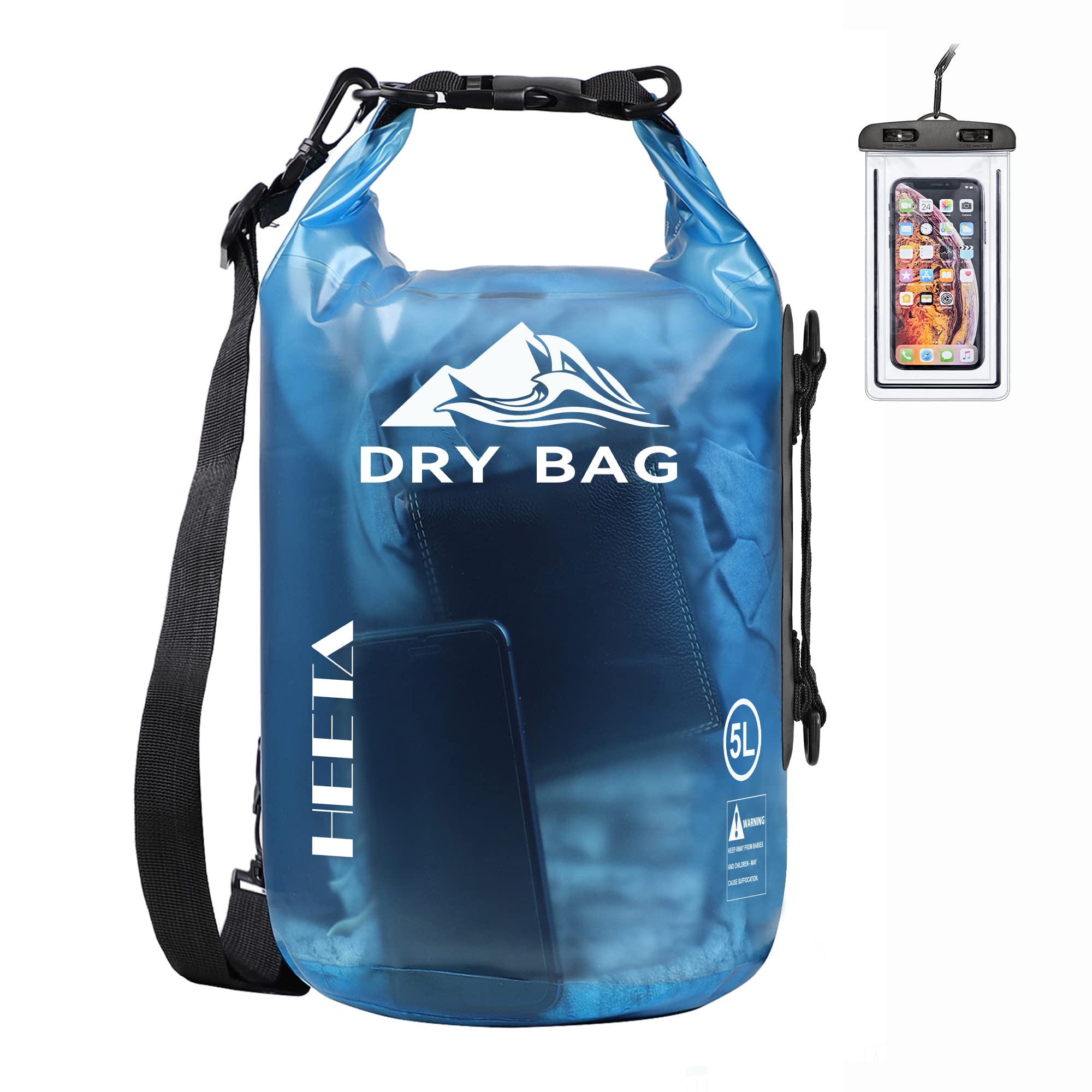
HEETA Dry Bag Backpack
Key Features
- Capacity: 5L–40L
- Material: PVC (0.3–0.6mm)
- Closure: Roll-top buckle
- Strap System: Adjustable shoulder
- Extras: Phone case
- Price: Budget
The HEETA Dry Bag provides reliable water resistance against surface splashes and comes in five sizes from 5L to 40L at a budget-friendly price. Unlike the top pick Earth Pak with its padded harness and sturdier build, the HEETA is best for light, occasional use where cost matters most.
This bag suits casual kayakers, beachgoers, or travelers needing a spare dry bag for short excursions. The PVC material can tear at the fold after a handful of trips, so it is not intended for rocky shorelines or repeated heavy-duty outings.
Pros
- Holds up well against splashes during light rain or paddle spray.
- Wide range of sizes fits many short trips from a day at the beach to a flight carry-on.
- Costs less than half of premium dry bags, making it easy on the wallet for infrequent use.
Cons
- The PVC can tear at the fold after limited use, especially if rolled too tightly or stored compressed.
A good value for beach days and cruise excursions where you can keep the bag away from sharp surfaces and rough handling.
Best for Kayakers
Piscifun Dry Bag
Key Features
- Capacity: 10L–40L
- Material: 500D PVC
- Closure: Roll-top buckle
- Strap System: Double padded shoulder
- Extras: IPX8 phone case
- Price: Budget
Double padded shoulder straps and a roll-top closure make this one of the more comfortable dry bags for a day on a kayak or raft. The IPX8 phone case gives your phone a separate dry pocket that floats if dropped overboard. Some units may develop strap or buckle issues after a few trips, and the bag is not designed for full submersion — surface splashes are fine. This suits paddlers who prioritize a dedicated phone case over expedition-grade durability.
Pros
- Welded seams and reinforced stress points for long-lasting construction.
- Includes a functional IPX8 phone case that floats.
- Good water resistance for surface-level kayaking and rafting.
Cons
- Strap or buckle breakage has been noted on some units after moderate use.
- Water resistance drops under full submersion — best kept above water, not for diving.
Paddlers who want a floating phone case will appreciate this bag; for heavy-duty submersion or portage comfort, the top pick offers better hardware and a padded harness.
Best for Commute & Trail
COR Surf 25L Backpack
Key Features
- Capacity: 25L (also 40L)
- Material: PVC with nylon lining
- Closure: Roll-top buckle
- Strap System: Padded mesh with chest strap
- Extras: Padded laptop sleeve, YKK zippers, side mesh
- Price: Mid-Range
The COR Surf 25L combines dry bag waterproofing with commuting essentials: a padded laptop sleeve, YKK zippers, and side mesh pockets. Its roll-top closure and PVC construction keep rain and splash out, making it a practical choice for bike commuters who need to protect electronics.
This pack suits urban outdoor enthusiasts and daily riders who face wet roads, but not extended submersion or heavy surf. Seams can leak under pressure when fully submerged, and strap fraying has been noted after moderate use. For kayaking or serious water sports, a dedicated dry bag like Earth Pak is a better fit.
Pros
- High-quality construction with a rugged feel
- Good water resistance for rain and splash
- Versatile for both outdoor and commuting use
Cons
- Seams can leak under pressure when fully submerged
- Strap fraying or seam separation has been noted after moderate use
For wet-weather commuting and day trips where electronics need rain protection, this pack delivers. Those needing submersion-proof gear should look elsewhere.
Best for Adventurers
Skog Å Kust BackSak
Key Features
- Capacity: 25L or 35L
- Material: Vinyl-coated polyester (500D)
- Closure: Roll-top buckle
- Strap System: Padded with sternum strap
- Extras: Splash-proof front zip, interior mesh
- Price: Premium
The BackSak stands out for its premium vinyl-coated polyester and padded harness that carry loads comfortably all day. The roll-top closure keeps main contents dry in rain and splashes, while the clean Scandinavian look transitions from trail to office without looking out of place.
This pack suits adventurers who value style and long-term build quality over the lowest price. The front zippered pocket handles light rain but not submersion, so keep phones and wallets inside the main compartment during heavy downpours. A small percentage of zippers or buckles may develop issues after extended use, though the overall construction holds up well for its intended roles.
Pros
- Comfortable padded shoulder straps and sternum strap for all-day carry
- High-quality vinyl-coated polyester resists abrasion and weather
- Roll-top closure keeps gear dry in moderate rain and splashes
Cons
- Front zippered pocket is splash-proof only; valuables may get wet in heavy rain
- Occasional zipper or buckle failures after months of use may require repair
Buy this if you want a dry backpack that looks good on the trail and in the city, and you’re willing to pay for materials that hold up longer than budget options.
Best for Hikers
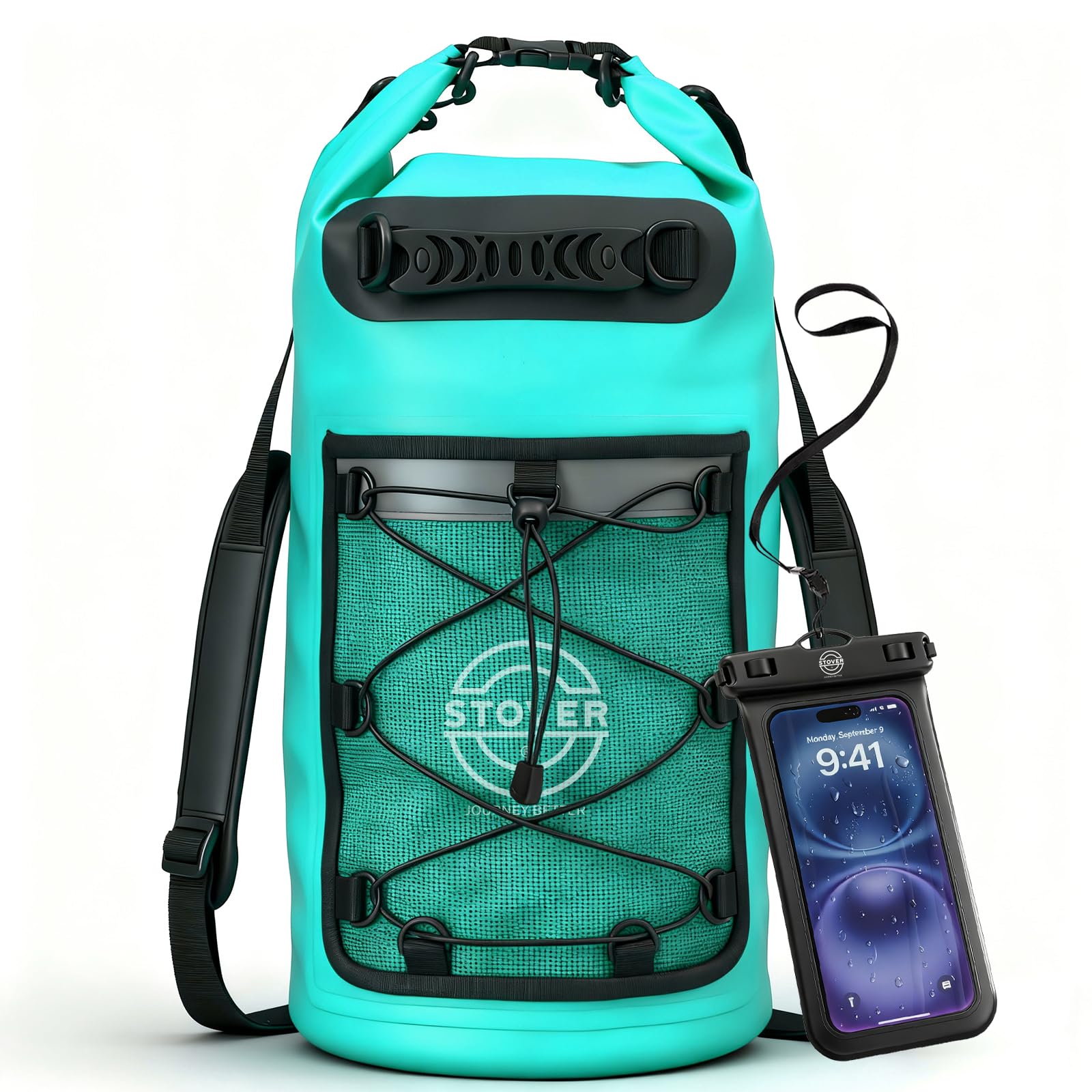
STOVER Dry Backpack
Key Features
- Capacity: 5L–55L
- Material: Vinyl tarpaulin
- Closure: Roll-top buckle
- Strap System: Padded, adjustable, sternum
- Extras: IP58 phone case
- Price: Budget
The STOVER Dry Backpack offers solid construction and dependable waterproofing for the price, with sizes from 5L to 55L and an included IP58 phone case. It works well for canoeists and hikers who need a basic roll-top bag that keeps gear dry in rain. However, stitching around the straps can be inconsistent on some units, limiting its appeal as a primary bag compared to more established brands like Earth Pak. Best suited as an affordable spare or for occasional use where the phone case adds value and you’re willing to inspect the stitching upon arrival.
Pros
- Solid build with good materials for the budget tier
- Spacious size range and a usable waterproof phone case included
Cons
- Stitching around straps can be inconsistent, worth checking before heavy use
A capable budget backup for day trips or as a spare for group outings, provided you inspect the stitching and don’t need the track record of top sellers.
Best for Kayak Trips
IDRYBAG 40L Backpack

Key Features
- Capacity: 20L–40L
- Material: 500D PVC
- Closure: Roll-top buckle
- Strap System: Padded, chest, waist belt
- Extras: Splash-proof front, interior zip, mesh sides
- Price: Mid-Range
The IDRYBAG 40L offers ample capacity and thoughtful pocket layout for multi-day paddling. Its 500D PVC build and roll-top closure keep gear dry in surface conditions. However, buckle and strap hardware is less durable than alternatives like Earth Pak or Skog Å Kust – these components can give out after moderate use, making it better suited for lighter loads or shorter trips.
Pros
- Good build quality and toughness
- Functional design with useful pockets
Cons
- Buckles and straps can fail after modest use
Best for multi-day kayak trips where capacity matters more than hardware longevity, provided you inspect the straps before each outing.
Best for Eco Adventurers
FE Active 30L Backpack

Key Features
- Capacity: 30L
- Material: Eco-friendly 5mm PVC tarpaulin
- Closure: Roll-top buckle
- Strap System: Padded, adjustable, chest strap
- Extras: Bungee cord, side mesh, inner pouch
- Price: Budget
This 30L dry bag uses recycled PVC tarpaulin and a roll-top closure to keep contents dry in rain and splashes. Padded shoulder straps and chest strap offer decent comfort for day hikes. At 2.2 lbs, it is heavier than many alternatives, and the hardware is less refined than top-tier brands, so it suits casual use rather than harsh conditions.
Pros
- Eco-friendly materials: recycled 5mm PVC tarpaulin reduces environmental impact.
- Effective waterproofing: roll-top closure and tarpaulin keep gear dry in rain and splashes.
Cons
- Strap and buckle hardware may show wear over time with frequent heavy use.
Best for eco-conscious day hikers who value sustainable materials over minimal weight and understand that long-term toughness may not match premium dry bags.
Best for Beachgoers
OMGear Dry Backpack

Key Features
- Capacity: 5L–40L
- Material: PVC (unspecified)
- Closure: Roll-top buckle
- Strap System: Shoulder strap (small) / backpack (large)
- Extras: Colorful prints
- Price: Budget
Eye-catching tropical patterns and solid waterproofing for day trips make this a stylish choice. However, clip and strap hardware can loosen after limited use, so it’s best for light beach outings rather than demanding adventures.
Pros
- Eye-catching prints make it easy to spot on the water.
- Plenty of room for a day’s essentials.
Cons
- Hardware can loosen or break with light use — check buckles before relying on it.
Best for beach enthusiasts who want a colorful, affordable dry backpack for calm conditions.
Best for Canoe Campers
Haimont 60L Duffel

Key Features
- Capacity: 60L or 90L
- Material: 500D tarpaulin
- Closure: Roll-top buckle
- Strap System: Adjustable backpack straps
- Extras: Multiple handles, IPX7 submersible
- Price: Mid-Range
This 500D tarpaulin duffel provides solid IPX7 submersion protection and generous 60L or 90L capacity for hauling group gear on canoe trips or rafting expeditions. However, the duffel shape makes it awkward to carry as a backpack over distances, and shoulder strap hardware can detach under load – better suited for short carries and boat-to-camp moves than hiking.
Pros
- Thick 500D tarpaulin material withstands rough handling and submersion.
- Spacious 60L/90L capacity fits all gear for multi-day trips.
Cons
- Shoulder strap buckle may detach under heavy load – inspect before each trip.
Best suited for expedition groups who prioritize volume and waterproofing over backpack comfort for short carries.
Best for Kids
Cliduli Sea Turtle Bag

Key Features
- Capacity: 5L–20L
- Material: Polyester (likely PVC-coated)
- Closure: Roll-top buckle
- Strap System: Removable shoulder (5-10L) / backpack (20L)
- Extras: Nautical print
- Price: Budget
This Cliduli bag offers effective waterproofing for splashes and brief dips, with thick material that feels sturdy and a playful sea turtle print that kids enjoy. The 5L to 20L sizes suit packing a towel and snacks for a short outing, but the limited capacity and unverified long-term use mean it is best for occasional child trips rather than serving as an adult’s primary daypack.
Pros
- Great waterproofing for light water activities
- Thick material that feels sturdy
Cons
- Long-term resilience after repeated use has not been confirmed
Best for parents seeking a lightweight, fun dry bag for kids’ beach days where gear stays close to shore.
Best for Day Hikers
geckobrands Embark 10L

Key Features
- Capacity: 10L
- Material: Polyester/PU
- Closure: Roll-top buckle
- Strap System: Drawstring backpack straps
- Extras: Ultra-light, 0.6 lbs
- Price: Mid-Range
Weighing just 0.6 lbs and packing down small, the geckobrands Embark is a water-resistant drawstring bag for carrying personal items to the beach or on a dry trail. Its roll-top closure keeps light rain and splashes out, but sustained heavy rain can seep through, and the drawstring mechanism may wear over time. This is a casual companion, not a dry bag for kayaking or submersion.
Pros
- Weighs only 0.6 lbs and compresses to a small size for easy packing
- Handles light rain and splash exposure during beach or pool outings
Cons
- Drawstring closure and lining may loosen or fail over time with regular use
A good choice for minimalist day trips where weight matters and you don’t expect heavy rain or submersion.
How to Choose
The best dry bag is useless without correct rolling technique – three to five rolls and a tight seal determine whether your gear stays dry.
Capacity
Choose a volume that matches your trip length. A 10–20L bag works for day hikes, while 30–40L handles overnight kayak trips. Larger bags above 55L become awkward to wear as backpacks because the duffel shape shifts weight away from your center of gravity.
Overstuffing a bag reduces the number of rolls you can make, which compromises the seal. Aim for 80% fill to leave room for three tight rolls.
Material
PVC and vinyl tarpaulins are the standard – they are waterproof and affordable. Thicker materials (500D or 0.5mm+) resist punctures better but add weight. Thin PVC (0.3mm) saves ounces but can tear at the fold after a season of use.
Vinyl-coated polyester (like Skog Å Kust’ 500D) offers a balance of abrasion resistance and UV stability. For whitewater or rocky shores, prioritize thickness over weight.
Closure
Roll-top closures are the most reliable for keeping water out – they create a mechanical seal when folded and buckled. Zippered dry bags are convenient but rarely waterproof under submersion; they rely on a gasket that degrades over time.
The number of rolls matters: three is the minimum for splash resistance, five achieves full submersion protection. Always seal the bag by pressing out air before rolling.
Strap System
Basic shoulder straps work for light loads but quickly become uncomfortable when the bag is heavy or worn for hours. A padded ergonomic harness with a sternum strap and waist belt transfers weight to your hips, critical for day hiking or portaging.
Removable straps are handy for converting the bag to a duffel, but removable buckles are a common failure point. Fixed, sewn-on straps with reinforced stitching tend to last longer.
Extras
Phone cases are useful but rarely match the bag’s own waterproof rating – many are splash-proof only. An IPX8 case (like Piscifun’ ) can handle shallow submersion, but the bag itself may not. Extra pockets (front zip, side mesh) add organization but create potential leak points if not sealed.
Consider whether you need a laptop sleeve. That feature adds weight and reduces the bag’s packing flexibility, but is invaluable for commuters.
FAQ
Can I trust a dry bag backpack to keep my phone dry if I fall in the water?
Only if the bag is fully sealed and the water exposure is brief. A properly rolled dry bag can survive a dunk, but prolonged submersion (over a minute) often forces water through the fold or seams. For absolute phone protection, use a dedicated waterproof phone case (IPX8 rated) inside the bag.
How many times should I roll the top to make a dry bag truly waterproof?
Three rolls are enough for splashes and rain. For full submersion – like a capsize in a kayak – roll five times and clip the buckle as tight as possible. Always press out excess air before rolling; trapped air makes the bag buoyant but reduces the seal’s effectiveness.
Will a dry bag backpack float with a laptop and clothes inside?
It will float if the trapped air inside offsets the weight, but a heavy load (laptop, books, full water bottle) will sink the bag. Most dry bags are not designed as flotation devices – treat them as waterproof storage, not life preservers.
Why does my dry bag leak at the fold after a few uses?
Repeated folding stresses the same line of material, causing micro-cracks in thin PVC. Bags with thicker PVC (0.5mm+) or reinforced fold areas resist this longer. To extend life, vary the fold position slightly each time you seal the bag, and avoid storing it folded for long periods.