This post contains affiliate links. We may earn a small commission when you buy through our links — at no extra cost to you.
A full-face helmet looks like a full-face helmet, but not all are built for the same kind of riding. Many helmets sold for mountain biking carry only a BMX or general cycling certification, which isn’t enough for the speeds and impacts of downhill descents.
The difference comes down to ASTM F1952 certification, a standard that tests for higher impact energy and chin bar loads. Without it, a helmet’s protection on a serious downhill crash is unproven. This guide focuses on helmets that either hold that certification or offer comparable protection, and explains the trade-offs you’ll encounter with features like MIPS, weight, and ventilation.
Whether you’re a weekend bike park regular or a racer pushing limits, knowing which certifications matter and what you give up for lower weight or a lower price lets you buy with confidence instead of guessing.



Best for Downhill Racers
Smith Mainline
Key Features
- Certification: ASTM F1952
- Rotation Protection: MIPS
- Weight: ~750g
- Ventilation: 21 vents
- Price: $$$
Smith’s Mainline hits a rare sweet spot: full downhill certification (ASTM F1952) with MIPS rotational protection, full Koroyd honeycomb coverage, and 21 vents — all in a 750g shell. That weight and airflow make it one of the few DH helmets you can leave on during climbs without overheating.
The fit system is the most elaborate in this class: three cheek pad kits, two crown liners, and two neck rolls let you dial in snugness from cheek to crown. That adjustability means riders with oval or round head shapes can find a secure fit without pressure points. The tradeoff is the MIPS liner’s tendency to creak or rattle when turning the head — a minor annoyance that disappears once you’re moving fast, but worth knowing if you’re sensitive to helmet noise.
This helmet is built for aggressive downhill and enduro riders who push hard and want every protection advantage without feeling weighed down. If you ride park laps or race enduro and prioritize ventilation over absolute silence, the Mainline delivers. The MIPS creak is present but manageable; riders who need total quiet during slow climbs or shuttle rides may find it distracting.
Pros
- Exceptional ventilation and low weight keep you cool and comfortable on long descents.
- Full Koroyd coverage plus MIPS provides layered impact protection across the entire shell.
- Highly customizable fit with multiple pad options ensures a secure, non-slip feel.
Cons
- MIPS liner can produce a creaking or rattling noise when turning the head, which may be distracting in quiet settings.
For riders who value ventilation, light weight, and certified protection over total silence, the Mainline sets the standard.
Best for Bike Park Users
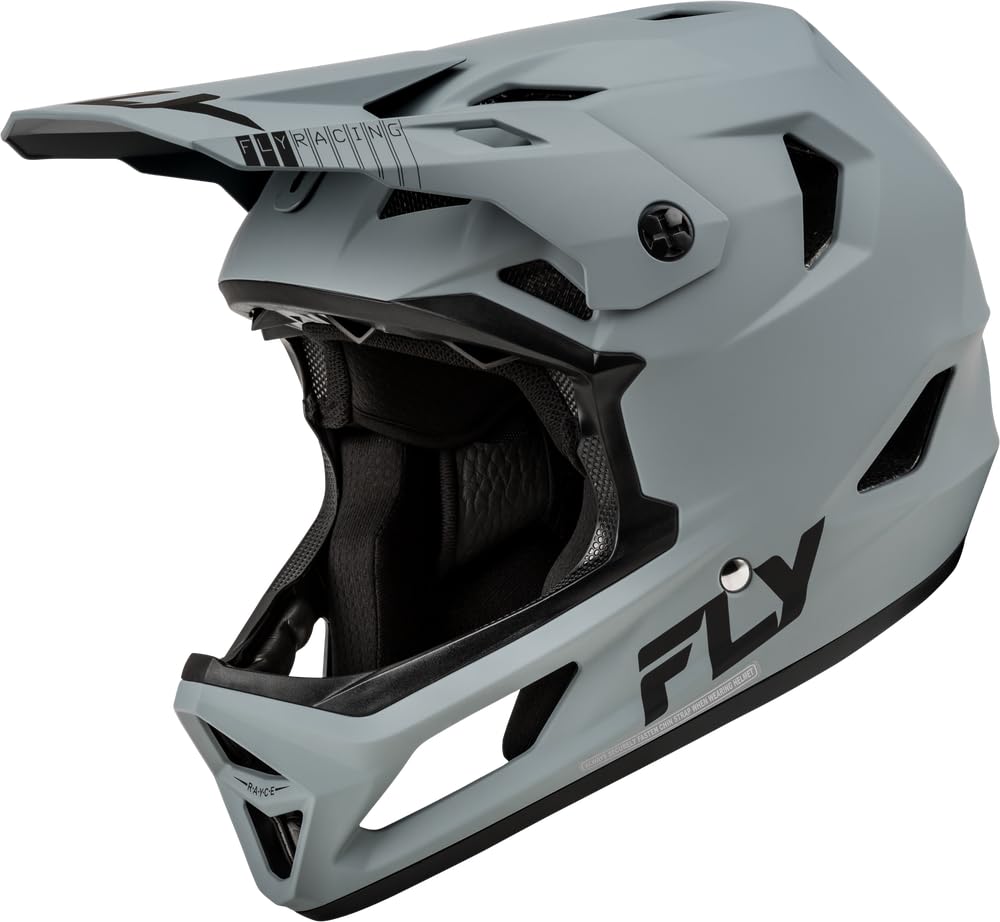
Fly Racing Rayce
Key Features
- Certification: ASTM F1952-15
- Weight: 930g
- Ventilation: TFV system
- Price: $$
The Fly Racing Rayce carries explicit ASTM F1952 certification, which puts it in the same safety class as premium competitors like the Smith Mainline — but without the MIPS label or the sub-800g weight. Riders get a well-constructed helmet with a snug, secure fit and a removable, washable liner that keeps things fresh after long days in the park. The ventilation system moves enough air to stay comfortable during extended climbing or descending, making it a solid all-day option for bike park riders.
This helmet suits riders who want downhill-level certification without paying extra for rotational protection. The 930-gram weight is noticeable on climbs compared to lighter alternatives, and the lack of MIPS means it’s not the best fit for those who prioritize that specific safety feature. If your riding is primarily lift-served or shuttled and you want a certified helmet that doesn’t break the budget, the Rayce delivers where it counts.
Pros
- ASTM F1952 certification provides downhill-rated impact protection at a mid-range price.
- Snug, secure fit with a removable washable liner for comfort during full-day sessions.
- Ventilation system maintains airflow during climbs and descents for all-day use.
Cons
- At 930 grams, the weight is noticeable during extended climbing — less of an issue for lift-accessed riding.
- MIPS rotational protection is absent — this matters if your typical crash involves high-speed rotational impacts on loose terrain.
Best for riders who want a certified downhill helmet without spending on MIPS, and can accept the extra weight in exchange for a solid build and all-day comfort.
Best for Hot Weather Riders
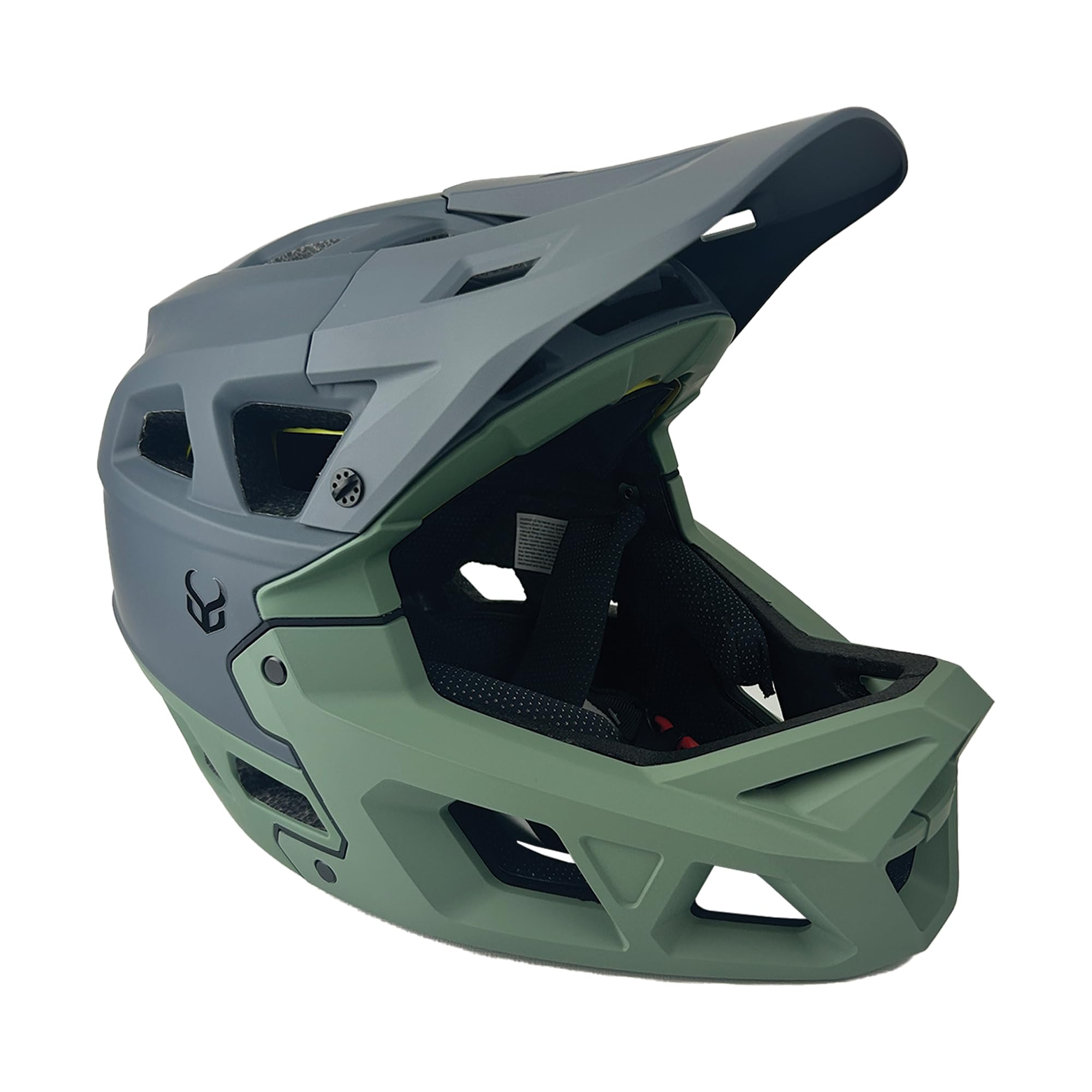
Demon Podium X MIPS
Key Features
- Certification: Downhill rated
- Rotation Protection: MIPS
- Weight: 710g
- Ventilation: 20+ vents
- Price: $$
Unlike the cheapest certified downhill helmet, which skips rotational protection entirely, the Podium X brings MIPS to a lightweight 710g package with 20+ vents. That combination makes it a strong candidate for riders who prioritize airflow and crash mitigation over an official ASTM sticker.
This helmet suits hot-weather riders who wear glasses and want MIPS without the steep price of premium models. The sizing is limited to 55–58 cm (S/M), so larger heads are out. And while the brand calls it ‘downhill rated,’ the listing does not explicitly cite ASTM F1952 — a detail that matters if certification is a hard requirement for your riding.
Pros
- Lightweight at 710g with ample ventilation for hot days
- Comfortable fit via multiple removable thickness pads
- MIPS rotational protection at a mid-range price point
Cons
- Only available in S/M (55–58 cm) — larger head sizes will not fit
- Listing does not explicitly state ASTM F1952 certification; ‘downhill rated’ is the brand’s own claim
If MIPS and ventilation matter more than an explicit ASTM label, the Podium X offers a strong balance of weight, airflow, and price. Riders who require formal certification should stick with the explicitly certified options.
Best for Budget Downhill Riders
Mongoose Title
Key Features
- Certification: ASTM F1952
- Weight: 805g
- Ventilation: 10 vents
- Price: $
The Mongoose Title is the only helmet at its price point with explicit ASTM F1952 downhill certification, making it a genuine option for aggressive riding without a premium investment. At roughly 805 grams, it keeps neck strain low during long descents, and the ABS/EP foam shell delivers solid impact absorption for its class.
This helmet suits budget-conscious downhill riders and beginners who need certified protection first — rotational safety is not a priority. Be aware that fit can be inconsistent for larger or rounder head shapes, and ventilation is moderate on hot rides. Unlike the slimmer MIPS-equipped alternative in this set, the Title sticks to the basics: certified protection and light weight, with no rotational safety layer.
Pros
- Only budget helmet with ASTM F1952 certification for downhill use
- Lightweight design reduces neck fatigue on long runs
- Build quality and impact protection meet standards for aggressive riding
Cons
- Fit may be tight for larger or rounder head shapes
- Ventilation only moderate — limited airflow on hot days
For riders who prioritize certified downhill protection over rotational safety and can accept fit variability, this is a straightforward entry point.
Best for Specs-Minded Riders
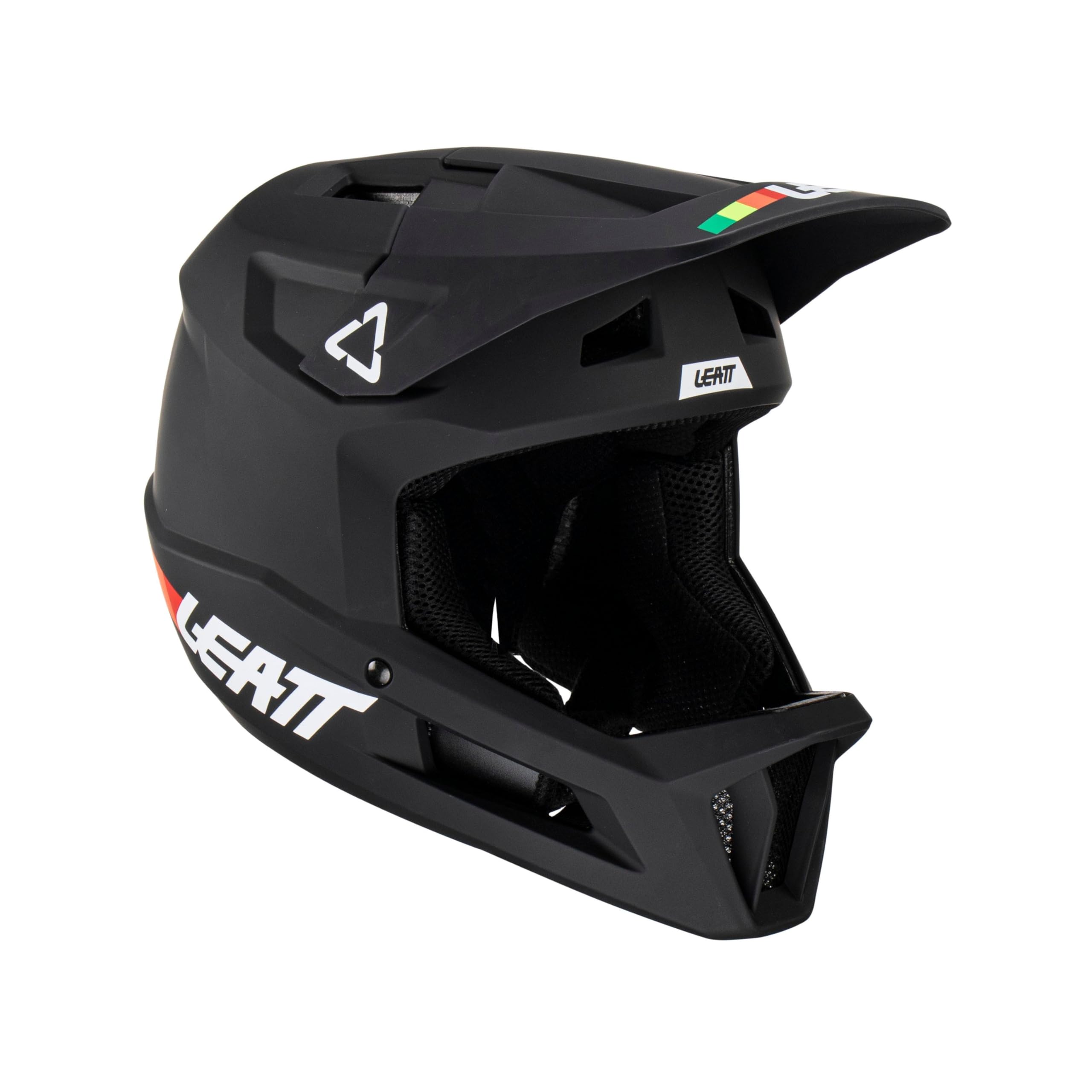
Leatt Gravity 1.0
Key Features
- Certification: ASTM F1952-10
- Rotation Protection: 360 Turbine
- Weight: 900g
- Price: $$
Leatt’s 360 Turbine technology provides rotational impact protection without the creaking noise often associated with MIPS systems, while ASTM F1952 certification confirms it meets downhill standards. This puts it in direct competition with the top-pick Smith Mainline, but with a heavier 900g build that contrasts with the Mainline’s 750g frame.
This helmet fits riders who trust Leatt’s reputation and want a rotational protection system that stays quiet, and who are comfortable buying based on specification sheets rather than extensive community validation. Real-world performance remains unverified by a large user base, making this a calculated choice for those willing to take a leap on paper specs.
Pros
- 360 Turbine rotational protection eliminates MIPS creaking noise.
- ASTM F1952 certified for aggressive downhill riding.
- Breakaway visor reduces risk of neck injury in crashes.
Cons
- At 900g, it is heavier than many downhill helmets, adding fatigue on extended climbs.
For riders who prioritize a quiet rotational system and downhill certification over weight savings and user validation, the Leatt Gravity 1.0 is a viable alternative to the Smith Mainline.
Best for Serious Racers
POC Otocon Race
Key Features
- Certification: ASTM F1952
- Rotation Protection: MIPS Integra
- Weight: ~750g
- Price: $$$
The Otocon Race MIPS stands out among DH helmets for integrating RECCO, NFC Medical ID, and MIPS Integra into a certified downhill shell – a combination not offered by the top pick or other competitors. The breakaway peak reduces snag risk, and the claimed 750g weight keeps it competitive among lighter certified helmets despite the added tech.
This helmet is best for serious downhill racers who want the latest protective technology and are willing to trust brand pedigree over community feedback. The premium price and absence of customer reviews mean a degree of uncertainty – but if the feature set aligns with your needs, the Otocon delivers a fully certified DH helmet with a breakaway peak, lightweight construction, and clean aesthetics that prioritize function over flash.
The MIPS Integra system integrates rotational protection with the helmet’s adjustment mechanism, reducing weight and complexity. Paired with RECCO, it adds a layer of safety for backcountry racers who may need rescue location assistance.
Pros
- RECCO reflector offers added safety in backcountry scenarios – a feature absent from most DH helmets.
- NFC Medical ID gives emergency responders instant access to your medical information without a phone.
- MIPS Integra delivers rotational protection that integrates with the fit system for a streamlined design.
Cons
- Premium pricing requires buyers to rely on brand reputation rather than community feedback – a leap of faith for some.
The Otocon Race MIPS is a purpose-built tool for racers who want the latest safety tech and are willing to embrace the uncertainty of unvetted reviews.
Best for Breathable Budget
OutdoorMaster Rhino

Key Features
- Certification: Claimed downhill
- Weight: ~750g
- Ventilation: 27 vents
- Price: $$
The Grizzly’s ventilation is genuinely impressive — 27 vents and a sub-750g weight keep your head cool on hot climbs. The chinbar and EPP collar protection offer decent coverage for trail riding. However, the absence of MIPS rotational protection and the lack of explicit ASTM F1952 downhill certification mean this helmet is best suited for casual trail or enduro use rather than aggressive downhill runs. Additionally, the plastic visor screws can be prone to stripping or snapping under repeated adjustments, and fit varies between riders — some find it tight, others loose.
Pros
- 27 vents and ~750g weight keep you cool on demanding climbs.
- Supportive chinbar and EPP collarbone pads give a reassuring sense of protection for trail riding.
Cons
- Plastic visor screws can wear or strip with repeated adjustments.
- Fit may run tight for some riders and loose for others, making sizing a gamble.
Best for riders who prioritize airflow above all else and primarily ride flowy trails, not aggressive downhill — consider aftermarket screws if you adjust the visor often.
Best for Trail/bmx Riders
O’Neal Sonus Deft

The O’Neal Sonus Deft delivers strong value for casual riding with a comfortable interior and a magnetic buckle that simplifies fastening. However, it lacks ASTM F1952 certification for downhill use, weighs about 3.5 pounds, and its sizing runs small – making it best suited for trail riders, BMX, or youth riders on a budget who don’t need DH-rated protection.
Pros
- Exceptional value for the price point
- Comfortable fit with quality padding
Cons
- For riders with larger heads, the fit can be too snug due to sizing that runs small.
Ideal for budget-conscious riders who need a full-face for trail, BMX, or youth riding and are okay with sizing up for a proper fit.
Best for Budget Mips Seekers
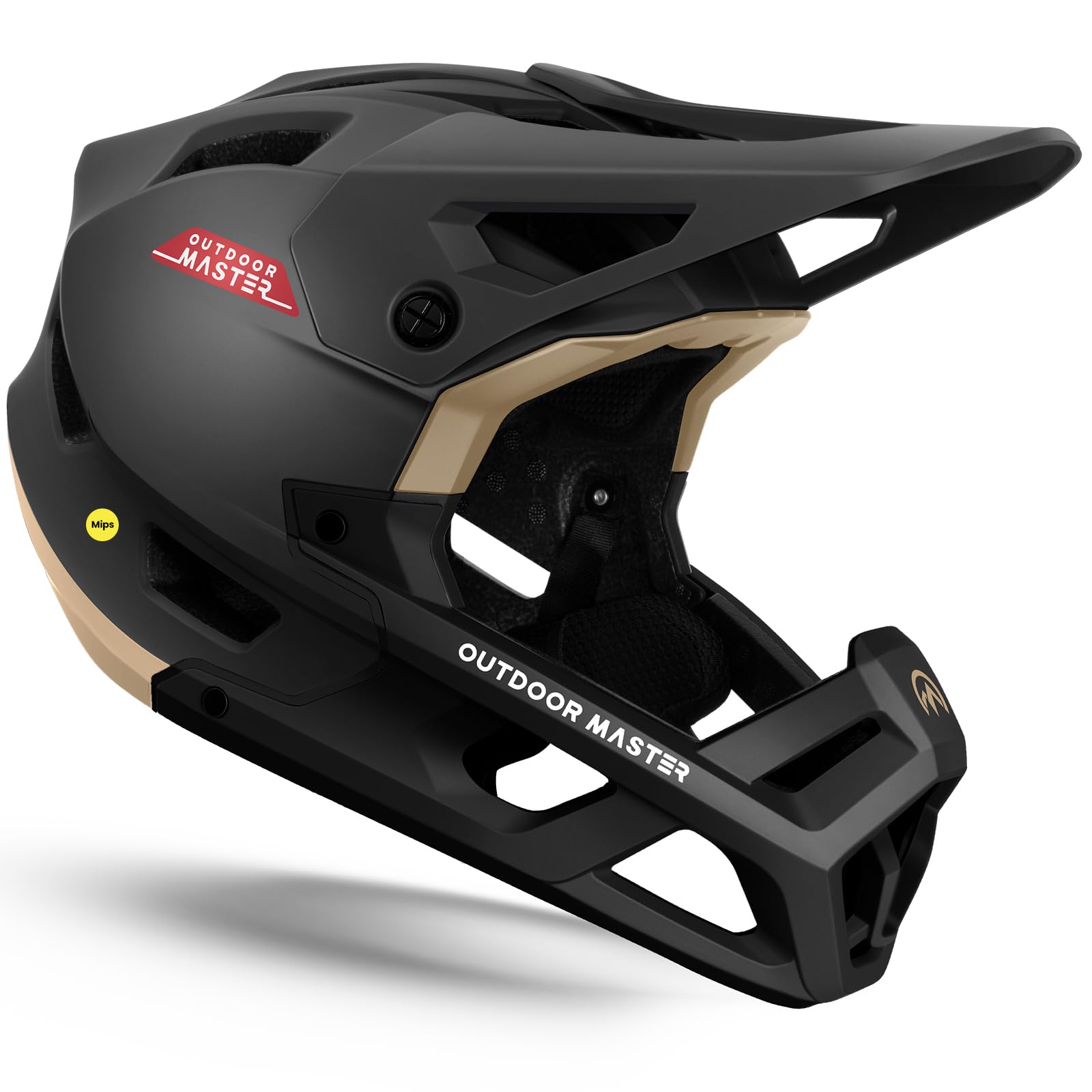
OutdoorMaster Rhino MIPS
Key Features
- Certification: Not stated
- Rotation Protection: MIPS
- Weight: ~750g
- Ventilation: 27 vents
- Price: $$
The OutdoorMaster Rhino MIPS delivers MIPS protection in a lightweight, well-ventilated full-face at a budget-friendly price. It lacks explicit downhill certification (ASTM F1952), so it’s best suited for trail and enduro riding rather than aggressive downhill runs where certified protection is required.
Pros
- Lightweight with good ventilation and MIPS
- Good protection for the price
Cons
- Runs small; ordering up a size is necessary for a proper fit
This helmet fits riders who want MIPS on a budget for moderate trail use, provided they check sizing carefully.
How to Choose
The single most important distinction in downhill helmets is ASTM F1952 certification, which tests for impacts at speeds and angles that typical full-face helmets aren’t required to survive.
Downhill Certification
ASTM F1952 is the benchmark for downhill riding. Helmets without it are only certified for lower-energy impacts from BMX or general cycling. On a steep, fast descent, a non-certified helmet may lack the structural integrity to prevent chin bar collapse or energy transfer to the brain.
Check the label or listing for explicit ASTM F1952 mention. Some helmets claim ‘downhill rated’ without the certification – while they may still offer good protection, the absence of independent testing is a gamble for aggressive riding.
Rotational Impact Protection
MIPS and systems like Leatt’s 360 Turbine are designed to reduce rotational forces that cause brain injuries in angled impacts. They add a low-friction layer between the outer shell and liner, allowing the helmet to rotate slightly on impact.
The trade-off: MIPS can introduce a creaking or rattling noise during head movement, and adds some weight. Not all riders notice it, but if you’re sensitive to helmet noise, try it on before buying. Riders on a budget who do only moderate trails may find the extra cost hard to justify.
Weight
A sub-800g helmet significantly reduces neck fatigue over a full day of descents. Every 100g saved matters on long, rough runs where you’re constantly moving your head to scan the trail. Heavier helmets (900g+) become noticeable after consecutive laps.
Lighter helmets often use more expensive materials like carbon fiber or advanced EPS molds, which drive up price. A 750g premium helmet costs two to three times more than a 930g certified model. Decide how much you value all-day comfort vs. upfront cost.
Ventilation
Downhill helmets have fewer vents than trail helmets to maintain structural strength, but designs vary widely. More vents (20+) with deep channels improve airflow during climbs or shuttle rides, while fewer vents (10) trap heat on hot days.
Overheating is a common complaint. If you ride in warm climates or pedal uphill, prioritize helmets with at least 15 vents and internal channeling. The trade-off is that heavily vented shells may be slightly less protective in certain impacts, though all certified models pass the same drop test.
Fit Adjustability
A helmet that doesn’t fit securely is a safety hazard. Look for multiple cheek pad thicknesses, crown liner options, and a retention system that hugs your head without pressure points. The Smith Mainline and Demon Podium X offer the most adjustability in this group.
If a helmet has only one pad set, your chances of a perfect fit drop. Many riders end up buying aftermarket pads or swapping sizes. When ordering online, pay attention to return policies and measure your head circumference against the brand’s size chart.
FAQ
Is ASTM F1952 certification required for downhill mountain biking?
Yes, for aggressive downhill riding ASTM F1952 is the minimum standard. It tests the helmet at higher impact speeds and includes a chin bar load test that EN1078 and CPSC standards do not. Helmets without it may still offer decent protection, but you are accepting an unverified level of safety for hard hits.
Why does my MIPS helmet make a creaking noise when I turn my head?
The creaking comes from the low-friction MIPS liner moving against the EPS foam. It’s a normal byproduct of the mechanism and doesn’t affect protection. Some brands, like Smith, are more prone to it. If the noise bothers you, try a helmet with Turbine technology (Leatt) or a non-MIPS certified model like the Fly Racing Rayce.
Can I use a BMX full-face helmet for downhill riding?
No, BMX helmets are certified to EN1078 or CPSC, which test for lower impact forces. They lack the reinforced chin bar and thicker liner needed to absorb a high-speed crash. A helmet like the O’Neal Sonus Deft is fine for pump tracks and easy trails, but for lift-accessed downhill you need ASTM F1952 certification.
What’s the difference between MIPS and 360 Turbine protection?
Both reduce rotational forces, but MIPS uses a sliding plastic liner that moves on impact, while 360 Turbine uses small rubber-like pads that deform and absorb rotation. Turbine is generally quieter and lighter, but MIPS has broader industry adoption and is easier to find across price points. Both are effective.