This post contains affiliate links. We may earn a small commission when you buy through our links — at no extra cost to you.
Most coolers under $50 promise long ice retention and solid construction, but real-world use often reveals cheap hinges, leaky zippers, and melting ice before lunch. The right cooler for your money depends on matching design to your actual outing: a feature-packed soft cooler with a shelf might tempt, but a simpler bag that just works often wins on reliability.
This guide cuts through marketing claims to highlight coolers that hold up to day trips, tailgates, and work sites without breaking the bank. Whether you need something for hiking, the job site, or a weekend barbecue, the picks here balance performance, durability, and cost.


Best for Day Trips
Creative Green Life Jumbo
Key Features
- Ice Retention: Day-trip only
- Latch/Hinge Durability: Zipper, no hinges
- Capacity vs Portability: 30 cans, 1.3 lbs
- Lid Seal: Leak-resistant liner
- Price: Budget
The Creative Green Life Jumbo holds up to 24 cans with ice and maintains cold temperatures for hours thanks to its thick polyurethane foam insulation. At just 1.3 pounds and collapsing flat for storage, this is the rare soft cooler that prioritizes both capacity and convenience without compromising on thermal performance. The leak-resistant liner and machine-washable design make cleanup simple after beach sand or spilled drinks.
A minor note: some bags arrive with a chemical odor that dissipates after airing out for a day or two — a short-lived inconvenience in an otherwise well-constructed bag. The adjustable shoulder strap is comfortable for carrying a fully loaded cooler, and the zippers hold up well under repeated use.
This cooler suits grocery shoppers, farmers market regulars, beachgoers, and anyone packing lunch for a day out. It is not built for multi-day camping trips where ice must stay frozen for two or more days, nor for hiking that demands hands-free carrying. For everyday insulated transport where you need reliable cooling for a few hours, it delivers without fuss.
Pros
- Holds ice and cold drinks well for hours with thick foam insulation
- Fits up to 24 cans with ice or a full grocery haul
- Sturdy stitching and zippers hold up to regular use
- Collapses flat for easy storage and includes a sturdy shoulder strap
Cons
- Some units have a chemical smell when first opened, but it clears after airing
For nearly any day trip, grocery run, or beach outing, this cooler bag offers strong insulation and durable construction at a fraction of the cost of comparable options.
Best for Budget Camping
Coleman Chiller 48 Qt
Key Features
- Ice Retention: Claimed 2.5 days
- Latch/Hinge Durability: Lid lacks stay-open
- Capacity vs Portability: 48qt, 8.1 lbs
- Lid Seal: TempLock foam seal
- Price: Budget
The Coleman Chiller offers a rare combination of low weight (8.1 lbs) and solid ice retention for a hard cooler at this price point. It holds 31 cans with ice or 76 without, and the TempLock foam insulation keeps contents cool through a full day at the beach or a tailgate. The flat lid supports up to 200 lbs, making it a usable extra seat — a practical choice for budget-conscious buyers who need a hard cooler for short outings rather than multi-day trips.
This cooler suits day-trippers and tailgaters who prioritize portability and value over premium features. The main tradeoff is the lid: it does not prop open on its own, so you need to hold it up or prop it with something while loading — a minor inconvenience that doesn’t affect cooling performance. The small grip area on the lid can also make opening a bit fussy with full hands. If your priority is a cooler for multi-day camping where ice must stay frozen, consider a rotomolded option instead.
Pros
- Light enough at 8.1 lbs to carry one-handed when empty
- Holds 31 cans with ice, 76 without, fitting a 2L bottle upright
- Flat lid supports up to 200 lbs as a seat
Cons
- In a tailgate setting where you often grab items, the lid may need to be held open or propped
- The lid’s small grip can make one-handed opening awkward when your other hand is full
For day trips and tailgates where a hard cooler’s durability matters but weight and cost don’t, the Coleman Chiller delivers without breaking the bank.
Best for Camping, Fishing
Igloo BMX 25 Qt
Key Features
- Ice Retention: Claimed 4-5 days
- Latch/Hinge Durability: Stainless steel hardware
- Capacity vs Portability: 25qt, 11.3 lbs
- Lid Seal: Rubberized T-grip latches
- Price: Mid-Range
The Igloo BMX 25 Qt employs rotomolded construction and stainless steel hinge rods, features typically reserved for coolers costing twice as much. In moderate temperatures, it keeps ice frozen for three days or more, matching the performance of premium brands like Yeti and Pelican.
This cooler is built for campers, fishermen, and off-road adventurers who need reliable cold storage over multiple days but don’t want to spend premium dollars. It is heavier than budget hard coolers, and in extreme heat (ambient temps over 90°F with frequent opening), ice retention may not reach the claimed 4-5 days. For those in hot climates or requiring maximum portability, a soft cooler or lighter model would be a better fit.
Pros
- Rotomolded shell and stainless steel hardware offer long-term durability comparable to premium coolers.
- Holds ice for 3+ days in typical camping and fishing conditions.
- Delivers premium-level performance at a fraction of the cost of Yeti or Pelican.
Cons
- In hot weather (90°F+), ice retention may fall short of the 4-5 day claim; performance varies with usage and ambient temperature.
- Hinge or latch issues can occur, similar to many hard coolers in this price range.
For buyers who want premium cooler performance without the premium price, the Igloo BMX is a strong choice — just account for its weight and ice retention limits in hot conditions.
Best for Construction Work
Klein Tools Work Cooler
Key Features
- Ice Retention: 30 hours claimed
- Latch/Hinge Durability: Rugged plastic, lock hasp
- Capacity vs Portability: 17qt, 6.8 lbs
- Lid Seal: 180° lid opening
- Price: Mid-Range
This cooler is built to survive a job site drop and keep lunch cold for a full shift. While the top pick is a lightweight soft bag for day trips, the Klein Tools Work Cooler focuses on ruggedness and utility — including a lid that seats 300 pounds.
Best for tradespeople who need a durable lunch box that doubles as a seat during breaks. The tradeoff: the shoulder strap is short, so carrying it fully loaded over longer distances is awkward — it is better used as a handle or set down on a toolbox. The bulk also limits it to stationary or vehicle-transported use rather than hiking.
Pros
- Survives drops and heavy use on job sites
- Keeps food and drinks cold throughout a full workday
- Sturdy lid supports up to 300 lbs as a seat
Cons
- Strap length may be too short for comfortable shoulder carry with a full load
- Larger than typical lunch boxes; may feel bulky for tight workspaces
For tradespeople who value durability and a built-in seat over portability, this cooler delivers exceptional value.
Best for Hiking, Beach
Maelstrom Cooler Backpack
Key Features
- Ice Retention: Day-trip only
- Latch/Hinge Durability: Zipper (leaks)
- Capacity vs Portability: 35 cans, 0.95 lbs
- Lid Seal: Leak-proof claimed
- Price: Budget
The Maelstrom Cooler Backpack combines a comfortable backpack design with ample pocket organization and a 35-can capacity, making it a practical choice for hiking and beach trips. While the top pick focuses on simple reliability, this bag adds separate compartments for snacks, tools, and utensils plus a bottle opener — all at a similar budget-friendly price.
Best for hikers and day-trippers who want hands-free carrying and can accept the occasional dampness from melted ice. The zipper is not fully leak-proof, so keeping drinks in sealed bags is needed to avoid wet gear. This tradeoff is minor for sandy or grassy locations but becomes a problem if the bag must stay dry.
Pros
- Multiple pockets for organized storage of food, drinks, and accessories
- Comfortable backpack straps for hands-free carrying on walks or hikes
- Good temperature retention keeps drinks cold for several hours
Cons
- Zipper seeps water when ice melts, requiring sealed containers to keep other items dry
If hands-free carrying and plenty of pockets are your priorities, this backpack cooler offers solid value for casual outdoor trips — just plan for a bit of moisture as ice melts.
Best for Kayaking, Boating
Pelican 14 Qt Cooler
Key Features
- Ice Retention: Good for size
- Latch/Hinge Durability: Press-and-pull latches
- Capacity vs Portability: 14qt, 8.3 lbs
- Lid Seal: Lid organizer
- Price: Premium
The Pelican 14 Quart Cooler brings the same press-and-pull latches and polyurethane foam insulation found in larger Pelican models, but in a package that weighs 8.3 pounds and fits behind a kayak seat. Compared to the rotomolded value pick at a similar price, this cooler trades interior volume for easier handling and a form factor that stows neatly. The stainless steel bottle opener and inner tray add convenience without adding bulk.
This cooler suits outdoor enthusiasts who need a bombproof personal ice chest for day trips or short overnights — kayakers, boaters, and off-roaders will appreciate the secure lid and lifetime guarantee. However, the 14-quart capacity and high cost per quart make it a poor fit for budget shoppers or anyone needing to pack for a group. If you need more room without sacrificing durability, the larger rotomolded alternatives deliver better value per quart.
Pros
- Rotomolded build with thick walls and secure latches that withstand rough handling
- Holds ice well for its size, keeping contents cold through a full day on the water
- Light enough at 8.3 lbs to carry one-handed, with a sturdy handle for short carries
Cons
- Premium price for 14 quarts means a higher cost per quart than larger coolers
- Ice retention is good but may not last a full weekend in hot climates
This makes sense for solo adventurers who want a nearly indestructible small cooler with a lifetime warranty. For larger groups or everyday use, a rotomolded 20-quart will stretch the budget further.
Best for Day Trips
Titan Arctic Zone 30 Can
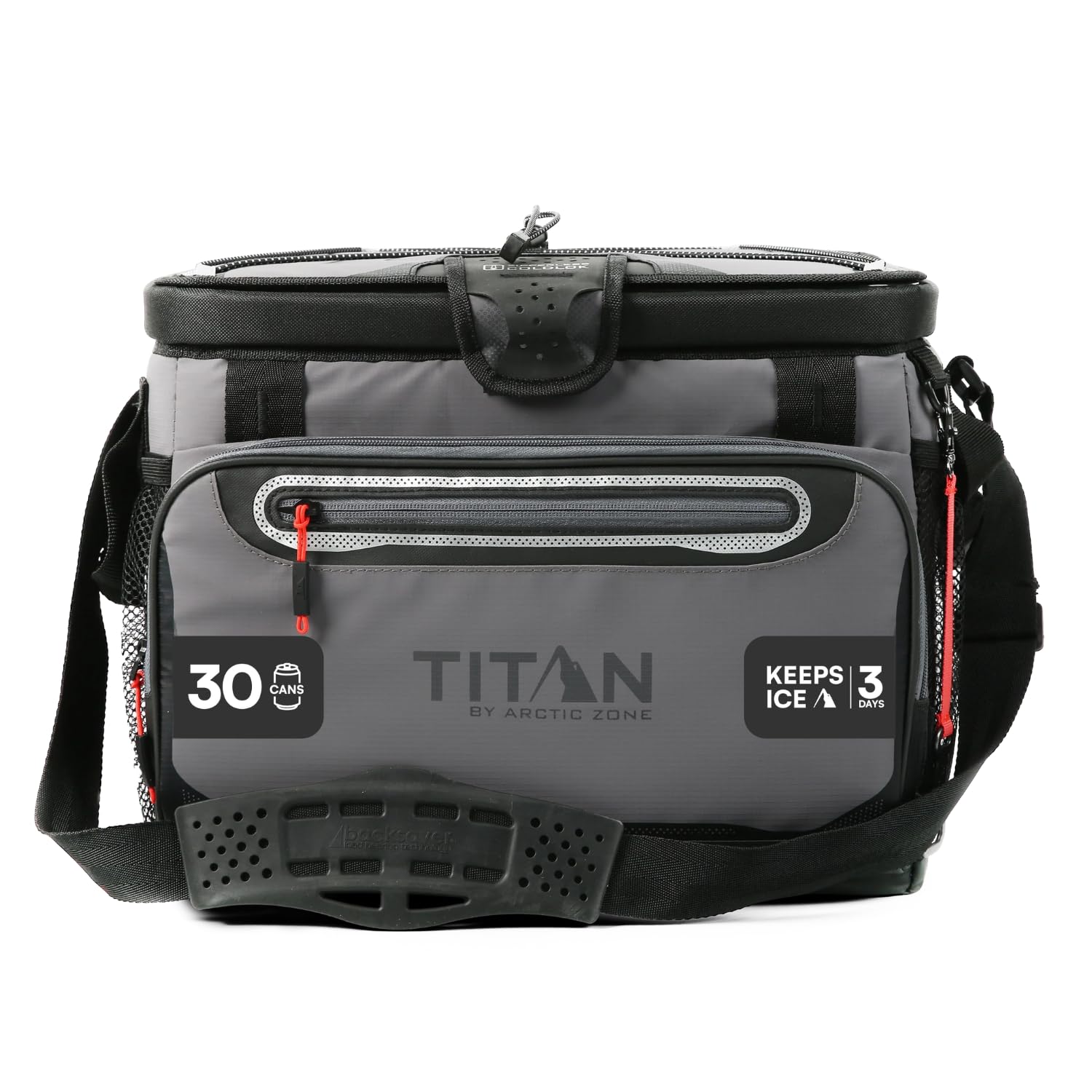
Key Features
- Ice Retention: Moderate
- Latch/Hinge Durability: Zipperless lid
- Capacity vs Portability: 30 cans, 3.6 lbs
- Lid Seal: Zipperless flip lid
- Price: Mid-Range
The zipperless flip lid and removable SmartShelf make packing and accessing items easy, and the build quality stands out among soft coolers. However, ice retention falls short of the claimed two days in hot weather, so this cooler works best for shorter outings like picnics or beach trips. A more affordable option in this lineup offers better cold-holding consistency at half the price, which is why this Titan model doesn’t lead the value category.
Pros
- Excellent build quality and materials
- Spacious interior with removable shelf for organized storage
Cons
- Can leak if not kept upright due to the plastic insert design
Best suited for day trips where the zipperless lid and shelf add convenience, but buyers needing ice that lasts beyond a day should consider a more consistent performer.
Best for Day Trips
Igloo Profile II 30 Qt

Key Features
- Ice Retention: Good
- Latch/Hinge Durability: Plastic, decent
- Capacity vs Portability: 30qt, weight unknown
- Lid Seal: Slotted lid
- Price: Mid-Range
This Igloo Profile II 30 Qt builds on the brand’s reputation for dependable hard coolers, with thick insulation that keeps contents cold for multiple days. The 41-can capacity fits a 2-liter upright, and the lid has pouring channels and stacking slots. However, the cooler is prone to tipping over if knocked — a tradeoff for its lightweight design. Without confirmed pricing, we can’t assess its value against similarly sized options, though build quality and ice retention are competitive for day trips and moderate camping.
Pros
- Thick foam insulation keeps ice cold for multiple days.
- Rugged plastic shell withstands bumps and outdoor use.
Cons
- Can tip over easily when bumped on uneven surfaces.
If you find it at a competitive price, this cooler delivers consistent cold storage for day trips and camping, though its tipping tendency makes flat ground best.
Best for Lunch Bag
Stanley Julienne 10 Can

Key Features
- Ice Retention: With ice pack
- Latch/Hinge Durability: Zipper (sticky)
- Capacity vs Portability: 10 cans, 1.47 lbs
- Lid Seal: Leak-resistant liner
- Price: Premium
This bag looks great and holds up well over time, with sturdy fabric and a leak-resistant liner that keeps lunch cold when paired with an ice pack. The trade-off is a small 10-can capacity and a premium price tag — the zipper can also feel sticky at times. For buyers who value aesthetics and brand, it is a solid daily companion; anyone seeking maximum value per dollar will find larger options from the Creative Green Life bag more practical.
Pros
- Superior build quality and premium materials
- Attractive design that holds up well over months of use
Cons
- Cost is high for the 10-can capacity – a premium for style over volume
- Zipper operation can feel sticky, requiring extra effort to open and close
Best suited for style-conscious buyers who want a compact, durable lunch bag and are willing to pay for the Stanley name and build – not for those seeking maximum capacity per dollar.
Best for Budget Lunch
GLENKEY Expandable 16L

Key Features
- Ice Retention: Up to 8 hours
- Latch/Hinge Durability: Zipper (inconsistent)
- Capacity vs Portability: 16L, lightweight
- Lid Seal: Water-resistant outer
- Price: Budget
The GLENKEY Expandable 16L delivers a spacious, expandable interior with dual compartments and side pockets, sufficient for large lunches and up to 20 cans. However, this budget-friendly price comes with tradeoffs in longevity – some units develop seam tears or zipper sticking within months, making it best suited as a light-use or disposable option for occasional work or outings where cost is the primary concern.
Pros
- Expandable 16L capacity with dual compartments fits large lunches and up to 20 cans.
- Budget-friendly price for a large, insulated lunch bag.
Cons
- Seam tears or wear may appear within a few months of use.
- Zipper can stick or break, requiring careful handling.
Buy this for occasional work lunches or day outings where you need a large bag on a tight budget, but not for daily heavy use over many months.
How to Choose
The most important factor when buying a cooler on a budget is ignoring the ice retention claims and instead focusing on latch and hinge quality, as a broken latch renders any cooler useless.
Ice Retention Duration
Manufacturer claims of 2-5 days are often 1-2 days overstated for budget coolers. The actual duration depends on insulation thickness, lid seal integrity, and ambient temperature. In 90°F weather, most $40 hard coolers keep ice for 12-24 hours, not the promised 2.5 days.
If you need ice for a full weekend, you will need a rotomolded-style cooler like the Igloo BMX or a premium brand. For day trips, a well-insulated soft bag works fine. Pre-chilling the cooler and using block ice can extend performance by several hours.
Latch and Hinge Durability
Cheap plastic hinges and latches are the most common failure point on hard coolers under $75. Once a latch breaks, the lid won’t seal or stay closed, making the cooler nearly useless. Look for stainless steel hinge rods (Igloo BMX) or press-and-pull latches (Pelican) for longevity.
If you plan to move the cooler frequently or use it on job sites, prioritize rugged hardware. For stationary use at a party, cheaper plastic may survive long enough, but be prepared to replace it eventually.
Capacity vs Portability
Soft coolers are lightweight and collapsible, making them easy to carry and store, but they sacrifice ice retention and durability. Hard coolers are heavier and bulkier but hold ice longer and can double as seats. The trade-off is direct: a 50-can soft bag weighs under 2 lbs, while a 48qt hard cooler weighs about 8 lbs.
For hikers and backpackers, weight is critical so a soft backpack cooler is ideal. For tailgaters and campers who drive to the site, a hard cooler’s extra weight is acceptable for the capacity and cold performance.
Lid Seal and Ease of Access
A lid that doesn’t stay open or seal properly wastes cold air and frustrates loading. Many budget coolers lack a lid stay mechanism, forcing you to prop it open manually. A poor seal lets warm air in, accelerating ice melt. Look for models with pressure-molded gaskets or over-center latches that compress the seal.
For frequent use, a zipperless flip lid (like Titan) or a hinged lid with a lock is convenient. If you are okay with a simple open lid that requires a hand to hold up, a budget cooler can still work.
FAQ
How many days will a $40 cooler actually keep ice in 90°F weather?
Expect 1-2 days at most. Most budget coolers claim 2-5 days but practical use in heat often yields 12-24 hours. Pre-chilling the cooler and using block ice can extend it slightly.
Why do cooler lids stop staying open after a few uses?
Cheap plastic hinges and lack of counterbalance design cause wear. Under $50, few coolers have spring-loaded or assisted lids; expect manual propping. If this is critical, look for models with a lid lock or gas strut.
Are soft coolers leak-proof enough for a backpack?
Most soft coolers marketed as leak-proof still seep water from zippers when ice melts. For backpack use, combine with dry bags or use frozen water bottles that don’t condense. The Maelstrom backpack, for example, has widespread leakage complaints.
Which cooler brand has the most durable latches under $100?
Igloo’s BMX series and Pelican’s press-and-pull latches are the most reliable under $100. Klein Tools uses a lock hasp that holds up well. Avoid standard Igloo Playmate and Coleman Classic series for latch durability.