This post contains affiliate links. We may earn a small commission when you buy through our links — at no extra cost to you.
A climbing helmet that rides high on your head isn’t just annoying—it can throw off your balance when you’re craning to look up at a route. Many helmets sacrifice fit for ventilation or weight, leaving you with an awkward profile. This guide cuts through the noise by focusing on what actually matters: a helmet that stays put and feels right for your specific head shape and climbing terrain.
We’ve sorted through the most common complaints—padding that degrades, adjustment dials that wear out, and sizes that run small—to zero in on helmets that avoid these pitfalls. Whether you’re gym climbing, alpine scrambling, or canyoneering, the right helmet balances protection, weight, and long-term comfort without making you look like a mushroom.
The best helmet is the one you forget you’re wearing—until you need it.




Best for All-Around Climbing
Black Diamond Half Dome
Key Features
- Weight: 350 g
- Construction: Polycarbonate + EPS
- Fit System: 23-25 in
- Headlamp & Vent: Yes, large vents
- Price: $$
Polycarbonate shell paired with EPS foam liner provides solid impact protection for rockfall and side impacts, while the large ventilation ports keep air moving during warm days. The suspension system dials in easily, accommodating medium to large head sizes with a secure, stable fit.
This is a straightforward helmet for climbers who prioritize fit consistency and durability over ultralight weight. The taller profile sits higher on the head, which may feel less streamlined than hybrid designs — something to consider if you prefer a low-profile look. For beginners or all-around climbers, the Half Dome delivers dependable performance at a reasonable price.
Pros
- Padded interior and adjustable suspension keep the helmet comfortable during long days at the crag.
- Dial-fit system provides a snug, customizable fit for head sizes within the medium-large range.
- At 350 grams, the Half Dome feels solid without weighing down your neck on multi-pitch routes.
Cons
- On heads with a rounder shape, the helmet can sit higher than expected — not a safety concern, but worth trying on if low-profile fit matters.
- The S/M version can feel tight for heads near the upper end of its range, so sizing up may be needed for some users.
For climbers who value comfort and adjustability over minimal weight, the Half Dome delivers consistent performance from the gym to alpine rock.
Best for Side Protection
Petzl Boreo
Key Features
- Weight: 330 g
- Construction: Hybrid ABS + EPP/EPS
- Fit System: M/L
- Headlamp & Vent: Yes, elastic clips
- Price: $$
The Boreo’s hybrid ABS shell and EPP/EPS foam liner absorb impact from all directions, including lateral hits that many budget helmets lack. This makes it a strong choice for canyoners and cavers working in abrasive, rockfall-exposed conditions. The fit range (medium/large) accommodates most heads, though the available user feedback is limited, so long-term durability in gritty environments is less documented.
Pros
- Full-coverage impact protection includes side and rear impacts — uncommon at this price point.
- Integrated headlamp clips (two front plus rear elastic) keep lights secure in low-light conditions.
- Hybrid ABS shell resists abrasion better than foam-only helmets in rocky terrain.
Cons
- Long-term shell durability in frequent impacts is less documented due to limited field reports.
- Ventilation is moderate compared to ultralight helmets — less suited for hot, high-output climbs.
For climbers who prioritize side impact protection over minimum weight, the Boreo offers a durable hybrid design at a mid-range price.
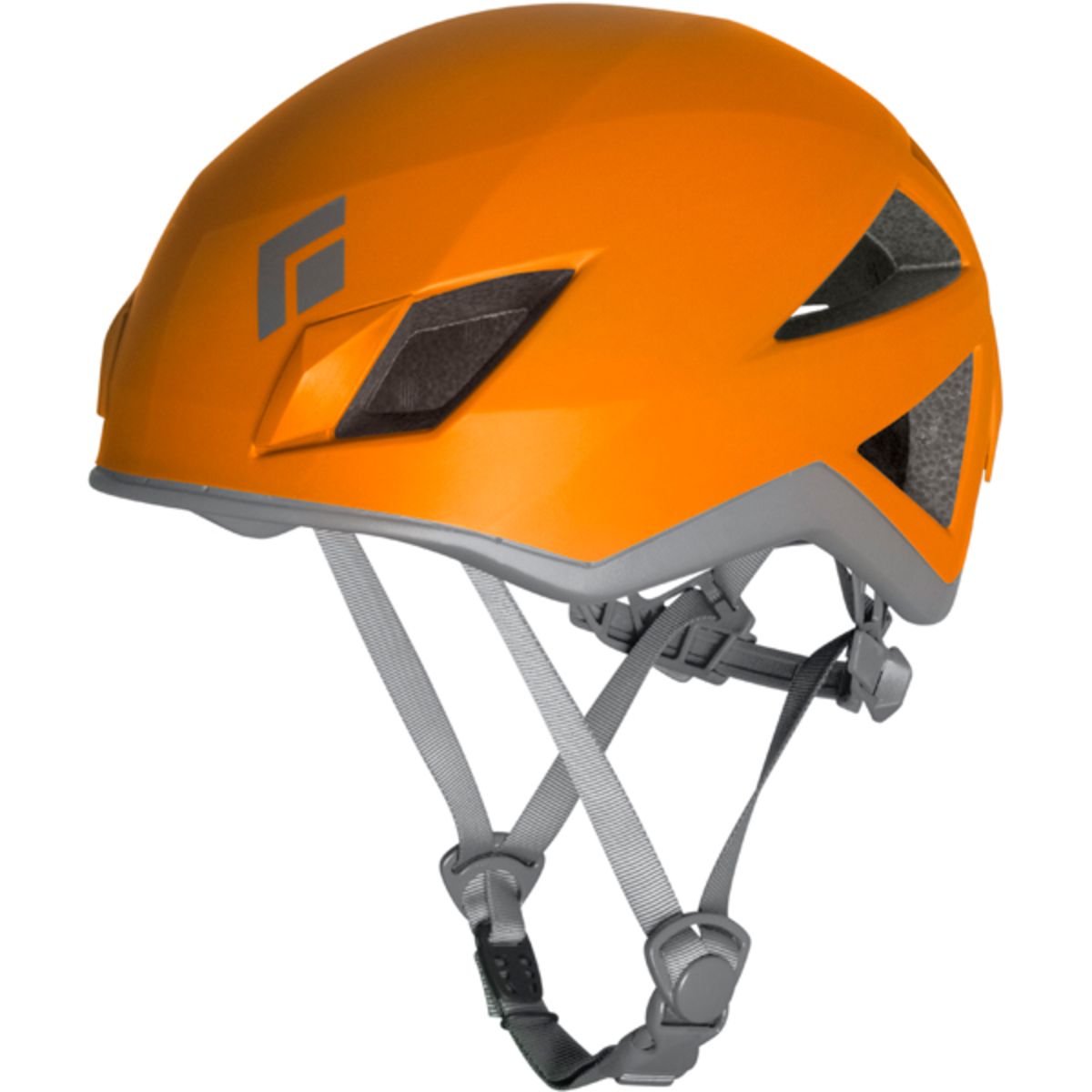
Best for Alpine Climbing
BD Vector
Weighing around 590 grams with large ventilation ports, the Vector is built for sustained climbing and ski touring where heat buildup and neck fatigue are real concerns. Its premium price and lack of specified side impact protection make it a specialized choice for weight-conscious alpine climbers rather than a do-everything helmet — the Half Dome’s comfortable adjustability suits a wider range of activities.
Pros
- Very lightweight for its class at roughly 590 grams
- Large vents provide excellent airflow during high-exertion climbs
- Tool-free ratchet adjustment creates a secure, customized fit
Cons
- Higher cost than many comparable climbing helmets
- Slightly bulkier profile compared to newer ultralight designs — may not fit under some ski helmets or hoods
Ideal for climbers and ski tourers who prioritize weight and breathability over side impact protection and all-purpose use.
Best for Caving, Climbing
Tontron Climbing Helmet
Key Features
- Weight: 390 g
- Construction: ABS + EPS
- Fit System: 21.6-23.6 in
- Headlamp & Vent: Yes
- Price: $
This helmet delivers solid impact protection at a price that undercuts competing certified models. Its ABS shell and EPS liner hold up to repeated knocks, and headlamp clips make it practical for caving. The adjustable fit works for most head shapes, though the padding can feel thin and the profile sits high. It suits budget-conscious climbers who need basic protection for recreational use or work, but those seeking all-day comfort should consider the top pick’s better padding.
Pros
- CE-certified ABS/EPS construction withstands impacts in caving and climbing.
- Integrated headlamp clips and adjustable bands add utility for caving.
- Cost-effective entry into certified protection for budget buyers.
Cons
- Thin padding and a tall profile can feel uncomfortable during longer sessions.
- Heads larger than 24 inches may find the fit too snug.
This helmet fits climbers on a tight budget who need basic protection for caving or occasional top-roping, as long as they prioritize value over all-day comfort.
Best for Hiking, Caving
OutdoorMaster Helmet
Key Features
- Weight: 290 g
- Construction: PC shell + EPS
- Fit System: 20.86-24 in
- Price: $
At 290 grams, the OutdoorMaster is the lightest helmet to earn EN 12492 certification, making it an obvious pick for weight-conscious hikers and cavers. The in-mold construction delivers adequate impact protection for recreational use, and the thick top padding (1.7 inches) handles falling rock. However, the single-size fit can feel tight for heads near 24 inches, and the thin padding may not sustain comfort on multi-hour climbs. This helmet suits budget-conscious users who prioritize low weight and simple protection over plush padding or extended wear.
Pros
- EN 12492 certified protection at a budget-friendly price
- Ultralight 290g design reduces neck fatigue on long approaches
- Streamlined shape works well for caving and tight spaces
Cons
- For climbers with head sizes near 24 inches, the fit can be too snug
- Thin padding may feel less cushioned on longer days
A strong value for hikers and cavers who don’t need all-day comfort and whose head size fits within the range.
Best for Large Heads
Fusion Meka II

Key Features
- Weight: ~318 g
- Construction: Plastic outer
- Fit System: 20-26 in
- Price: $
The Fusion Meka II delivers a comfortable, well-padded fit for larger heads, making it a strong candidate for beginners and casual zipline or climbing use. However, the plastic ratchet adjustment mechanism can strip over time, reducing long-term reliability compared to more durable designs.
Pros
- Extremely comfortable padding for all-day wear
- Solid build quality for the price point
Cons
- The rear ratchet can strip after repeated adjustments, making the fit less secure over time.
Ideal for climbers with larger heads on a budget, the Meka II prioritizes comfort but accepts a trade-off in adjustment mechanism longevity.
Best for Low-Profile Hybrid
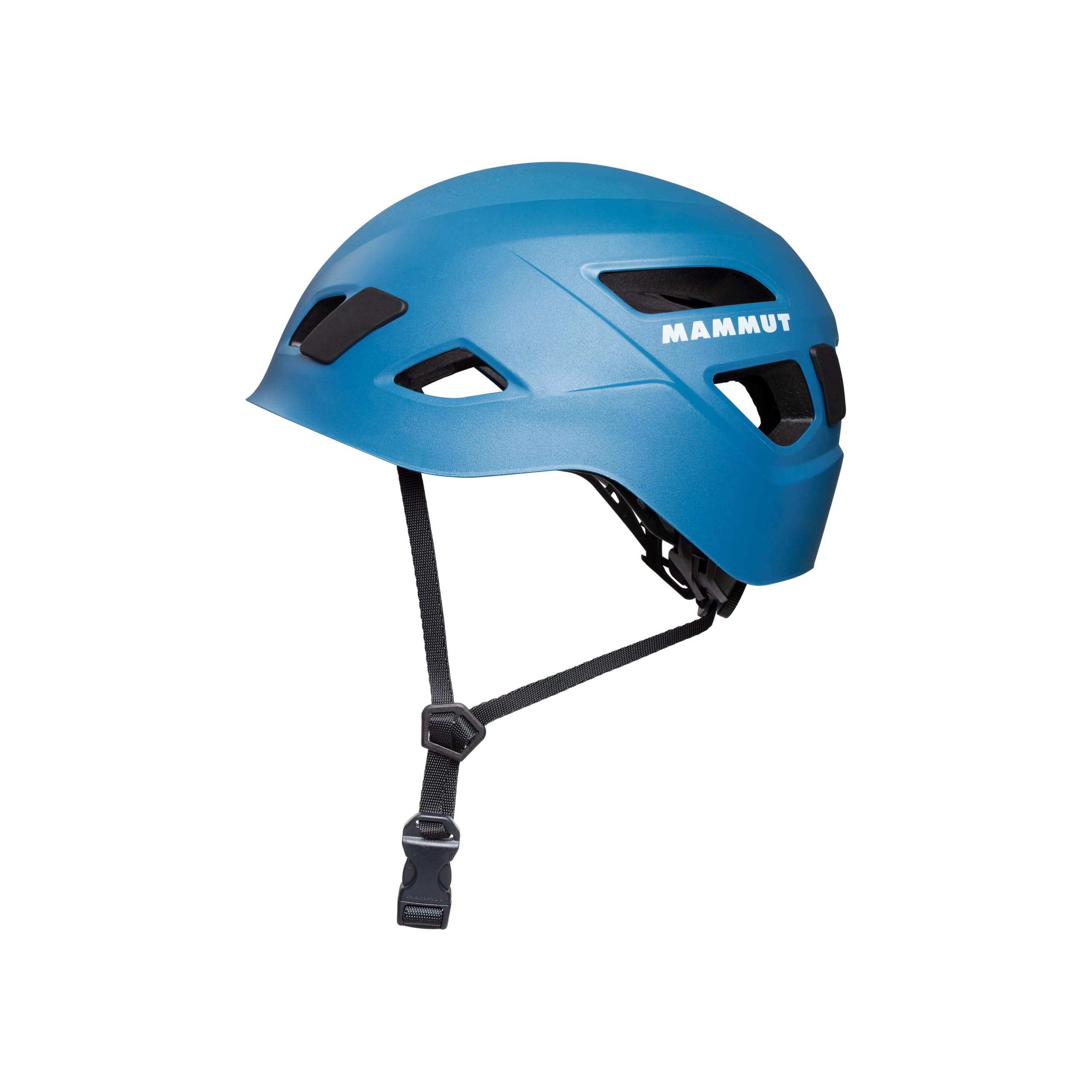
Mammut Skywalker 3.0
Key Features
- Weight: 330 g
- Construction: Hybrid ABS + EPS
- Headlamp & Vent: Yes, 9 vents
- Price: $$
The Skywalker 3.0 combines Mammut’s low-profile hybrid shell with a rear thumb dial and headlamp clips at a discounted price. Firsthand experience reports are scarce, making confident comparisons to alternatives with broader community consensus difficult.
Pros
- Low-profile hybrid shell suits climbers who prefer a sleek, close-fitting helmet.
- Rear thumb dial allows quick, glove-friendly fit adjustments.
Cons
- Scarce firsthand experience reports make it hard to assess long-term performance confidently.
For climbers already familiar with Mammut quality who value a low-profile shape over widespread user consensus, this helmet offers good value at a discount.
How to Choose
The most important factor in a climbing helmet is fit—a helmet that shifts or sits too high compromises protection and comfort, regardless of specs.
Weight
Ultralight helmets (under 300g) reduce neck fatigue on long alpine approaches but use thinner shells that may not withstand repeated rock strikes as well as heavier models.
Save ultralight helmets for high-output climbing where every gram matters and rockfall risk is lower.
Construction
ABS shells are more durable against dings but heavier. In-mold PC+EPS is lighter but less impact-resistant. Hybrid combines a hard ABS top layer with EPS foam for a middle ground.
Your choice should match how often the helmet will get scraped against rock.
Impact Coverage
Standard EN12492 only tests top impact. Helmets with side and rear protection (like foam lining all around) add safety margin in tumbling falls or rockfall from above.
But they are heavier and less ventilated. Consider the terrain you climb most.
Fit System
A helmet that sits high on the head is a common complaint, often due to a poor internal shape or a one-size-fits-all approach. Look for a ratcheting dial that adjusts both circumference and vertical position.
Tighten until the helmet stays put when you shake your head.
Headlamp & Ventilation
Headlamp clips that move or break can be a minor annoyance on multi-day trips. Clip-on designs are more secure than elastic straps.
Ventilation is critical for high-output climbs—large ports or fixed vents help, but can let in rain or snow.
FAQ
Why do climbing helmets often sit so high on my head?
This is usually because the helmet’s internal shape doesn’t match your head’s side profile. Many budget helmets use a deep, rounded mold that pushes the helmet up. A helmet with adjustable suspension (like a ratcheting dial that raises/lowers the brim) can help bring it lower. If it still sits high, consider a different model—fit is non-negotiable.
Is a hybrid climbing helmet better than a pure ABS or EPS helmet?
Hybrid helmets combine a hard ABS shell with foam liner, offering better impact absorption than pure ABS and more durability than pure EPS. They’re a solid middle ground for most climbers. For pure weight savings, go with EPS in-mold; for max durability in caving, go with ABS. Hybrid suits all-around use.
How much should a climbing helmet weigh for alpine climbing?
For alpine climbing, aim for under 350g. Helmets like the Black Diamond Vector (~590g) are actually heavier than claimed in packaging; real-world feedback puts them lighter. True ultralight helmets under 300g are ideal for fast ascents. But don’t sacrifice fit for weight—a well-fitted 350g helmet is safer than a loose 250g one.
Can I use a climbing helmet for canyoneering?
Yes, but look for a helmet with side and rear protection, as canyon falls often involve tumbling down slopes. Helmets like the Petzl Boreo with full foam lining are better suited than standard top-only helmets. Also ensure it has secure headlamp clips for exploring dark sections.