This post contains affiliate links. We may earn a small commission when you buy through our links — at no extra cost to you.
Water leaking from a hydration bladder turns a great hike into a soggy mess. It’s not a problem exclusive to cheap models — even premium brands have their share of leak reports. The real difference comes down to how a bladder is built and which pack it’s designed for.
Plastic taste is another frustration that lingers wash after wash. Some materials handle this better than others, and a wide opening makes cleaning and drying far easier — a detail often overlooked until mold sets in.
This guide focuses on the bladders that strike the best balance of leak resistance, taste, and ease of maintenance, so you can pick the one that fits your hiking style without second-guessing.


Best for Day Hikers
Water Buffalo Oasis
Key Features
- Capacity: 2L
- Closure Type: Slide closure
- Opening: Wide opening
- Material: TPU
- Valve & Tube: High-flow bite valve, insulated
- Price: $$
The Water Buffalo Oasis delivers a hydration bladder that combines universal pack compatibility with a wide opening for straightforward filling and cleaning. The insulated hose keeps water cool on warm days, and the bite valve offers decent flow without requiring much effort.
For day hikes, disc golf, or casual excursions, the Oasis is a capable companion. The closure system can be finicky to seal, and leakage from the hose connection or closure has been noted in some units. That makes it less suited for multi-day trips where a leak could soak gear, but for shorter outings the tradeoff is acceptable.
Pros
- Excellent overall quality and construction
- Very easy to use and fill
- Easy to clean with wide opening
Cons
- Slide closure requires deliberate sealing to avoid leaks
- Leakage from the closure or hose connection can occur in some units
A solid mid-range bladder that fits any pack and handles day trips well, so long as you don’t need absolute leakproofness for extended backcountry use.
Best for Tactical, Legacy Pack
CamelBak Omega
Key Features
- Capacity: 3L
- Closure Type: HydroLock lever
- Material: TPU
- Valve & Tube: HydroLock lever, insulated tube
- Price: $$$
The CamelBak Omega 3L uses thick TPU and a HydroLock lever to deliver a dependable seal on the trail. Built specifically for pre-2019 CamelBak packs like the M.U.L.E. and H.A.W.G., it won’t fit modern hydration systems. The premium price matches the robust construction, making it a focused choice for those with the right pack.
Pros
- Heavy-duty TPU construction handles rough trail use without punctures
- HydroLock lever stops drips when the tube is not in use
- Quick-disconnect allows easy removal from pack for refilling
Cons
- Fits only pre-2019 CamelBak packs — not compatible with modern hydration systems
A focused reservoir for those who already own a compatible legacy CamelBak pack and want long-lasting leak resistance.
Best for Taste-Sensitive Hikers
Platypus Big Zip EVO
Key Features
- Capacity: 3L
- Closure Type: SlideLock zip top
- Opening: SlideLock zip top
- Material: Polyethylene / PU
- Valve & Tube: HyFLO bite valve, insulated tube
- Price: $$$
The Big Zip EVO’s polyethylene material is the standout feature for anyone who has been put off by plastic aftertaste in other bladders. The wide SlideLock zip top makes filling and cleaning straightforward, a real convenience on the trail. This design prioritizes taste and maintenance ease over the rugged durability of some competitors. Leakage from the hose connectors or zip seal can occur, and the internal baffle may separate after extended use. This works best for day hikers who value clean-tasting water and quick maintenance over long-term ruggedness.
Pros
- Taste-free polyethylene material eliminates plastic aftertaste.
- Wide SlideLock zip top makes filling and cleaning straightforward.
- Build quality feels solid for standard day hikes.
Cons
- Internal baffle can separate over time, reducing reservoir shape.
- Hose connector or zip seal can leak in some units.
For taste-sensitive hikers who value easy cleaning over ruggedness, the Big Zip EVO delivers on its core promise, as long as leakage is checked before each trip.
Best for Osprey Pack Owners
Osprey Hydraulics LT
Key Features
- Capacity: 2.5L
- Closure Type: Slide-Seal opening
- Opening: Slide-Seal opening
- Material: TPU
- Valve & Tube: HydraClip hanger, magnetic hose
- Price: $$$
The Osprey Hydraulics LT uses a HydraClip hanger and magnetic hose to lock into Osprey packs, providing a dedicated integration that universal bladders can’t match. This makes it the best choice for Osprey backpack or vest owners who want a secure, rattle-free setup. However, some units may develop leaks at the bite valve or hose connection, and a chemical taste can appear in the first few uses — this requires careful rinsing. These issues make it less ideal for non-Osprey users or those who are sensitive to plastic flavors.
Pros
- Locks securely into Osprey packs with HydraClip hanger and magnetic hose
- Large Slide-Seal opening simplifies filling and cleaning
- Consistent water flow on the trail with minimal maintenance
Cons
- Bite valve or hose connection may leak after repeated use
- Some units release a chemical taste that can linger
If you own an Osprey pack and want a reservoir that disappears into the system, this is the one — just plan for a potential rinse cycle and occasional leak checks.
Best for High-Flow Preference
CamelBak Crux
Key Features
- Capacity: 3L
- Closure Type: On/off lever, leak-proof cap
- Material: TPU
- Valve & Tube: Big Bite self-sealing, on/off lever
- Price: $$
The Crux reservoir delivers 20% more water per sip than standard bladders, a tangible upgrade for thirsty hikers. The improved flow rate comes from a redesigned valve and hose assembly, and the bladder fits securely in most backpack hydration sleeves without shifting.
This is best suited for hikers who already own a CamelBak pack and want a faster drinking experience. The plastic taste may persist after multiple washes, and the cap and hose connection can leak if not fully tightened — so this is not the right choice for taste-sensitive users or anyone who needs absolute leakproof reliability.
Pros
- Crux valve delivers noticeably faster flow rate, reducing effort during long hikes.
- Fits securely in most backpack hydration sleeves without shifting.
Cons
- Plastic taste may linger after multiple uses, especially noticeable with plain water.
- Cap and hose connection can leak if not fully tightened — test before each trip.
A solid upgrade for existing CamelBak users, but be prepared to manage potential leaks and taste in exchange for faster flow.
Best for Budget Moderate Hikes
MARCHWAY TPU 3L
Key Features
- Capacity: 3L
- Closure Type: Screw cap
- Opening: Large opening (3.35in)
- Material: TPU
- Valve & Tube: 360° bite valve, insulated neoprene
- Price: $$
MARCHWAY’s 3L bladder delivers neoprene tube insulation at a budget-friendly price, a feature more common on pricier models — useful for short hikes where keeping water cool matters. Leakage around the hose connection or lid and a persistent plastic taste are tradeoffs that make it better suited for day trips where you can pre-rinse the bladder and check seals before heading out.
Pros
- Neoprene tube cover keeps drinking water noticeably cooler than bare tubes
- Well-constructed with a large opening that simplifies cleaning and drying
- Budget-friendly price for an insulated bladder
Cons
- Plastic taste may linger after multiple rinses, noticeable in the first few uses
- Leakage around the hose connection or lid seal can occur, requiring pre-trip inspection
Worth considering for budget buyers who want tube insulation on short hikes, but plan on rinsing thoroughly and checking seals before relying on it.
Best for Budget Occasional Use
CHERAINTI 2L

Key Features
- Capacity: 2L
- Closure Type: Large screw cap
- Opening: Large screw cap
- Material: Nylon
- Price: $
The CHERAINTI bladder offers easy filling and good functionality at a low price, ideal as a spare for short day trips. The tradeoff: some units may leak from pinholes or seams, so it’s best treated as a disposable backup rather than a primary hydration source.
Pros
- Exceptional value for money
- Easy to fill and use
Cons
- Possible leakage from pinholes or seams – treat as a disposable backup
Buy this as a cheap spare for short trips where a leak won’t ruin your day, not as a primary bladder.
Best for Budget Two-Pack
sphaiya 2-Pack

Key Features
- Capacity: 2L each
- Closure Type: Auto-lock mouth
- Opening: Large opening
- Material: EVA
- Valve & Tube: Auto-lock mouth, neoprene cover
- Price: $
This two-pack includes a cleaning brush and large openings, making routine maintenance simpler than many budget bladders. Leakage from the hose connection or cap can happen in some units, and the material is prone to punctures under heavier use. For short day hikes or bike rides where you want a spare bladder and a convenient cleaning tool, this offers solid value — but long-term durability is a moderate risk.
Pros
- Comes with two bladders and a cleaning brush for the price of one bladder elsewhere
- Large opening makes filling and scrubbing easier than narrow-mouth designs
Cons
- Hose connection or cap may leak in some units, requiring extra attention before each trip
A budget-friendly choice for short trips where you value easy cleaning and a backup bladder, but not the best pick for extended hikes or daily heavy use.
Best for Groups, Short Trips
Baen Sendi 2-Pack
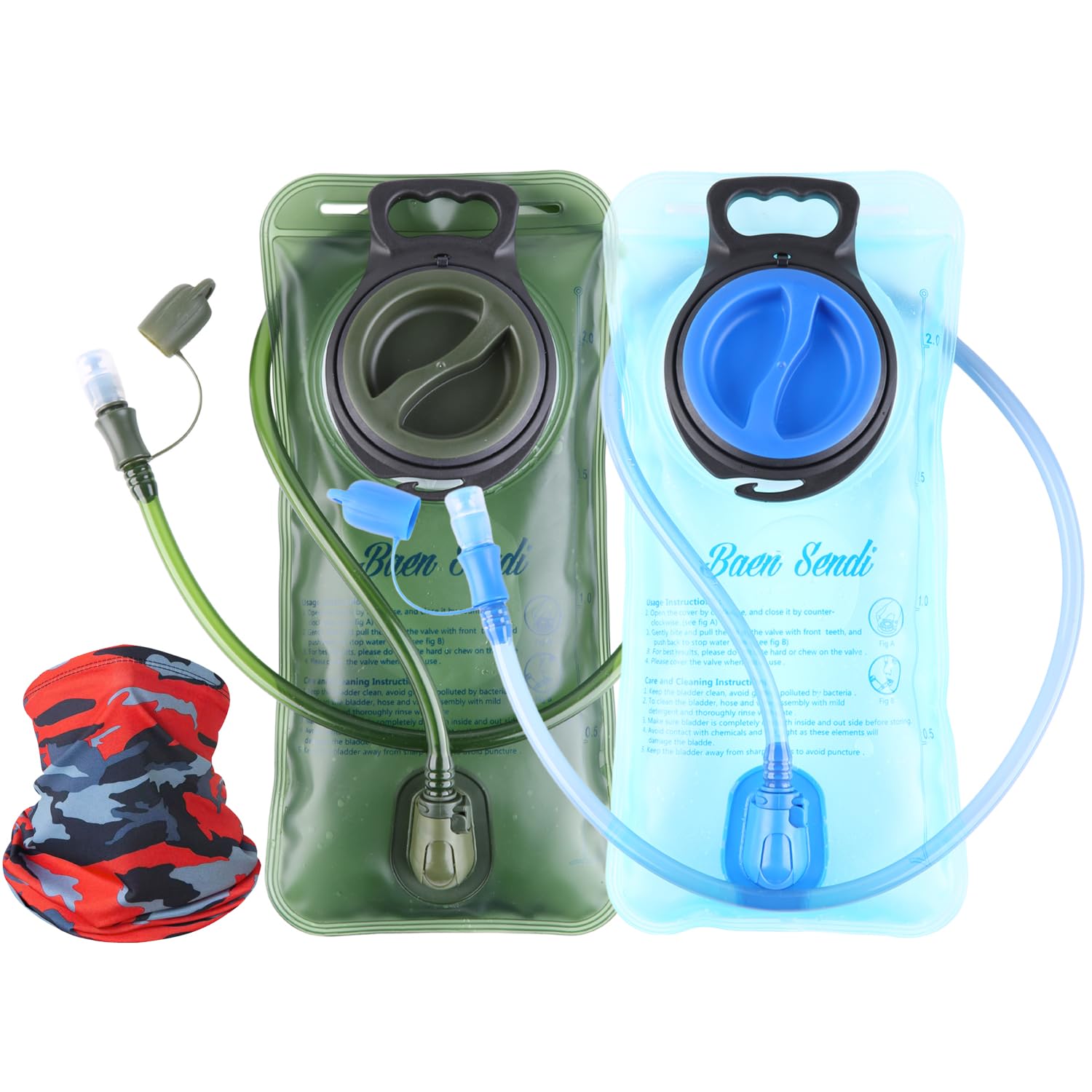
Key Features
- Capacity: 2L each
- Closure Type: Quick-release tube, auto-shutoff
- Opening: Large opening
- Material: PEVA
- Valve & Tube: Quick-release tube, auto-shutoff
- Price: $
This two-pack delivers immense value for groups needing extra hydration at festivals or short day hikes. The bladders work well enough for casual use, with decent bag quality given the low price. However, the base hose connector can leak and the cap may not close securely for some, making these better suited as backup or shared spares than a solo primary. If you need reliable hydration on longer outings, a single premium bladder would be a wiser choice.
Pros
- Great value for two bladders at a budget price
- Works well for hiking and festivals on short trips
Cons
- Leakage from the base hose connector can occur
Fits as a low-cost backup or group spare for short day trips where occasional leakage is acceptable.
Best for Day Hikes Moderate
LANNEY 2L Insulated

Key Features
- Capacity: 2L
- Closure Type: Large opening
- Opening: Large opening
- Material: EVA/TPU
- Valve & Tube: Insulated tube, 90° bite valve
- Price: $
The LANNEY 2L Hydration Bladder brings a neoprene-insulated tube and 90° bite valve at a price that suits day hikes and casual use. However, leakage from the cap or hose connection can occur, and the mouthpiece may break – these limitations make it better suited as a backup or for short trips where full reliability isn’t critical.
Pros
- Insulated tube keeps water cool on warm hikes
- Good build quality and value for the price
Cons
- Leakage from cap or hose connection may occur
Best for casual day hikes where an insulated tube is desired – not for extended trips or leak-free expectations.
Best for Tactical, Zip-Top
CamelBak Fusion

Key Features
- Capacity: 3L
- Closure Type: TRU Zip waterproof zipper
- Opening: TRU Zip
- Material: TPU
- Valve & Tube: HydroLock, quick disconnect, insulated
- Price: $$$
CamelBak’s Fusion 3L uses military-grade TPU and a waterproof zipper for rapid top-ups, plus an insulated tube that keeps water cool on long marches. The tradeoff: some units develop leaks at the zipper or hose connection – less of a concern for users who prioritize quick access over absolute dry security.
Pros
- High-quality TPU construction with a waterproof TRU Zip zipper
- Insulated tube reduces water warming under direct sun
Cons
- Leaks from the zipper or hose can wet gear – acceptable if quick access matters more than dry storage
Ideal for tactical pack owners who value rapid refill and can accept occasional moisture – not for those needing total leakproof performance.
How to Choose
Always pressure test a new bladder at home before your first hike – many ‘leakproof’ bladders fail under real-world pressure.
Capacity: 2L vs 3L
A 2L bladder holds enough water for a 2-3 hour day hike without weighing you down. A 3L bladder adds roughly 2.2 pounds when full and is better for longer treks or hot conditions where you need more hydration.
The trade-off is that a 3L bladder takes up more pack space and can be harder to fit in smaller packs. If you mostly do half-day hikes, 2L is sufficient; for all-day efforts, 3L gives you a buffer.
Leakproof Reliability
Most leaks come from the connection points: the hose-to-bladder fitting, the cap threads, or the zipper seal. Screw caps are simpler but can cross-thread; zipper seals offer quick access but are more prone to failure if debris gets in the track.
The most reliable designs use a slide-lock closure with a gasket, which minimizes failure points. Regardless of the system, plan for the possibility of a slow leak — always carry a dry bag or backup water source on multi-day trips.
Ease of Cleaning and Drying
A wide opening (2.5 inches or larger) lets you reach inside with a sponge or drying cloth, and it speeds up air drying. Narrow screw caps make it nearly impossible to scrub the bottom corners, leading to mold growth over time.
Bladders that can be turned inside out (like the Platypus Big Zip EVO) dry fastest. If you hike in humid climates, prioritize bladders with a zip-top or large cap — they cut drying time by hours.
Taste and Odor of Materials
TPU (thermoplastic polyurethane) is the most common material and often retains a chemical taste for several uses. Polyethylene (used by Platypus) is naturally taste-free, while EVA and PEVA have a mild plastic flavor that fades slowly.
To reduce taste, soak the bladder in a baking soda solution for 12 hours before first use. If the taste persists after three washes, the material itself is the culprit — and it won’t disappear with time.
Valve and Tube Quality
Bite valves with a shut-off lever prevent accidental spills when the tube is not in use. Standard bite valves wear out after a season and need replacement. Insulated tube covers help keep water cool on hot days but add a few ounces.
Quick-disconnect fittings allow you to remove the bladder without pulling the tube through the pack, a convenience that matters when refilling at a stream. If you hike in cold weather, look for a valve that resists freezing.
FAQ
Why does my hydration bladder taste like plastic even after washing?
The taste comes from the material itself, not residue. TPU bladders often release volatile compounds that linger even after multiple washes. Soak the bladder in a baking soda and water solution (1 tbsp per liter) for 12 hours. If the taste remains, the material is the cause and you’ll need to switch to a polyethylene-based bladder like the Platypus Big Zip EVO.
How can I dry my water bladder quickly to prevent mold?
Turn the bladder inside out if possible, or prop it open with a clean paper towel roll. Hang it in a well-ventilated area. Avoid storing it sealed — moisture trapped inside guarantees mold. For bladders with narrow openings, use a dedicated drying rack or a hairdryer on low heat for 10 minutes.
Is a 2L or 3L water bladder better for a day hike?
For a typical day hike of 3-5 hours, 2L (about 67 ounces) is enough for most people, especially if you can refill along the trail. A 3L bladder adds over two pounds to your pack and is only necessary for long, hot, or dry hikes where water sources are scarce. Choose 2L for light day trips and 3L for all-day adventures.