This post contains affiliate links. We may earn a small commission when you buy through our links — at no extra cost to you.
For every camper who has watched a percolator’s glass knob crack mid-brew, or hauled a heavy steel press miles into the backcountry, the coffee dilemma is real. Lightweight brewers often sacrifice flavor; heavy ones punish your pack. The right choice depends on how you camp.
This guide cuts through the trade-off. We focus on brewers that actually hold up to trail use, keep heat without adding bulk, and produce a cup that justifies the effort. Whether you are a solo thru-hiker counting grams or a car camper serving a group, these picks match your trip style.
Expect honest weight comparisons, real-world durability notes, and a clear warning on the one component that fails most often.



Best for Solo Campers
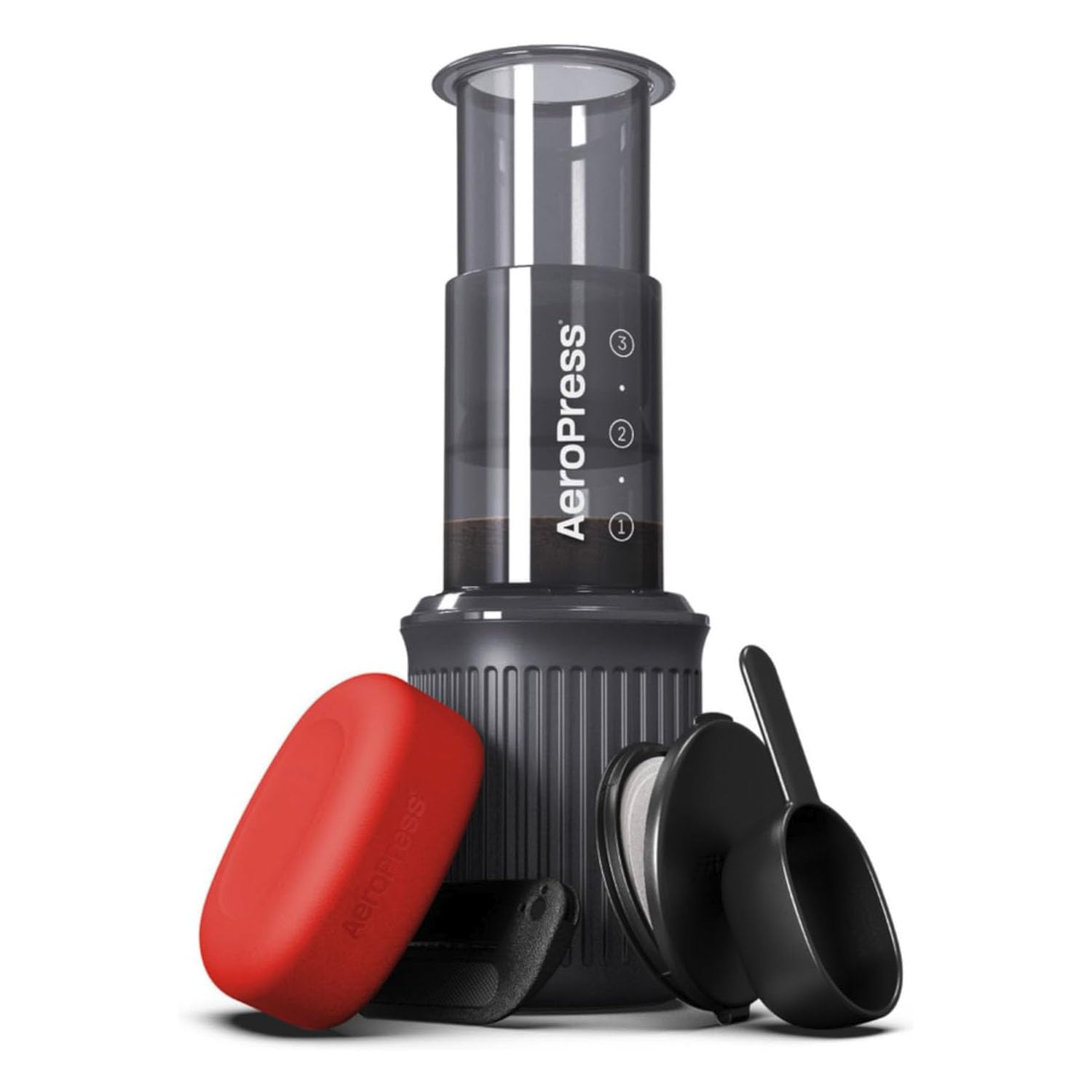
AeroPress Original
Key Features
- Portability: 0.4 lbs
- Capacity: 10 oz
- Durability: Plastic, shatterproof
- Ease of Cleaning: Pop out puck
- Brew Method: Press
- Price: Mid-Range
The AeroPress Original produces a notably clean, low-bitterness brew in about two minutes using a simple press action. The plastic body is shatterproof, the paper filters catch fines effectively, and cleanup amounts to popping out the spent puck and rinsing the chamber. This consistency and speed set it apart from percolators or pour-over cones that require more attention or produce sediment-heavy coffee.
This brewer is a natural fit for solo campers and backpackers who can work with a single 10-ounce serving. If you need coffee for two or more, you will be brewing multiple rounds — a minor inconvenience but a real boundary for groups. The lightweight 0.4-pound build and small footprint tuck easily into a pack, and the all-plastic construction avoids the glass-top fragility common in percolators. For a car-camping or basecamp setup where a slightly larger cup is fine, the AeroPress Original is the safer bet compared to the more compact AeroPress Go.
Pros
- Coffee flavor is smooth and low in bitterness, with a clean finish that matches pour-over quality.
- Brew cycle takes about two minutes from start to finish, with no waiting for water to perk.
- Cleanup is fast — pop out the puck and rinse; no scrubbing or disassembly required.
Cons
- Single-serve capacity (10 oz) requires sequential brews for more than one person.
For the solo camper who wants a fast, flavorful cup without the hassle of percolator cleanup or fragile glass parts, this is the most practical choice at a mid-range price.
Best for Solo Travelers
AeroPress Go
Key Features
- Portability: 0.7 lbs with mug
- Capacity: 8 oz
- Durability: Polypropylene, built-in mug
- Ease of Cleaning: Rinse and pop
- Brew Method: Press
- Price: Premium
Built-in mug and lid let the AeroPress Go pack its brewer, scoop, and filters inside itself – no loose parts. At 0.7 lbs with the mug, it is lighter than the AeroPress Original when you factor in a separate cup. The trade-off is an 8 oz serving, noticeably smaller than the Original’s 10 oz. This suits solo travelers and ultralight backpackers who want a dedicated mug and the smallest possible footprint. The Go is not for campers who need a full-sized mug or those on a tight budget.
Pros
- Packs everything inside itself with a built-in mug – no extra gear needed.
- Quick and simple to use and clean.
Cons
- Only brews 8 oz – smaller than the Original; may feel too small for those used to a standard mug.
Solo backpackers who want the most compact coffee kit with a dedicated mug will appreciate this design. For larger servings or budget buyers, the Original remains a better fit.
Best for Group Car Campers
Coffee Gator 34oz French Press
Key Features
- Portability: 2.1 lbs
- Capacity: 34 oz (4-5 cups)
- Durability: Stainless steel, double-walled
- Ease of Cleaning: Rinse basket
- Brew Method: French press
- Price: Mid-Range
Double-walled 18/8 stainless steel insulation keeps coffee hot for hours — a clear advantage over glass presses and a key reason to choose this over the top pick’s single-serve speed. The 34 oz capacity serves 4–5 cups at once, making it a practical stovetop option for RVs or campsites with a fire.
This brewer suits group campers and car campers who want a single vessel for the morning. The 2.1 lb weight and mesh filter that can let sediment through if plunged quickly are real boundaries — this is not for backpackers or anyone who insists on a crystal-clear cup.
Pros
- Keeps coffee hot for hours thanks to double-wall insulation
- Sturdy build with heavy-duty 18/8 stainless steel
- 34 oz capacity serves 4–5 cups in one brew
Cons
- At 2.1 lbs it’s too heavy for backpacking or carrying far from the vehicle
- Mesh filter can allow fine sediment into the cup if plunged too quickly
For car campers who value heat retention and don’t need to carry gear far, this French press delivers consistently hot coffee for the full morning.
Best for Ultralight Backpackers
GSI Ultralight Java Drip
Key Features
- Portability: 0.4 oz
- Durability: Nylon, clips fragile
- Ease of Cleaning: Rinse and fold
- Brew Method: Pour-over
- Price: Budget
At 0.4 ounces, the GSI Ultralight Java Drip disappears into any pack. Unlike the AeroPress Original, which focuses on brew speed and quick cleanup, this pouch-size pour-over is built for hikers counting every gram. The nylon legs can break if handled carelessly, so it’s best for those who treat gear gently.
Pros
- Weighs 0.4 oz – easy to forget it’s in your bag
- Delivers real pour-over coffee on the trail
Cons
- Nylon legs can break if twisted or dropped – careful handling required
For solo backpackers who prioritize weight above all, the Java Drip is the lightest way to brew real coffee – just pack it gently.
Best for Traditional Campers
COLETTI Bozeman 9-Cup
Key Features
- Portability: 2 lbs
- Capacity: 9 cups
- Durability: Stainless steel, glass top fragile
- Ease of Cleaning: Basket rinse
- Brew Method: Percolator
- Price: Mid-Range
Unlike the press-style brewers often recommended for solo campers, the Bozeman delivers the bold, rich taste of percolated coffee over a campfire or stove. Its all-stainless-steel and glass body avoids the metallic taste of aluminum and heat concerns of plastic. With a 9-cup capacity, it suits groups of 2-4 at car campsites who prioritize flavor and material purity. The glass knob can crack from rapid temperature changes, so treat it with care or pack a spare.
Pros
- All stainless steel and glass – no aluminum or plastic.
- Makes strong, rich coffee with classic percolator taste.
Cons
- Some coffee fines may pass through the reusable basket.
- The glass knob can crack under high heat – use with caution.
A solid percolator for those who want traditional camp coffee without plastic, if you accept the glass top’s need for caution.
Best for Jetboil Owners
Jetboil French Press
Key Features
- Portability: 0.8 oz
- Capacity: Fits Jetboil pot
- Durability: Silicone, packs inside pot
- Ease of Cleaning: Rinse press
- Brew Method: French press
- Price: Budget
At 0.8 oz and designed to stash inside your Jetboil pot, this silicone French press adds real coffee brewing capability with no meaningful weight penalty. It only works with specific Jetboil models (Flash, MicroMo, Zip, 1L tall & 0.8L cups), and some owners have noted fit issues with the Flash. Best suited for Jetboil owners who want fresh-press coffee on backpacking trips without carrying a separate brewer.
Pros
- Extremely lightweight (0.8 oz) and packs completely inside a Jetboil pot.
- Delivers a strong, fresh French press brew on the trail.
Cons
- Limited compatibility: only fits specific Jetboil models; some users report the Flash version may not seal properly.
- Silicone material can feel flimsy during use.
Adds real coffee to a Jetboil cook system with minimal weight and cost – essential for owners who want more than instant coffee on the trail.
Best for Car Campers
Attsky Collapsible Dripper

Key Features
- Portability: Collapsible flat
- Capacity: 1-2 cups
- Durability: Silicone, may collapse
- Ease of Cleaning: Rinse
- Brew Method: Pour-over
- Price: Budget
Attsky’s collapsible dripper packs flat for storage and uses standard #2 cone filters, making it easy to tuck into a camping kit. Cleanup is quick with its silicone material. However, the silicone cone may collapse during pouring, requiring steady hands. It is heavier than the GSI Ultralight option, so backpackers may prefer a lighter design.
Pros
- Packs flat for easy storage
- Quick to set up and rinse clean
Cons
- Silicone cone may collapse during pour, requiring steady hands
A space-saving option for casual car campers who can accept a bit of instability in exchange for a low price and packability.
Best for Group Campers
Stanley 48oz French Press

Key Features
- Portability: 2.5 lbs
- Capacity: 48 oz (6 cups)
- Durability: Stainless steel, lid/hinge weak
- Ease of Cleaning: Rinse basket
- Brew Method: French press
- Price: Premium
The Stanley 48oz French Press delivers impressive heat retention thanks to double-wall vacuum insulation – coffee stays hot for hours at base camp. Its large capacity suits groups, but the mesh filter can let fine grounds through, and the lid/hinge assembly may loosen over time. At 2.5 pounds, it’s better for car camping than backpacking.
Pros
- Keeps coffee hot for hours – ideal for mornings at camp.
- 48-ounce capacity serves several people in one brew.
Cons
- Mesh filter can allow fine coffee grounds into the cup – noticeable with lighter roasts.
Best for car campers who prioritize heat retention over sediment – not a fit for backpackers or those wanting clean, grounds-free coffee.
Best for Rv Campers
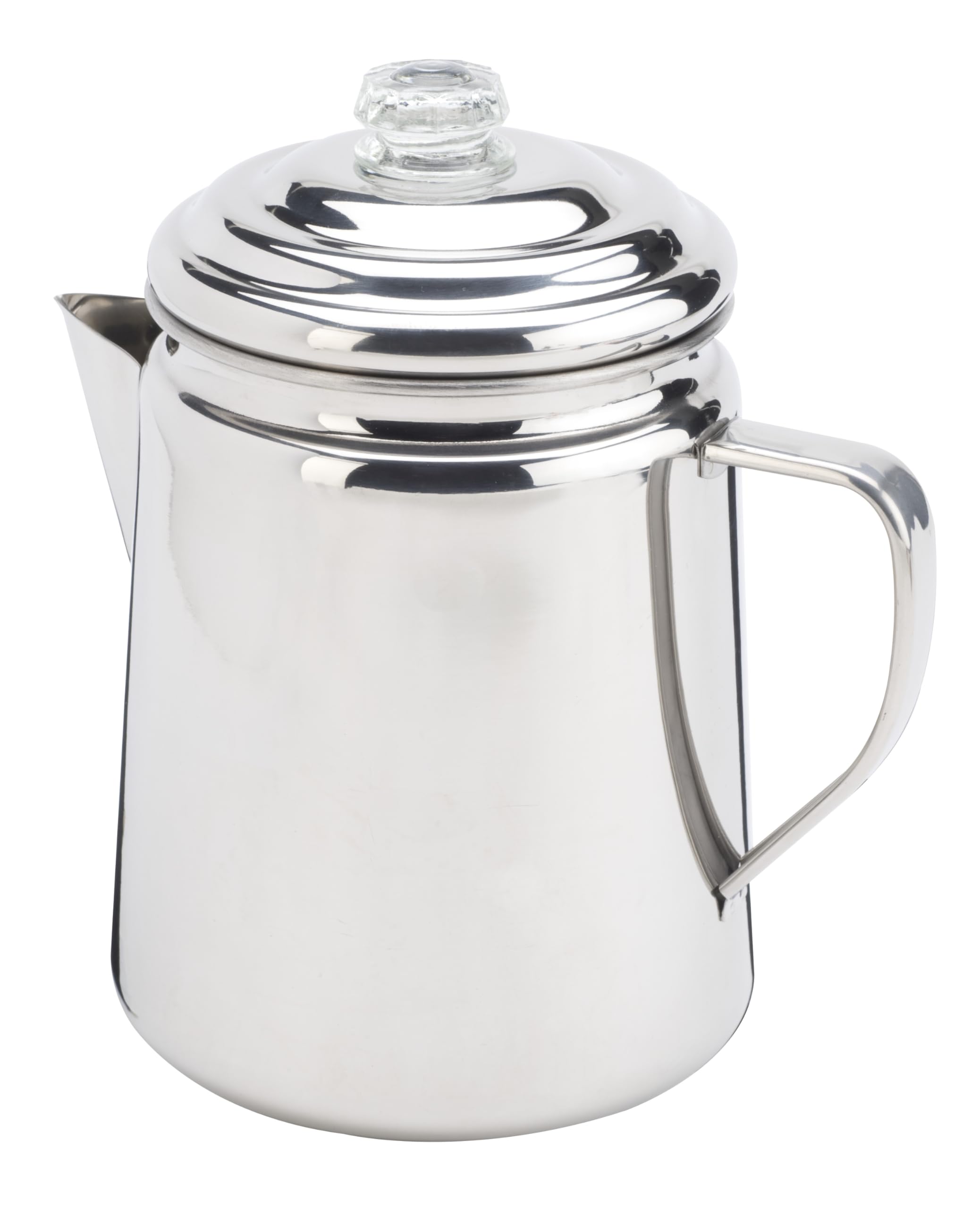
Coleman 12-Cup Percolator
Key Features
- Portability: 2.2 lbs
- Capacity: 12 cups
- Durability: Stainless steel, glass top fragile
- Ease of Cleaning: Basket rinse
- Brew Method: Percolator
- Price: Luxury
The Coleman 12-cup percolator offers sturdy stainless steel construction and a reusable filter, producing rich percolated coffee over a campfire or stovetop. However, its glass top can crack during transport or use, and the handle becomes hot enough to require an oven mitt. These drawbacks keep it from being a standout value at a premium price.
Pros
- Sturdy stainless steel build feels robust and long-lasting.
- Rich, classic percolated coffee flavor without paper filters.
Cons
- Glass top may crack or break, especially when packed or used over a campfire.
Best for Coleman loyalists or RV campers who want a traditional percolator and are prepared to handle the glass top carefully and use a mitt for the handle.
Best for Tech Enthusiasts
WACACO Pipamoka

Key Features
- Portability: 15 oz
- Capacity: 10 fl oz
- Durability: Stainless steel, twist mechanism
- Ease of Cleaning: Multiple parts
- Brew Method: Vacuum press
- Price: Premium
The Pipamoka produces notably clean, strong coffee and its integrated stainless steel mug keeps drinks hot for hours — a solid companion for solo campers who enjoy the brewing ritual. However, the twisting mechanism requires noticeable hand strength and the multiple parts (not dishwasher safe) demand careful cleaning, limiting its appeal to those who prioritize speed or simplicity on trips.
Pros
- Produces clean, strong coffee with a vacuum pressure method.
- Integrated insulated mug keeps coffee hot and doubles as a travel container.
Cons
- Twisting mechanism can be hard to operate and may leak if not assembled carefully.
Best suited for tech-minded solo campers who value the brewing process and want an integrated thermos, but less ideal if you need quick cleanup or minimal effort.
Best for Home & Camp
Eurolux 12-Cup Percolator

Key Features
- Portability: 2.5 lbs
- Capacity: 12 cups
- Durability: Stainless steel, glass top fragile
- Ease of Cleaning: Basket rinse
- Brew Method: Percolator
- Price: Mid-Range
All-metal construction gives clean coffee taste, and the wood handle looks classic. Works on stovetop or campfire for 12 cups. However, the glass top can crack along threads, and the handle may separate — fine for careful car camping, not for rugged trips.
Pros
- No plastic taste from all-metal construction
- Easy to use on stovetop or campfire
Cons
- Glass top may crack along threads
Best for home and car camping traditionalists who appreciate the wood-handle aesthetic and can accept the glass top’s fragility.
Best for Car Campers
GSI Collapsible Java Drip

Key Features
- Portability: 0.84 lbs
- Capacity: Fits most mugs
- Durability: Silicone, stable
- Ease of Cleaning: Rinse
- Brew Method: Pour-over
- Price: Budget
This collapsible cone uses #4 paper filters and collapses to a 1-inch disc for easy packing. The trivet lid adds stability during brewing. At 0.84 lbs it is noticeably heavier than ultralight options — suitable for car camping but not for backpackers. Some cup sizes may not fit securely, causing wobbling.
Pros
- Collapsible cone packs flat for easy transport
- Produces clean drip coffee without bitterness
Cons
- Heavier than ultralight alternatives — less suited for backpacking
This pour-over works well for car campers and RV travelers who want a collapsible cone with a stable base and don’t mind the extra weight.
Best for Large Groups
COLETTI Butte 14-Cup

Key Features
- Portability: 2 lbs
- Capacity: 14 cups (claimed)
- Durability: Stainless steel, glass top fragile
- Ease of Cleaning: Basket rinse
- Brew Method: Percolator
- Price: Premium
All stainless steel percolator brews a generous batch for groups, but the claimed 14-cup capacity is closer to 8-9 standard mugs. The glass top can break, making it less suitable for rugged camping. Compared to the smaller Bozeman, it offers lower value for the weight and fragility.
Pros
- All stainless steel construction – no plastic or aluminum
- Brews a large batch for groups – great for hunting camps
Cons
- Claimed 14-cup capacity is overstated; expect about 8-9 standard mugs
Best for basecamp groups who want a stainless percolator and can accept an inaccurate capacity rating and a delicate glass top.
How to Choose
The most important decision is not brew method — it is how much weight you are willing to carry for your coffee ritual.
Portability
Portability is measured by packed weight and volume. A 2-pound French press may be fine for car camping, but on a backpacking trip every ounce matters. Pour-over drippers like the GSI Ultralight weigh less than half an ounce, while insulated steel presses add over two pounds.
Consider your trip type: if it involves hiking more than a mile, a sub-1-ounce brewer saves energy. For base camp or RV use, weight is less critical.
Capacity
Single-serve brewers like the AeroPress produce one cup at a time. That is fine for solo trips but tedious for groups. French presses and percolators can brew 4 to 12 cups in one batch.
The hidden trade-off: larger capacity usually means heavier gear. A 48-ounce press holds enough for four people, but at 2.5 pounds you will think twice before packing it on a long hike.
Durability
Durability is where most camping coffee makers fail. Percolators with glass knobs crack under heat or impact — a known weakness across multiple brands. Stainless steel bodies are tough, but the glass viewing window remains a failure point.
Plastic or silicone brewers like the AeroPress and Jetboil press are shatterproof and pack without worrying about breakage. If you choose a percolator, plan to carry a spare glass top or wrap it carefully.
Ease of Cleaning
In the backcountry, cleaning gear with limited water is a chore. The AeroPress stands out: you pop out the compressed coffee puck and rinse the chamber in seconds. French presses require emptying grounds and rinsing a mesh filter. Percolators need basket cleaning and can leave messy fines.
Any brewer with multiple parts (like the WACACO Pipamoka) becomes a burden on the trail. Stick to designs you can clean with a single wipe or rinse.
Brew Method
Pour-over, French press, percolator, and press (AeroPress) each produce different flavor profiles. Pour-over yields a clean, bright cup but requires a separate mug and careful pouring. French press gives a full-bodied brew with some sediment. Percolator coffee is strong and bold but can be bitter if over-extracted.
The AeroPress method delivers a smooth, low-bitterness cup in under two minutes — a middle ground that suits most campers. Choose based on your taste preference and how much fiddling you want at camp.
FAQ
Why does my camping percolator keep breaking the glass top?
Percolator glass knobs are exposed to direct heat and thermal shock. Rapid temperature changes from cold water to boiling cause stress fractures. Even careful use can lead to cracking. The best workaround is to choose a percolator with an all-metal viewing knob (rare) or buy a spare glass top and keep it wrapped in your cookset.
Can I use a French press on a camp stove without a separate kettle?
Yes, if the French press is designed for direct heat. Most insulated stainless steel presses like the Coffee Gator can be placed on a stove or campfire to heat water. However, do not put an AeroPress or a glass-bodied French press over flame. If your press is not heat-safe, boil water separately in a pot and pour it in.
How do I keep coffee grounds out of my cup with a French press while camping?
Use a finer grind and press slowly to minimize sediment passing through the mesh. Some French presses have double filters or can be paired with a paper filter add-on. For the cleanest cup, consider a pour-over dripper with a paper filter, but this adds waste you must pack out.
What is the lightest way to make real coffee while backpacking?
The GSI Ultralight Java Drip at 0.4 ounces is the lightest real coffee brewer. It clips onto any mug and uses a reusable or paper filter. Pair it with a lightweight stove and you have fresh pour-over coffee for under an ounce of gear. The AeroPress Go is heavier (0.7 lbs) but offers a built-in mug and easier cleanup.