This post contains affiliate links. We may earn a small commission when you buy through our links — at no extra cost to you.
A folding saw seems simple — blade, handle, lock. But after a few trips, many hikers find their saw’s blade bent, the lock mechanism loose, or the handle cracked. The frustration is real: a tool that should last years ends up in the trash after one season.
The problem isn’t that good saws don’t exist — it’s that low-cost options often cut corners on blade hardness and lock integrity. Meanwhile, premium models can be overkill for light backpacking. The right saw fits your specific wood-cutting needs without breaking your budget or your gear.
This guide separates the saws that deliver consistent, reliable cuts from those that fail when you need them most. The difference often comes down to how the blade is hardened and how the lock is built — two details that separate a trusted tool from a trailside frustration.



Best for Ultralight Backpackers
Bahco Laplander 7.5"
Key Features
- Blade Length: 7.5 in
- Blade & Teeth: Swedish Steel, 7 TPI
- Price: Budget
The Bahco Laplander’s 7.5-inch Swedish steel blade cuts through green and wet wood with noticeable speed and a clean finish. At 0.47 pounds with a folding design, it packs easily alongside other essentials without adding bulk.
This saw suits ultralight backpackers and budget-minded campers who need a cutting tool for branches up to about 4 inches. The blade can bend if side pressure is applied, so straight, controlled strokes are best. Those who frequently cut dry hardwood or process large logs may want a more rigid blade.
Pros
- Cuts through green and wet wood quickly and cleanly.
- Lightweight at 0.47 lbs and packs compactly.
- Cost-effective option that undercuts many competitors with similar cutting ability.
Cons
For backpackers and bushcrafters who need a compact saw that actually cuts, the Bahco Laplander delivers without the premium price tag.
Best for Car Campers
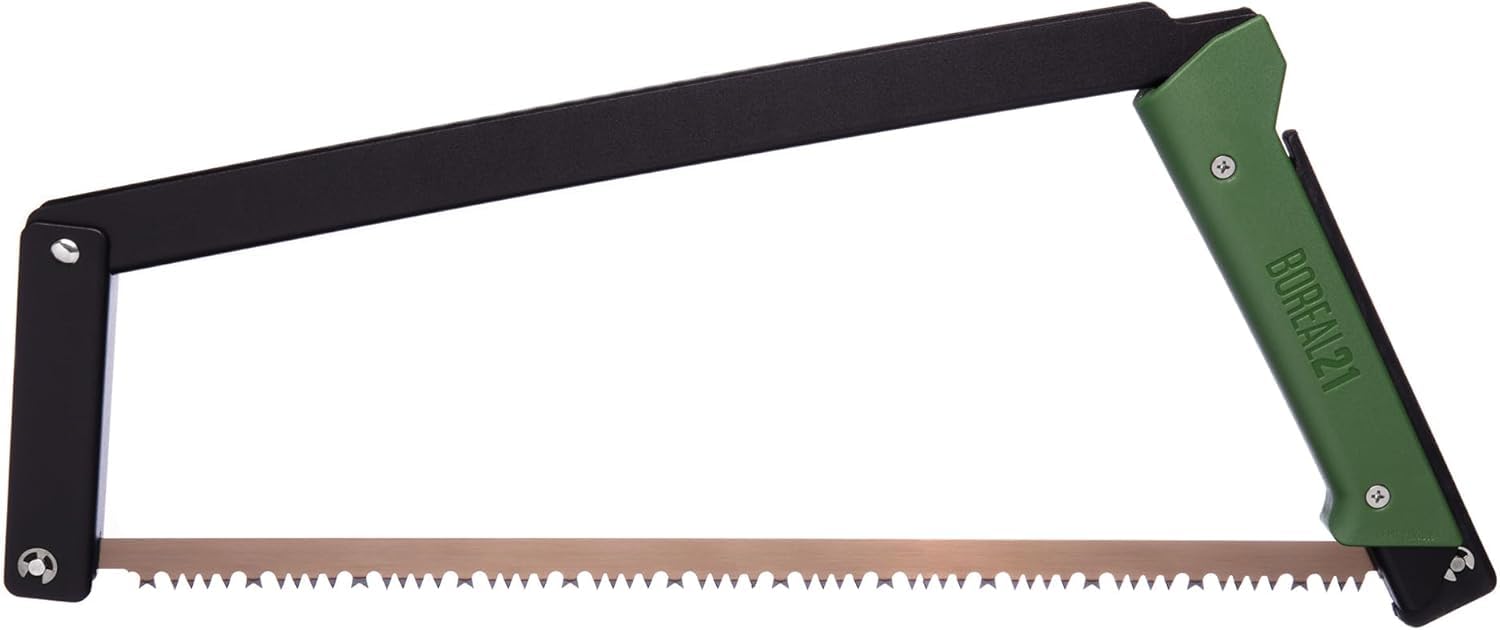
Agawa BOREAL21
The Agawa BOREAL21 trades compact portability for raw cutting speed. Its 21-inch blade and rigid aluminum frame rip through six-inch-plus logs in seconds, and the automatic tensioning system means no fiddling with wingnuts. This saw is built for volume, not weight savings.
This saw suits car campers and base campers who process firewood or do trail maintenance — not ultralight backpackers. The folded length of 23 inches may not fit inside standard backpacks; plan to strap it to the outside or keep it in a vehicle.
Pros
- Rips through large logs (6-inch+) with minimal effort
- Aluminum frame and stainless hardware hold up to heavy use
- Unfolds and locks without loose parts or tools
Cons
- Folded length of 23 inches may not fit inside most backpacks — best strapped outside or carried separately
Best for car campers and base campers who need fast, heavy-duty cutting and can manage the size.
Best for Bushcrafters
Silky PocketBoy 170
Key Features
- Blade Length: 6.75 in
- Blade & Teeth: Hard Chrome, 8.5 TPI
- Price: Premium
The impulse-hardened blade on the PocketBoy 170 slices through wood with less effort than any other saw this size, making quick work of branches and trail obstacles. Where the top pick balances speed and durability, this saw prioritizes raw cutting efficiency above all else.
This saw is for bushcrafters and backpackers who value razor-sharp cutting speed and are comfortable with precise pull cuts. The blade is brittle and can snap if twisted, so it requires a controlled, straight stroke — a tradeoff that careful users accept for the performance gain.
Pros
- Razor-sharp blade cuts through wood with minimal effort.
- Fits easily in a pocket or small pouch, ideal for light packs.
Cons
If you want the fastest-cutting compact saw and are willing to handle it with care, the PocketBoy 170 delivers unmatched sharpness in a pocket-sized package.
Best for Budget Campers
Mossy Oak 7" Saw
The Mossy Oak Folding Saw arrives with two spare bimetal blades and a nylon pouch, making it a cost-effective option for occasional branch trimming. While the Bahco Laplander offers a sturdier single blade, the Mossy Oak’s included spares allow blade replacement when dullness sets in. Best for budget-conscious hikers or campers who need a lightweight saw for emergency or light wood processing — not for heavy bushcraft where blade rigidity matters. The blade can feel flimsy under heavy load, so larger branches (over 3 inches) may cause bending.
Pros
- Comes with two extra blades and a belt pouch at a low price.
- Cuts branches up to 3 inches thick with ease.
- Lightweight and packs flat, clipping to belt or pack.
Cons
- When cutting larger branches, the blade may bend under side pressure — best to stick to limb diameters under 3 inches.
A solid value for light-duty use; the spare blades offset the blade’s tendency to flex on thicker wood.
Best for Rugged Campers
Sven-Saw 21"
The Sven-Saw swaps plastic parts for an anodized aluminum frame and a Swedish blade that cuts aggressively through hardwoods and green wood alike. At under 14 ounces it carries well for a 21-inch saw, but the 23-inch folded length can be too long for small backpack side pockets. The manual wingnut tensioner takes a few extra seconds to adjust compared to automatic systems, but once set the blade stays taut. This saw suits campers who want a rugged, repairable tool for basecamp or car camping, where pack space is less constrained.
Pros
- All-metal construction with no plastic components to fail
- Lightweight frame for a 21-inch blade length
- Cuts efficiently across a wide range of wood types
Cons
- Folded length of 23 inches may not fit in smaller packs or side pockets
- Blade tension requires manual wingnut adjustment instead of automatic locking
The Sven-Saw trades convenience for durability — ideal for campers who value a metal frame that outlasts plastic alternatives and accept the extra pack space needed.
Best for Backpackers
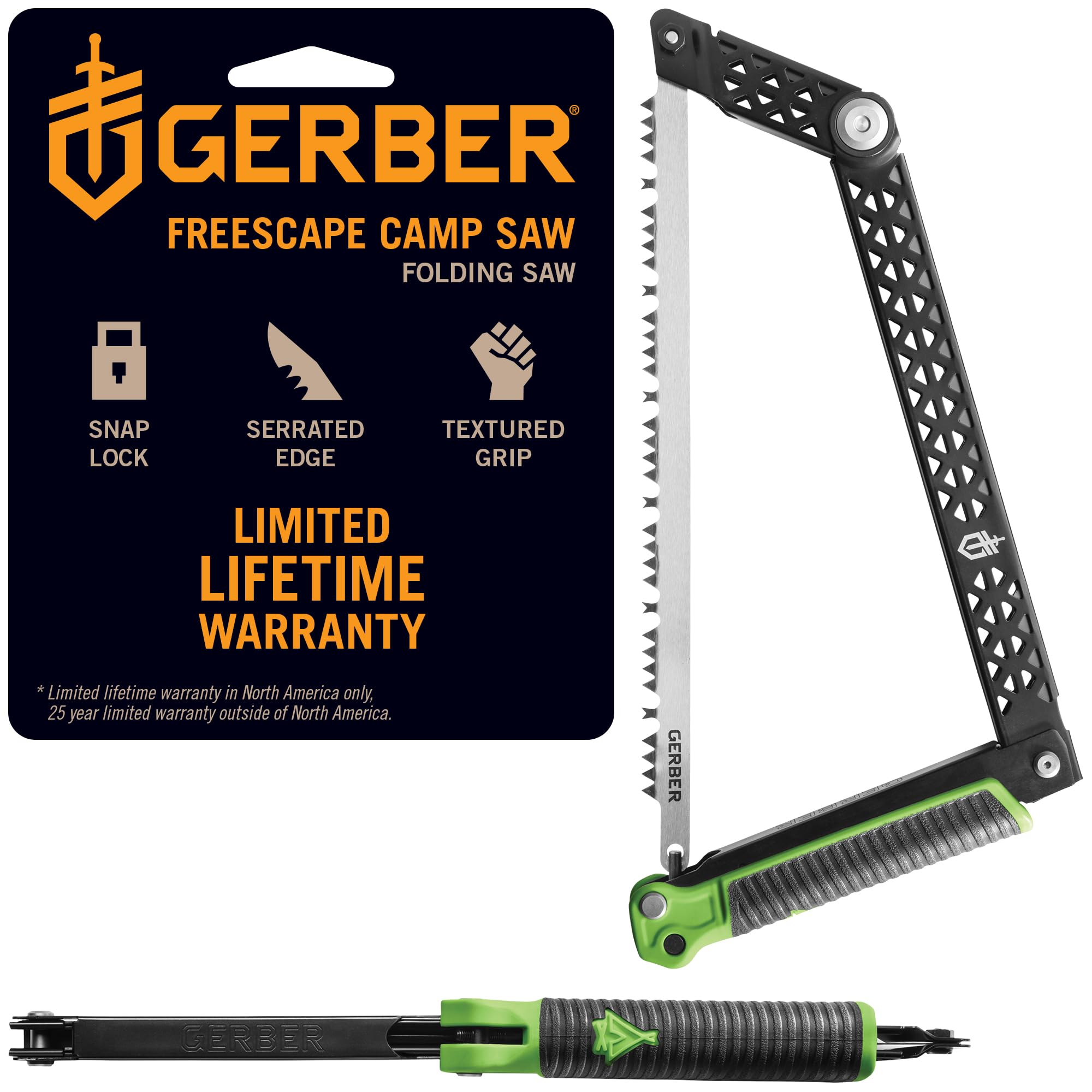
Gerber Freescape
The Gerber Freescape’s flat-folding mechanism eliminates the loose frame and separate blades of traditional bow saws, collapsing into a slim 12-inch package that slides into a pack pocket without snagging gear. The rubber-textured handle and four pivots lock into a rigid cutting platform that chews through small to medium logs with respectable speed. The tradeoff is price and weight: this costs about twice what a basic bow saw runs, and at 16 ounces it’s heavier than folding saws with similar blade length.
Best for backpackers who prioritize a flat-pack profile over ounce-counting — the lack of loose parts makes it easy to grab and go. Budget-conscious buyers or those needing more than 12 inches of reach will find better value elsewhere.
Pros
- Innovative flat-folding design packs flush with no loose parts to lose or rattle
- Cuts through small to medium logs quickly with comfortable rubber grip
Cons
- Premium-priced for a 12-inch capacity; most similar saws cost half as much
- At 16 oz, it is heavier than many folding saws with the same blade reach
Flat-storage enthusiasts who can accept the weight and price will appreciate the no-fuss packing — but this isn’t the saw for weight weenies or tight budgets.
Best for Light Pruning
REXBETI 11" Saw
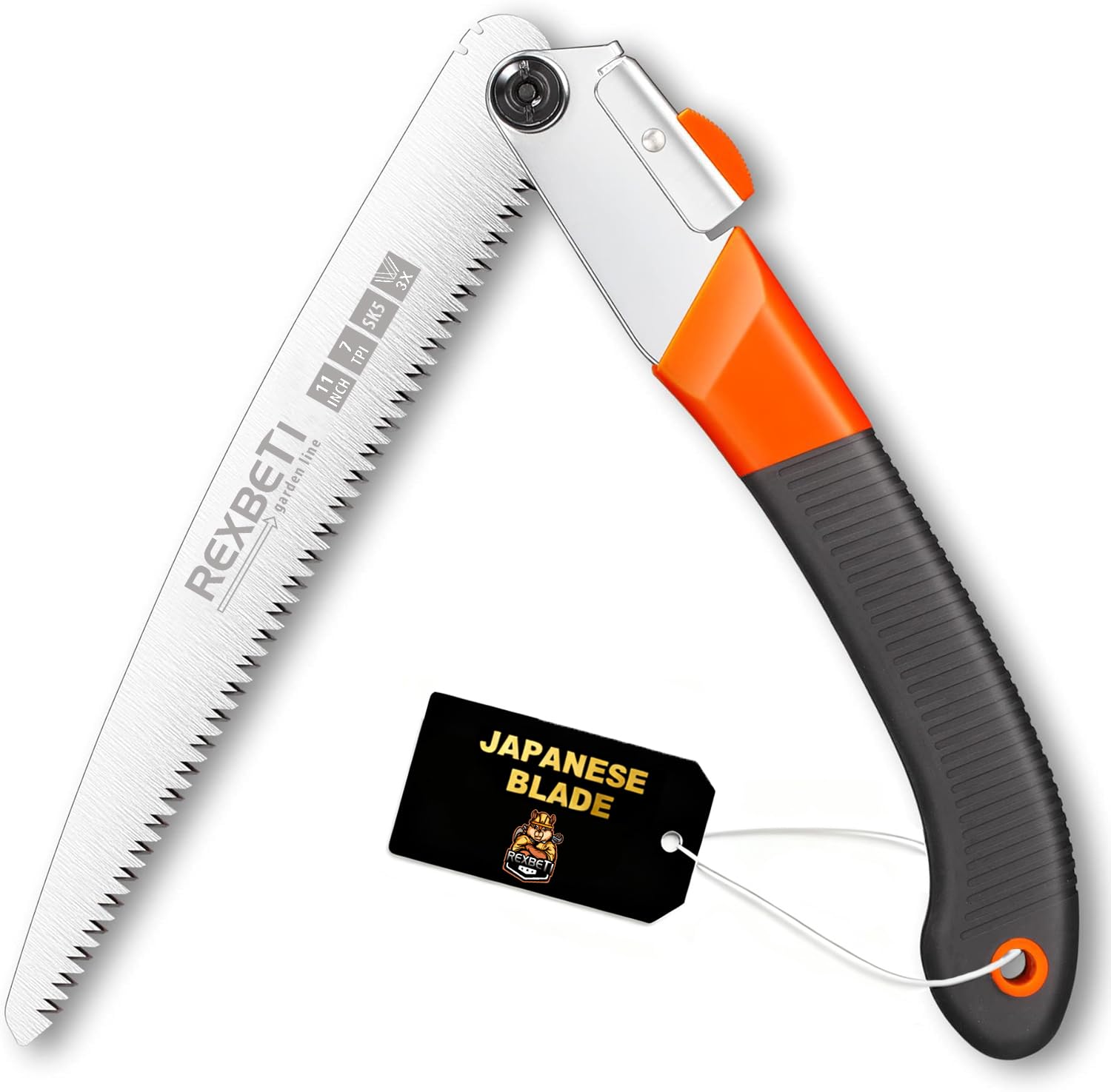
The REXBETI 11-inch saw comes very sharp and makes quick work of small branches with its dual-action teeth. However, the blade can snap under side load and the handle may crack with repeated stress. This saw suits occasional pruning where tool failure won’t ruin an outing, but is not dependable for backpacking or heavy cutting.
Pros
- Very sharp out of box; slices through wood with minimal effort.
- Cuts on both push and pull strokes for faster sawing.
Cons
- Blade can snap during use, especially when twisting or on larger branches.
A tempting price for a long blade, but only if you stick to light yard work and accept that breakage is possible.
Best for Bushcraft Carving
Silky GomBoy 240

The GomBoy’s aggressive curved blade chews through green branches quickly, making it a specialist tool for bushcraft carving and limbing. However, the thin blade can snap under side load, and the rubber handle lacks rigidity at the rear — limiting it to experienced users who can avoid twisting while cutting. The premium price and fragility keep it from being a general-purpose backpacking saw.
Pros
- Superb cutting performance on green wood, slicing through branches with minimal effort.
- High-quality build with a comfortable, well-shaped grip for extended use.
Cons
- Blade can snap if the saw is twisted or subjected to side pressure during cutting.
A strong choice for bushcrafters who need aggressive green-wood cutting and are willing to handle the blade with care to avoid breakage.
Best for Car Campers
Coghlan’s 21"

Key Features
- Blade Length: 21 in
- Blade & Teeth: Stainless Steel, —
- Price: Mid-Range
The Coghlan’s 21-inch Folding Saw is a lightweight bow saw that handles green and dry wood efficiently for camp chores. However, the plastic hinge and clamp may crack under tension, limiting its lifespan compared to all-metal alternatives like the Sven-Saw. This saw suits car campers who want a packable option for occasional use and don’t need long-term durability under heavy stress.
Pros
- Lightweight for a full-size bow saw
- Cuts well on green and dry wood
Cons
- Plastic hinge and clamp may crack under tension
A decent entry-level bow saw for car campers who pack light and won’t push the plastic components with heavy or frequent use.
Best for Budget Buyers
EverSaw 8" Camp Saw

The EverSaw 8-inch folding saw carries a high aggregate rating from thousands of buyers, yet the near absence of detailed feedback makes it impossible to assess cutting efficiency or lock durability. For a similar price, the Bahco Laplander offers detailed user reports and consistent cutting ability.
Pros
- Affordable price for an SK5 carbon steel blade
- Compact 8-inch blade stows easily in a pack
Cons
- Limited user feedback makes it hard to confirm long-term durability
A budget option for shoppers willing to rely on a high star rating without verifying performance details.
Best for Light Pruning
Craft911 11" Saw
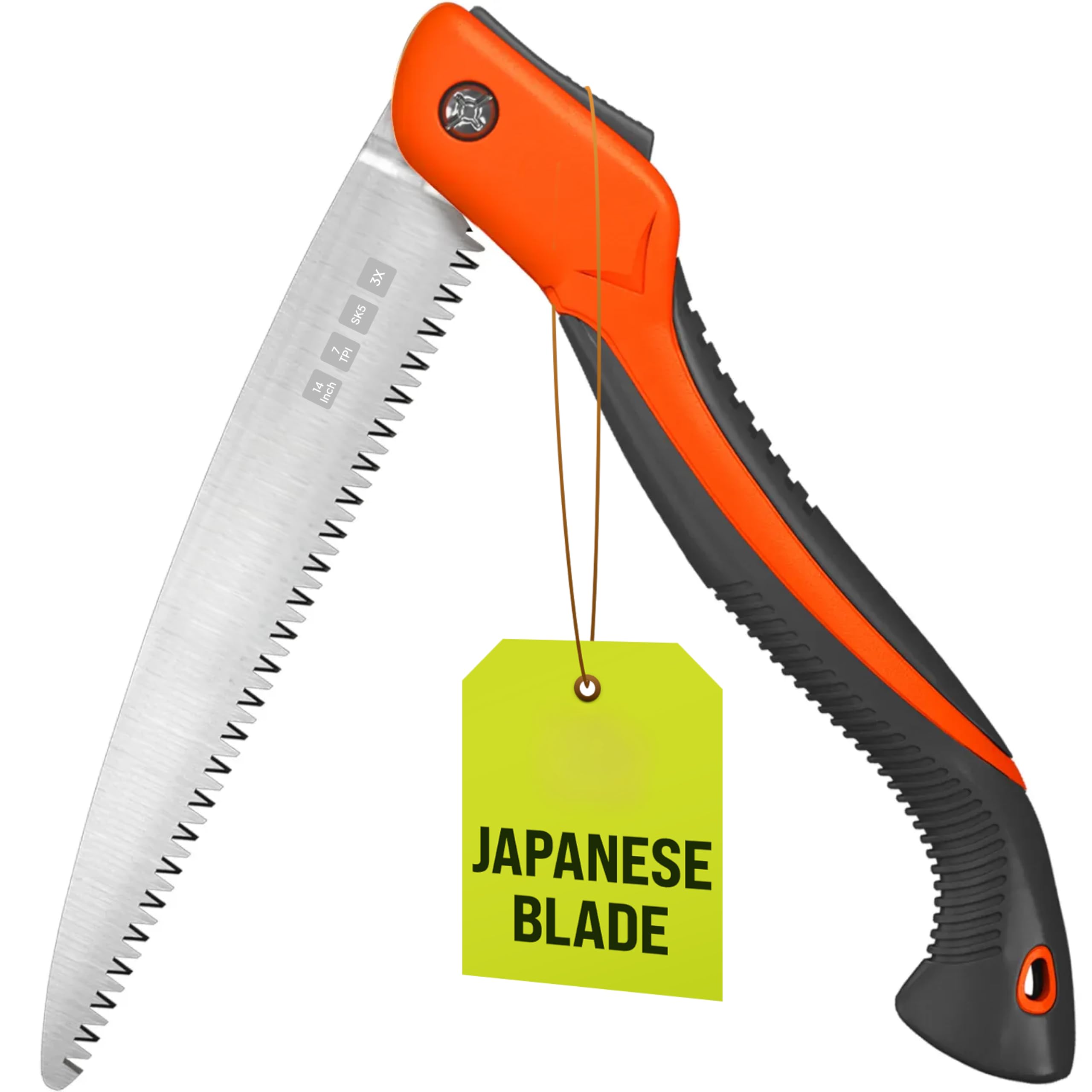
The Craft911 11-inch folding saw uses an SK5 blade that cuts small to medium branches quickly right out of the box. The compact design and low price make it appealing for light tasks. However, the locking mechanism may loosen with use, and the blade can snap under side load. This saw suits occasional pruning or emergency kits where a tool failure is acceptable, not backpacking trips where consistent performance matters.
Pros
- Very sharp out-of-box SK5 blade cuts small to medium branches efficiently.
- Compact folding design at a budget-friendly price.
Cons
- Locking mechanism and handle feel less robust; blade may snap under side load.
A sharp, low-cost option for light yard pruning or emergency kits where a saw failure won’t derail your trip.
Best for —
WEIMELTOY 10" Saw

The WEIMELTOY saw cuts quickly on green branches up to 4 inches and costs very little. However, the lock pin can dislodge during use, allowing the blade to fold unexpectedly—a risk that rules it out for backpacking or any situation where tool failure could cause injury. The blade also bends under heavier cuts.
Pros
- Cuts quickly on green branches up to 4 inches.
- Outstanding value for the cutting performance.
Cons
- Lock pin can dislodge during use, causing blade to fold unexpectedly.
Suitable only for very occasional yard trimming where lock failure is an acceptable risk. Not for backpacking or any critical outdoor use.
Best for Garden Pruning
Fiskars 10" Saw

Key Features
- Blade Length: 10 in
- Blade & Teeth: Alloy Steel, 6 TPI
- Price: Budget
This folding saw’s dual locking positions are a genuine advantage for reaching awkward angles, and the handle offers a secure grip. However, the blade can flex during cuts, leading to binding, and the undercut lock may slip. It works well for light pruning but is not a dependable choice for backcountry use.
Pros
- Dual locking positions allow cutting at overhand and undercut angles
- Comfortable non-slip grip reduces hand fatigue
Cons
- Thin blade can flex and bind during cuts, making straight cuts difficult
Best for occasional garden pruning where the dual-angle feature is useful, but not for backpacking or bushcraft where cut quality and lock security matter.
How to Choose
A longer blade isn’t always better for backpacking — consider how the folded saw fits in your pack and how much wood you realistically need to cut.
Blade Length and Portability
A longer blade cuts thicker logs faster, but the folded saw takes up more space. For backpacking, a 7- to 8-inch blade fits easily in a pack and handles most camp chores. For car camping or trail maintenance, a 21-inch bow saw processes firewood in half the time but may need strapping to the outside of your pack.
The trade-off is simple: longer blades on bow saws fold down to roughly their full length, while folding hand saws collapse into a more compact shape. Measure your pack’s main compartment and side pockets before choosing a large saw.
Blade Material and Tooth Design
Blade material determines how long the edge stays sharp and how easily it cuts. Swedish steel and impulse-hardened teeth (like those on Silky saws) hold an edge longer and cut faster on green wood, but they are brittle and can snap if twisted. Bimetal blades (e.g., Mossy Oak) offer more flex but dull faster on dry hardwood.
Tooth pattern matters too: higher TPI (teeth per inch) gives a finer cut but slower progress, while lower TPI removes material faster but rougher. For general backpacking, 7 TPI is a good balance. Triple-cut or curved blades excel at aggressive cutting on green wood but require careful technique.
Lock Mechanism Reliability
A failing lock is the most dangerous problem in a folding saw — the blade can collapse onto your hand mid-cut. Budget saws often use thin metal pins that loosen or fall out after a few uses. Look for a positive lock with a metal-to-metal engagement, like the twist-lock on the Bahco Laplander or the integrated catch on the Gerber Freescape.
Even good locks require periodic checks. If the lock feels loose after a season, replace the saw before it fails on the trail. Avoid saws where the lock is made entirely of plastic or relies on a single screw.
Weight and Packed Size
Every ounce counts on a backpacking trip. A sub-8-ounce folding saw is easy to justify, while a 1-pound bow saw may sit at home. But heavy cutting tasks demand a larger blade, which adds weight. The trick is matching the saw’s capacity to your typical wood size: if you only cut wrist-thick branches, a lightweight 7-inch saw is plenty.
Packed size matters as much as weight. Some 21-inch bow saws fold to just over two feet, which may not fit in a standard daypack. Measure your pack’s length before committing to a long-blade saw.
Build Materials: Plastic vs Metal
Plastic handles and hinges save weight but are prone to cracking under tension or in cold weather. Metal frames (anodized aluminum or steel) are heavier but far more durable. For a saw you expect to use for years, all-metal construction like the Sven-Saw eliminates plastic failure points.
If you go with a plastic-handled saw, avoid overtightening the blade and store it out of direct sun. Even premium polymer handles can become brittle after UV exposure.
FAQ
Why does my folding saw blade keep bending?
Blade bending usually happens when you apply side pressure or twist the saw during the cut. Folding saw blades are thin and designed for straight pull cuts. If you need to cut large logs, switch to a bow saw with a thicker blade. If bending persists, the blade may be too soft for the wood you are cutting — consider a saw with impulse-hardened teeth.
Is a 21-inch folding saw too big for backpacking?
For most backpackers, yes. A 21-inch saw folds to around 23 inches, which is too long for inside a standard pack. It can be strapped to the outside, but it snags on brush and adds over a pound. Stick to 7- to 8-inch folding saws for backpacking. Save the big saws for car camping or basecamp trips.
How to prevent a folding saw lock from failing?
Inspect the lock before every trip. Make sure the locking pin fully engages and there is no side-to-side play. Avoid saws with plastic locking mechanisms or screws that can back out. If your saw uses a wingnut or thumbscrew, check that it is tight before cutting. Replace any saw where the lock feels loose — it is not worth the risk.
Are Silky saw blades really that fragile?
Silky blades are extremely hard and sharp, which makes them brittle. They can snap if you twist the saw or hit a knot at an angle. With careful straight cuts they perform superbly, but they are not for rough use. If you often cut dry hardwood or need a saw that can tolerate abuse, consider a thicker blade like the Bahco Laplander.