This post contains affiliate links. We may earn a small commission when you buy through our links — at no extra cost to you.
Multi-day hiking trips demand a pack that carries its weight – literally. Many budget options boast 60+ liter capacities but cut corners on internal frame support and strap hardware, leaving hikers with sore shoulders and constant readjustment. Cheap hardware often means straps that slip under load, forcing frequent stops.
The difference between a comfortable hike and a miserable one often comes down to how well the pack transfers load to your hips. A good internal frame and reliable strap locks keep the pack stable even with 30+ pounds of gear.
This guide breaks down the key features that matter for multi-day treks – hip belt fit, frame rigidity, and strap tension systems – so you can find a pack that matches your trip length and budget without guessing.


Best for Budget Multi-Day
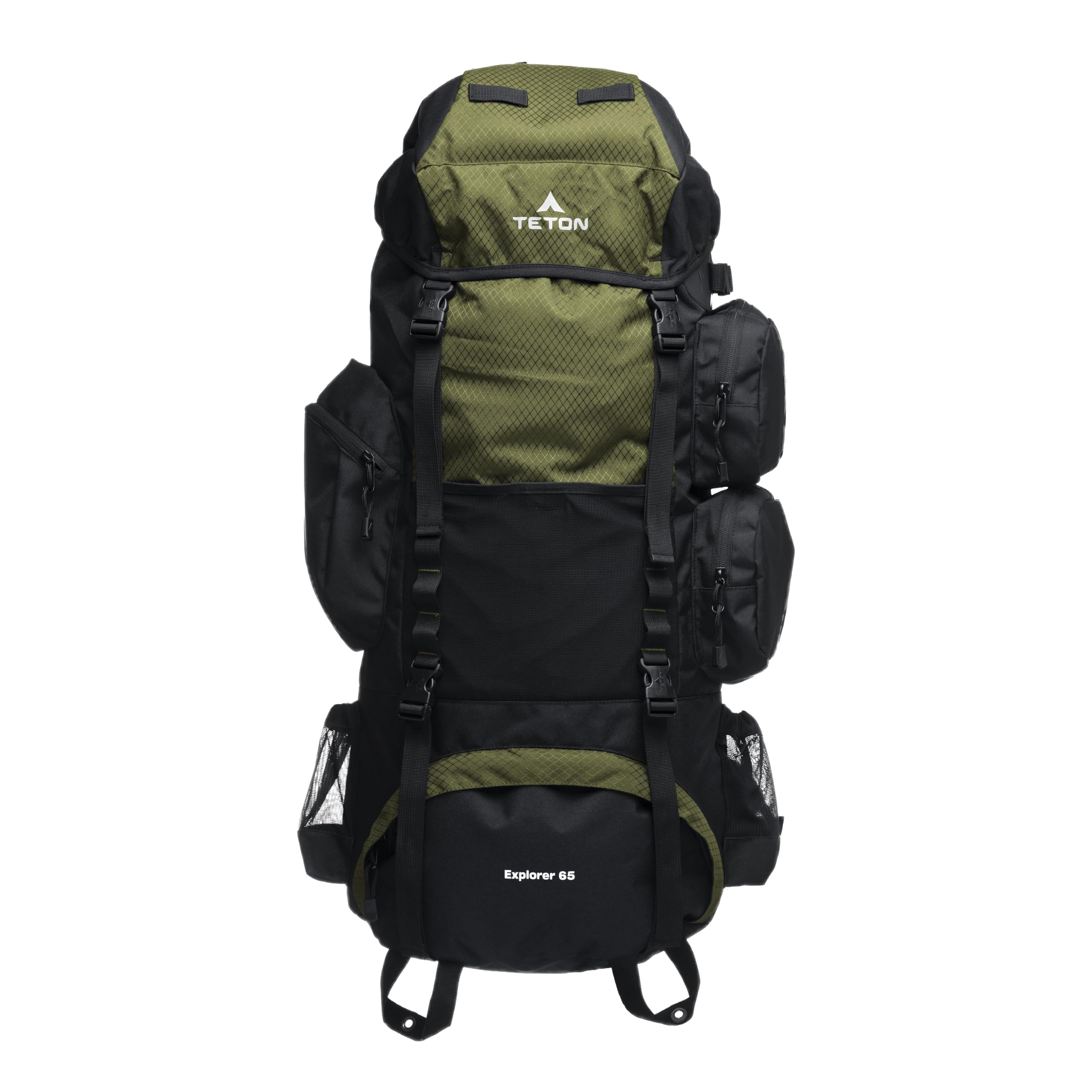
Teton 65L Explorer
Key Features
- Capacity: 65L
- Internal Frame: Internal
- Weight: 5 lbs
- Price: Budget
The 600D diamond ripstop polyester body and internal frame provide a stable platform for loads up to 50+ lbs. The suspension transfers weight to the hips effectively, reducing shoulder strain on long days. Six compartments, including a front panel pocket and side mesh pockets, keep gear organized and accessible.
This pack suits budget-conscious backpackers and beginners looking for a capable first pack for multi-day hikes. The 5-lb empty weight is a tradeoff — it’s heavier than premium alternatives, so less ideal for lightweight fastpacking or long ascents. The sleeping bag compartment fits standard bags but may be tight for oversized winter bags, so check your gear’s dimensions before packing.
Pros
- Durable 600D diamond ripstop fabric withstands trail abuse.
- Strong value for the money – features rival packs at twice the price.
- Comfortable carry even with heavy loads, thanks to well-padded hip belt and adjustable torso.
Cons
- Heavier than premium alternatives at 5 lbs – weight penalty is more noticeable on long ascents.
- Sleeping bag compartment fits standard bags but may be tight for oversized or winter bags, risking liner tears.
For anyone needing a budget-friendly, comfortable internal frame pack for multi-day hikes, the Teton 65L Explorer is a smart choice — just account for its weight when planning your gear list.
Best for Serious Multi-Day
Osprey Rook 65L
Key Features
- Capacity: 65L
- Internal Frame: Internal
- Weight: 3.7 lbs
- Price: Premium
Osprey’s AirSpeed suspension system and 3.7-pound weight give the Rook 65L a clear advantage on long, warm-weather hikes where back ventilation and weight savings matter most. The internal frame transfers load efficiently to the hip belt, keeping the pack stable on uneven terrain. An adjustable torso, integrated rain cover, and Daylite compatibility add practical versatility.
This pack suits serious multi-day backpackers who prioritize weight and ventilation. The tradeoff: fewer side and back pockets than competing designs, and a premium price that reflects the high-end materials and build. It pairs naturally with Osprey’s Daylite for summit hikes or camp day trips.
Pros
- Sub-4-pound weight reduces fatigue on consecutive long-mileage days.
- AirSpeed suspension promotes airflow, keeping your back dry on warm hikes.
- Adjustable torso and integrated rain cover add fit and weather protection.
Cons
- Side and back pocket layout is simpler than many packs, so organizing smaller items requires more planning.
For hikers who prioritize weight and ventilation and can work with a simpler pocket layout, the Rook 65L delivers premium comfort on multi-day trips.
Best for Budget Weekend
Loowoko 50L
At this price point the Loowoko 50L delivers a proper internal frame and a rain cover, making it a practical first hiking pack for short overnight trips. It’s notably lightweight and spacious enough to hold a week’s worth of clothing without weighing you down. The value is clear for someone who needs a pack a few times a year and wants to avoid a bigger investment.
Where it fits best is with budget-conscious weekend backpackers carrying light gear on well-maintained trails. The mixed reports on strap and seam durability mean this isn’t the pack for regular heavy loads or extended backcountry trips — those buyers should look to the more robust Teton 65L. For its intended role as a starter or casual-use pack, the Loowoko gets the job done without breaking the bank.
Pros
- Good build quality and features for the entry-level price.
- Spacious 50L capacity fits clothing and gear for a week-long trip.
- Lightweight design makes it comfortable for shorter hikes.
Cons
- Strap stitching and seam integrity can give out after a few uses under moderate loads.
- The fabric is not reliably waterproof without the included rain cover.
A solid entry point for occasional weekend backpackers on a tight budget — just keep the load light and use the rain cover in wet weather.
Best for Budget Beginners
Teton 55L Scout
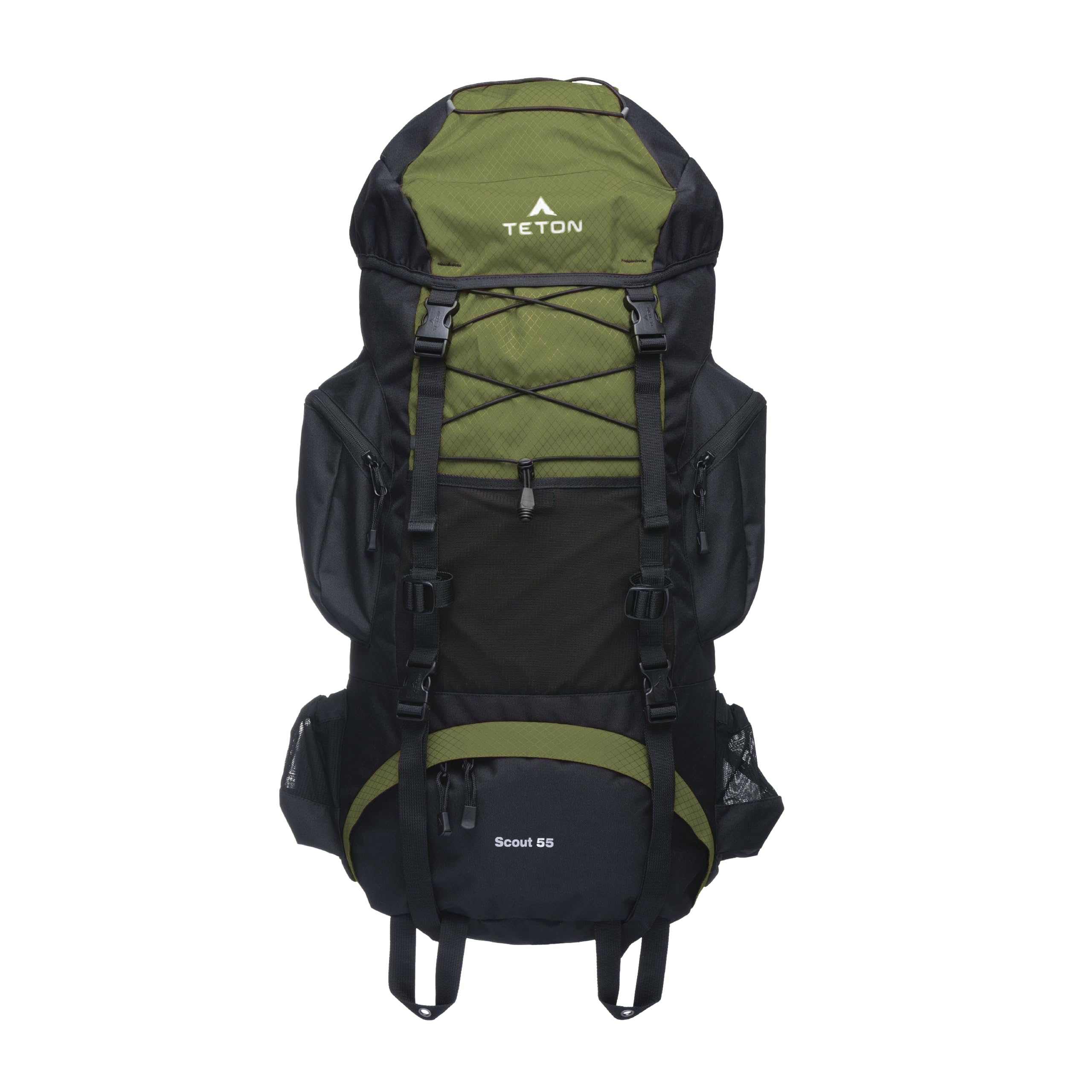
The Teton 55L Scout offers an internal frame, multi-position torso adjustment, sleeping bag compartment, and a rain cover at a budget-friendly price – a capable setup for short trips. However, unlike the larger 65L version, customer feedback is not available to confirm its long-term durability and comfort under heavier loads.
Pros
- Includes a rain cover and sleeping bag compartment at a budget price.
- Adjustable torso fit accommodates different body sizes.
Cons
- Long-term durability under repeated use has not been verified through customer feedback.
Best suited for budget-conscious beginners looking for a 55L pack for short overnight trips, where the unverified long-term durability is less of a concern.
Best for Military Aesthetic
Mardingtop 60L
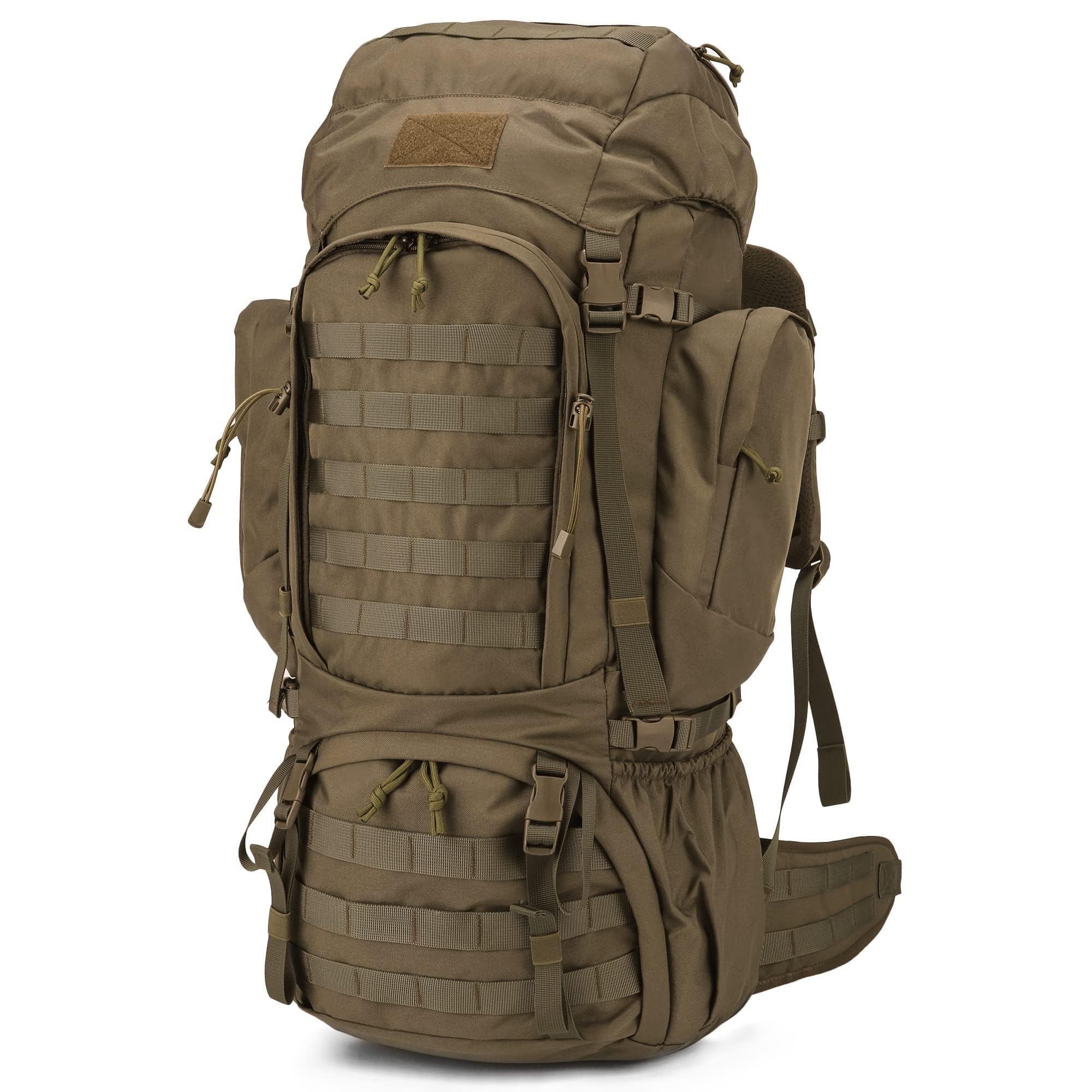
This pack offers a military aesthetic and a rain cover for a moderate price, matching the capacity needed for multi-day trips. However, without customer review content to verify load transfer, strap durability, or long-term comfort, its real-world performance on hikes remains uncertain. It may work for buyers who prioritize appearance and are willing to accept unproven quality.
Pros
- Internal frame and 60L capacity suit multi-day gear loads.
- Included rain cover adds weather protection out of the box.
Cons
- No verified customer feedback makes it impossible to confirm strap or frame reliability under weight.
Consider this pack only if the military look is non-negotiable and you’re prepared to test its limits yourself.
Best for Tactical Carry
WINTMING 70L

This 70L pack offers generous capacity at a budget-friendly price and stays light for its size. But it lacks an internal frame, so load transfers to your hips are nonexistent, and zippers can come off track under moderate use. Best reserved for car camping or emergency kits where you don’t need structured support.
Pros
- Large capacity for the price
- Good value for money
Cons
- Zippers can come off track or break during regular use
Fits best for non-hiking scenarios like car camping or as a spare gear bag where weight distribution and zipper durability aren’t critical.
Best for Lightweight Travel
Bseash 60L

This pack offers an impressive weight-to-volume ratio and plenty of organization for day hikes or travel. However, the frameless structure transfers weight to the shoulders, and strap hardware can detach when loaded beyond 15 pounds — a poor match for multi-day backpacking where internal frame support matters.
Pros
- Extremely lightweight for a 60L pack
- Multiple compartments keep gear organized
Cons
- Straps and waist buckle can detach under moderate load
A capable budget option for lightweight travel or day hikes with minimal gear, but avoid it for any trip requiring more than 15 pounds of load.
Best for Casual Hikes
Esup 50L

This pack offers a roomy 50L main compartment and comes with a rain cover, making it a practical choice for casual day hikes or travel with light clothing. However, it lacks an internal frame, so loads over 15-20 lbs become uncomfortable, and some users have noted seam tearing after a few uses. Durability is a concern for anything beyond occasional use.
Pros
- Good build quality for the price.
- Roomy enough for a week’s worth of clothing.
Cons
- Seam tear can occur after a few trips under heavier loads.
A budget-friendly option for day hikes and light travel, but not built for multi-day backpacking with heavy gear.
Best for Day Hikes
WoneNice 50L

A 50-liter waterproof pack with rain cover, ideal as a large daypack or travel bag. Its frameless design cannot transfer weight to hips, making it unsuitable for multi-day backpacking where loads exceed a few pounds. Long-term durability under heavy use is a known vulnerability.
Pros
- Waterproof construction and included rain cover keep gear dry in wet conditions.
- Spacious 50L capacity provides room for day hike essentials or travel items.
Cons
- Frameless design lacks load transfer to hips, limiting comfort for multi-day loads.
Fits as a budget-friendly waterproof daypack for travel or light day hikes, but not for multi-day backpacking trips.
Best for Day Hikes
Bseash 50L

The Bseash 50L is a lightweight and spacious pack that suits day hikes or city travel on a tight budget. It lacks an internal frame and its zippers and straps may not hold up under moderate weight, so multi-day backpacking is not recommended. Best for light loads on short outings.
Pros
- Lightweight 50L capacity with generous interior space.
- Budget-friendly price for casual day use.
Cons
- Zippers can snag and may stick under load.
A decent choice for day hikes or travel on a budget, but not for multi-day backpacking.
How to Choose
A pack’s empty weight matters less than how its frame transfers load to your hips when fully packed.
Capacity
Capacity determines how much gear you can carry for a given trip. A 40-50L pack suits weekend trips with compact gear, while 60-80L is needed for longer food carries or bulky items like a bear canister.
Oversizing leads to temptation to overpack, adding weight. The sweet spot for most multi-day trips is 55-65L – enough room for essentials without encouraging extra bulk.
Internal Frame
An internal frame transfers the pack’s weight from your shoulders to your hips via a structured frame sheet and a padded hip belt. Without a frame, all weight hangs on your shoulders, quickly causing fatigue and poor posture.
Frameless packs work only for loads under 15-20 lbs. For backpacking with typical gear weights of 25-40 lbs, an internal frame is non-negotiable for comfort and efficiency.
Weight
Empty pack weight directly affects how much energy you burn per mile. A difference of 1-2 lbs may not seem significant, but over 10 miles with a 30-lb load, every ounce compounds.
Ultralight packs under 3 lbs save weight by using thinner materials and simpler suspension, often at the cost of load capacity. Heavier packs (4-5 lbs) are more durable and carry heavier loads comfortably for budget-conscious hikers.
Hip Belt Comfort
The hip belt is the primary load-bearing surface. A well-padded, contoured belt that wraps around your iliac crest prevents the pack from sagging and shifting. Adjustability is key – a one-size belt often fails on different body shapes.
Look for packs with multiple hip belt sizes or adjustable torso lengths. A belt that sits too high or low will transfer weight back to your shoulders, defeating the purpose of the frame.
Strap Lock Reliability
Strap locks (cams or buckles) hold shoulder strap tension. Cheap plastic cams can slip under load, requiring constant re-tightening. This is a common failure on sub-$100 packs and a top complaint from long-distance hikers.
Test by loading the pack and pulling the strap firmly – a good lock should hold without slipping. Metal or reinforced plastic cams are more reliable than basic friction-based adjusters.
FAQ
Why do my backpacking backpack straps keep loosening while I hike?
Straps loosen because the tension lock mechanism is too weak to hold the force of a loaded pack. This is common on budget packs with basic plastic cams. The fix is to look for packs with metal or reinforced cam locks, or to tie a half-hitch knot after cinching. If the problem persists, the pack is not suitable for backpacking.
Is a 65L backpack too big for a 3-day hiking trip?
Not necessarily. A 65L pack gives you room for a bear canister, extra clothing layers, and a larger tent. For minimalist 3-day trips with compressed gear, 50L may suffice. The key is to fill the volume wisely – a partially full 65L pack can be cinched down, but overpacking adds weight.
How heavy is too heavy for a backpacking backpack?
An empty pack over 5 lbs is considered heavy for multi-day trips. Combined with 25-30 lbs of gear, you’ll feel it on ascents. Aim for under 4 lbs if possible, but budget packs often weigh 5 lbs. If you prioritize cost over weight, plan for shorter days and frequent breaks.
Can I use a frameless daypack for multi-day backpacking?
Only if your total gear weight stays under 15-20 lbs and you don’t mind shoulder strain. Frameless packs offer no hip belt load transfer, meaning all weight sits on your shoulders. For most multi-day trips with a tent, stove, and food, a frameless design leads to discomfort and potential injury.