This post contains affiliate links. We may earn a small commission when you buy through our links — at no extra cost to you.
Many day hikers grab a cheap packable backpack thinking lighter is better, only to find sore shoulders from thin straps or a torn seam after a few trips. The trade-off between weight and durability is real, but you don’t have to pick one over the other if you know where to look.
This guide focuses on daypacks that actually hold up on the trail while keeping weight reasonable. The best choices combine smart organization, a proper suspension system, and materials that survive more than a season. We?ve sorted through the options to find the packs that deliver on both comfort and longevity.
What matters most isn?t the lowest price or the most pockets ? it?s how the pack fits your body and handles the gear you actually carry. Whether you need a 20L all-rounder for work and weekends or a compact hydration setup for short loops, the right pack is out there.




Best for Commuter & Hike
Osprey Daylite Plus
Key Features
- Capacity: 20 L
- Weight: 1.29 lb
- Hydration: Reservoir sleeve
- Suspension/Straps: AirScape backpanel, padded straps
- Organization: 5 pockets
- Price: $$
The Osprey Daylite Plus combines the AirScape backpanel with a padded laptop sleeve and a luggage pass-through, making it a rare daypack that works equally well on a trail, in an office, or on an airplane. Its 20-liter main compartment holds a 14-inch laptop along with a change of clothes and lunch, while the 100% recycled 300D polyester fabric and YKK zippers feel built to handle years of daily abuse. Osprey backs it with a lifetime warranty, adding peace of mind for regular use.
On the trail, the suspension manages full loads without sway, and the breathable panel reduces heat buildup. The front organization pocket keeps snacks and a phone within reach, though the side mesh pockets are snug – a 26 oz Yeti fits, but wider bottles may require some effort. The internal reservoir sleeve accepts a hydration bladder, and the luggage pass-through secures the pack to a suitcase handle for smooth airport transit. The zippered front pocket includes a key clip and pen slots, adding to its everyday utility.
This pack suits day hikers who also commute or travel and want a single bag for both duties. The main tradeoff is length: the pack runs tall, so hikers under 5’4" may find it sits too low on their back, causing discomfort. For those who fit, the Daylite Plus delivers Osprey’s consistent build quality, backed by a lifetime warranty. It’s not for ultralight hikers after the lightest pack – at 1.29 lb it’s not the lightest – but for those needing a durable hybrid for everyday use, it justifies its mid-range price.
Pros
- Build quality with recycled fabric and durable zippers
- Adaptable design for hiking, commuting, and travel
- Breathable backpanel and padded straps reduce fatigue
- Compact 20L holds more than its size suggests
Cons
- May feel too tall for hikers under 5’4" – pack length can sit low on shorter torsos, causing discomfort
- Water bottle pockets are snug – larger containers may be tricky to insert
For day hikers who need a laptop bag that doubles as a carry-on, the Daylite Plus offers Osprey’s durability in a compact package – just confirm the torso length before buying.
Best for Budget All-Rounder
SKYSPER 20L Daypack
Key Features
- Capacity: 20 L
- Weight: 1.1 lb
- Suspension/Straps: Padded straps, breathable back
- Organization: 10 pockets
- Price: $
The SKYSPER 20L packs in a surprising number of features for its low price – ten pockets, anti-theft zipper, and trekking pole attachments – giving it an edge over the top pick’s simpler layout at a fraction of the cost. The 1.1-pound weight and padded shoulder straps make it comfortable for a full day on the trail, and the breathable back panel helps on warm hikes.
This pack suits budget-conscious day hikers who carry light loads (under 10 pounds) and want a well-organized bag for occasional outings. It is not built to withstand years of heavy weekly use; some users have reported stitching separation after several months, so it works best for those who hike a few times a season rather than every weekend.
Pros
- Exceptional value for a well-featured daypack
- Lightweight enough to not slow you down, yet sturdy for its class
- Well-organized interior with multiple pockets and compartments
Cons
- Stitching can separate after several months of regular use – best for occasional hiking rather than frequent heavy loads
For the occasional day hiker on a budget, this SKYSPER delivers impressive organization and comfort – just keep in mind it may not hold up for years of heavy use.
Best for Hydration Budget
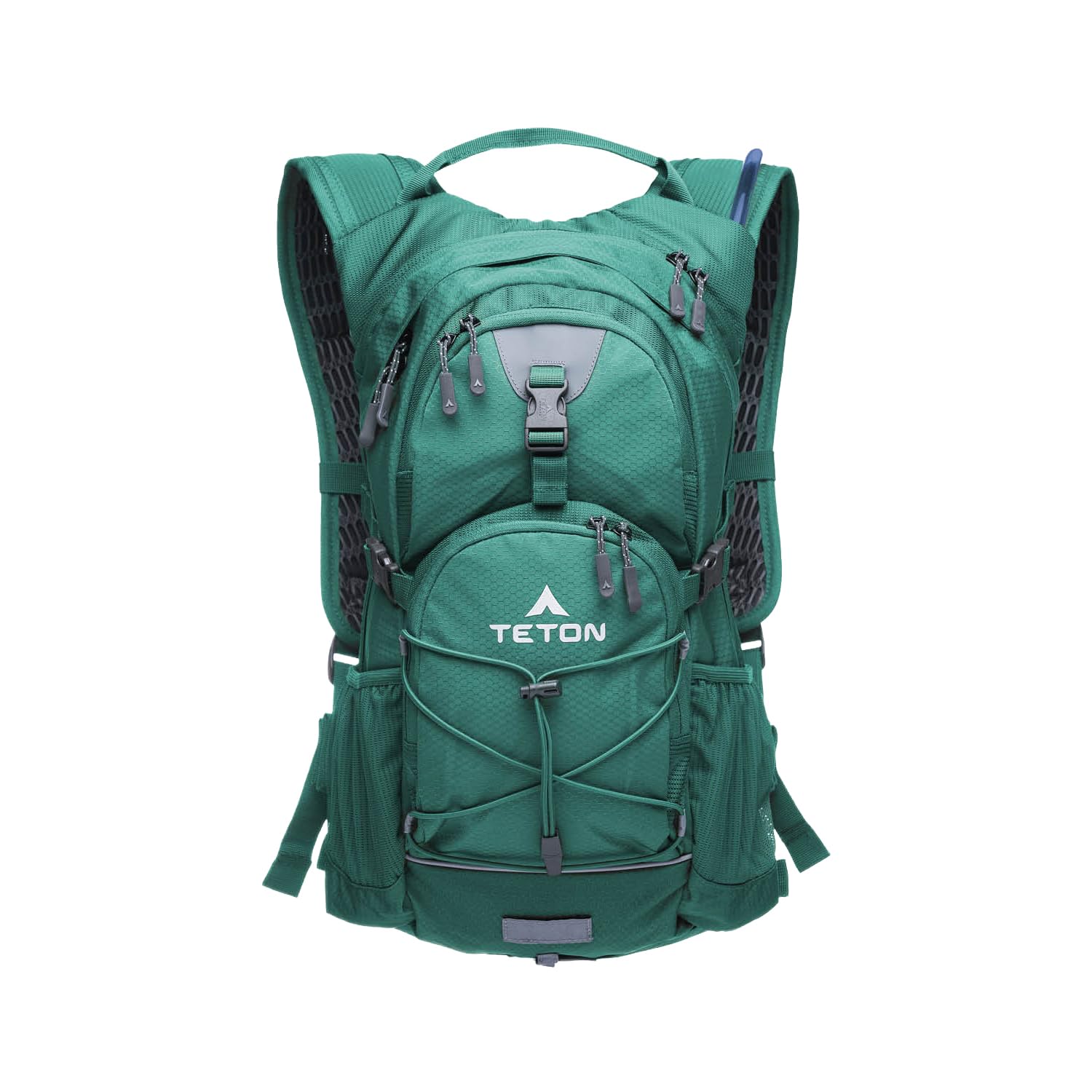
TETON Oasis 18L
Key Features
- Capacity: 18 L
- Weight: 2 lb (with bladder)
- Hydration: Included 2L bladder
- Suspension/Straps: Padded straps, hip belt
- Organization: 7 pockets
- Price: $$
The TETON Oasis delivers a hydration-ready experience with a 2L bladder and sewn-in rain cover at a mid-range price — a convenience the top pick doesn’t offer out of the box. Multiple pockets keep gear organized, and the insulated bladder pocket helps keep water cool on warm days.
This pack suits budget-conscious day hikers who want an all-in-one solution without adding extra purchases. On longer hikes, the shoulder straps may dig into broader shoulders, and the bite valve can carry a plastic taste initially. Those planning all-day treks or seeking premium build should look at the top pick instead.
Pros
- Includes a leakproof 2L bladder and sewn-in rain cover at a budget-friendly price.
- Well-organized storage with multiple pockets and weather-guarded zippers.
- Affordable compared to premium hydration packs with similar features.
Cons
- Shoulder straps can dig in and chafe on hikes longer than a few hours, especially for broader shoulders.
- Waist strap and bite valve may show wear or break after limited use.
A practical hydration pack for day hikes where convenience matters more than all-day comfort — just keep the straps adjusted and give the bladder a rinse before first use.
Best for Travel Backup
G4Free 10L Packable
Key Features
- Capacity: 10 L
- Weight: 0.56 lb
- Suspension/Straps: Unpadded straps
- Organization: 4 pockets
- Price: $
At just 0.56 lb, the G4Free 10L folds into its own pocket smaller than a fist – lighter and more compact than most packable daypacks. Despite the low weight, the polyamide fabric and SBS zippers hold up well for occasional use. It packs four pockets including side mesh for a water bottle, and the cross-body strap compatibility adds versatility.
This bag best serves travelers who need a backup bag for day excursions or short, flat hikes where you carry only a water bottle and a snack. However, the lack of chest and hip straps means it bounces during running or scrambling, and the 10L capacity won’t fit a 2L bladder plus jacket and lunch for a full day out. It’s a capable spare at a budget price, but not a replacement for a structured daypack with load support.
Pros
- Weighs only 0.56 lb and folds into its own pocket – easily stashed in any luggage.
- Spacious enough for a water bottle, snack, and small items without feeling bulky.
- Zippers and fabric feel above average for a budget packable – suitable for occasional use.
Cons
- No chest or waist strap – pack bounces on uneven terrain or when moving quickly.
- 10L capacity limits carrying a 2L water bladder plus extra layers for a full day hike.
Best as a spare bag for travel or short, minimal hikes – not for full-day or active trail use.
Best for Minimalist Day
Osprey Daylite 13L
Key Features
- Capacity: 13 L
- Weight: 1.09 lb
- Hydration: Fits 2L bladder
- Suspension/Straps: Wide straps, mesh back
- Organization: 3 pockets
- Price: $$
The Osprey Daylite Commuter delivers Osprey’s hallmark durability in the smallest form of the series – it’s the lightest and most streamlined option compared to the Daylite Plus, which adds laptop storage and more pocketing. The 1.09-pound weight, panel-loading design, and internal hydration sleeve keep it simple for short trips.
This pack suits hikers who carry only a water bladder, snacks, and a light jacket – the 13-liter volume matches those essentials without wasted space. It also works as a lightweight summit pack or a reliable daypack for kids, thanks to its comfortable mesh back panel and wide shoulder straps.
Pros
- Stitching and zippers show Osprey’s build quality – this small pack feels solid.
- Ideal size for short 2-4 hour hikes with essentials – holds a bladder, snacks, and jacket.
- Wide shoulder straps and breathable mesh back provide comfort for light loads.
Cons
- For day hikes needing a spare layer or large lunch, the 13-liter capacity can feel limiting.
- The unpadded hip belt does little to transfer weight off shoulders on longer climbs.
A premium small daypack that excels for minimal carries – best for short hikes, kids, or as a spare summit pack.
Best for Budget Packable
SKYSPER 15L Foldable
Key Features
- Capacity: 15 L
- Weight: 0.75 lb
- Suspension/Straps: Chest strap with whistle
- Organization: 6 pockets
- Price: $
Unlike most packable daypacks that omit a chest strap, the SKYSPER 15L includes one – providing noticeable stability on uneven terrain. The pocket layout is thoughtfully organized, with deep side mesh pockets that hold water bottles securely and multiple zippered compartments for small items. At 0.75 lb, it disappears into your luggage when folded. Stitching and zippers feel substantial for a packable design.
This backpack suits day hikers who carry the basics: a layer, snacks, water, and small accessories. The 15L capacity works for short morning walks or as a backup bag while traveling. Those expecting a full-day hike with extra layers, a packed lunch, and camera gear may find it tight. The polyester fabric handles light mist but is not meant for sustained rain – a dry bag liner adds protection when needed.
Pros
- Chest strap with integrated whistle improves carrying comfort – a rarity at this price.
- Deep side pockets and multiple zippered compartments keep gear organized and accessible.
- At 0.75 lb, the pack feels nearly weightless on short hikes.
Cons
- Fabric is water-resistant but not waterproof – steady rain will soak through.
- For a full day with extra layers and food, the 15L capacity may feel restrictive.
Best for hikers who want a packable backup that doesn’t skimp on stability – short, light days only.
Best for Ultraslight Backup
4Monster 16L Packable

Key Features
- Capacity: 16 L
- Weight: 4 oz
- Suspension/Straps: Thin unpadded straps
- Organization: 4 pockets
- Price: $
The 4Monster pack weighs just 4 ounces and folds into a pouch the size of your fist, making it a convenient backup for travelers and fair-weather hikers. Despite its 16-liter capacity accommodating essentials like water and an extra layer, the thin nylon and minimal stitching mean durability is limited — straps and seams can separate under heavier loads. This is an occasional-use spare, not a daily hiking pack.
Pros
- Extremely lightweight and compact when packed.
- Surprisingly roomy for day use.
Cons
- Thin straps dig into shoulders when carrying more than a few pounds.
- Durability is a concern — straps and seams can separate under normal loads.
Best as an emergency backup or travel daypack for light loads — not for regular hiking.
Best for Travel Daypack
WATERFLY 20L Packable

Key Features
- Capacity: 20 L
- Weight: 10.2 oz
- Suspension/Straps: Unpadded straps
- Organization: 4 pockets
- Price: $
The WATERFLY 20L folds into its own pouch and adds almost no weight to luggage, with side pockets that hold water bottles and an interior zippered pocket for small valuables. However, this pack trades structure for packability: the straps and seams can separate after repeated use, and the flimsy back panel offers little support when loaded. For travelers who need a spare pack for city days or short, non-demanding hikes, it works—just don’t expect it to hold up as a primary hiking pack over multiple seasons.
Pros
- Very lightweight and packs into a small pouch
- Good organization for a packable bag
Cons
- Straps and seams can separate after several uses
- Bag collapses when empty and offers minimal back support
A good choice for travelers who want an inexpensive backup daypack for city excursions or the occasional easy hike, but not a pack for regular trail use where durability matters.
Best for Kids & Small Adults
sunhiker 20L Backpack

Key Features
- Capacity: 20-25 L
- Weight: 12.3 oz
- Suspension/Straps: Padded back & straps
- Organization: 3 compartments, 2 side
- Price: $
This pack delivers good value for the price: at under 12 ounces, it’s easy to carry and fits a water bottle, snacks, and a light jacket. The construction, however, may show wear after a season of regular use, so it’s best reserved for very occasional day hikes or as a spare bag.
Pros
- Very affordable for its feature set
- Lightweight enough for all-day carry
Cons
- Hip belt too small for adults with a waist over 30 inches – may not close comfortably
A decent choice if you need a very light pack for short, infrequent hikes and aren’t concerned about long-term durability.
Best for City & Short Hikes
SKYSPER 10L Packable

Key Features
- Capacity: 10 L
- Weight: 0.6 lb
- Suspension/Straps: Unpadded straps
- Organization: 3 pockets + 2 side
- Price: $
Weighing 0.6 lb and folding into its own pocket, this 10L packable excels as a backup bag for city day trips or as a spare inside a larger travel pack. The hidden back pocket provides security for valuables. For day hiking, it is a secondary option — best suited for short, ultralight excursions where you carry only essentials.
Pros
- Weighs only 0.6 lb and compresses to palm size.
- Includes a hidden anti-theft pocket and deep side mesh pockets for a water bottle.
Cons
- Limited to very minimal loads — fits a small water bottle, snacks, and a light jacket, but not layers or extra gear.
- Unpadded shoulder straps may become uncomfortable if you push beyond a couple of pounds.
Ideal as a packable spare for travel or city use where you carry minimal items; not suitable as your primary day hiking pack for longer or gear-heavy trips.
Best for Travel & Beach
G4Free 40L Packable

Key Features
- Capacity: 40 L
- Weight: 1.03 lb
- Suspension/Straps: Thin straps
- Organization: 8 pockets
- Price: $
At just over a pound and folding into its own pocket, the G4Free 40L is one of the lightest large packables. Its wet pocket separates damp swimwear from dry gear, handy for beach-to-trail use. The water-resistant coating isn’t fully waterproof — light rain can wet contents. Thin shoulder straps dig in when the pack is fully loaded, so it suits short, dry day hikes or travel use with moderate loads.
Pros
- Weighs just over a pound despite 40L capacity — easy to stash or carry as a backup.
- Separate wet pocket keeps swimwear or damp clothes away from dry items.
Cons
- In moderate rain, the pack’s water resistance may not keep contents dry — a rain cover is advisable.
- The shoulder straps can become uncomfortable under heavy loads due to minimal padding.
Best for fair-weather day hikes or as a travel daypack where you prioritize packability over rain protection and load comfort.
Best for Oversized Budget
Maelstrom 40L Daypack

Key Features
- Capacity: 40 L
- Weight: 2.2 lb
- Hydration: Hydration sleeve
- Suspension/Straps: Padded straps, hip belt
- Organization: 7 pockets
- Price: $
The Maelstrom 40L delivers a spacious interior, rain cover, and multiple pockets at a budget price. Its 40-liter volume suits those carrying bulky gear like camera equipment or extra dog supplies, but is larger than most day hikes require. Durability has been inconsistent in some units, with reports of seam or zipper issues after moderate use. For occasional loads or as a backup for heavier trips, it offers good value; for regular day hiking, a more compact option would be a better fit.
Pros
- Generous 40L capacity fits bulky items like photo gear or extra clothing layers.
- Includes a rain cover and multiple pockets for organized storage.
Cons
- 40L capacity is excessive for most day hikes, adding bulk and weight for short trips.
- Stitching and zipper durability can vary between units; some have shown wear after limited use.
Best suited for hikers who regularly carry oversized items and want a low-cost option for light use; not a daily driver for standard day hikes.
Best for Not for Hiking
SPEEDPARK 40L

Key Features
- Capacity: 40 L (feels 30L)
- Weight: 1.76 lb
- Hydration: Hydration sleeve
- Suspension/Straps: Basic straps
- Organization: 10 pockets
- Price: $
The SPEEDPARK 40L offers a low price and a generous number of compartments, making it appealing for budget shoppers who want a lightweight bag. However, the claimed 40 liters is optimistic — many users find it closer to 30L, and the laptop sleeve only fits a 13-inch device. More importantly, the stitching and strap attachments have been known to give out after limited use, so this pack is best reserved for occasional travel or as a cheap spare rather than a regular hiking companion.
Pros
- Lightweight and very affordable for a 40L bag
- Multiple pockets help keep small items organized
Cons
- Actual capacity is noticeably smaller than advertised, and the laptop sleeve fits only a 13-inch device
- Strap stitching and zippers can loosen or wear out after a few uses, shortening the pack’s lifespan
Only consider this pack if you need a single-use bag or a cheap spare for travel and can accept a shorter lifespan and smaller-than-claimed volume.
Best for Fast Hikes
Osprey Daylite Cinch

Key Features
- Capacity: 15 L
- Weight: 0.75 lb
- Hydration: Hydration sleeve
- Suspension/Straps: Minimal straps
- Organization: 4 pockets
- Price: $$$
This 15-liter pack stays secure during running or scrambling, with premium build quality typical of Osprey. Its streamlined design means no external water bottle pockets and a cinch closure that lets in rain—acceptable for speed-focused day hikers who don’t need quick hydration access. For fast-moving hikers who value a bounce-free carry, the lack of organization is a deliberate tradeoff rather than a flaw.
Pros
- Very lightweight and simple design – no wasted features.
- Stays put during active use – ideal for trail running or mountain biking.
Cons
- No external water bottle pockets – requires removing the pack to access hydration.
- Cinch closure can allow water and dirt inside if not fully secured.
Best for hikers who value a secure, low-weight pack and don’t mind sacrificing pocket access and weather sealing.
Best for Stylish Budget
Bseash 40L Hiking

Key Features
- Capacity: 40 L
- Weight: 1.76 lb
- Hydration: Hydration sleeve
- Suspension/Straps: Basic straps
- Organization: 6 compartments
- Price: $
The Bseash 40L stands out with its attractive design and light weight for a framed pack this size. It offers good organization with multiple compartments and mesh pockets. However, the hydration sleeve is sealed shut in many units, requiring a DIY cut to use, and stitching on straps can separate under heavier loads. This pack best fits day hikers who prioritize looks and occasional use over heavy trail reliability.
Pros
- Eye-catching design with fun color options
- Well-organized interior with many pockets
Cons
- Stitching on straps can separate under heavy loads
- Hydration sleeve is sealed shut and may need cutting to use
Works well as a light daypack or travel bag for short trips where you don’t rely on a hydration system and can accept occasional wear.
How to Choose
The single most important buying insight: the pack you?ll actually use is the one that fits your torso length and distributes weight properly, not just the lightest or cheapest one.
Capacity: 10–40 Liters
A 10-liter pack is fine for a water bottle and a snack, but you?ll run out of room fast if you add a jacket, lunch, and a first aid kit. Conversely, a 40-liter pack is overkill for a standard day hike and adds unnecessary bulk that can throw off your balance on narrow trails.
The sweet spot for most day hikers is 15–20 liters. That range comfortably holds a hydration bladder, an extra layer, food, and small essentials without forcing you to strap items to the outside.
Hydration Compatibility
Not all daypacks include a hydration sleeve or port, which matters if you prefer hands-free sipping. Internal sleeves keep the bladder snug against your back, but some cheap packs lack a dedicated sleeve, forcing the bladder to shift and slosh. A port for the hose tube is also essential to avoid pinching.
If you prioritize hydration, look for packs that come with a bladder included, like the TETON Oasis. Otherwise, budget an extra $15–25 for a compatible bladder and check the pack’s maximum bladder size?usually 2L or 3L.
Weight
Every ounce counts on a long hike, but ultralight packables (under 8 oz) trade weight for durability. Their thin nylon fabric and unpadded straps can?t handle more than a few pounds without digging into your shoulders. A pack that weighs 1–1.5 lb offers a better balance of comfort and load-bearing ability.
Consider your typical load: if you carry just a water bottle and phone, a 0.6 lb packable works. If you carry 5–10 lb of gear, a 1.2 lb pack with padded straps will feel much better by mile 5.
Suspension and Straps
The back panel and shoulder straps determine how the load transfers to your body. A padded, breathable back panel reduces sweat and prevents hot spots, while a frame sheet or stiff foam distributes weight across your back instead of concentrating it on your shoulders. Hip belts with padding take pressure off your spine if the pack is fully loaded.
Chest straps are surprisingly important: they prevent the pack from swaying side to side on uneven terrain. Many budget packables lack chest or hip straps entirely, which makes them bounce on anything beyond a flat path.
Organization
Pocket layout directly affects how often you have to stop and dig around. A main compartment with a single opening means everything piles up at the bottom. Side mesh pockets for water bottles, a quick-access front pocket for snacks, and an internal zippered pocket for keys and phone keep your day efficient.
Too many pockets can be just as bad; 5–8 well-placed pockets is the sweet spot. Look for at least one external pocket that you can reach without taking the pack off, like a waist strap pocket or a front vertical zip.
FAQ
Is a 20L daypack enough for a full day hike with water and lunch?
Yes, for most day hikes a 20L pack holds enough: a 2L hydration bladder, a sandwich, snacks, a light jacket, and small essentials like sunscreen and a map. If you also carry a camera, extra layers, or dog water, you may need 25–30L.
Why do some hiking backpacks make my back sweat so much?
Back sweat happens when the pack’s back panel lacks ventilation. Flat, non-mesh panels trap heat and moisture against your spine. Look for packs with a raised mesh or trampoline-style back (like Osprey’s AirScape) that creates an air gap to reduce sweating.
Can I use a packable backpack as my main day hiking pack every weekend?
Not recommended for regular use. Packable backpacks (under $25, folding into a pouch) use thin fabrics and light stitching that can fail after a few trips. They also lack padded straps and support, making them uncomfortable with more than 2–3 lb of gear. Reserve them as emergency backups.
How do I know if a daypack’s hip belt will actually fit my waist?
Check the maximum waist measurement listed in the specs. Many budget packs have hip belts that only fit waists up to 30 inches. If you have a larger waist, look for packs with adjustable or extended hip belts, or choose a pack without one (like the Osprey Daylite Cinch).