This post contains affiliate links. We may earn a small commission when you buy through our links — at no extra cost to you.
Hiking with a baby sounds like a great idea until your lower back gives out a quarter-mile in. The problem isn’t that baby carriers aren’t comfortable — it’s that most soft-structured carriers are designed for city sidewalks, not rocky trails. They lack the lumbar support, weight distribution, and storage that turn a hike into a chore.
The real split in this category is between soft carriers that pack small and hiking backpack carriers that transfer weight to your hips. Soft carriers work for short, mellow walks under an hour. But once you’re carrying a toddler up a steady incline for two hours, a frame carrier with a proper waist belt becomes a necessity, not a luxury.
This guide focuses on carriers that genuinely reduce back strain and keep essentials within reach on the trail. We highlight the trade-offs between price, storage, and durability so you can pick the right tool for the hikes you actually do.


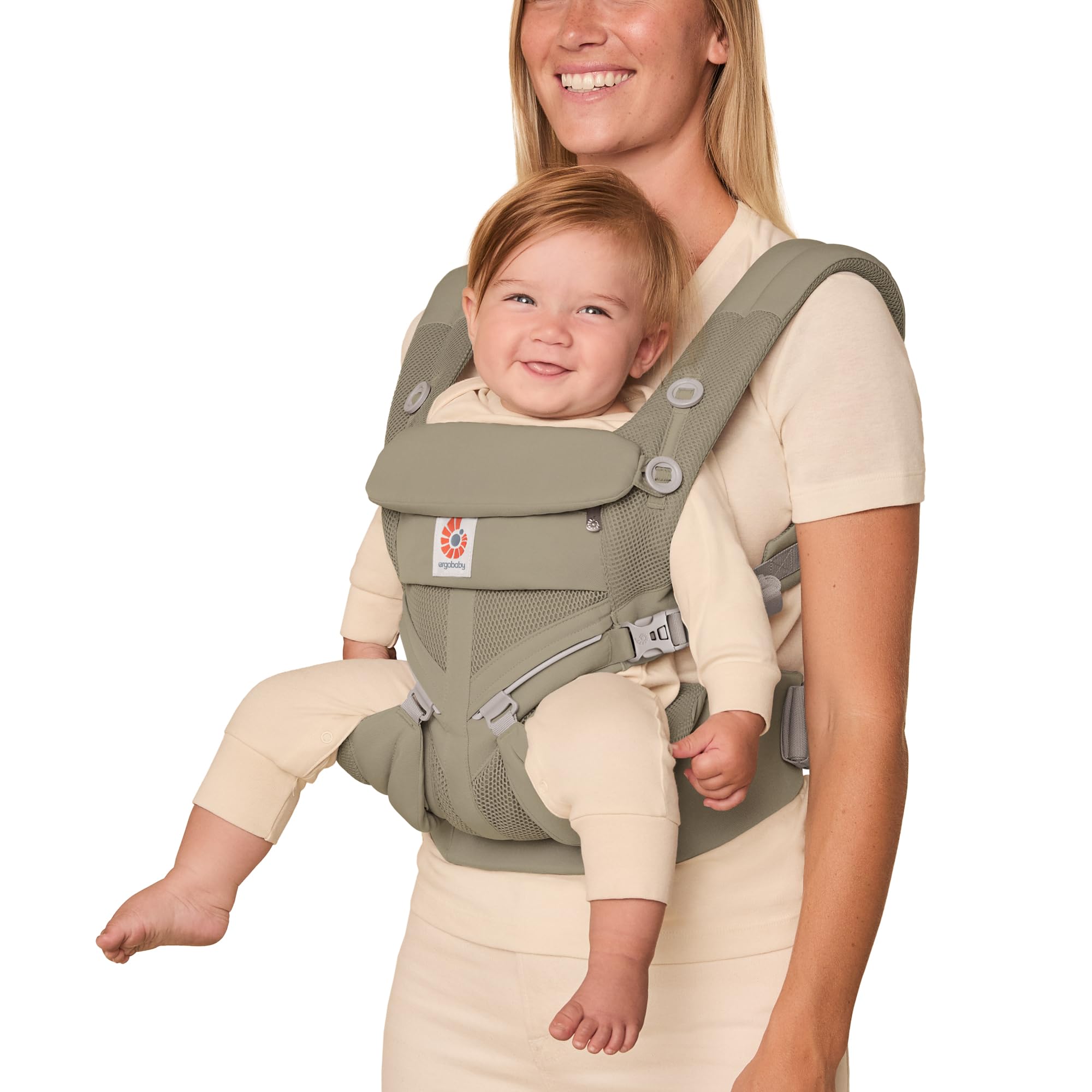


Best for Support & Versatility
LILLEbaby Complete
Key Features
- Weight Capacity: 7–45 lbs
- Lumbar Support: Integrated pad
- Carrying Positions: 6
- Breathability: Mesh panel
- Price: $$
The LILLEbaby Complete delivers the kind of lower back support you’d expect from a dedicated hiking carrier, without the weight or bulk of a frame. The integrated lumbar pad takes strain off your lower back, even with a growing toddler. Its 3D mesh air panel keeps both you and your child cooler on warm-weather hikes. And with six carrying positions — including hips and back — it adapts from newborn to 45 pounds, so you won’t need a second carrier.
This carrier is best suited for hiking parents who prioritize ergonomic support and position options over storage pockets. The seat width can be narrow for some babies, which may cause discomfort on longer carries. And the many adjustment points mean the first few uses will involve some trial and error. But for families who want a single, soft carrier that handles trails and errands equally well, the Complete is a well-balanced option at a mid-range price.
Pros
- Effective lumbar support reduces back strain during hikes.
- Six carrying positions adapt from newborn to toddler without a new carrier.
- Strong value for a feature-rich carrier with breathable mesh panel.
Cons
- Seat width may be too narrow for some babies, causing discomfort on extended carries.
- Multiple adjustment points can be confusing during initial setup.
For hiking families who want lumbar support and position variety without a backpack frame, this carrier offers the best balance of comfort and value at a mid-range price.
Best for Hiking Backpack
besrey Hiking Backpack
Key Features
- Weight Capacity: 16–44 lbs
- Lumbar Support: Waist belt
- Carrying Positions: 1 (back)
- Storage Pockets: Side + back + drool pad
- Breathability: Mesh seat
- Price: $$$
At 5.5 lbs with a three-position adjustable seat, sunshade, and rain cover included, this backpack is purpose-built for day hikes with toddlers 16 lbs and up. The adjustable seat helps kids stay comfortable enough to fall asleep on the trail, and the large back pocket plus side pockets carry snacks and layers without extra bags.
This carrier fits families who want a lightweight, feature-loaded hiking backpack for well-maintained trails and moderate loads. The 16 lb minimum means newborns are out, and some units have shown strap separation under heavy use – inspect attachment points periodically. If you prioritize durability and infant versatility, the top pick soft carrier may suit better.
Pros
- Lightweight frame (5.5 lbs) makes packing and carrying easy on day hikes.
- Three-height adjustable seat keeps toddlers comfortable enough to nap on the trail.
- Large back pocket and side pockets offer ample storage for hiking essentials.
Cons
- Straps can separate from the frame under heavier loads – inspect before each outing.
- Minimum weight of 16 lbs excludes infants and smaller babies.
Best for parents who want a lightweight, adjustable hiking backpack for day trips with a toddler 16–44 lbs, provided they check strap integrity regularly.
Best for Ergonomic Longevity
Ergobaby Omni Classic
Key Features
- Weight Capacity: 7–45 lbs
- Lumbar Support: Waist belt
- Carrying Positions: 4
- Breathability: Mesh fabric
- Price: $$$
The Ergobaby Omni Classic delivers a patented bucket seat and adjustable back panel certified hip-healthy for newborns up to 45 pounds, making it a strong contender for hiking families who want one carrier for both trails and daily errands. Its mesh fabric keeps air moving during warm-weather walks, and the lumbar support distributes weight well enough for hour-long carries. However, mastering all four positions takes practice, and some babies don’t feel secure in outward-facing mode — so expect a brief adjustment period and consider test-wearing before committing to longer hikes.
Pros
- Ergonomic support distributes baby’s weight evenly, reducing strain on parent’s back and shoulders.
- Adjustable panel and seat grow with the child from 7 to 45 pounds without extra inserts.
- Mesh fabric and durable stitching hold up well to daily use and outdoor conditions.
Cons
- Switching between the four carrying positions requires practice and patience.
- In outward-facing mode, some babies feel less secure and may fuss until repositioned.
A durable, ergonomic carrier that suits parents who value longevity and breathability over packability, and are willing to invest a little time learning the positions.
Best for Budget Active Use
Infantino Carry On
Key Features
- Weight Capacity: 8–40 lbs
- Lumbar Support: Lumbar belt
- Carrying Positions: 2 (in/out)
- Storage Pockets: Multiple zippered
- Breathability: Polyester
- Price: $
The Infantino Carry On stands out among budget carriers for its multiple zippered and elastic pockets plus a lumbar belt pouch. Unlike the general-purpose budget carrier, this keeps phone, keys, and diapers accessible without a separate backpack. Best for active parents on day trips or casual hikes who need storage but don’t plan multi-hour treks.
Pros
- Ample storage with multiple pockets and lumbar belt pouch.
- Good value – performs similarly to pricier active carriers.
- Comfortable for both parent and baby during short outings.
Cons
- Strap irritation possible for shorter users.
- Lumbar support is less robust than dedicated hiking carriers – fine for short trips.
A smart buy for parents who want pockets without a backpack carrier, but not the pick for extended hikes.
Best for Dads & Durability
Tactical Baby Carrier
Key Features
- Weight Capacity: 8–33 lbs
- Lumbar Support: None (no waist belt)
- Carrying Positions: 2 (in/out)
- Storage Pockets: MOLLE webbing
- Breathability: Cotton
- Price: $$$
This carrier fits dads up to 6’3" and 300 lbs with MOLLE webbing for attaching pouches, making it a distinctive option for parents who value rugged aesthetics and extra storage. The cotton build with tactical webbing feels solid, and the included sunshade and drool bib add everyday practicality. However, the absence of a waist belt means all weight rests on the shoulders, which limits comfort on longer outings. This is best suited for short walks and daily errands where the tactical look and customization matter more than lumbar support.
Pros
- Rugged build and tactical aesthetic that feels durable
- Comfortable fit for larger frames up to 6’3", 300 lbs
- MOLLE webbing allows attaching pouches for extra storage
Cons
- No waist belt – weight rests entirely on shoulders, limiting comfort on longer walks
- Weight range stops at 33 lbs, shorter than some competitors
If you’re a bigger dad who prioritizes a rugged look and pouch attachments over lumbar support for hiking, this carrier fits that niche well.
Best for Newborn Softness
Ergobaby Embrace
Key Features
- Weight Capacity: 7–25 lbs
- Lumbar Support: Waist belt
- Carrying Positions: 2 (in/out)
- Breathability: Soft knit
- Price: $$
The Ergobaby Embrace wraps newborns in a soft knit that mimics a woven wrap but clips on in seconds — no learning curve. The integrated head support suits most infants, though some babies may need an extra cloth if their head sticks out. It’s limited to 25 lbs, so it won’t carry a toddler on a real hike (that’s the Omni’s job). This carrier is best for parents who want a cozy, fuss-free option for short neighborhood walks and easy trails during the first year, not for day-long treks or heavy toddlers.
Pros
- Extremely comfortable for newborns – babies often fall asleep quickly
- Easy to put on and take off, simpler than wraps or ring slings
Cons
- Neck support may be insufficient for some newborns – baby’s head can stick out
- Carries only up to 25 lbs – outgrown well before toddler stage
A wonderful starter carrier for newborns on gentle outings, but not the one for serious hiking or toddlers.
Best for Value & Comfort
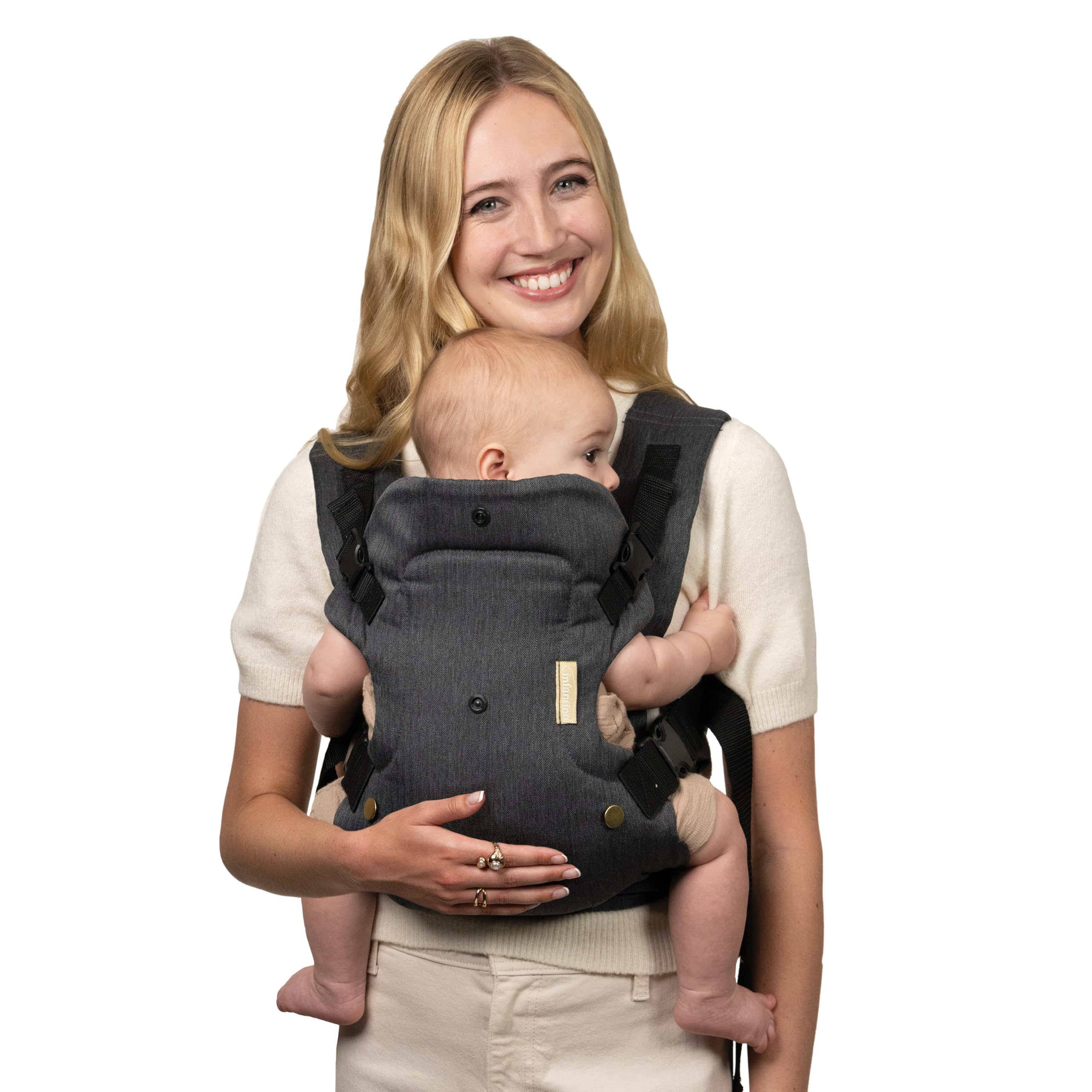
Infantino Flip Luxe
Key Features
- Weight Capacity: 7–35 lbs
- Lumbar Support: Enhanced belt
- Carrying Positions: 4
- Breathability: Polyester/cotton
- Price: $
The Flip Luxe is a well-priced everyday carrier with four positions and a padded waist belt that keeps most parents comfortable during short outings. However, the lumbar support can feel inadequate for longer carries with toddlers over 25 lbs, and there are no storage pockets or breathable mesh — so it suits casual walks rather than serious hiking trips.
Pros
- Comfortable for both parent and baby, with minimal back strain during everyday use.
- Great value — an affordable alternative to premium carriers without sacrificing basic ergonomics.
Cons
- Lumbar support can feel insufficient for extended carries with toddlers over 25 lbs.
Best for parents who need an affordable, comfortable carrier for daily errands and short walks, not for lengthy hikes with a heavy toddler.
Best for Cotton Comfort
Momcozy Purehug

Key Features
- Weight Capacity: 7–44 lbs
- Lumbar Support: EVA foam belt
- Carrying Positions: 2 (in/out)
- Breathability: 100% cotton
- Price: $
The Momcozy Purehug uses 100% cotton and EVA foam lumbar support for comfortable short walks and indoor use. Padded shoulder straps and easy solo adjustment make it simple for everyday errands. However, the waist strap may be too short for plus-size parents, and straps can loosen over time – limiting its appeal for longer hikes or varied body types.
Pros
- Padded shoulder straps distribute weight comfortably for extended wear.
- Easy to put on and adjust by yourself without assistance.
Cons
- Waist strap may be too short for plus-size parents to secure properly.
Best for parents who prioritize cotton comfort and short outings over hiking-specific features, particularly if they have an average build and want an affordable everyday carrier.
Best for All Accessories
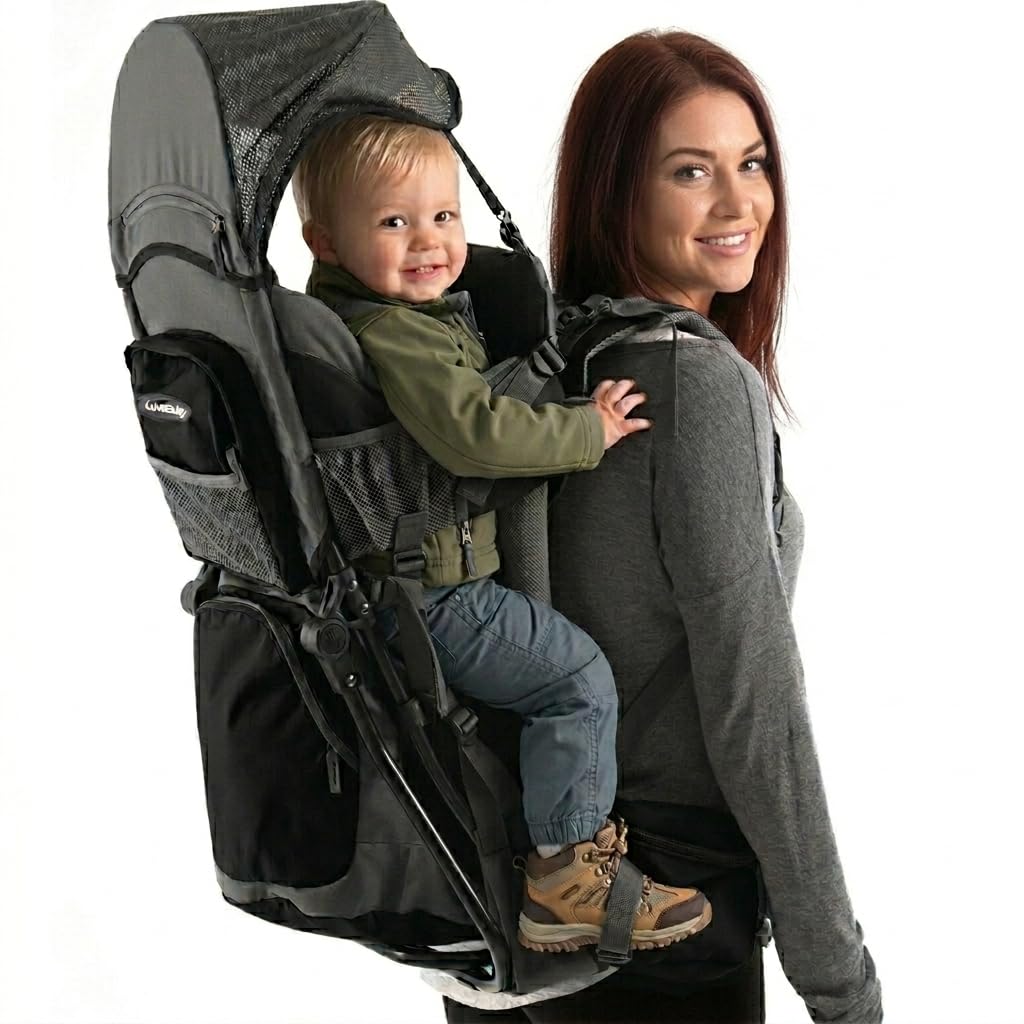
Luvdbaby Hiking Backpack
Key Features
- Weight Capacity: 16–40 lbs
- Lumbar Support: Waist belt
- Carrying Positions: 1 (back)
- Storage Pockets: Many compartments
- Breathability: Ripstop polyester
- Price: $$$
Rain hood, insulated bottle pocket, and changing pad come included under $200, along with comfortable support for parent and child on day hikes. Storage compartments are generous for gear. The tradeoff: chest straps and netting may break after limited use in some units. This suits occasional hikers who can handle minor repairs and value accessories over absolute durability.
Pros
- Comfortable for both parent and child on day hikes with minimal back strain.
- Generous storage with multiple compartments for gear and accessories.
Cons
- Chest straps and netting may break after limited use in some units.
Best for occasional hikers who want a fully loaded backpack and are willing to accept the possibility of minor repairs.
Best for Lightweight Day Hikes
ClevrPlus Cross Country

Key Features
- Weight Capacity: 5–33 lbs
- Lumbar Support: Waist belt
- Carrying Positions: 1 (back)
- Storage Pockets: Multiple compartments
- Price: $$
This carrier packs lightweight storage and a sun canopy at a budget-friendly price. On uneven ground, the carrier can wobble, and the kickstand may feel less sturdy than premium models. These limitations make it a better fit for day hikes on maintained paths than for rugged backcountry trips.
Pros
- Lightweight frame at 5.5 lbs eases the load on parent and child.
- Multiple compartments offer generous storage for day-hike essentials.
Cons
- On uneven terrain, the carrier can wobble and the kickstand may feel flimsy.
Best for budget-conscious families taking day hikes on well-maintained trails; not for uneven or off-trail terrain.
Best for Style & Comfort
NEST BLANCHE Carrier

Key Features
- Weight Capacity: 7–35 lbs
- Lumbar Support: Waist belt
- Carrying Positions: 2 (in/out)
- Breathability: Cotton-linen
- Price: $$
The NEST BLANCHE Carrier offers a sharp houndstooth design with good parent support and quality construction. However, the cotton-linen fabric traps heat, making it less suitable for warm-weather hikes or longer trails. This carrier fits best for fashion-conscious parents on short walks and errands, not for serious hiking.
Pros
- Prestige look that rivals high-end brands with its houndstooth pattern
- Comfortable support for the parent without back pain
Cons
- Cotton-linen fabric can trap heat, making it less breathable for warm conditions
A good choice for style-conscious parents who need a comfortable carrier for short walks and errands, but not for hot-weather hikes or long trails.
Best for Budget Newborn
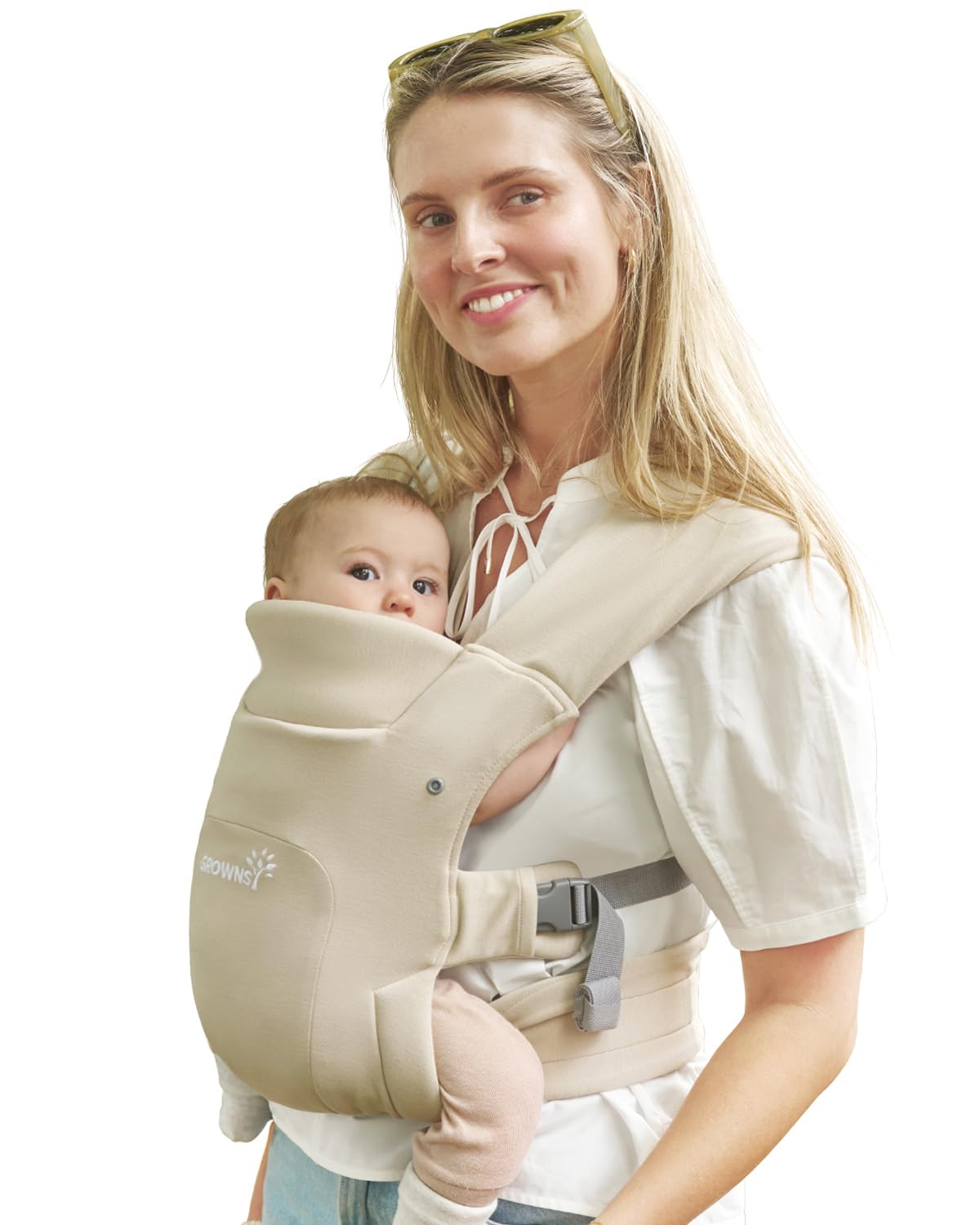
GROWNSY Newborn Carrier
Key Features
- Weight Capacity: 7–44 lbs
- Lumbar Support: EVA waist cushion
- Carrying Positions: 2 (in/out)
- Breathability: Cotton/polyester
- Price: $
Soft cotton and EVA lumbar pad make this gentle on newborns and simple to put on. The shoulder straps can ride up and loosen during wear, and comfort drops once the baby approaches toddler weight. For short walks around the house or errands, it works — just don’t expect it to handle a day hike or a heavier child.
Pros
- Very soft cotton-polyester blend that’s gentle on baby’s skin
- Quick buckle system for easy on and off
Cons
- Shoulder straps can ride up and loosen over time
Best for new parents on a tight budget who need a soft carrier for short indoor use and won’t be hiking with a heavy toddler.
Best for Luxury Everyday
BabyBjörn Harmony

Key Features
- Weight Capacity: 7–40 lbs
- Lumbar Support: Waist belt
- Carrying Positions: 4
- Breathability: 3D mesh
- Price: $$$$
The 3D mesh and supportive waist belt make this ideal for daily errands. Yet the lack of storage, heavier build, and high cost reduce its hiking utility — this carrier suits neighborhood strolls, not mountain trails.
Pros
- Pressure-relieving waist belt reduces lower back fatigue during extended wear.
- Breathable 3D mesh fabric helps keep baby comfortable in warm conditions.
Cons
- Premium price may not feel justified for those seeking a carrier with hiking-friendly storage.
A luxury choice for short outings where comfort is the priority, but hiking families should look elsewhere for storage and weight savings.
How to Choose
The difference between a pleasant hike and a back-breaking one comes down to how weight is transferred from your shoulders to your hips.
Weight Capacity
Most carriers list a range like 7–45 lbs. The lower limit matters for newborns – some hiking backpacks start at 16 lbs, leaving a gap you need to fill with a soft carrier. The upper limit determines how long you can carry a growing toddler before comfort drops off. A carrier rated to 45 lbs can handle a heavy 2-year-old, but the frame and padding matter as much as the number.
Lumbar Support
A wide, padded waist belt that cinches tight around your hips transfers the baby’s weight off your shoulders. Without it, all the load stays on your upper back and neck. For hikes longer than 30 minutes, skip carriers that rely only on shoulder straps – they’ll leave you sore. The best systems use a rigid panel or foam insert that prevents the belt from sagging.
Carrying Positions
Inward, outward, back, and hip positions offer flexibility. But outward-facing on a soft carrier puts the baby’s weight away from your center of gravity, increasing sway and back strain. For hiking, inward or back positions are most stable. If you plan to use back carry often, look for a carrier that lets you adjust the seat height independently of the shoulder straps.
Storage Pockets
On a trail, you need quick access to a phone, snack, and water. Soft carriers rarely have more than one small zip pocket. Hiking backpacks offer multiple compartments, insulated bottle holders, and even a changing pad. The trade-off is bulk: more pockets add weight and make the carrier less packable. If you carry a separate daypack, minimal storage is fine.
Breathability
Both you and your baby generate heat on a climb. Mesh panels or 3D spacer fabrics allow air to flow, reducing sweat buildup. Cotton-linen blends feel soft but trap moisture, making them less ideal for hot days or sustained effort. If hiking in summer or humid conditions, choose a carrier with mesh along the front panel and back of the waist belt.
FAQ
What makes a baby carrier good for hiking vs. everyday use?
Hiking requires a carrier that transfers weight to your hips, keeps your hands free, and stores essentials like water and snacks. Everyday carriers prioritize easy on/off and multiple positions but often lack lumbar support and storage. For short, flat walks an everyday carrier works; for trails with elevation, a hiking-specific carrier with a waist belt and frame is much more comfortable.
Can I use a soft-structured carrier for long hikes?
It depends on the hike length and your child’s weight. Soft carriers without a load-bearing waist belt put all weight on your shoulders, which becomes uncomfortable after about 30 minutes with a toddler over 20 pounds. For hikes over a mile with a heavy child, a framed hiking backpack is the better choice. Soft carriers work best for short, gentle trails or as a backup for quick carries.
How do I clean a baby carrier that gets sweaty on the trail?
Most fabric carriers are machine washable on a gentle cycle, but always check the tag. Remove any detachable hoods or padding first. Air dry only – heat can damage foam padding and waist belt support. For mesh panels, a quick rinse and hang-dry after each hike prevents mildew. Avoid bleach or fabric softener; they degrade breathability and fasteners.