This post contains affiliate links. We may earn a small commission when you buy through our links — at no extra cost to you.
Many baby backpack carriers look impressive out of the box but start showing wear after a few outings – straps fray, buckles crack, or the frame wobbles on uneven trails. The gap between marketing claims and real-world durability is wider in this category than most parents expect.
The real challenge is finding a carrier that is light enough to haul up a trail without exhausting you, yet sturdy enough to handle the bumps without breaking or shifting. Some pack on features and storage at a low price, but cut corners on strap quality and frame rigidity. Others focus on premium materials and adjustability but cost more and offer fewer pockets.
Our picks prioritize carriers that deliver on both weight and build quality, while also fitting a range of body types and providing the sun protection and storage that make a hike enjoyable. You don’t have to choose between comfort for yourself and safety for your child – the right design does both.



Best for Lightweight Travel
Osprey Poco LT
Key Features
- Max Weight: 48.5 lbs
- Accessories: Sunshade
- Frame/Weight: Folding frame, 5.56 lbs
- Adjustable Fit: Adjustable torso 6 in
- Storage: Minimal, no insulation
- Price: Mid
The Osprey Poco LT combines a folding frame, UPF 50 sunshade, and lightweight construction into a single, packable carrier. At 5.56 lbs, it ranks among the lighter framed options, and the frame collapses flat for storage in a suitcase or closet. The adjustable torso (6 inches) accommodates different parent heights without sacrificing stability.
The AirScape backpanel reduces heat buildup during warm-weather hikes, and the padded hip belt distributes weight evenly. Parents note that sweat accumulation is noticeably lower compared to solid-panel designs. The child seat provides good support for toddlers up to 48 lbs, though the lack of side mesh pockets means water bottles must be stowed inside the main compartment or carried separately.
This carrier suits families who need a lightweight, packable solution for travel and day hikes rather than extended backcountry trips. The tradeoff is limited external storage – no insulated bottle pocket or mesh side pockets – so extra diapers, snacks, and gear may require a separate daypack or hydration bladder. For lighter trips where every ounce matters, the Poco LT hits a sweet spot between portability and child comfort.
Pros
- Lightweight 5.56 lbs frame folds flat for storage in luggage or closet.
- AirScape backpanel and padded hip belt keep parent cool and comfortable on warm days.
- Sturdy frame and materials hold up to repeated use without quality complaints.
Cons
- Mid-range price may not appeal to budget-focused buyers given the limited feature set.
- Limited external storage – no insulated bottle pocket or side mesh pockets – means extra gear requires a separate pack or hydration bladder.
For travel-conscious parents who want a carrier that disappears into a suitcase when not in use, the Poco LT delivers where it counts: weight, ventilation, and durability.
Best for Serious Hiking
Deuter Kid Comfort
Key Features
- Max Weight: 40 lbs
- Accessories: Sunshade
- Frame/Weight: Lightweight frame, 3.3 lbs
- Adjustable Fit: Adjustable backpanel
- Storage: Hydration sleeve
- Price: Premium
The Deuter Kid Comfort’s suspension system is its standout feature — users report little to no discomfort on long hikes, a direct result of the well-engineered backpanel and weight distribution. At 3.3 pounds, it’s notably lighter than many framed carriers, including the top-pick Osprey Poco LT, making it easier to manage on uneven terrain. The tradeoff is storage: where the Osprey includes a folding frame and integrated sunshade, the Deuter focuses its weight savings on the frame and harness.
This carrier is built for families who take hiking seriously and are willing to invest in top-tier comfort — the high price reflects the materials and suspension engineering. However, the limited pocket layout means you’ll need separate pouches for water bottles, snacks, or sunscreen; there’s no insulated bottle holder. For day hikes where quick access to small items matters, this design requires a bit of planning. The included sunshade and hydration sleeve are nice touches, but anyone needing multiple organizational pockets should look at the Kelty Journey PerfectFIT instead.
Pros
- Outstanding comfort with premium suspension system
- Exceptional build quality and materials
- Lightweight for a framed carrier
Cons
- Premium pricing puts this carrier out of reach for budget-conscious families — those willing to invest get exceptional build quality.
- Lacks dedicated side pockets for water bottles or small gear, so hikers relying on quick-access storage may need to pack differently.
For hikers who value a fatigue-free carry above all else, the Deuter offers one of the smoothest rides available — but you’ll trade away quick-access storage and pay a premium for that comfort.
Best for Budget Hiking
ClevrPlus Canyonero
Key Features
- Max Weight: 42 lbs
- Accessories: Canopy, rain cover, changing pad
- Frame/Weight: 6.5 lbs
- Storage: Insulated pocket
- Price: Mid
Loads of included extras — rain cover, sun canopy, changing pad, and an insulated bottle pocket — make this a ready-to-go carrier for day hikes. Parents report even weight distribution that reduces strain on shoulders and hips, a key advantage for longer outings. The stand helps during loading, though it adds a bit of weight.
This carrier suits families of average to taller height. Caregivers under 5’2" will likely find the frame length uncomfortable. While the carrier offers strong value, some buckles and seams can show wear with consistent use — something to monitor but not a dealbreaker for occasional to moderate hiking.
Pros
- Even weight distribution reduces shoulder and hip strain during long hikes.
- Spacious storage with insulated pocket keeps food and extra layers accessible.
- Mid-range price that includes rain cover, sun canopy, and changing pad — strong package for the cost.
Cons
- Frame length can be too long for shorter caregivers, making the carry less comfortable.
- Some buckles and seams may loosen with regular use; periodic inspection is wise.
A well-equipped carrier for average-height families who want extra accessories without the premium spend, as long as they keep an eye on hardware durability.
Best for Shared Use
Kelty Journey Signature
Key Features
- Max Weight: 40 lbs
- Accessories: Sunshade
- Frame/Weight: Aluminum roll cage, 7.1 lbs
- Adjustable Fit: PerfectFIT suspension
- Storage: Multiple pockets, no insulation
- Price: Premium
The Kelty Journey Signature’s PerfectFIT suspension lets multiple adults swap the carrier in seconds, with adjustments that actually hold. The aluminum roll cage and 5-point harness keep a child secure while the hip belt transfers weight to the hips, reducing shoulder strain. At 7.1 lbs, it is heavier than most framed carriers — a tradeoff that pays off when two parents of different heights share the hiking load.
This carrier suits families where two or more adults will use the same pack, especially on day hikes where comfort and easy fitting matter more than ultralight gear. The storage — zippered pockets, hip belt pockets, and a sunshade — covers essentials without the bulk of the Journey Elite’s hydration sleeve. Buyers who need a sleeker option or hike alone should consider the lighter Osprey Poco LT instead.
Pros
- Adjustable suspension lets multiple caregivers swap quickly with a good fit each time.
- Weight distribution keeps both parent and child comfortable on long hikes.
- Zippered pockets and hip belt pockets hold day-trip essentials without adding bulk.
Cons
- Weighs 7.1 lbs — on short, flat trails the extra heft is noticeable versus lighter frames.
- Premium price reflects the suspension adjustability, not extra storage — the Elite model offers more pockets for the same cost.
Best for families who need a single carrier that fits multiple adults comfortably on moderate hikes — the weight and price are fair given that adjustability.
Best for Budget All-In-One
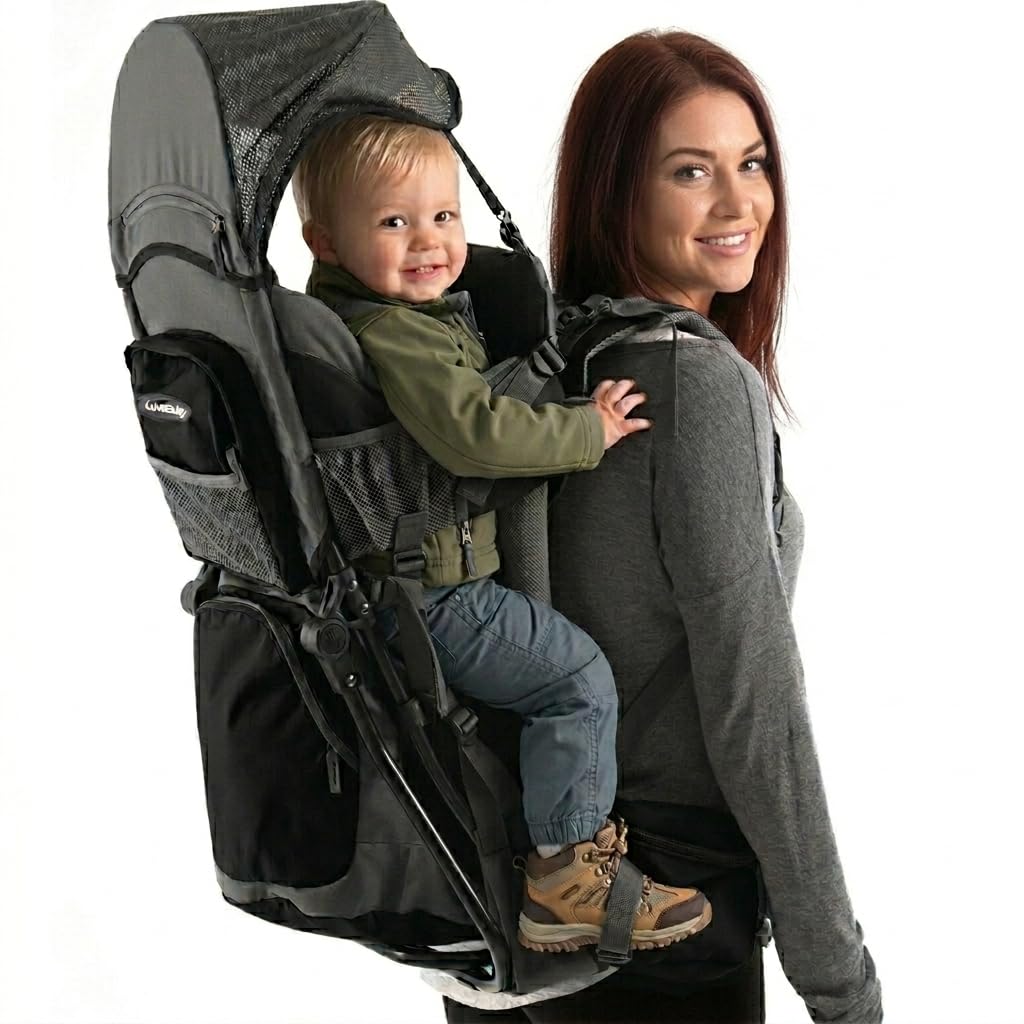
Luvdbaby Hiking Carrier
Key Features
- Max Weight: 40 lbs
- Accessories: Visor, rain cover, changing pad
- Storage: Insulated pocket
- Price: Mid
The Luvdbaby Hiking Carrier packs more storage and included accessories — diaper pad, insulated bottle holder, rain and sun hood — than most carriers in its price range, making it a strong option for day trips where you need to bring everything. Parents consistently report comfortable carry for both adult and child, with no back strain noted even on moderate hikes.
This carrier suits budget-conscious families who hike occasionally and value convenience over long-term ruggedness. However, some straps and netting can separate after limited use, so frequent long-distance hikers or those expecting heirloom build quality should look to more durable options like the Osprey Poco LT.
Pros
- Ample storage with multiple pockets and insulated bottle holder for all-day essentials
- Included diaper pad, rain cover, and sun visor reduce need for separate purchases
- Comfortable padding and hip belt support for parent and child on moderate trails
Cons
- In some units, chest straps and netting can separate after a few outings — worth inspecting regularly
A well-equipped carrier for casual day hikes, but durability inconsistencies mean it’s best for families who use it occasionally rather than every weekend.
Best for Lightweight Hiking
besrey Hiking Carrier
Key Features
- Max Weight: 40 lbs
- Accessories: Sunshade, storage bag
- Frame/Weight: 5.5 lbs
- Adjustable Fit: Adjustable straps
- Storage: No insulation
- Price: Mid
At 5.5 pounds, this carrier is easy to lift and adjust, with a setup process that takes minutes. Compared to the heavier, more storage-packed Osprey Poco LT, the besrey trades some durability and organization for a simpler, lighter build that suits families who don’t need full-day expedition features.
Best for hikers who value a packable carrier for short to medium trips, especially parents who want a comfortable fit without back strain. That said, it lacks an insulated bottle pocket, and some units have shown buckle or strap wear after limited use – a point worth checking if you plan frequent rugged outings.
Pros
- Comfortable for both parent and child with good weight distribution
- Easy to assemble and adjust out of the box
- Lightweight build makes it convenient to pack and carry
Cons
- Buckle and strap breakage can occur in some units
- No insulated pocket for storing cold drinks during hikes
A solid choice for moderate day hikes when you want a lightweight, easy-to-use carrier, but the top pick offers better durability and storage for those who need more from their gear.
Best for Budget Short Hikes
ClevrPlus Cross Country

Key Features
- Max Weight: 33 lbs
- Accessories: Canopy, rain cover, changing pad
- Frame/Weight: 5.5 lbs
- Storage: No insulation
- Price: Budget
At five and a half pounds, the ClevrPlus Cross Country is one of the lightest framed carriers available, making it a practical choice for short, casual outings where every ounce matters. Storage is generous with large compartments, and the included sun canopy, rain cover, and changing pad add real day-trip utility without pushing the price up. However, the kickstand can be unstable on uneven ground, and the harness fit is less forgiving for caregivers under five-foot-two or over six feet. Those looking for a carrier that handles rough trails or multiple users of varying heights will find these limitations frustrating.
Pros
- Lightweight frame eases the load on shorter hikes.
- Includes sun canopy, rain cover, and changing pad at a budget-friendly price.
Cons
- Harness fit can be off for very short or tall caregivers.
- Kickstand may wobble on uneven terrain, requiring careful placement.
For families who stick to mostly even trails and want the lowest-priced framed carrier with decent storage, the Cross Country delivers solid value despite its fit and stability tradeoffs.
Best for Long Excursions
Kelty Journey ELITE

Key Features
- Max Weight: 40 lbs
- Accessories: Sunshade
- Frame/Weight: Aluminum frame, 7.1 lbs
- Adjustable Fit: PerfectFIT suspension
- Storage: Hydration sleeve
- Price: Premium
The Kelty Journey ELITE packs generous storage with hydration sleeve and hip belt pockets, plus a built-in sunshade. At 7.1 lbs, the weight becomes noticeable on longer treks, and the adjustable harness may not trim down enough for shorter caregivers. It shares the same price as the Signature model but offers more cargo space at the cost of added bulk and a less universal fit.
Pros
- Generous storage with hydration sleeve and multiple compartments for day-long gear.
- Durable build with aluminum frame and quality stitching.
Cons
- Shoulder straps may be too long for shorter parents, affecting proper fit.
- Heavy frame can be tiring on extended hikes.
Best suited for taller parents prioritizing storage over weight on full-day hikes.
Best for Ultralight Hiking
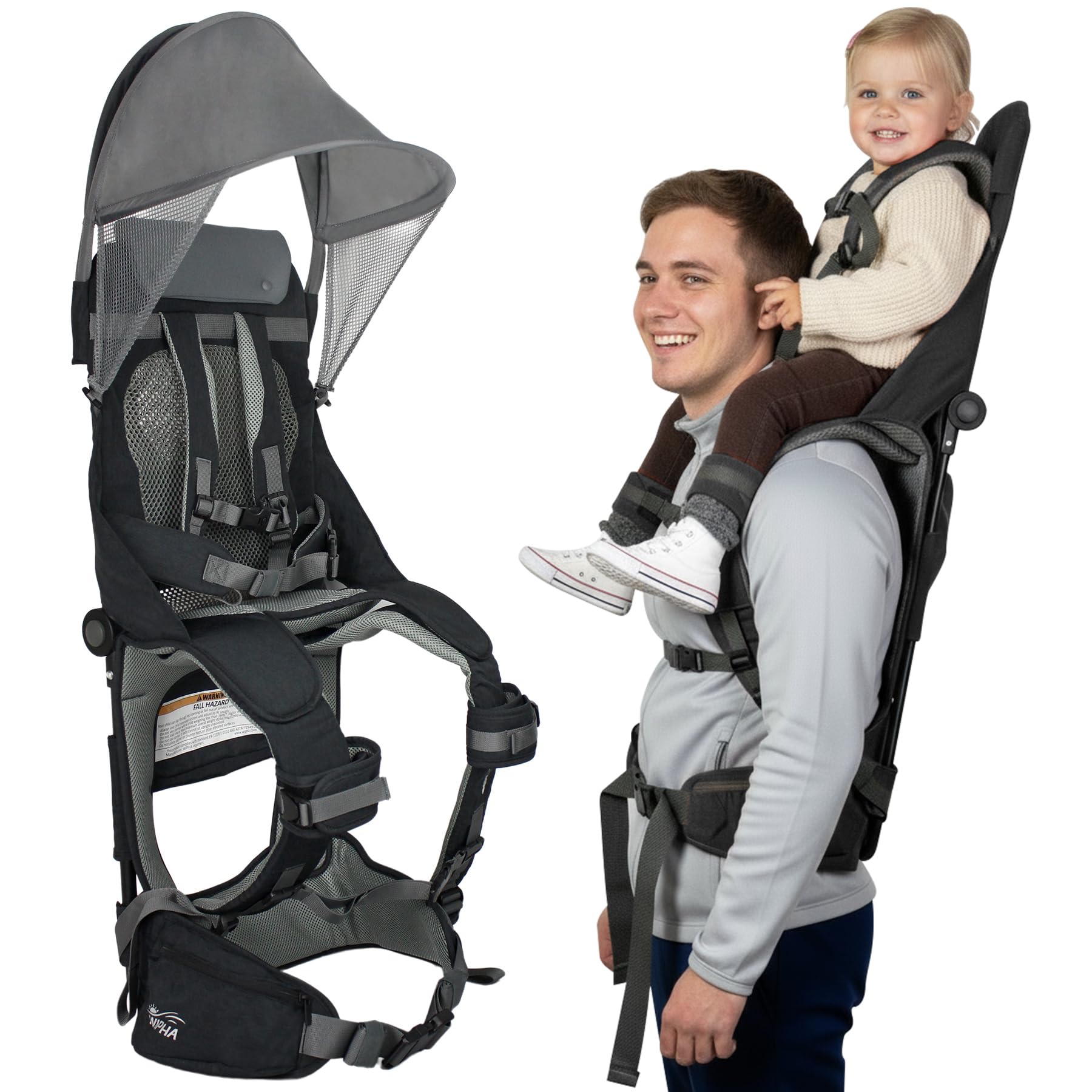
WIPHA Shoulder Carrier
Key Features
- Max Weight: 40 lbs
- Accessories: Sunshade
- Frame/Weight: Aluminum frame, 3.3 lbs
- Storage: Insulated pocket
- Price: Mid
The WIPHA Shoulder Carrier is the lightest framed carrier in this roundup at 3.3 lbs, with a sturdy aluminum frame and ample storage including an insulated pocket. However, the child seat is narrow – best for toddlers under 30 lbs – and the parent harness has limited adjustability, making it less accommodating for multiple caregivers or larger builds. That narrow focus is why it sits below the top picks for most hikers.
Pros
- Weighs only 3.3 lbs, making it the lightest framed carrier available.
- Plenty of storage including an insulated pocket and multiple zippered compartments.
Cons
- Narrow child seat fits smaller toddlers best; children over 30 lbs may find the seat snug.
- Parent harness has limited adjustability, which can be a factor for households with multiple caregivers of different sizes.
Ideal for ultralight hikers with a small toddler under 30 lbs who value a low base weight over seat width or harness customization.
Best for Budget Value
ClevrPlus Deluxe

Key Features
- Max Weight: 33 lbs
- Accessories: Canopy, rain cover, mini backpack
- Frame/Weight: 5.2 lbs
- Storage: No insulation
- Price: Budget
The ClevrPlus Deluxe is the lowest-priced framed carrier with a detachable mini backpack that doubles as a separate daypack. Its lightweight build suits short, occasional trips. The metal frame may press into the hips for some users, so comfort on longer hikes depends on individual fit. This carrier works best for budget-conscious parents who only need a carrier infrequently and don’t have hip sensitivity.
Pros
- Detachable mini backpack adds storage and can be used alone.
- Lightweight 5.2 lb frame is manageable for short outings.
Cons
- Plastic waist buckle may break after a few uses.
A suitable choice for occasional short hikes on a tight budget, provided hip sensitivity is not an issue.
Best for Everyday Carrier
LILLEbaby Complete

Key Features
- Max Weight: 45 lbs
- Frame/Weight: Soft carrier, 2.5 lbs
- Adjustable Fit: 6 positions
- Price: Budget
The LILLEbaby Complete delivers exceptional lumbar support and six carrying positions that adapt from infant to toddler, making it a strong everyday carrier for short walks and errands. However, as a soft-structured carrier without a frame, it lacks the storage, sunshade, and load support needed for long hiking trails with a heavy toddler. Parents seeking a backpack-style carrier for regular outdoor adventures will find framed options more suitable.
Pros
- Exceptional lumbar support reduces back strain during extended wear.
- Machine-washable materials simplify cleaning after daily use.
Cons
- Soft-structured design lacks a frame; for long hikes with a heavy toddler, support and storage fall short.
- Adjusting the multiple straps for different positions requires practice; not intuitive straight out of the box.
This carrier suits parents who need back-friendly support for daily outings, but it is not the right choice for hiking trips requiring a framed backpack.
Best for Ultra-Compact Travel
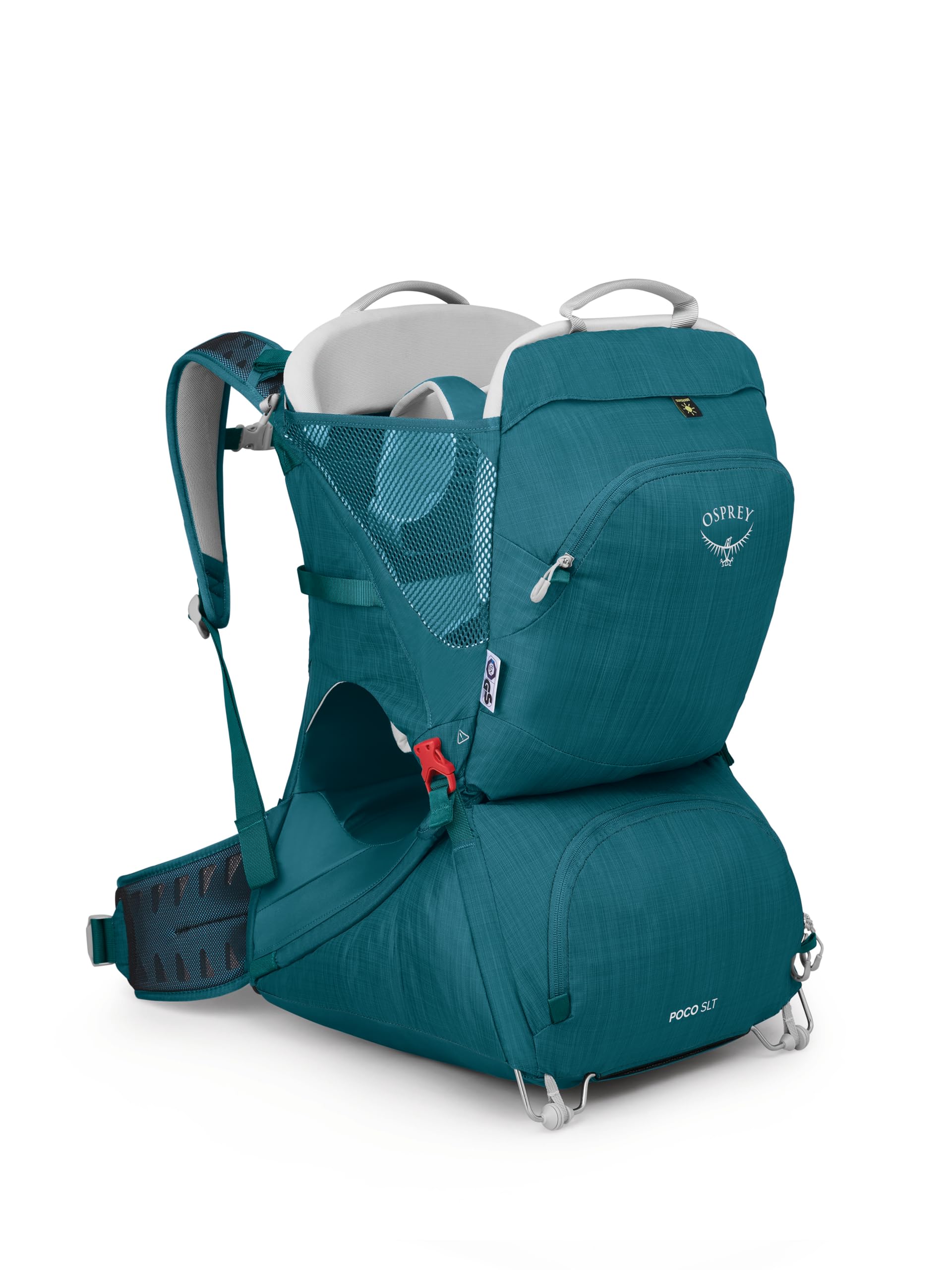
Osprey Poco SLT
Key Features
- Max Weight: 50 lbs
- Accessories: Sunshade sold separately
- Frame/Weight: Folding frame, 4.7 lbs
- Adjustable Fit: Adjustable torso 6 in
- Storage: Hydration sleeve
- Price: Mid
The Osprey Poco SLT cuts weight down to 4.7 pounds and folds into a compact shape that stows easily in a suitcase. On short day hikes it carries a toddler comfortably, and the frame is sturdy enough for its weight class. The trade-off is two-fold: the dedicated sunshade pocket (UPF 50 compatible) comes empty, requiring a separate purchase, and storage capacity is limited compared to other framed carriers. This makes it best for travelers who prioritize packability over all-day gear hauling or integrated sun protection.
Pros
- Folds compactly for easy storage in luggage or car trunk
- Comfortable for both parent and child on short, moderate hikes
Cons
- Limited gear capacity for longer outings or extra layers
- Sunshade not included despite a purpose-built pocket
Best for ultralight travelers who can improvise sun protection and don’t need to carry much gear beyond the child.
Beco Toddler Carrier
Beco Toddler Carrier

The Beco Toddler Carrier handles heavier toddlers well, with a weight capacity up to 60 lbs and a light 1.4 lb frame that makes quick trips easy. However, it lacks the supportive frame, storage, and sunshade needed for hiking – even short trails. This is a carrier for neighborhood walks or errands, not for outdoor adventures.
Pros
- Lightweight at 1.4 lbs, reduces shoulder strain for quick carries.
- Fits toddlers up to 60 lbs – room for older, heavier children.
Cons
- Can become uncomfortable after 30 minutes with a heavy toddler due to minimal padding.
- Missing sunshade and storage pockets for water bottles or hiking essentials.
This carrier works well for quick errands and short walks with a heavy toddler, but leave it at home when you plan to hike.
How to Choose
The single most important factor in a baby backpack carrier is the fit between the frame and your torso length — a poor fit turns a comfortable hike into a backache in under a mile.
Weight Capacity
Higher weight ratings (40 lbs vs 33 lbs) usually mean a heavier frame and larger seat. For a small toddler, an oversize carrier adds unnecessary weight and may not cinch down snugly. Look for carriers that also offer adjustable seat height so the same pack grows with your child without leaving them rattling around.
Included Accessories
Sunshades, rain covers, and changing pads add convenience but vary widely in quality. Budget carriers often skimp on the sunshade’s wire frame, letting it flap in the wind. Rain covers can trap heat on warm days. Check whether the accessories are stowable and whether the sunshade has a rigid structure — a flimsy one will annoy you more than it helps.
Frame and Weight
Lightweight frames (under 5 lbs) use aluminum or carbon fiber, which reduces fatigue on long hikes but can feel less rigid on uneven terrain. Heavier steel frames offer more stability but weigh you down over miles. For short day hikes, a 7 lb pack is fine; for all-day treks, every pound you shave off the carrier’s base weight reduces strain on your back and shoulders.
The trade-off is between carrying comfort and child stability. A lighter frame that flexes too much can cause your child to sway, while a rigid frame distributes weight more evenly but adds bulk to your load.
Adjustable Fit
Torso length adjustability is critical if two caregivers of different heights will share the carrier. Many models claim one-size-fits-all but only offer 2-3 inches of range. A carrier that sits too high or low shifts weight from your hips to your shoulders, causing strain. Also check the child’s seat height adjustment — a fixed seat may become uncomfortable as your toddler grows taller.
Storage and Pockets
Insulated bottle pockets are handy but add bulk; hydration sleeves require buying a separate bladder. Side mesh pockets are prone to tearing if overloaded. More pockets often mean thinner fabric and cheaper zippers that fail after a few trips. For day hikes, two large compartments plus hip belt pockets are usually enough — you don’t need a dozen small pouches.
FAQ
Why does my baby carrier backpack feel unstable when I set it down with the kickstand?
Most kickstands are designed for flat ground. On soft soil, rocks, or inclines they lack the surface contact to stay planted. Before lowering the carrier, clear the area of debris and press the kickstand into the ground. If it still wobbles, consider whether the carrier has a wide enough base — some budget models use thin aluminum legs that bend under load.
Can I use a soft-structured baby carrier for long day hikes instead of a framed backpack?
Soft carriers lack a rigid frame, so all the child’s weight rests on your shoulders and back without proper load distribution. After about 2-3 miles or 30 minutes with a heavy toddler, most parents report significant discomfort. For hikes longer than a mile or with a child over 20 lbs, a framed backpack is the safer and more comfortable choice.
How do I adjust the torso length on a framed hiking baby carrier for different caregivers?
Most framed carriers have a sliding or latching mechanism on the backpanel. Loosen the shoulder strap anchors, slide the panel up or down to align the hip belt with your natural waist, then tighten. A correct fit places the hip belt directly above your iliac crest so the frame transfers weight to your hips. If the carrier lacks this adjustment, it likely won’t fit both tall and short caregivers comfortably.
Is the Osprey Poco LT worth the extra cost over a ClevrPlus carrier?
If you hike regularly and value durability and packability, yes. The Poco LT has no reported strap or buckle failures, folds flat for storage, and includes a quality UPF 50 sunshade. The ClevrPlus Canyonero offers a rain cover, changing pad, and insulated pocket at a lower price, but some users report strap breakage after moderate use. For families who plan multiple hikes per season, the Osprey’s reliability justifies the premium.