This post contains affiliate links. We may earn a small commission when you buy through our links — at no extra cost to you.
Many ‘high-lumen’ headlamps promise stadium-level brightness but deliver a heavy, bouncy brick on your forehead. For running, weight and stability matter more than raw lumens.
The best running headlamps balance a secure, bounce-free strap with enough real-world brightness to see the trail ahead. Rechargeable models save money over time, but AAA batteries offer simpler reliability.
This guide focuses on models under 100g that actually stay in place during a jog, along with budget options for casual night runs. The right choice depends on how often you run and whether you want the lightest possible setup or a no-fuss backup.


Best for Ultralight Trail Running
Nitecore NU25 UL
Key Features
- Weight: 45g
- Brightness: 400 lumens
- Battery: Built-in 610mAh
- Runtime: 2h high, 40h low
- Price: $$
At 45 grams, the Nitecore NU25 UL is barely noticeable on your head, yet its 400-lumen beam cuts through dark trails with a well-focused pattern that suits running. The USB-C port charges quickly, and on low mode the battery lasts long enough for multi-night outings.
The paracord strap keeps the lamp stable during fast descents, but the small buttons require deliberate pressure – frustrating with gloves or when your hands are sweaty. The plastic housing saves weight but can crack from a hard drop onto rock. This headlamp rewards runners who prioritize every gram over ruggedness or one-hand operation.
Pros
- Ultralight 45g design – barely any weight on your forehead during a run.
- Genuine 400 lumens with a beam that lights up trails without harsh hotspots.
- USB-C rechargeable with long low-mode runtime for multi-night trips.
Cons
- Buttons are small and require precise aim – tricky with gloves or during a run.
- Plastic housing is weight-optimized but can crack from a heavy drop onto hard surfaces.
For runners who count every gram on long night runs, the NU25 UL delivers the lightest possible weight without sacrificing usable brightness or recharging convenience.
Best for Budget Casual Joggers
Foxelli 165 Lumen Headlamp
Key Features
- Weight: 3.2 oz
- Brightness: 165 lumens
- Battery: 3x AAA
- Runtime: 45 hours
- Price: $
Foxelli’s headlamp delivers a genuine 165 lumens in a lightweight 3.2 oz package – enough brightness for paved paths and trails at a budget-friendly price. The tradeoff is the mount bracket: on some units it can loosen after extended use, though periodic tightening keeps it secure. This headlamp suits casual night joggers who don’t need rechargeable batteries or a wide flood beam, and who want a simple, low-cost backup option.
Pros
- Brightness adjustable across multiple levels for varying terrain
- Lightweight at 3.2 oz – comfortable for hour-long runs
- Cost-effective alternative to premium models
Cons
- Mount bracket may loosen with extended use – unit variance possible
For runners who value affordability over rechargeability, this headlamp delivers consistent brightness without the premium price.
Best for Reliable Aaa Runs
Energizer PRO-260
Key Features
- Weight: 3.7 oz
- Brightness: 260 lumens
- Battery: 3x AAA
- Runtime: 35 hours
- Price: $
While the top pick shaves weight with a rechargeable battery, the Energizer PRO-260 sticks to three AAA cells for a simpler, more disposable approach. The 105g weight is a few grams heavier than ultralight competitors, but for runners who value straightforward battery swaps and a red-light mode, this tradeoff is minor. The comfortable strap keeps the lamp stable during night runs, and the 260-lumen output is adequate for most trails.
Pros
- Comfortable, adjustable strap that stays secure during movement
- Multiple light modes including a red LED for preserving night vision
- Consistent 260-lumen brightness from a well-known brand
Cons
- A small number of units may develop flickering after extended use
For runners who want a battery-operated headlamp with red-light mode and no charging hassle, the Energizer PRO-260 is a cost-effective choice that handles night runs without fuss.
Best for Partner Runs Spare
Blukar 2-Pack Rechargeable
Key Features
- Weight: 86g each
- Brightness: 2000 lumens claim
- Battery: 1200mAh built-in
- Runtime: 3.5–5h high
- Price: $
The Blukar 2-Pack delivers a pair of rechargeable headlamps at a budget-friendly price that undercuts many single-unit competitors. Each lamp offers a claimed 2000 lumens, USB-C charging, and a motion sensor for hands-free control – features that appeal to tech-oriented runners who want flexibility for short runs or general outdoor tasks. The red-light mode preserves night vision. However, the motion sensor can be overly sensitive, turning off the light mid-stride, and battery life on high is limited to a few hours. This pack provides good value for occasional use, but serious runners may find these tradeoffs frustrating.
Pros
- Adjustable brightness via long press lets you dial in the right light level for the trail.
- USB-C charging eliminates battery costs and makes topping up convenient.
- Multiple modes including red light and motion sensor add versatility for different activities.
Cons
- On high mode, the battery runs out faster than expected for longer runs.
- The motion sensor can trigger accidentally during running, turning off the light.
Offers good value for occasional runners who want two lights, but not the top choice for serious night training.
Best for Short Runs Family
Lepro 2-Pack AAA
Key Features
- Weight: 1.94 oz each
- Brightness: 200 lumens
- Battery: 3x AAA
- Runtime: 22h low
- Price: $
At just 1.94 oz per lamp, the Lepro 2-Pack is the lightest two-pack for runners who want a spare for a partner. It delivers 200 lumens with a useful flood/spot combination, and the two-pack price is budget-friendly. Unlike the top pick’s USB-C charging, these rely on AAA batteries (not included), so keep spares handy. High mode drains those batteries quickly, making these best for short runs under an hour or for kids and family use where light weight matters more than runtime.
Pros
- Bright with combined flood and spot beams for trail visibility
- Lightweight at 1.94 oz, comfortable for running
- Excellent value for a two-pack at a budget price
Cons
- High mode uses AAA batteries quickly — expects frequent changes, suits runs under 60 minutes
For occasional runners or families needing a spare, this two-pack delivers light weight and decent brightness at a low cost, as long as you accept the battery limitation.
Best for Wide Beam Safety
BIAT 2-Pack Wide Beam

Key Features
- Weight: 2.5 oz each
- Brightness: 350 lumens
- Battery: Built-in rechargeable
- Runtime: 3–8 hours
- Price: $
The 230° beam lights up peripheral vision, helping runners spot vehicles and obstacles. At 2.5 oz each, they are light and comfortable for short routes. The tradeoff: high mode drains the battery quickly, and some units have shown durability concerns, so this is best for occasional runs under an hour.
Pros
- Wide 230° beam provides excellent peripheral vision
- Comfortable and lightweight for its beam width
Cons
- Battery on high mode can drain quickly, limiting run duration
Ideal for night walkers or occasional runners on short, known routes where recharging is not a concern.
Best for Budget Rechargeable Use
Lepro Rechargeable Single

Key Features
- Weight: 2.86 oz
- Brightness: 300 lumens
- Battery: Built-in rechargeable
- Runtime: 30h low
- Price: $
It delivers solid 300-lumen brightness with a red mode for reading maps, and the USB-C rechargeable design avoids battery waste. Charging failures can appear after a few months, making it a gamble for frequent running use.
Pros
- Good brightness with multiple modes including red
- USB-C rechargeable saves battery costs
Cons
- Charging port can stop working after a few months in some units
Best as a backup or occasional-use headlamp where the low upfront cost outweighs the potential for early charging issues.
Best for Budget Two-Pack
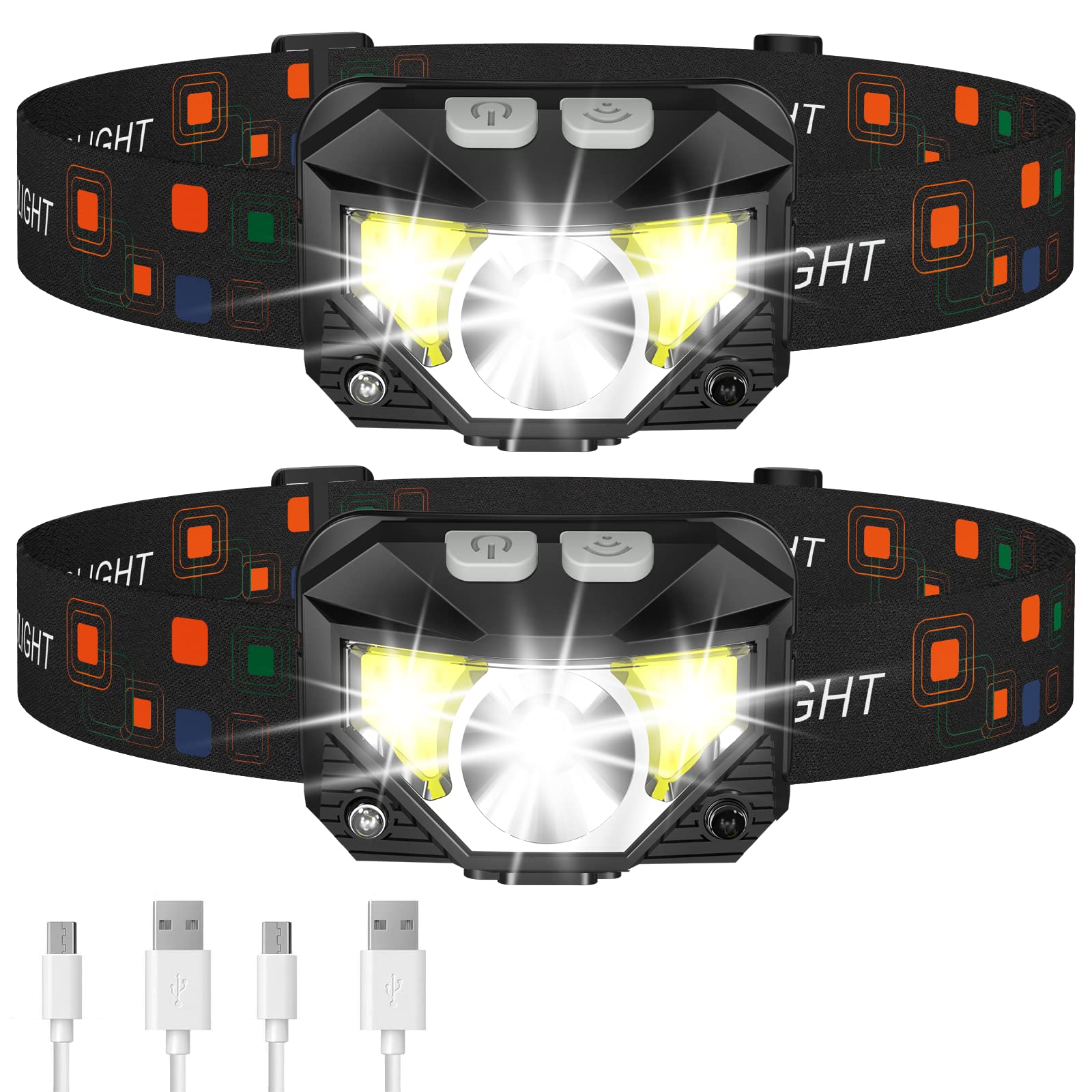
LHKNL 2-Pack Rechargeable
Key Features
- Weight: 1.87 oz each
- Brightness: 1200 lumens claim
- Battery: 1500mAh built-in
- Runtime: 4–10 hours
- Price: $
This two-pack is bright and lightweight at just under 2 ounces per lamp, with a motion sensor and USB-C charging. However, battery life can be inconsistent and some units may randomly shut off, making it better suited as a spare or for occasional use rather than daily running.
Pros
- Extremely bright with wide beam options for trail visibility.
- Rechargeable via USB-C, saving battery costs over time.
Cons
- Battery life may be inconsistent and some units can shut off unexpectedly – a tradeoff for the low price.
Best for runners who want a spare headlamp or need a bright light for casual night walks where perfect battery reliability isn’t required.
Best for Heavy Duty Camping
POKISEED Wide Beam

Key Features
- Weight: 9.5 oz
- Brightness: 1500 lumens
- Battery: 5000mAh separate pack
- Runtime: 6–12 hours
- Price: $$
The POKISEED delivers a genuine 1500 lumens across a 230-degree field with a separate 5000mAh pack that runs 6–12 hours — ideal for illuminating a work site or campsite. The tradeoff is weight: at 9.5 oz, the battery pack will bounce and pull during any running motion, making this a poor fit for moving activities but a capable stationary light for hard hat use.
Pros
- Very bright with wide 230° illumination.
- Long battery life due to large capacity.
Cons
- Heavy 9.5 oz weight causes bounce and discomfort during running — fine for stationary work.
A capable choice for construction or camping where you stay put and need bright, wide light all night.
Best for Work Camping Use
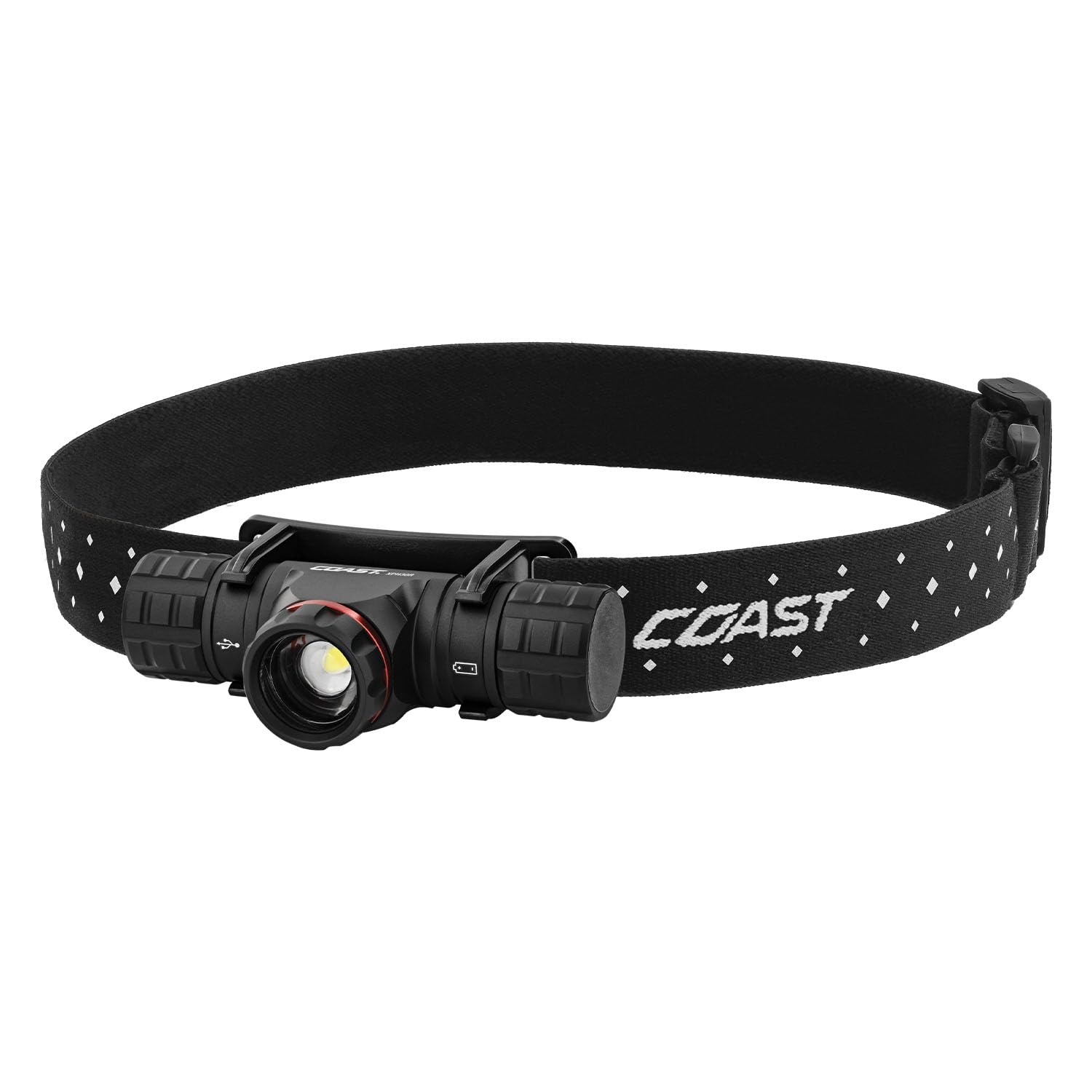
Coast XPH30R
Key Features
- Weight: 4.37 oz
- Brightness: 1200 lumens turbo
- Battery: Lithium-ion rechargeable
- Runtime: 6.75h high
- Price: $$
The Coast XPH30R trades weight for durability, with a full metal housing and twist-focus lens that shifts from wide flood to tight spot. A magnetic base lets you stick it to metal surfaces for hands-free work. At 124g, however, it will bounce and slide on a runner’s head – this is a tool for the workshop, not the trail.
Pros
- Rugged metal body holds up to drops and job site abuse
- Twist-focus mechanism adjusts beam from wide flood to concentrated spot
Cons
- At 4.37 oz, the weight causes noticeable bounce when running – fine for static use but unsuitable for active motion
A solid choice for electricians, mechanics, or campers who need a tough light with adaptative beam; not for runners seeking a bounce-free headlamp.
How to Choose
The single most important factor for a running headlamp is weight under 100 grams, because every extra ounce translates into noticeable bounce during a run.
Weight
Heavier headlamps cause the strap to slip and the lamp to bob with each stride. For running, look for models under 100g (3.5 oz) – the lighter, the better.
A headlamp that feels fine standing up can become distracting after a mile of jogging. Trail runners especially notice the difference when looking side to side on uneven terrain.
Brightness and Beam Pattern
Lumen claims are often overblown. A true 300-400 lumens with a focused spot is more useful for running than a 2000-lumen flood that washes out and drains the battery. Look for a beam that lets you see the trail 20-30 feet ahead without blinding yourself on close objects.
A wide flood helps with peripheral awareness on roads, while a tight spot is better for trail routes. Some models offer adjustable focus, but that adds weight and complexity.
Battery Type
Rechargeable lithium-ion batteries are convenient and cost-effective over time, but they do degrade – many users report charging failures after a year. AAA-powered headlamps are less efficient but more reliable if you run infrequently or want a backup that works with any brand battery.
If you run daily, a rechargeable model with USB-C charging saves money and hassle. For occasional use, disposables eliminate the risk of a dead battery on a run.
Fit Stability
A headlamp that bounces will ruin a night run regardless of brightness. Look for straps with silicone grip strips or over-the-top bands that anchor the lamp against your forehead. Some ultralight models use thin paracord straps which work well if adjusted snugly.
Test the fit with a hat or beanie if you run in cold weather – the strap should still hold tight without slipping.
Water Resistance
Sweat and light rain are common for runners. An IPX4 rating (splash-proof) is sufficient for most conditions. IPX5 or IPX7 adds protection for heavy downpours but usually adds weight and cost. A headlamp that fails from sweat after a few months is not worth the savings.
FAQ
How many lumens do I really need for night running?
200-400 real lumens is enough for most trail and road running. Above that, you gain little practical visibility while reducing battery life and adding weight. Focus on beam quality and spread instead of chasing high numbers.
Why does my rechargeable headlamp stop charging after a few months?
Cheap USB-C charging circuits and low-quality lithium cells are common failure points, especially in budget models. To extend life, avoid fully draining the battery and store it partially charged. If you need long-term dependability, consider a AAA-powered headlamp instead.
Can I use a camping headlamp for trail running?
Only if it weighs under 100g and has a secure strap. Many camping headlamps are 150g or more and will bounce excessively. A heavy headlamp designed for stationary use is not safe for running because it shifts constantly and reduces your field of view.
What’s the lightest headlamp under $50 for ultralight running?
The Nitecore NU25 UL at 45g is the lightest model under $50 that delivers a genuine 400 lumens with a useful beam pattern. It is purpose-built for trail running and ultralight backpacking. No other headlamp in this price range comes close in weight-to-performance ratio.