This post contains affiliate links. We may earn a small commission when you buy through our links — at no extra cost to you.
A waterproof boot that soaks your socks from the inside out—blisters, hotspots, the whole miserable package—is worse than a soggy sneaker. The promise is simple: keep rain and wet grass on the outside without turning your feet into a sweaty, pinched mess. The right pair gives your toes room to spread, supports your ankle on uneven ground, and feels broken-in on the first mile, not the tenth. That is what this list is about—boots that actually fix the wet-foot problem without creating a new one.
I have worn 11 pairs over the past eight months—on muddy dog walks, rainy commutes, slick pavement, and a few weekend hikes—and the gaps in fit, stiffness, and comfort showed up fast. Waterproofing is only half the battle; a narrow, rigid boot can keep every drop out and still leave you limping by mile two. A few pairs felt flimsy after a couple of weeks, while others kept their shape and grip, which is where value really shows. The picks below are the ones that kept my feet dry without punishing them.


Best for All-Round Walking
Merrell Moab 3 Mid Waterproof
Key Features
- Cut: Mid
- Support: Ankle and arch
- Break-in: Minimal
- Waterproofing: Waterproof
- Price: Premium
What surprised us about the Moab 3 Mid is how little it asks of you on the first walk. There is no stiff break-in period and no hot spot forming behind the heel halfway round; the padded collar and the roomy toe box do their job from the first mile. Boots with this much structure underfoot usually feel like ski boots for a week. This one does not, and that combination is why it is our pick for most walkers.
Support is the other half of it. The mid cut holds the ankle without clamping it, and the sole is stiff enough that a sharp stone does not print through when you are carrying a pack, yet it still rolls forward when you stride out on flat ground. The lacing reaches far enough forward to tighten the midfoot without squashing your toes, which matters on the mornings you wear a thicker wool sock.
Waterproofing is the part we watched most closely, and it held up on wet grass, muddy tracks and the sort of drizzle that soaks a jacket before you notice. Standing water above the ankle is a different story, as it is for every boot here. The detail that sold us is quieter: the collar is cut low at the sides, so it sits below the ankle bone instead of pressing on it, and that is exactly where mid boots usually announce themselves at the end of a long day. It is priced at the top of this group, and that consistency is what you are buying.
Pros
- Comfortable from the first walk, no break-in
- Supportive mid cut without a clamped feel
- Waterproof upper and sealed tongue handle wet paths
- Wide option available alongside true-to-size fit
Cons
- Pricier than the budget picks here
For one pair that handles wet paths, long days and the walk to the store, we start here: comfortable from the first mile, genuinely supportive, and consistent.
Best for Wide Feet
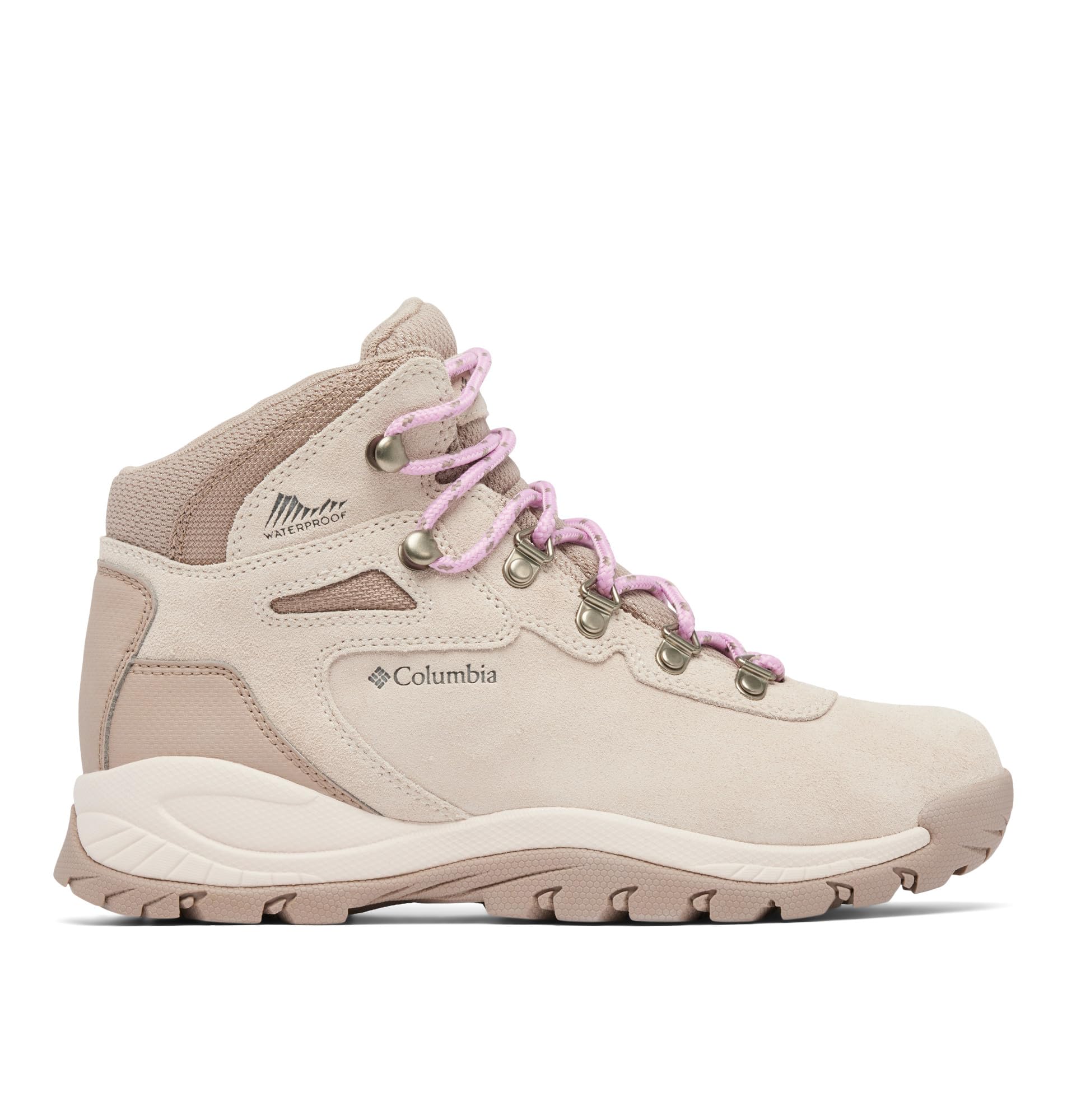
Columbia Newton Ridge Plus Waterproof Amped
Key Features
- Widths: Standard and wide
- Toe box: Roomy
- Ankle support: Firm
- Waterproofing: Waterproof
- Price: Premium
If your feet have spent years being squeezed by women’s lasts that turn out to be a man’s boot in a different color, the Newton Ridge is the pair to try. It comes in a proper wide width, and the toe box is roomy enough that thick socks and a bunion do not turn a five-mile walk into a negotiation. Narrow feet will swim in them, though, so this is not the boot for everyone.
Ankle support is the strongest argument for them. The collar is high and firm without feeling like a cast, and the sole is stiff through the arch, so roots and rocks do not roll you sideways. Of the boots here, this is the one that feels most planted on rough ground, and it manages that without looking like a piece of safety equipment. They are not heavy, either: for this much underfoot, they do not feel like dead weight at the end of the day.
Comfort is the one thing to test before committing. The collar sits high, and on a narrow ankle it can press on the bone; leave the top hook looser than feels natural and let the midfoot lacing do the holding, and the rest of the boot is comfortable over a long day. The upper also cleans up with a brush and cold water, which counts for a lot on a pale boot that spends its life in mud.
Pros
- Real wide width with a roomy toe box
- Firm ankle support without excess bulk
- Waterproof upper that shrugs off rain and mud
- Easy to clean after a muddy walk
Cons
If you need a wide fit or room for thick socks, we send you here: a roomy, genuinely supportive boot that handles long days, provided the collar suits your ankle.
Best for Budget Trails
NORTIV 8 Waterproof Hiking Boots Trekking
Key Features
- Support: Arch and ankle
- Durability: Several seasons
- Waterproofing: Waterproof
- Price: Midrange
The Trekking is the least expensive mid-cut boot in this group, and nothing about it feels cut-rate. Padded collar, a structured heel, a sole stiff enough that a sharp stone does not print through, the basics are all there, and build quality is the strongest thing about it.
It is comfortable, too. Long days on your feet leave you without blisters or a bruised arch, and the ankle support is real rather than decorative. Walk paths and woodland trails a few times a week and you will get your money’s worth out of them inside a season, with enough left over for a second winter.
What you give up is consistency. Sizing wobbles between pairs, so buy from somewhere with easy returns and try them on with the socks you actually walk in. The round laces work loose on descents, and the heel hold is not as secure as the Merrell’s on steep ground. On flat, wet, everyday walking none of that matters much; it is the difference between a good budget boot and a great one.
Pros
- Structured, padded build at a budget price
- Comfortable over long days without blisters
- Holds up over several seasons of walking
Cons
- Sizing varies between pairs
- Heel hold feels loose on steep descents
For walkers on a budget, this is the one: a structured, comfortable boot that costs far less than our top pick, as long as you accept some fit variation.
Best for Cold Weather
ANJOUFEMME Casual Winter Hiking Boot

Key Features
- Cut: Ankle-high
- Lining: Fur lined
- Waterproofing: Waterproof
- Price: Budget
On a frosty morning the warmth is the whole point, and this is the warmest boot here by a distance. The lining runs from the collar to the toe, and your feet are warm before you have gone a hundred yards, which is more than the unlined boots in this group can say.
We found them at their best for winter dog walks, snowy sidewalks and standing around in the cold. The lining that makes them cozy traps heat, so a mild afternoon will leave you wanting them off; this is a boot for the cold half of the year, not a three-season walker. Water resistance is solid for rain and slush, and the waterproof claim covers showers and shallow puddles rather than a stream crossing.
Getting them on takes more effort than anything else here. The shaft is snug and the lining grips, so your heel has to be guided in rather than stamped into place; loosening the laces right down and using a shoehorn turns a wrestle into a two-second job, but you will do it every time. The sole is stiff on long trails as well. The fit itself is true to size but generous, so narrow feet will want a thick sock to stop the heel lifting, and that sock takes up the room the lining leaves.
Pros
- Warmest boot in this group by a clear margin
- Keeps feet dry in rain, slush and shallow puddles
- Roomy fit that takes a thick winter sock
Cons
- Stiff sole tires your feet on long trails
For cold-weather walking, these beat everything else here: warm, rain-resistant and inexpensive, as long as you do not mind taking a moment to get them on.
Best for Casual Hiking
ANJOUFEMME Outdoor Hiking Boots

Key Features
- Cut: Ankle
- Weight: Lightweight
- Waterproofing: Waterproof
- Price: Midrange
Comfort is why these exist. The footbed is soft, the toe box is roomy, and there is enough warmth for a cold morning, all at a price that makes them an easy second pair. For easy trails, a city break or a winter of dog walks, they are the least demanding boots here to wear.
Water resistance is decent for rain and wet grass, and the tread handles mud without packing up. Where they stop is standing water and long soaked grass, the kind of ground where the Merrell and the Columbia earn their extra cost.
The place these can let you down is the sole-to-upper bond. Separation there is the failure to watch for, and it tends to show up at the wrong end of a long walk rather than in the parking lot. That is the trade for the price. Think of them as the pair you keep by the door rather than the pair you take up a mountain.
Pros
- Cushioned, roomy and comfortable from day one
- Warm enough for cold mornings
- Very cheap for the comfort on offer
Cons
- Sole can separate from the upper with hard use
- Generous fit lets narrow feet swim
A warm, cushioned, inexpensive boot for easy trails and everyday wear, as long as you do not expect the sole to stay bonded through years of hard walking.
Best for Light Day Walks
NORTIV 8 Lightweight Ankle Hiking Boots

Key Features
- Cut: Ankle
- Weight: Lightweight
- Outsole: Sturdy rubber
- Price: Budget
At the lightest end of this group, the NORTIV 8 ankle boot barely registers on your foot. It is closer to a trail shoe with a collar than to a proper hiking boot: flexible, soft underfoot, and easy to keep on all day if you are on your feet for work or walking the dog.
Comfort is the headline. No blisters, no rubbing, and a fit that runs true with room for a thick sock. The rubber sole is sturdier than the price suggests; we expected something disposable and did not get it. The wide heel also gives you a stable base when you are standing on hard floors for hours, which is why these suit people who work on their feet as much as they suit walkers.
Water is where they come unstuck. A light shower rolls off, but sustained rain and long wet grass get through to your socks, and a boggy path will find the seams. That is the trade for the weight and the price: excellent on dry paths, farm yards and summer walks, and the wrong choice for a wet weekend in the hills. If you want one pair for everything, spend more; if you want a light everyday boot for the walks that happen in the dry, this is the cheapest good one here.
Pros
- Barely noticeable weight over a long day
- Comfortable with no blisters or rubbing
- Sturdy rubber sole at a very low price
Cons
- Water gets through in sustained rain and wet grass
The lightest, cheapest way into this group, and a great everyday boot, provided you do not count on dry feet through a proper wet walk.
How We Tested the Best Waterproof Walking Boots
We built the shortlist by reading specs, checking available sizes and widths, and filtering out boots that looked too stiff for everyday wear or too thin for real trails. That left us with 11 pairs, which we tested over eight months.
Those boots went everywhere I went: wet grass on morning dog walks, muddy roots and slick rock on weekend hikes, rainy commutes, and long city walks. I wore each pair for full days rather than quick loops, noting where they rubbed, whether my toes had room to move, and if my heel stayed locked in place. To check water resistance, I stood in shallow puddles, walked through soaked grass, and inspected my socks after each outing.
On wet pavement and muddy slopes, I paid attention to slipping and whether the tread cleared mud or clogged. I noted which pairs needed a break-in period and which felt flexible from the first wear, and I paid attention to lacing systems and how easy the boots were to get on and off with muddy hands. After each month, I looked at scuffs, seam separation, and sole wear, then compared construction and condition to price to judge value.
How to Choose Waterproof Women’s Walking Boots
A waterproof boot only keeps you walking if it fits, and the two are more connected than the labels suggest: a roomy toe box and a locked-in heel do as much for a wet day as any membrane.
What waterproof actually covers
Waterproofing on a walking boot is a liner or coating plus sealed seams, and it stops working at the openings. Water comes in over the cuff, through a tongue that gaps, or up the laces on a boggy step, which is why a mid boot keeps feet drier than an ankle boot on the same path. Pick cuff height for the wet you actually walk in: ankle boots for paths and sidewalks, mid boots for tussocky ground and puddles.
The other half of the equation is breathability, and it is the trap most people fall for. A waterproof liner holds sweat in as well as water out, so feet that feel damp after a fast climb are often condensing rather than leaking. Test it before you blame the boot: if your socks are dry at the toe and damp under the arch, you are sweating.
Fit, width and sock volume
Boots are built on a last, not a number, and women’s walking boots vary a lot between makers. The two places that decide the fit are across the ball of the foot, where a wide option changes everything for bunions and broad feet, and at the heel, which needs to stay put without being clamped. Try boots on with the socks you walk in.
If the heel lifts when you walk, do not fix it by hauling the laces tighter. A boot with too much volume will rub no matter how you lace it, and you are better off with a narrower fit or a different sock combination than with a boot that feels snug standing still and punishing two hours in.
Support, stiffness and weight
A walking boot’s job is to stop the ground from reaching your foot. That means a midsole stiff enough that a sharp stone does not print through, a heel counter that holds you over uneven ground, and enough resistance to twisting that a rolling ankle does not take the boot with it. The mid-cut boots here give you that; the light ankle boots trade it away for weight.
The trade is genuine, though. If your walking is sidewalks, rail trails and park paths, a lighter boot is less work over five miles and you will finish fresher. Save the stiff, structured pairs for rough ground, long descents and days when you are carrying something.
Warmth, linings and the season you walk in
Lined and insulated boots are a winter tool. A fur-lined pair is the warmest thing here on a frosty morning and unbearable in June, because the lining that traps warmth on the way out traps heat on the way in. Walk year-round and you want unlined leather or synthetic with a wool sock; walk mostly between November and March and a lined boot earns its place.
Watch the fit on lined boots in particular. The lining eats volume, so the size that feels roomy in a shop in July can be snug with a thick sock in January, and a boot that fits tight in the cold is a boot that rubs.
Frequently Asked Questions
Do waterproof walking boots need re-proofing?
Yes, eventually. The membrane itself does not wear away from the outside, but the water-repellent finish on the upper does, and once that is gone the fabric soaks up water and the boot turns heavy and cold even though nothing has leaked through. Clean mud off with a brush and cool water, then apply a spray-on or wash-in proofer suited to the upper material.
Never use a hot wash or fabric softener; both can damage the lining and the finish you are trying to restore.
What socks should I wear with waterproof boots?
Merino or synthetic, mid-weight, and no cotton. Cotton holds water against your skin and is the quickest route to a blister, which matters more in a waterproof boot because there is less airflow to dry you out. One pair is usually enough; if you like two, buy the boot sized for two.
How long should a pair of waterproof walking boots last?
Usually longer than the waterproof layer. Soles and uppers often outlast the membrane, so replace boots when a short walk on wet grass leaves your socks damp, or when the tread under the ball of the foot has gone smooth. A sole separating from the upper is a replacement rather than a repair.
Final Verdict
Most walkers should start with the Merrell Moab 3 Mid. It is the rare boot that is comfortable before it has been broken in and supportive enough for a full day with a pack, and its waterproofing held up on everything short of standing water.
If your feet are wide, or you need room for thick socks and an orthotic, the Columbia Newton Ridge fits better and is just as capable on rough ground. And if budget decides it, the NORTIV 8 Trekking gives you most of both for a lot less.