This post contains affiliate links. We may earn a small commission when you buy through our links — at no extra cost to you.
A synthetic jacket has always carried a whiff of compromise—warmer than fleece in wind, but bulkier than down and less warm once the mercury drops—though I’ve come to think that reputation is only half fair. The good ones hold heat when the air turns damp, pack small, and look normal enough for the coffee shop. The bad ones leave you fighting a sticky zipper or feeling a cold seam. What you want is one layer for a muddy dog walk, a windy commute, and a weekend trail.
Over the past eight months, I’ve worn 12 synthetic insulated jackets through cold morning dog walks, weekend hikes, and raw, drizzly days. My team and I compared warmth when damp, sizing over a hoodie versus a base layer, and whether zippers and stitching held up after repeated use and a few washes. A few surprised me. The ones worth your money got the basics right: warm when damp, honest sizing, zippers that don’t snag, and stitching that stays put.




Best for Cold-Weather Hiking
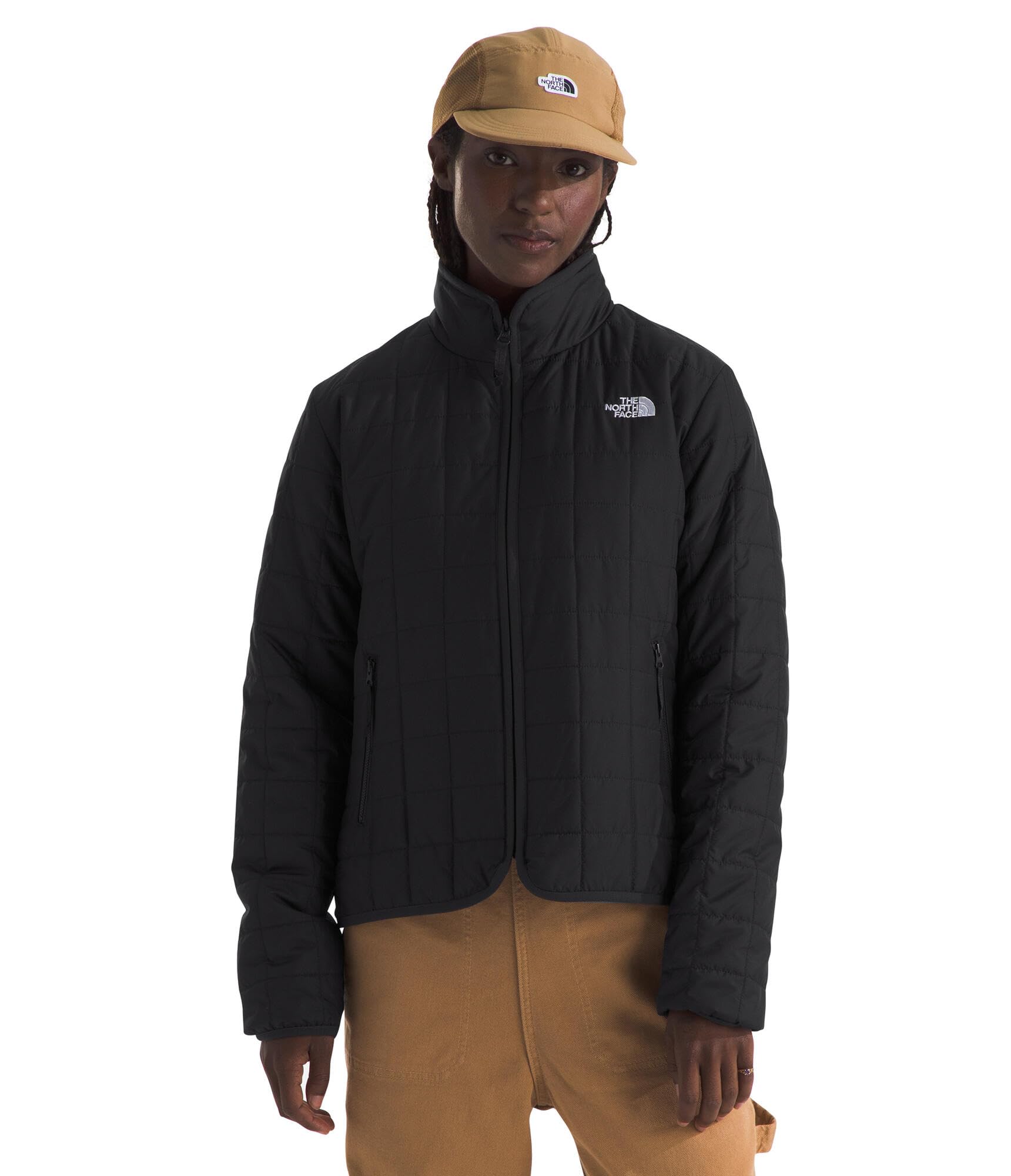
North Face Junction Insulated Jacket
Key Features
- Shell: Recycled polyester, non-PFC DWR
- Pockets: 4
- Insulation: 100g recycled HEATSEEKER
- Center-back length: 23.88 in
- Price: Premium
The Junction is the best-specified synthetic jacket in this guide: 100 grams of recycled HEATSEEKER fill, a recycled polyester shell with a non-PFC DWR finish, four pockets, and a straight cut that ends at the hip. That combination is why it’s our top pick. The fill weight is the number that matters — enough loft to hold heat when you stop moving, little enough that it slides under a hardshell without turning you into a parcel.
On the trail it behaved like a proper insulating layer: warm from the upper 30s into the 50s with a fleece underneath, and comfortable to carry once the climb warmed us up. The DWR shrugged off fine drizzle long enough to get a shell on. What stood out most is the cut — 23.88 inches down the back sits above a pack hipbelt, and the straight body doesn’t bunch at the shoulders when you swing your arms.
The sleeves are long, so on a shorter frame they will bunch at the wrist, and the body is short enough that taller hikers should try it over a layer rather than on its own. Sizing is split enough that the safe move is your usual size over a base layer, one up if you want a fleece underneath. For warmth while standing still, the Columbia Heavenly below is cozier; the Junction is the one that packs and layers.
Pros
- 100g recycled HEATSEEKER fill, fully specified
- Non-PFC DWR shell sheds light rain
- Four pockets, two of them zipped
- Short hem clears a pack hipbelt
Cons
- Not warm enough for deep winter
The best synthetic jacket here for women who hike: named 100g recycled fill, a DWR shell and four pockets, in a cut that layers under a shell.
Best for First Hiking Layer
Amazon Essentials Packable Puffer
Key Features
- Hood: Attached
- Insulation: Synthetic down alternative
- Packability: Packs into included bag
- Water resistance: Water-resistant shell
- Price: Budget
The cheapest jacket in this guide is also the one we point people toward when they are building a first hiking kit. It’s hooded, the shell beads light rain, and it rolls into the small bag it arrives in — small enough to live in the bottom of a daypack all season and be forgotten until the weather turns.
Warmth is honest for a lightweight puffer: comfortable through the 40s and 50s, fine into the high 30s at night with a fleece underneath, and thin enough that you will feel it if you stand still below freezing. That is not a fault so much as the job description. What to plan around is the volume — the body is cut generously and the hood is big, which is great over a hoodie and floppy over a t-shirt.
The main zipper is the one part that feels its price: small, and it takes a couple of tries to engage in the dark, so zip up before you lose the light. Everything else punches above the money. The stitching held through our testing, and the fabric has a matte, slightly crinkly finish rather than the slick shell of a much pricier jacket.
Pros
- Cheapest synthetic layer in this guide
- Packs into its included bag
- Hooded with a water-resistant shell
- Warm into the high 30s over a fleece
Cons
- Runs large through the body
- Oversized hood
The cheapest jacket here and the easiest to recommend for a first synthetic layer: hooded, water-resistant, and it packs into its own bag.
Best for Everyday Winter Wear
Columbia Heavenly Hooded Jacket
Key Features
- Fit: Slim
- Cuffs: Extended, thumb holes
- Lining: Omni-Heat reflective
- Weight: 1 lb
- Price: Premium
The Heavenly is the jacket here that doesn’t look like outdoor gear. It’s cut close through the torso, noticeably slimmer than the puffers around it, and the extended cuffs with thumb holes close the gap between sleeve and glove on a cold morning.
Where it wins is warmth without bulk. The reflective Omni-Heat lining pushes body heat back at you, and the result is a coat that handles a real winter commute without the marshmallow silhouette. This is the one we reach for when we are standing around rather than moving — a platform, a sideline, a cold walk to the shops.
The slim cut is the trade-off: this works over a base layer and a thin midlayer, not over a thick fleece, and a jacket this close-fitting leaves little room for error underneath. It’s a town jacket first. For a layer that stuffs into a pack and disappears under a shell, the Junction above is the better answer.
Pros
- Warm without a bulky silhouette
- Reflective lining heats up fast
- Thumb-hole cuffs seal the wrists
- Close cut that flatters
Cons
- Sizing runs small
The warmest, best-looking jacket here for everyday winter wear, provided you want a close-fitting town coat rather than a trail layer.
Best for Cold-Weather Layering
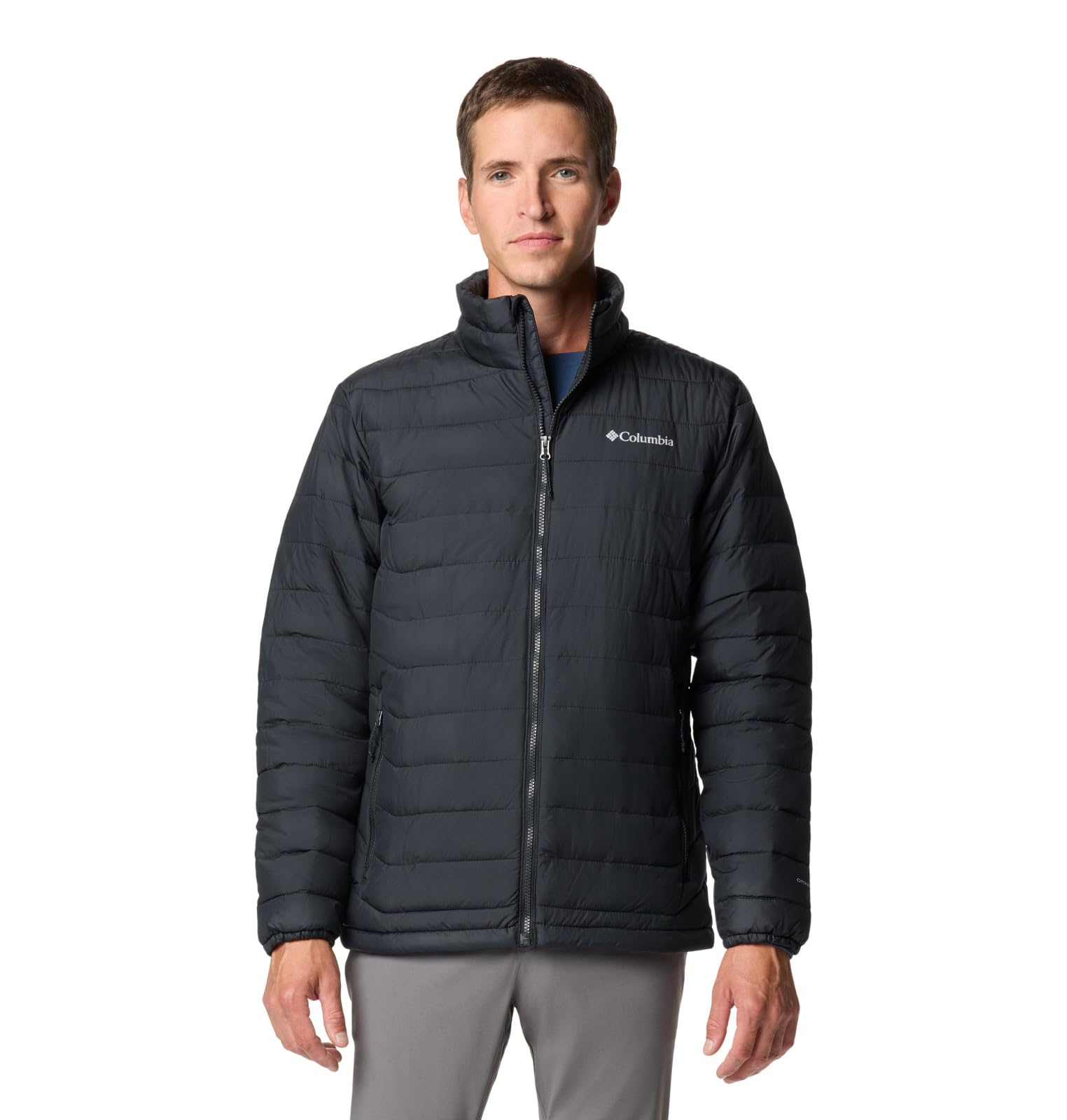
Columbia Powder Lite II Jacket
Key Features
- Fit: Runs slightly large
- Lining: Reflective thermal
- Layering: Takes a midweight fleece
- Price: Premium
The first cold morning explains the Powder Lite II: the reflective lining comes up warm almost immediately, well before a plain quilted shell has done anything. It’s the men’s jacket here that covers the widest range of winter days without feeling like armor.
What we like is how much room it leaves. The body runs slightly large, so a midweight fleece goes underneath without pulling across the back, and the sleeves and hem are long enough to stay put when you reach overhead. It’s warm on a commute, light enough to stuff into a daypack when the afternoon warms up, and tidy enough to wear somewhere better than a trailhead afterwards.
Where it gives ground to the Junction is packability: this is a jacket you wear rather than one you carry on a long climb. For men who want a single warm layer that handles a cold commute and an easy weekend walk, that’s the right trade to make.
Pros
- Reflective lining warms up quickly
- Roomy enough for a midweight fleece
- Long sleeves and hem
- Packs easily into a daypack
Cons
- Thin shell with light stitching
For men who want one jacket for cold commutes and easy hikes, this is the pick: warm, roomy enough for a fleece, and light in a daypack.
Best for Backpacking Trips
Outdoor Ventures Packable Puffer
Key Features
- Fit: Runs small
- Cuffs: Elastic
- Shell: Wind-blocking
- Packing: Rolls into its own pocket
- Price: Midrange
The test that matters with this one is how small it goes. Rolled into its own pocket, the Outdoor Ventures disappears into the bottom of a daypack or the corner of a carry-on, which is the entire reason to own a packable in the first place.
It’s warmer than that trick suggests. The shell blocks wind, and that is most of the difference: on a ridge in the mid-30s with a light fleece underneath we were comfortable, and the elastic cuffs kept the draft off our wrists. Standing still below freezing, you will want more.
Sizing is the thing to get right. The fit runs small enough that going up a size is the normal move, and the sleeves are long, so the larger size is still the right call if you are in between. For a jacket that spends most of its life compressed in a pack, the trade-offs land in the right places.
Pros
- Rolls into its own pocket
- Wind-blocking shell adds real warmth
- Elastic cuffs seal out drafts
- Warm into the 30s over a fleece
Cons
- Open seams can let fill escape
The men’s jacket we take on trips: warm into the 30s, rolls into its own pocket, and blocks wind better than its weight suggests.
Best for Layering over Fleece
33,000ft Packable Puffer
Key Features
- Fit: Roomy through shoulders
- Packing: Stows in its own pocket
- Chest pocket: Zippered, phone-sized
- Price: Midrange
Two zipped hand pockets, a chest pocket that swallows a phone, and an inside zip pocket: the 33,000ft is the best-organized jacket in this guide, and that matters more than it sounds when you are walking without a pack or working a zip with gloves on.
It’s also cut for people with shoulders. The upper body is roomy enough that a fleece underneath doesn’t bind across the back, the hem isn’t so long that it rides up when you sit, and it stows into its own compartment for the trip home. Warmth holds to roughly 35F with a layer under it.
Sizing is the one variable: ours ran close to true through the chest and loose at the hem, so start with your usual size. Against the Outdoor Ventures above, this jacket gives up a little packability and gains a broader cut and better pockets — the pick if you layer over a fleece rather than stuffing the jacket in a bag.
Pros
- Chest pocket sized for a phone
- Roomy through the shoulders
- Stows in its own pocket
- Warm to about 35F with a layer
Cons
- Zippers can catch on the shell fabric
The best pocket layout here, plus shoulders roomy enough to layer over a fleece without binding — a strong men’s pick for hiking.
Best for Cool-Weather Errands
Spyder Packable Puffer

Key Features
- Fit: Runs tight in larger sizes
- Hood: Attached
- Packing: Packs down small
- Pockets: Deep inner pockets
- Price: Midrange
The hood is the reason this one made the list. On a windy walk it stayed put instead of snapping at your ears, and the quilted outer has a clean, non-technical look that works on the school run as well as at the trailhead.
It’s light — the kind of light you notice when you lift it — and warmer than that suggests, holding a chilly fall day with a sweater underneath and packing down small enough for a tote bag.
The inside pockets are deep, deep enough that a phone and keys stay where you put them instead of migrating to the hem, and the sleeves aren’t too long on a shorter frame.
For the money it’s one of the nicer jackets here: light, tidy and easy to live with. If you need one coat for a genuine winter, the Columbia Heavenly above is the step up; if you want a light layer for fall, this is the one to beat at the budget end.
Pros
- Light enough to forget in a bag
- Deep inside pockets
- Hood stays put in wind
- Clean, non-technical look
Cons
- Warmth stops short of real winter
- Larger sizes run tight
A light, tidy women’s packable for cool mornings, with a hood that behaves in wind and a price that makes it an easy second layer.
Best for Active Fall Hikes
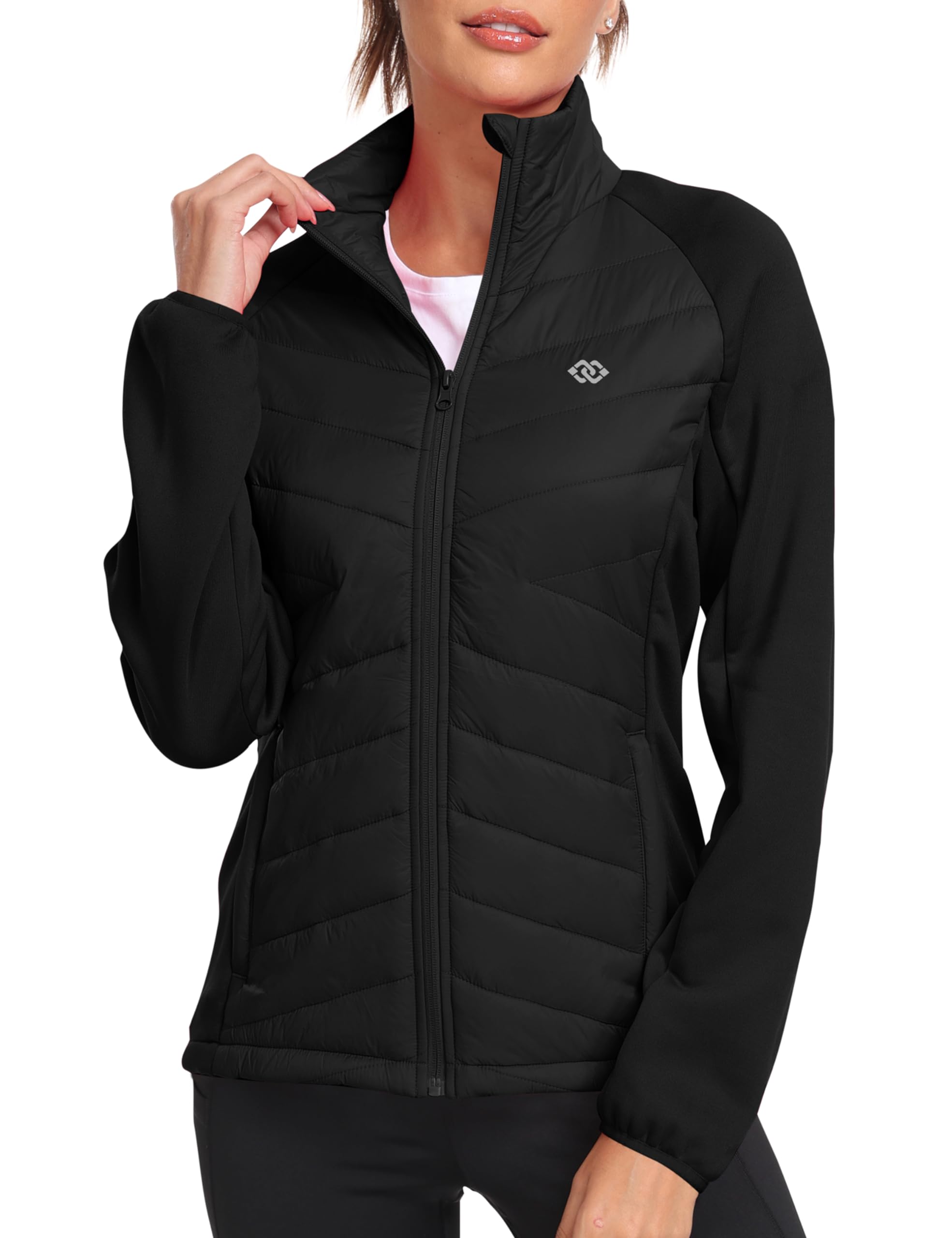
MoFiz Insulated Hiking Jacket
Key Features
- Fit: Runs small
- Lining: Fleece-lined body
- Warmth: Comfortable in the 40s
- Pockets: Zippered hand pockets
- Price: Budget
The MoFiz is pitched as a puffer and a fleece in one, and on a cool morning that is close to how it feels: quilted across the front, smooth through the sides and sleeves, soft against the back.
It’s a light jacket in the best sense — it disappears into a carry-on, moves well when you are running or hiking, and it is comfortable in the 40s over a long-sleeve base layer.
The waist has internal pull ties, unusual at this level and genuinely useful: cinch the hem for a climb, loosen it when you stop. Sizing runs small, so go up a size, especially if you are between two.
It isn’t a winter jacket, and it isn’t trying to be. What it is: the cheapest women’s option here that is actually built for moving, and the one we hand to someone who wants a packable layer for fall hikes without spending much.
Pros
- Quilted front with smooth side panels
- Packs into a carry-on
- Internal waist pull ties
- Comfortable in the 40s over a base layer
Cons
- Fleece lining isn’t always what arrives
The cheapest women’s jacket here built for movement: light, packable and comfortable in the 40s on a run or a quick hike.
How We Tested Synthetic Insulated Jackets
We started by pulling together 12 jackets from brands we knew, then cut anything that only came in narrow sizes, had a reputation for weak zippers, or felt too heavy for three-season use. Each one had to work as a standalone layer and under a rain shell.
For eight months, those jackets lived by my front door and in my team’s cars. They went on 6 a.m. dog walks in damp 40-degree weather, weekend hikes with a loaded daypack, windy commutes, and a drizzly week when I wore them under a shell. I tried each over a T-shirt, a midweight fleece, and a thin base layer to see how the fit changed.
To judge warmth, I noted cold spots along seams, whether heat built up too fast on a climb, and if the jacket still felt warm after the fabric got damp. I weighed each on a kitchen scale and stuffed it into its own pocket to check packability. After every few wears, I ran the main zipper up and down twenty times and looked at stitching at the cuffs, hem, and pocket corners.
Sizing got its own notes: sleeve length, hem coverage, and whether the same size fit over a hoodie without binding across the shoulders. I also wore each jacket to the grocery store and on a casual Friday to see if it looked too technical for everyday. At the end, we compared what each one delivered against what it cost, because a jacket is only a good value if the zipper and seams survive a season.
How to Choose a Synthetic Insulated Jacket
Synthetic fill is the right call for damp, moving cold, so the decision that matters most is how much insulation you need and how the jacket layers.
Match the Fill to the Cold You Actually Meet
Warmth in a synthetic jacket is mostly a question of how much fill sits in the baffles. The jackets here split into two camps: light packables that are comfortable from the 40s into the 50s and hold up into the 30s with a fleece underneath, and 100-gram layers like the North Face Junction that stretch a little colder without much extra bulk.
The trap is buying for the coldest day you can imagine instead of the one you will stand around in. If you move — hiking, walking to work — a lighter layer plus a shell beats one heavy jacket. If you stand still, buy warmer and accept the bulk.
Why Synthetic Earns Its Place in Wet, Cold Weather
Down wins on warmth per ounce, but it collapses when it gets wet and takes a long time to dry. Synthetic fill keeps trapping heat while damp — not as well as when dry, but enough to get you off a hill — and it dries far faster. That makes it the fill for drizzle, sweat and shoulder-season trips where the weather turns.
The practical thing to look for is a shell with a durable water repellent finish; the Junction’s non-PFC DWR is the clearest example in this guide. A DWR is not waterproofing, so pair it with a hardshell in sustained rain.
Packability: Judge the Bundle, Not the Claim
Almost every jacket here calls itself packable, and they don’t mean the same thing. Some roll into their own pocket or stuff sack and compress to something you can bury in a daypack; others simply fold small enough for a suitcase. Neither is wrong, but only the first is worth carrying on a hike.
Check whether the jacket has its own pocket or bag and how much of your pack it eats. The Outdoor Ventures and the 33,000ft both stow into themselves, which is why they are the two here we take uphill.
Fit Decides Whether You Wear It
Fit is where most of the guesswork sits in this category, because some of these run large, several run small, and a couple are split depending on which size you take. Buy for the layer you will wear underneath: a midweight fleece adds real volume through the chest and shoulders.
Sleeve length matters as much as chest size, since a jacket that is roomy in the body but long in the sleeve is a layering piece rather than a stand-alone. Between sizes and planning to layer? Size up. Wearing it over a t-shirt only? Take your usual.
Frequently Asked Questions
How do I wash a synthetic insulated jacket?
Machine wash cold on a gentle cycle with a mild or technical detergent, then tumble on low with two or three dryer balls to break up clumped fill. Skip fabric softener and skip high heat, since both flatten loft.
If the shell stops beading water, a wash-in DWR treatment brings it back. The North Face Junction is machine washable on its label; treat everything here the same way.
Is a synthetic puffer or a fleece better for hiking?
They do different jobs. A fleece breathes better under effort and stays comfortable when you are sweaty; a synthetic puffer traps far more heat once you stop. Most hikers carry the fleece as the moving layer and the puffer for breaks and summits.
If you want only one, a light synthetic puffer over a base layer covers more cold for the same weight, at the cost of breathability on the climb.
How should I store a packable puffer?
Loose on a hanger or in a drawer, not compressed in its stuff sack. Synthetic fill recovers better than down, but constant compression still flattens loft over a season, and a jacket that lives packed from October to March will feel thinner by spring.
Keep the stuff sack for travel, then shake the jacket out and let it hang when you get home.
Final Verdict
The North Face Women’s Junction is the jacket we recommend first: 100 grams of recycled synthetic fill, a DWR shell and four pockets make it the most complete layer here for hiking and travel, and it slides under a hardshell instead of fighting it.
Want a warm town coat instead? The Columbia Heavenly is cozier and better looking. Shopping for a man? The Powder Lite II fills the Junction’s role — roomy enough for a fleece, warm on a cold commute, light enough for a daypack.